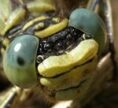
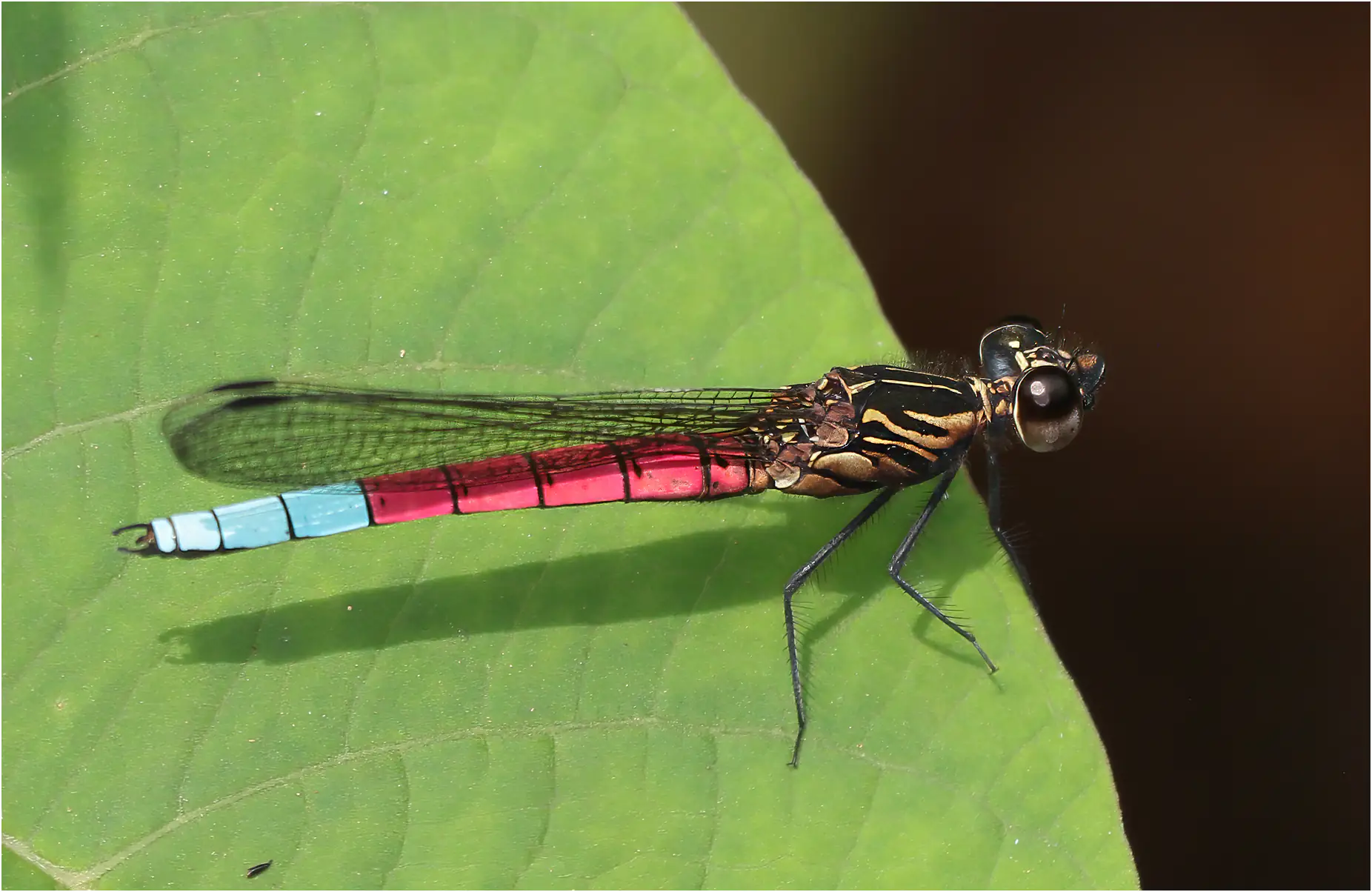
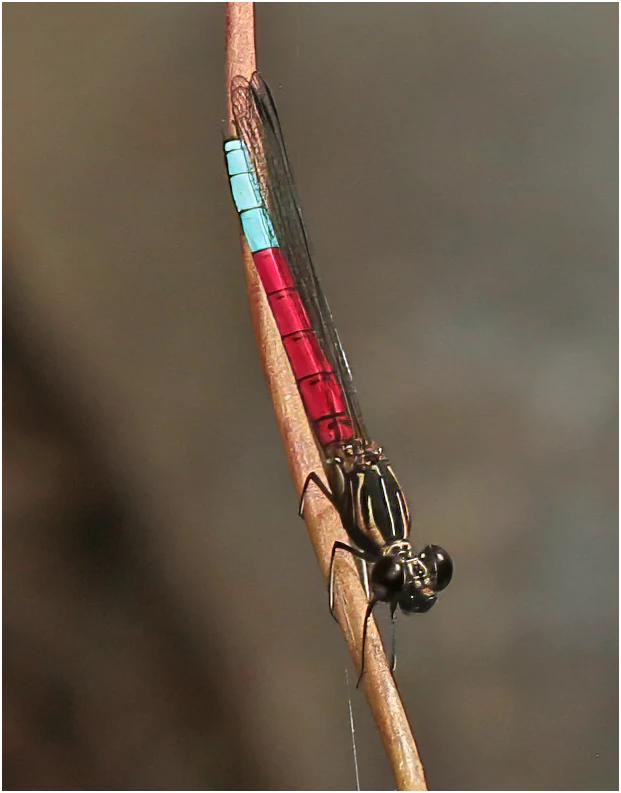
I was delighted to encounter *Chlorocypha curta* again, which I had first met in Benin in 2008, where I was taking my very first photos of exotic dragonflies. It was the first Chlorocyphidae I had photographed, and I remember my surprise upon discovering its unique face in my photos.
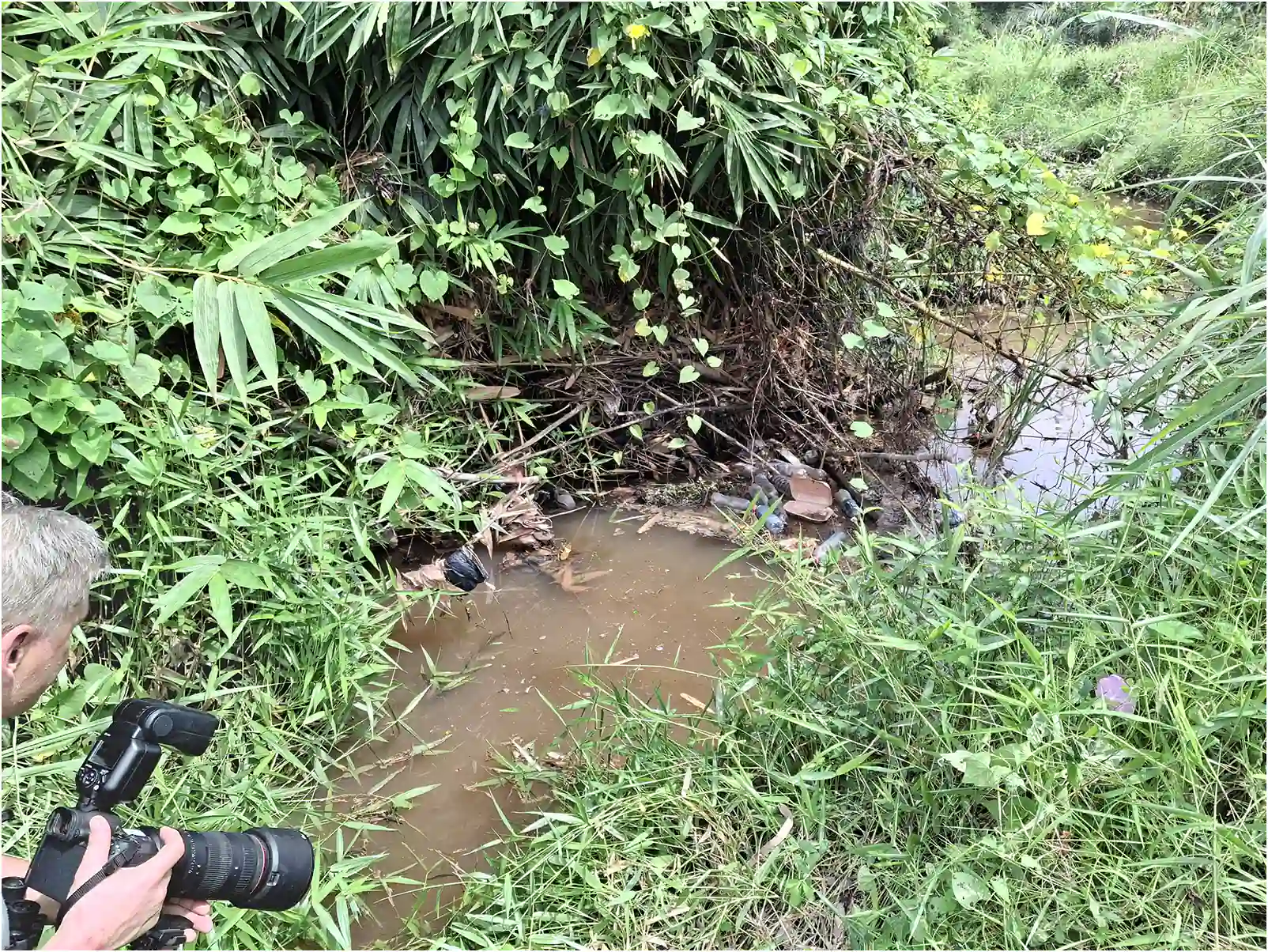
Unfortunately, the terrain configuration where it made two brief appearances prevented closer approach. It was found on a small, narrow, and deep stream, widening slightly in places. When we approached too close to this tangle of branches, it simply moved to the other side, but for us, the detour was quite complicated and the approach equally difficult.
This has nothing to do with odonates, but these photos highlight one of Africa’s scourges: plastic water bottles abandoned by the millions in nature…
It is impossible to confuse it with another *Chlorocypha* in Ghana; the color distribution is unique to this species, with segments 2 to 6 red, then blue up to the tenth.
Hagen 1853, who described it under the name *Libellago curta*, measured its abdomen at 21 mm, for a total length of approximately 32 mm.
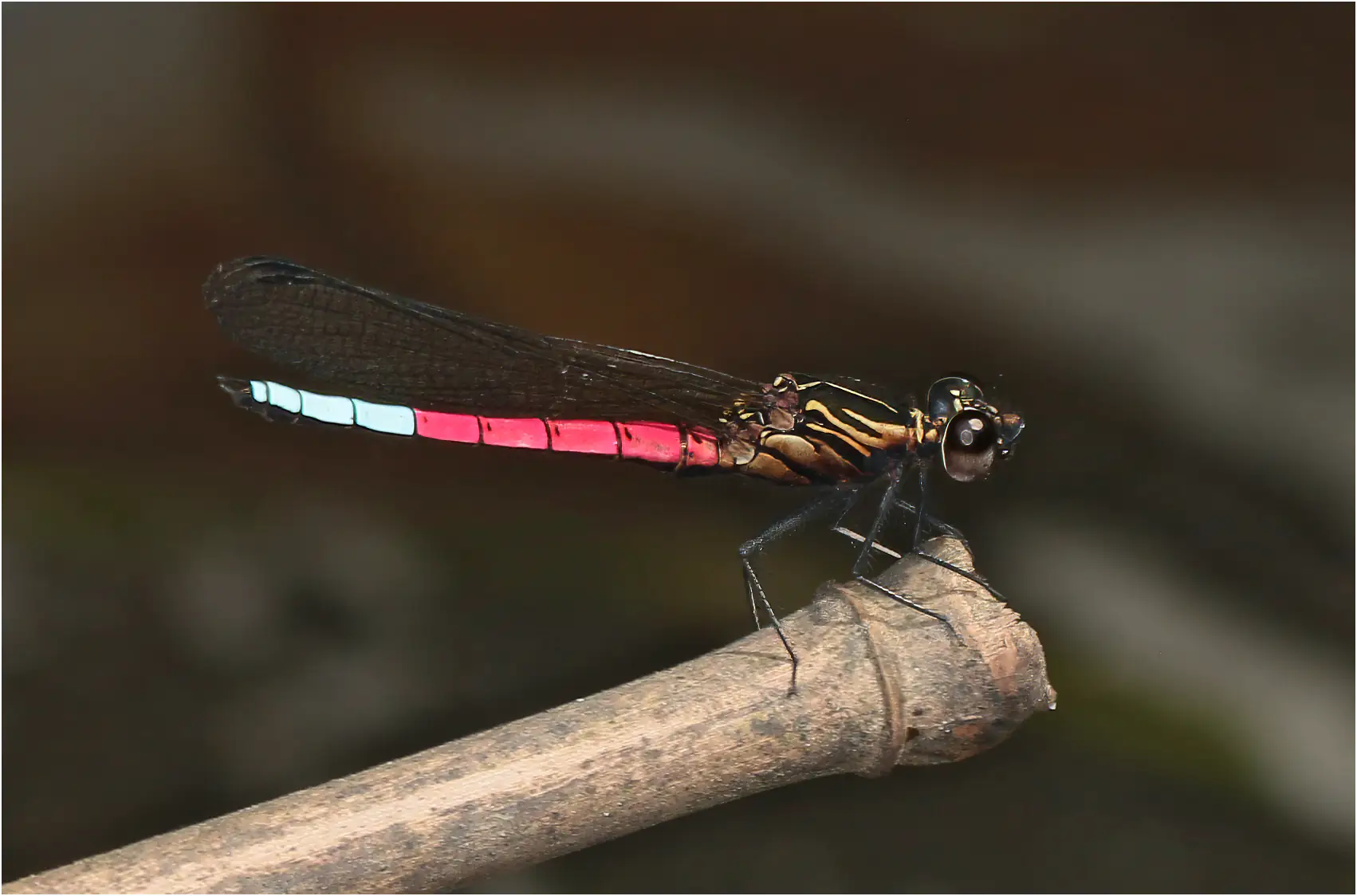
It is most often found on rivers or streams in open areas, or in clearings within forests.
Its distribution area, south of the Sahel, extends from Sierra Leone to Uganda, Kenya, and Sudan, and south to Angola.
IUCN Red List.
English speakers call it the Blue-tipped Jewel.
Etymology Chlorocypha curta
Fraser (1928) created the genus *Chlorocypha* with *Agrion dispar* by Palisot de Beauvois as the type species (I was unable to access his description despite extensive research).
Chlorocypha, from the Greek chloro, for yellow or green, and cyphos meaning humpbacked, hump, referring to the color of the species’ peculiar clypeus, likely in a not-very-mature specimen. Fraser writes: « I have chosen the name Chlorocypha for this genus, based on the specific character mentioned by Palisot de Beauvois for the type species dispar : « le chaperon [Clypeus] est d’un jaune-verdâtre« . «
Curta means short, truncated in Latin, and Hagen, who described it under the genus name *Libellago*, presumably found its abdomen more massive, shorter than other *Libellago* he knew.
Fraser, 1928 – « A revision of the Fiers-winged Damselflies (Family Chlorocyphidae) of Africa ». Annals and Magazine of Natural History, Series 10, Vol. 2.
Hagen in Selys, 1853 – Synopsis des Caloptérygines. Bulletins de l’Académie Royale Des Sciences, Des Lettres et Des Beaux-Arts de Belgique, 20 (Appendix), 1–73.