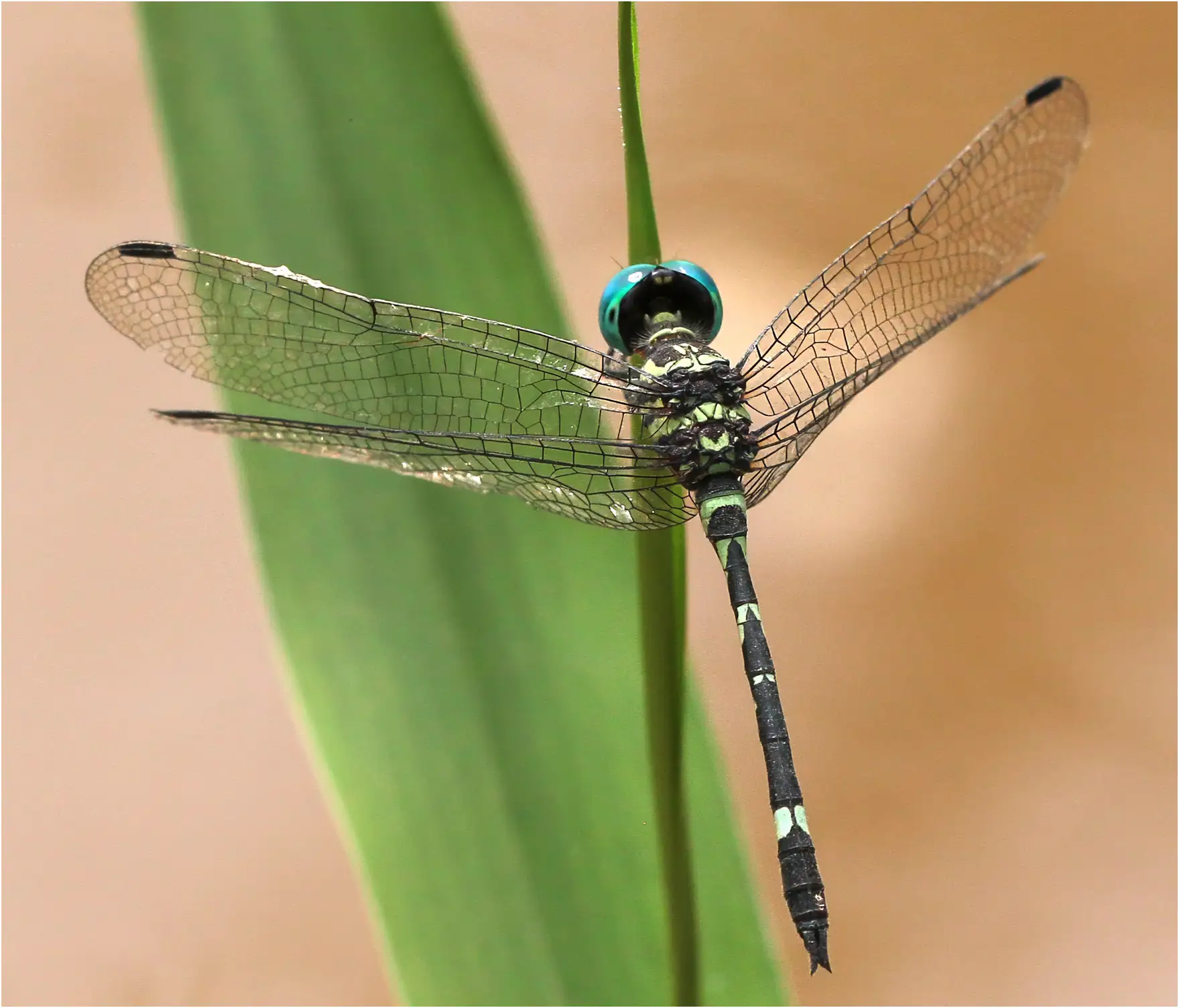
Tetrathemis camerunensis is one of eight African species in a genus that includes 14 worldwide; it is also present in Asia and Oceania. The African species might one day rejoin the genus Neophlebia, now extinct, but which Selys had created to place Tetrathemis polleni. Sjöstedt, moreover, described this species in the genus that Selys had created.
It was later synonymized with the genus Tetrathemis (Brauer, 1868). This would therefore be a just return!
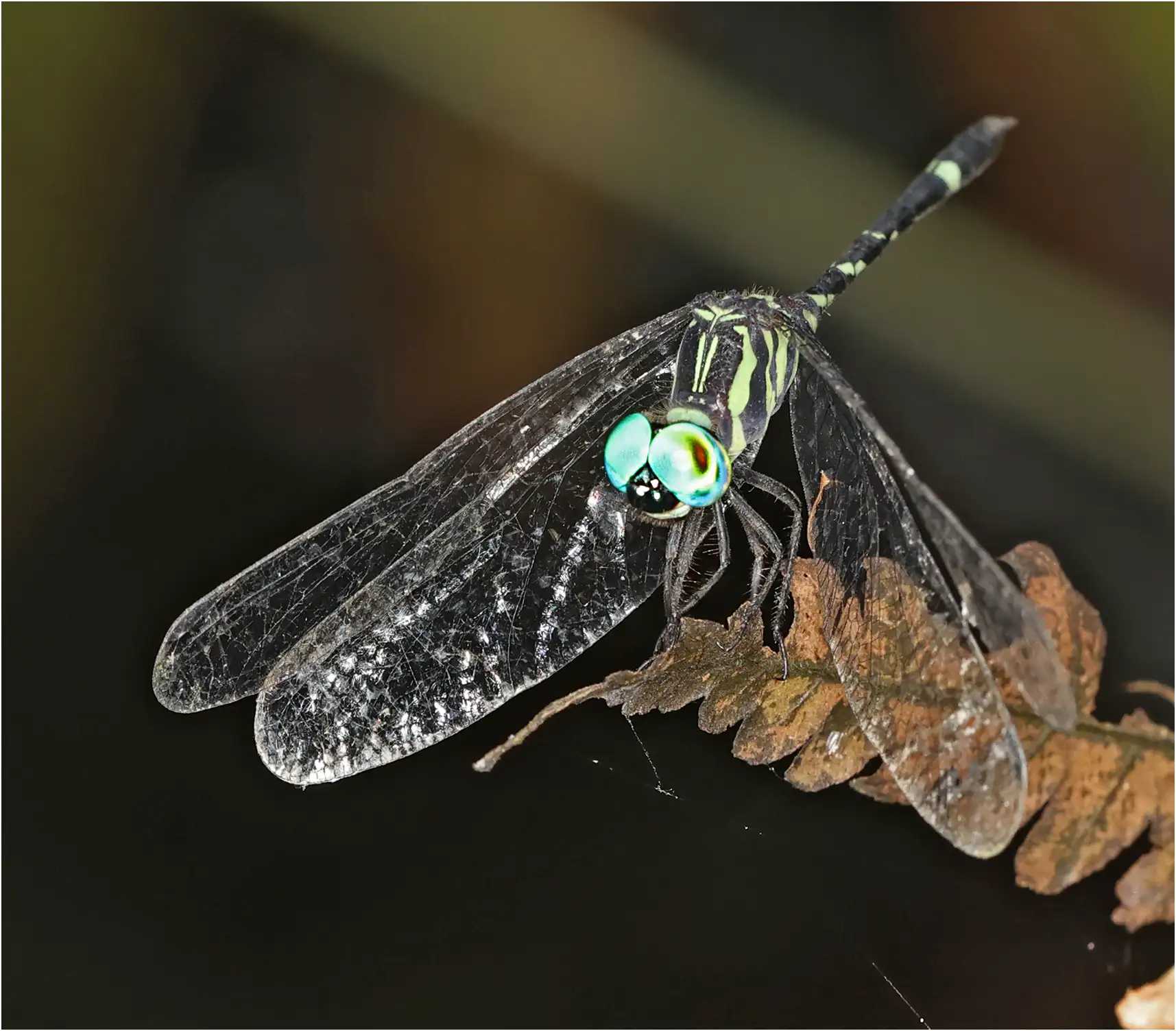
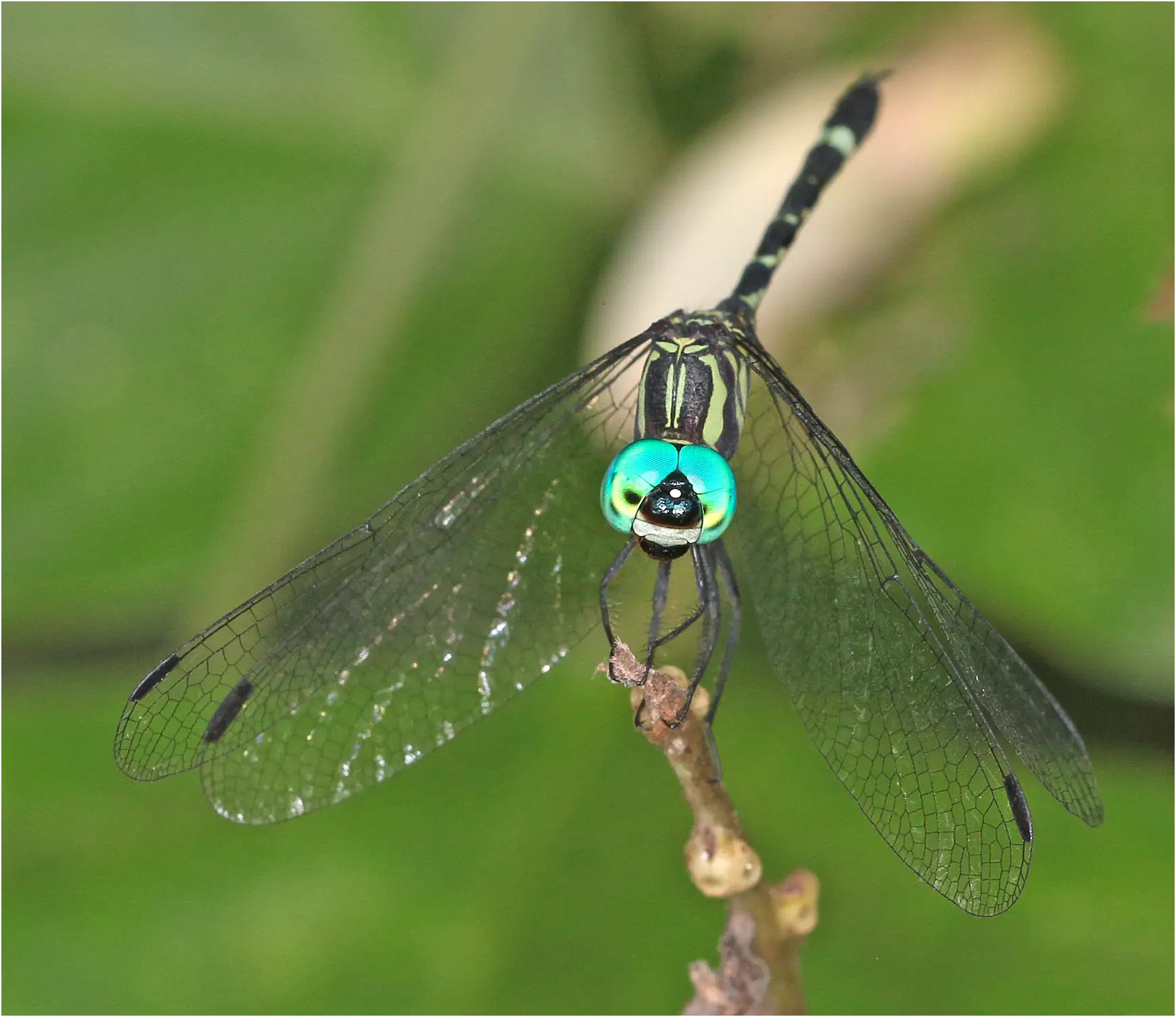
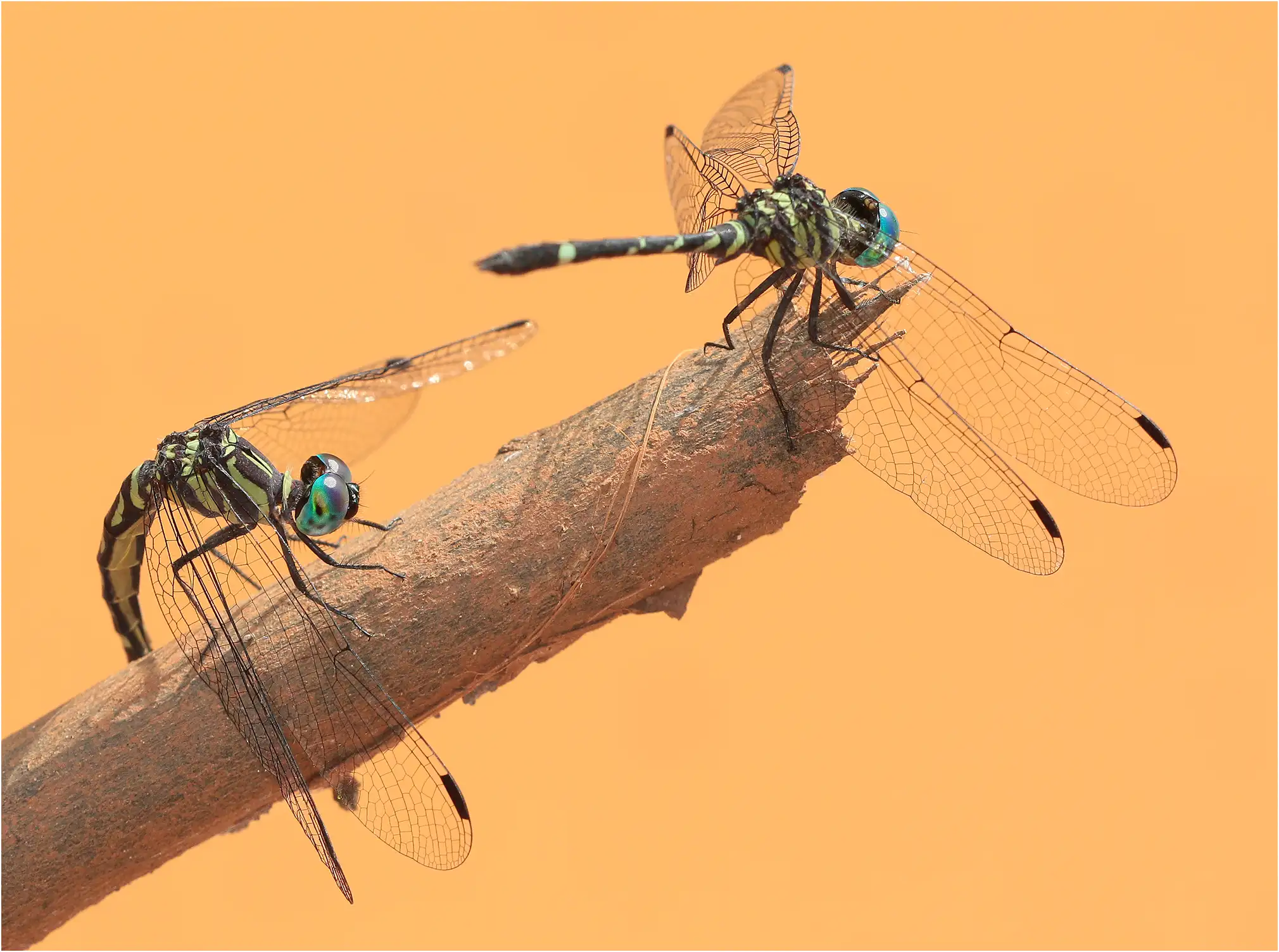
Tetrathemis camerunensis is very similar to the other species we encountered in Ghana, Tetrathemis godiardi, and is only clearly distinguished by its anal appendages. But these are very different: the superior appendages, the cerci, of our species are long and divergent, while those of its cousin are massive and short, just a little shorter than the epiproct, which can thus be easily observed.
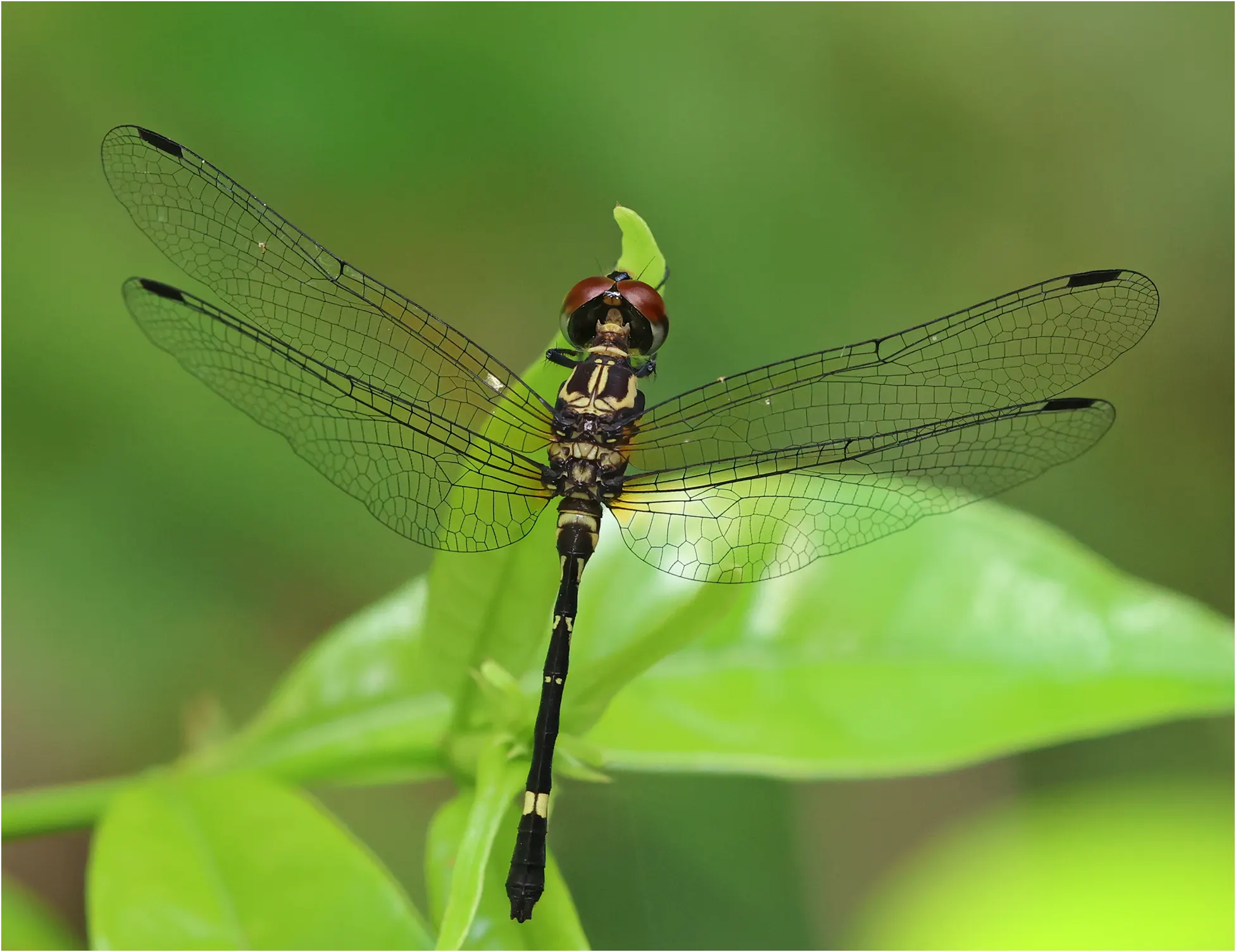
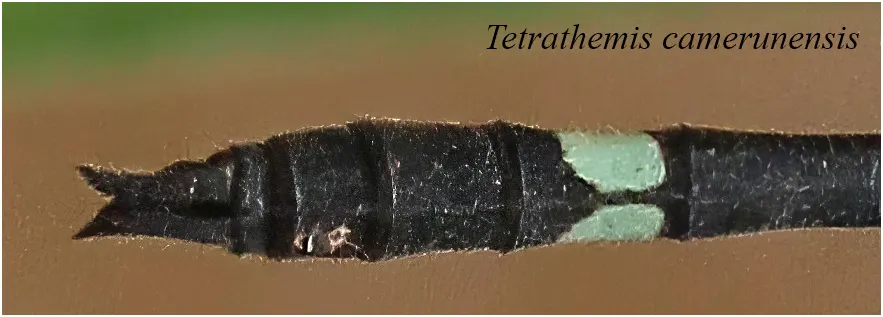
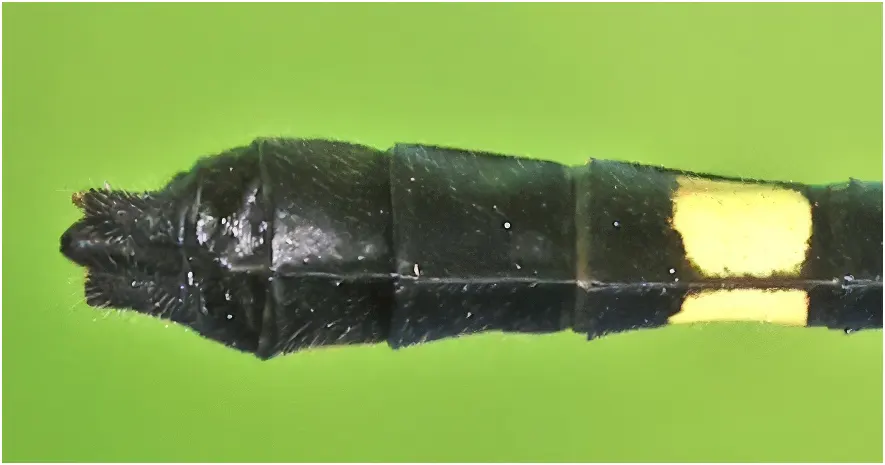
Sjöstedt tells us that the male measures 31 mm and the female 28 mm.
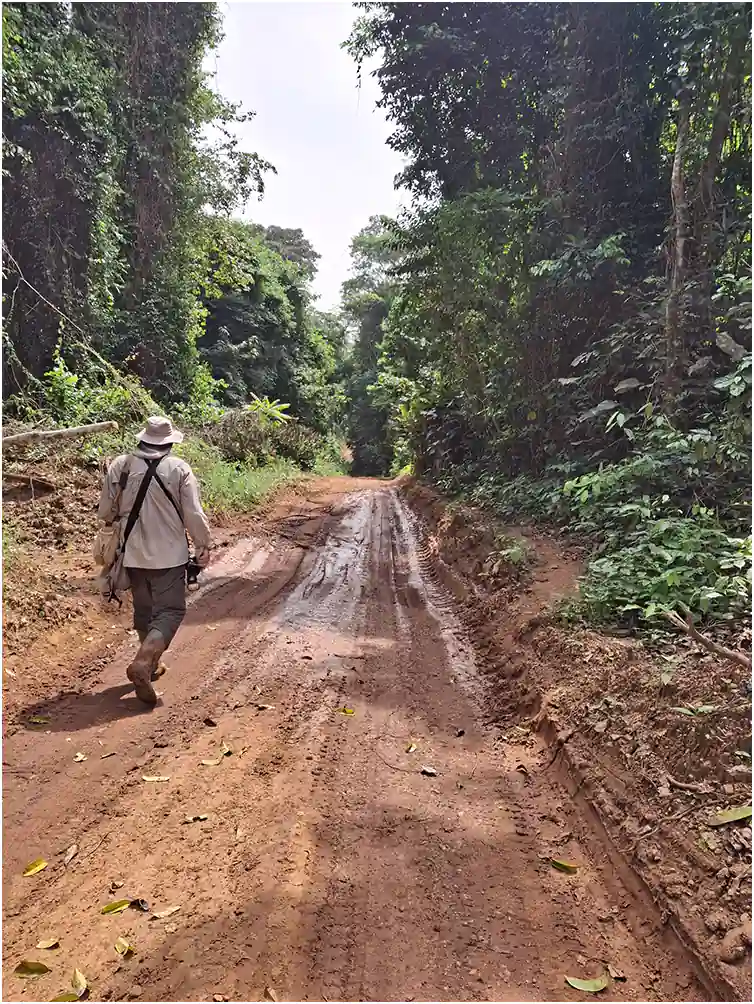
We contacted it several times and it seemed much more common to us than T. godiardi. We encountered it in the forest, on large puddles cutting across logging tracks, on a fairly large forest pond or in more open environments, such as on this stream, where Chris is precisely supposed to photograph the subject below right.

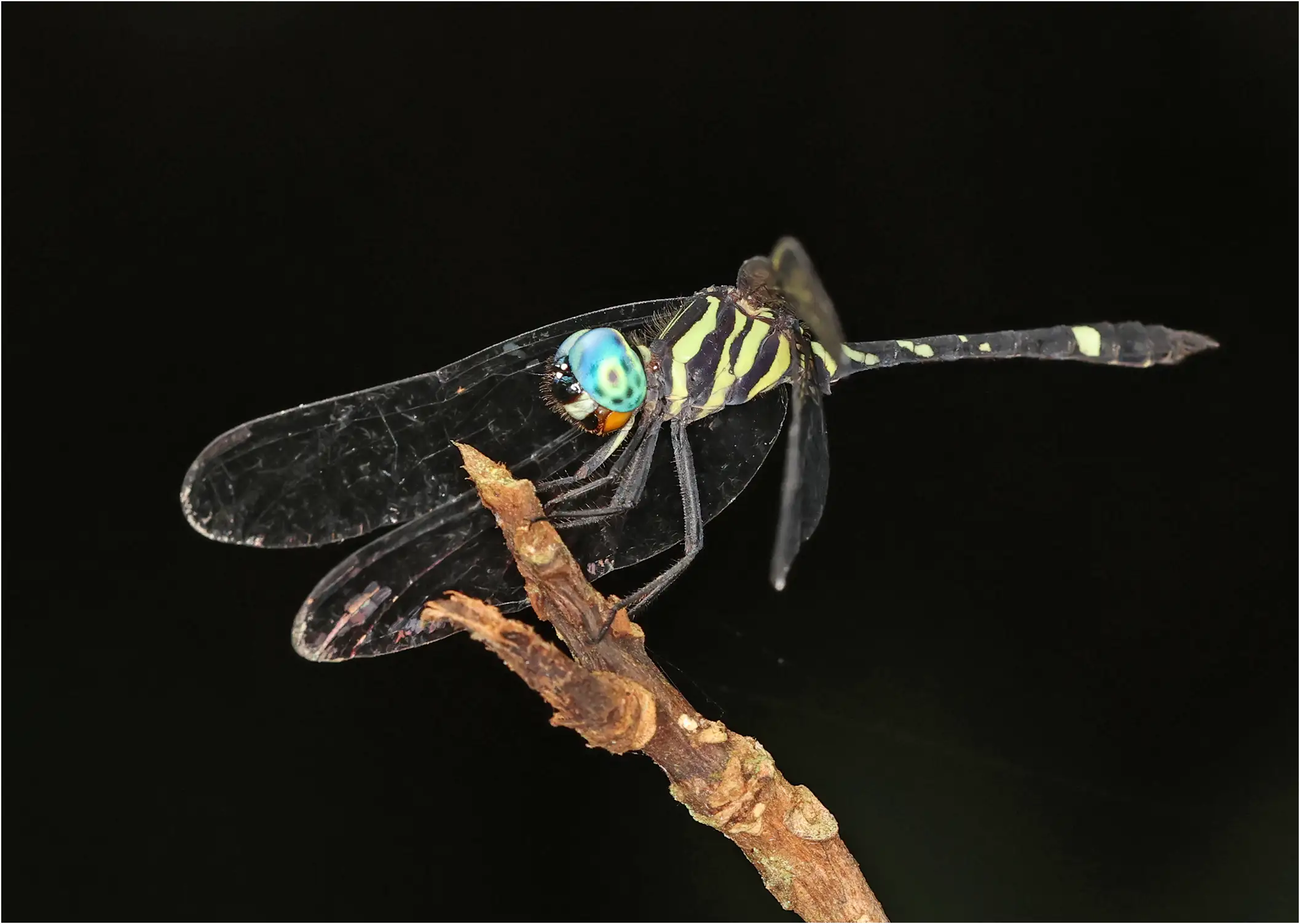
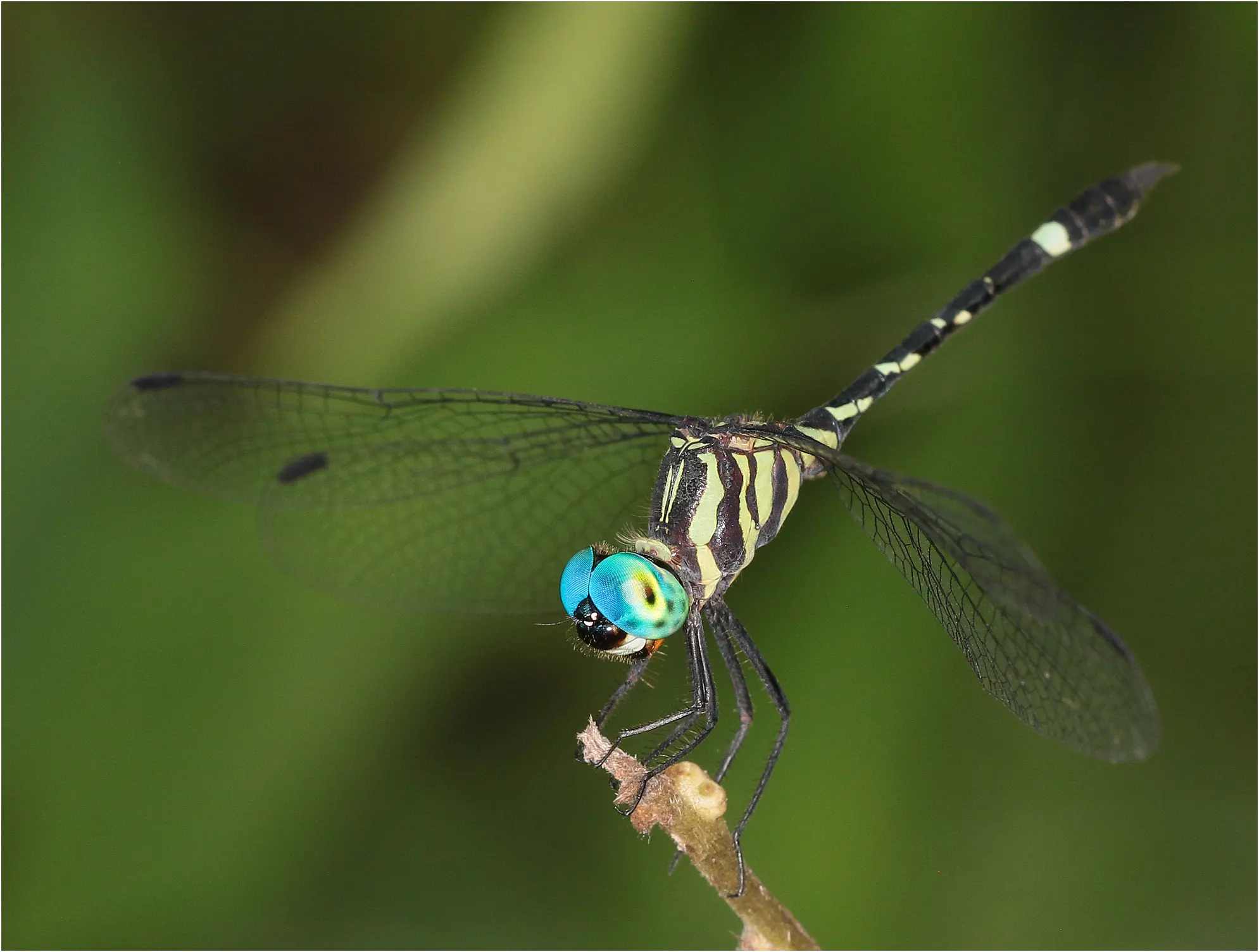
Its geographical distribution follows the tropical and equatorial forest belt, from Gambia and Guinea to Nigeria in West Africa, then Cameroon, Gabon, Congo, and Central African Republic, then Rwanda and Uganda.
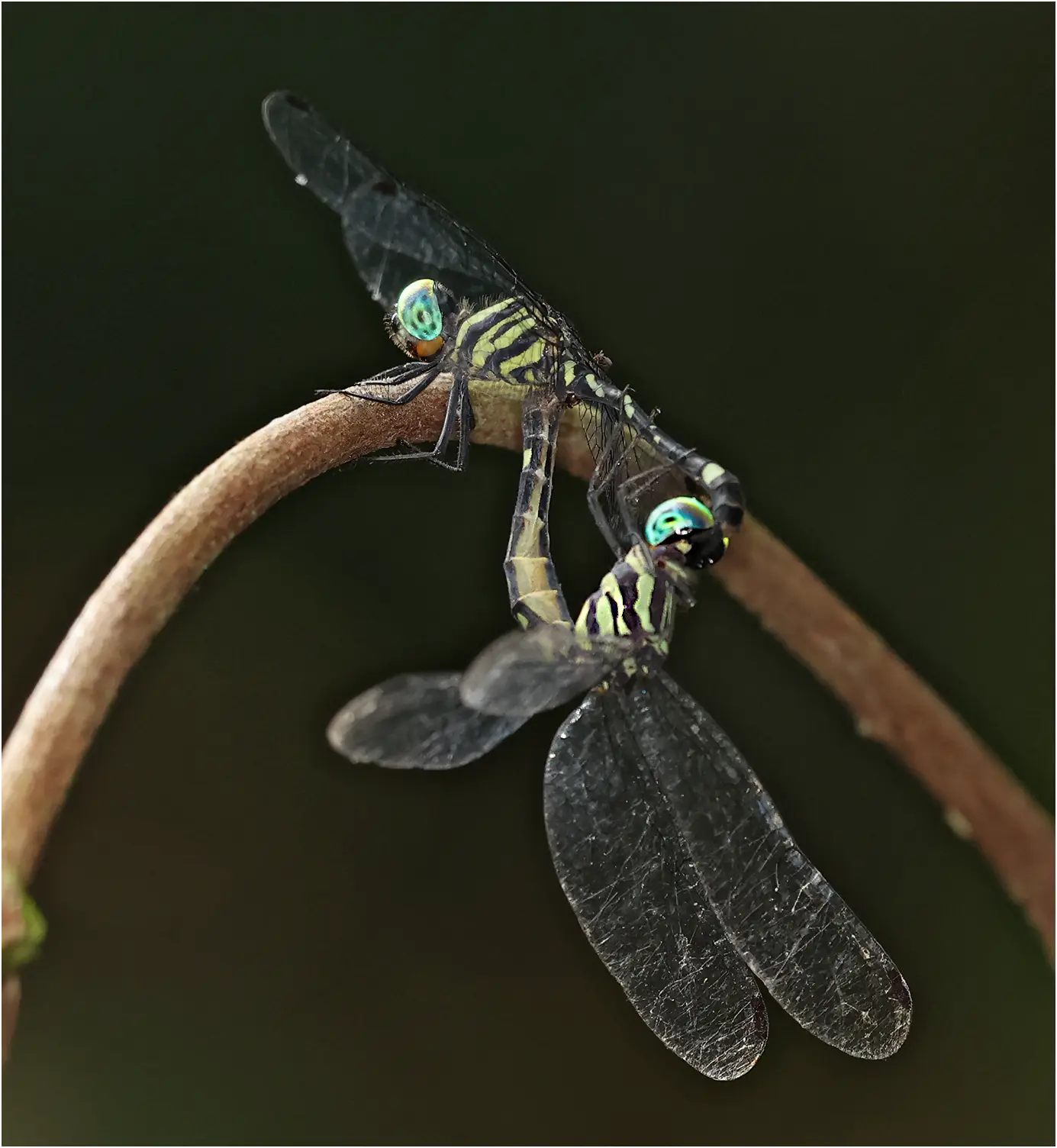
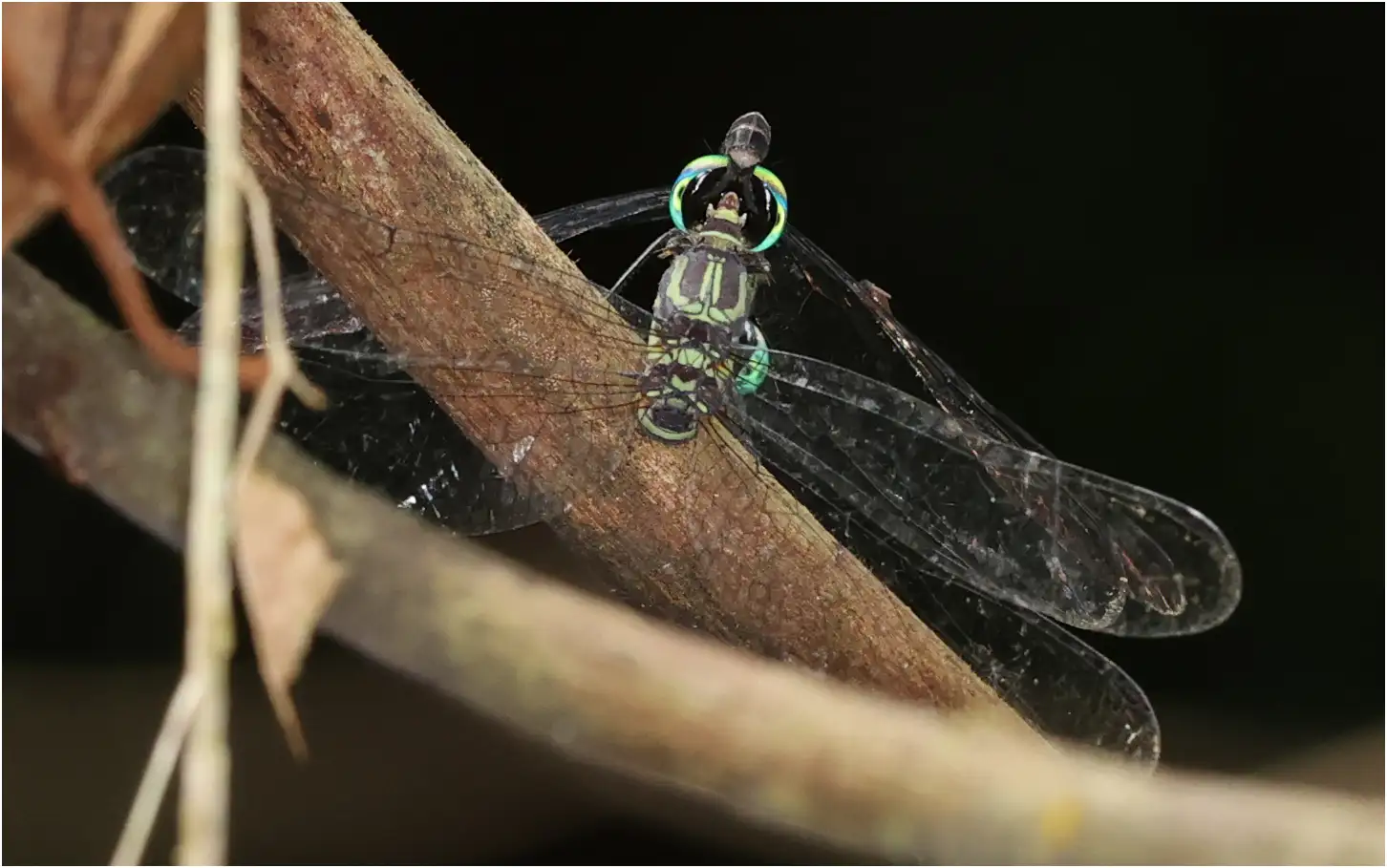
On the forest pond in question, we observed a mating, unfortunately unapproachable and a little too high up. This is an opportunity to note the slight sexual dimorphism. However, it is noticeable that the female’s abdomen appears much wider than the male’s.
Tetrathemis camerunensis mating, Ghana, Kakum National Park, 2026-01-14
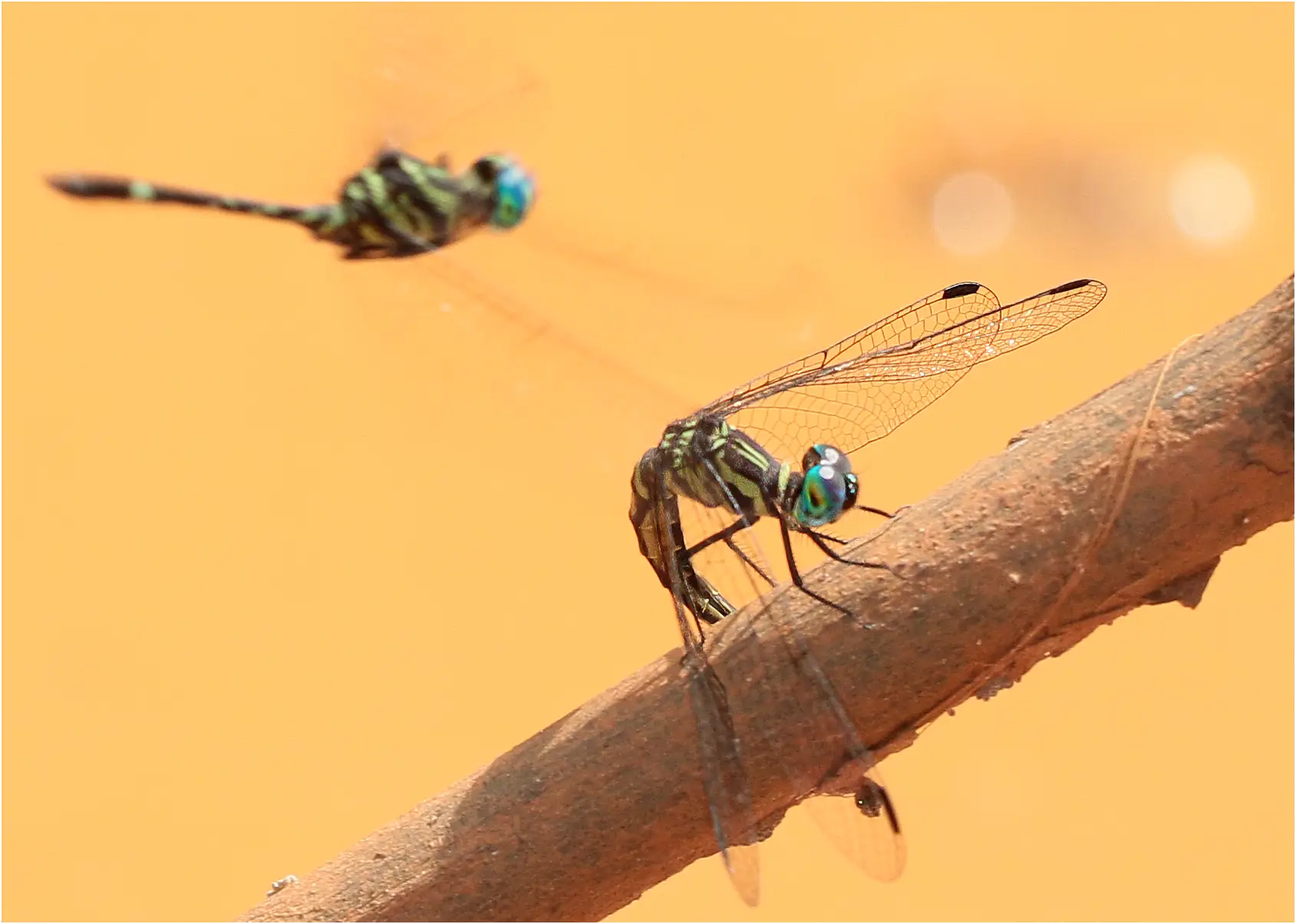
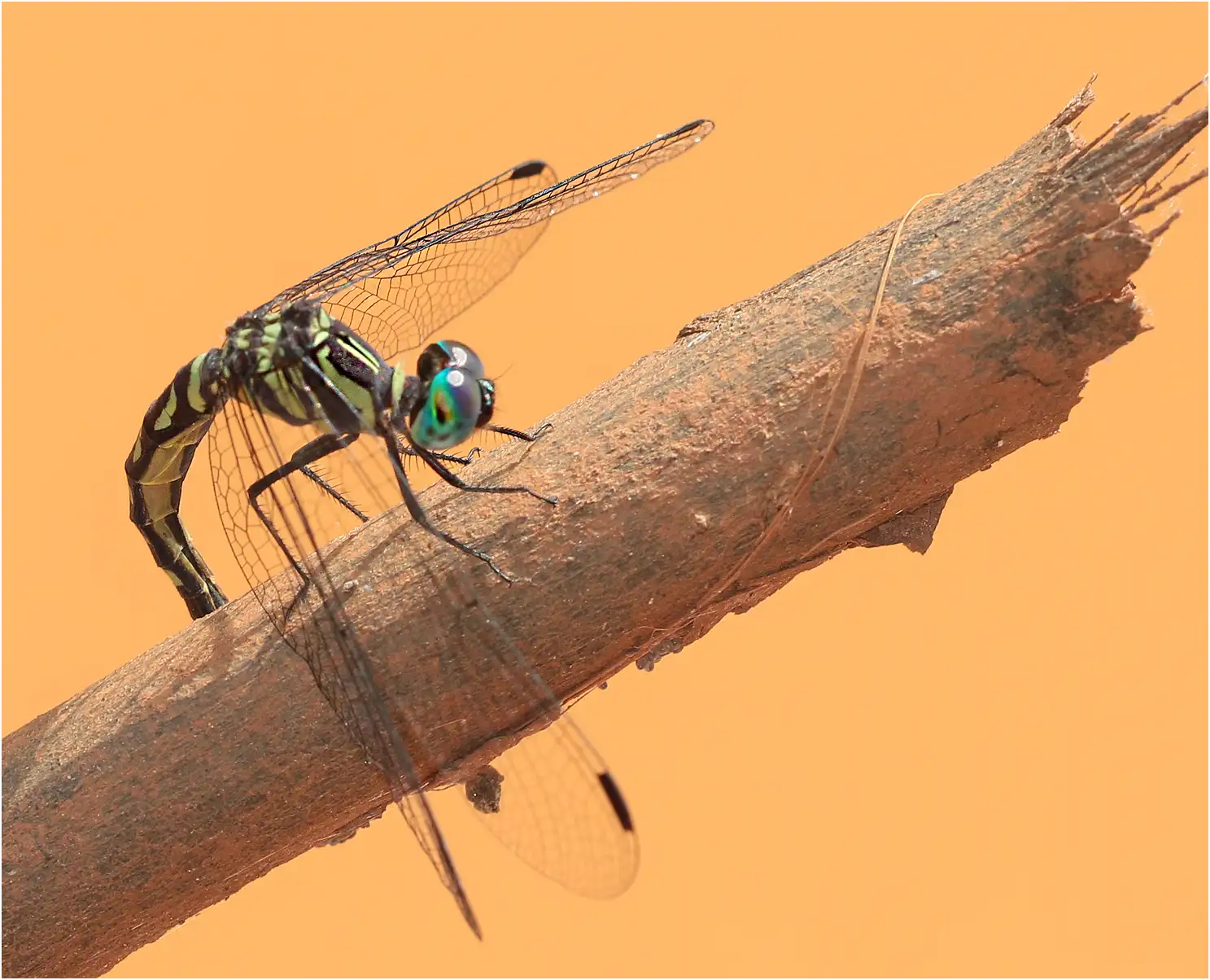
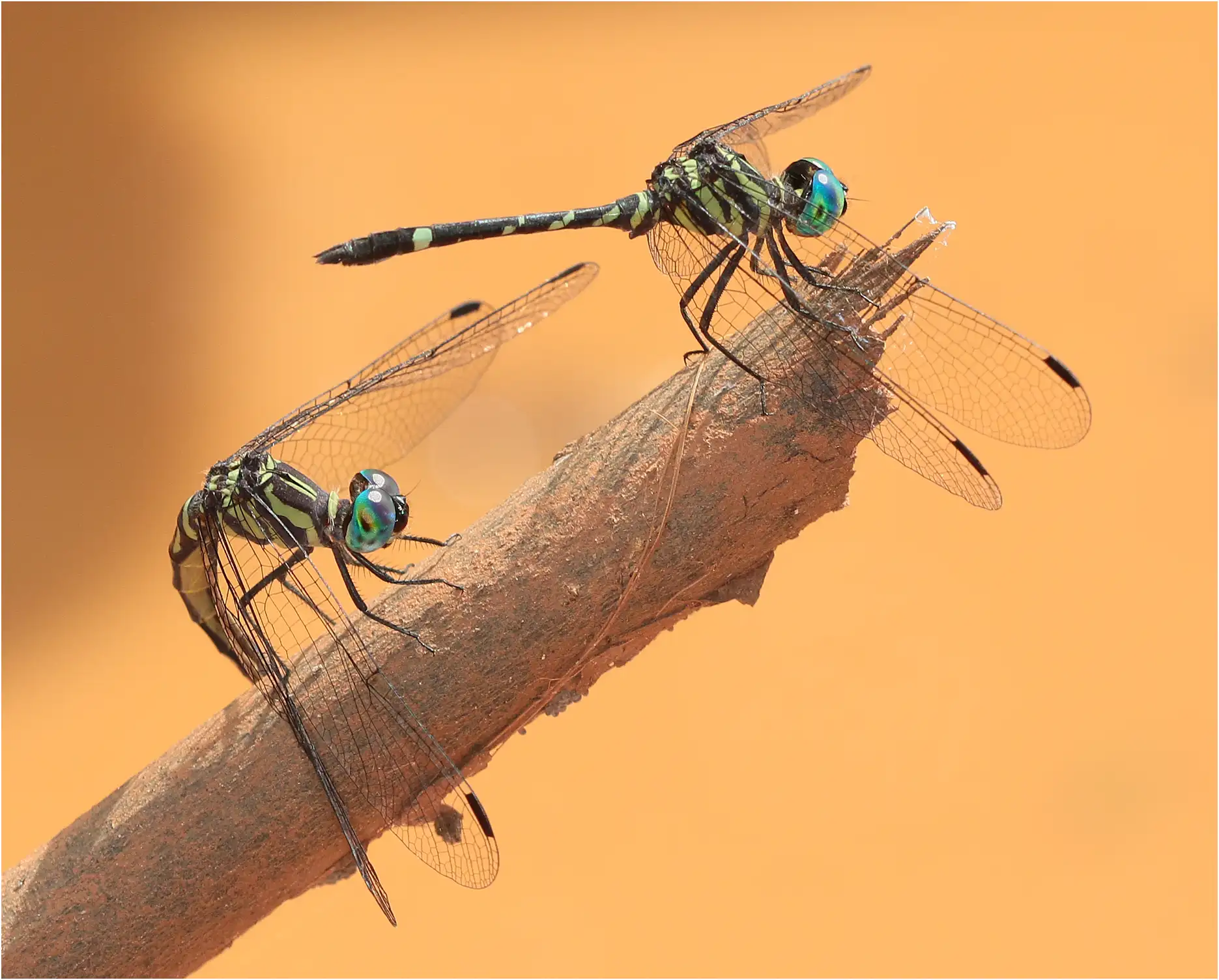
The unusual rains of this January formed large puddles in places on the forest paths. On a small branch emerging from one, a female was ovipositing under the supervision of a male. The latter flew around and landed from time to time, right next to her. The female inserted her eggs into this piece of rotten wood, about 30 cm above the water. The larvae or prolarvae will certainly have to dive to find an element in which to develop.
Etymology Tetrathemis camerunensis
Tetrathemis (Brauer, 1868), from –tetra for –four and Themis – Greek goddess of order, justice. The name of the goddess of order is particularly well suited to taxonomy, a science that aims to describe and order families, genera, and species.
The number 4 refers, as Brauer describes, to the shape of the cardinal cell, which we incorrectly call the triangle, which is quadrangular for this genus. This etymology is provided by Endersby & Fliedner, 2015.
Camerunensis obviously comes from Cameroon to which the suffix –ensis is added, indicating origin. Sjöstedt specifies that the specimen comes from Kitta, probably currently listed as Kotto Balue, in western Cameroon, which was one of his base camps during his 1891 expedition.
Ian Endersby & Heinrich Fliedner, 2015 – The Naming of Australia’s Dragonflies, Ian Endersby & Heinrich Fliedner, Busybird publishing.
Sjöstedt, 1900 – Odonaten aus Kamerum, West Africa – Kungl. Svenska vetenskapsakademien. (1872). Bihang till Kongl. Svenska vetenskaps-akademiens handlingar (Vol. 25). K. Svenska vetenskaps-akademien. P. 36.