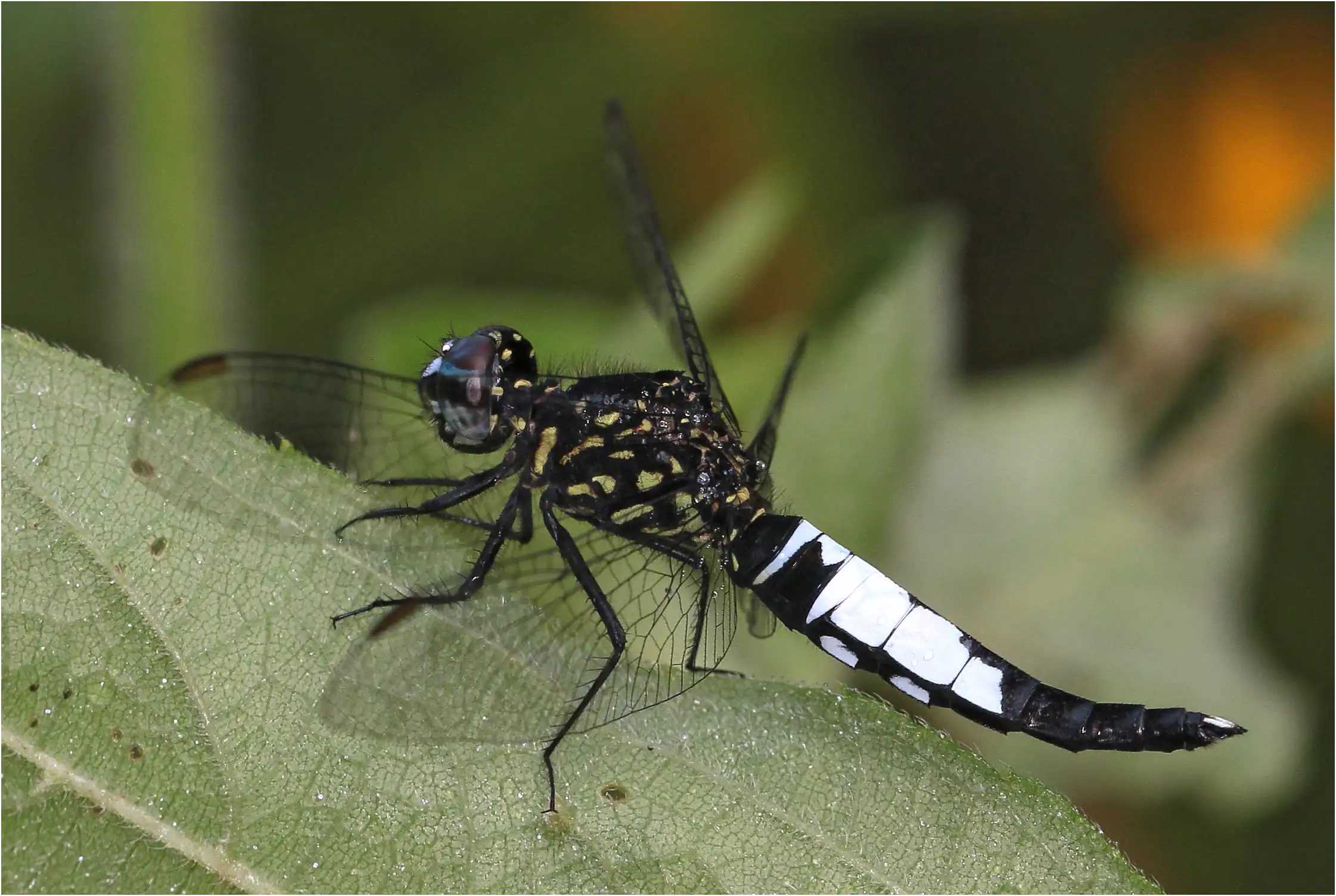
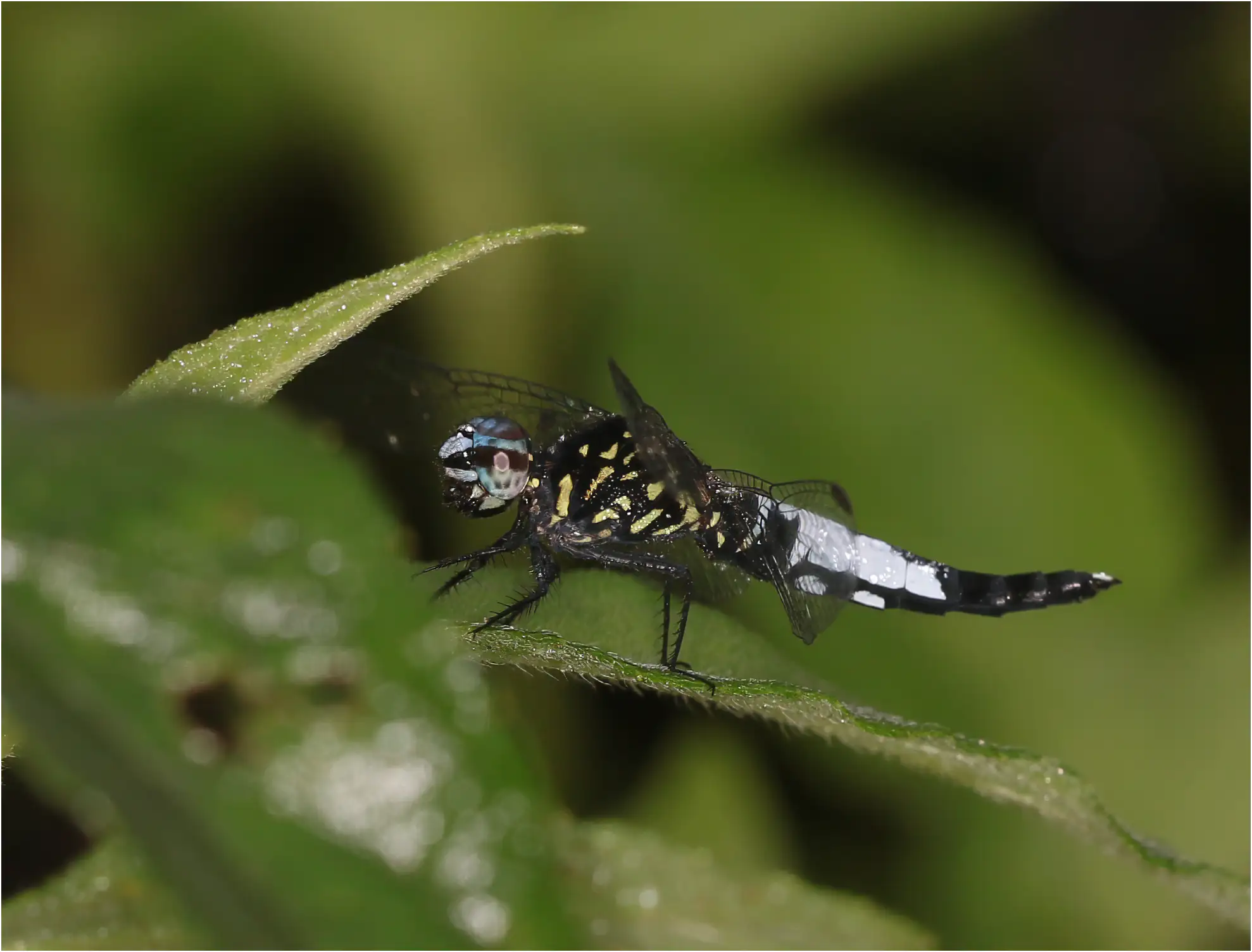
Acisoma trifidum (Libellulidae) is quite a surprise, as I did not think it could be so different from the other Acisoma I had come across in Africa, namely A. inflatum and A. variegatum. Or even from the one I know even better, having often encountered it in Asia, Acisoma panorpoides. In all my photos, the distal part of the abdomen is strongly upturned; none of the Acisoma I had been fortunate enough to encounter, in Asia or Africa, showed this feature. I consulted a number of papers to write this article, and none mentions this detail...
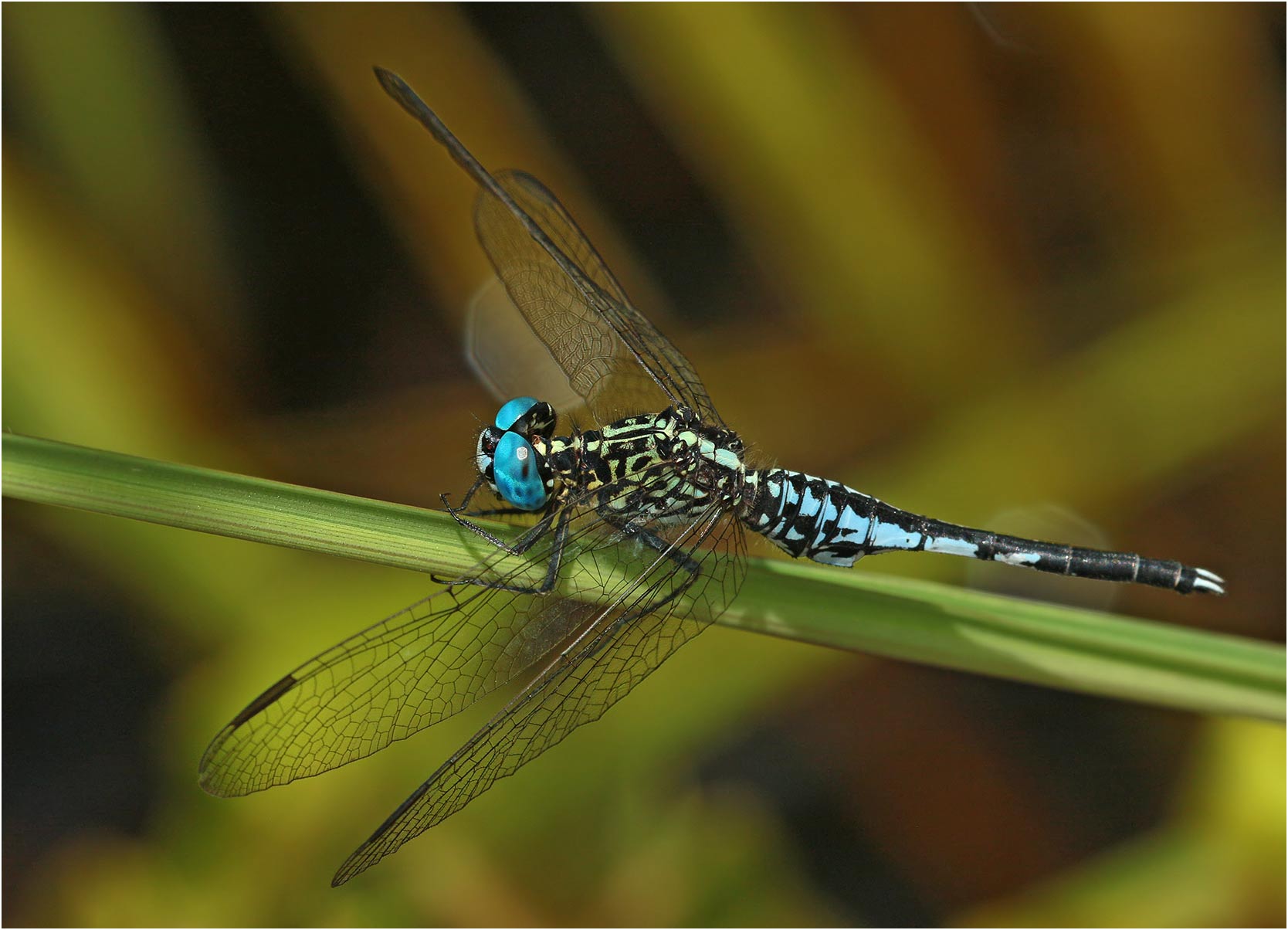
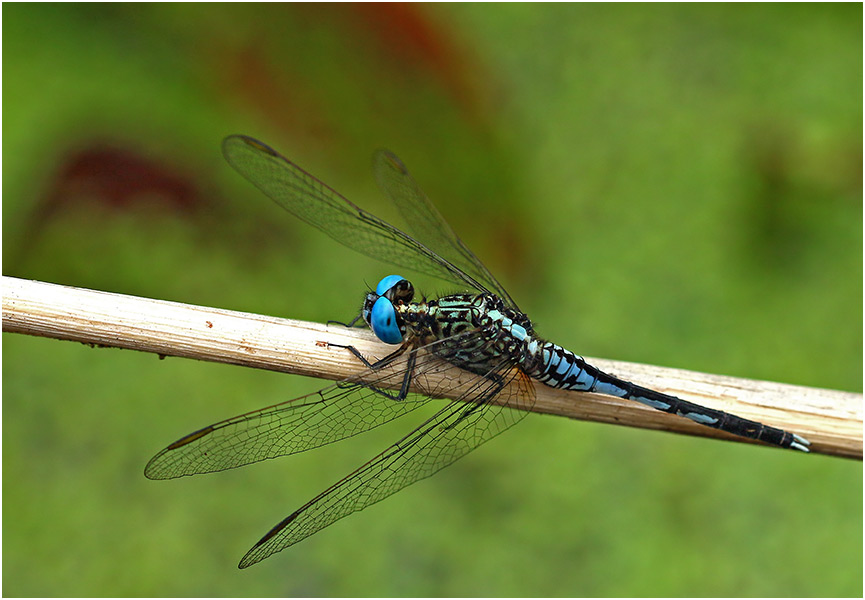
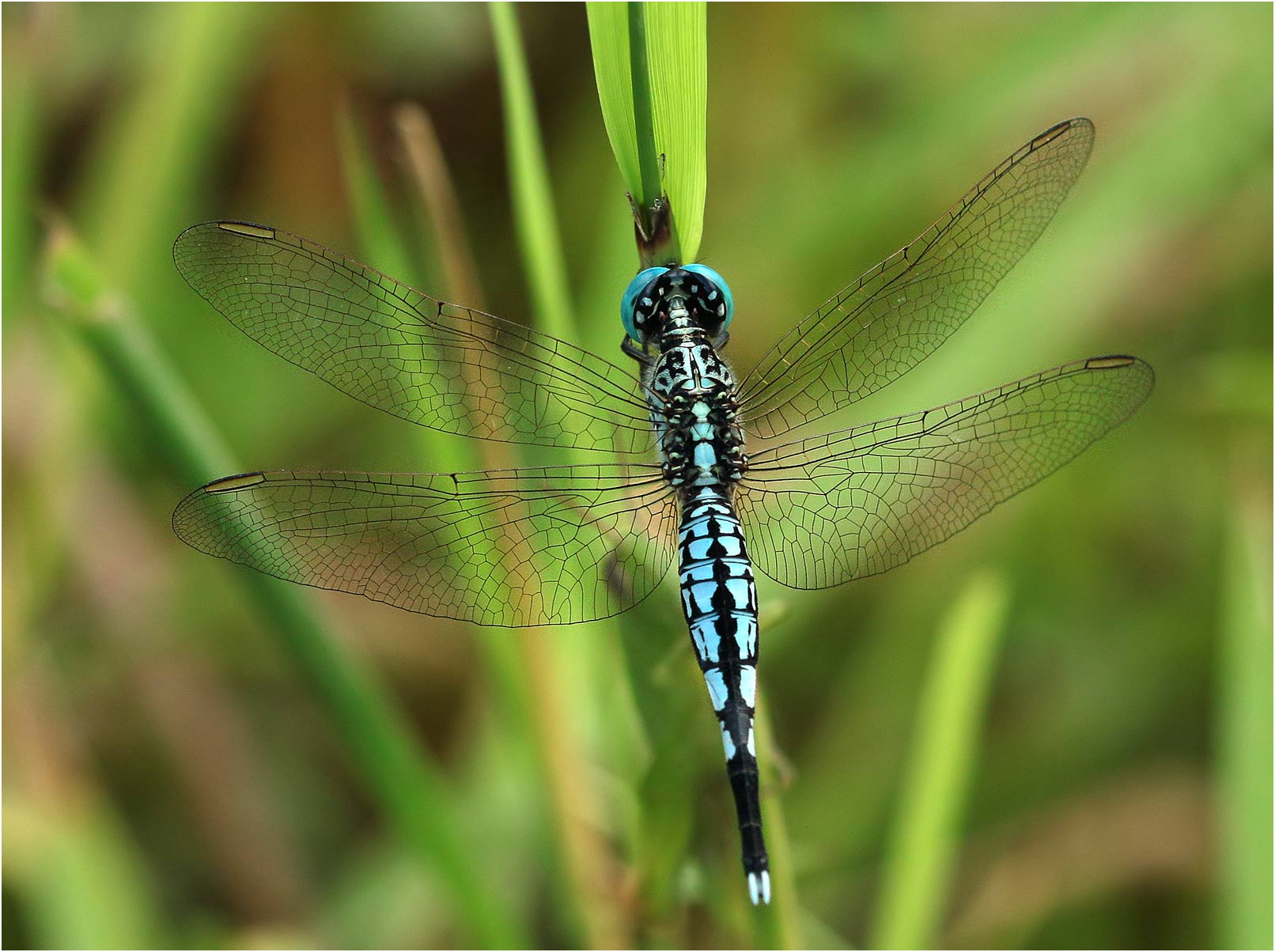
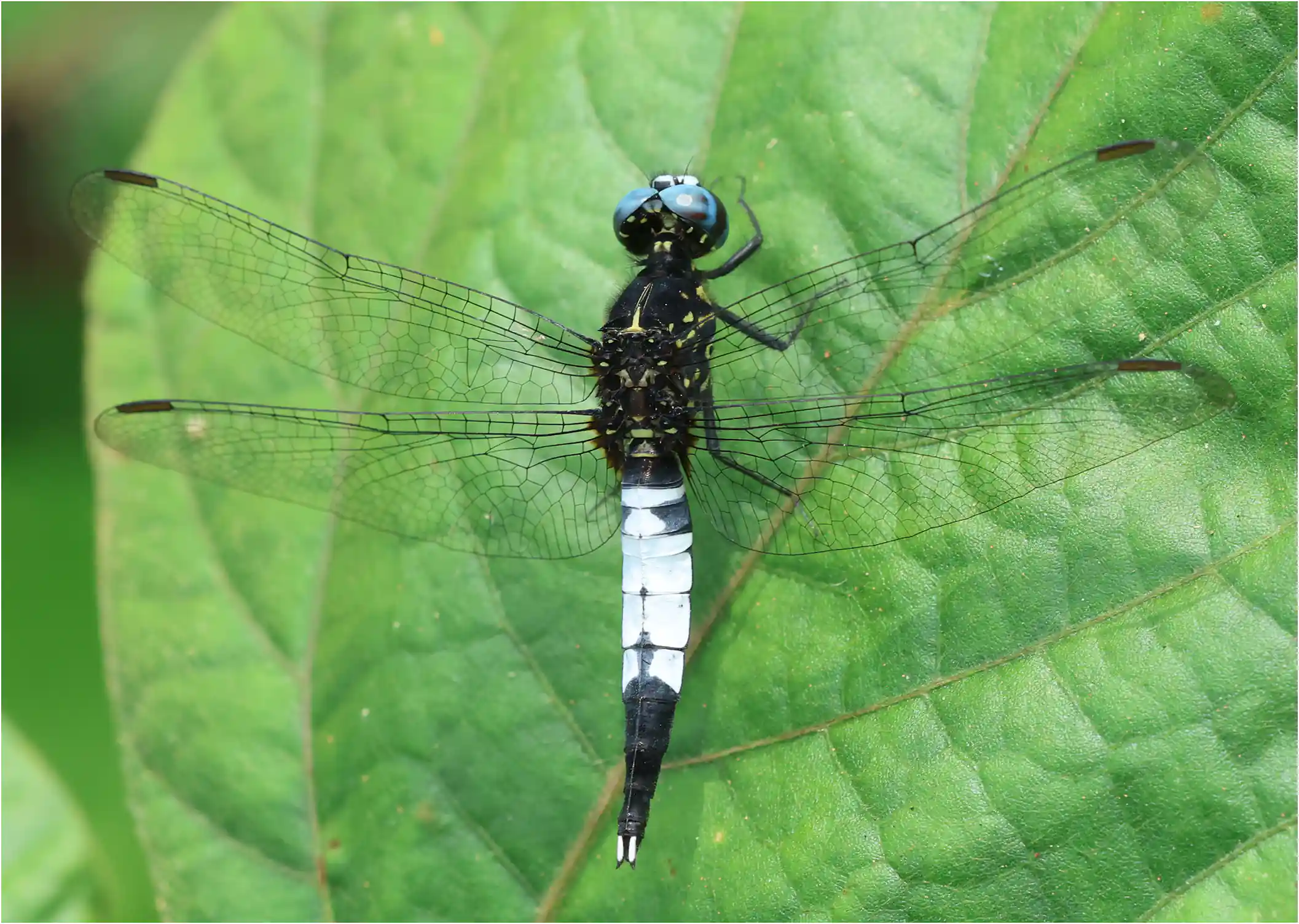
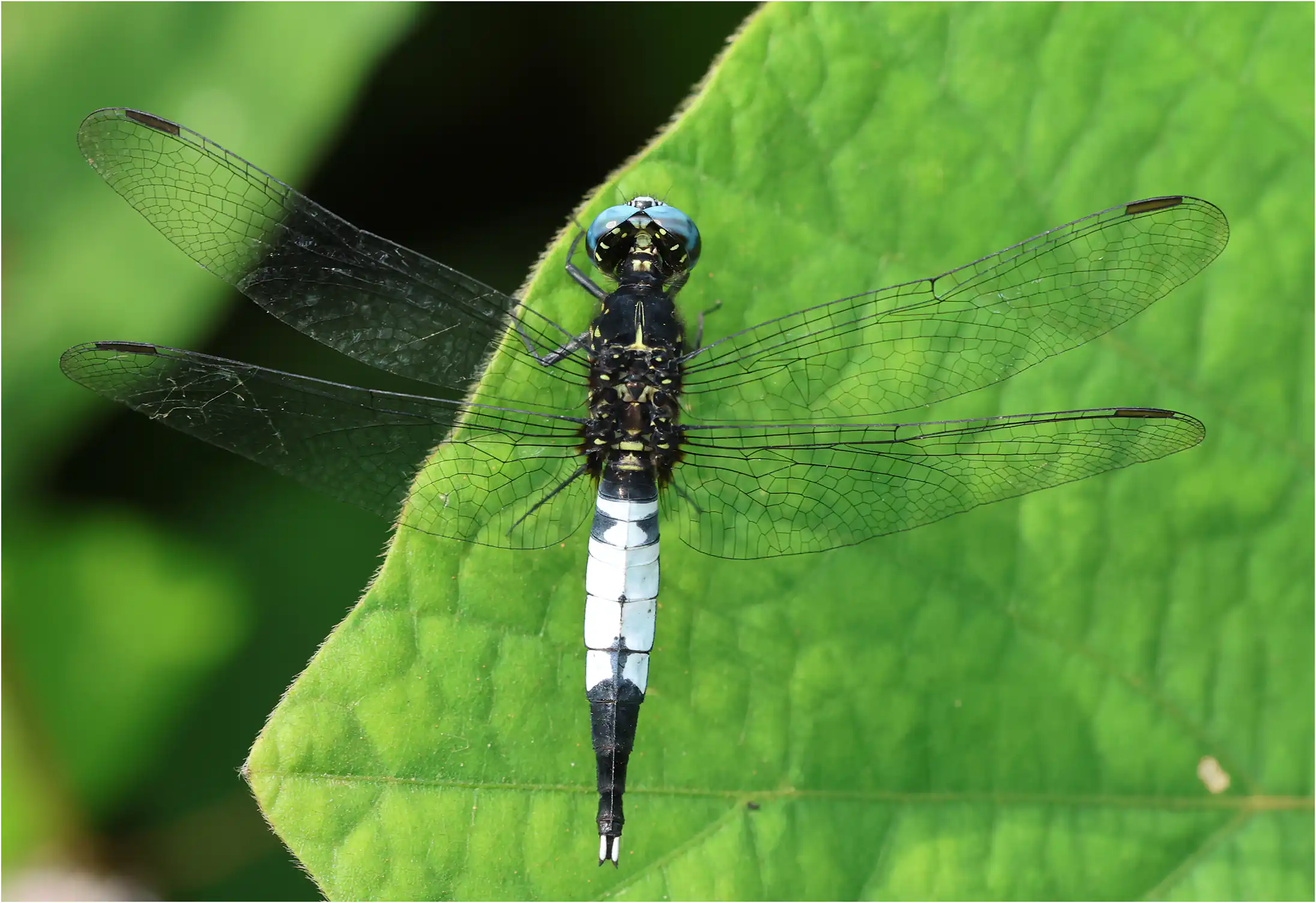
Since Mens, L.P., Schütte, K., Stokvis, F.R. & Dijkstra, K.-D.B. (2016), the genus Acisoma comprises six species: one Asian, Acisoma panorpoides, and five African, two of which, A. attenbouroughi and A. ascalaphoides, are strictly restricted to Madagascar. Until then, only two species were recognised: A. ascalaphoides in Madagascar and A. panorpoides, from the rest of Africa to Asia.
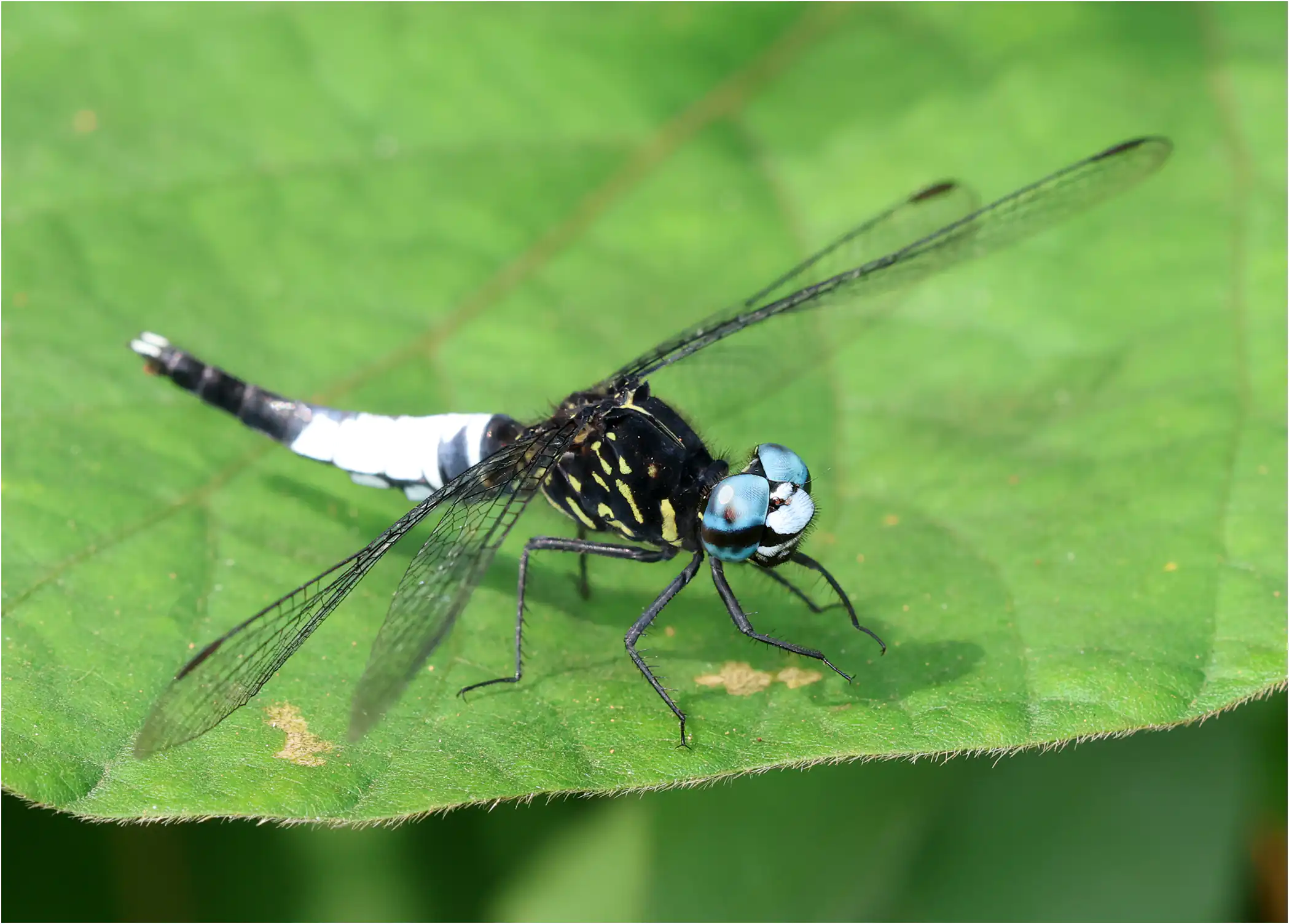
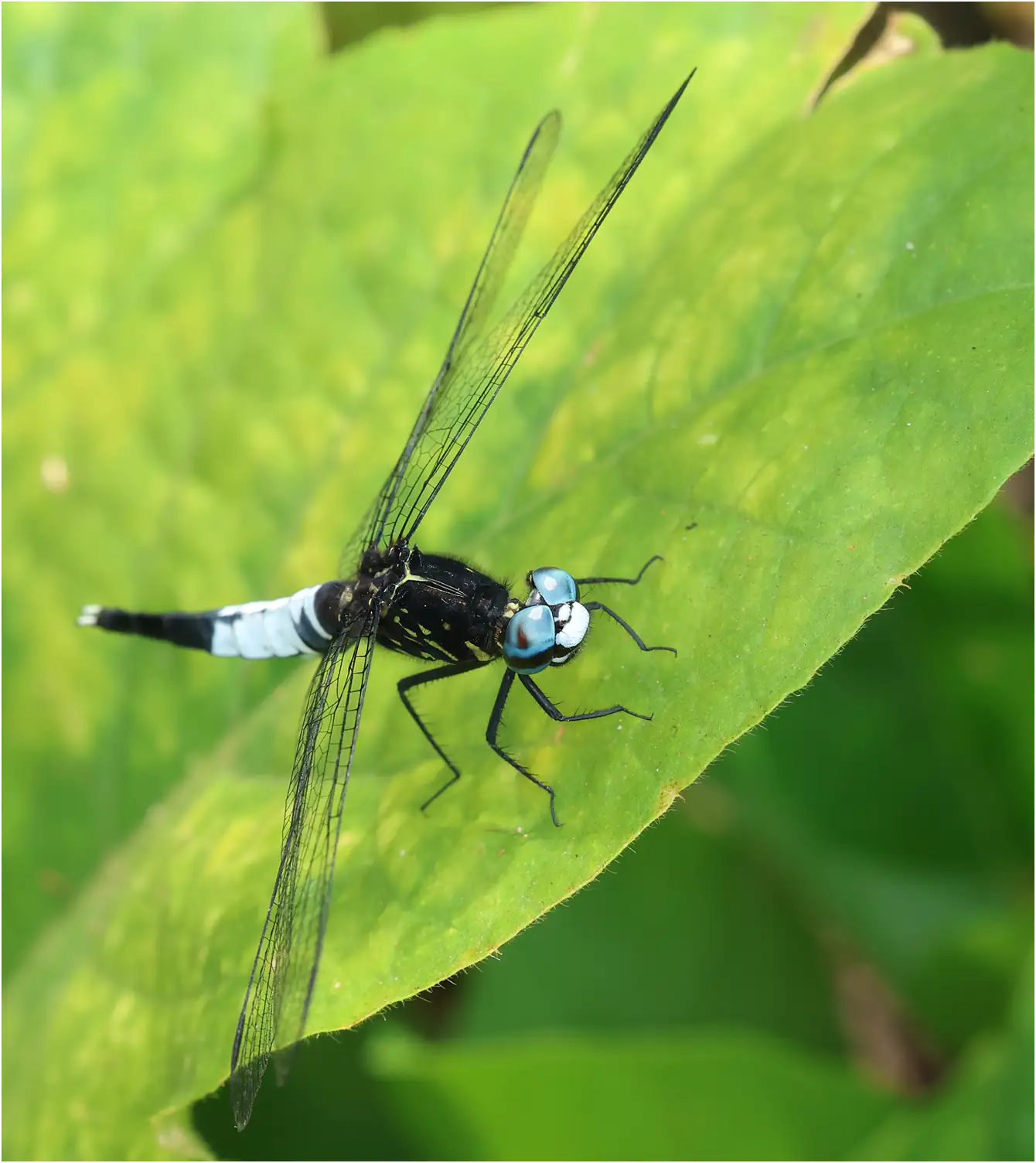
However, Acisoma trifidum is probably the easiest to separate and identify because of the contrast between its very pale abdomen and its dark thorax crossed by a series of short yellow lines, its dark face, black labrum and labium marked with white spots, with the black extending across the eye.
In 1889, Kirby had noted venation anomalies between Asian and African specimens, in particular the fact that African specimens had an incomplete last antenodal vein: "There are several doubtful forms from Africa and Madagascar, in all of which (with the exception of a specimen which I regard as the true A. ascalaphoides of Rambur) the last antenodal is not continuous." And indeed, all African Acisoma show this feature, which is less absolute in A. ascalaphoides (with only 89% of specimens). And, in the same paper, further on, he describes Acisoma trifida, which international nomenclature has changed to trifidum.
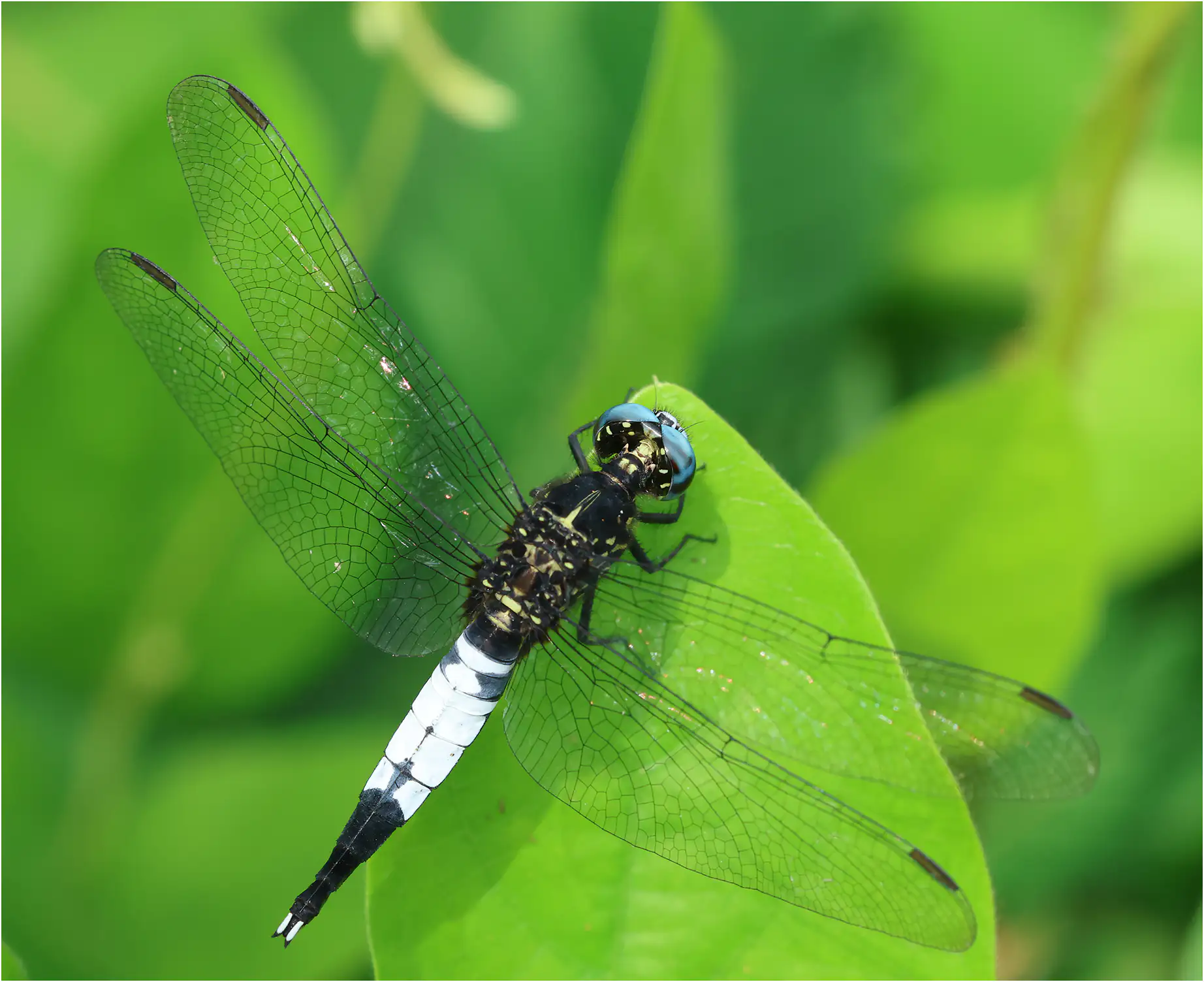
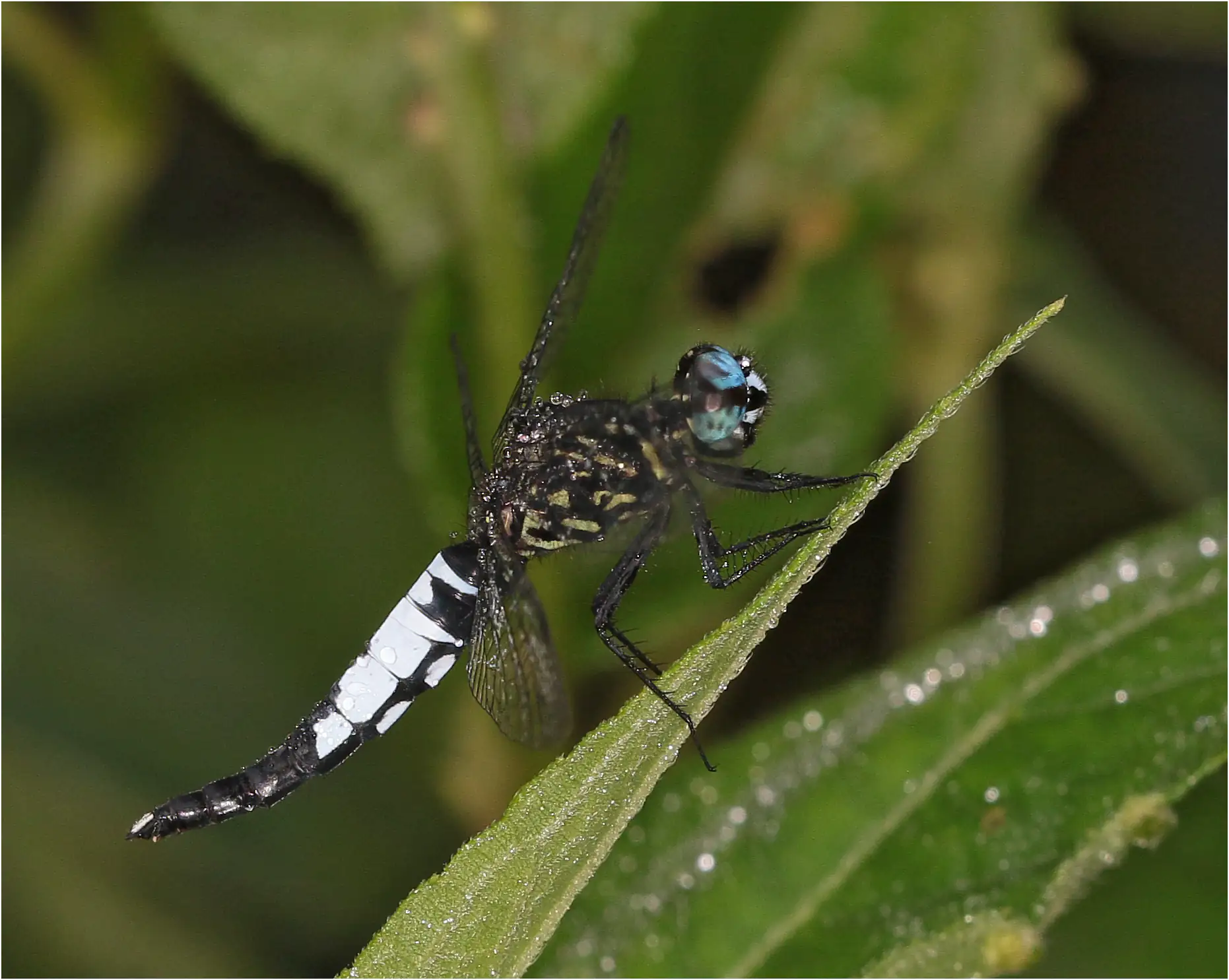
According to Kirby, the total body length is 26 mm.
It is found throughout West and Central Africa, from Senegal to Uganda, Rwanda, and northern Zambia.
IUCN Red List.
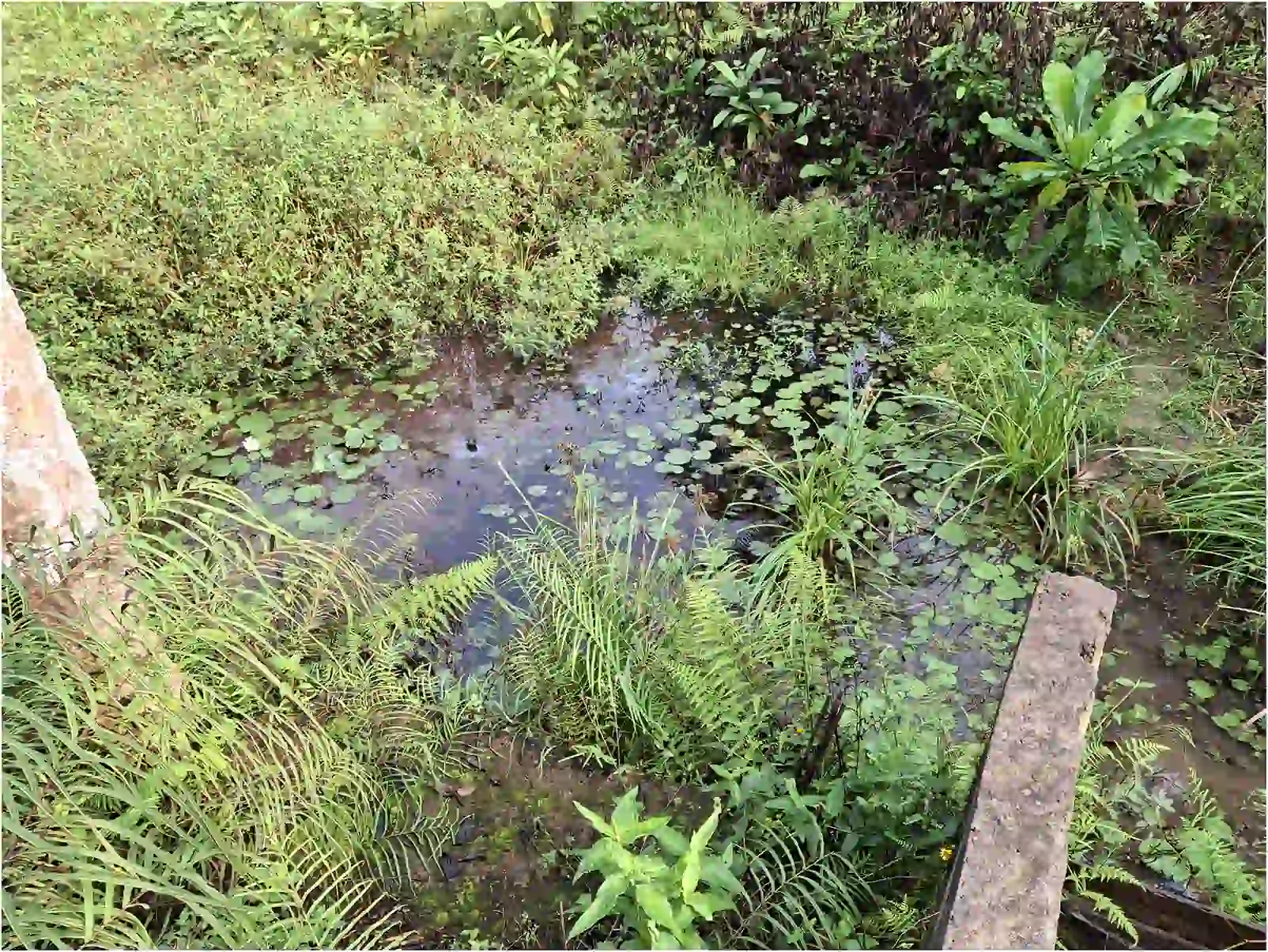
It favours more forested ponds than those of A. inflatum, with which it frequently coexists. We found it at the forest edge, then on a very small pond in open habitat (Ankasa Forest Reserve Lodge), and on a larger swampy pond—the latter two water bodies being in open habitat!
It is certainly less common than the latter in the areas we explored; we did not observe any females.
Etymology
Acisoma, from Greek akis meaning needle, arrow and from Greek sôma meaning body, in reference to the expanded shape of the first abdominal segments and the tapered shape of the last.
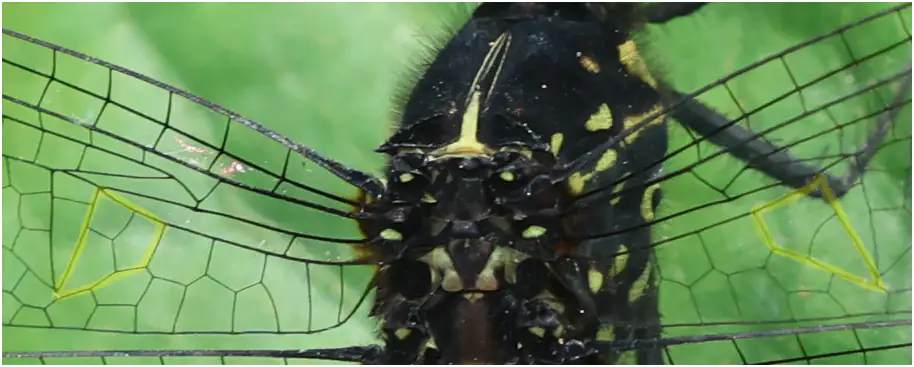
Trifidum, from the Latin adjective trifidus, meaning divided into three. Kirby indeed noted that this Acisoma trifidum had three cells in the subtriangle of the forewing, whereas the Asian species and those of mainland Africa showed only one. He did not know that in 40% of cases it has only two (this number can vary from one wing to the other, as shown by the specimen below).
In English, it is known as the Pied Pintail, i.e. a pied-coloured [dragonfly] with a pointed tail… which is quite evocative.
Kirby, 1889 - A revision of the subfamily Libellulinae, with descriptions of new genera and species. Proceedings of the
Zoological Society of London - 12 (9), 249–348.
Mens, L.P., Schütte, K., Stokvis, F.R. & Dijkstra, K.-D.B. (2016) - Six, not two, species of Acisoma pintail dragonfly (Odonata: Libellulidae) - Zootaxa, 4109 (2), 153–172.
Male Acisoma trifidum, Ghana, Amasuri Conservation Area, 2026-01-15
Kirby, 1889 - A revision of the subfamily Libellulinae, with descriptions of new genera and species. Proceedings of the
Zoological Society of London - 12 (9), 249–348.
Mens, L.P., Schütte, K., Stokvis, F.R. & Dijkstra, K.-D.B. (2016) - Six, not two, species of Acisoma pintail dragonfly (Odonata: Libellulidae) - Zootaxa, 4109 (2), 153–172.