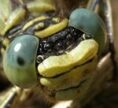
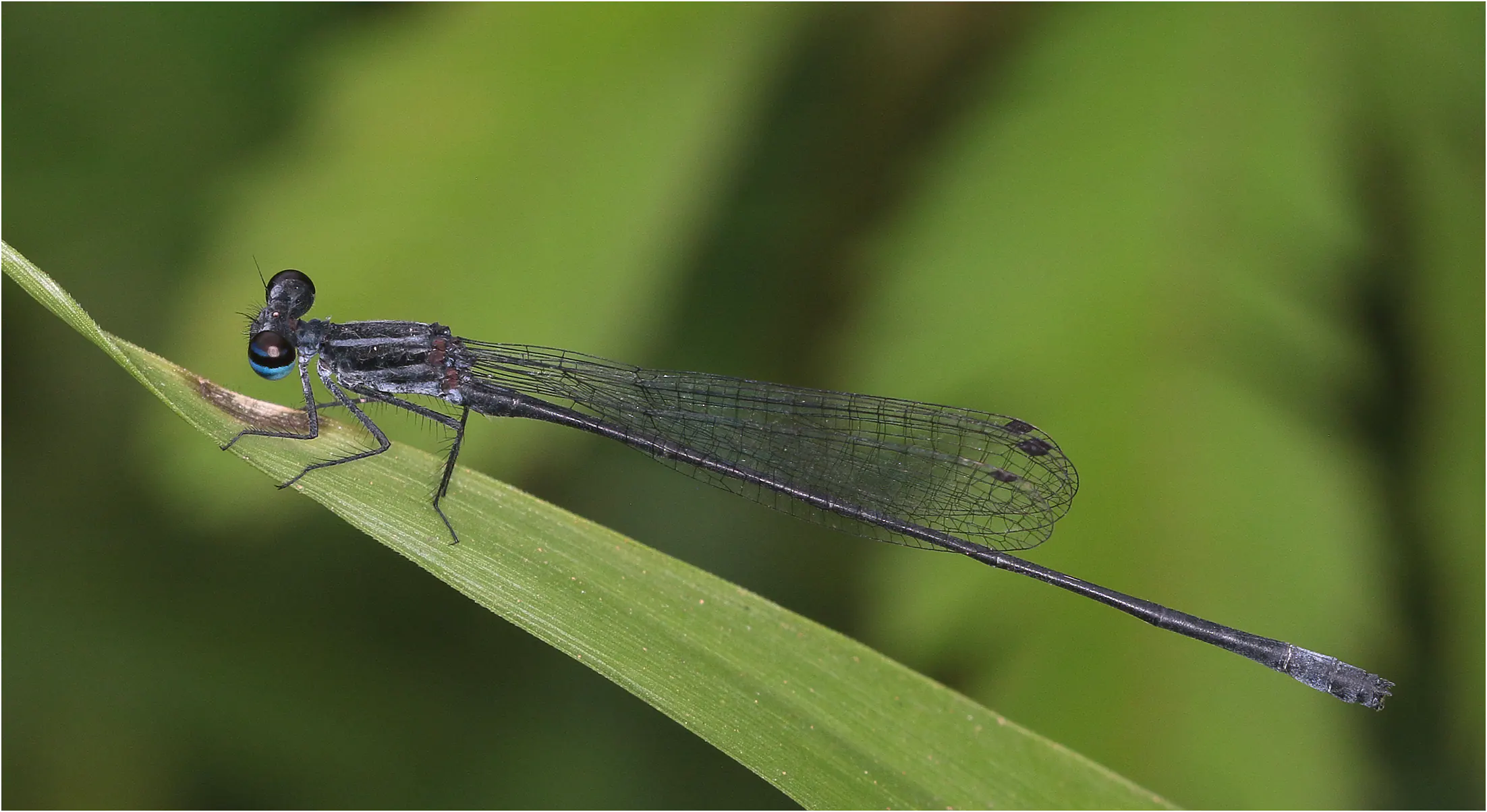
Only one encounter with a few individuals of Elattoneura nigra, Platycnemididae, near a deeply incised stream passing under the road, in a very open area.
Elattoneura is a major genus with 45 species worldwide, 30 in Africa and at least 4 in Ghana. It should be noted that the Asian species probably belong to another genus…

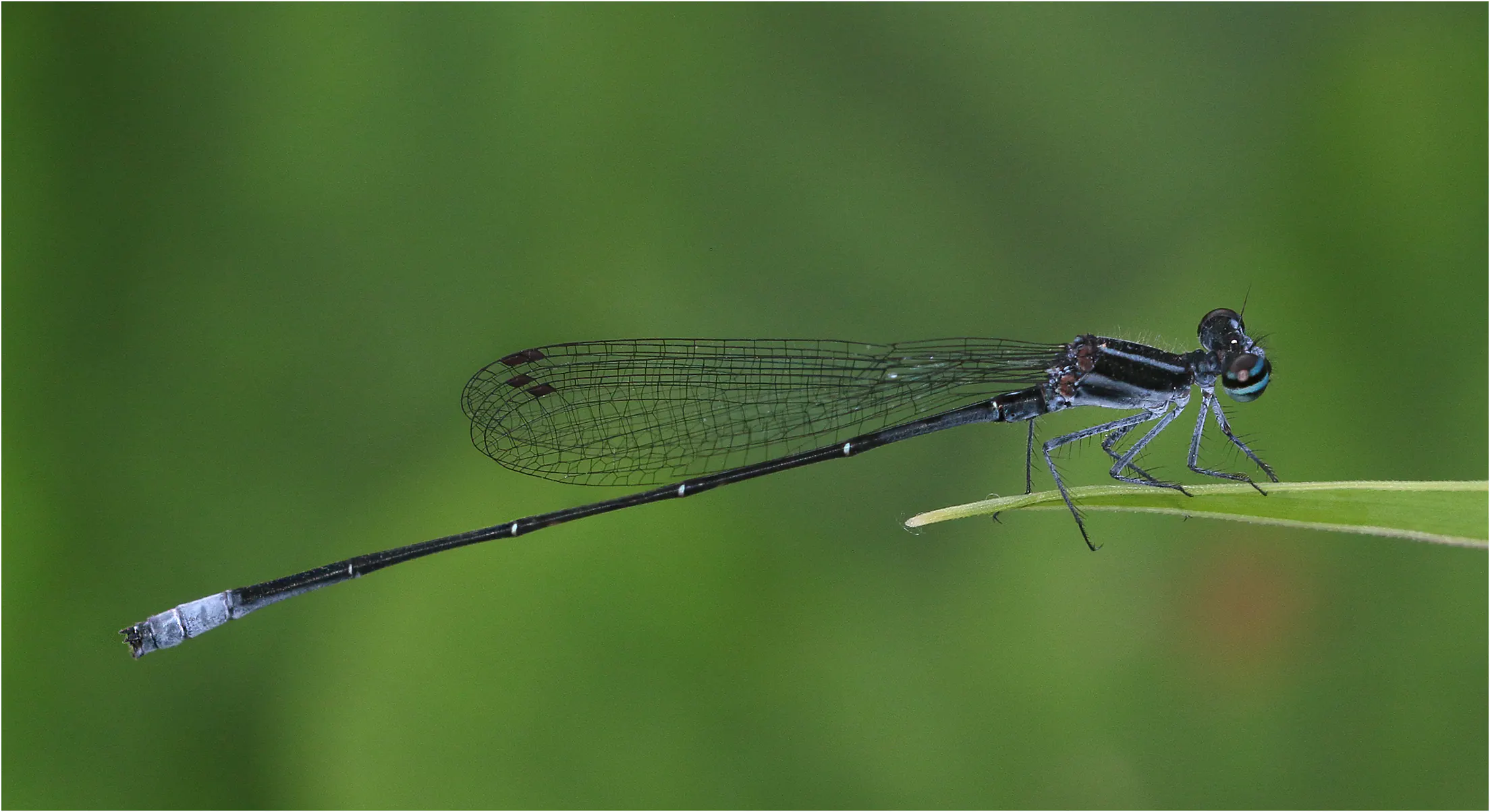
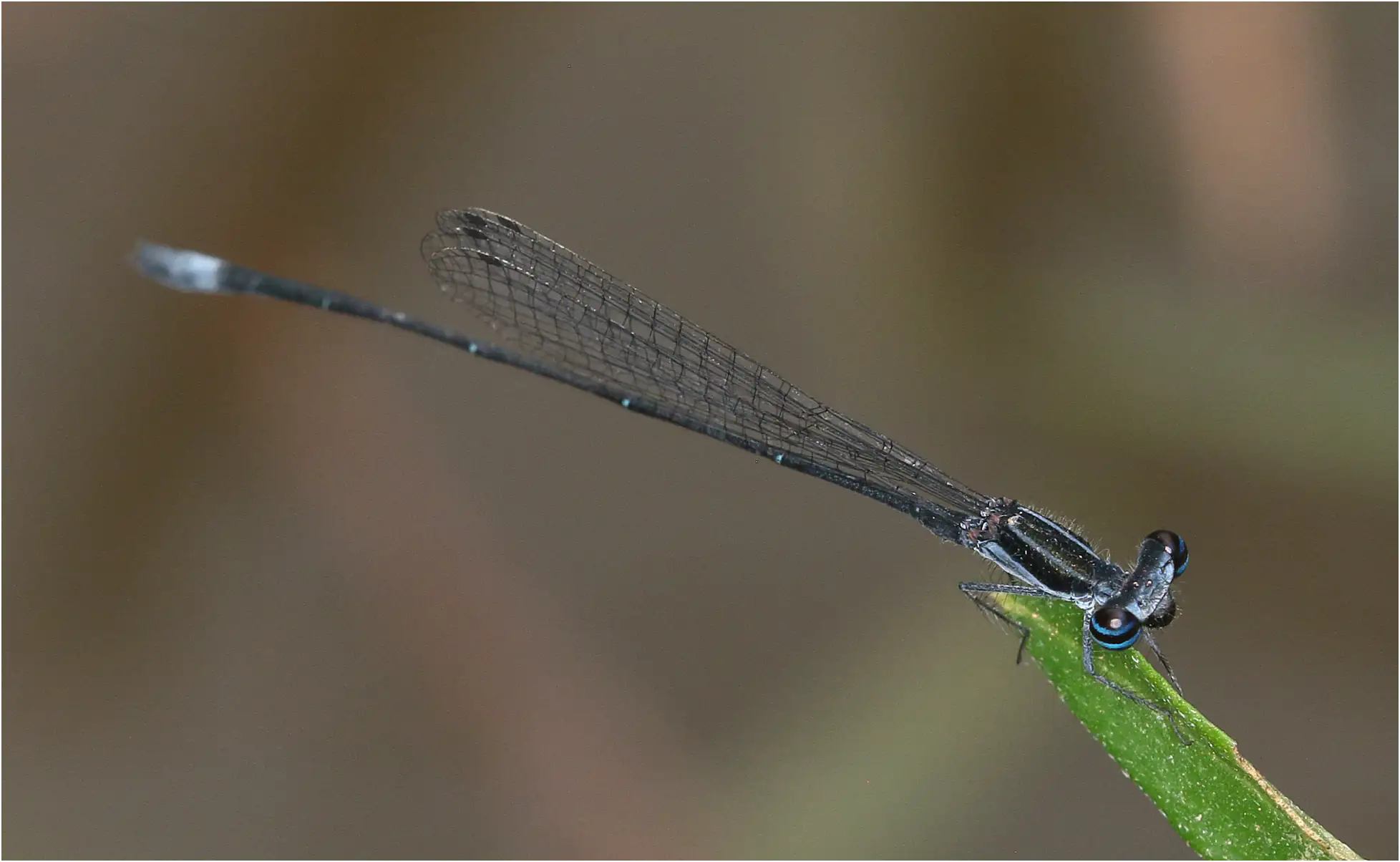
We encountered the 4 expected species. Elattoneura nigra poses no identification problem; the others either have orange legs, like E. girardi, or are pruinescent—sometimes very strongly so—on the dorsal side of the thorax, like E. villiersi or E. balli. None of the others shows these magnificent dark eyes, streaked with two blue lines.
Kimmins states that its hindwing measures 16 mm and its abdomen 26 mm, for a total length of about 32 mm.
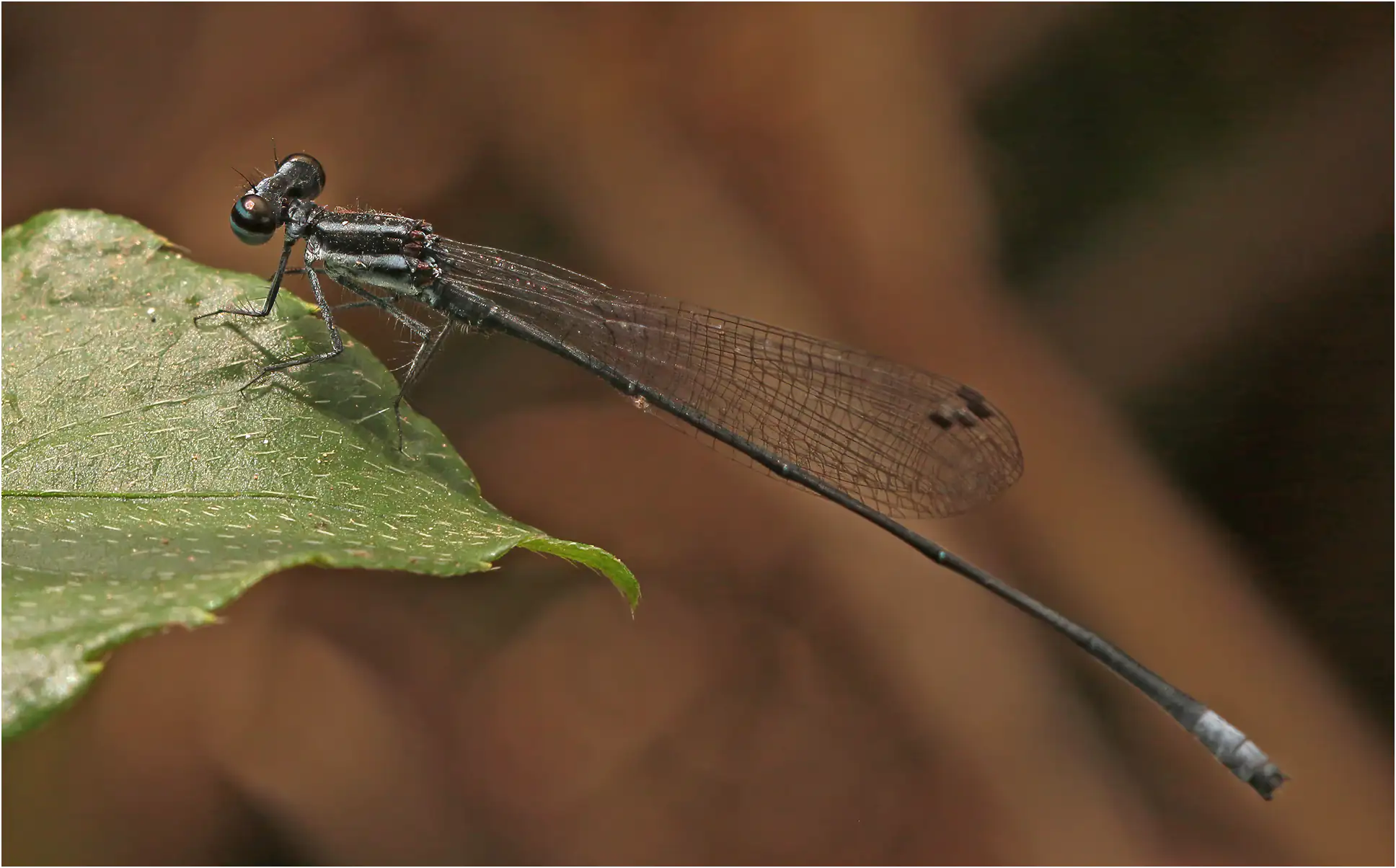
According to the ADDO (sometimes difficult to access since the site is offline and the link is a web.archive one), E. nigra is part of the glauca group, which includes species found in gallery forest or open forest; our specimens were truly at the edge of the « forest », or rather oil-palm plantations, on the outskirts of a village.
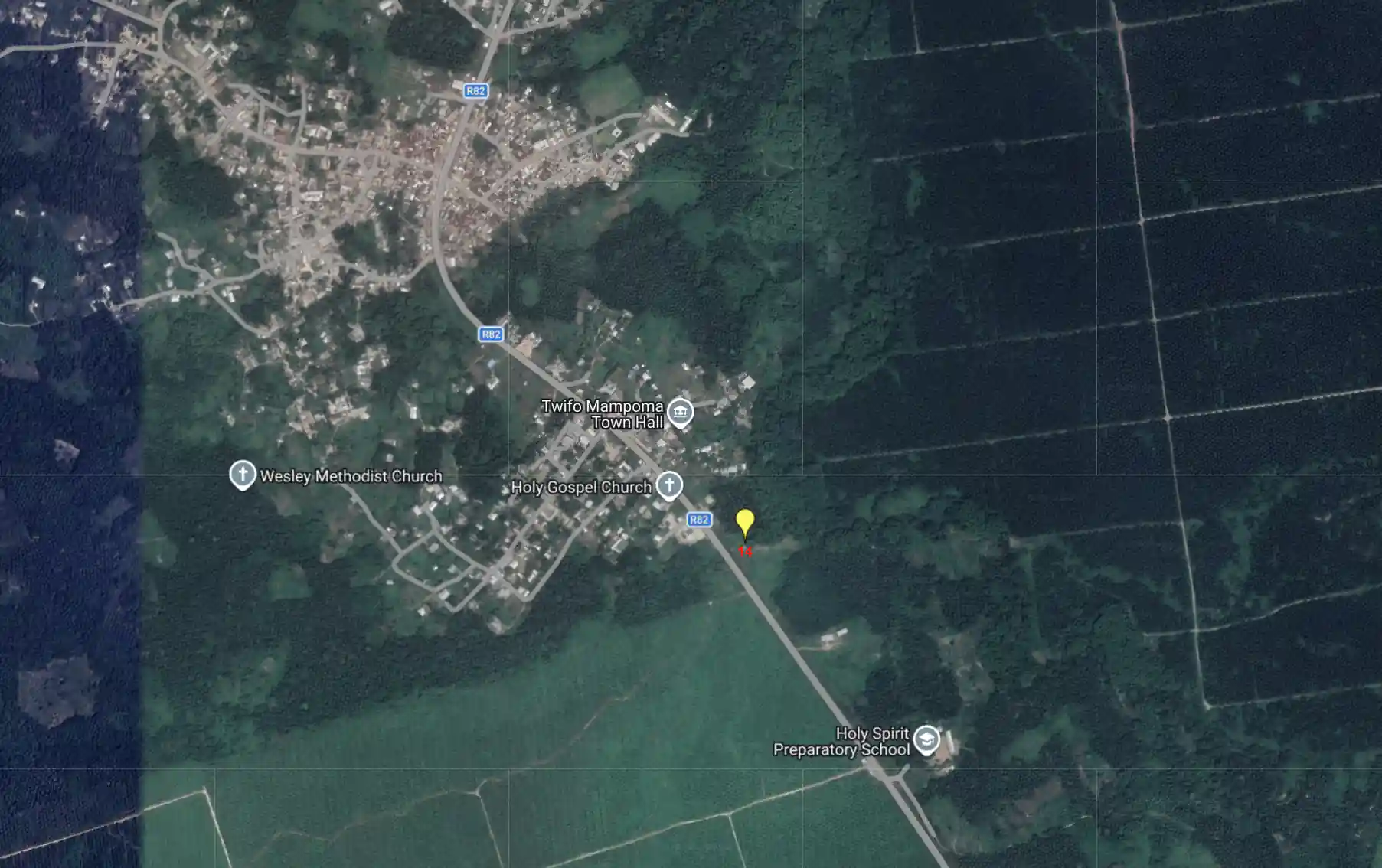
The species occurs in the Sudanian savanna, from The Gambia and Senegal to Nigeria, and as far as Uganda, across Cameroon, the Democratic Republic of the Congo and the Republic of the Congo.
IUCN Red List.
Etymology Elattoneura nigra
Elattoneura from the Greek ellaton, meaning smaller, and neuron, which in entomology is translated as a wing vein. This refers to the reduced length of a vein used as a diagnostic character in the systematics of damselflies. See Suhling & Martens (2007).
Nigra, from the Latin niger, black. Kimmins writes: « General colour black ». Its English common name is indeed Black threadtail.
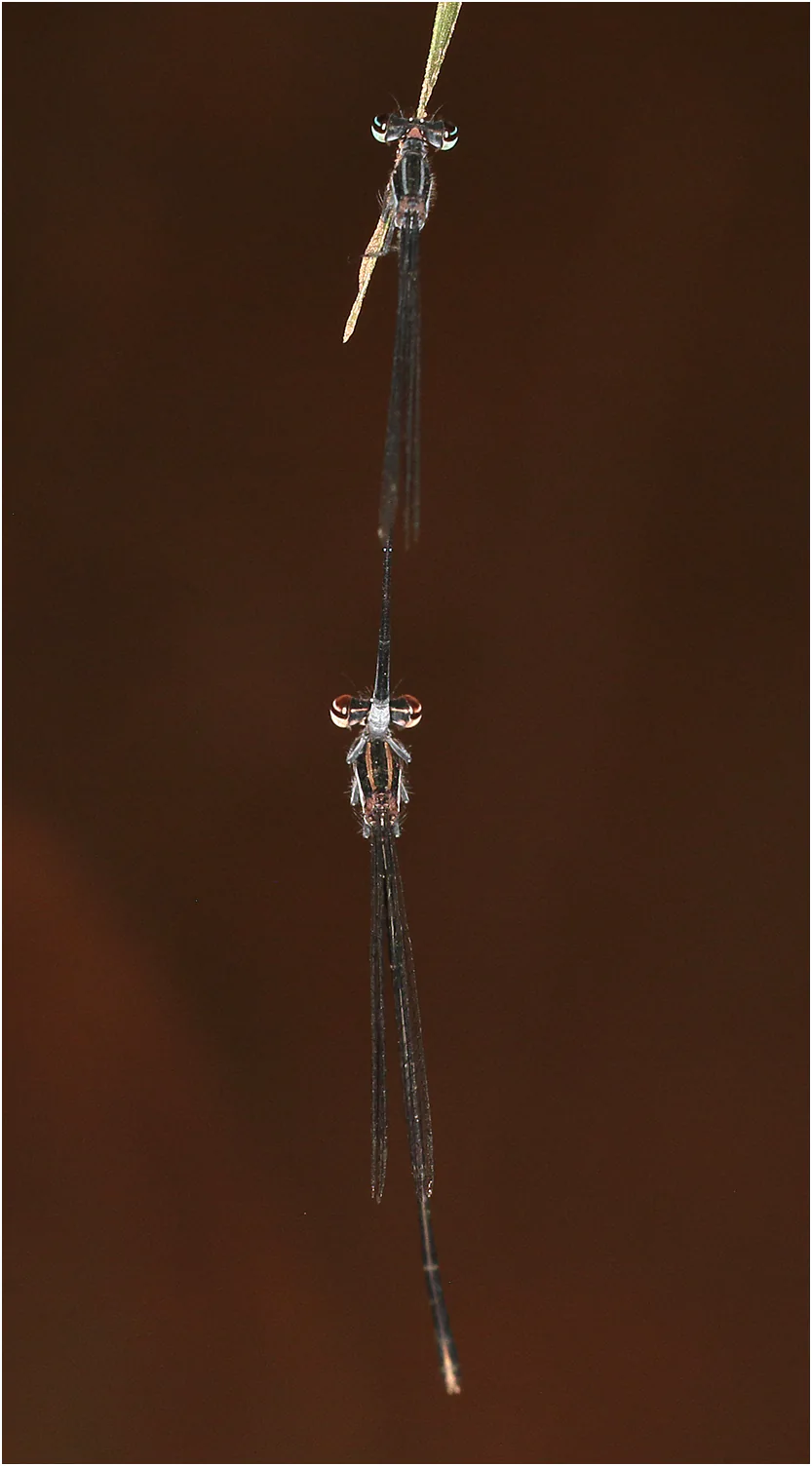
Elattoneura nigra in tandem, Ghana, Twifo Atti-Morkwa, 2026-01-20
Kimmins, 1938 – New African species of Elattoneura (Odonata) – Annals and Magazine of Natural History – Series 11 – Volume 1 – Issue 3 – p. 297.
Frank Suhling & Andreas Martens, 2007 – Dragonflies and Damselflies of Namibia, Gamsberg Macmillan.