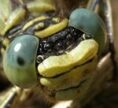
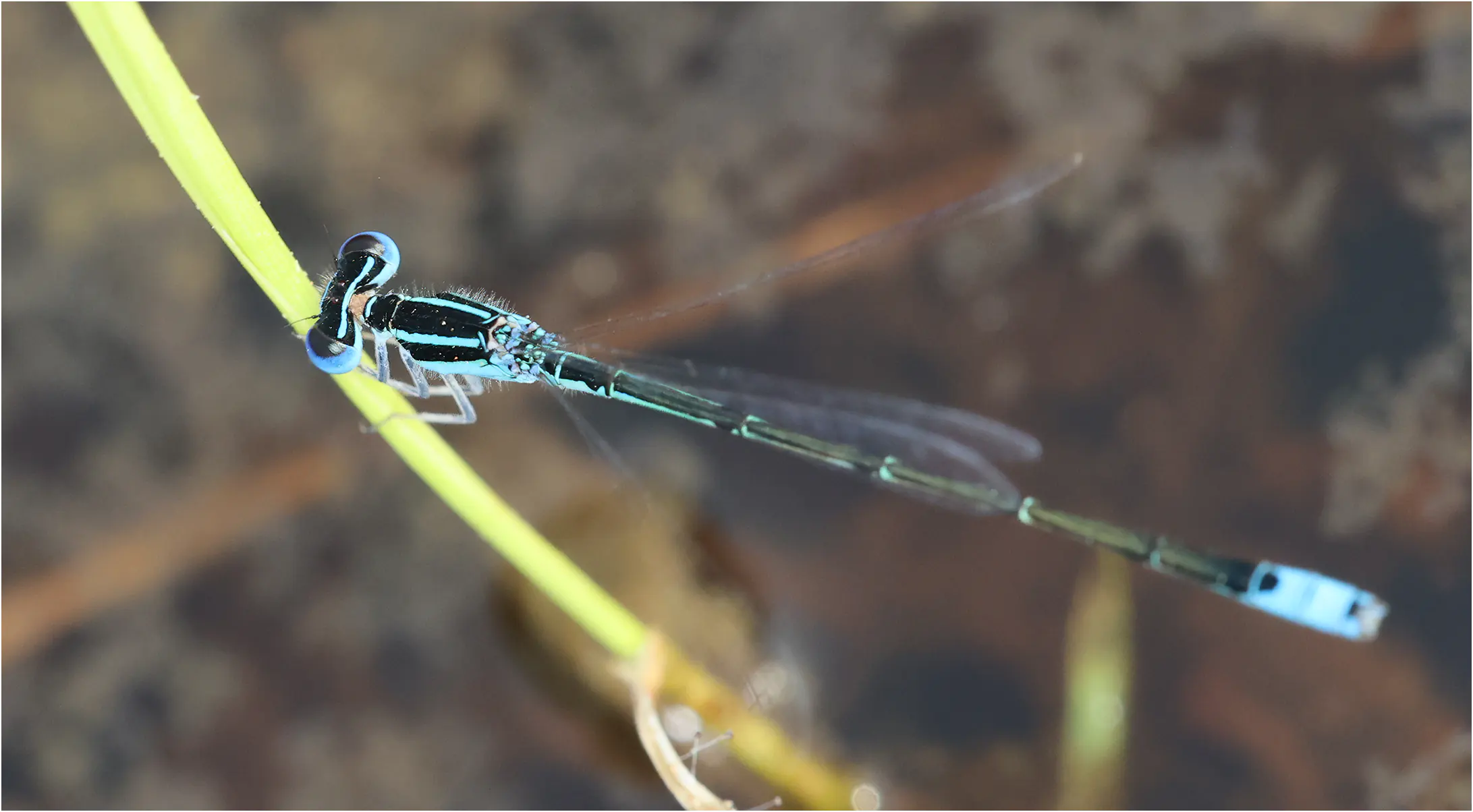
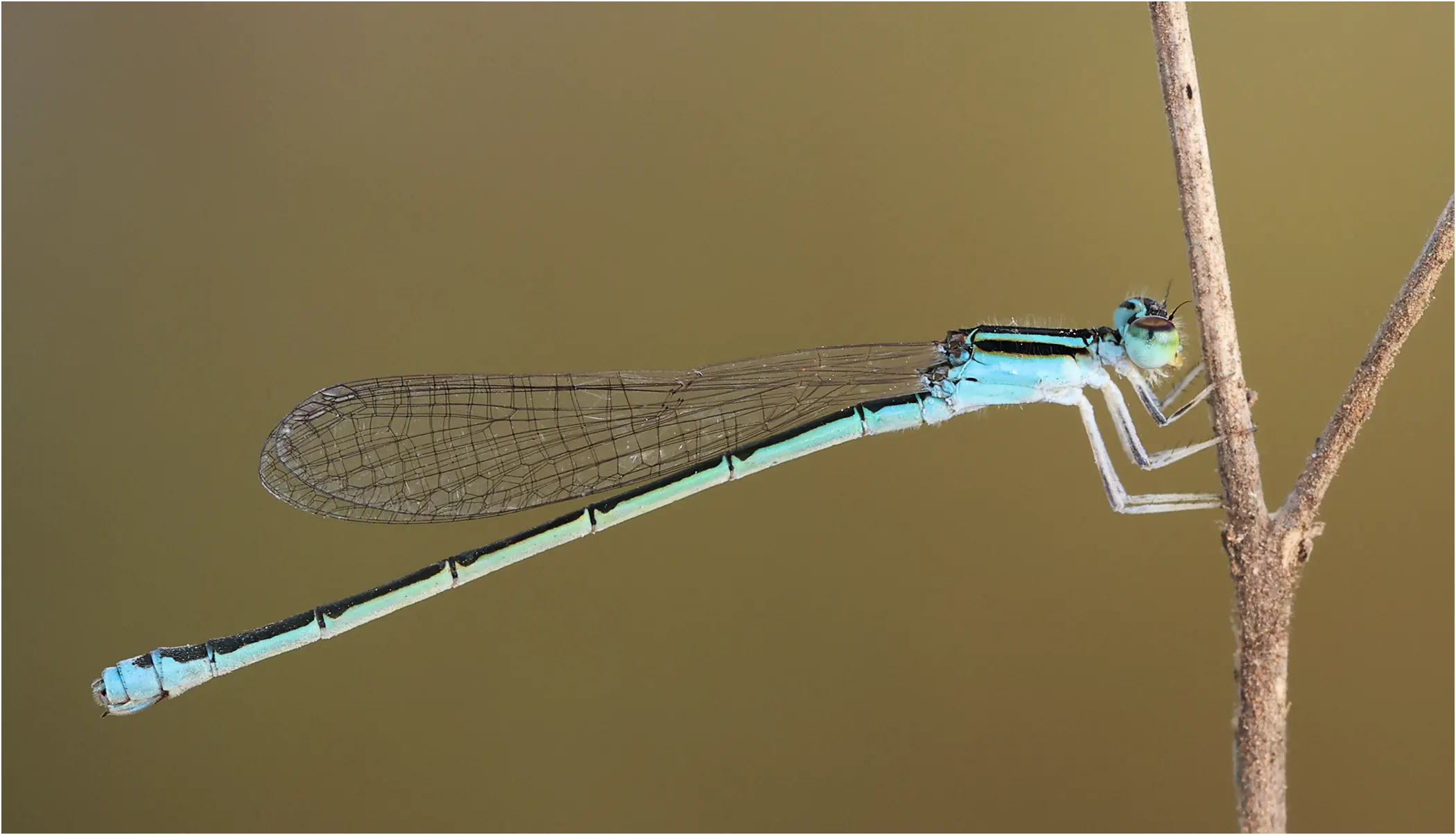
Azuragrion vansomereni, Coenagrionidae, belongs to a genus comprising 6 species; it is one of the smallest with a hindwing of 11 to 14 mm, for a total length of approximately 21 to 23 mm. English speakers call it the Tiny bluet.
When viewed in profile (better seen on the female below), there is an almost total absence of black lines on the metapleural and interpleural sutures, a detail that would typically classify it among the Enallagma; this is what Pinhey did in 1956, and it was May in 2002 who reorganized the African Enallagma or Africallagma (and other related genera) and moved it into this genus.
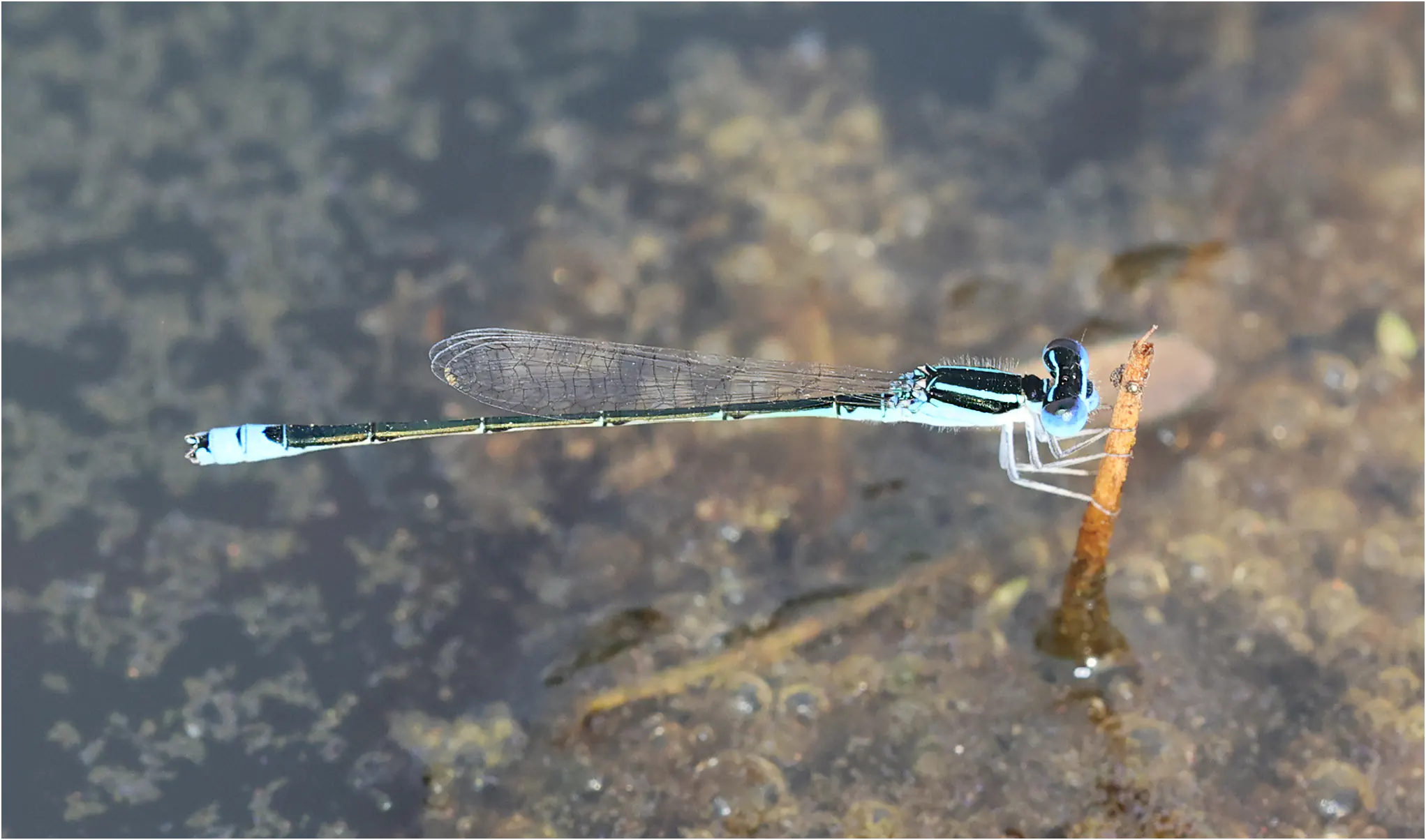
In Ghana, there is only one Azuragrion, which facilitates identification; otherwise, it is visually very similar to A. nigridorsum. The difference lies in the anal appendages; for Azuragrion vansomereni, the cerci are significantly longer than the paraprocts, whereas they are of equal size for A. nigridorsum.
The distribution of Azuragrion vansomereni covers a vast Sahelian belt extending from West Africa (Senegal) to Central and East Africa; the species formerly reached central Saudi Arabia, where it is now extinct following the destruction of its habitats.
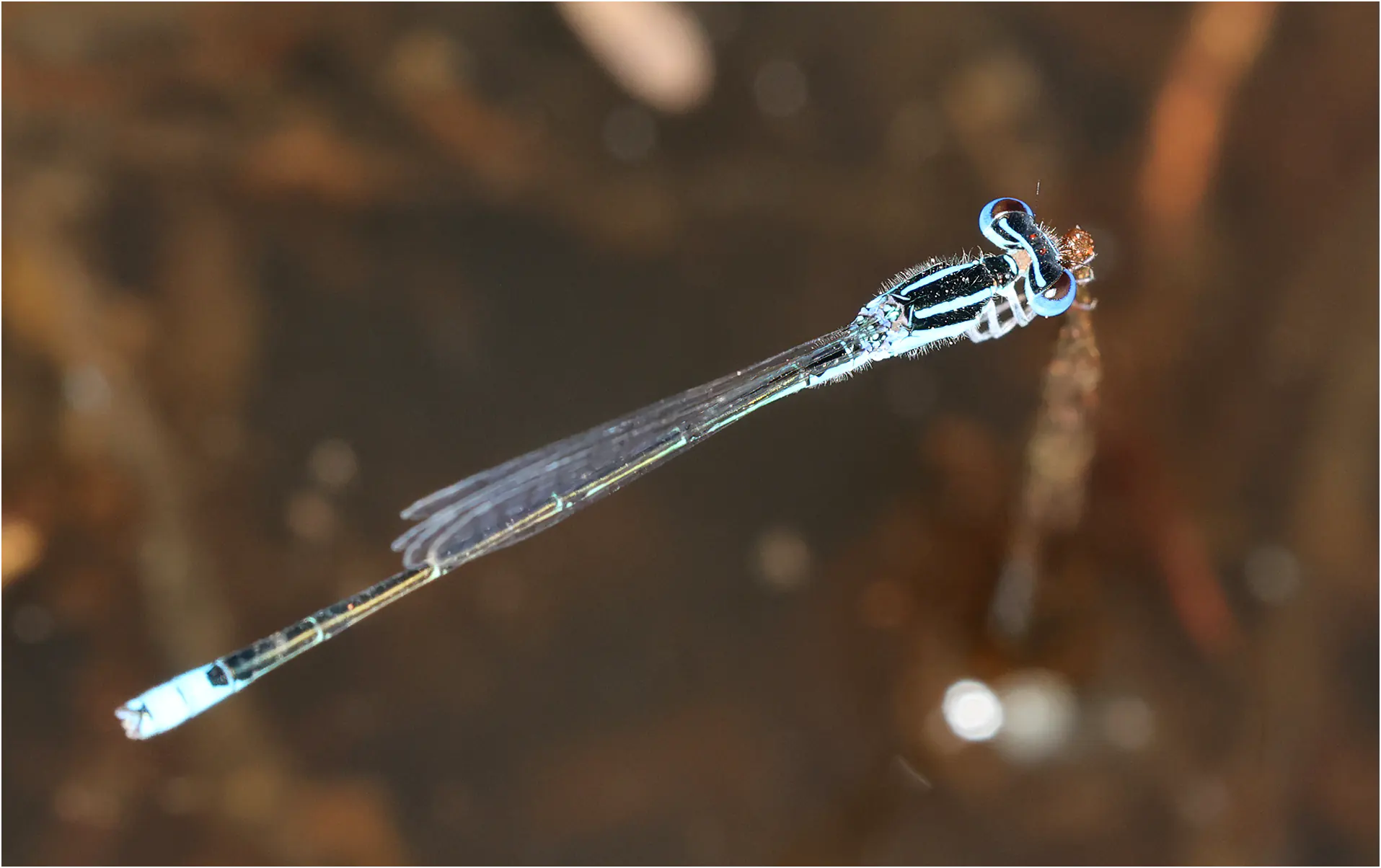
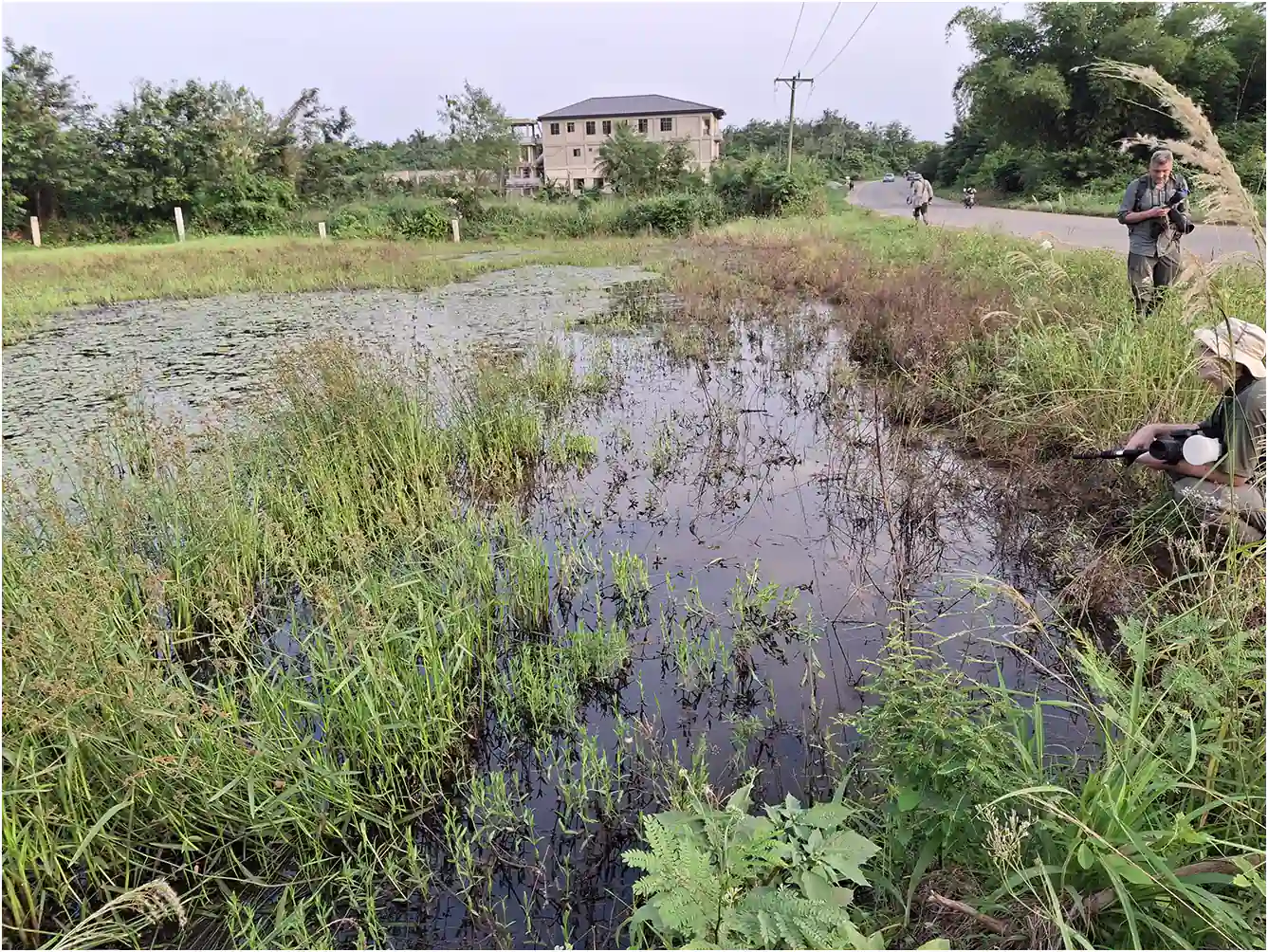
They are found on still waters or very slow currents with emergent vegetation. We encountered them, in very small numbers, on a shallow pond. They proved difficult to approach because they perch on grasses or emergent twigs at water level, or even directly on the water, and are sensitive to the slightest movement of their support or the observer.
They shared this space with a few Diplacodes luminans and Lestes dissimulans; we did not see these three species anywhere else.
We saw only one female, very briefly. Apart from Ischnura elegans and Lestes dissimulans, these were the only damselflies present on this pond. The identification of this female is therefore certain, as we find the absence of black marks on the thoracic sutures and the blue line crossing the postocular space.
Etymology
Azuragrion is composed of the Latin azureus, for blue, and agrion, from the Latin agrios, living in the fields, wild, so often used to signify membership in the Coenagrionidae family. And, indeed, all Azuragrions are blue (and black).
Vansomereni is a tribute to Victor Gurner Logan van Someren, a British entomologist who collected specimens during the colonial period in Kenya and Uganda. He passed his collections to Pinhey, specifically this specimen from Uganda which the author would describe as Enallagma vansomereni.
May, 2002 - Phylogeny and taxonomy of the African genus Azuragrion with description of a new genus, Africallagma (Odonata: Coenagrionidae). Odonatologica, 31(3), pages 285–301.
Pinhey, 1956 - Some dragonflies of East and Central Africa and a rarity from Mauritius - Occasional Papers of the Coryndon Memorial Museum - Volume 4, pages 17–41 [paid access].