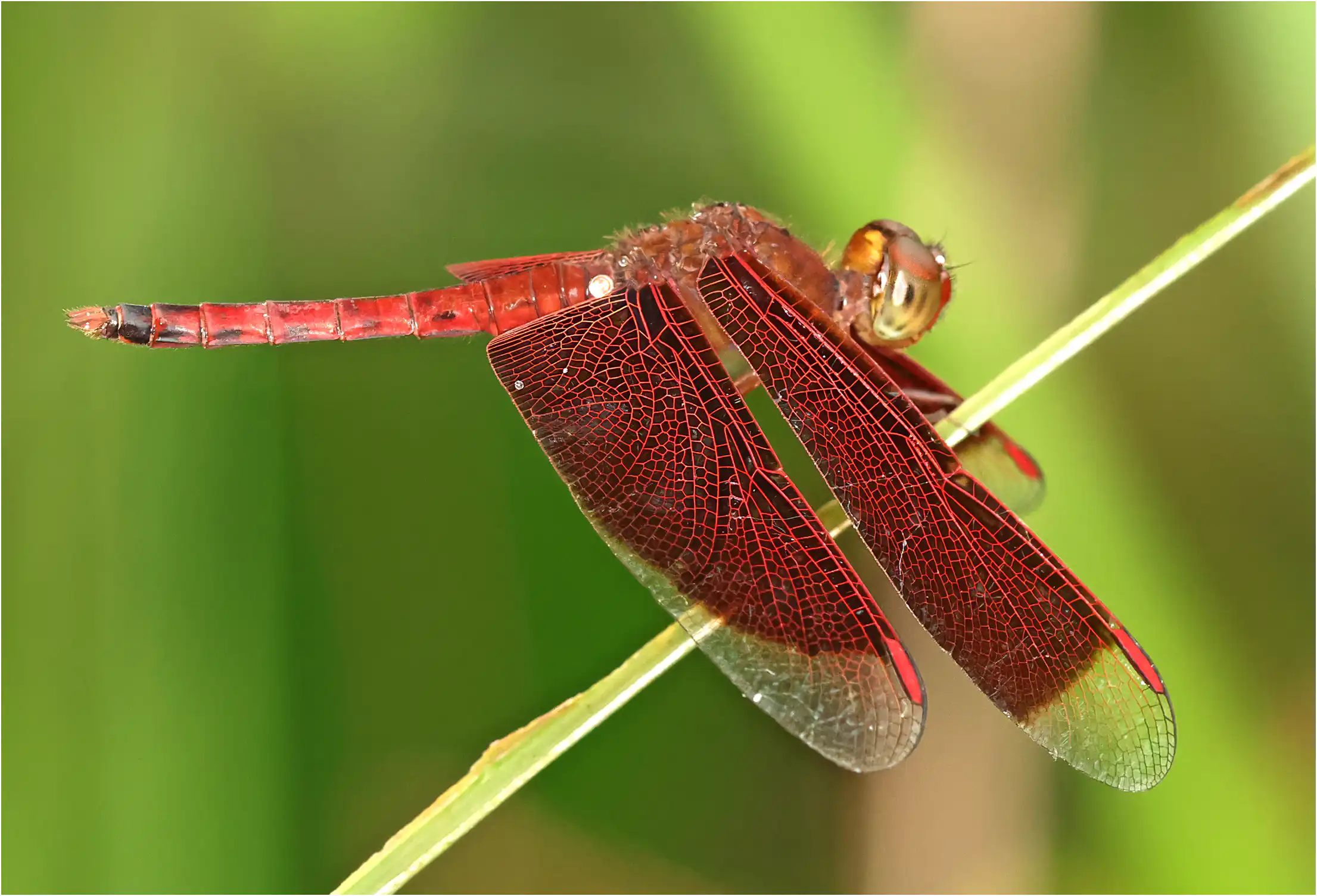
Identification of males of Neurothemis fluctuans
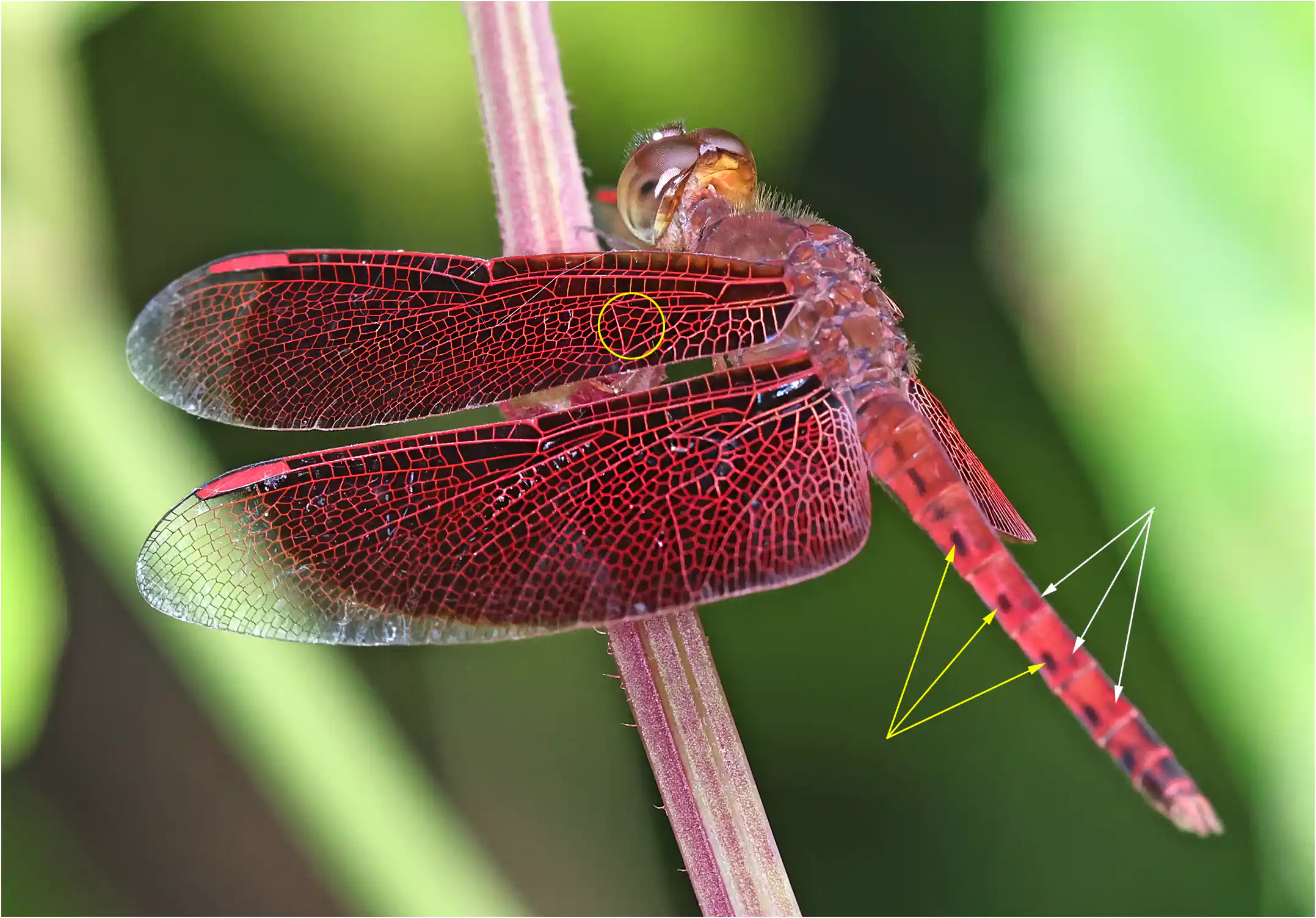
Neurothemis fluctuans is one of the three Neurothemis in Sarawak. It differs from N. ramburii and N. terminata by its small size, 22 to 25 mm (1), its abdominal markings and its venation. These details are highlighted below:
- The number of cells in the forewing triangle is small (yellow circle), about 4 to 7 (5 below, 7 above)
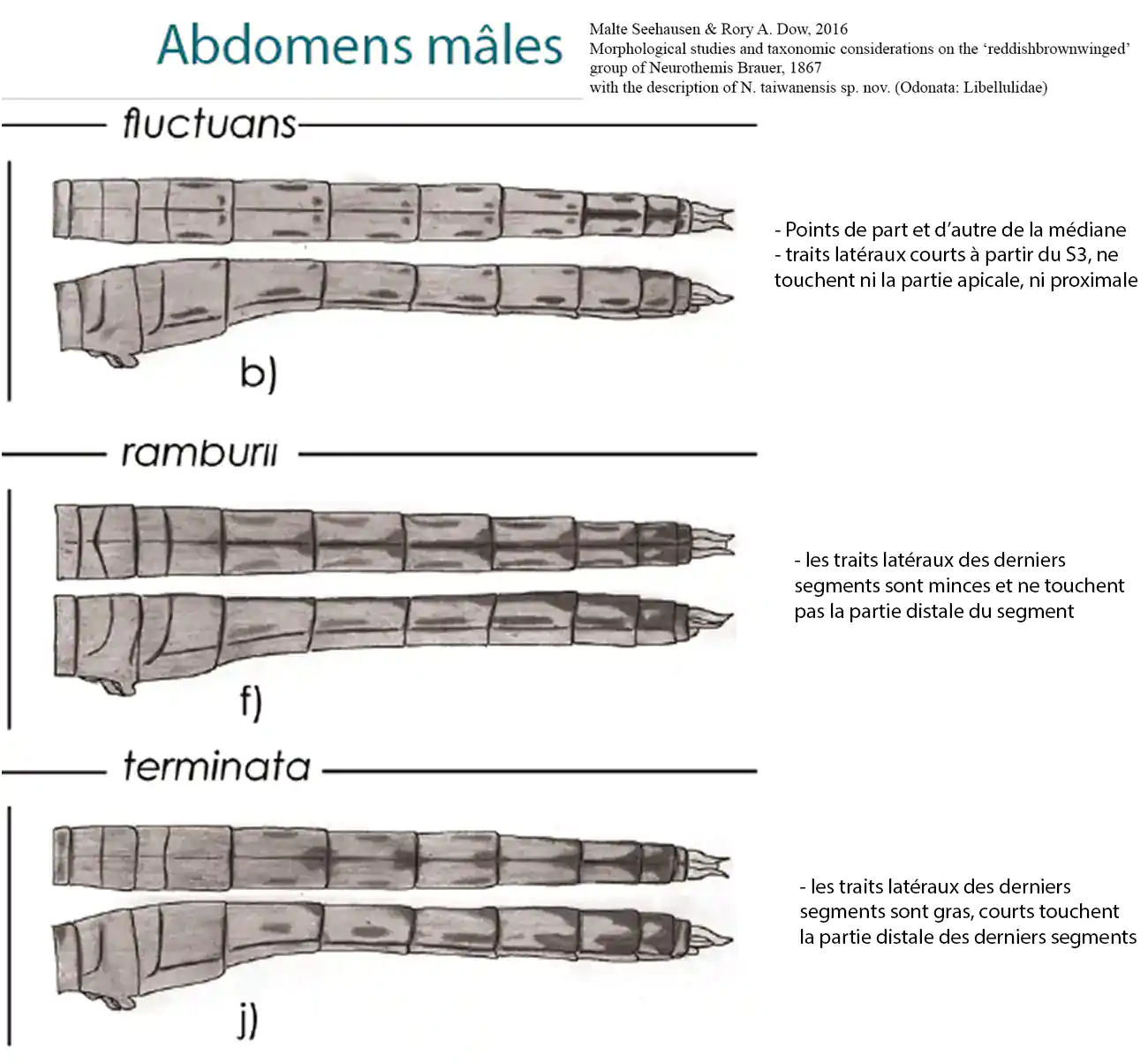
- On either side of the abdominal dorsal carina, there are pairs of spots (white arrows), more or less discreet; these spots are not visible for the other two species, the colouration at this level being blended with the spot at the apex of the segments
- The lateral markings on the abdomen (yellow arrows) are small and centered in the segments.
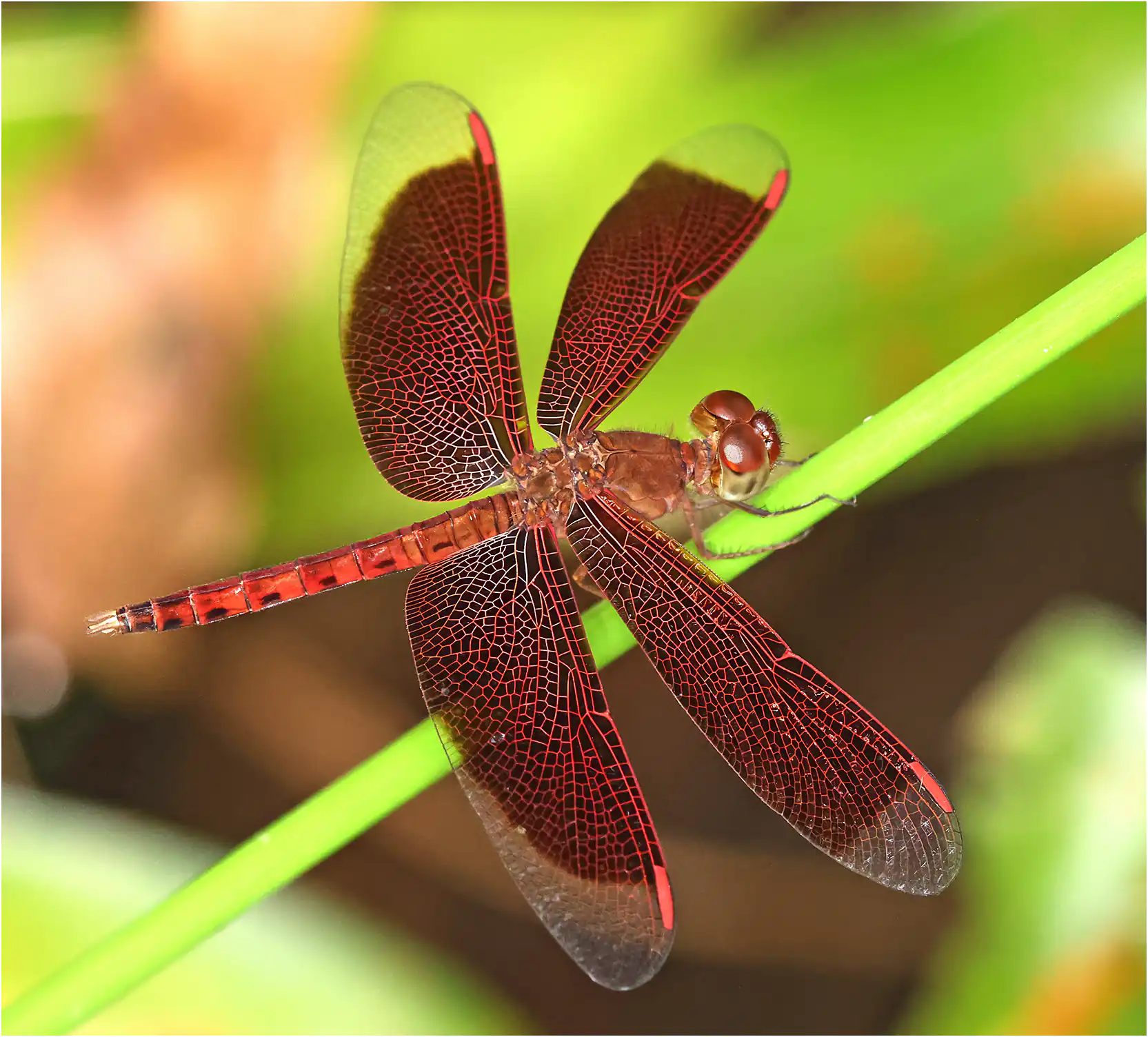
Wing colouration can be close to that of N. ramburii (eight cells in the wing triangle of this specimen from Sarawak), which is also very variable, with the hindwing maculation being very rounded. On the other hand, it is far removed from that of N. terminata (12 cells in the triangle of this specimen from Sarawak) for the hindwing, for which it resembles that of the forewing, reaching the posterior margin of the wing in a straight line.
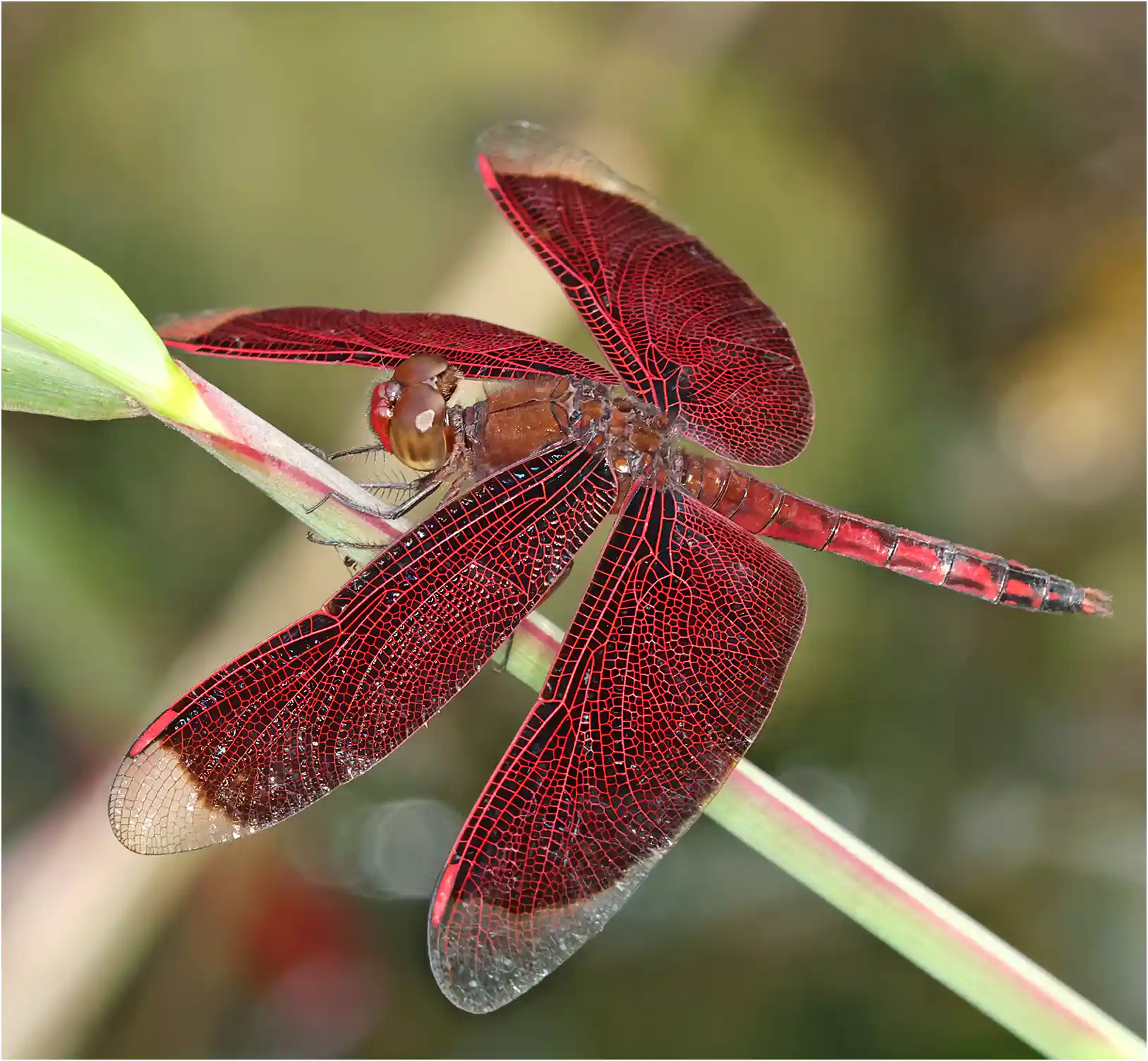
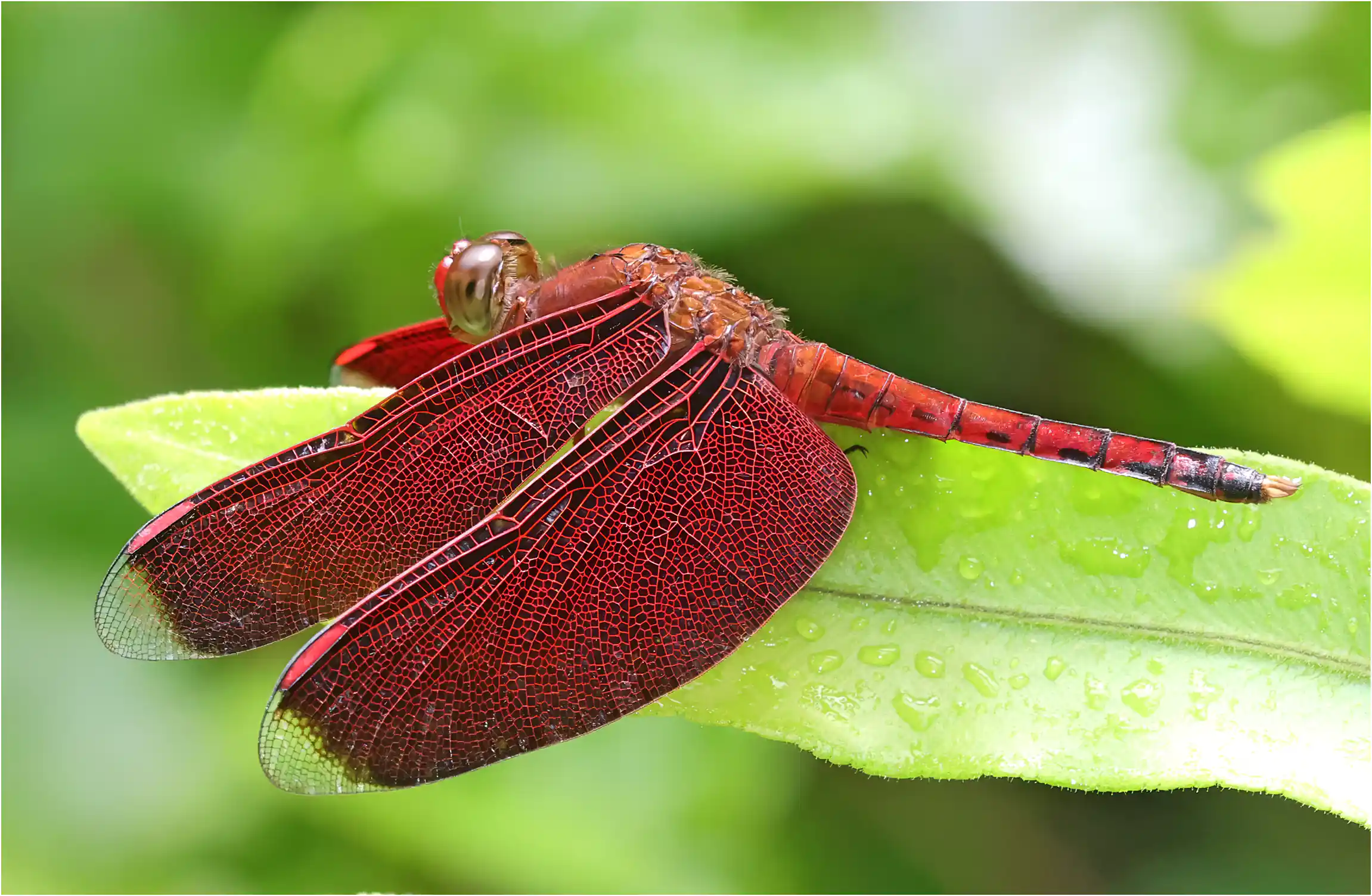
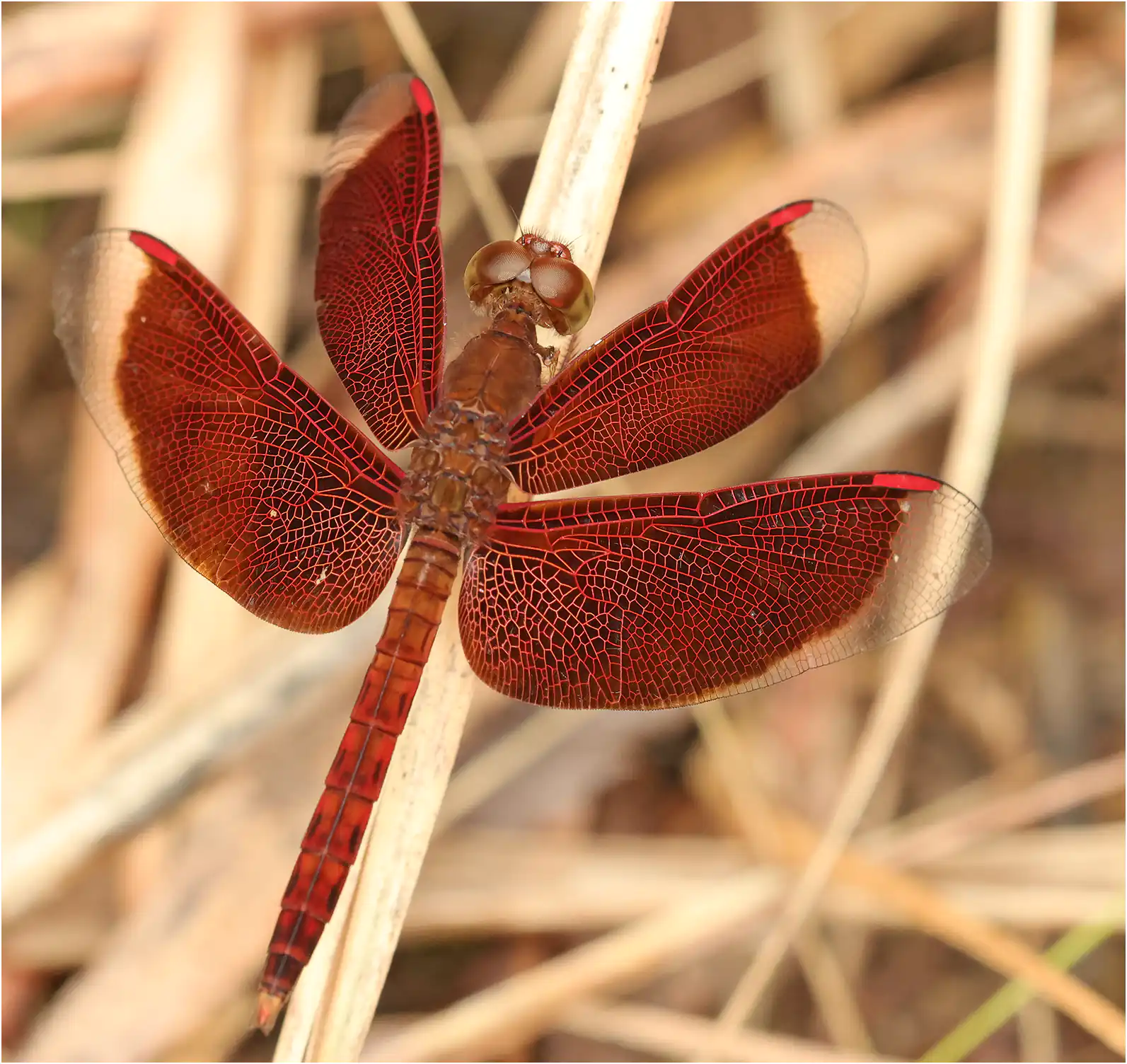
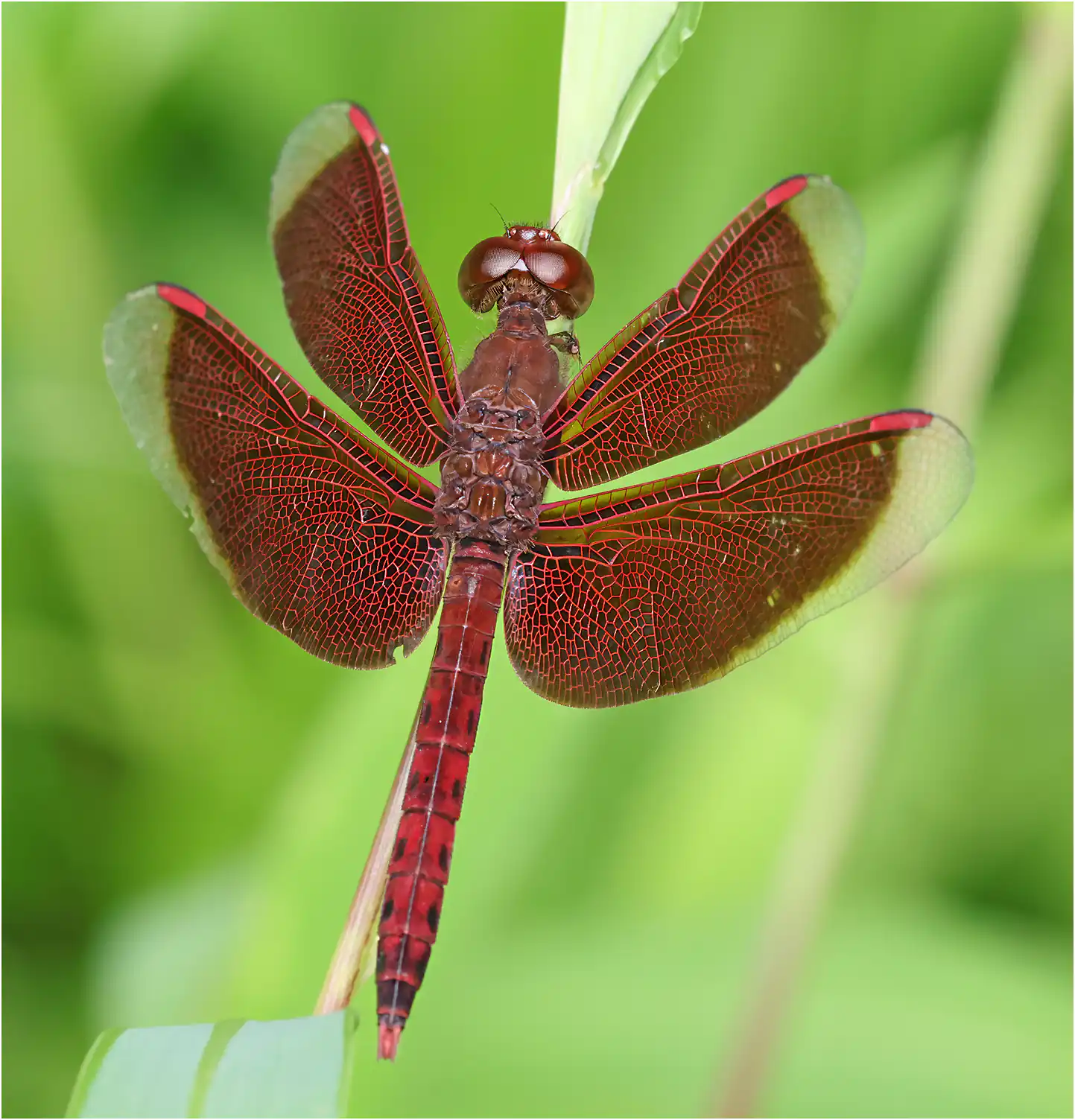
Matang Wildlife Center, 19/03/2025 (7 cells in the triangle)
Seehausen and Dow (2) have brought a long-awaited revision to this genus, and in their work one can take advantage of drawings and explicit reproductions concerning first of all wing coloration; we note that N. fluctuans and N. ramburii can be similar on this point, for example the N. fluctuans "d" and N. ramburii "d" and "f" variations, and that one cannot rely on this single element to establish identification.
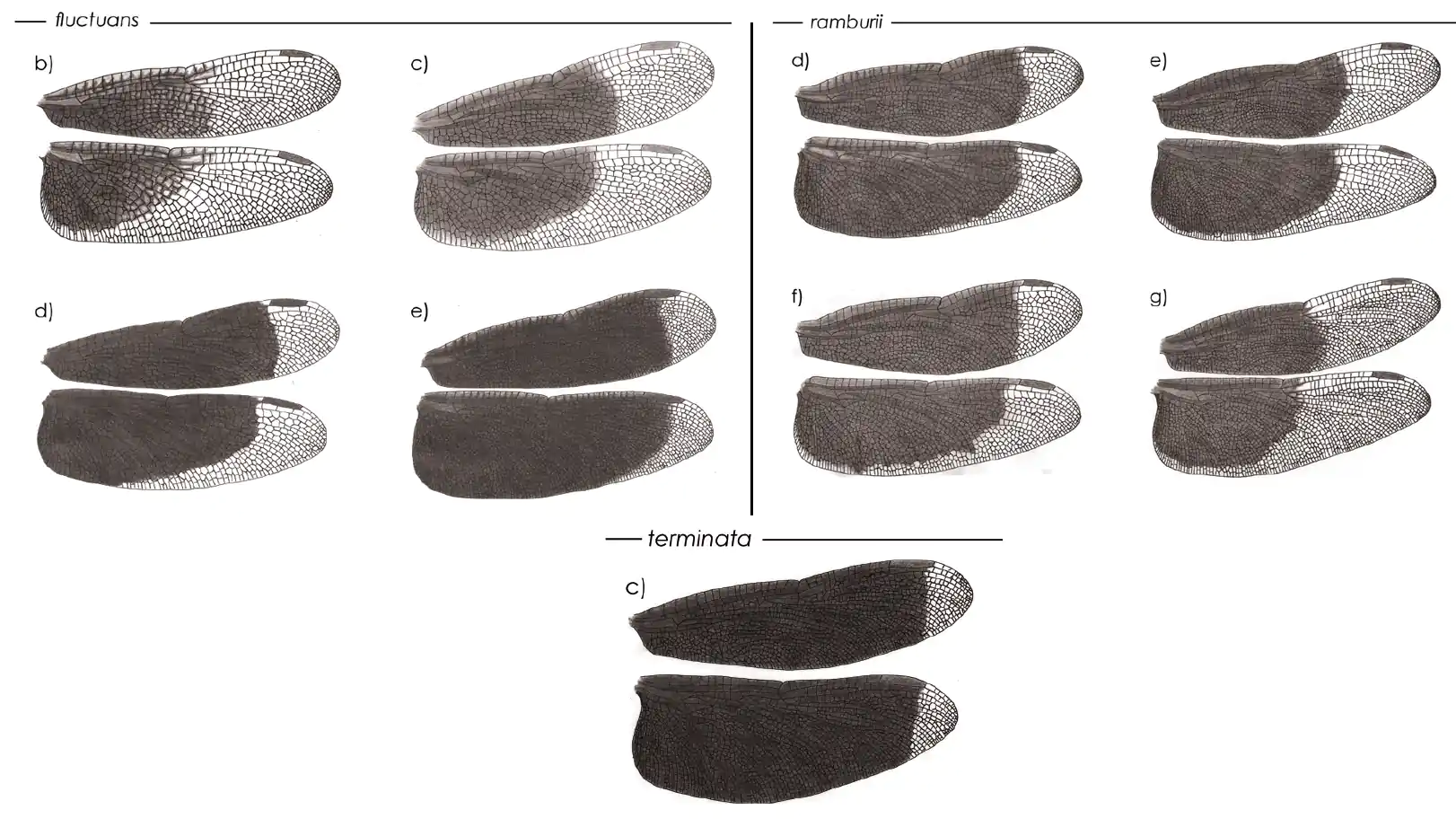
accordong to Seenhausen et & Dow, 2016 (2)
On the abdomens, one notes especially on the dorsal view the pairs of spots of N. fluctuans, whereas for the other two species, these spots are integrated into the dark apical spot.
Dans le Dragonflies of Japan (3) on trouve le dessin ci-dessous qui met en évidence les triangles alaires très différents entre N. fluctuans et ses deux cousins N. ramburii et N. terminata.

Females identification
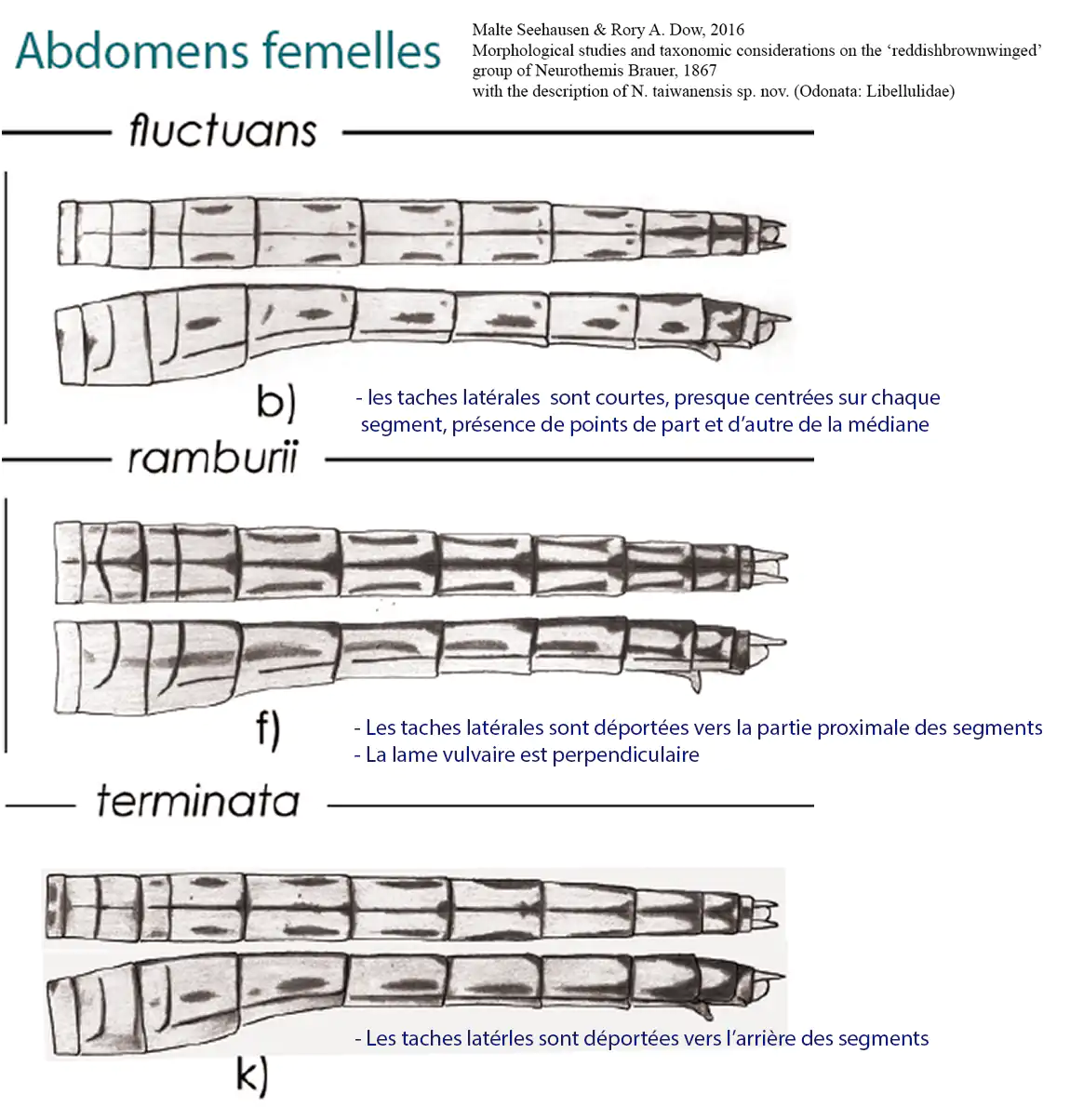
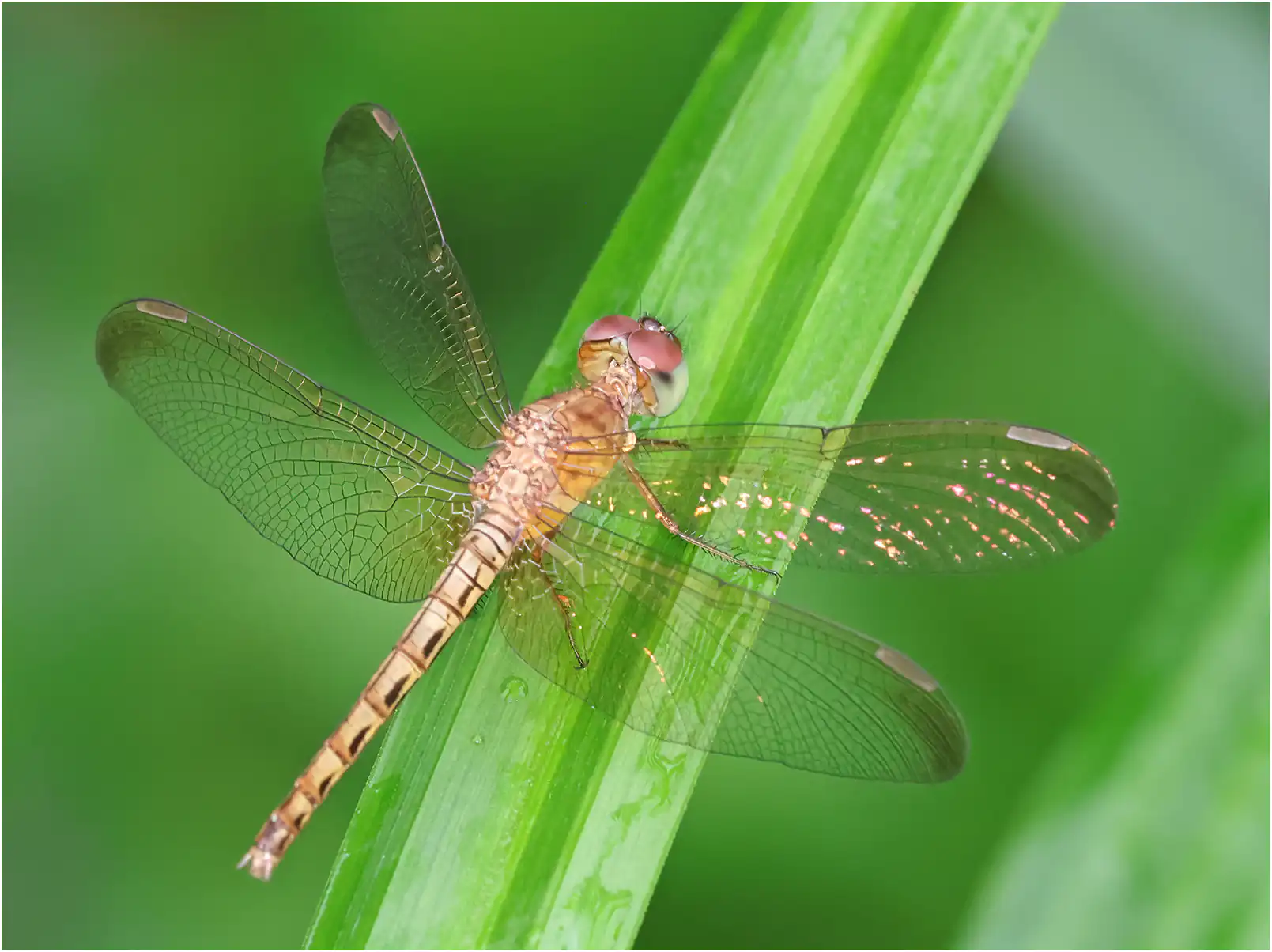
Females are most often pale with much more visible dark markings, and the forewing triangle has only two cells. The characteristic abdominal markings of the species are found even more pronounced (comparison of the wings of the three species present in Sarawak in Seehausen and Dow, 2016 (1)). While the female on the left below could raise some doubts as to the lateral markings of her abdomen, one notes the presence of the spots already mentioned for the males and the two-celled triangle.
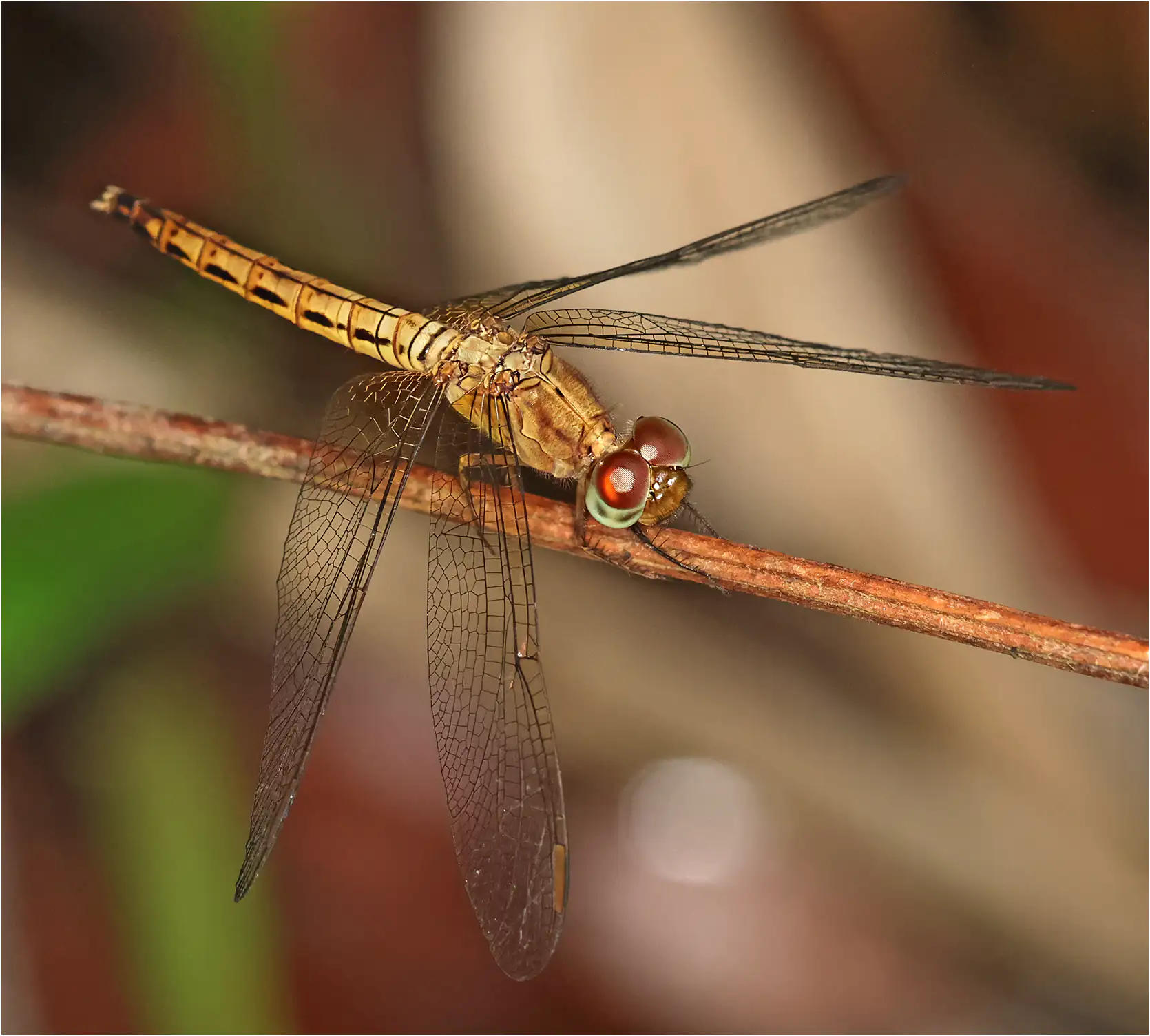
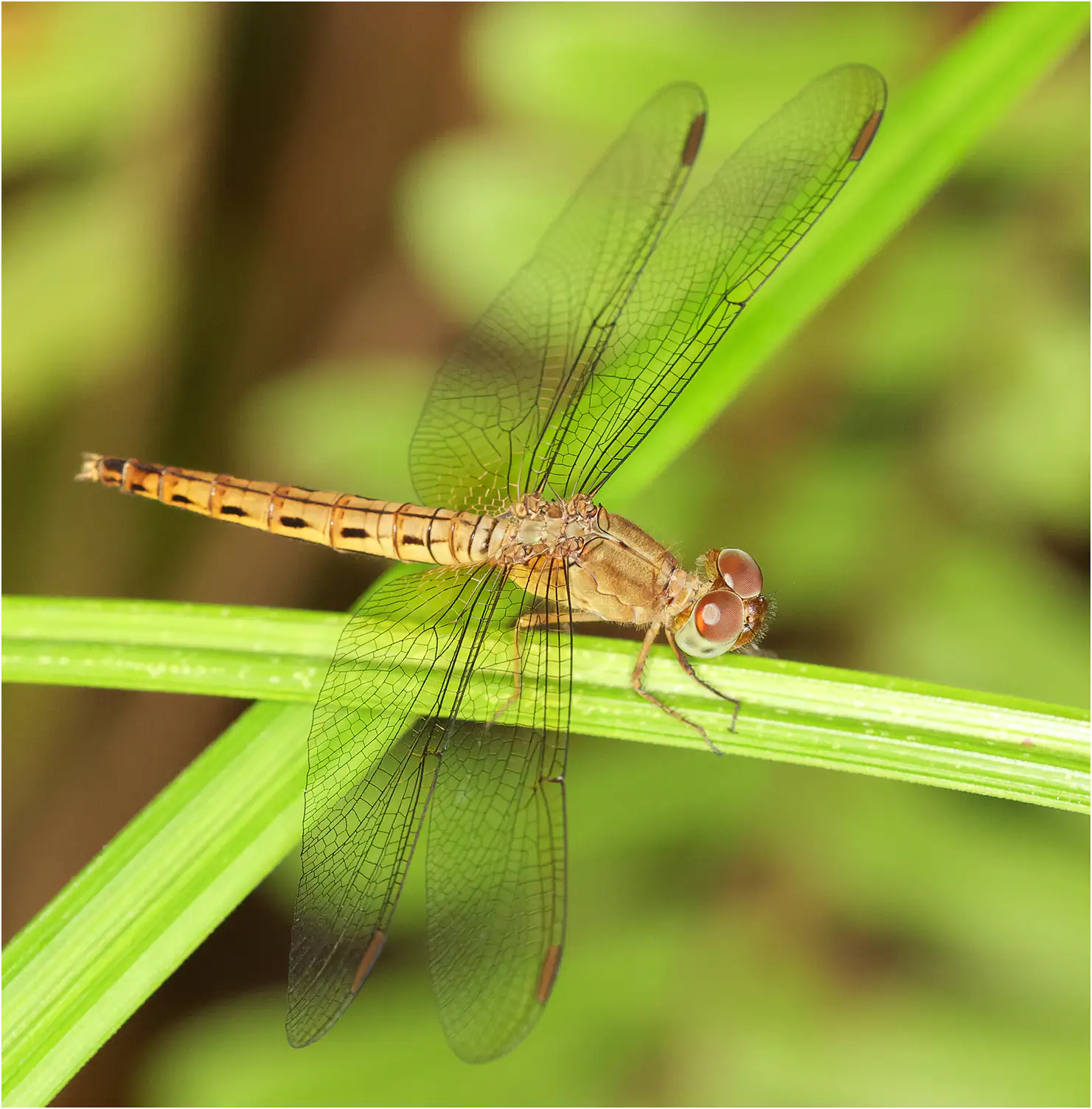
There are two forms of females (2); one common with hyaline wings (sometimes darker at the apex), the other androchrome (isochromatic in English) whose body and wing colouration is close to that of the males and which shows a denser venation, with 4 to 5 cells in the forewing triangle.
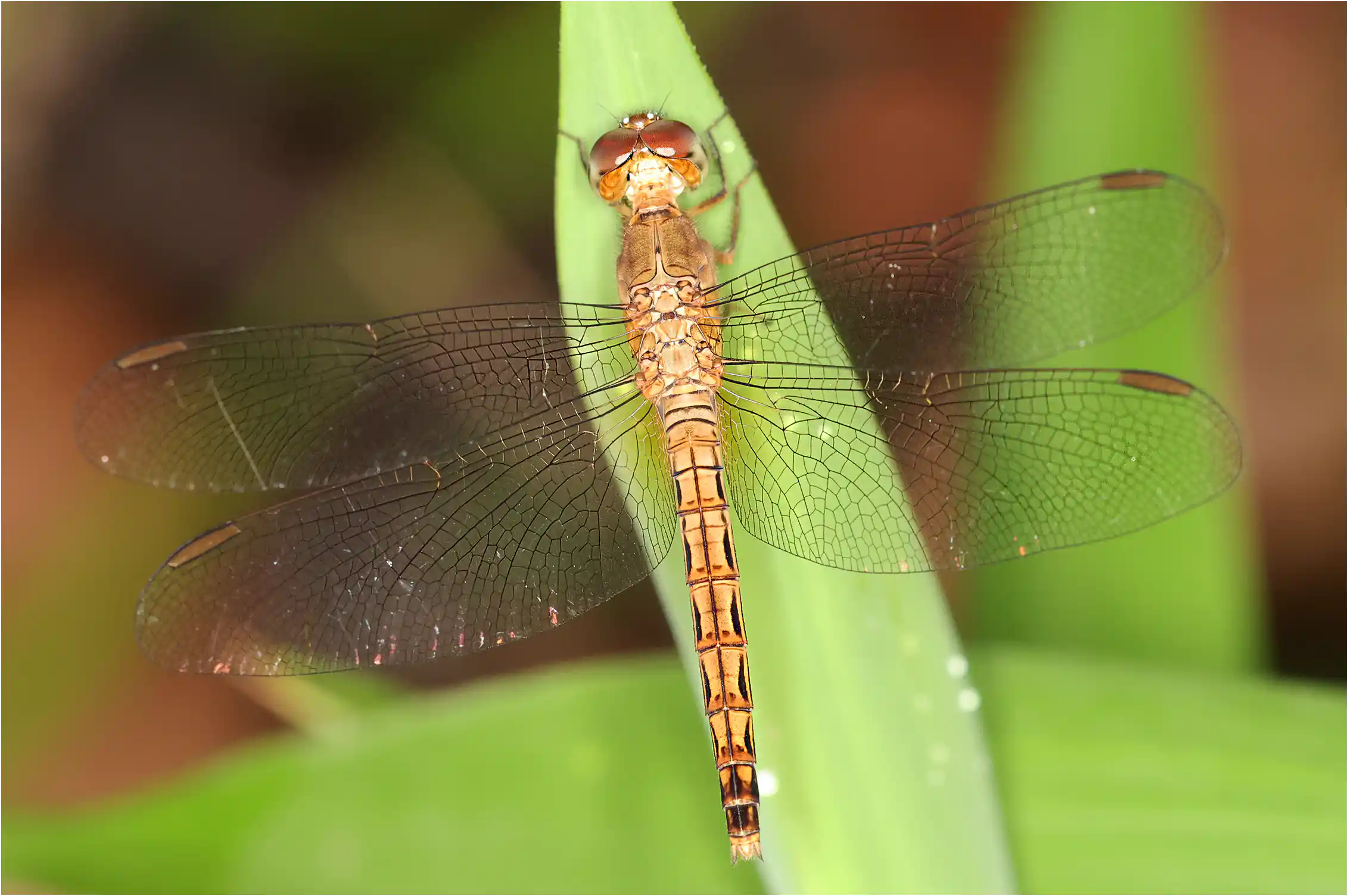
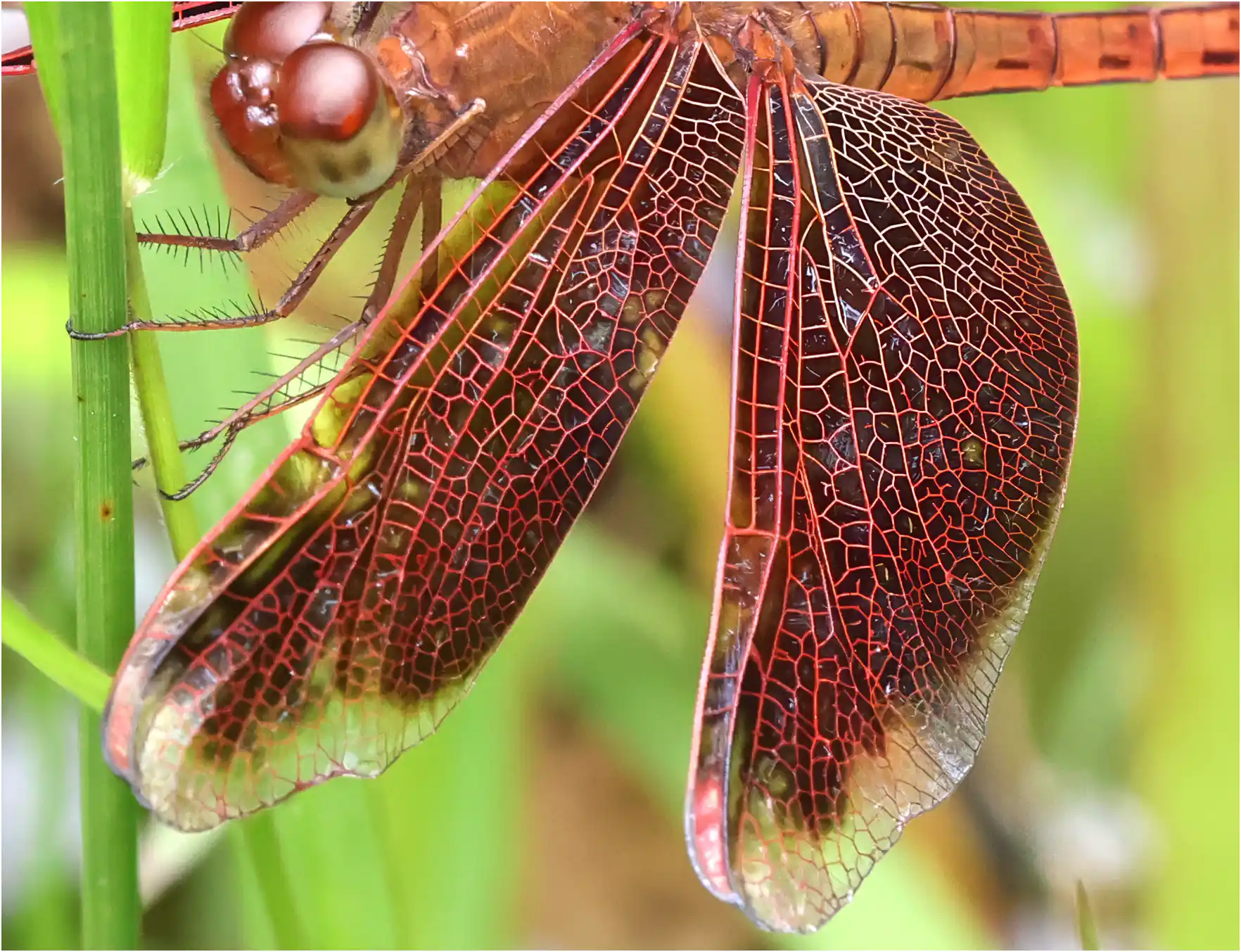
But in the photo below, one would be hard-pressed to count the number of cells in the forewing triangle of this female with the typical abdomen of the species: the venation is completely disrupted and deformed, on both the forewing and the hindwing. From the way the wings are crumpled at the apex, she undoubtedly experienced emergence problems, but she does not seem to mind.
Biotope and geographical distribution
It is a species encountered in varied habitats, near or away from water. It favours marshes, pools, and ponds, as well as rivers, ditches, or irrigation canals, as long as the environments are sufficiently open. It is encountered along forest tracks or at the forest edge.
Its distribution is broad; from west to east, it is found in India, due to its presence in the Nicobar and Andaman Islands, up to Palawan, in western Philippines, across southern Myanmar, northern Thailand, and Vietnam. To the south, it is present on the Malay Peninsula, Sumatra, Borneo, and Java (2).
IUCN Red List.
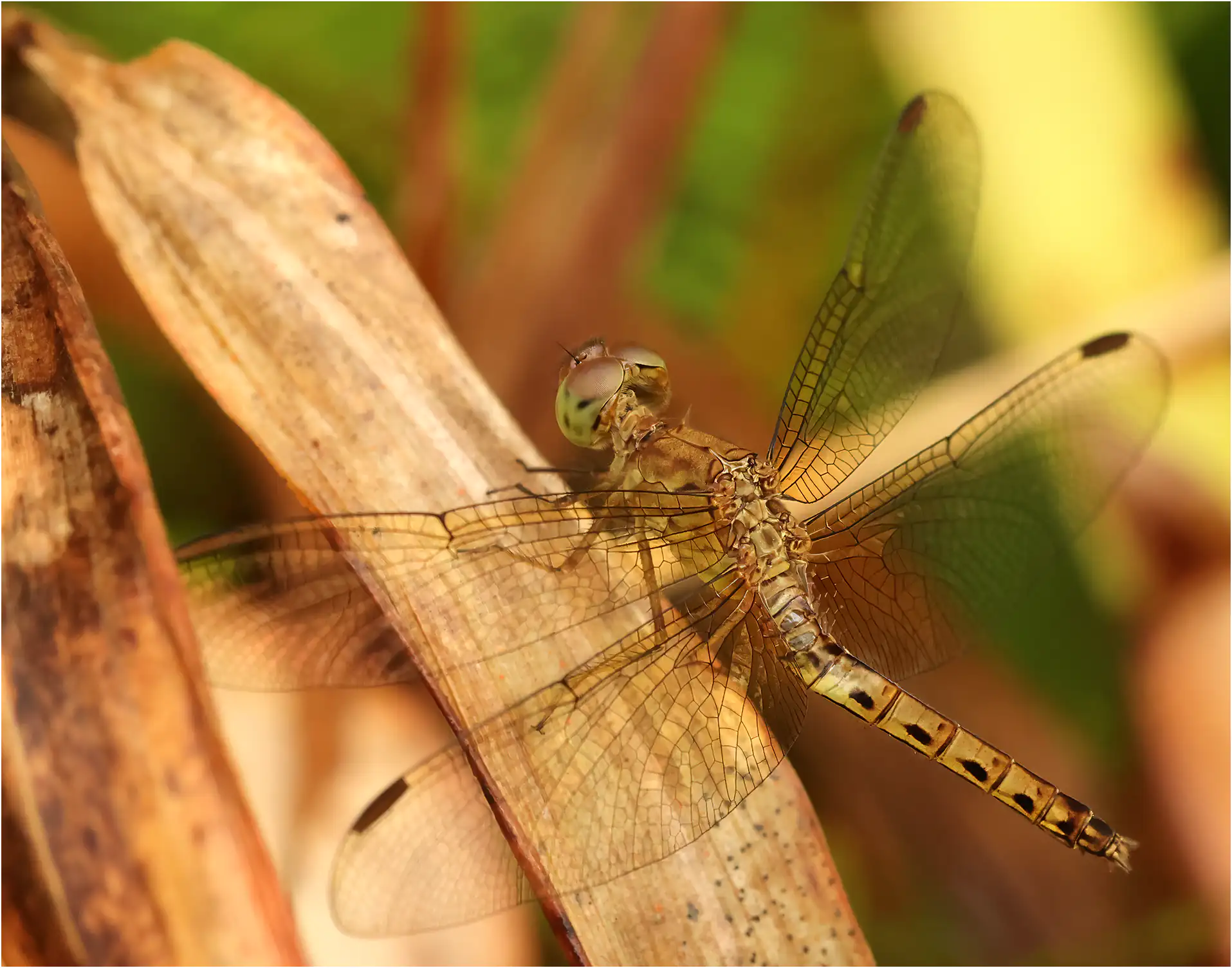
This last female must have had a difficult time; it is undoubtedly a predation attempt that left her with a heavily misaligned abdomen.
Etymology of Neurothemis fluctuans
The species briefly described by Fabricius in 1793 took the name Polyneura palliata with Rambur, 1842, then Neurothemis fluctuans with Brauer.
Neurothemis (4), from the Greek neuro for "nerve" or rather "wing venation" in entomology, and from Themis, Greek goddess of order and justice, which has been used many times since Hagen (1861). The name of the goddess of order is particularly well suited to taxonomy, the science that aims to describe and order families, genera, and species. Brauer created this generic name in 1867 to replace the genus Polyneura, created by Rambur in 1842, because the latter was already used in Hemiptera. This generic name was intended to emphasise the large number of cells in their wings.
Fluctuans; Ngiam and Ng, 2022 (1) propose to translate "fluctuans" from the Latin verb fluctuare, meaning "agitated by the waves", "undulating", by the English term "fluctuating", for the variability of the insect's body colour ranging from rusty brown to brick red. This is possible, but on the one hand, I doubt that Fabricius had many specimens on hand to notice this variability, and on the other hand, the specimens he may have had took months, if not years, to reach him and were therefore dried and discoloured.
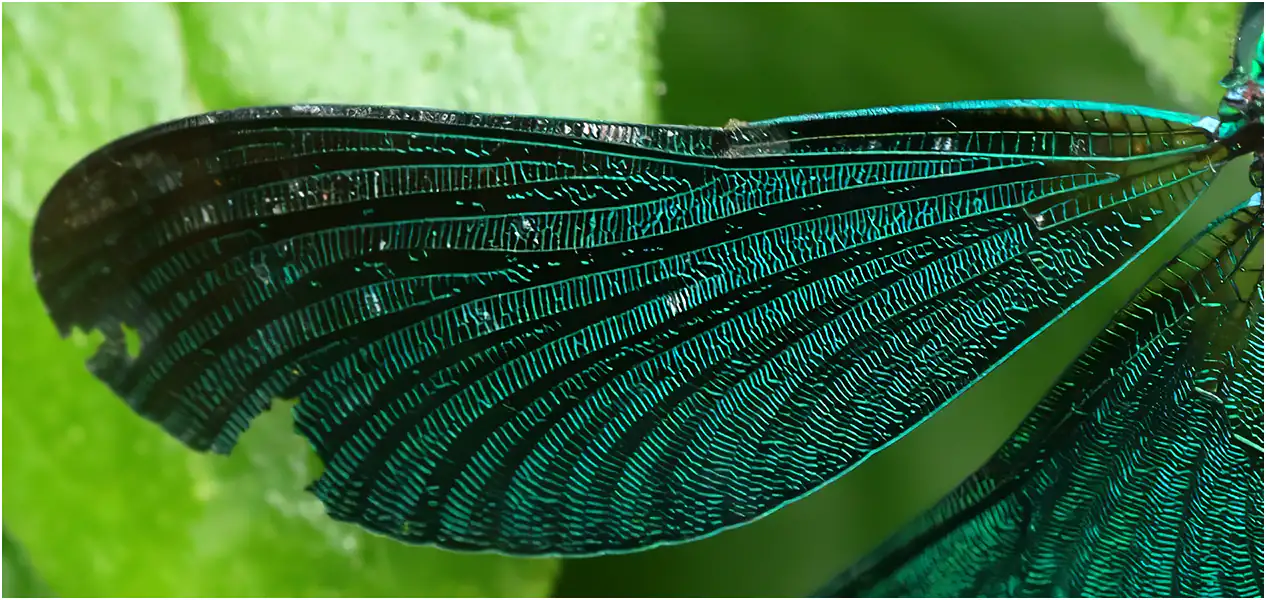
Another explanation: let us remember that these were the early days of odonatology, and it is possible that Fabricius realised or wanted to emphasise the fact that the wings are not flat at all but present a succession of hollows and bumps, which is much more easily visible on dark, coloured wings like those of a Neurothemis. Fluctuans would then be close to its original meaning, translating the undulations of the wing surface (which I illustrate here with a Calopteryx virgo wing).
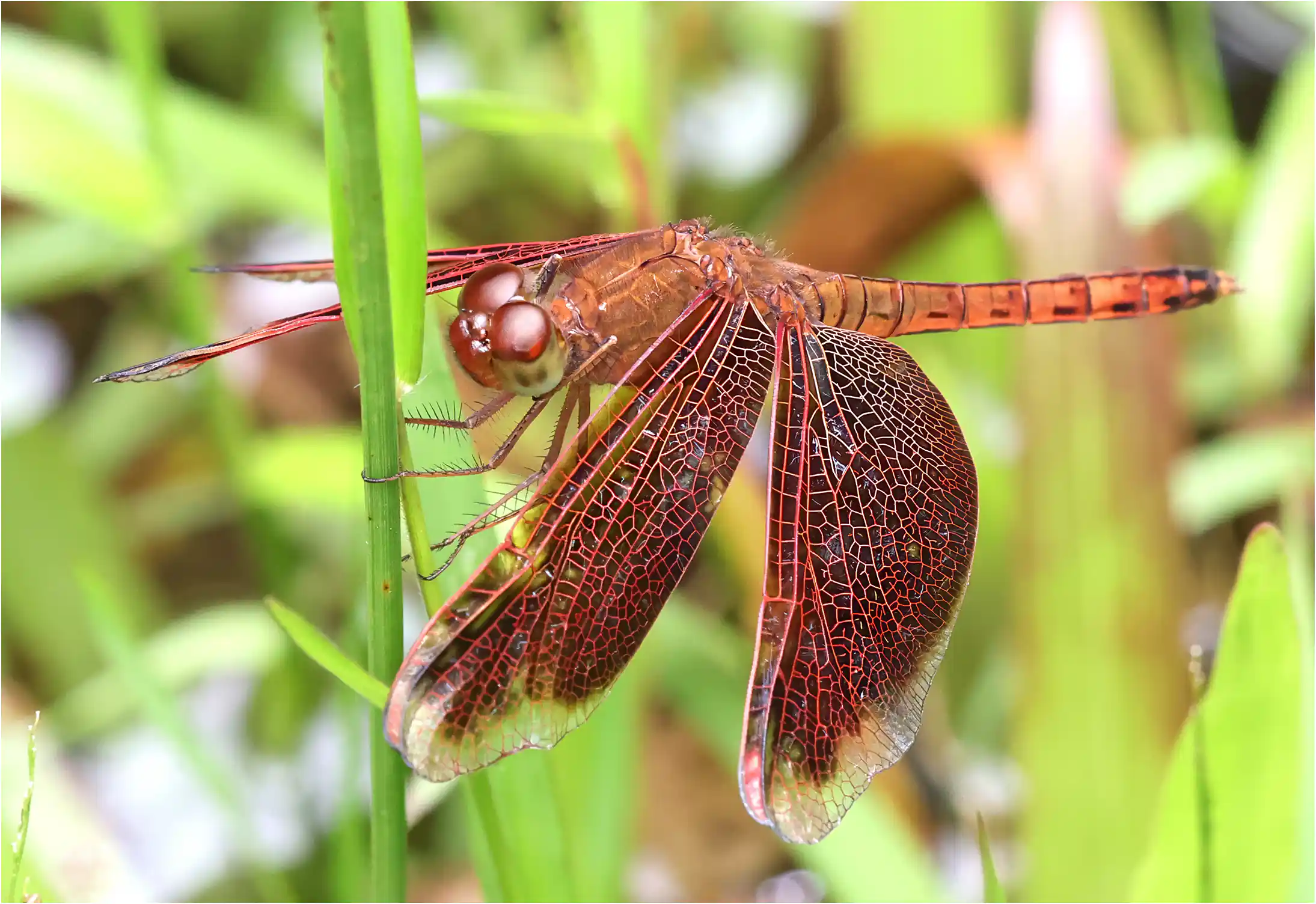
Its English vernacular name is Common Parasol; it is common, indeed, and it has the habit of perching with its wings held lower than its abdomen, the forewings very low, seeming to shelter its thorax or what is beneath it from the sun, like a parasol.
1- Robin Ngiam & Marcus Ng - A photographic guide to the Dragonflies and Damselflies of Singapore - John Beaufoy Publishing – 2022
2- Malte Seehausen & Rory A. Dow, 2016 – Morphological studies and taxonomic considerations on the ‘reddishbrownwinged’ group of Neurothemis Brauer, 1867 with the description of N. taiwanensis sp. nov. (Odonata: Libellulidae) – Journal of the International Dragonfly Fund.
3- Akira Ozono, Itsura Kawashima, Ryo Futahashi, 2012 – Dragonflies of Japan – Bun-ichi Sogo Shuppan Co.
4- The Naming of Australia’s Dragonflies, Ian Endersby & Heinrich Fliedner, Busybird publishing, 2015.