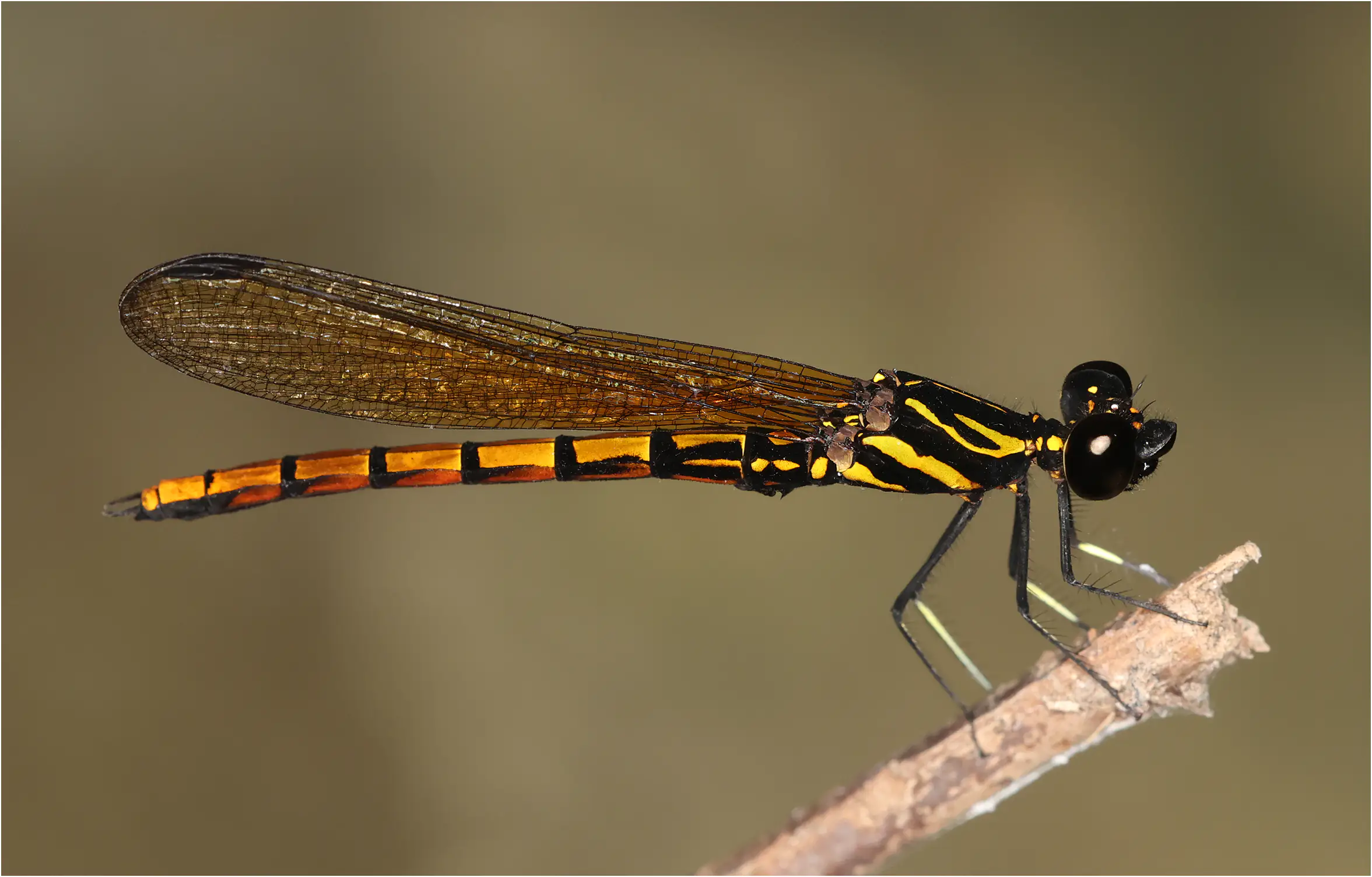
Like all Chlorocyphidae, Chlorocypha luminosa is spectacular and magnificent. The entire family is truly special to odonatologists due to the small size of its members, wings as long as the abdomen, vivid colors, and the singular appearance of their clypeus.
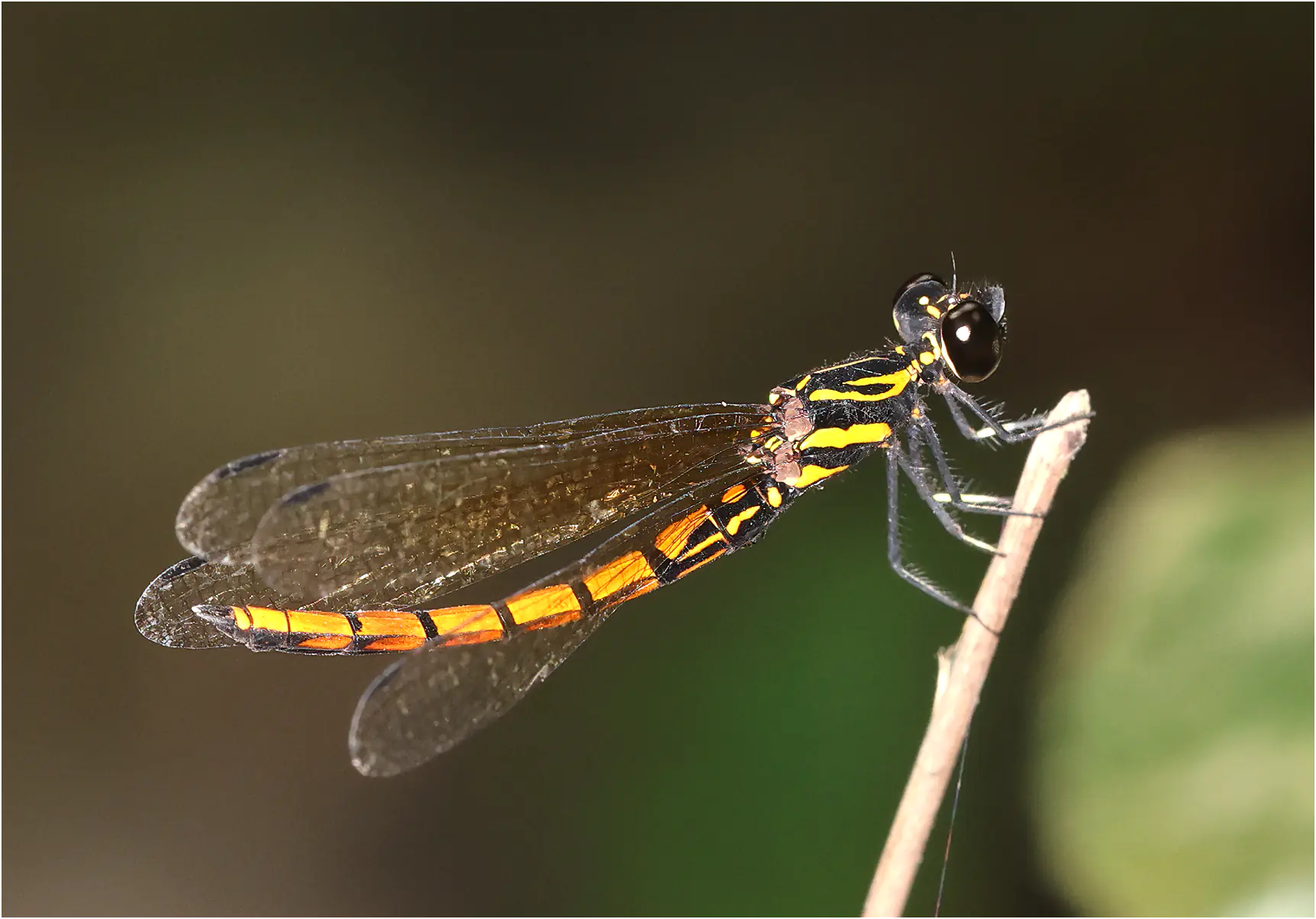
In English, it is called the Orange Jewel, both for the coloration of its abdomen and its wings; there is no risk of confusing mature individuals with another Chlorocypha, because among these thirty-one species endemic to tropical Africa, this is the only one with amber wings.
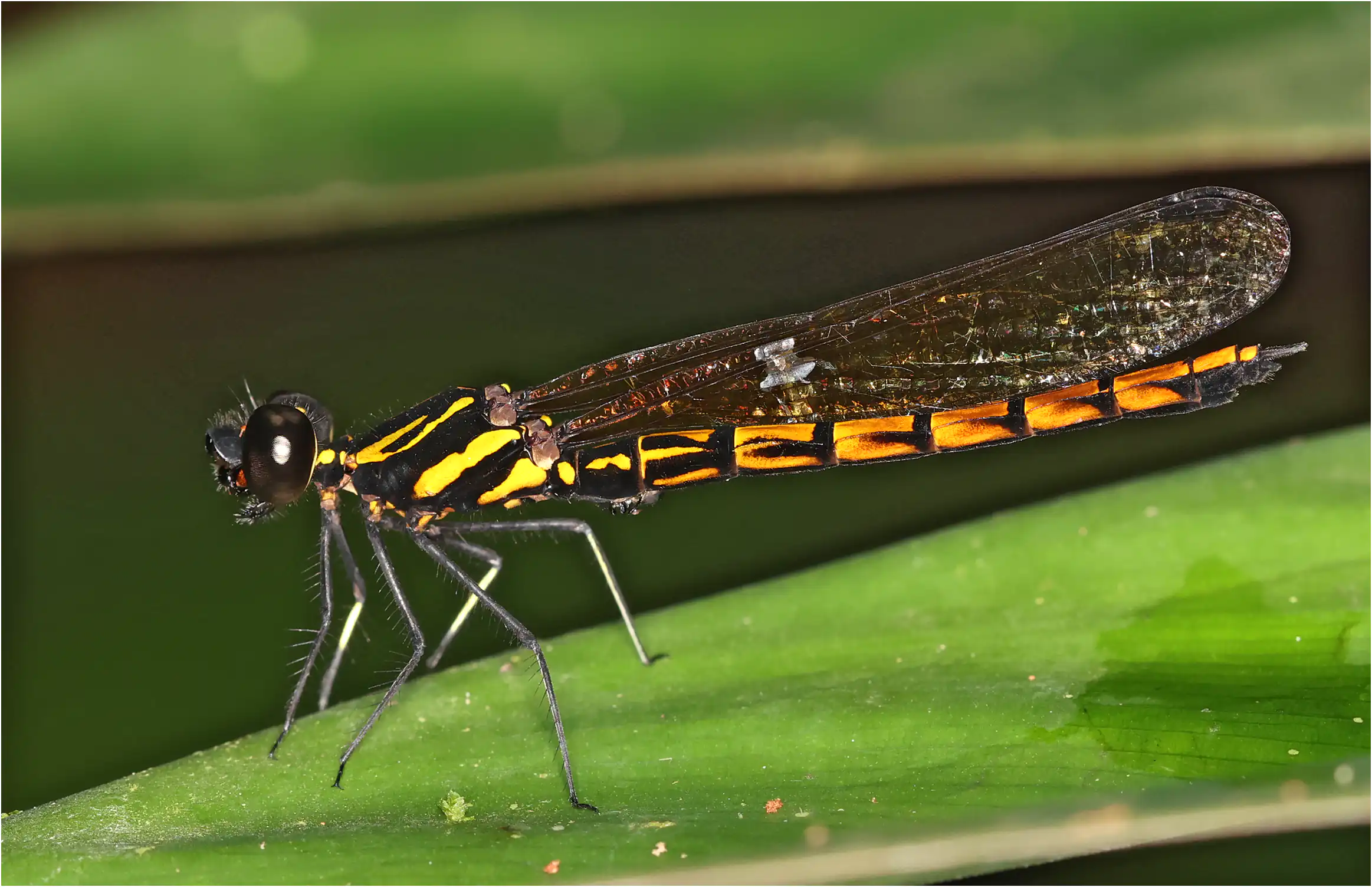
Karsch, who captured it in British Togoland in a region that is currently in Ghana, measured its hindwing at 22 mm and its abdomen at 21 mm, giving a total length of barely more than 30 mm.
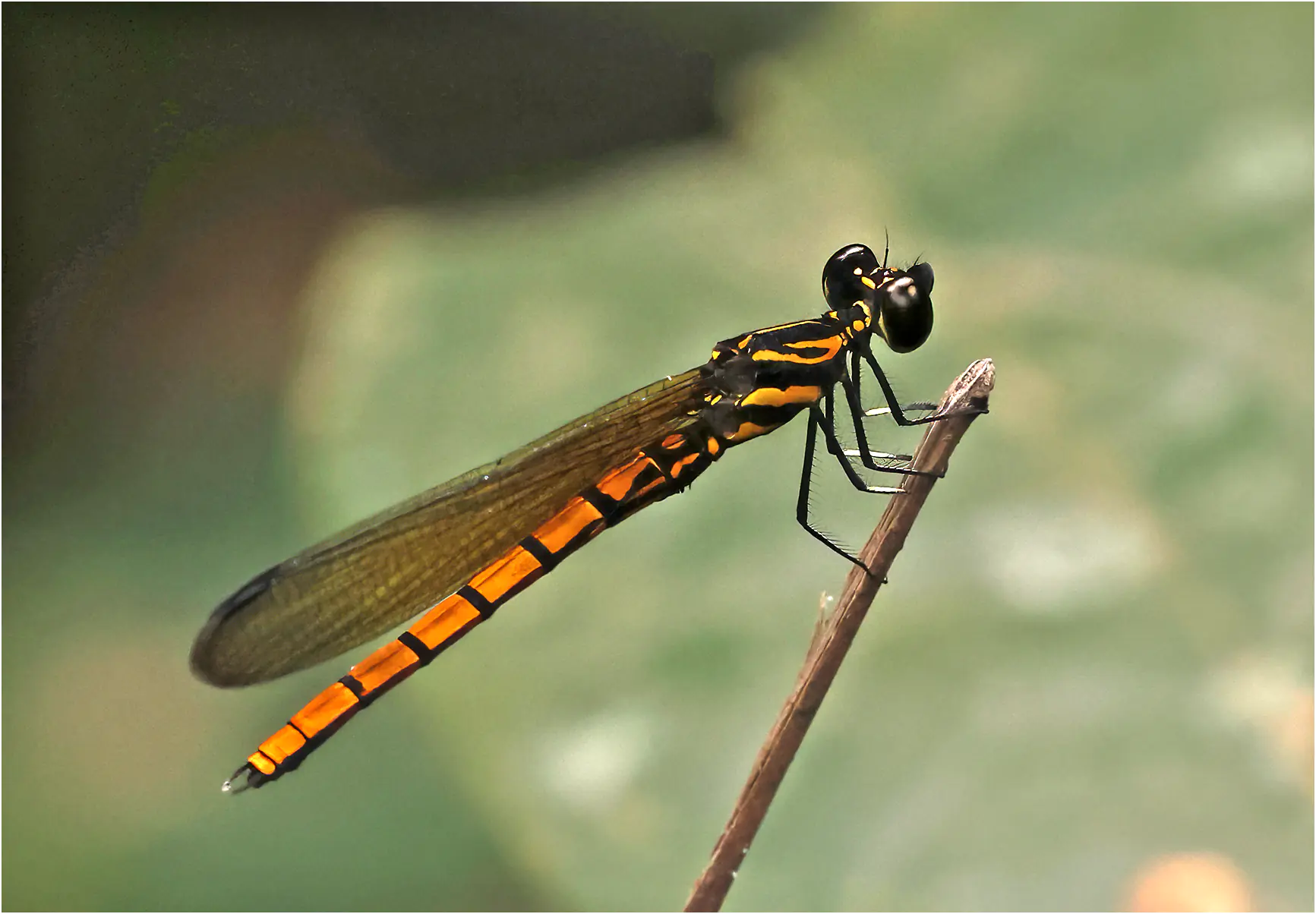
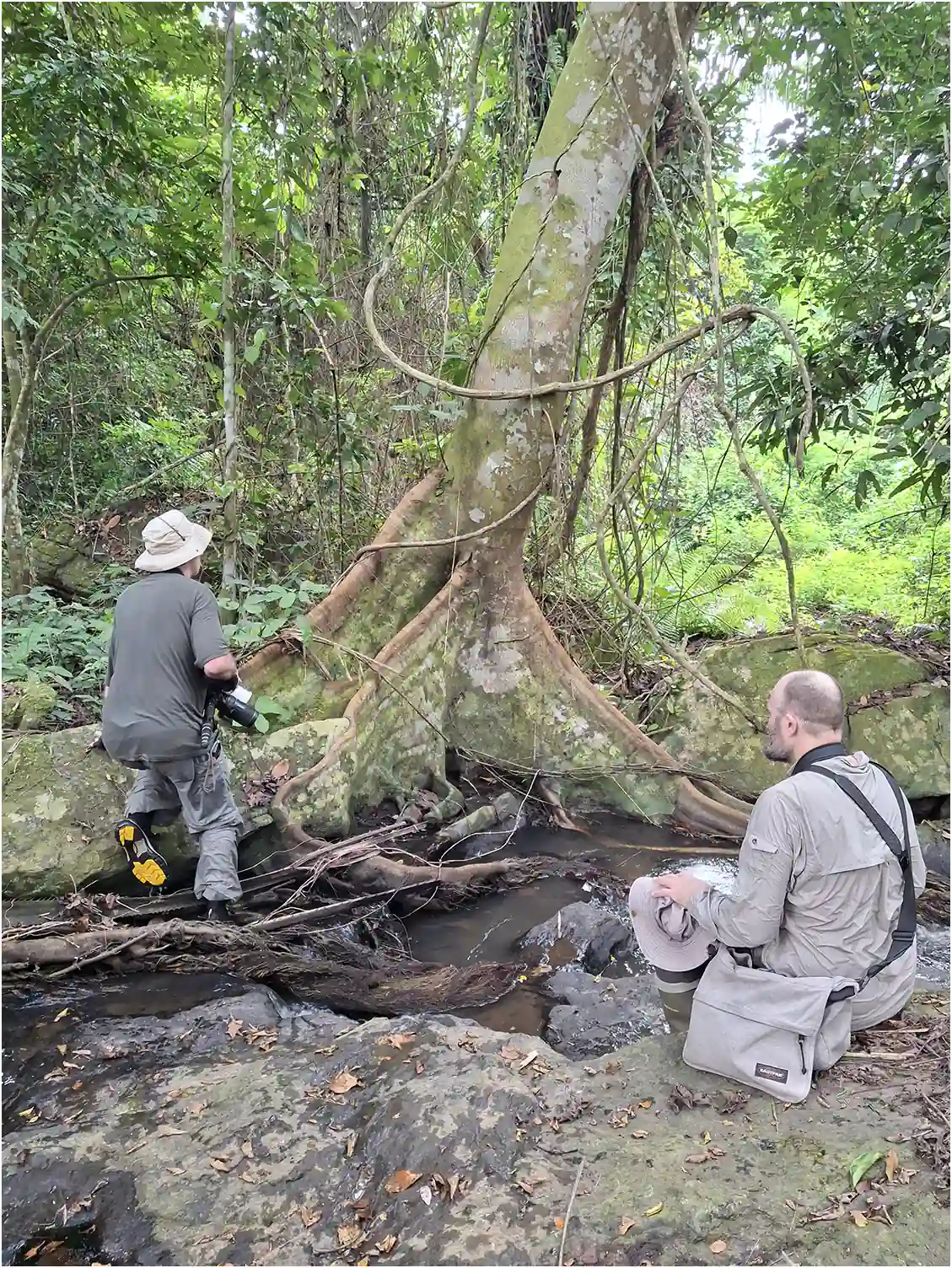
We encountered it three or four times, always on small forest rivers sometimes dense and quite dark, perched in the riparian vegetation over the water.
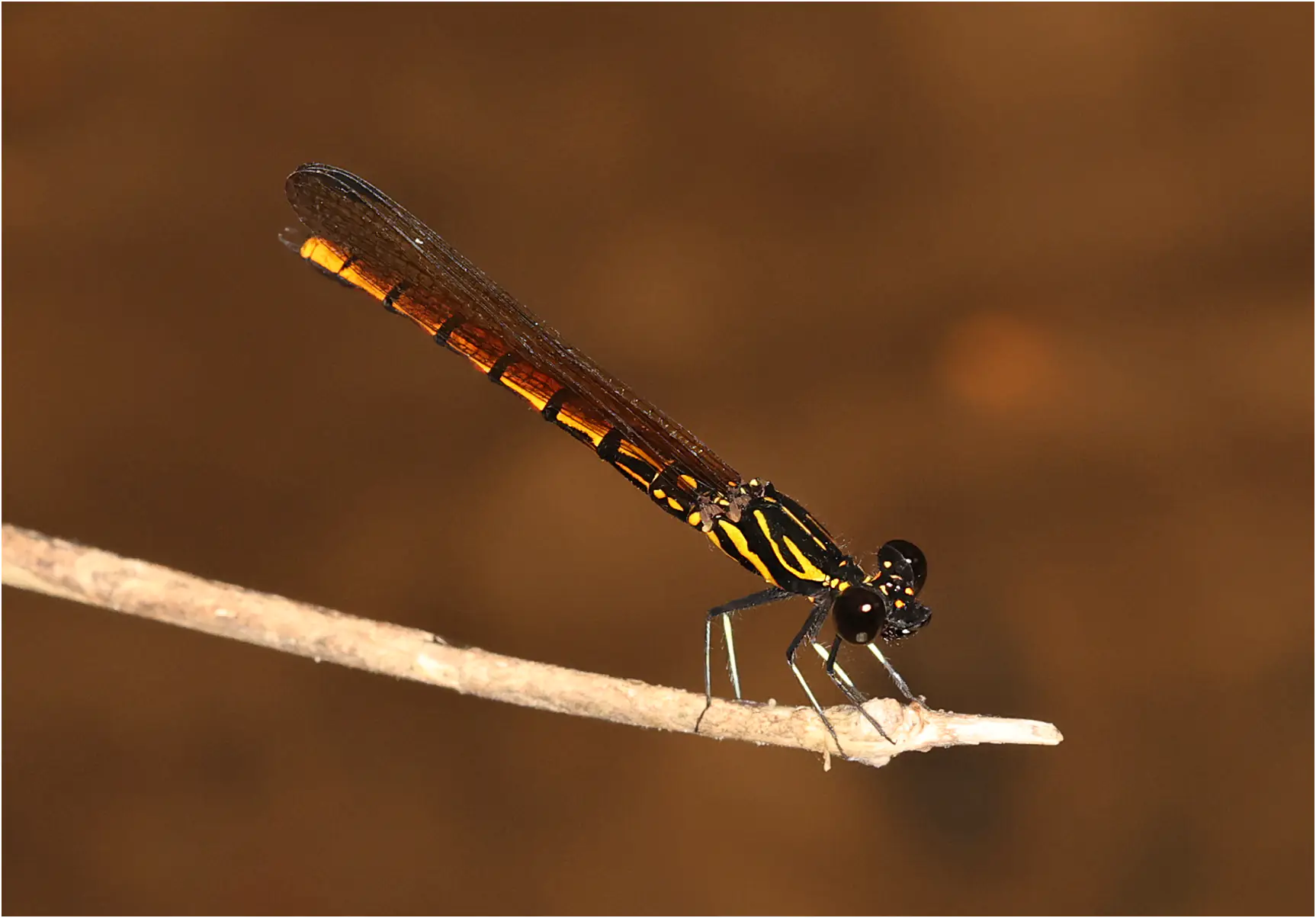
Its distribution is relatively limited in West Africa, from Guinea, Sierra Leone, and Liberia to Togo, including Ghana and likely Ivory Coast (only a single record on iNaturalist).
IUCN Red List.
Etymology: Chlorocypha luminosa
Karsch described it in the genus Libellago (a genus now restricted to Asia). Fraser (1928) erected the genus Chlorocypha for Palisot de Beauvois' Agrion dispar (1805).
Chlorocypha, from the Greek chloro, for yellow or green, and cyphos, meaning humpbacked or hump, referring to the color of the species' curious clypeus, certainly in an immature specimen. Fraser wrote: "I have chosen the name Chlorocypha for this genus, based on the specific character mentioned by Palisot de Beauvois for the type species dispar : "le chaperon [Clypeus] est d’un jaune-verdâtre" [the clypeus is of a greenish-yellow]." I am certain that Palisot de Beauvois never wrote these words in his description, nor did Selys in his Synopsis des Caloptérygines, nor in his Monographie des Caloptérygines. The origin of Fraser's quote remains a mystery to me.
Luminosa, from the Latin luminosus, meaning luminous, bright, or radiant, certainly recalling the brilliance of its wings and the contrast between the black and yellow of its thorax and abdomen.
Fraser, 1928 – « A revision of the Fiers-winged Damselflies (Family Chlorocyphidae) of Africa ». Annals and Magazine of Natural History, Série 10, Vol. 2.
Karsch, 1893 - Die Insecten der Berglandschaft Adeli im Hinterlande von Togo (Westafrika) nach dem von den Herren Hauptmann Eugen Kling imd Dr. Richard Büttner, gesammelten Materiale bearbeitet von Dr. F. Karsch, mit einem Vorworte von Dr. Richard Büttner. I Abtheilung Apterygola, Odonata, Orthoptera saltatoria. Lepidoptera. Rhopalocera. Berliner Entomologische Zeitschrift, 38, 1-266. (Odonata: 17-48), p. 33.
Palisot de Beauvois, 1805 – Insectes recueillis en Afrique et en Amérique, dans les royaumes d’Oware et de Bénin, à Saint-Domingue et dans les États-Unis, pendant les années 1786-1797. Imprimerie de Fain et Compagnie, Paris. Livraison 2, p. 85, pl. VII.