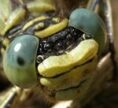
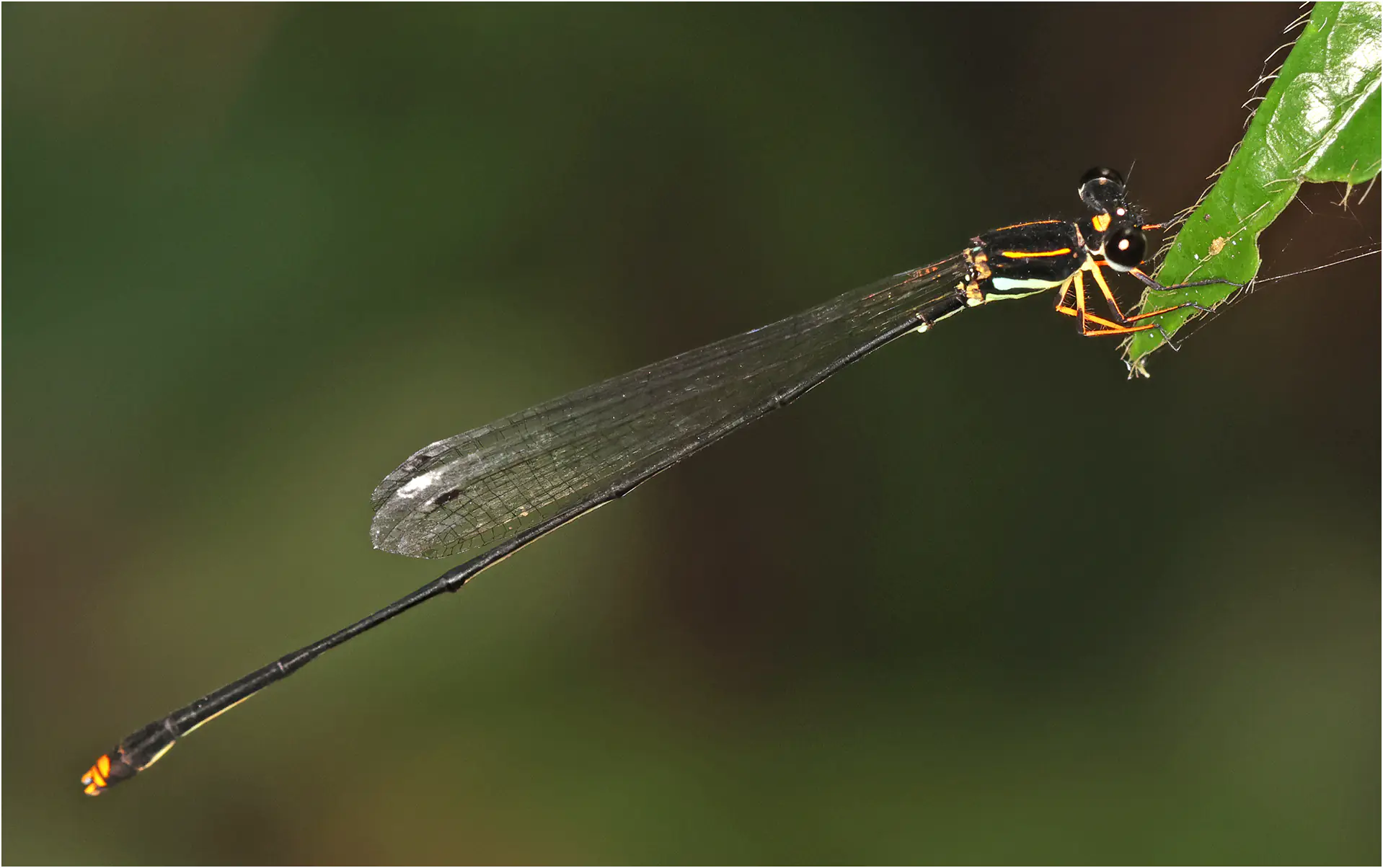
Allocnemis elongata, Platycnemididae, is one of three species of this genus in Ghana; my companions who were able to extend their stay by a week further north encountered the other two, A. flavipennis and subnodalis. These three species are often found together, likely sharing the same ecological requirements.
It is a genus currently comprising 18 species, all endemic to tropical Africa; the vicissitudes of taxonomy resulted in this small genus created by Selys, which originally contained only two species, being expanded to include Chlorocnemis and Isomecocnemis thanks to Dijkstra et al. (2014). The authors show that there is no genetic difference between these genera, and priority belongs to the genus Allocnemis created by Selys (1863) in the same document, a few pages earlier.
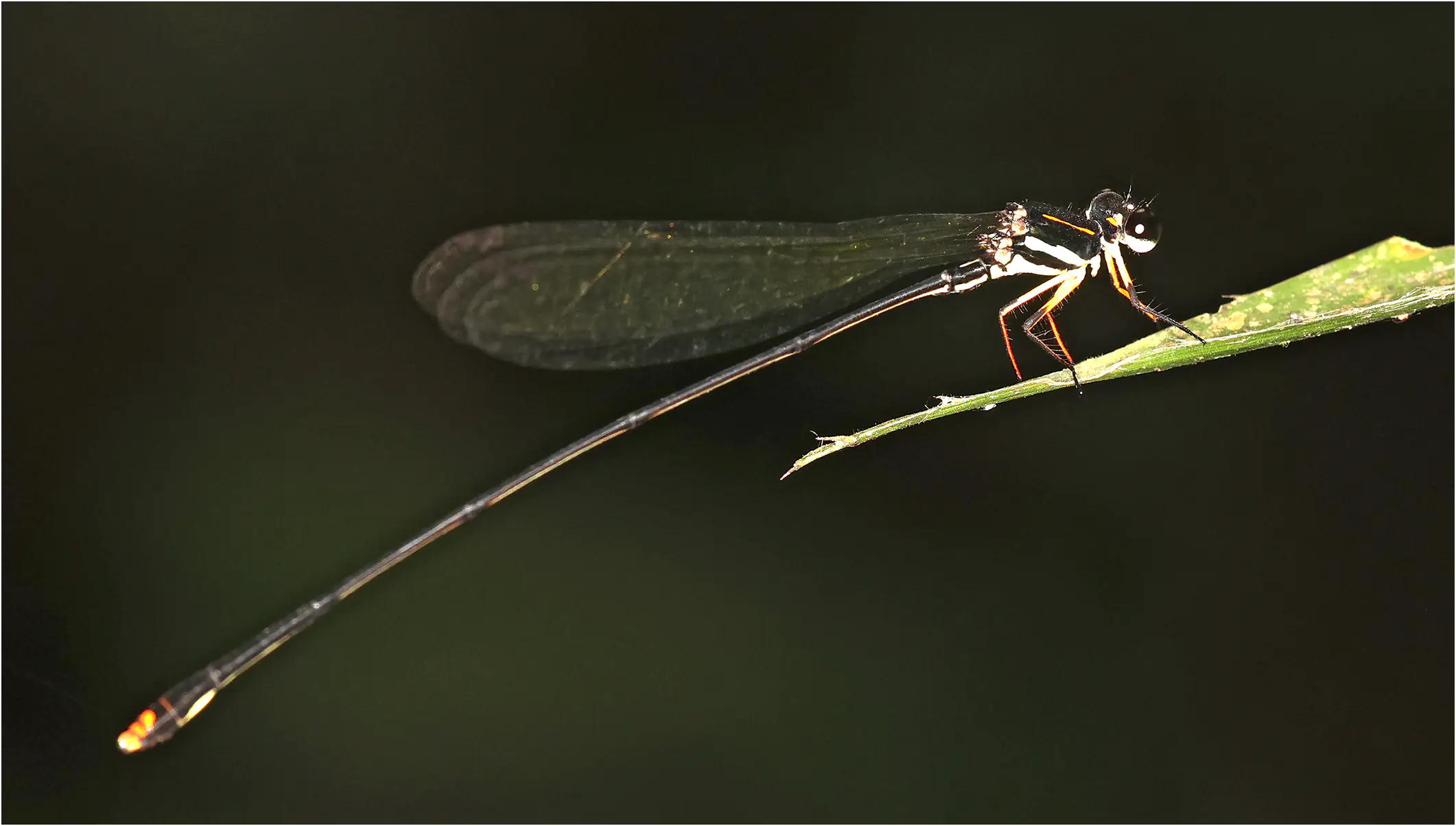
In Ghana, it cannot be confused with any other Allocnemis; A. flavipennis shows all-black legs and very strongly amber-tinted wings, whereas for A. subnodalis, all the pale parts of the thorax, abdomen, and legs are blue.
For Allocnemis elongata, it is worth noting the tricolored legs; the inner surface of the legs is orange, the upper two-thirds of the femora are white, and the remainder of the leg is dark.
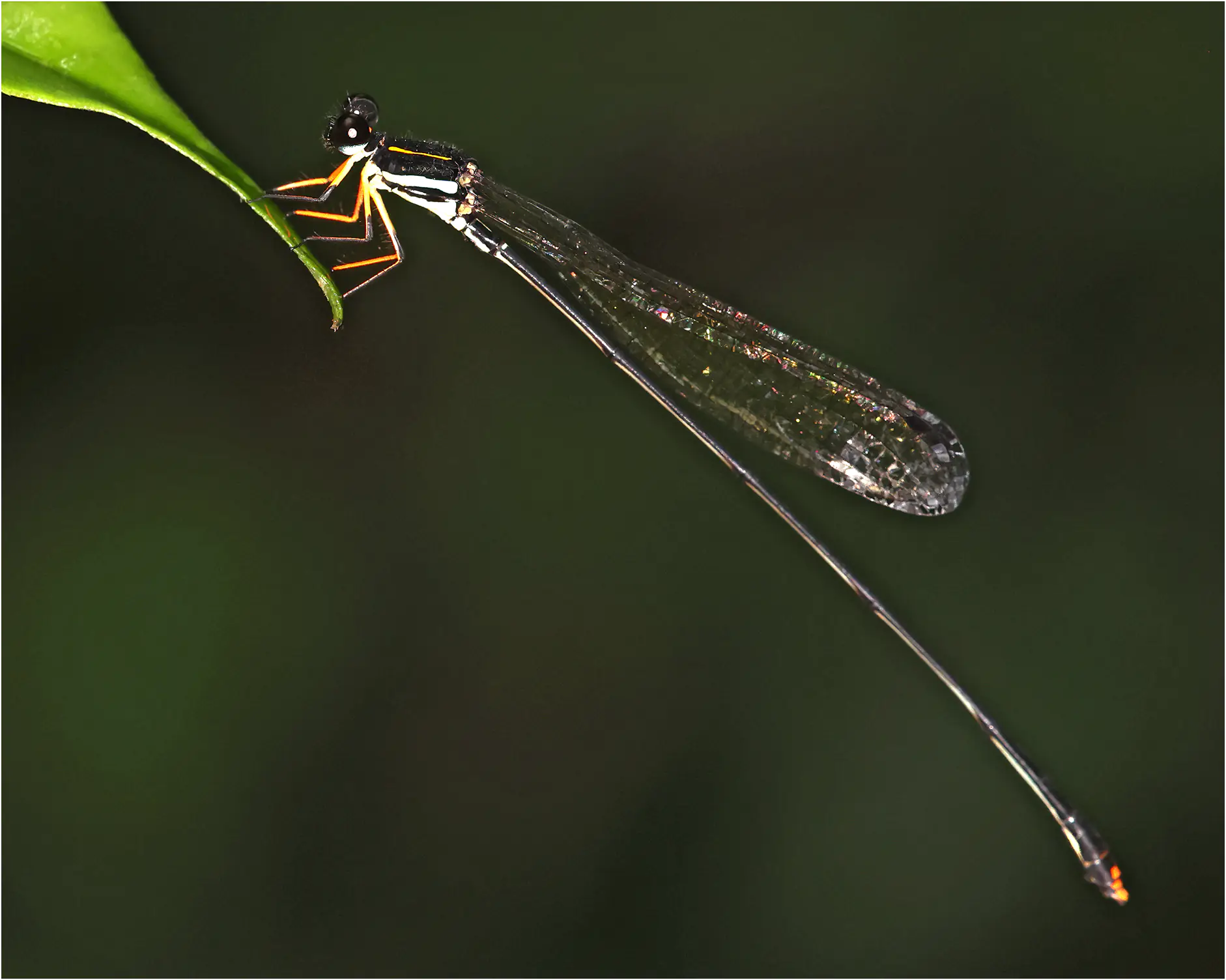
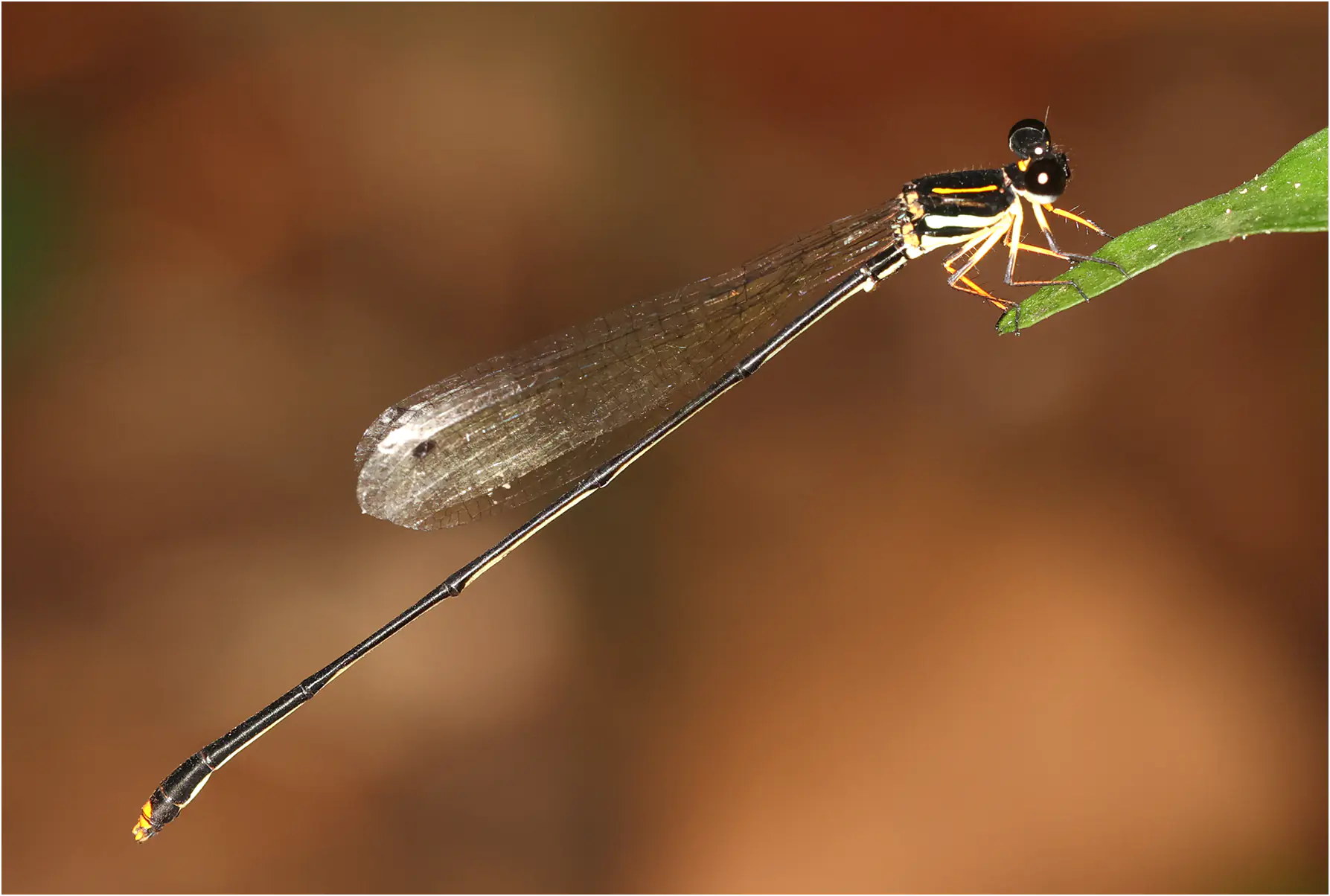
Selys indicates to us that its abdomen measures 41 mm, with the entire insect measuring approximately 48 mm. Its habitat consists of headwater streams in forested environments; it is indeed in this dark setting that we encountered it in the Kakum forest.
In this environment, accompanied by Elattoneura villiersi, we observed it in tandem and ovipositing, but as is often the case, it is very difficult to have both the male and female in the same plane of focus…
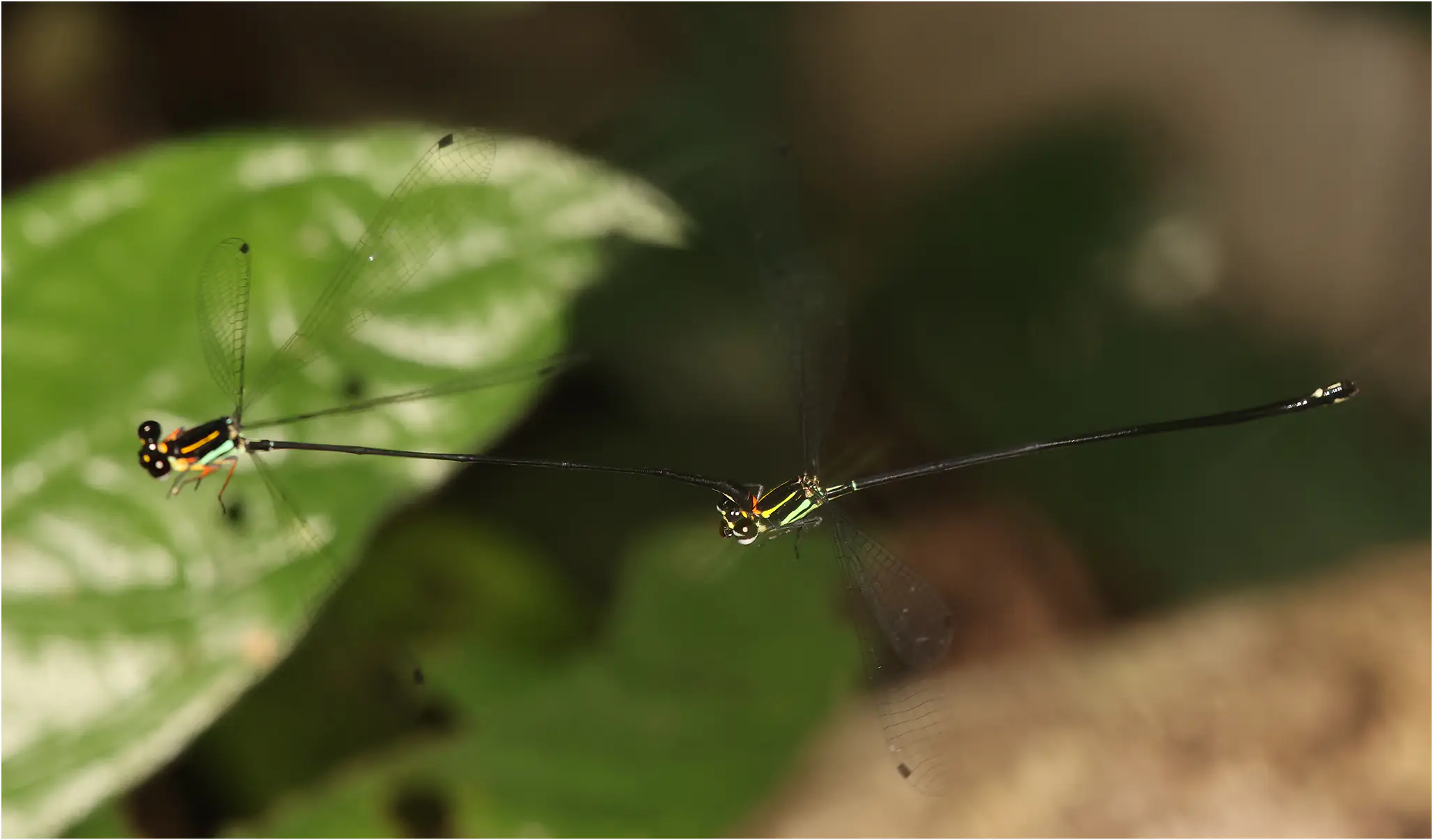
The females are therefore somewhat duller; their legs, in particular, are not orange.
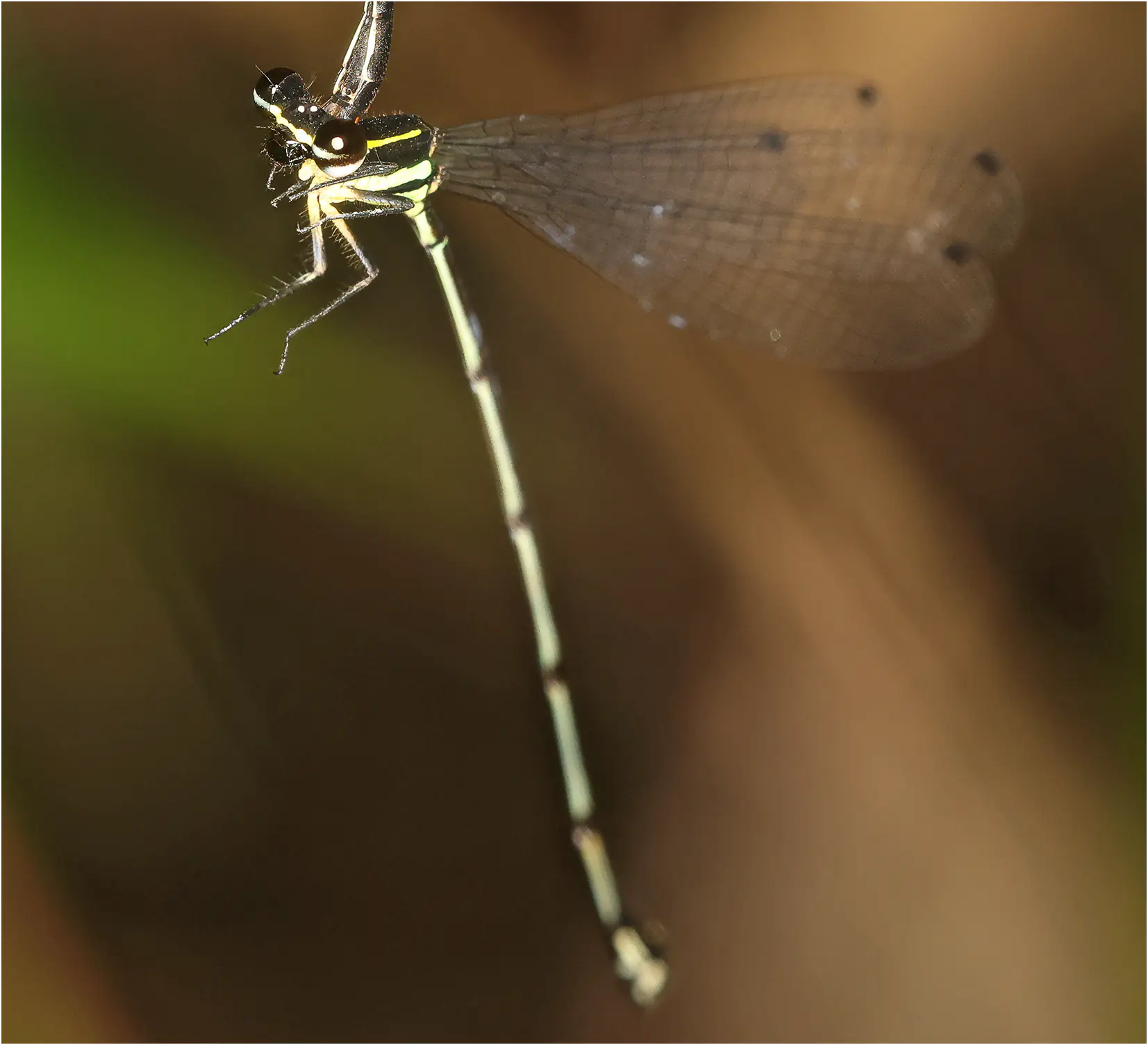
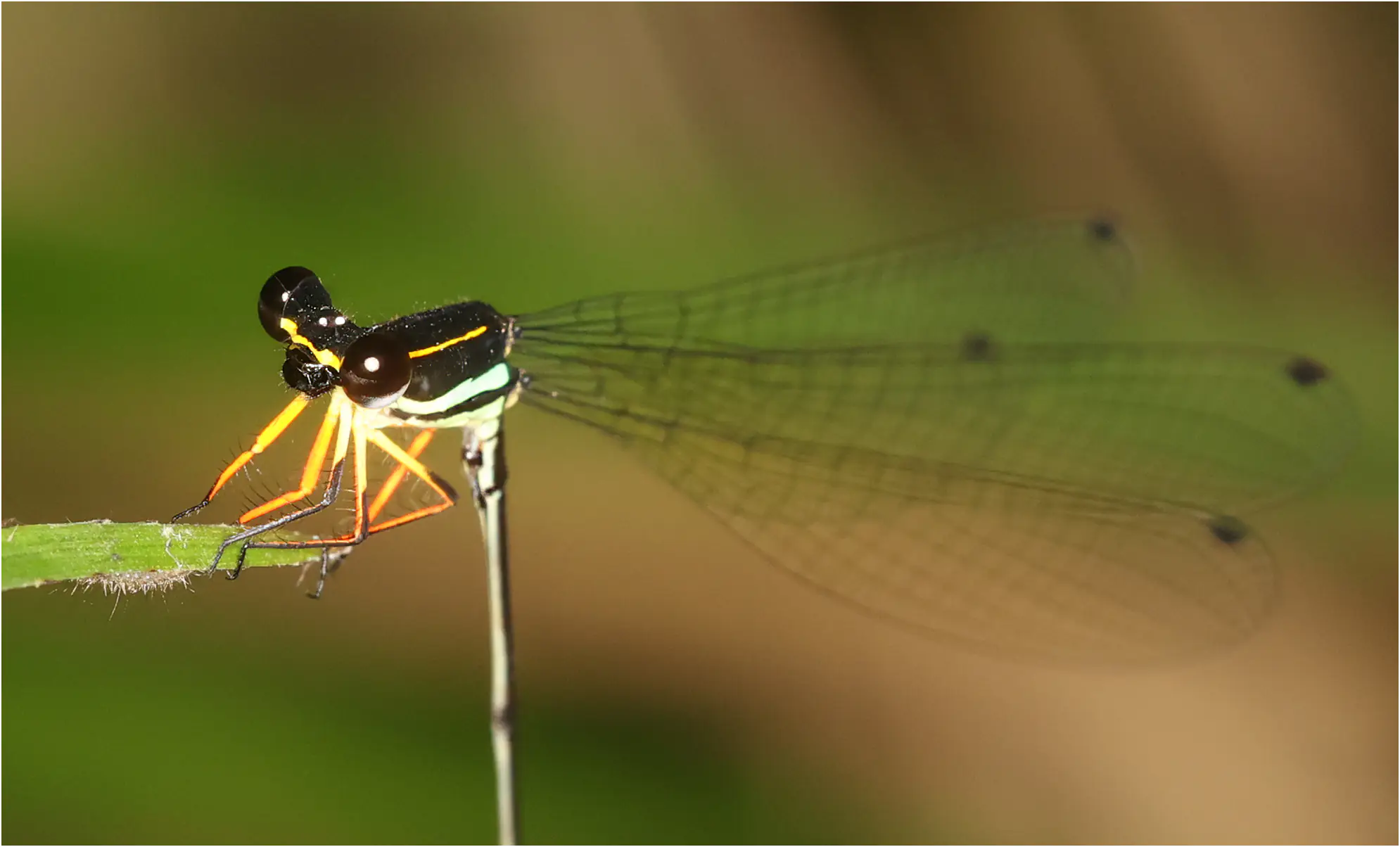
Its distribution extends from Guinea and Sierra Leone to Nigeria. However, it has not (yet) been discovered in Benin (it is not reported in the Catalogue illustré des Odonates du Bénin, Tchibozo et Maes, 2025).
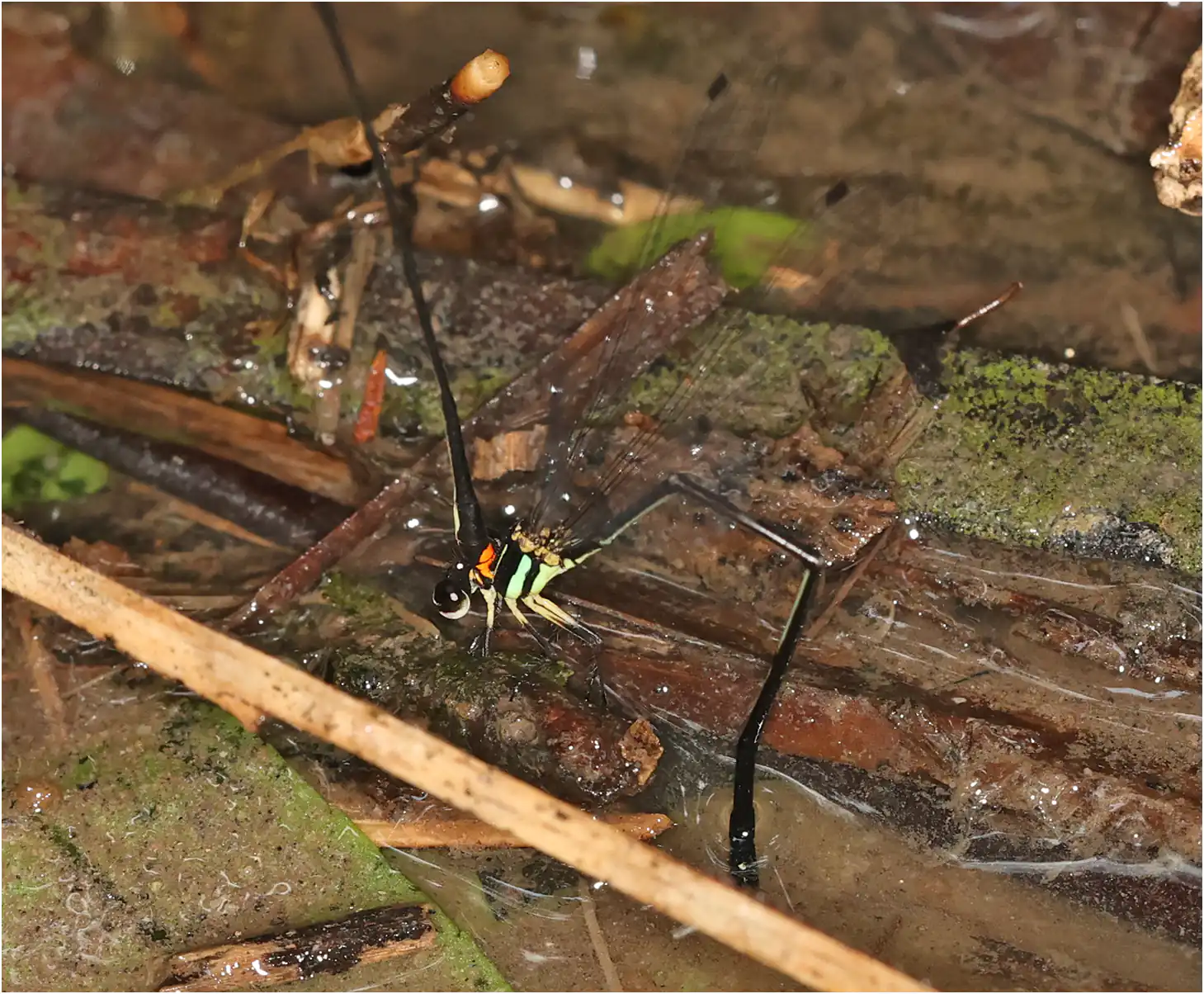
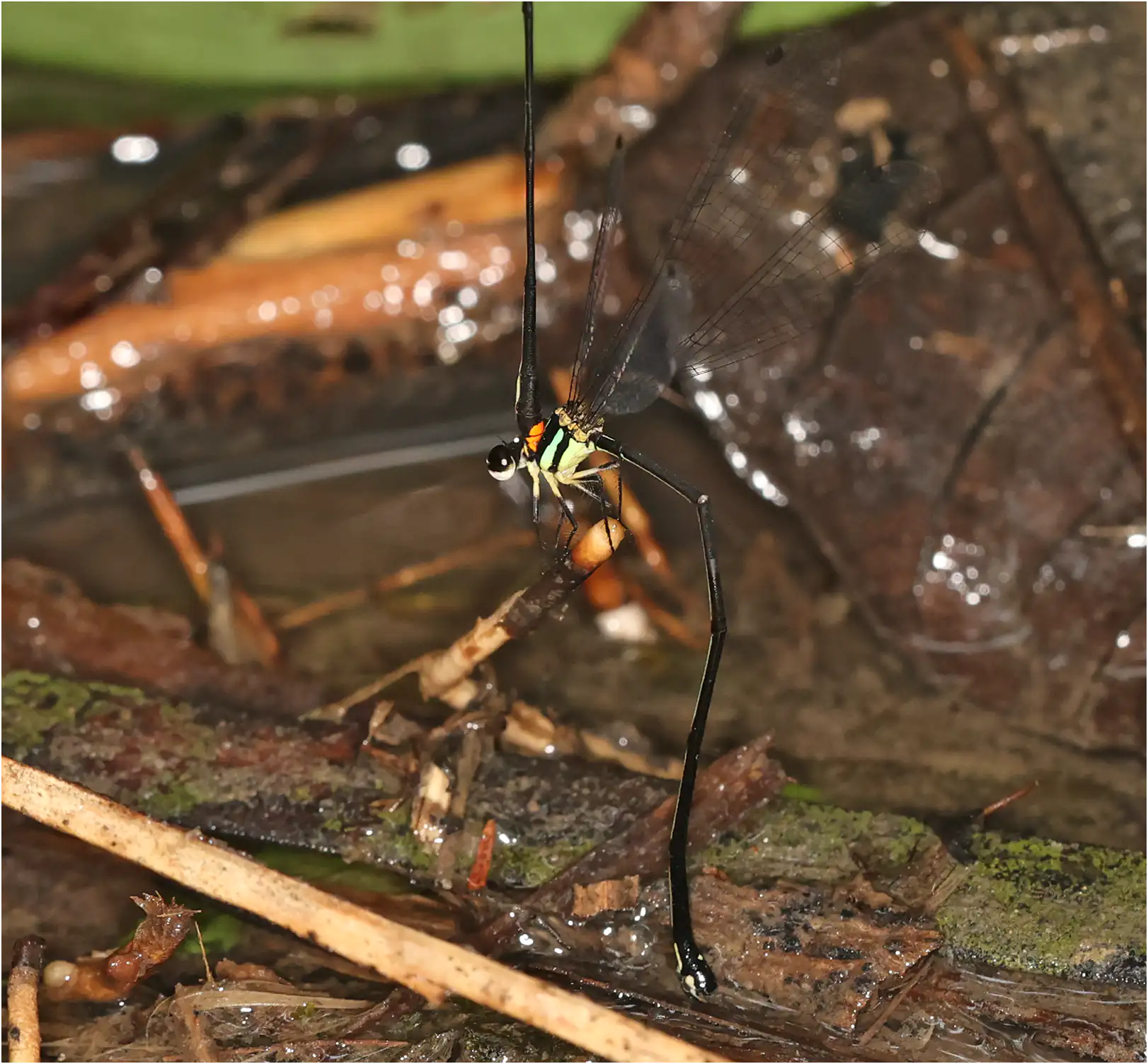
A few minutes earlier, we had encountered a female that had remained unidentified, but she displays the exact same pattern details on the thorax and abdomen, and it is certainly a young female Allocnemis elongata with shiny, still sparsely colored wings. The color of the wings provides an opportunity to recall that the genus is called Yellowwing in English, which applies little if at all to our species. Its species name, Orange-legged, is, on the other hand, very descriptive.
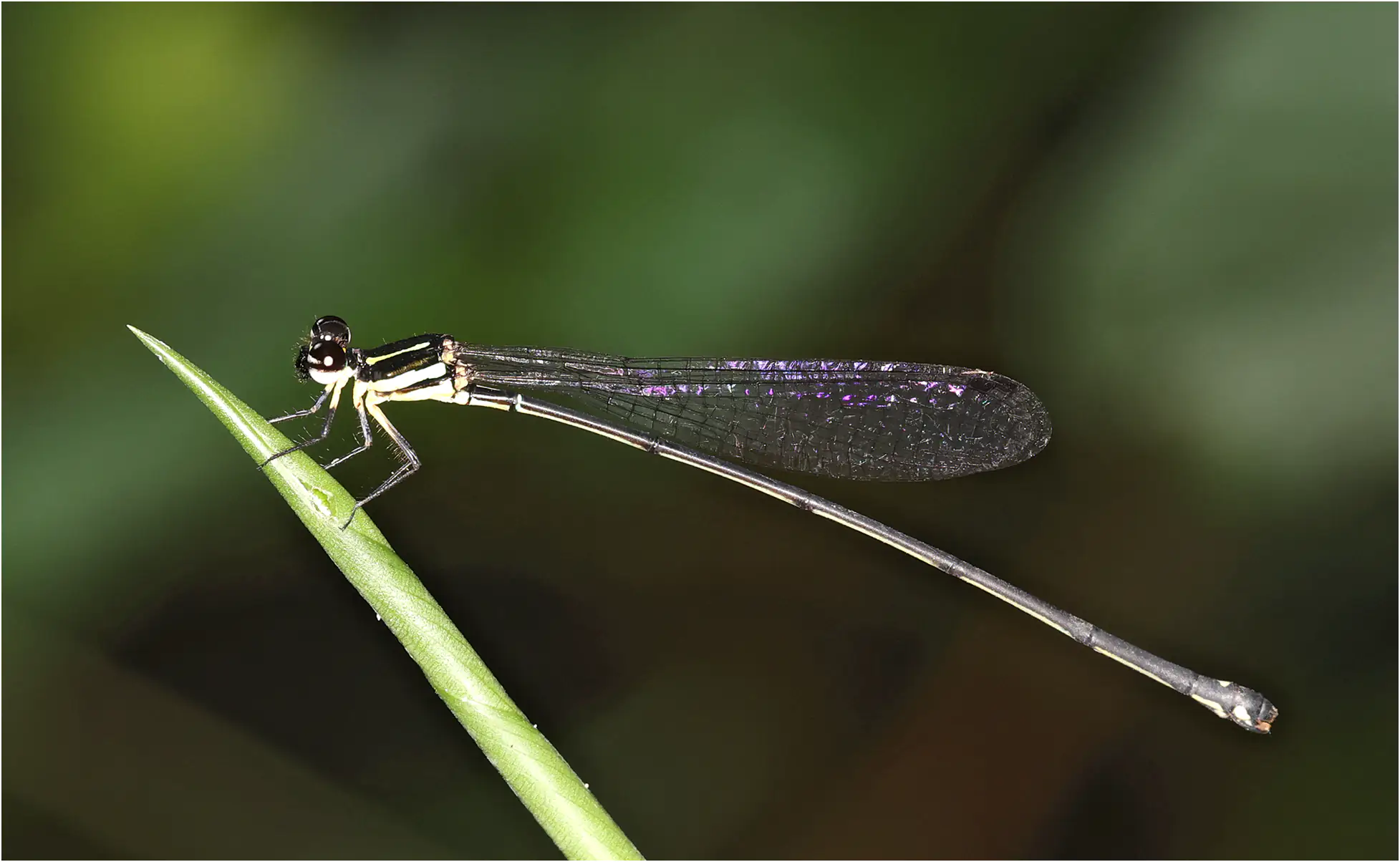
Etymology: Allocnemis elongata
Allocnemis, from the Greek allos, meaning other or different, and knemis, meaning greave (a piece of armor for the leg). In his Synopsis des Agrionines, Selys describes Allocnemis followed by Chlorocnemis, and if he introduces a notion of difference, it is because he finds the two genera very similar in coloration. He writes: "Ils imitent par leur coloration les Chlorcnemis de la même contrée... - They imitate in their coloration the Chlorocnemis of the same region..." As for cnemis, which was initially used to emphasize the specific leg characteristics of certain members of the family, it should now merely be seen as an indication of belonging to the Platycnemididae.
Elongata, from the Latin elongare, meaning to stretch or lengthen. Selys describes two Allocnemis in succession, Allocnemis elongata and A. flavipennis, but he notes that the former is larger: "Diffère de la flavipennis par la taille plus grande - Differs from flavipennis by its larger size." Indeed, the abdomen of flavipennis measures only 33 mm.
Dijkstra, K.-D. B., Kalkman, V. J., Dow, R. A., Stokvis, F. R., & van Tol, J. (2014) - Redefining the damselfly families: a full-lineage molecular phylogeny of Zygoptera (Odonata). Systematic Entomology, 39(1), 68–96.
Selys, 1863 – Synopsis des Agrionines, 4° Légion Platycnemis, p 176.