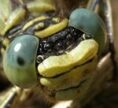
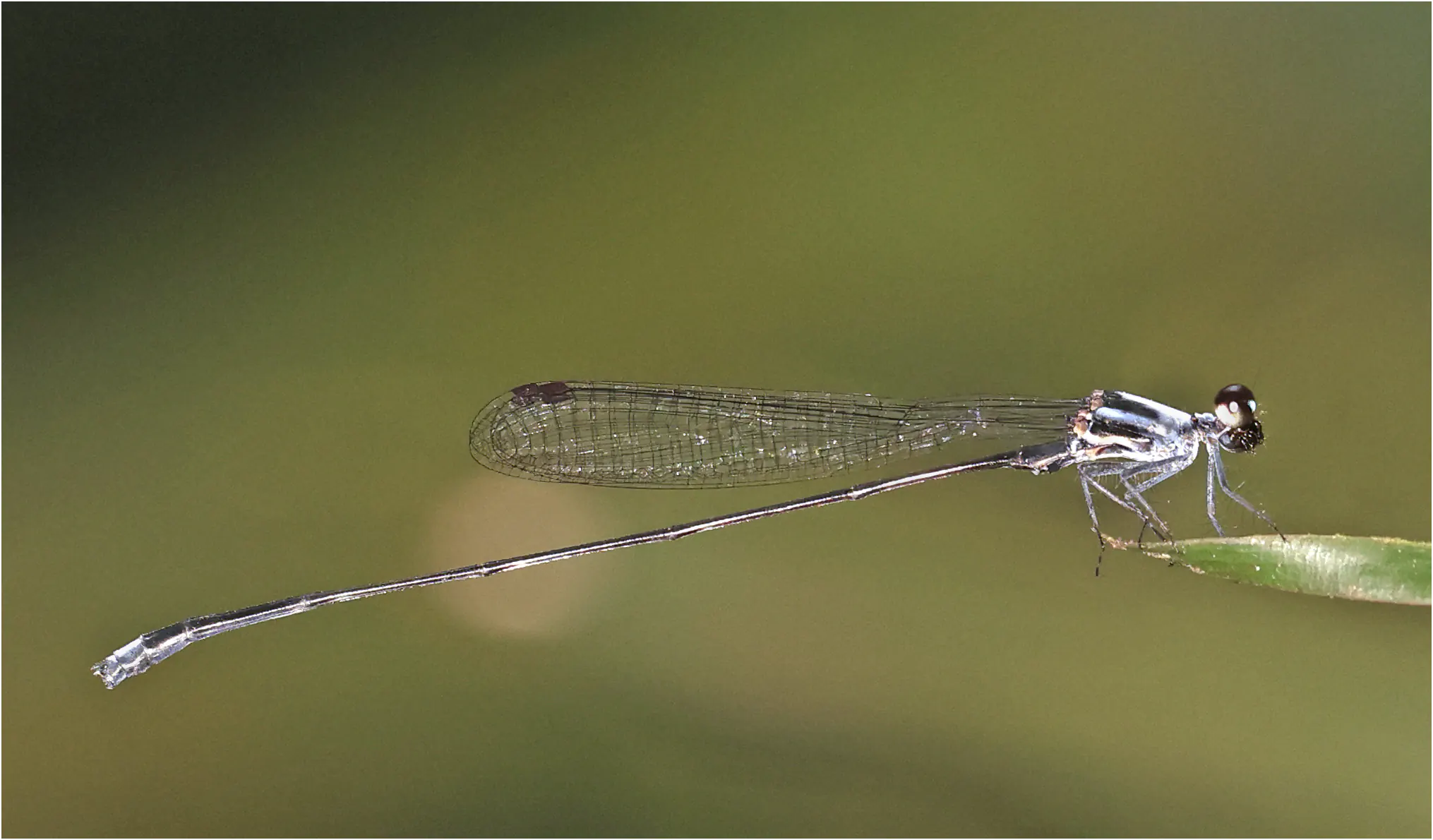
Among the thirty or so tropical African Elattoneura, Elattoneura balli is one of four recorded in Ghana. We were fortunate enough to encounter them all, and the species it is closest to is certainly E. villiersi.
However, while both have a pale dorsal surface on the thorax, E. villiersi displays two well-defined white elliptical shapes, whereas our species is simply covered with a whitish pruinescence without distinct boundaries. Furthermore, E. villiersi has white final two segments as well as a white distal end on S8. This distal end remains dark in Elattoneura balli.
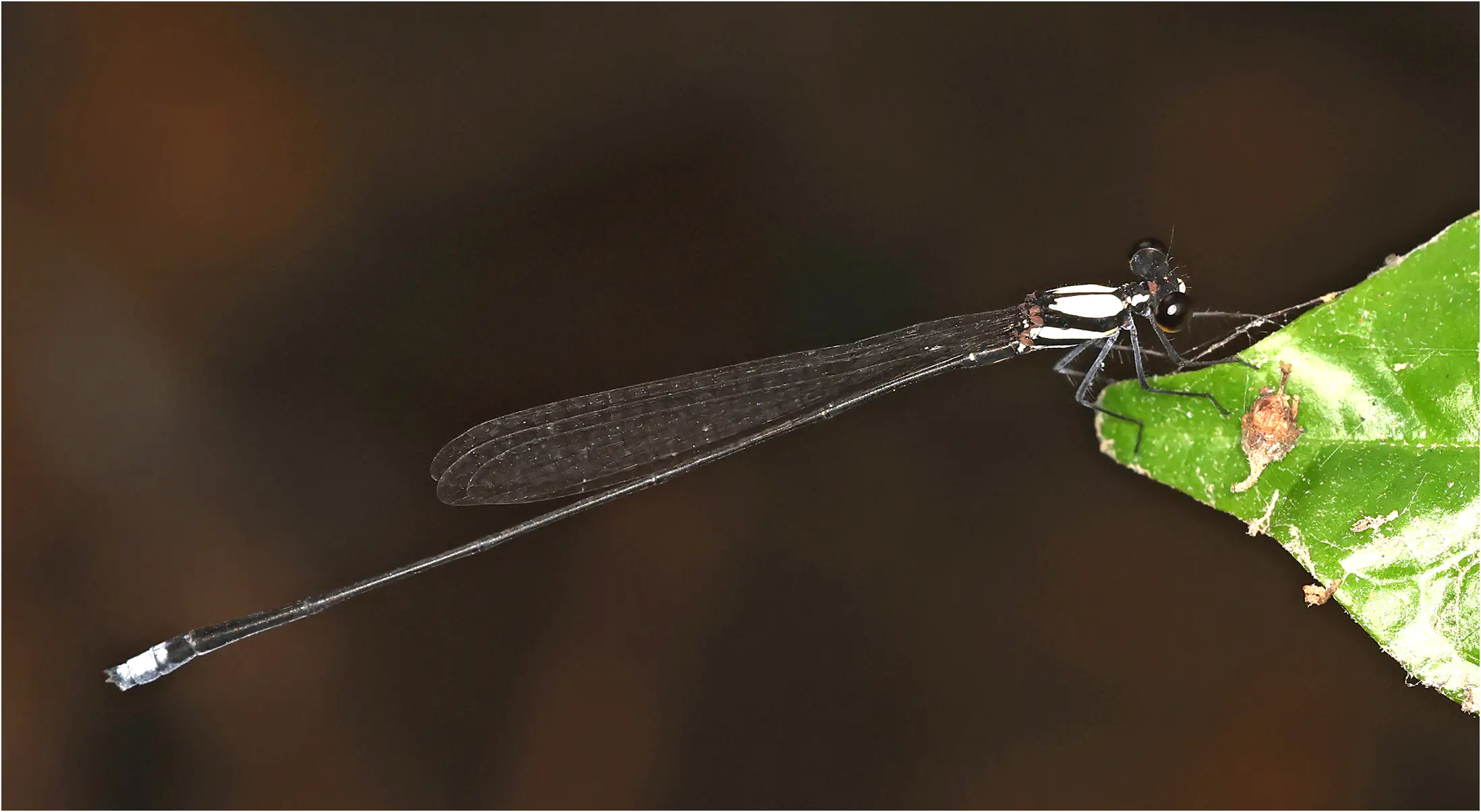
It is also very close to, or even indistinguishable without a hand lens from E. pruinosa, and very similar to E. lliba, but these two species do not range into West Africa. It is also known by the English common name Western Stream Threadtail.
And I had been surprised to encounter two Elattoneura in Borneo, in Sarawak (E. aurantiaca et E. longispina) ; According to Rory Dow, the specialist for this region, the Asian specimens almost certainly belong to another genus, which remains to be described.
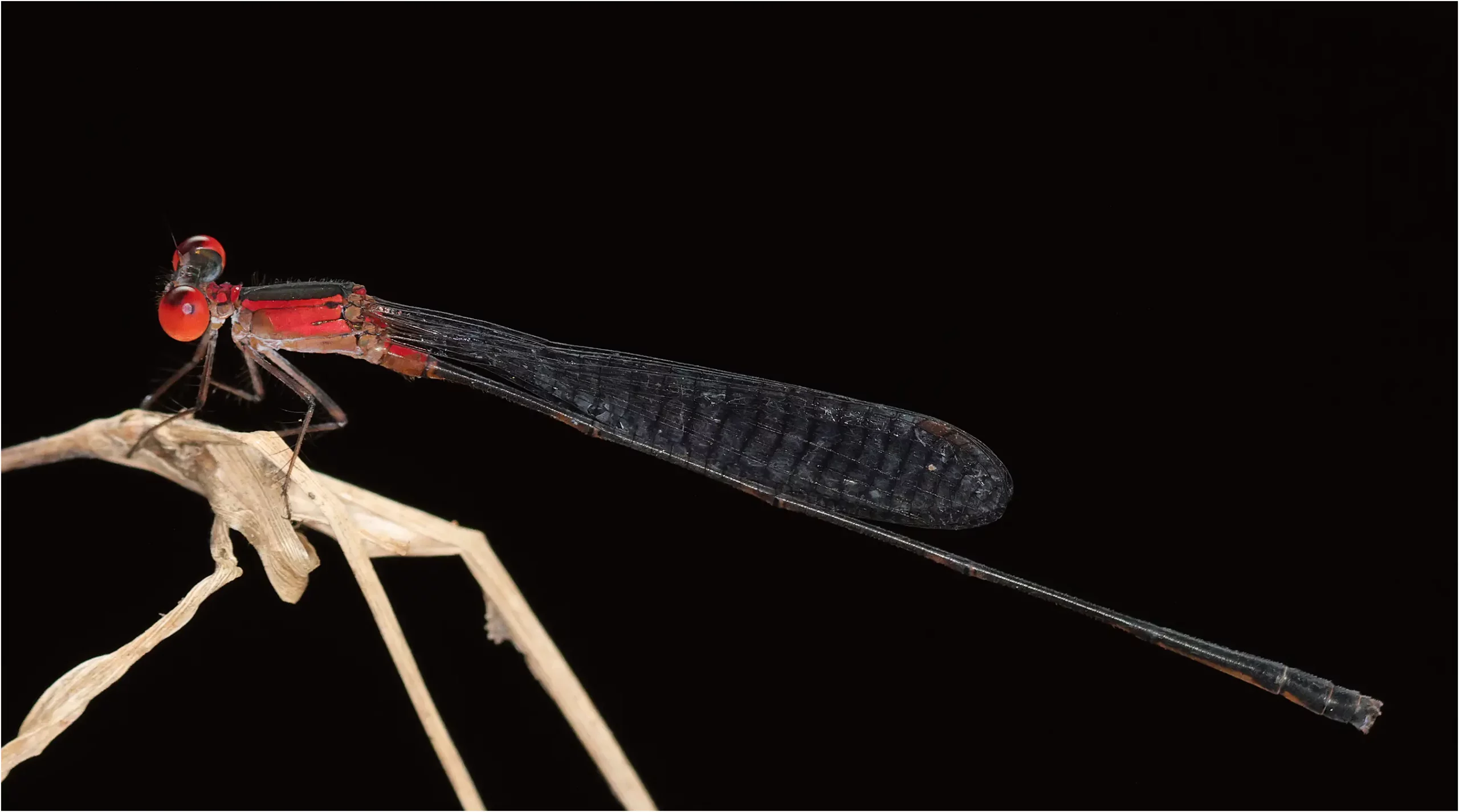
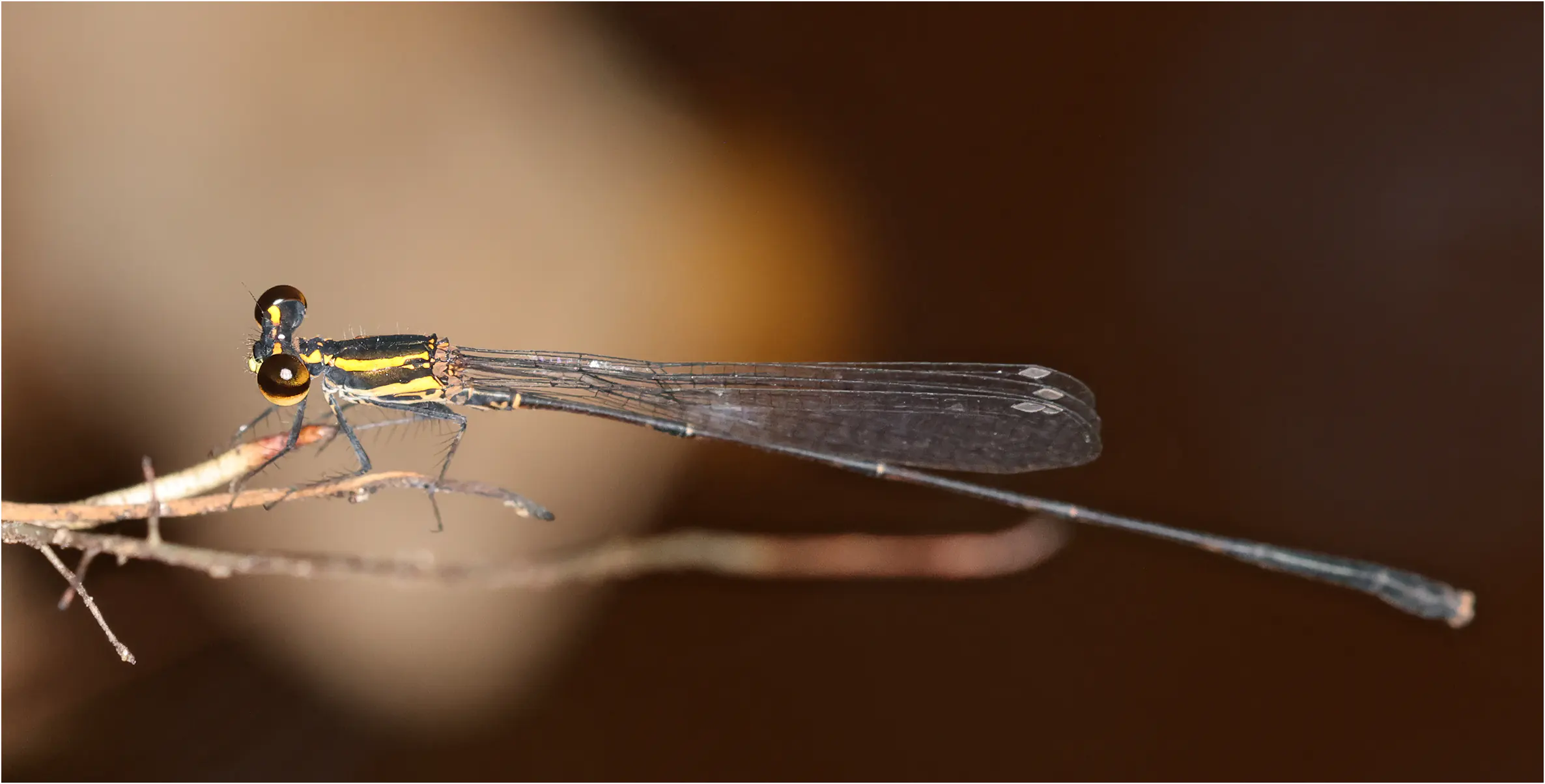
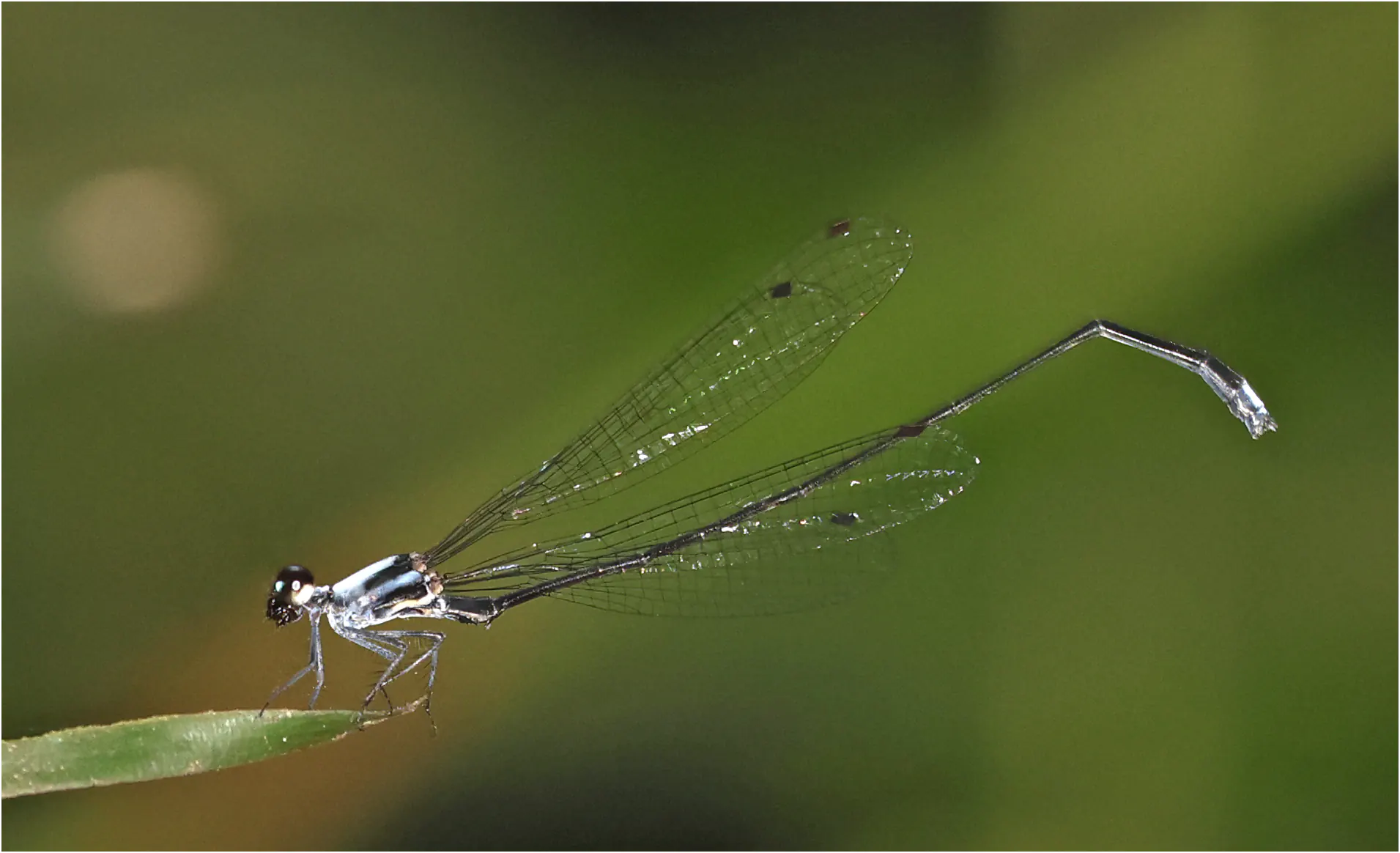
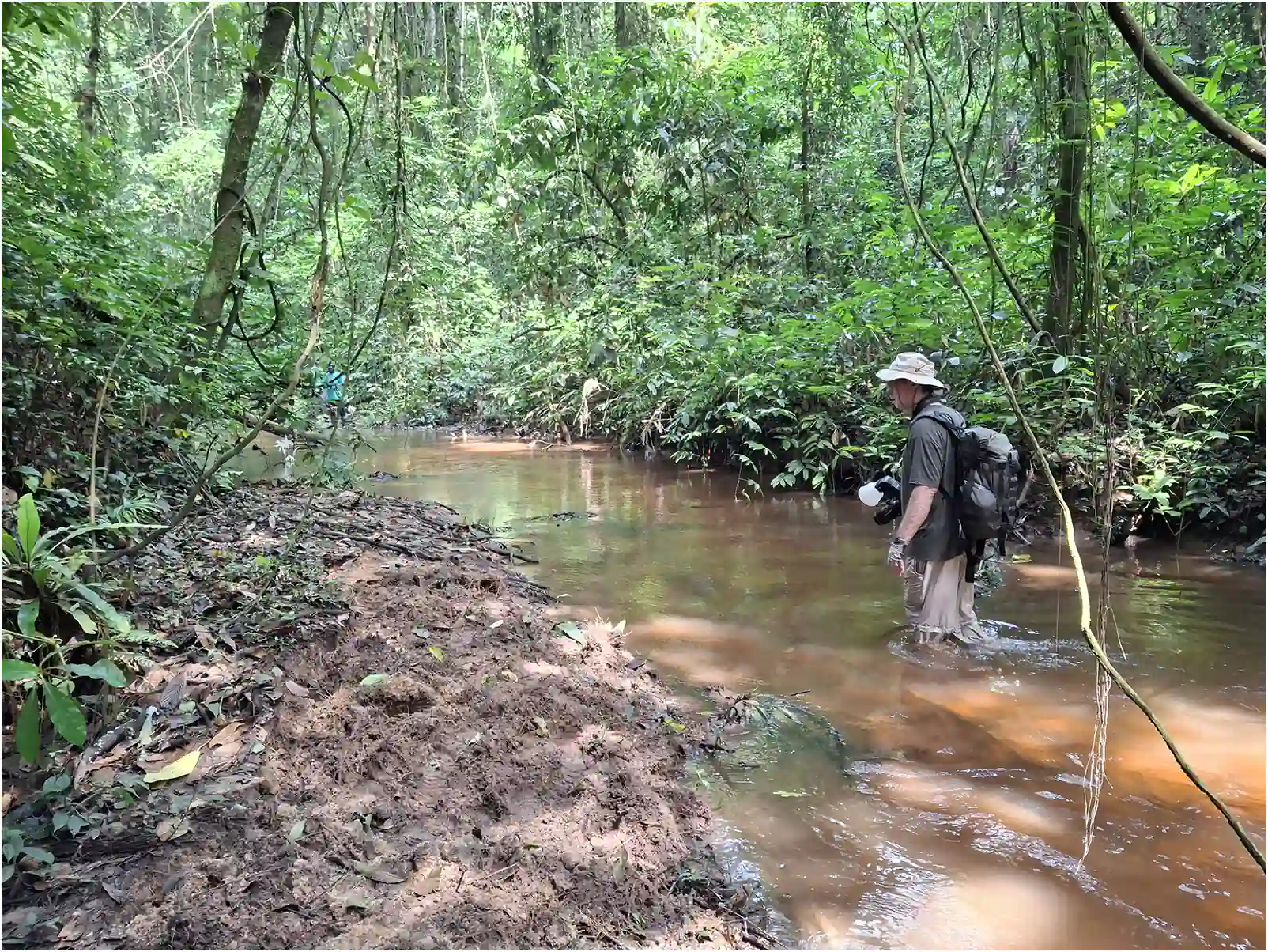
We only had a single encounter with Elattoneura balli, on a small river stream, with low water levels, a sandy and rocky bottom—quite the same environment that suits E. villiersi.
According to Kimmins, its abdomen measures 34 mm, so it barely reaches 40 mm.
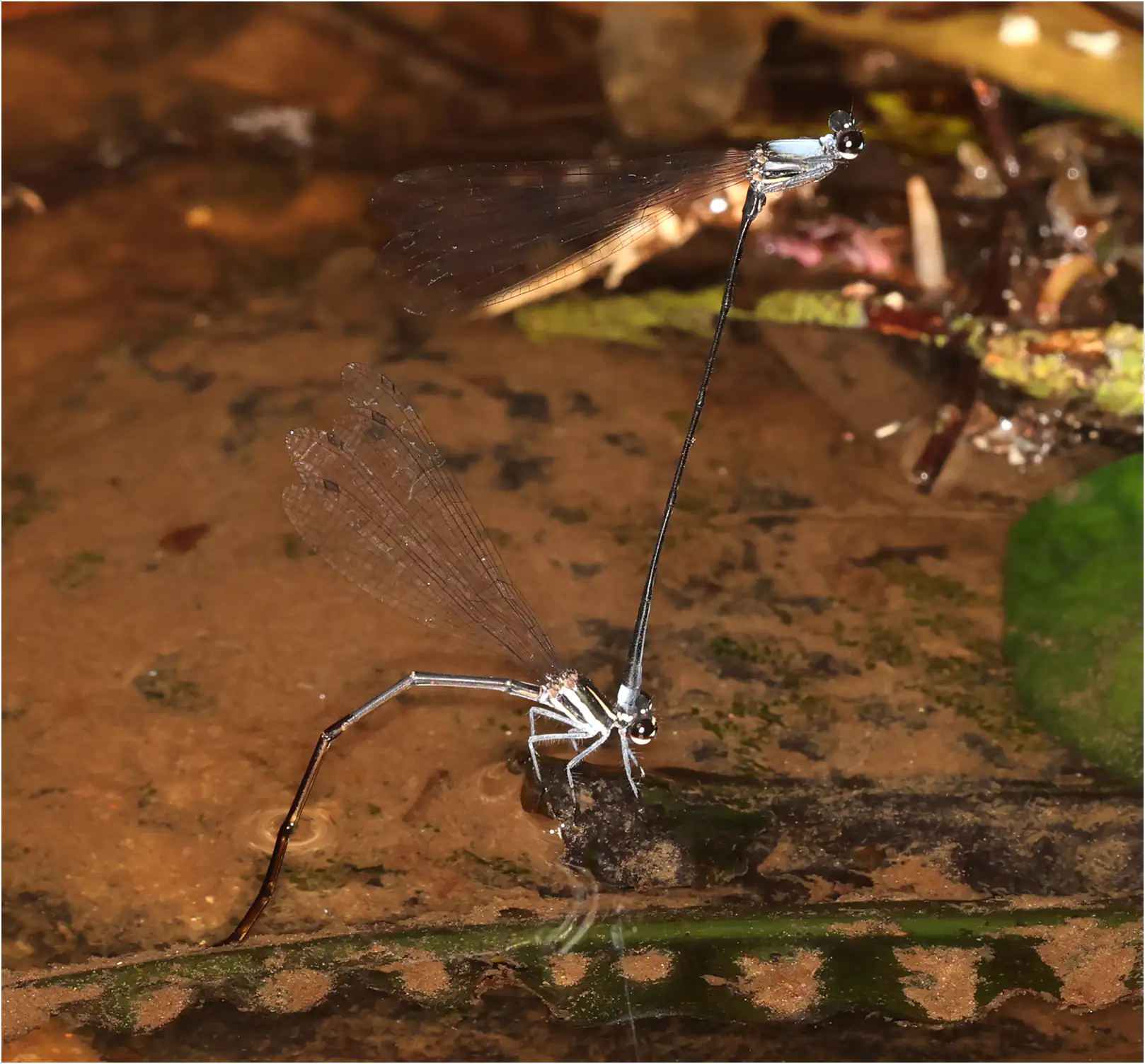
We were fortunate enough to observe a ovipositing pair, a rare opportunity to observe a female. She was inserting her eggs into living, floating, or submerged vegetation.
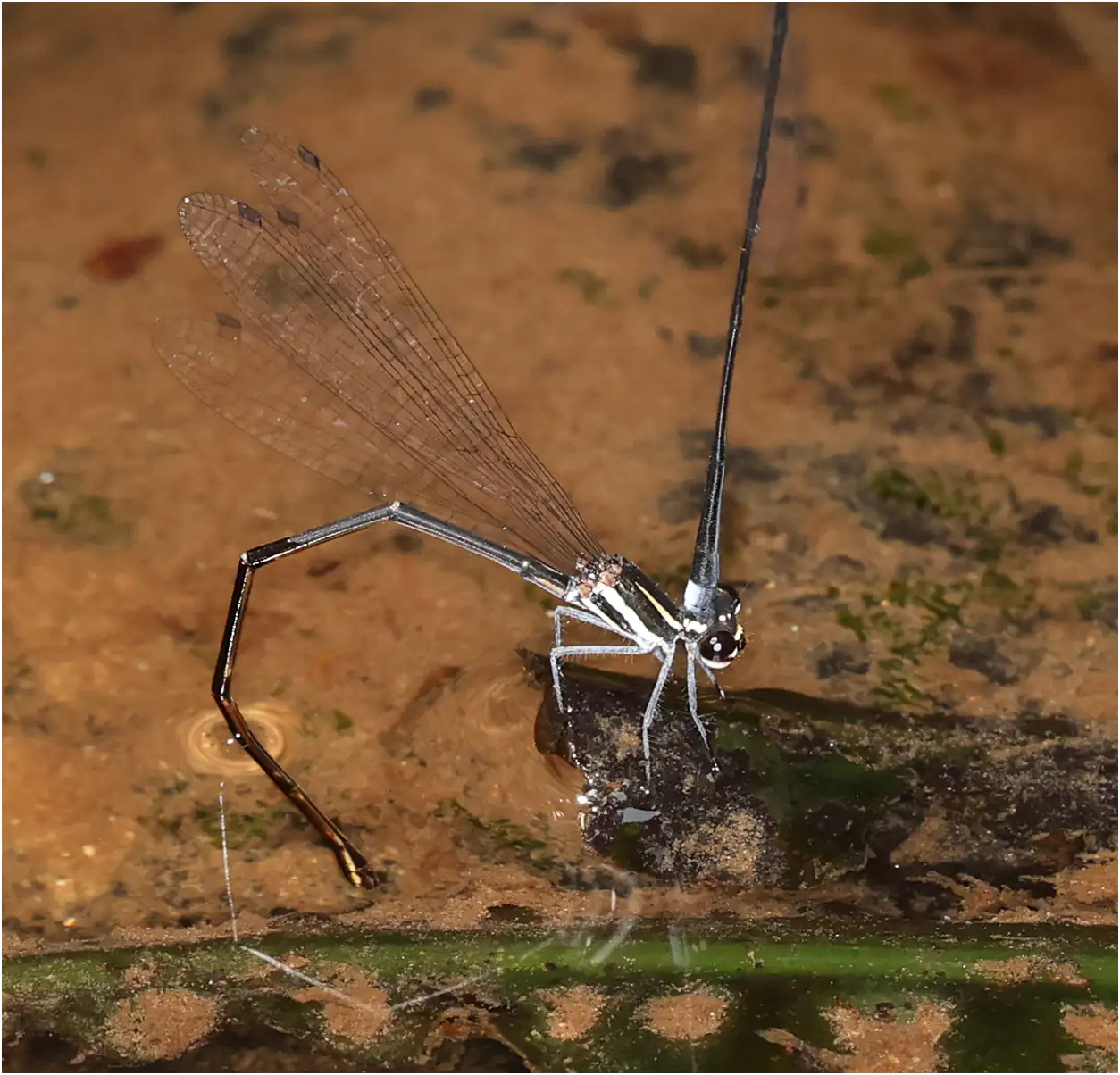
Its distribution extends from Guinea and Sierra Leone to Cameroon.
IUCN Red List.
Etymology of Elattoneura balli
Elattoneura from the Greek ellaton, for smaller, and neuron which in entomology is translated as a vein in a wing. This refers to the reduced length of a vein that serves as a benchmark in the taxonomy of damselflies. See Suhling & Martens (2007).
Balli; to quote Kimmins: "It is with pleasure that I name this species after Monsieur Antoine Ball [a Belgian entomologist], in recognition of the assistance he has given me on many occasions in elucidating difficult points in connection with the Selysian types of Odonata."
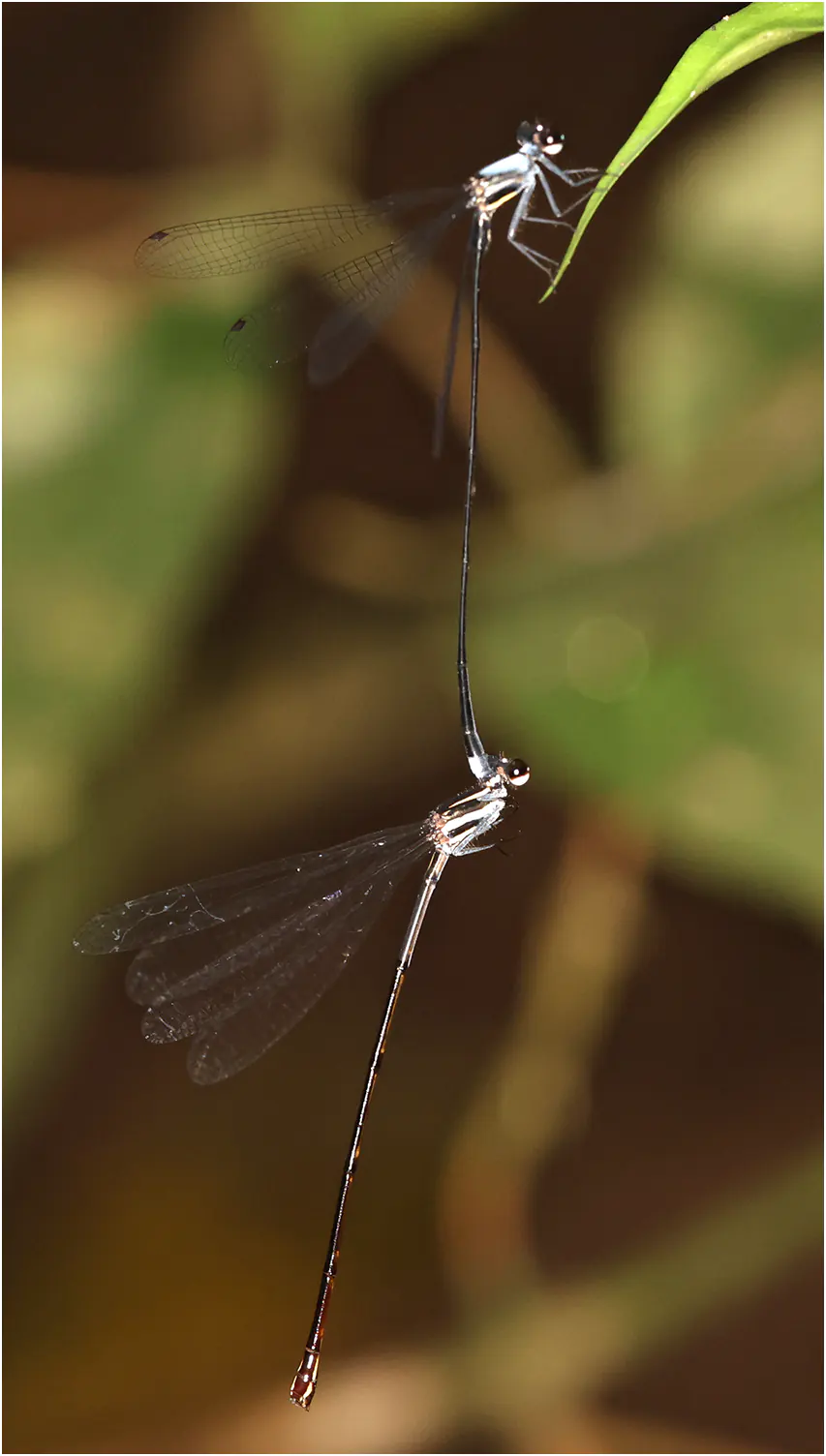
Elattoneura balli tandem, Ghana, Ankasa Forest Reserve, 16/01/2026
Kimmins, 1938 – New African species of Elattoneura (Odonata) – Annals and Magazine of Natural History – Serie 11 – Volume 1 – Issue 3 – P. 296.
Suhling & Martens, 2007 – Dragonflies and Damselflies of Namibia, Gamsberg Macmillan.