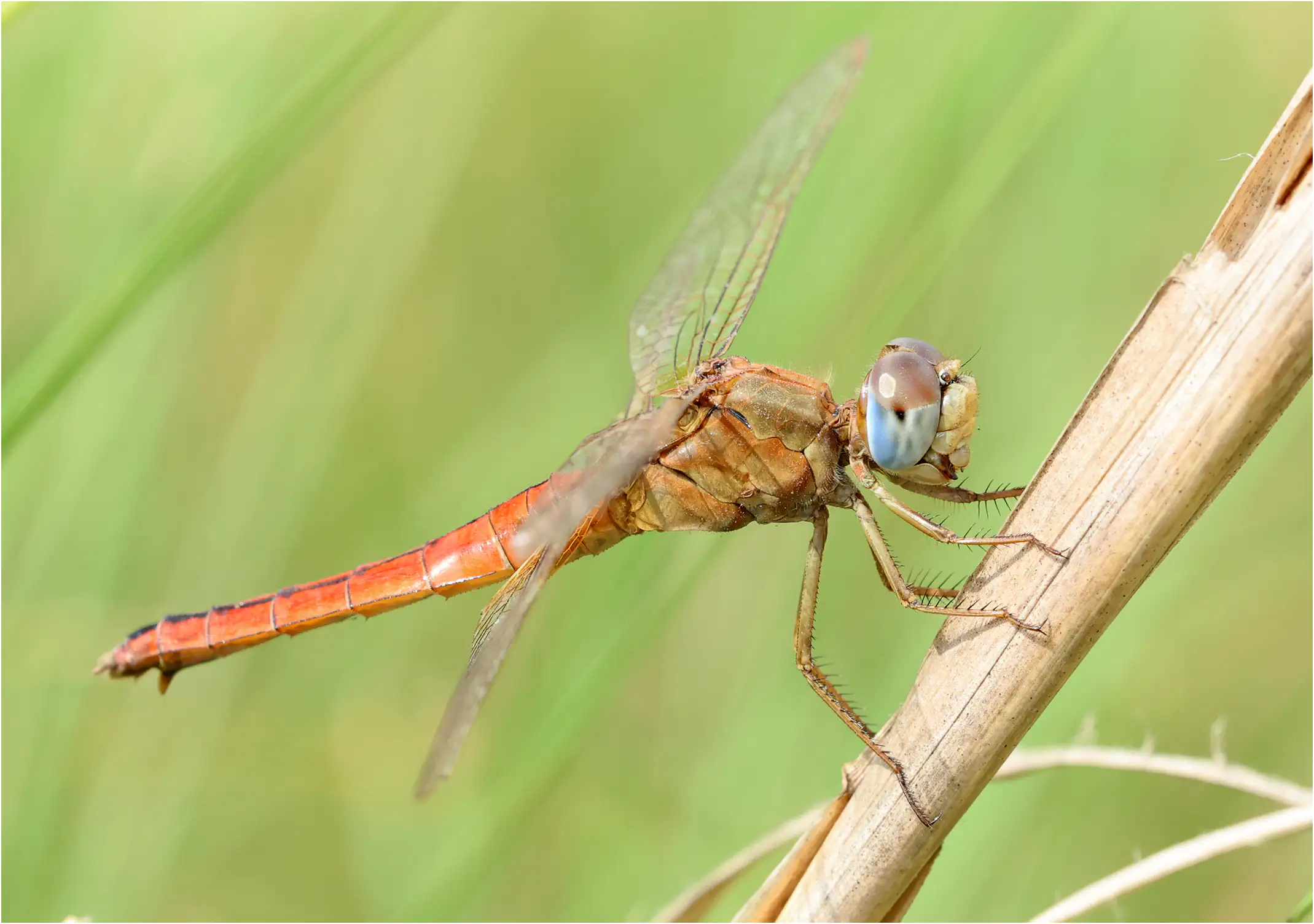
I had never encountered a female Crocothemis erythraea with such an appearance. Yet, Crocothemis erythraea is very common in my home region in France, but very scarce in the areas we surveyed in Ghana, since we remained primarily in the forest.
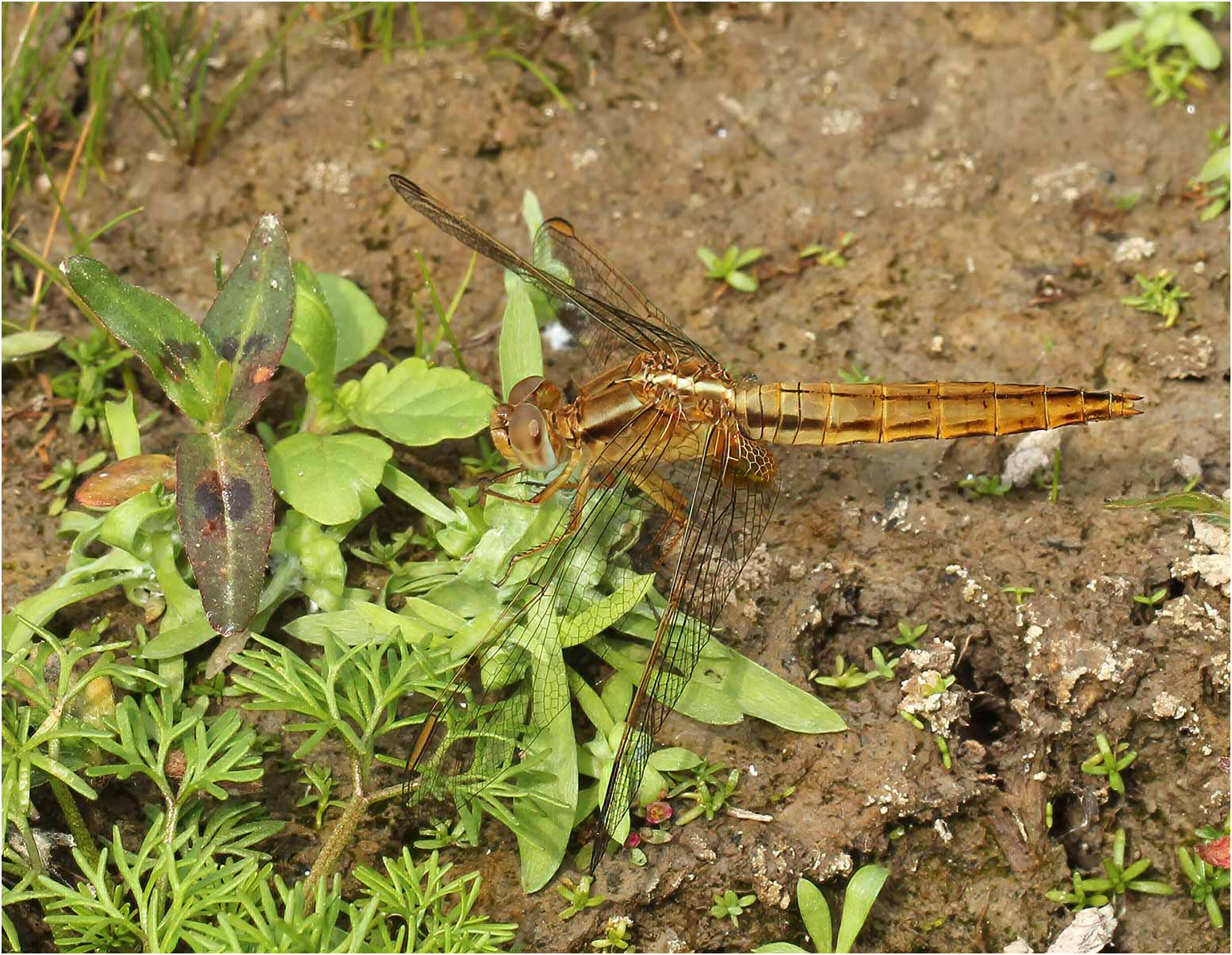
Typically, females are yellow (or golden), with amber-tinted wing bases like the subcostal venation, a dark brown antehumeral stripe, and a more or less pronounced black line running along the dorsal abdominal carina. Much like the one below, although the black line on the dorsal carina is quite pronounced here.
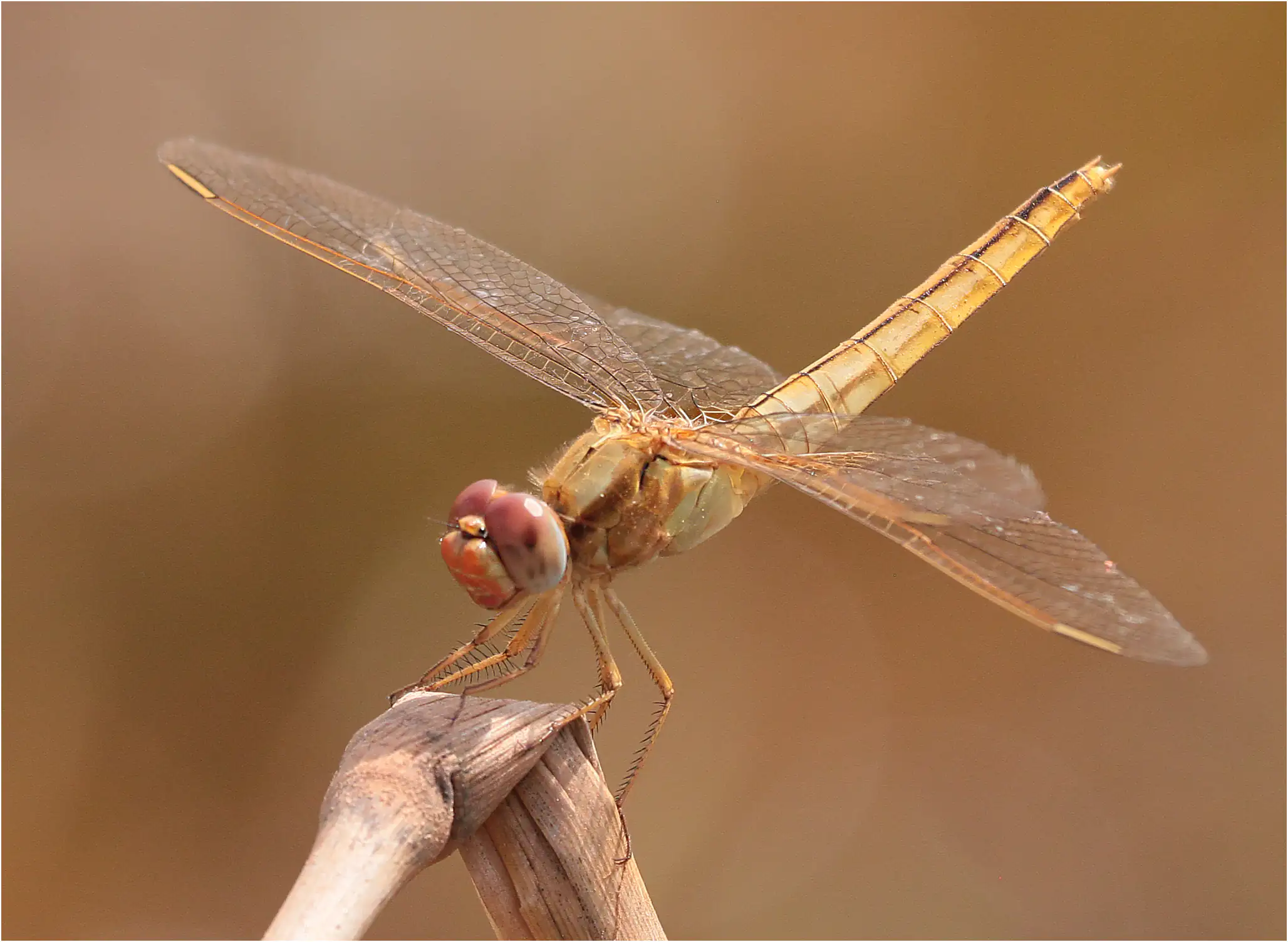
Andromorphic or androchrome females are also encountered, sharing the same color—or nearly so—as the males, and thus, of course, red.
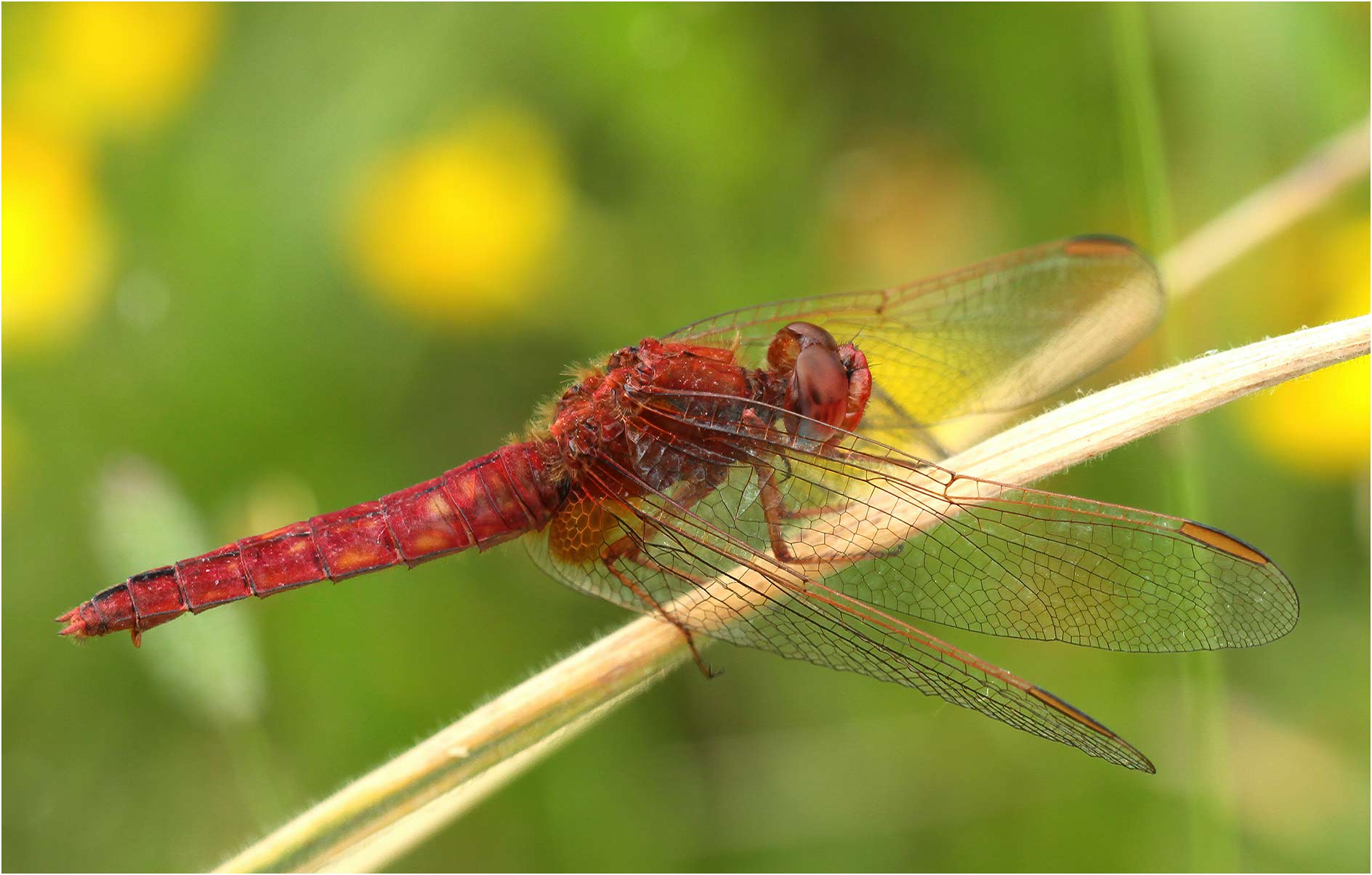
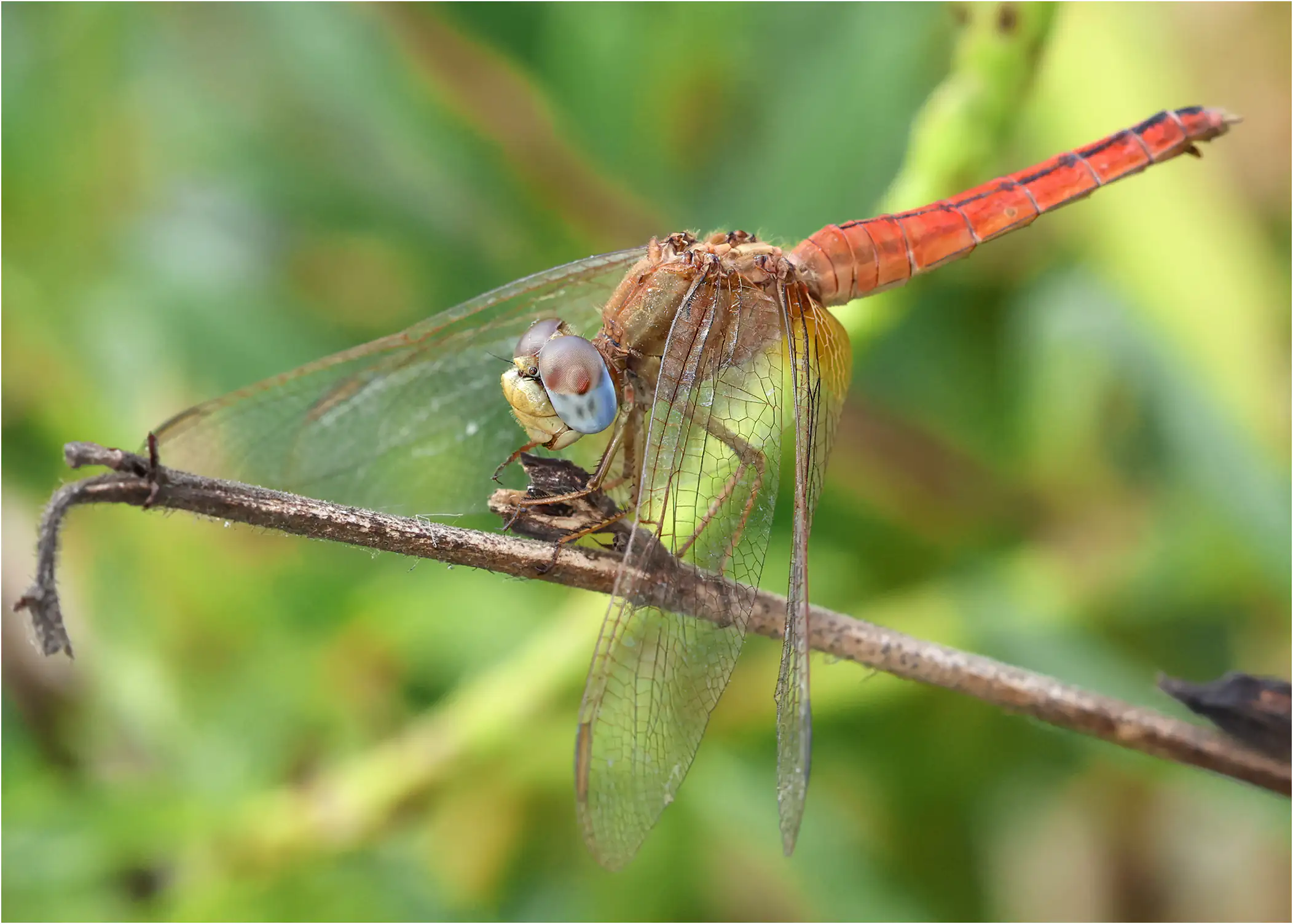
However, I had never seen a semi-androchrome female before. One might think that its maturation is incomplete and that its thorax will also turn red; I do not believe so, because even though it is not an old female, it is not very young either—its abdomen is brightly colored with a very strong black line along the dorsal face of the abdomen, and its face is very pale and whitish.
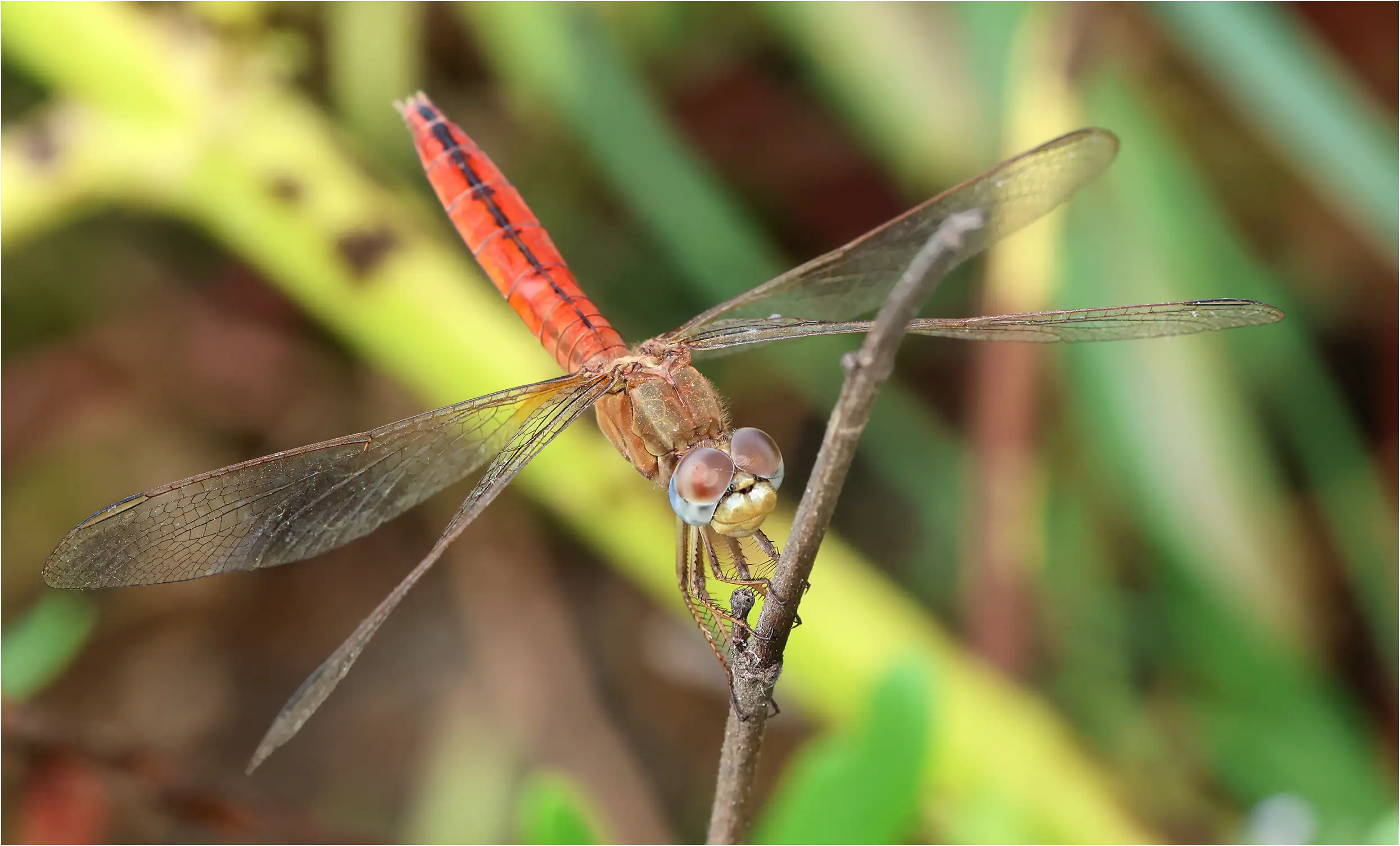
We were even briefly thrown off in identifying it, since both Crocothemis sanguinolenta and C. divisa are present in Ghana; however, C. divisa is a small species whose females do not display wing coloration or a basal wing patch, whereas the lateral abdominal carina of C. sanguinolenta is punctuated with black dashes.
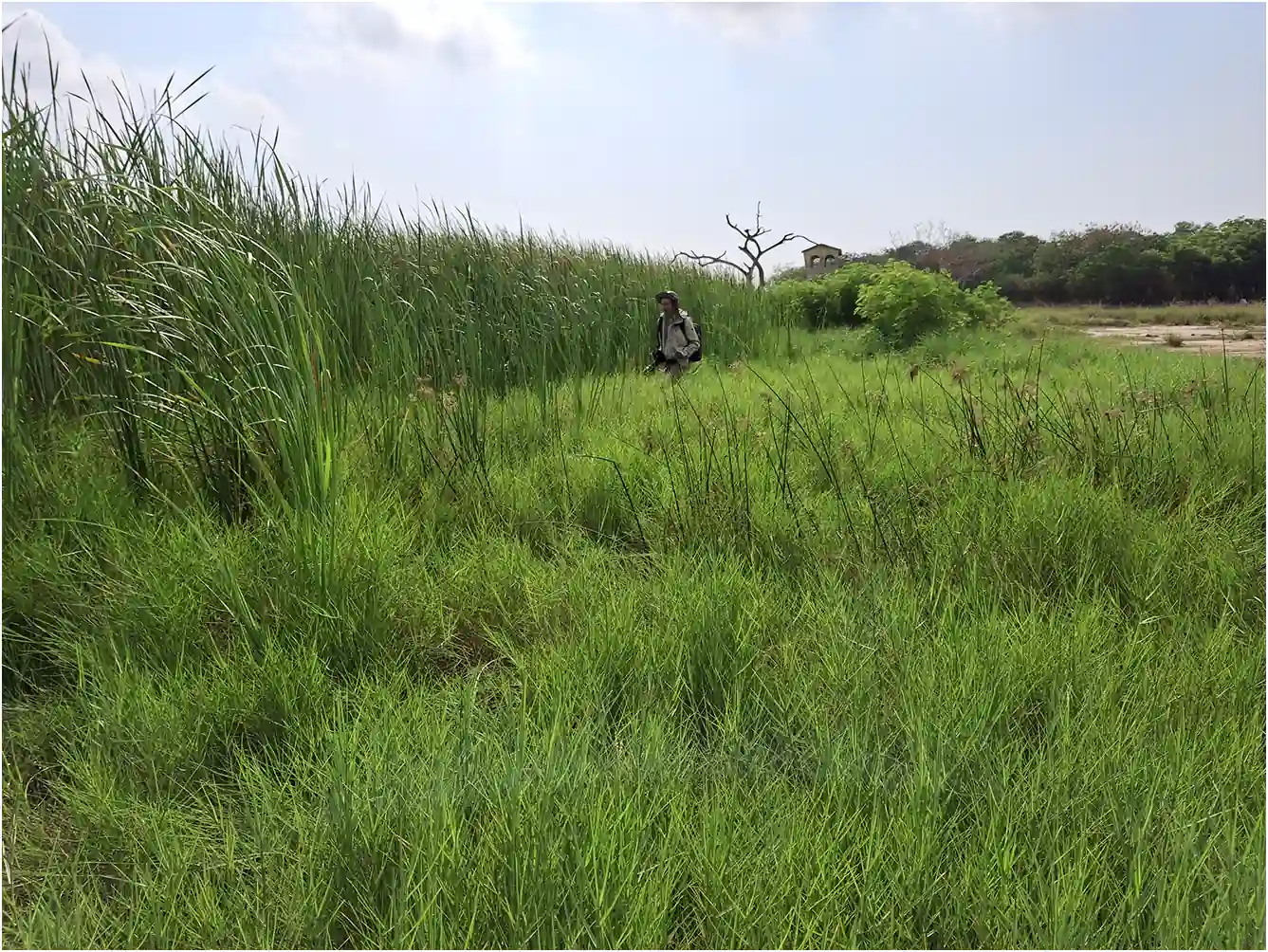
We observed this female Crocothemis erythraea at the edge of a wide wetland created by the delta of two rivers forming a "lagoon." Their habitat favors lentic environments, much like in France, though they are occasionally found along the banks of slow-flowing rivers.
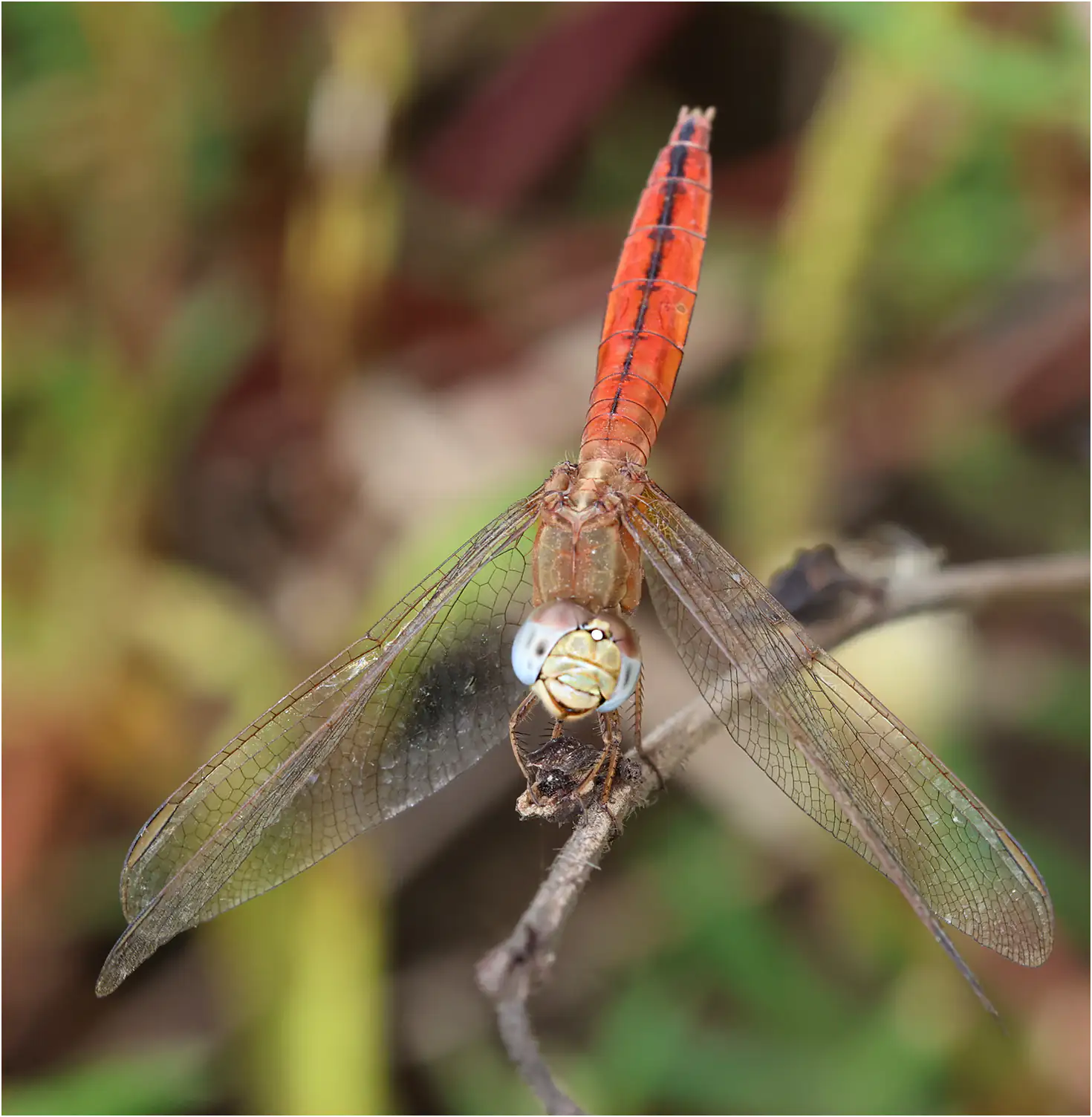
It is the most widespread and common Crocothemis in Africa, yet we encountered it only three times. Its distribution range is gigantic, especially as it is constantly expanding northward into Europe; it crossed the Strait of Gibraltar only in 1975 and is now well established in Germany and the Netherlands, and occasionally reported in England. It occupies the entirety of Africa up to Madagascar and reaches eastern India and Kyrgyzstan.
IUCN Red List.
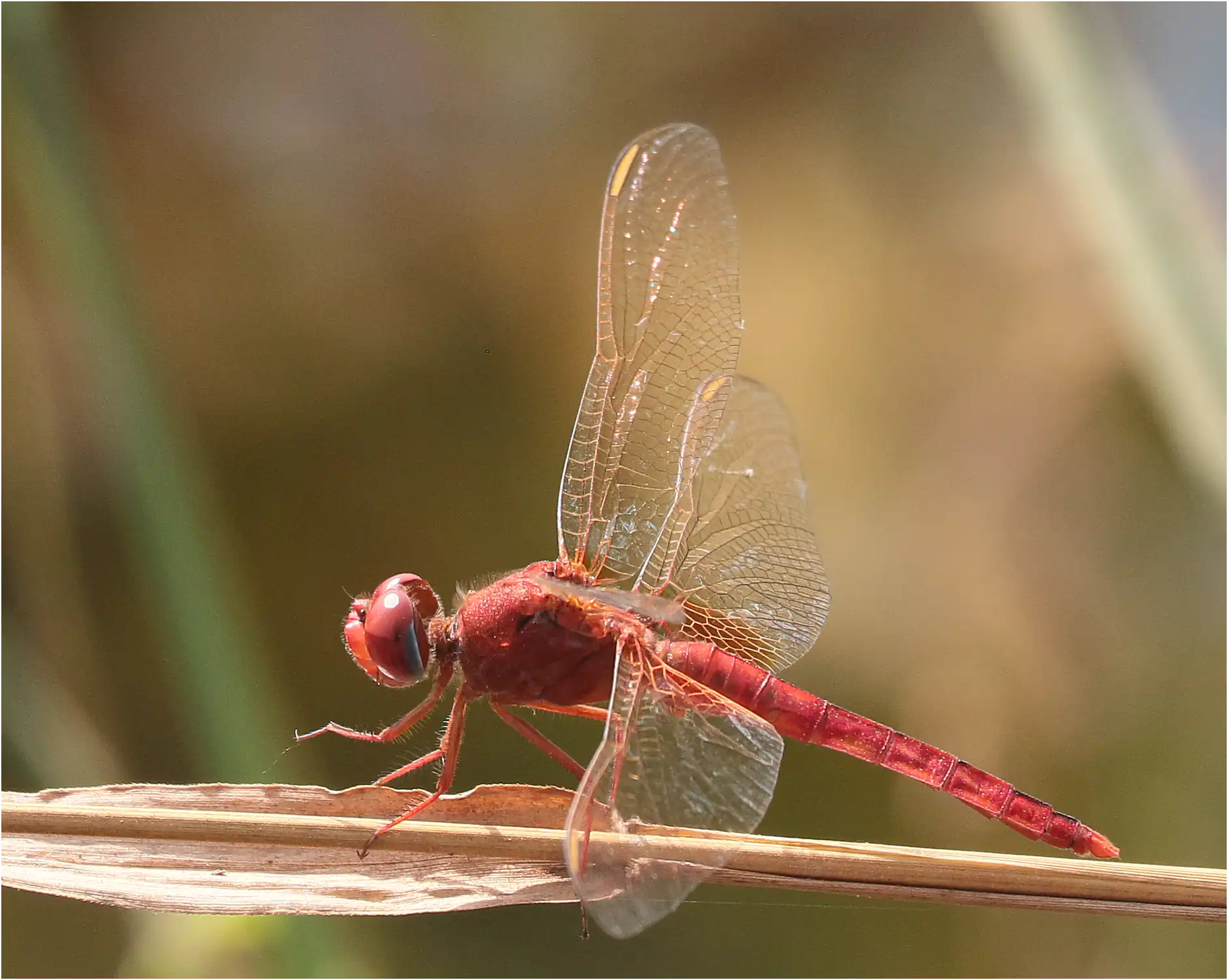
Etymology of Crocothemis eythraea
Brullé described the species in the genus Libellula, and it was Brauer who made it the type species of his genus Crocothemis in 1868.
Crocothemis, from the Greek krokos for saffron, referring to the color of the wing base, and Themis, the Greek goddess of divine order and law. Hagen created several generic names ending in the suffix -themis in 1861, likely following the precedent of using divine names for dragonflies like Echo or Nehalennia. The name of the goddess of order is particularly well suited to taxonomy, the science that seeks to describe and order families, genera, and species. Brauer adopted the term -themis, which effectively became an indicator of affinity within the Libellulidae.
Erythraea, from the Latin erythraeus, meaning "red," referring to the scarlet color of the mature male rather than any Eritrean origin (the former province of Ethiopia, whose name also derives from the red color of the sea it borders). The species was described from a specimen collected in the southwestern Peloponnese (present-day Greece).
Brullé, 1832 - Expédition scientifique de Morée. Section des sciences physiques. Tome III. — Première partie Zoologie. Deuxième section. — Des animaux articulés ; par M. Brullé ; les crustacés par M. Guérin. P. 102.