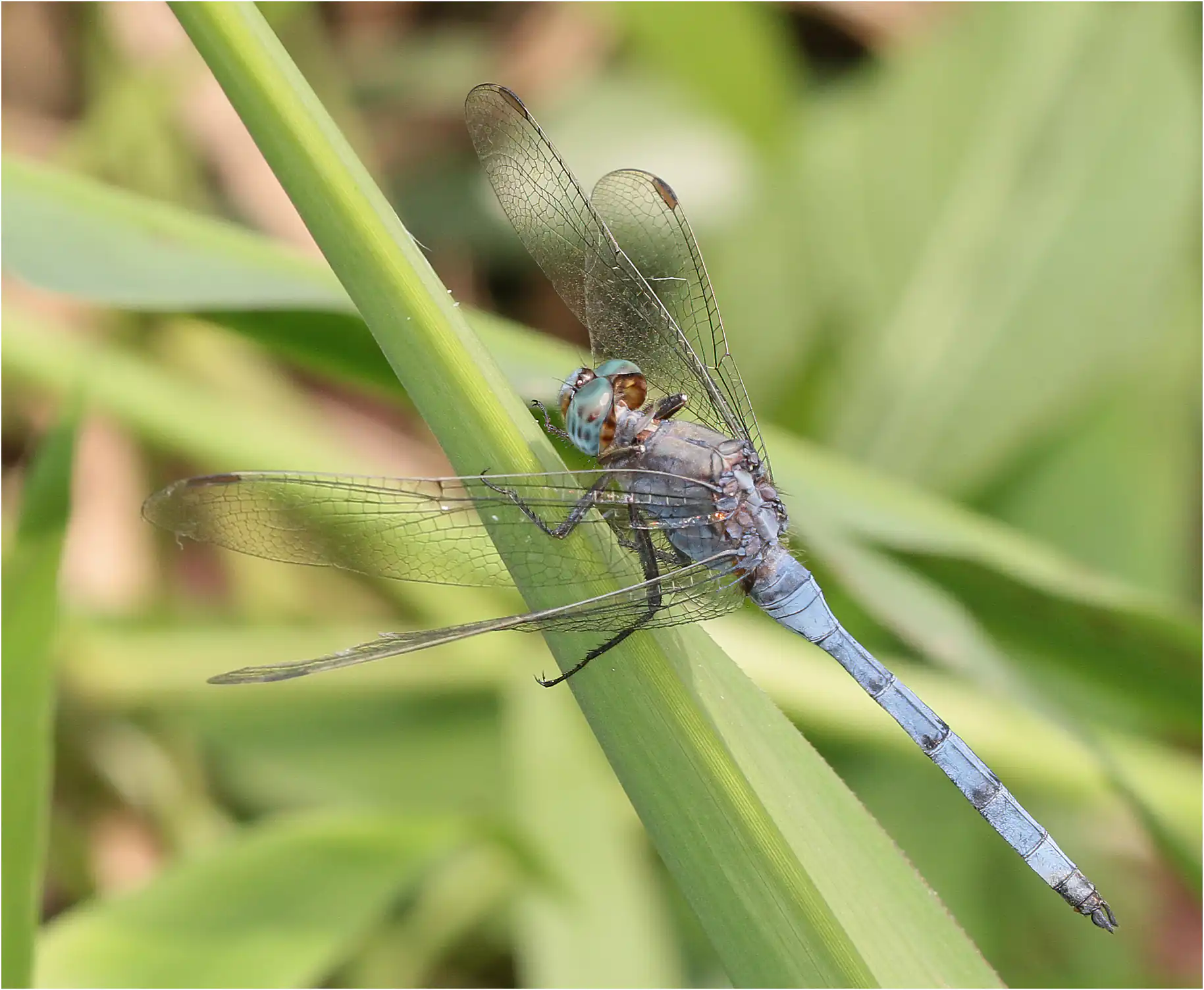
I had already encountered Orthetrum chrysostigma, first in South Africa (a female), then in Ethiopia (an aged female), and finally at great length with numerous photos of males, females, and matings in Namibia.
Yet, among all the Ghanaian Orthetrum species (15 are currently known in Ghana out of the 36 African Orthetrum), I had a hard time recognizing it, at least on the last series of photos.
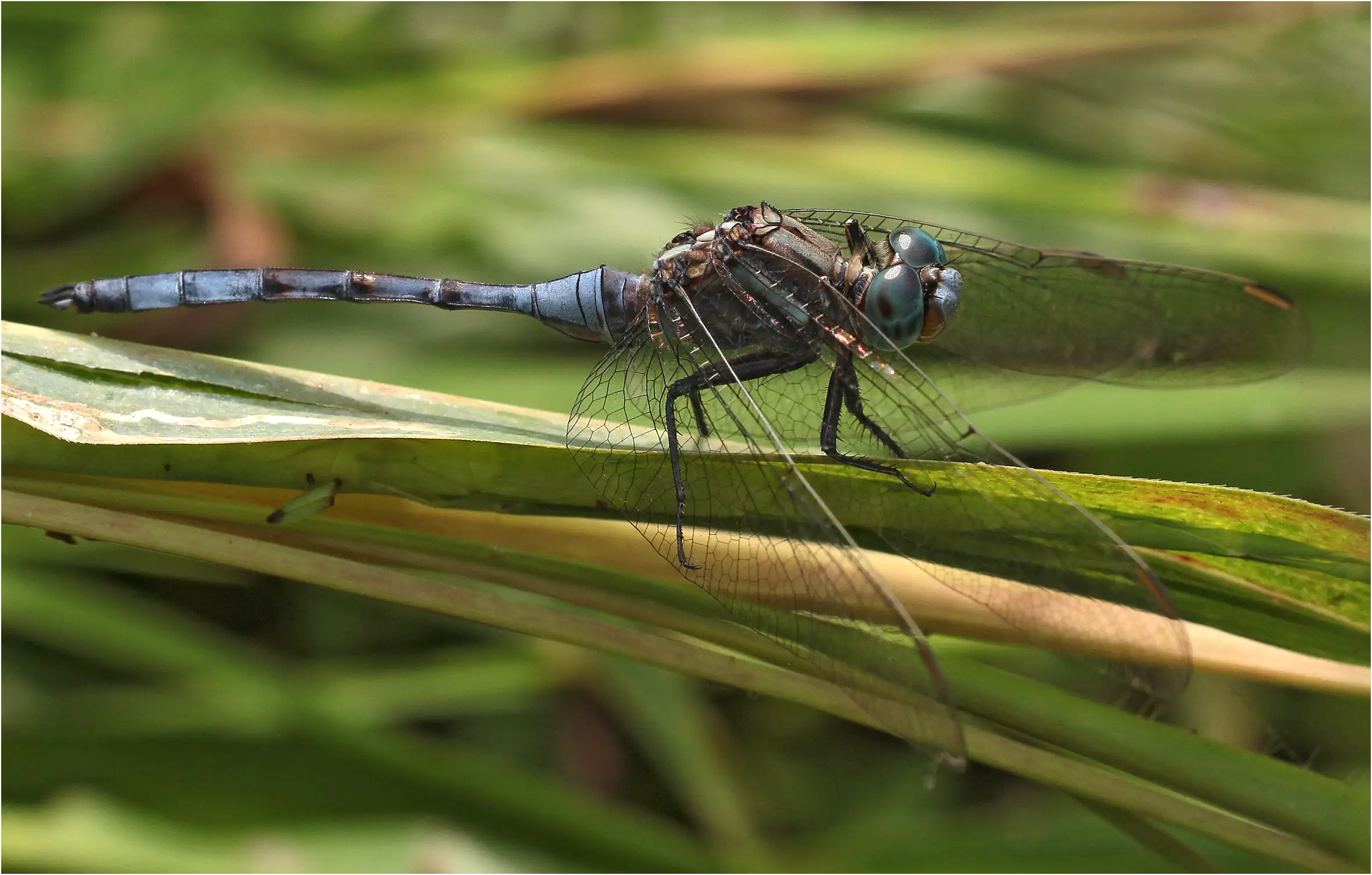
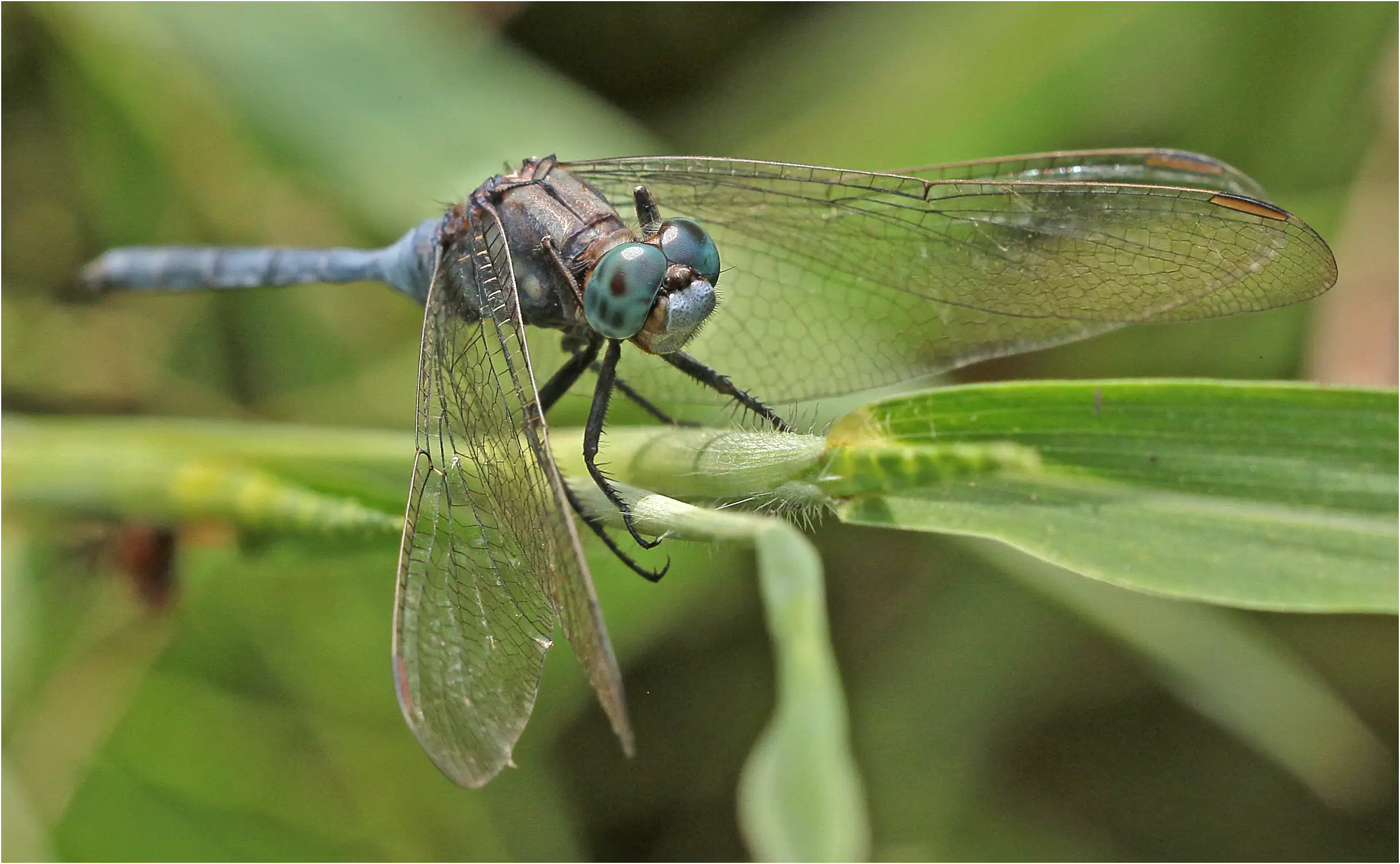
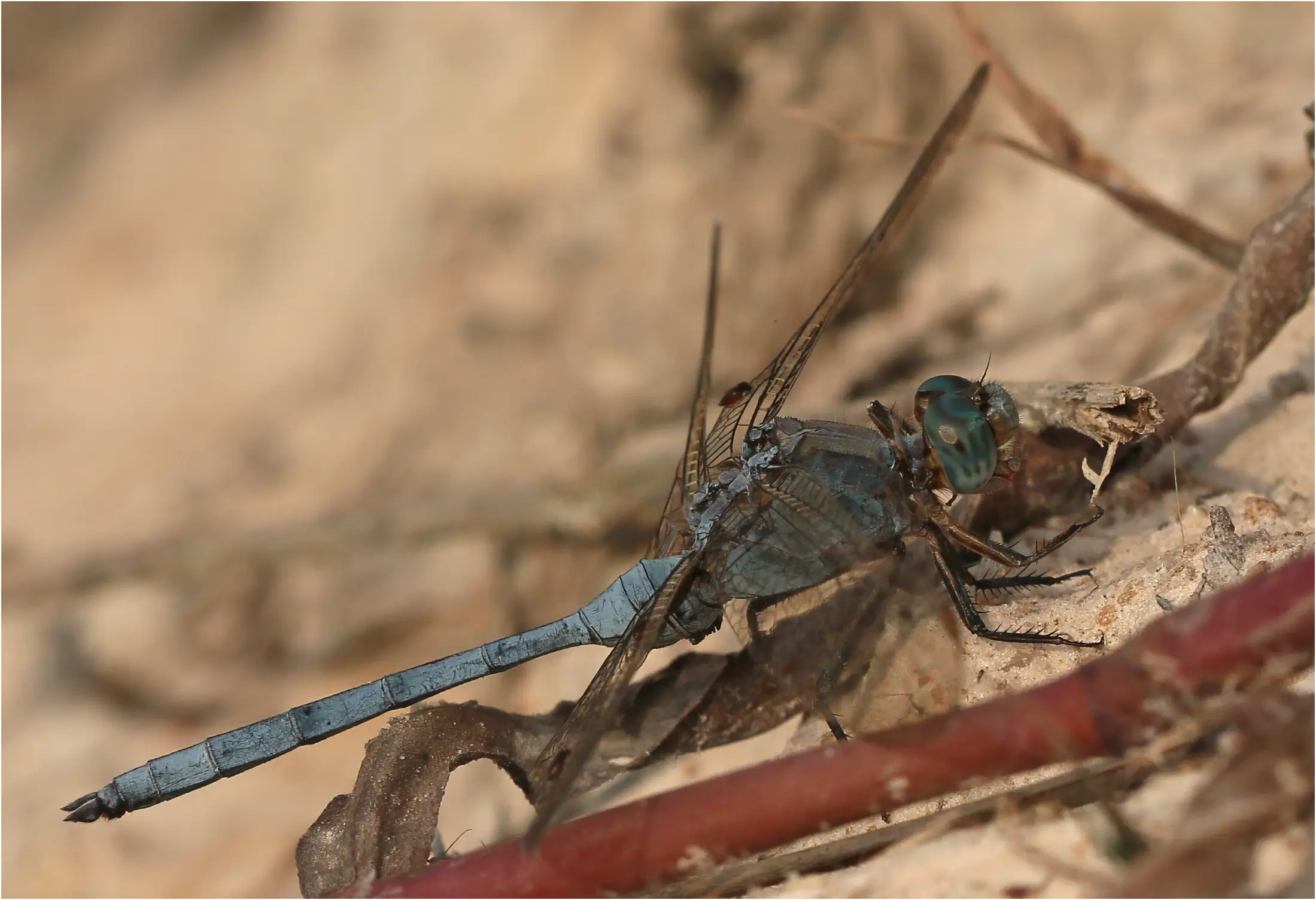
Young male Orthetrum chrysostigma are yellow, like females. As they age, their abdomen becomes covered in a blue pruinescence, initially respecting the dark intersegmental rings before making them disappear. This blue pruinescence can sometimes completely invade the thorax. The latter is lightly marked with dark features, though a fine, incomplete brown antehumeral stripe can be noted.
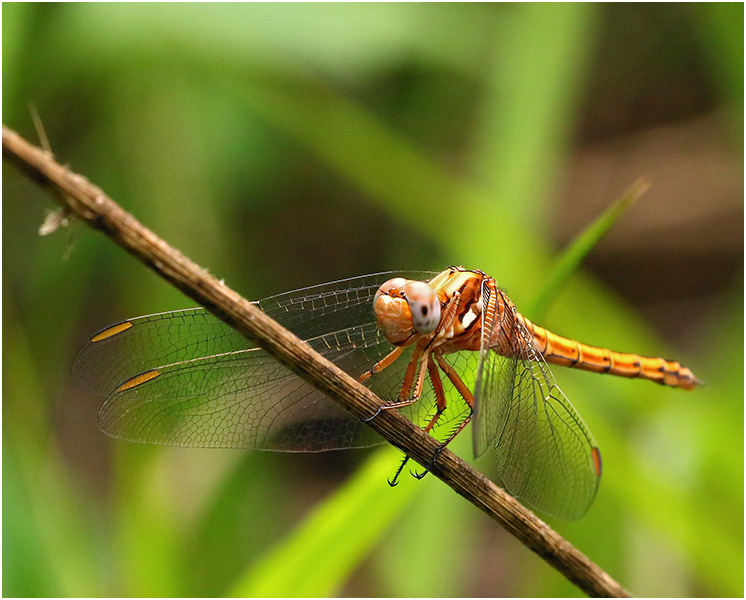
However, its identification (apart from the secondary genitalia) relies on a very visible element in immature and young mature individuals that completely disappears when the subjects are very mature or aging: a light stripe on the mesothoracic epimeron (mesepimeron), beneath the humeral suture.
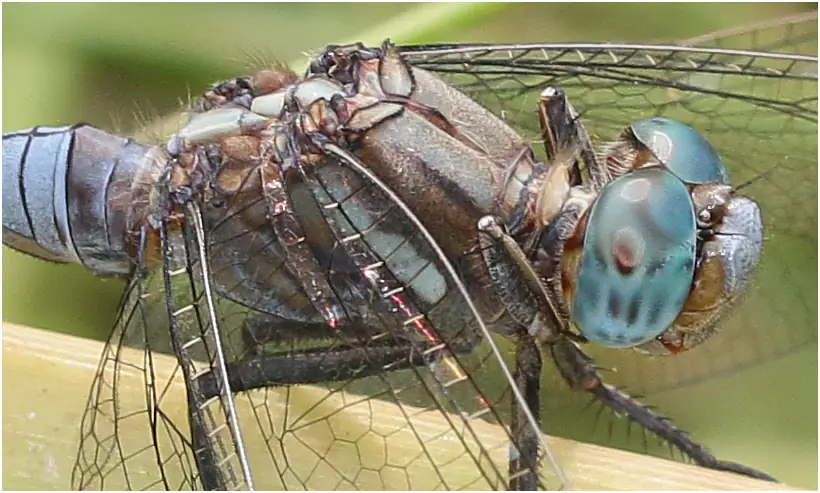
It should also be noted that the face is very pale, bordered on all sides by yellow, beige, or light brown.
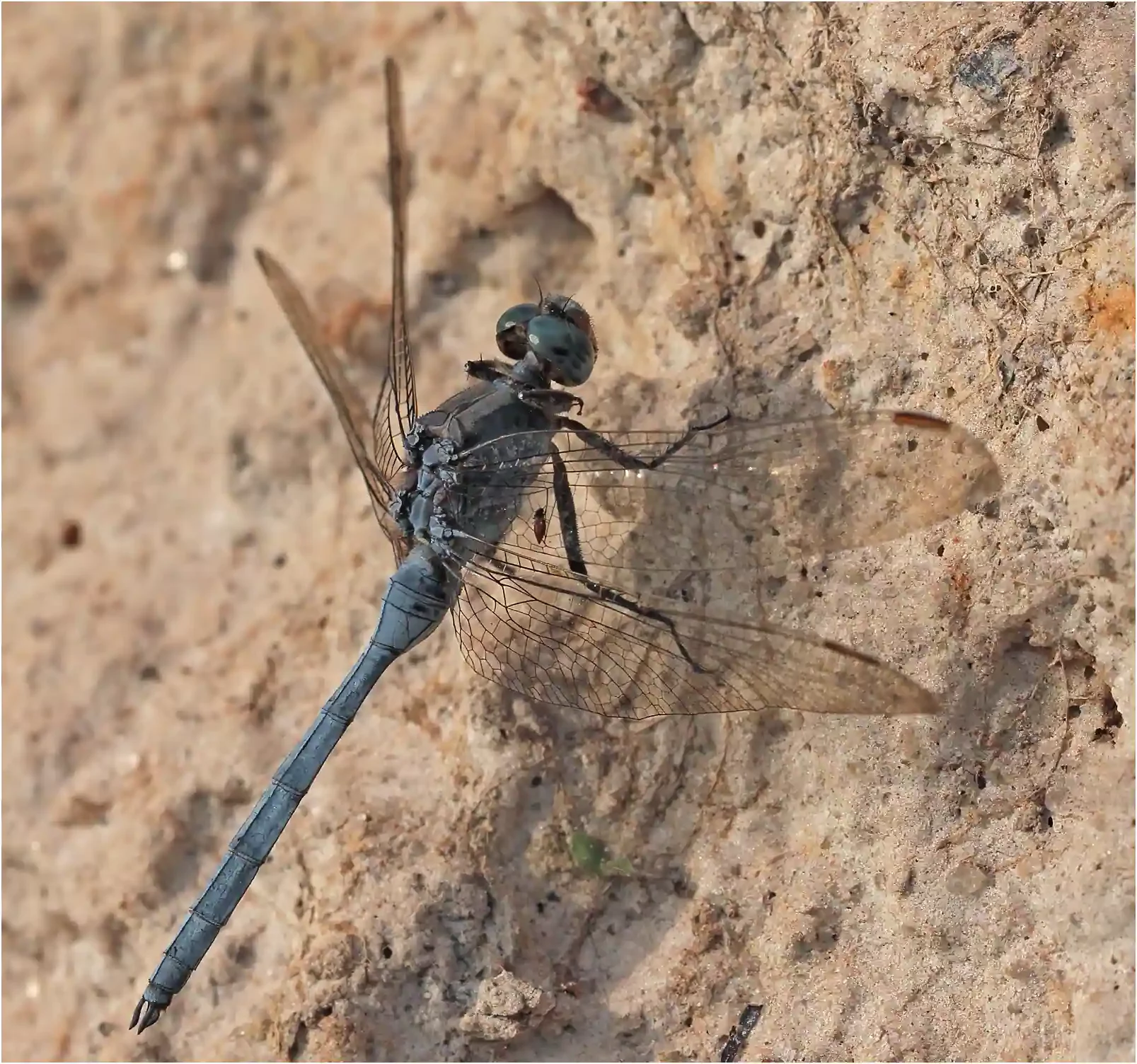
When combining all these details—a blue abdomen often marked on each segment, constricted at segment S3 and slender thereafter; a lightly marked thorax with this thin and short antehumeral stripe; the pale (white) face; the long yellow pterostigmata; and the blue-green eyes—one has a strong chance of dealing with Orthetrum chrysostigma, even if its pale "epaulet" (hence its English name, Epaulet Skimmer) is not always clearly visible.
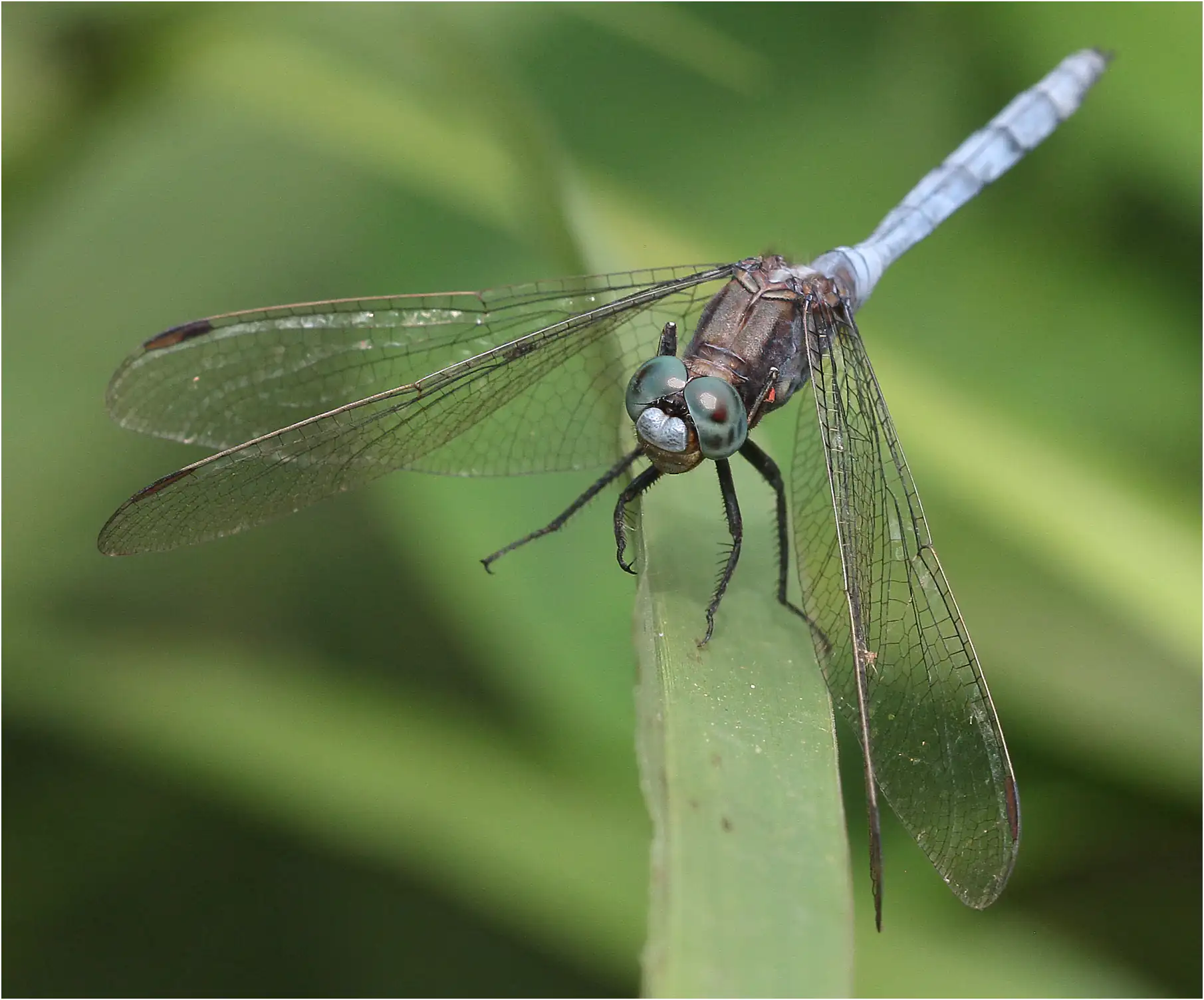
Thus, I had difficulty identifying the subject below because its epaulet is truly uncertain, and it was only by elimination and addition of the other criteria that I managed to confirm its identity. Through the left or right forewing, one can arguably make out a whitish line; is this truly that epaulet or a reflection on the wing membrane?
Size, habitat & distribution
It measures 39 to 46 mm (Tarboton W. & M., 2015).
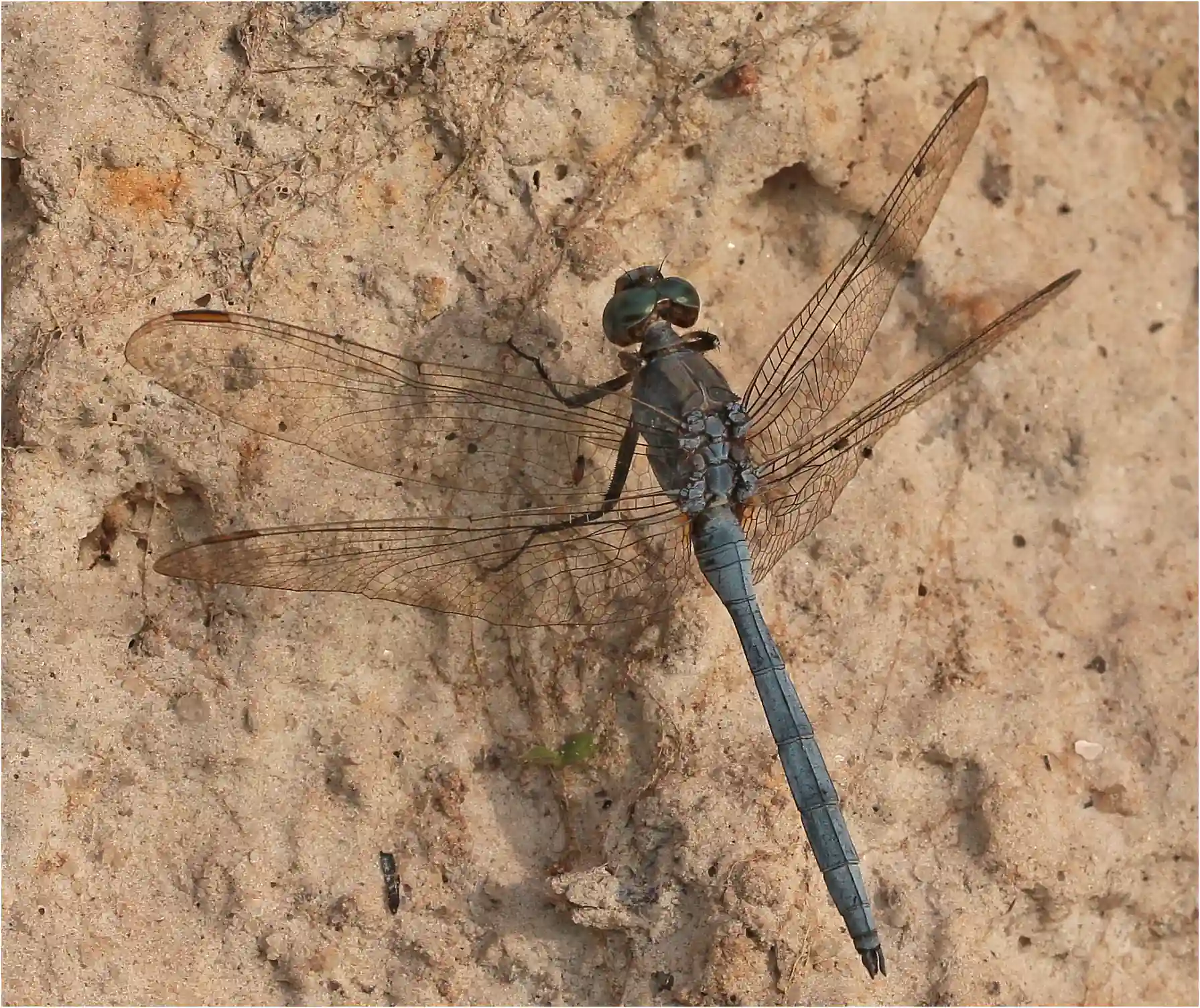
Its habitat consists mainly of rivers or streams, but also of temporary ponds in open environments or cleared areas within forests. The two individuals illustrated were encountered, one on an enclosed stream, the other on a wide, very shallow river in an open setting.
It is very common, and its distribution is aided by the diversity of habitats it tolerates: it is distributed throughout Africa, with the exception of Gabon, Equatorial Guinea, the Congo, and part of the Democratic Republic of the Congo. Further east, it reaches Iran; to the northeast, its distribution follows the Mediterranean coast as far as southern Turkey. To the northwest, it is well established in the south of Portugal and Spain and extends up the Mediterranean coast at least as far as Barcelona.
IUCN Red List.
Etymology of Orthetrum chrysostigma
Orthetrum (see Endersby & Fliedner, 2015) comes from two Greek words: orthos, meaning "straight," and etron, meaning "abdomen," signifying that the sides of the abdomen are parallel. This generic name, created by Newman in 1833, lost its relevance with the discovery of new species (whose abdomen sides are not parallel), but the name has stuck.
Chrysostigma, from the Greek chrysos for "gold" and the Greek stigma meaning "mark" or "spot," certainly to emphasize the golden color of the pterostigmata, which Burmeister described as "tawny" (stigmatibus fulvis).
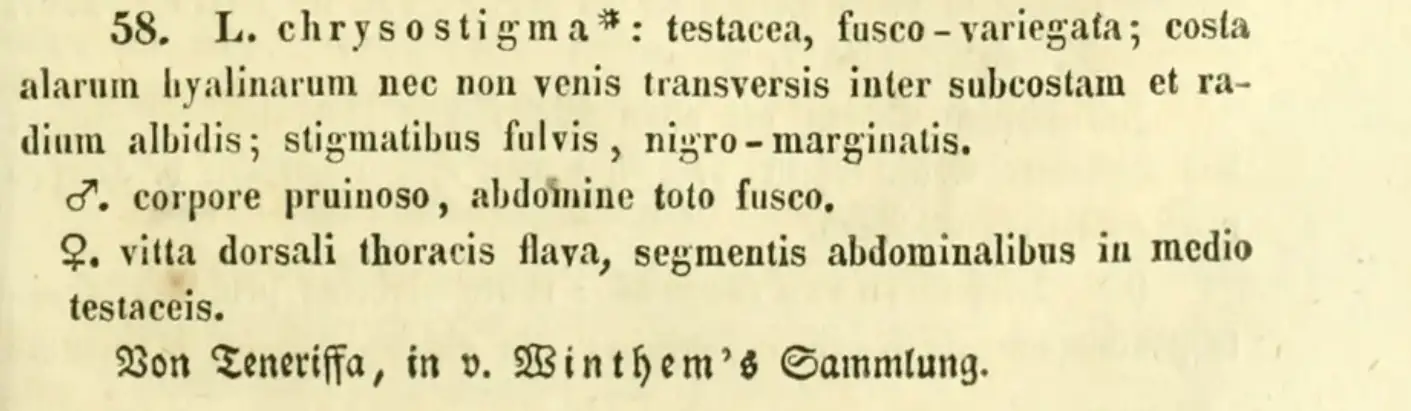
Burmeister, 1839 - Handbuch der Entomologie (vol. 2) p. 857.
Endersby Ian & Fliedner Heinrich (2015). The Naming of Australia’s Dragonflies. Busybird publishing.
Warwick et Michèle Tarboton (2015). A Guide to the Dragonflies & Damselflies of South Africa. Struik Nature.