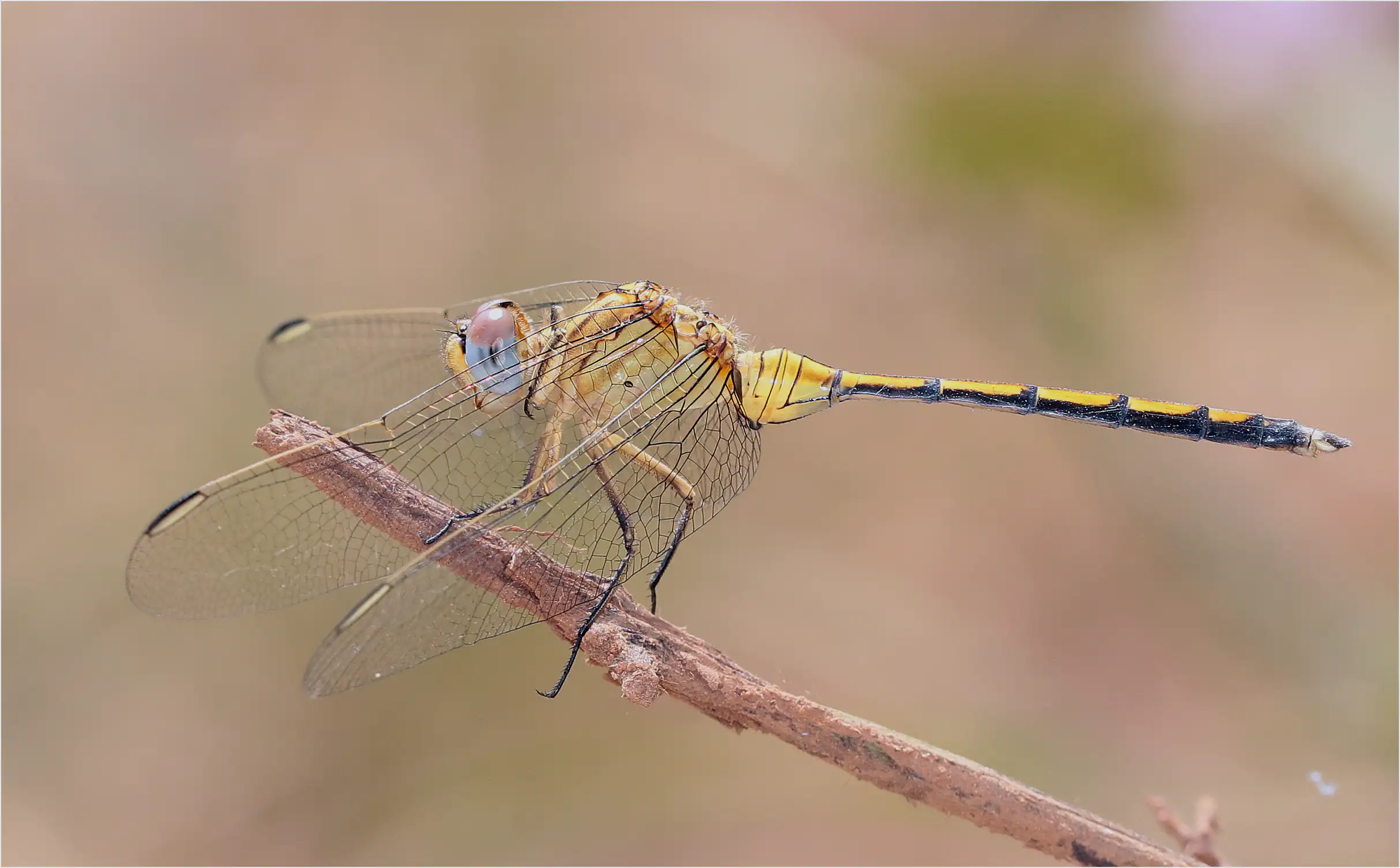
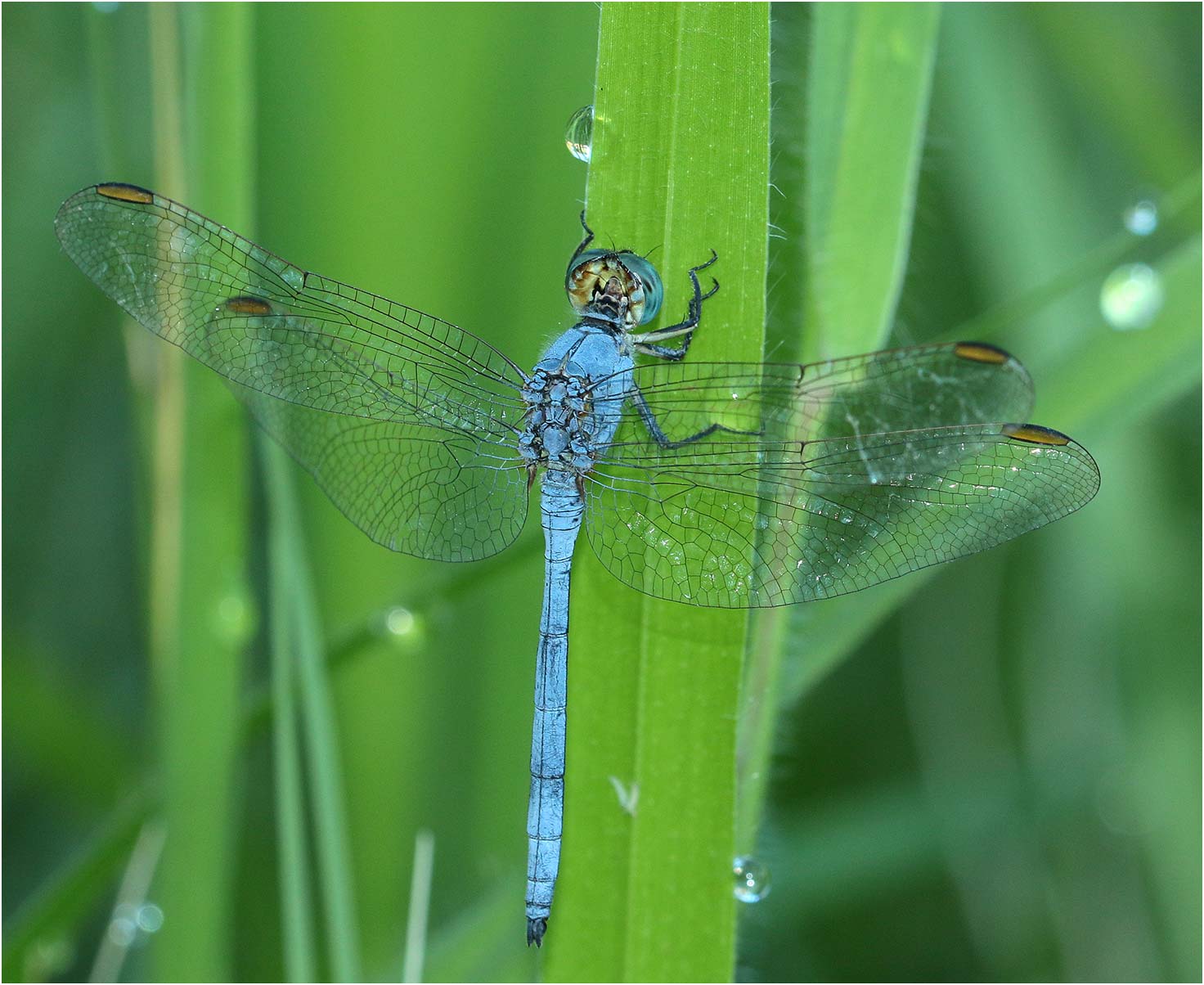
In Ghana, I did not observe any mature male Orthetrum abbotti; you will have to visit the page dedicated to the species in Namibia to see them, along with other photos of males and females.
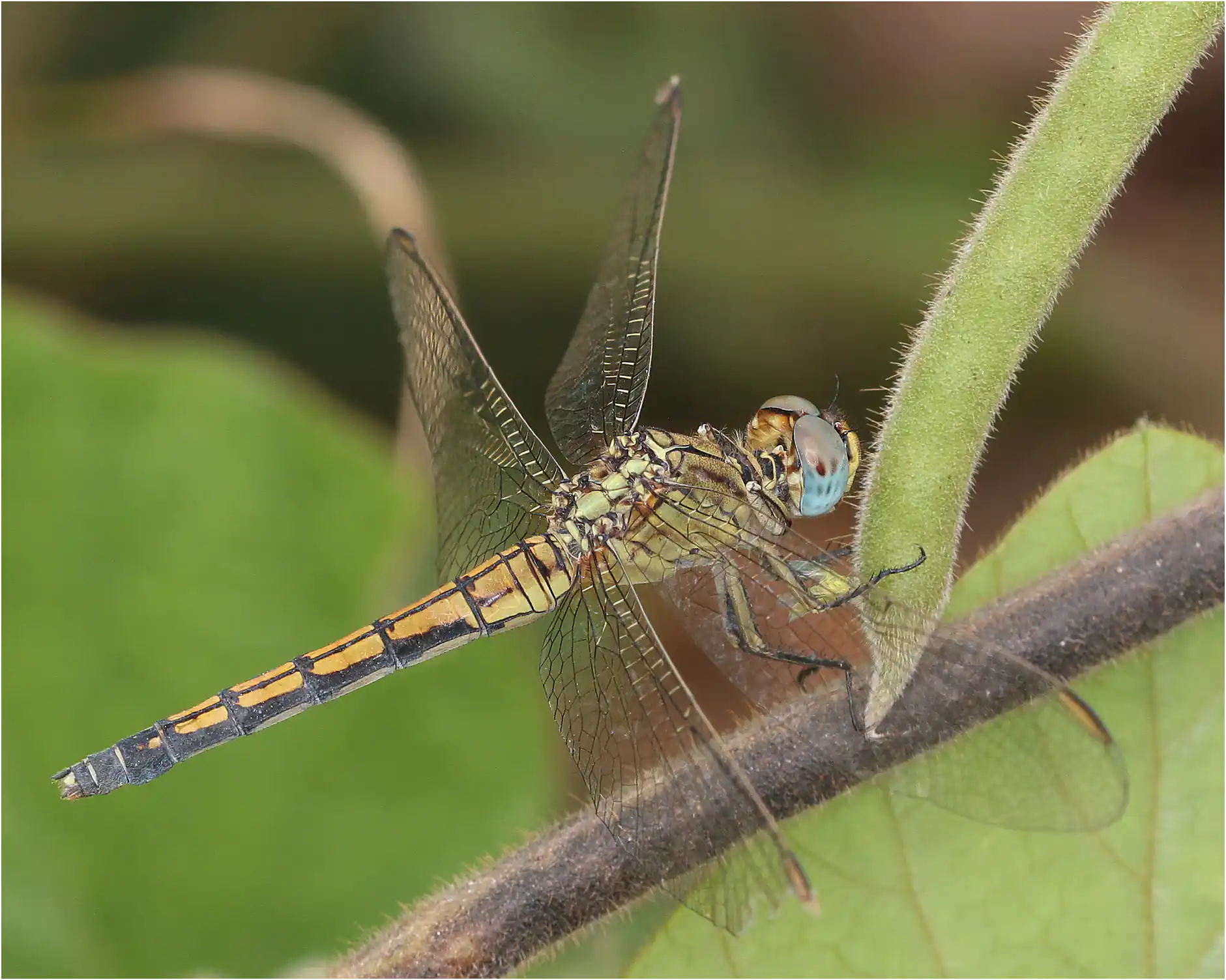
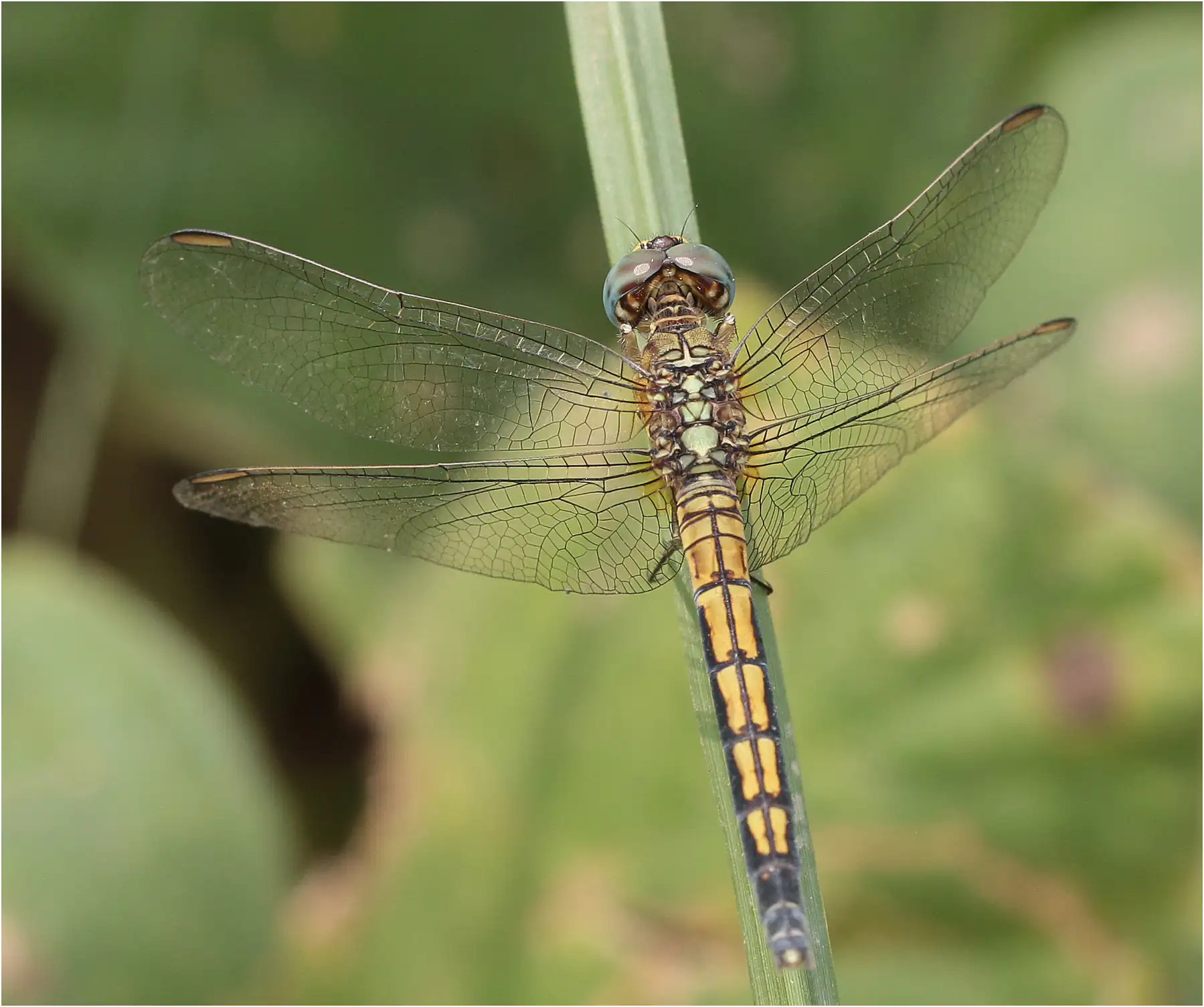
On these immature, non-pruinose subjects, identification is relatively easy: one notes the lower part of the eyes is blue, the thorax is lightly marked with a black metastigma, whereas the posterior suture is practically outlined only in its upper part. The abdomen is flanked with black, which extends dorsally at the end of each segment, increasingly towards the distal part with S9, thus becoming almost black, while its own tip is white, as are the base of the cerci and the epiproct. The black line running along the dorsal carina is characteristic of the species. It is small, about 35 mm (Small Skimmer in English) and its pterostigmata thus appear very long; the costal vein is pale, as are the subcostal crossveins.
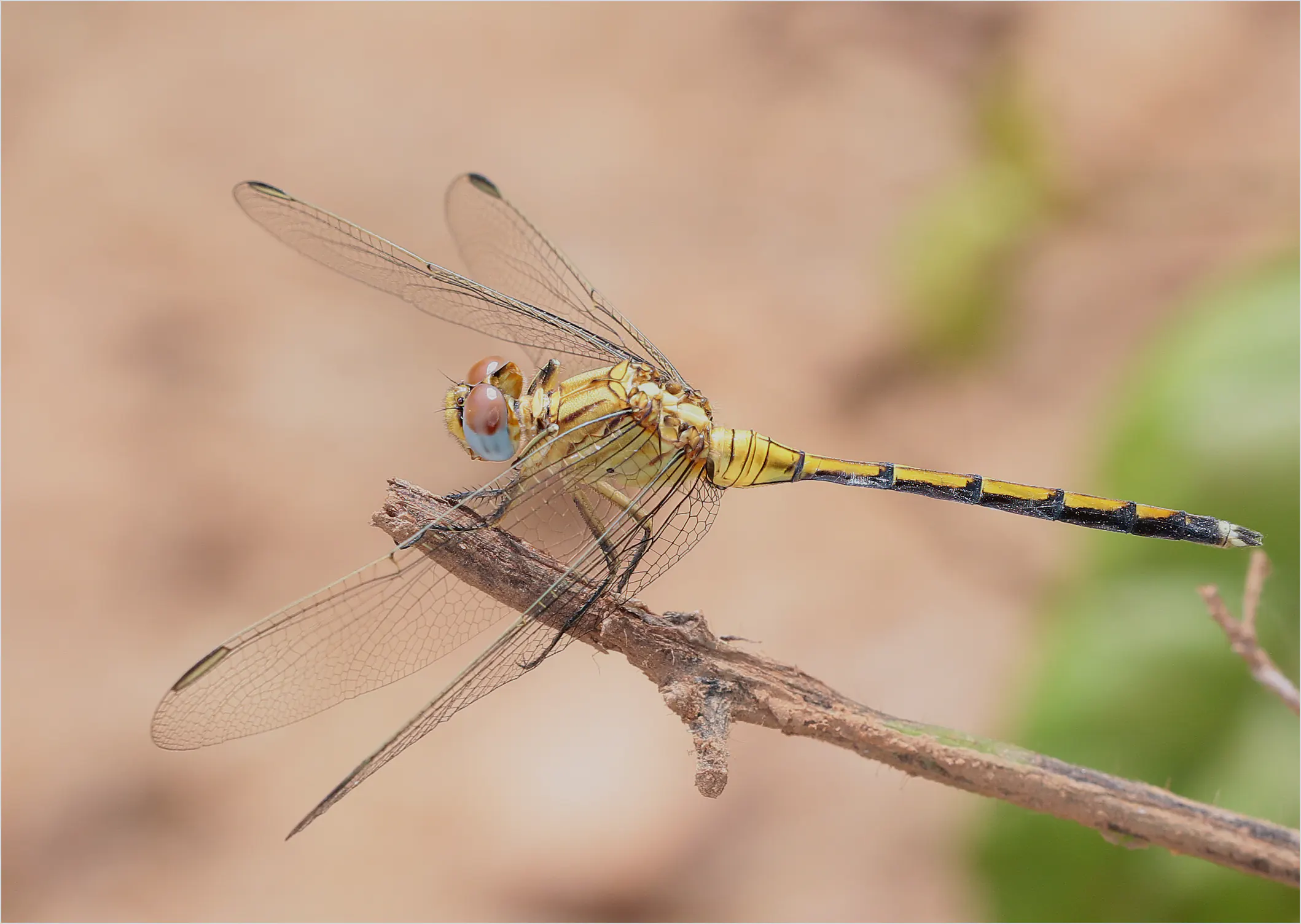
These same identification details can be found for this mature female; females also appear to almost constantly bear a faint dark line above the metastigma.
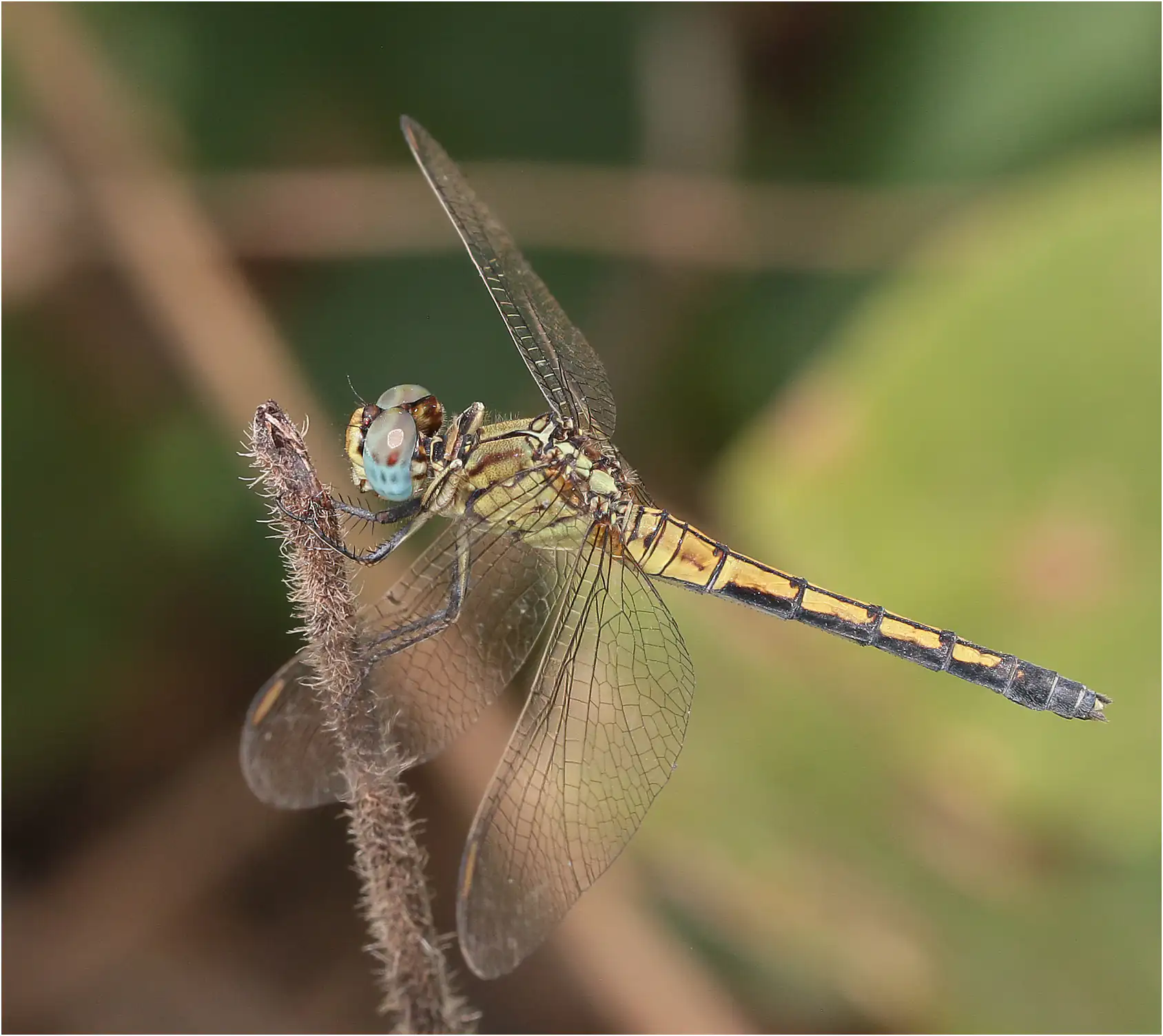
We encountered the male on a forest path, while the female was perched near a wide river. ADDO (editor Dijkstra) gives it very varied habitats, such as seeps, springs, streams, and stagnant waters, in open environments or in cleared areas within forests.
It is found throughout subtropical Africa, down to South Africa on its eastern slope. It is present only in northern Namibia and is apparently absent from Botswana.
IUCN Red List.
Etymology of Orthetrum abbotti
Orthetrum (see Endersby & Fliedner, 2015) comes from two Greek words, "orthos" meaning "straight" and "etron" for "abdomen," to signify that the sides of the abdomen are parallel. This generic name (neuter) created by Newman in 1833 lost its relevance with the discovery of new species (whose sides of the abdomen are not parallel), but the name stuck.
Abbotti is a tribute by Calvert to Dr. William Louis Abbott (1860-1936), an American physician, ornithologist, traveler, and zoological collector, who collected specimens (notably in East Africa, Madagascar, and the Indian Ocean) that enabled these descriptions.
Dijkstra, K.-D.B (editor ADDO), 2019 – African Dragonflies and Damselflies (ADDO).
Calvert P., 1892. Preliminary Notes on Some African Odonata. Transactions of the American Entomological Society (1890-)
, Vol. 19 (1892), pp. 161-164.
Endersby Ian & Fliedner Heinrich (2015). The Naming of Australia’s Dragonflies. Busybird publishing.