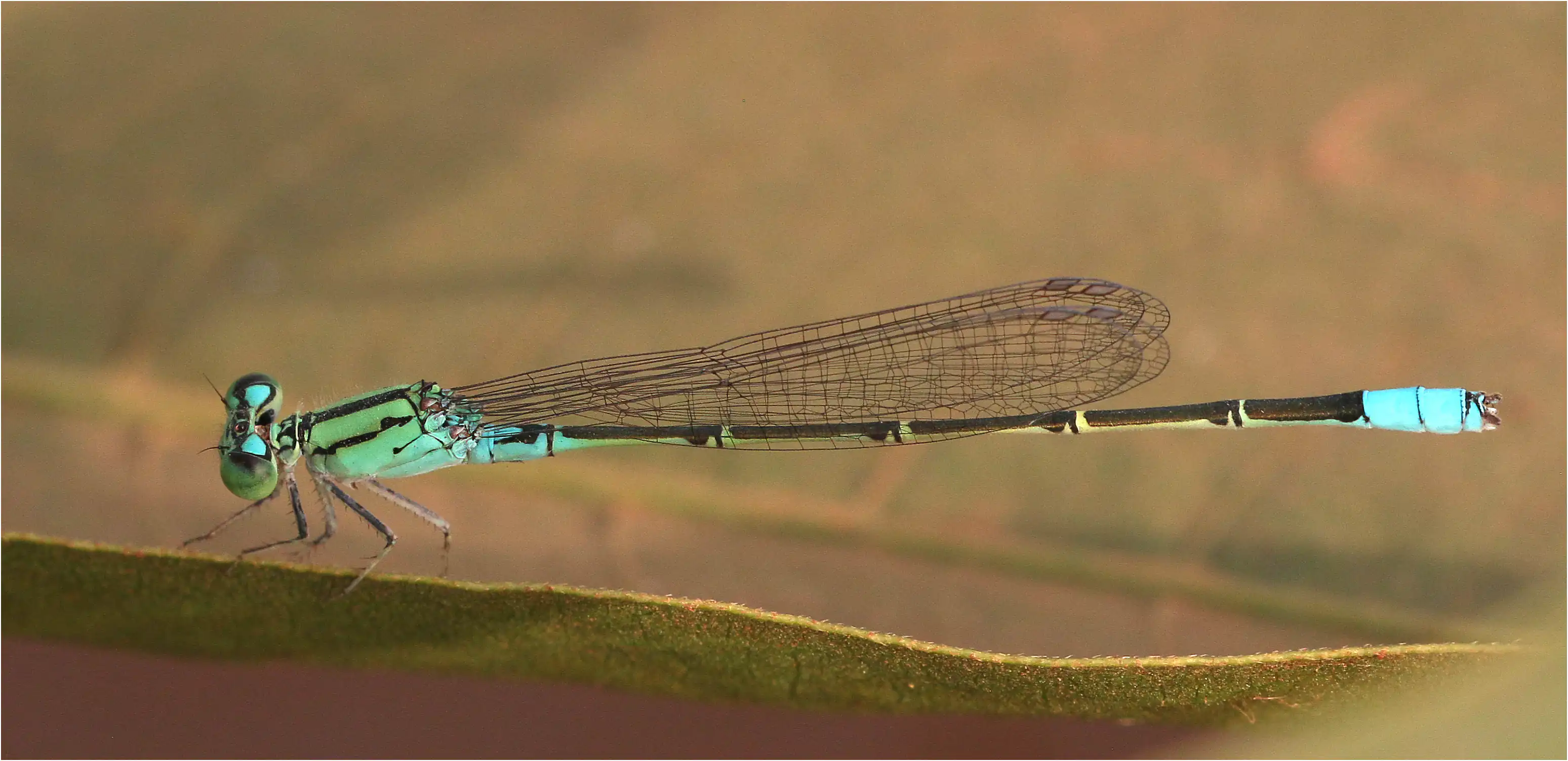
I had already encountered Pseudagrion nubicum in Namibia, but only immature males. In Ghana, they were fully mature and accompanied by a female. There are 18 Pseudagrion species in Ghana, and we confirmed P. isidromorai, which was not yet on the "official list". But it is an immense genus comprising 172 species worldwide, 71 of which are in Africa, divided into Group A and Group B. Our Pseudagrion nubicum belongs to the latter, which includes small- to medium-sized individuals, generally paler in colouration than those of Group A, that favour warm habitats and standing or temporary waters, and often have a wide distribution.
Identification of Pseudagrion nubicum
In Ghana, it can probably only be confused with:
– P. glaucescens, but the latter has a truly different habitus, almost waxy like a Ceriagrion with very few dark lines on the thorax, described as "vestigial" by Pinhey (1961).
– or P. torridum, here in Ethiopia, whose cerci are truly pointed (and not obtuse as in Pseudagrion nubicum).
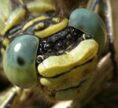
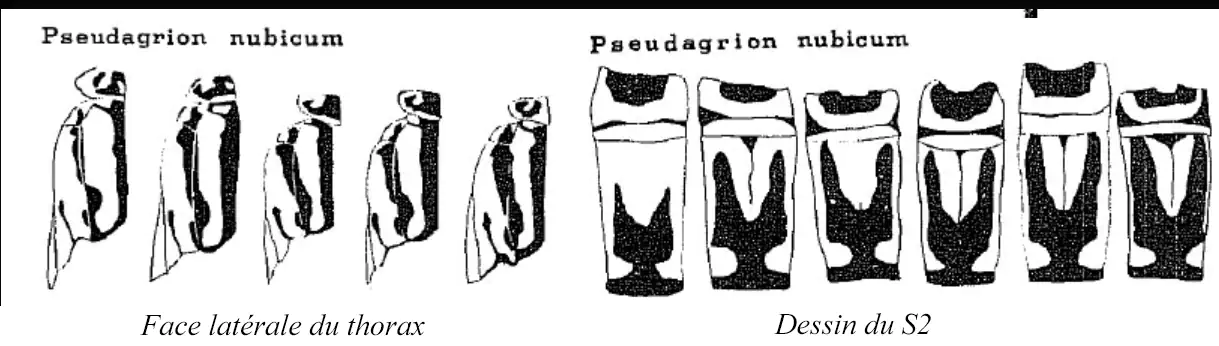
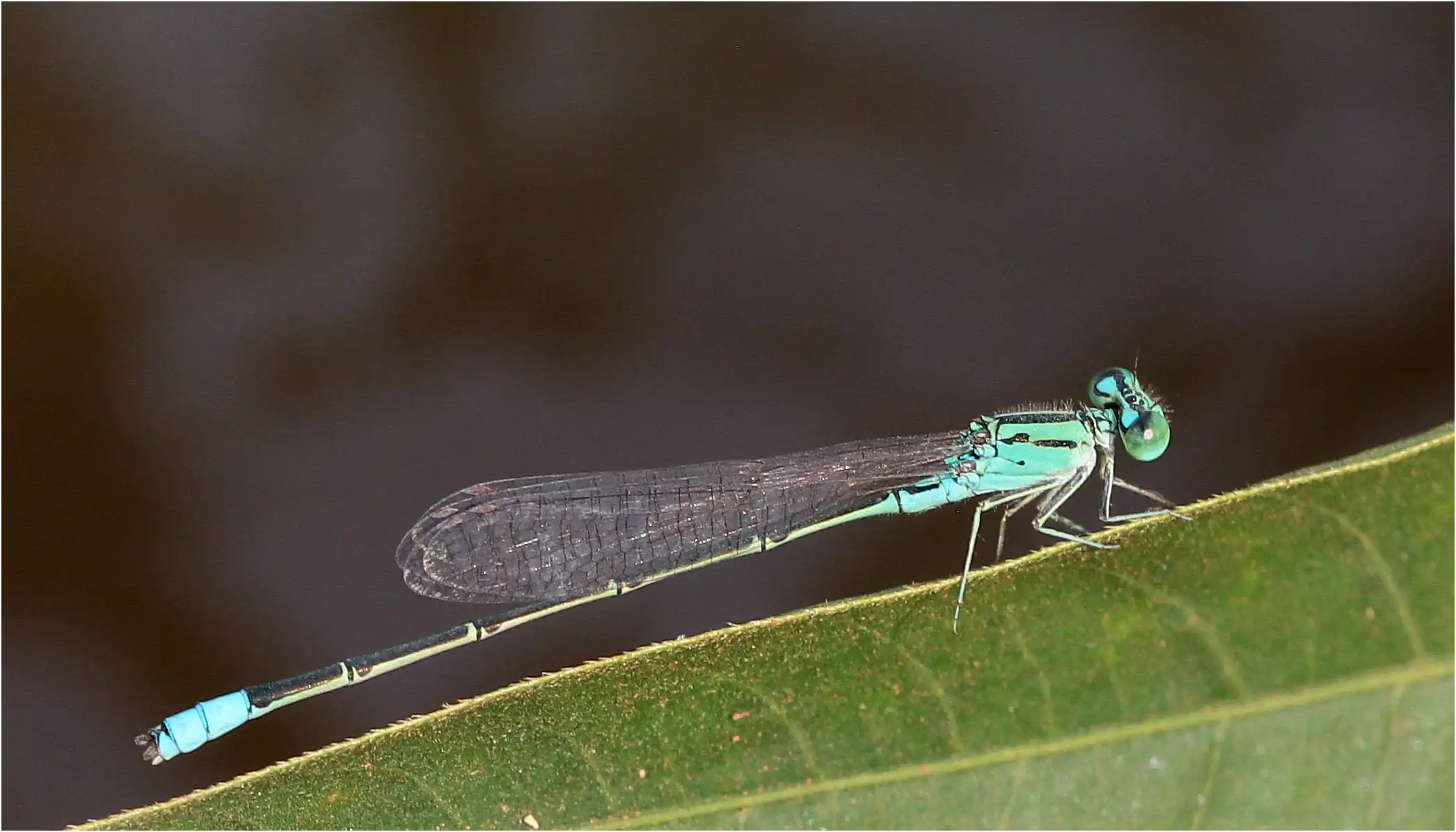
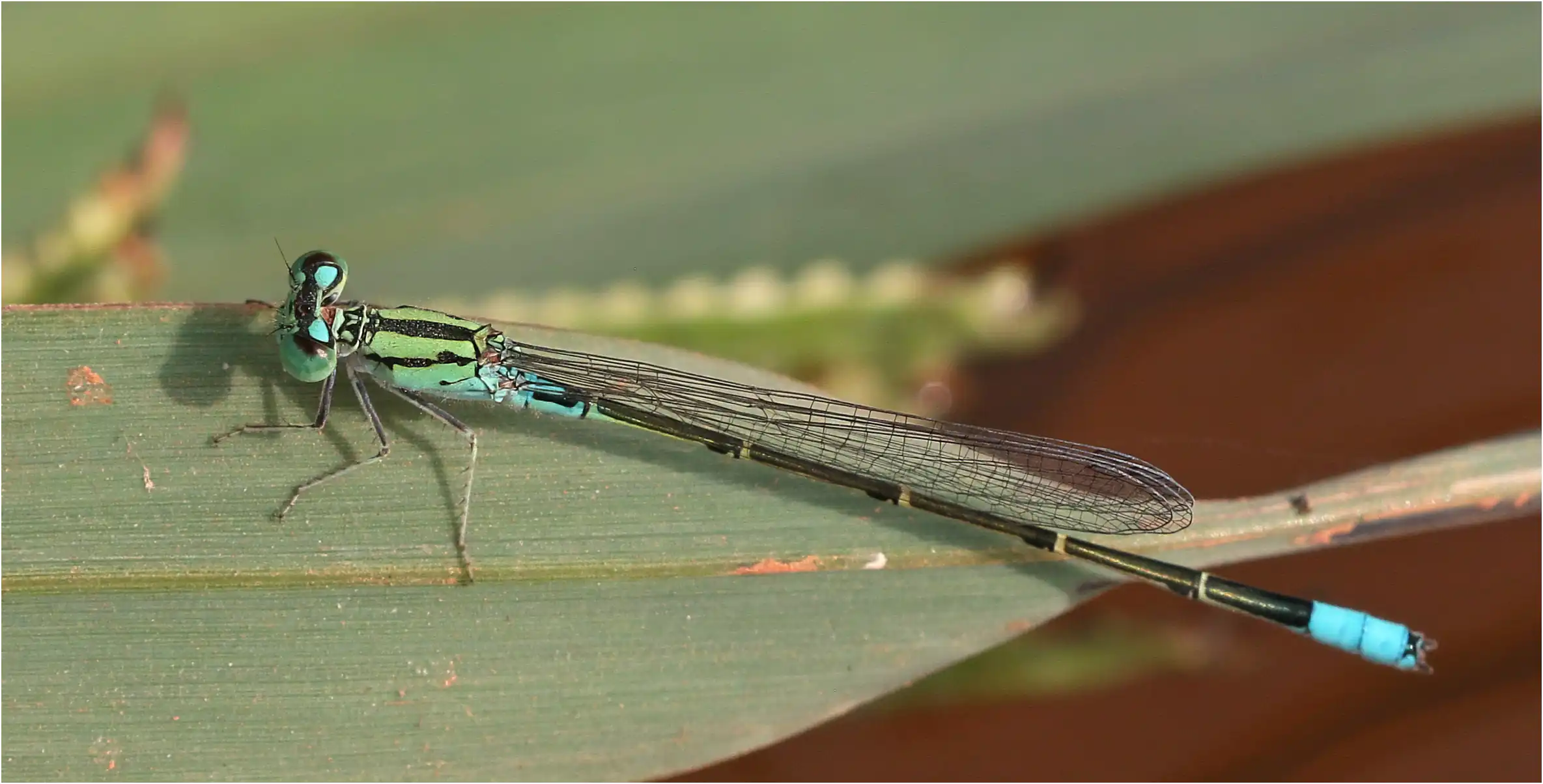
These three species show a black "U" with or without a stem on a blue background on S2 (second abdominal segment), or a "Y", a "cat's head", or a "goblet", depending on the observer's imagination and individual variations of these odonates. For all three species, segments 8 and 9 are blue, as is S10, except for its dorsal surface (Bluetail Sprite in English).
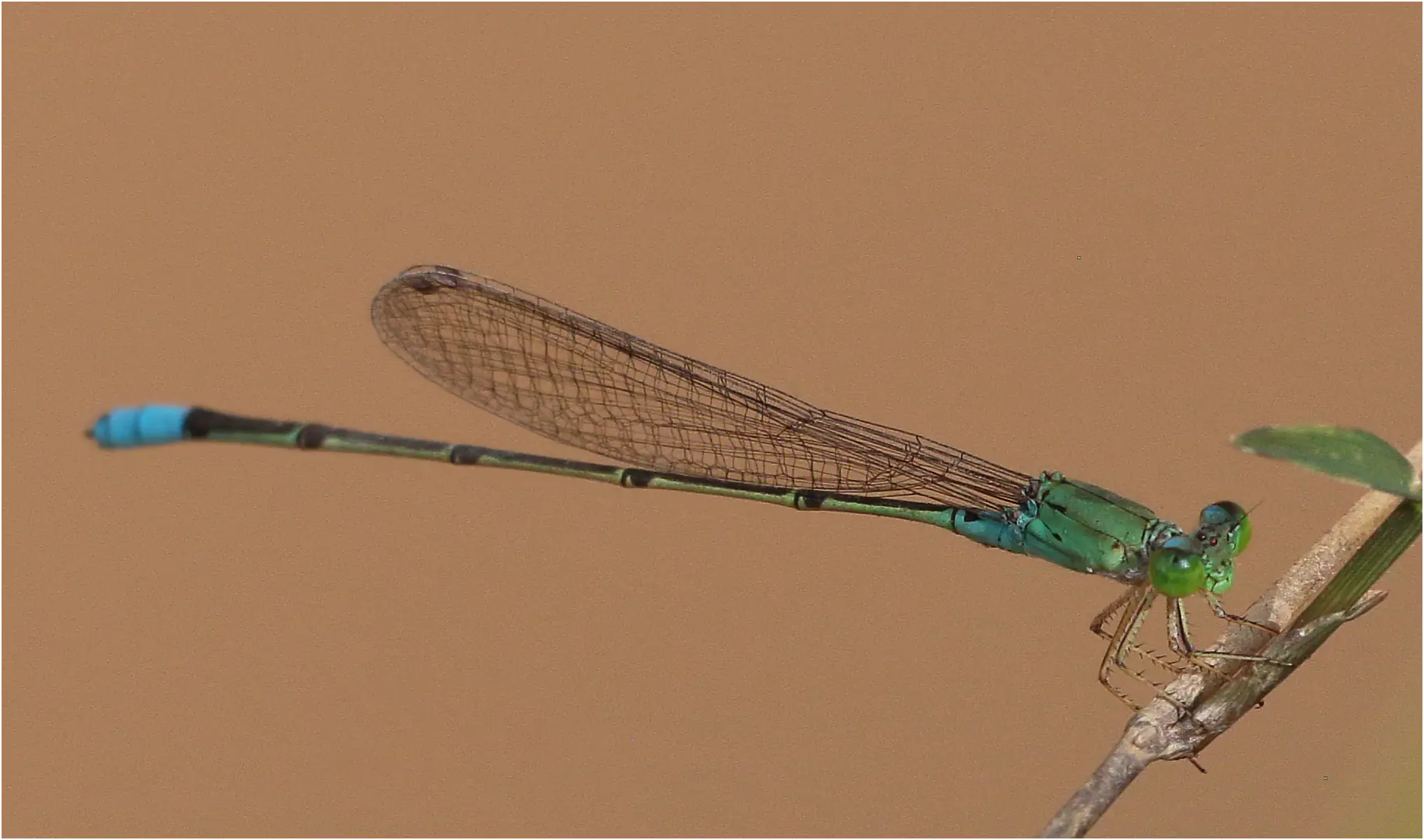
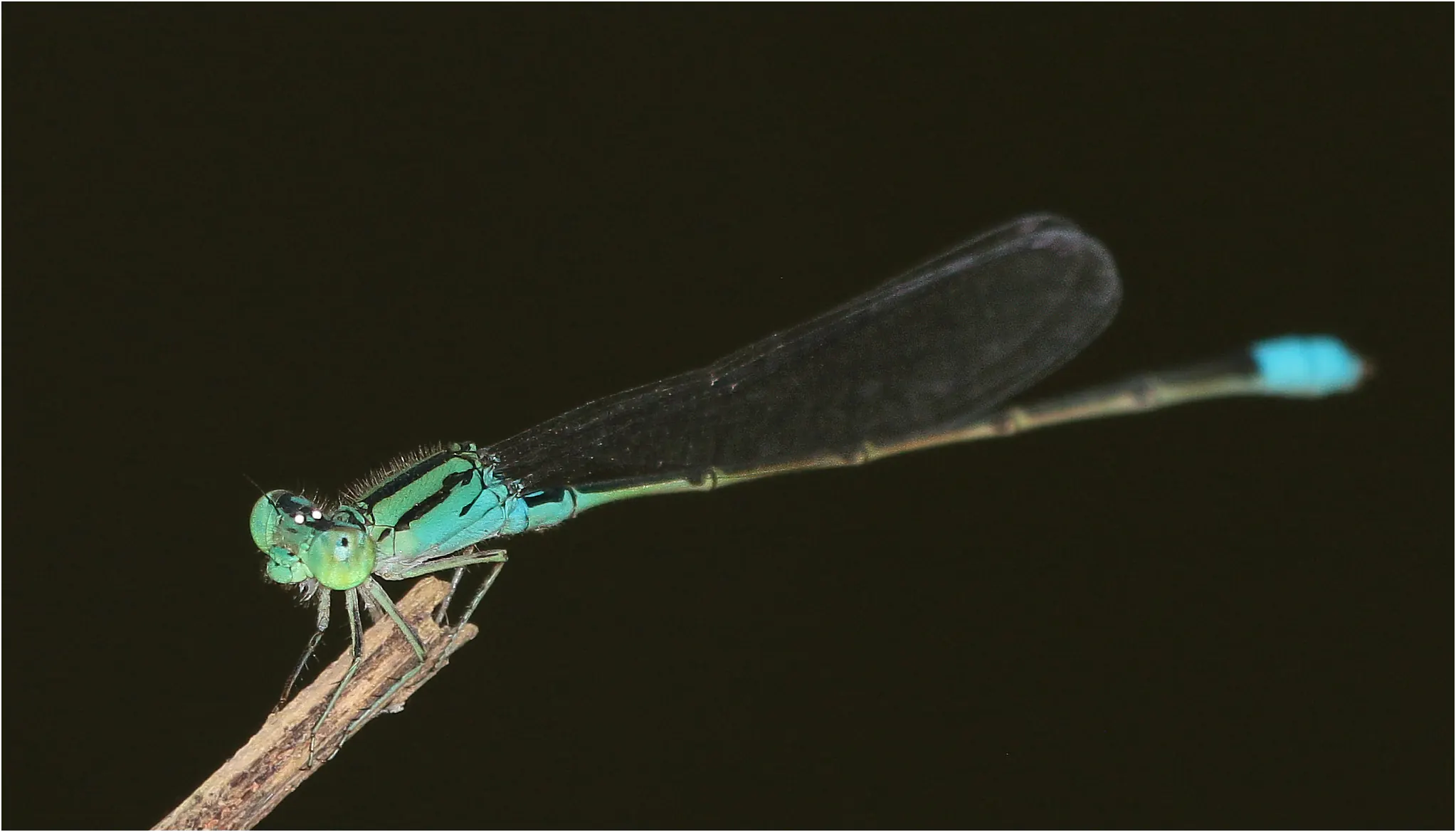
But neither the black thoracic markings nor the design on S2 are reliable enough to allow species identification on their own, as shown by Balinsky (1963).
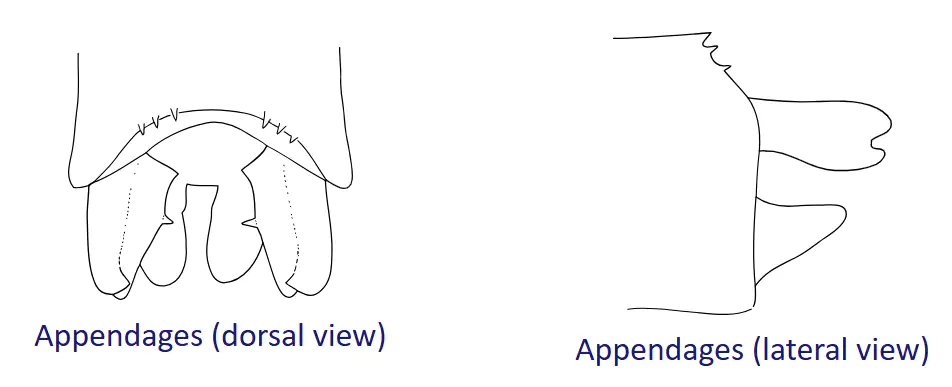
So one must rather rely on the anal appendages (even if, of course, the preceding elements narrow down the choice). The cerci, incised at their apex or even bifid, are longer than the paraprocts, and bear a clearly visible spine on their inner surface. In Selys (1876), we read: "...their extremity [superior anal appendages] seen in profile is truncated and bifid, and in the middle of their length, underneath, there is a small tooth."paraprocts and
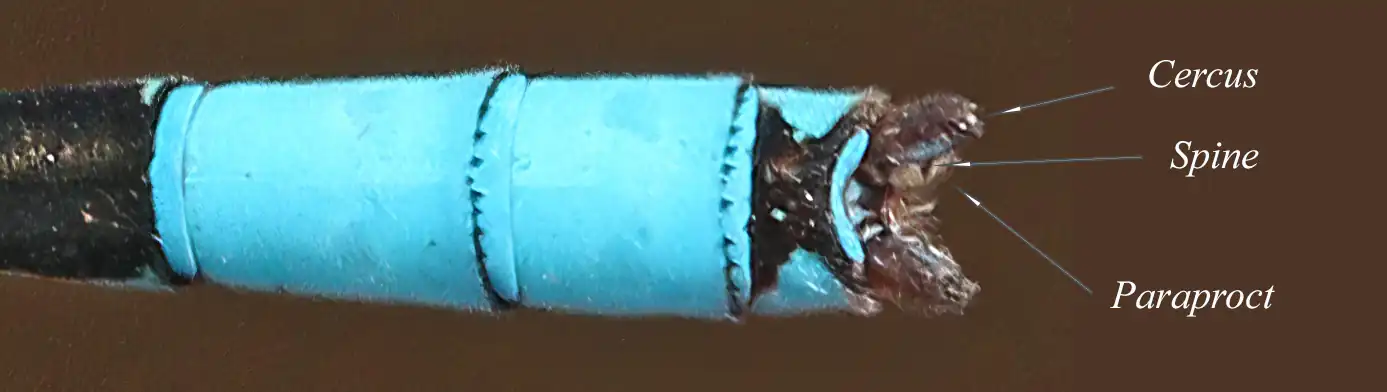
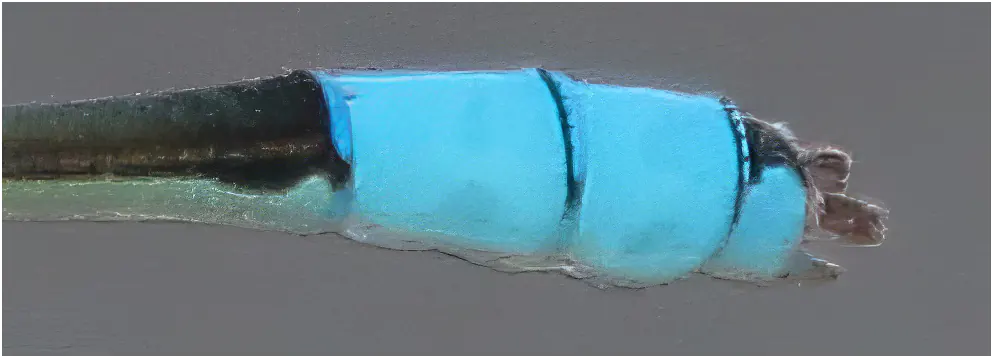
One can make out the terminal incision on the right cercus.
Pseudagrion nubicum male, Ghana, Hans Botel Cottage, 20/01/2026
I have always been astonished by the presence of these spines on the upper part of the apex of segments 8 and 9; I read somewhere (?) that it might be a mechanism allowing the larva to extract itself more easily from its exuvia…
And while we are on the subject of questions we rarely ask ourselves, the blue dots, slightly darker than the background, observed on S8 and S9, are reportedly created by underlying muscle insertions…
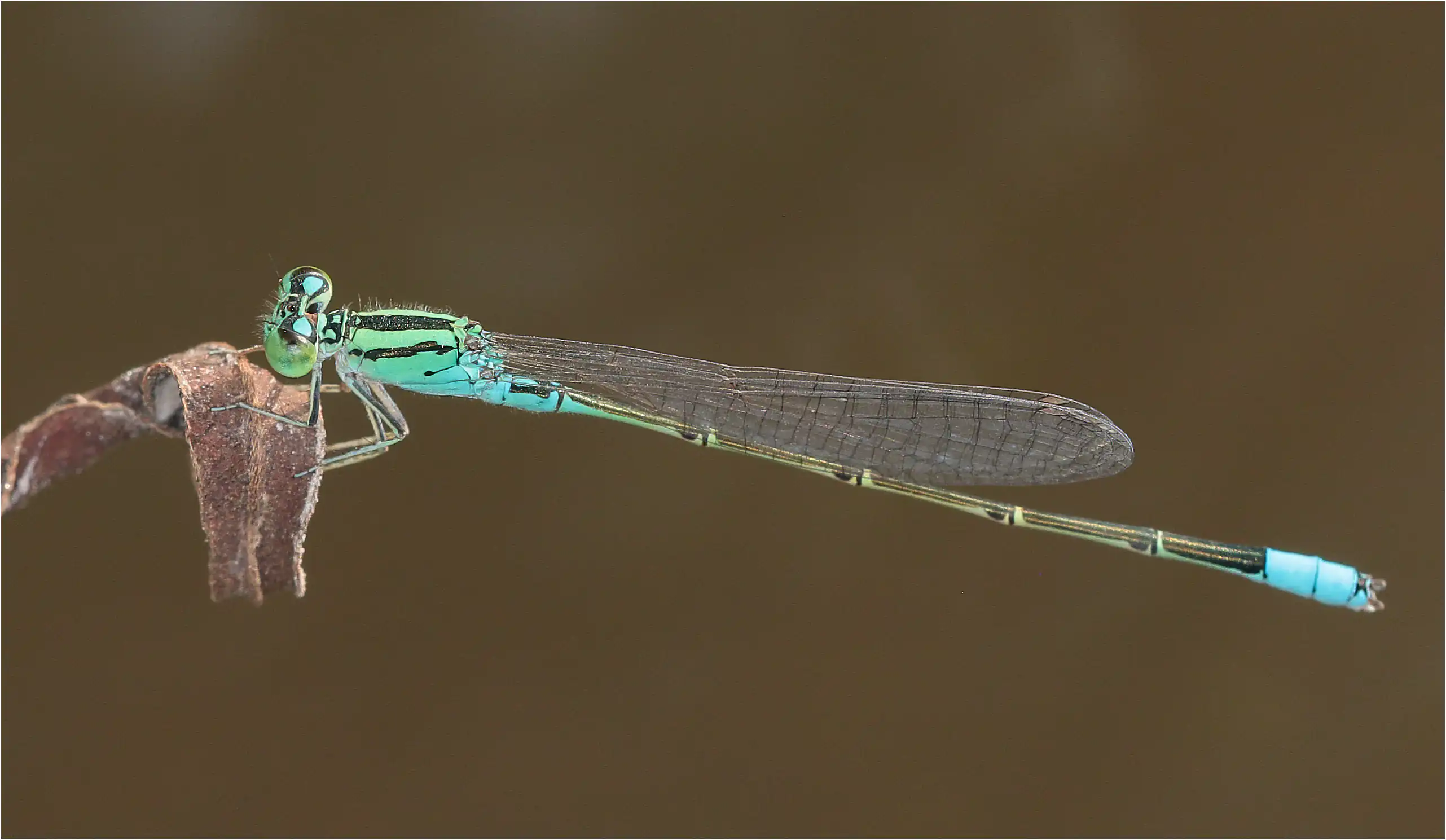
Size, habitat and geographical distribution
Selys tells us that the abdomen of his specimen measures 25 mm: the entire insect thus reaches about 31 mm.
We encountered it in an open environment, on a wide, very shallow river, perched on twigs overhanging the water and strongly shaken by the wind, where it was in the company of Pseudagrion glaucescens. But also on the banks of ponds around a lodge. On ADDO, Dijkstra and Clausnitzer indeed report it on standing waters and rivers, as well as lakes.
Its geographical distribution is remarkable; it is present in subtropical Africa, from Senegal to Ethiopia, reaching southwards to northern Namibia, Botswana, and Mozambique. Furthermore, it "extends northwards" via the Nile Valley corridor up to northern Egypt.
IUCN Red List.
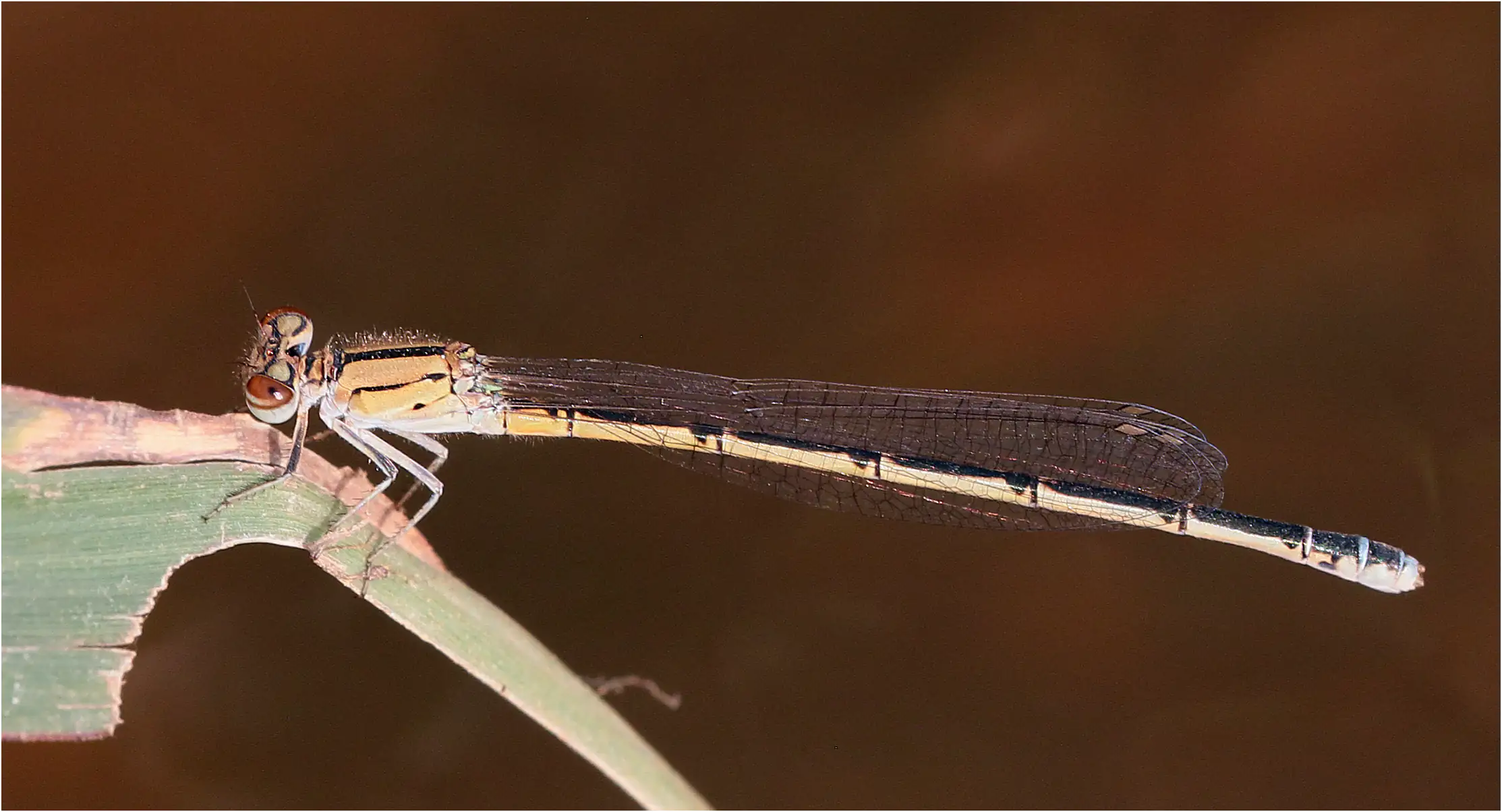
I briefly observed an immature female in the company of these males. It is likely a female P. nubicum because the only other Pseudagrion present was P. glaucescens, and the black thoracic and abdominal markings are too pronounced for a female of that species.
Etymology of Pseudagrion nubicum
Pseudagrion (Endersby & Fliedner, 2015) from Ancient Greek pseudo – false, erroneous, and agrion, this, as Selys (1876) wrote, to demonstrate the difficulty of separating this genus from Agrion: "les Pseudagrions semblent très voisins des vrais Agrions - the Pseudagrions seem very close to the true Agrions." Agrion, from the Greek agrios – wild, living in the fields.
Nubicum ; Selys wrote: "Patrie : Nubie; deux mâles. (Coll. de Selys.) - Habitat: Nubia; two males. (Selys Coll.)". Nubia is a major historical and geographical region of the Nile Valley, located between the First Cataract (near Aswan, in southern Egypt) and the Sixth Cataract (north of Khartoum, in Sudan).
BALINSKY, Boris I., 1963. A contribution towards the systematics of dragonflies of Southern Africa (Odonata). Journal of the Entomological Society of Southern Africa, vol. 26, n° 1, p. 228–255.
Dijkstra, K.-D.B (editor, 2021). African Dragonflihttp://addo.adu.org.za/index.php?taxon_id=37800es and Damselflies (ADDO).
Endersby Ian & Fliedner Heinrich, (2015). The Naming of Australia’s Dragonflies, Ian Endersby & Heinrich Fliedner, Busybird publishing.
Pinhey, E.C.G. (1961). Dragonflies (Odonata) of Central Africa. Occasional Papers Rhodes-Livingstone Museum, 14, 1-97.
SELYS-LONGCHAMPS, Edmond de, 1876. Synopsis des Agrionines, 5ᵐᵉ légion : Agrion (suite). Le grand genre Agrion. Bulletins de l'Académie royale des sciences, des lettres et des beaux-arts de Belgique, série 2, t. 42, p. 490–531, 952–991 [p. 501].