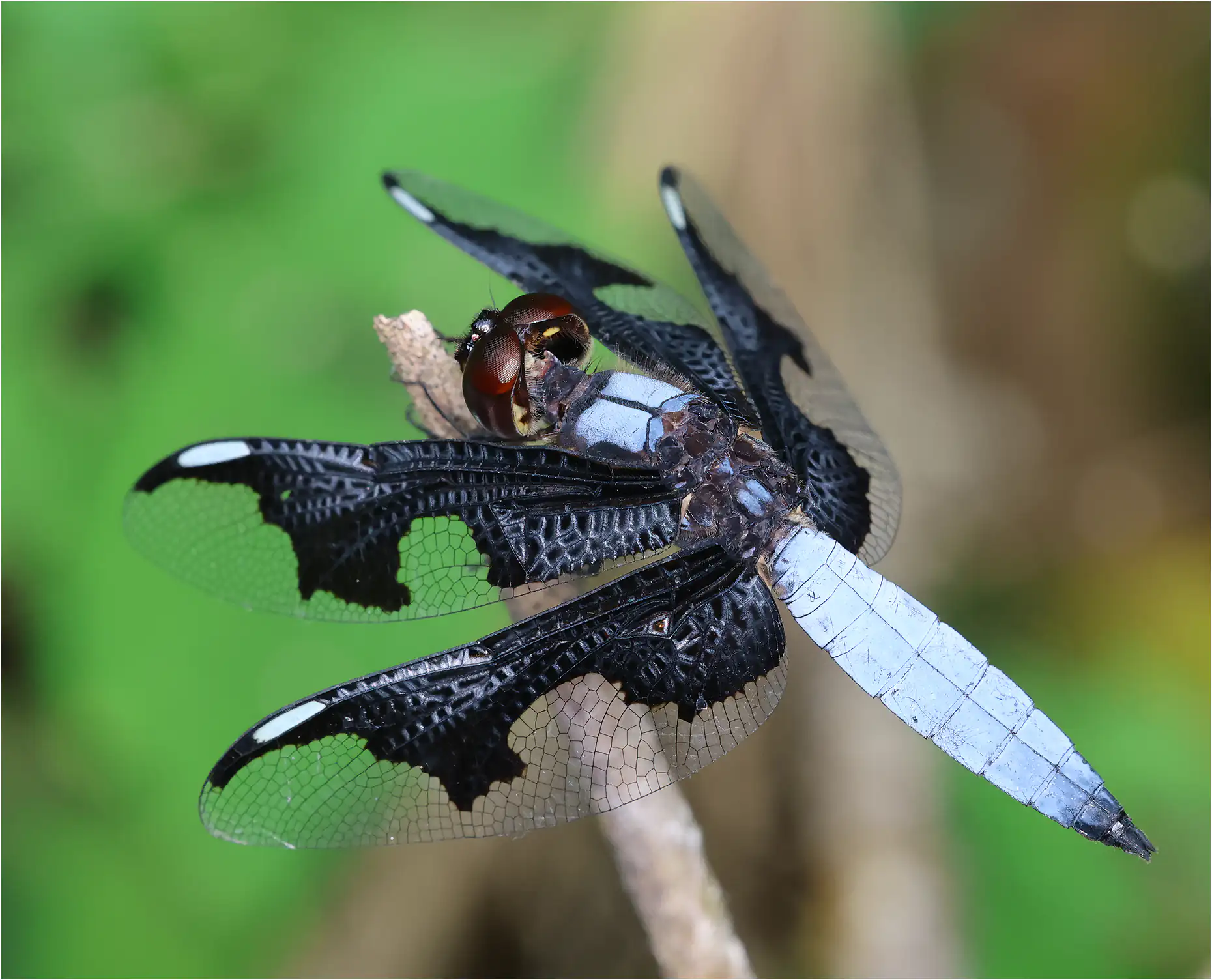
Palpopleura portia, Libellulidae, is part of a genus comprising seven species: one is Asian (P. sexmaculata), another is endemic to Madagascar (P. vestita), and five are found in mainland Africa. Among the latter, three are present in Ghana: Palpopleura portia, undoubtedly abundant; P. lucia, fairly common; and P. deceptor, which I have never seen. The latter shows nearly hyaline wings.
Identification of Palpopleura portia
males
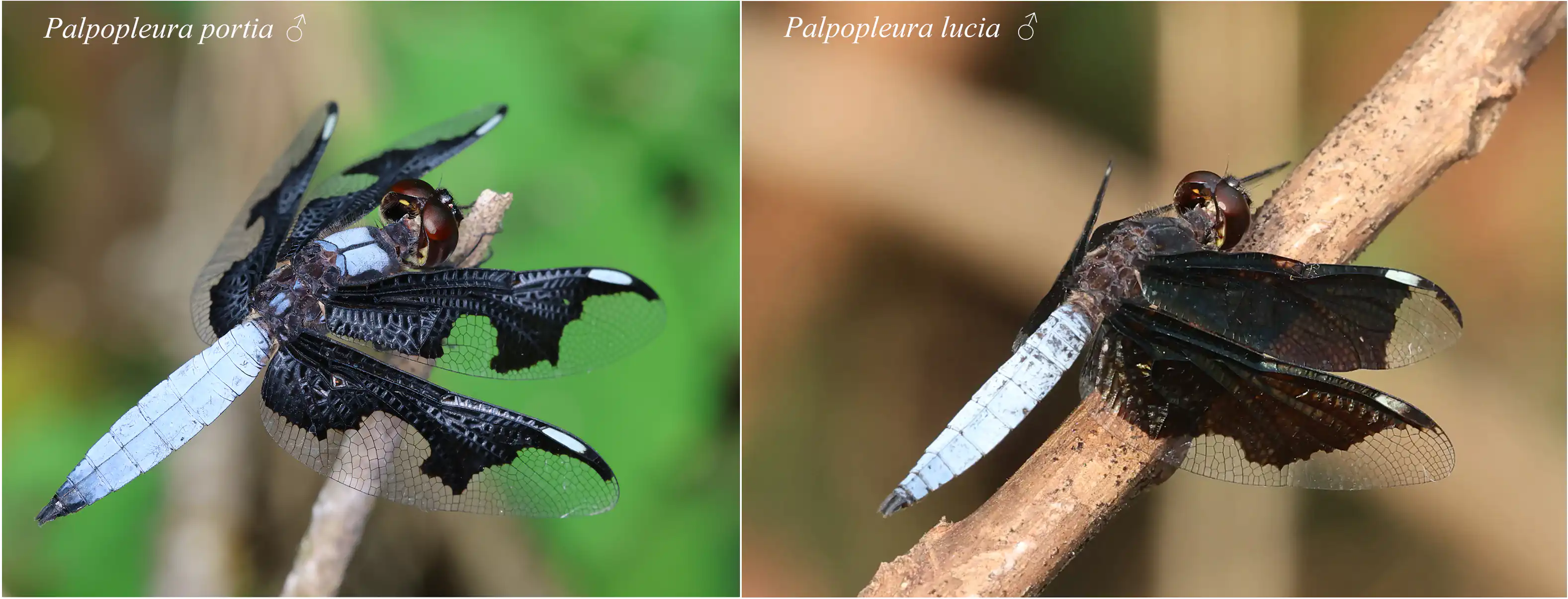
Males of Palpopleura portia can only be confused with males of P. lucia, which was indeed the case for decades, if not centuries; although Drury (1773) initially described the two species separately in the same work, providing two engravings, it was long thought that they were variations of the same species, certainly due to the similarity of the females. It was only with the molecular analyses by Mitchell & Samways (2005) that the truth was restored.
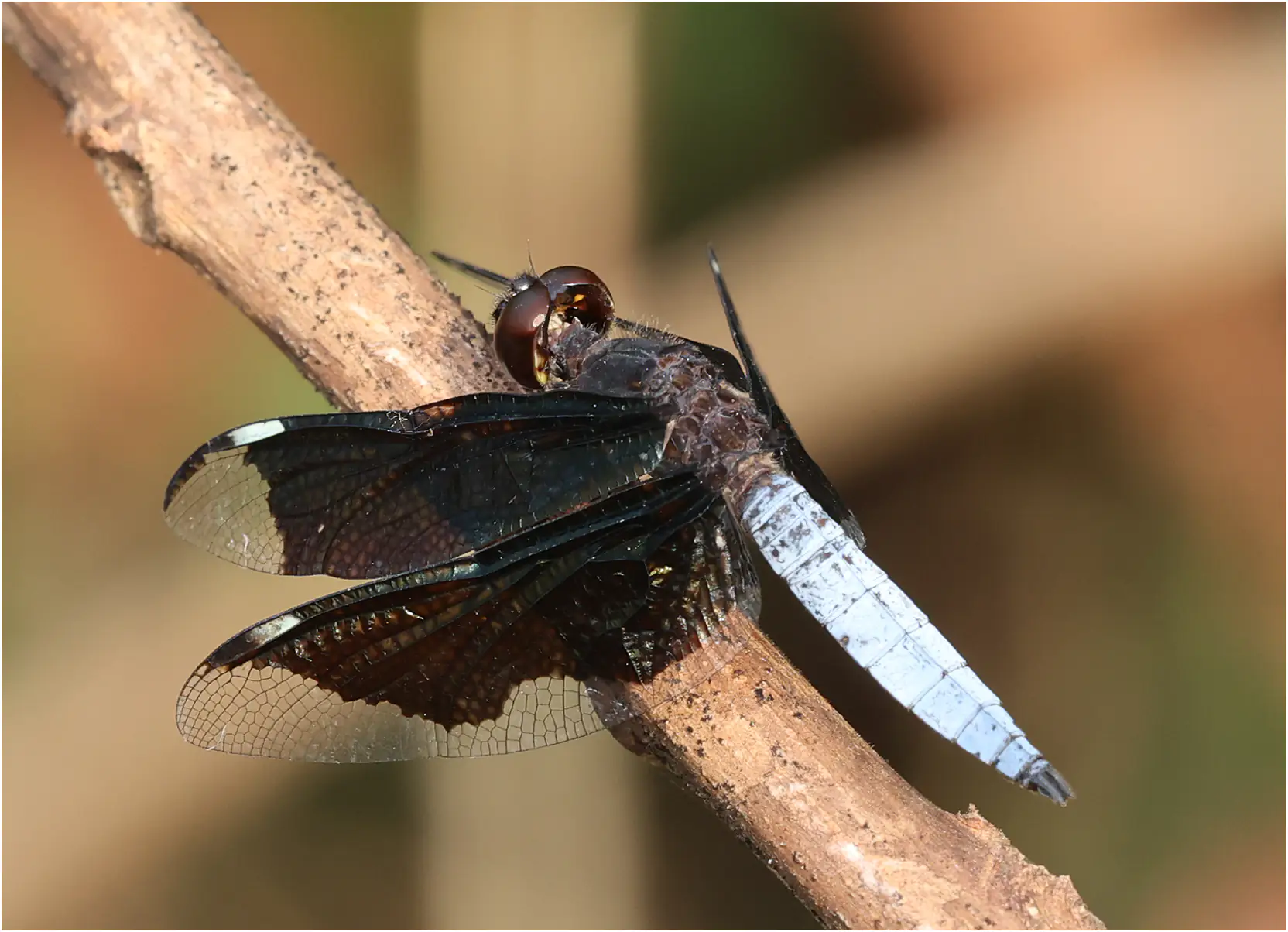
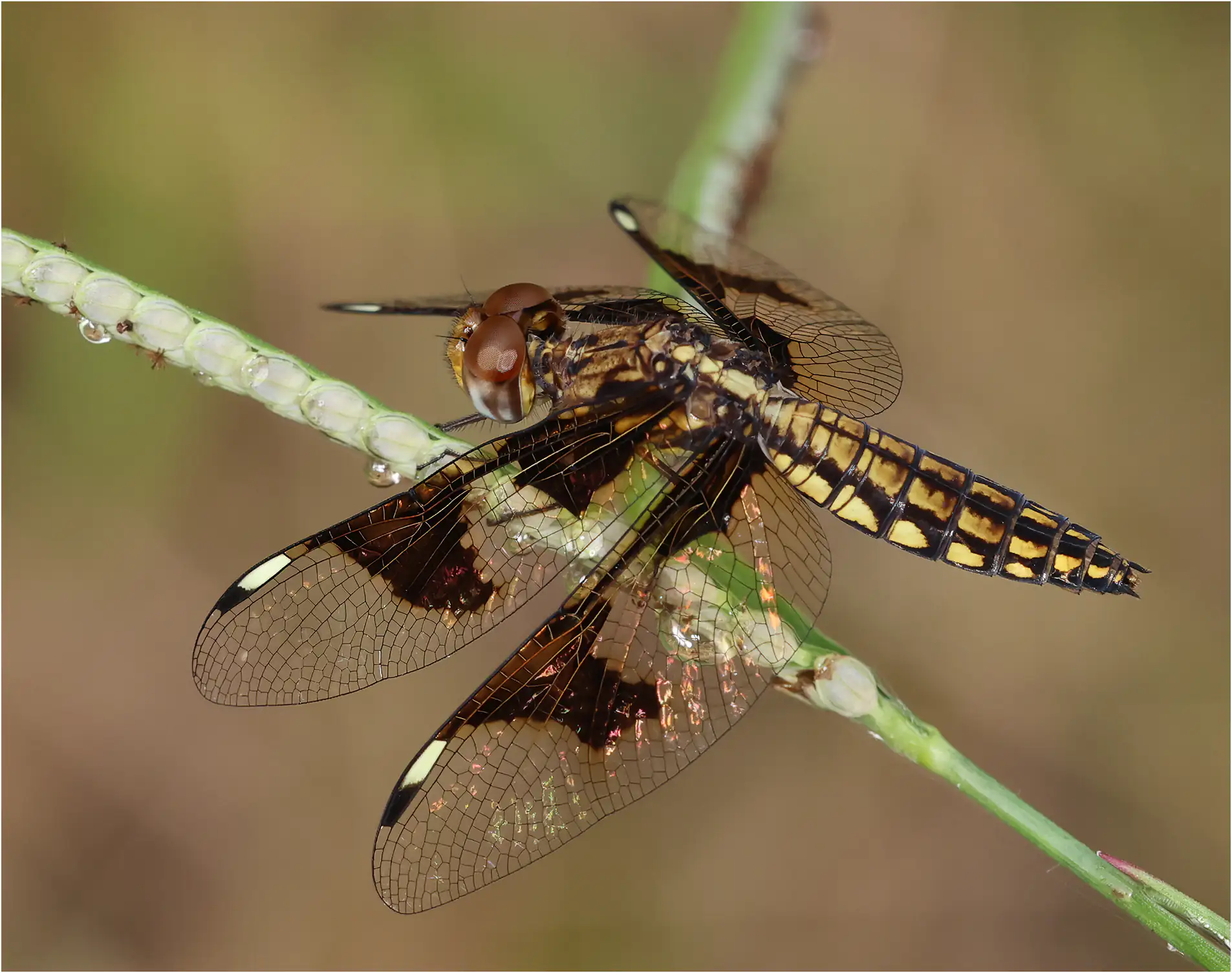
Two characters easily separate the males: the wings of Palpopleura portia are distinctly notched, and its thorax is covered with a blue pruinescence (that of P. lucia remains brownish-black).
Below are younger males whose thorax is beginning to be covered with pruinescence.
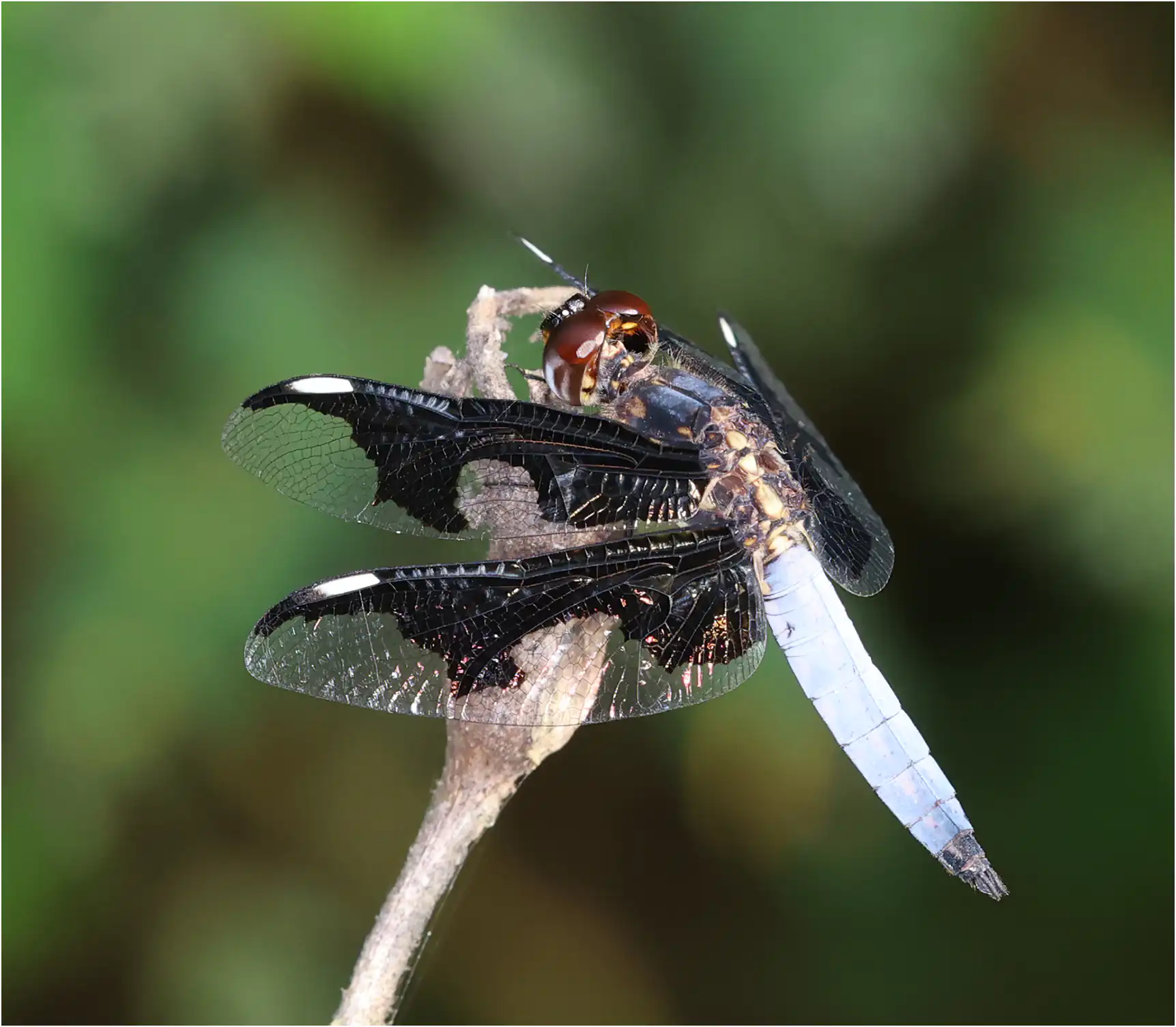
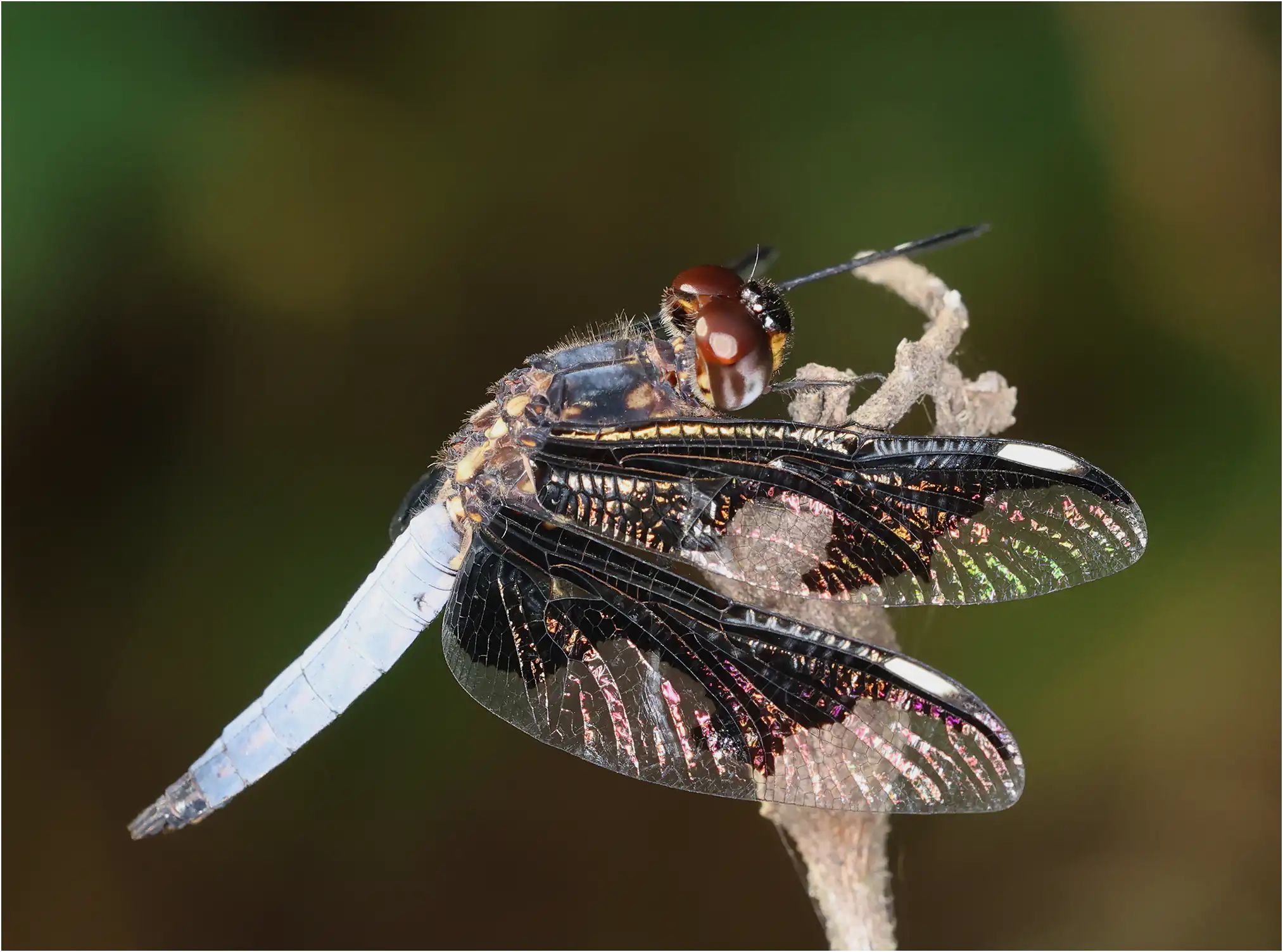
They measure 24 to 31 mm with a wingspan of 41 to 47 mm. They are therefore on average 1 mm smaller than their cousin P. lucia, which is impossible to appreciate in the field.
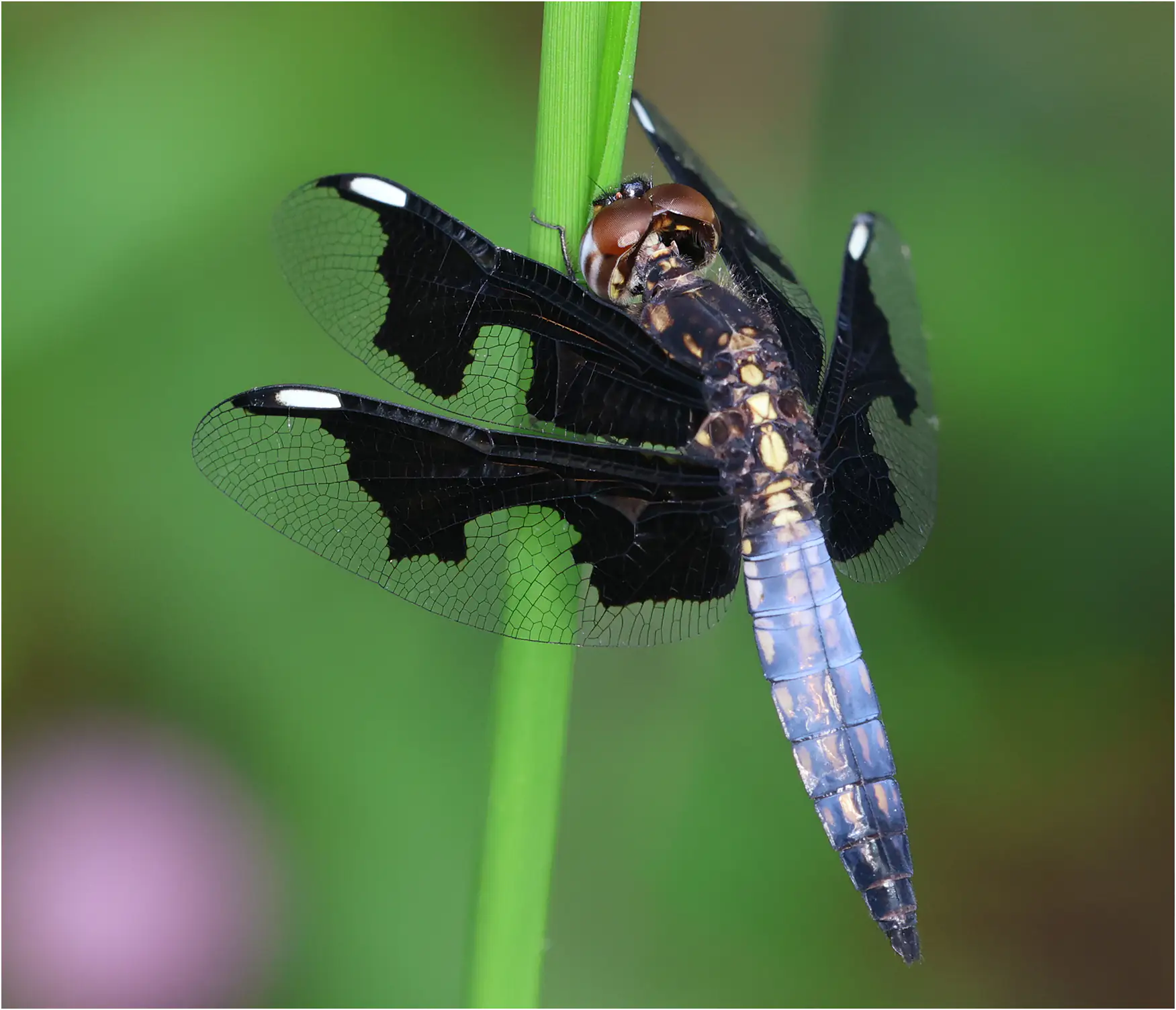
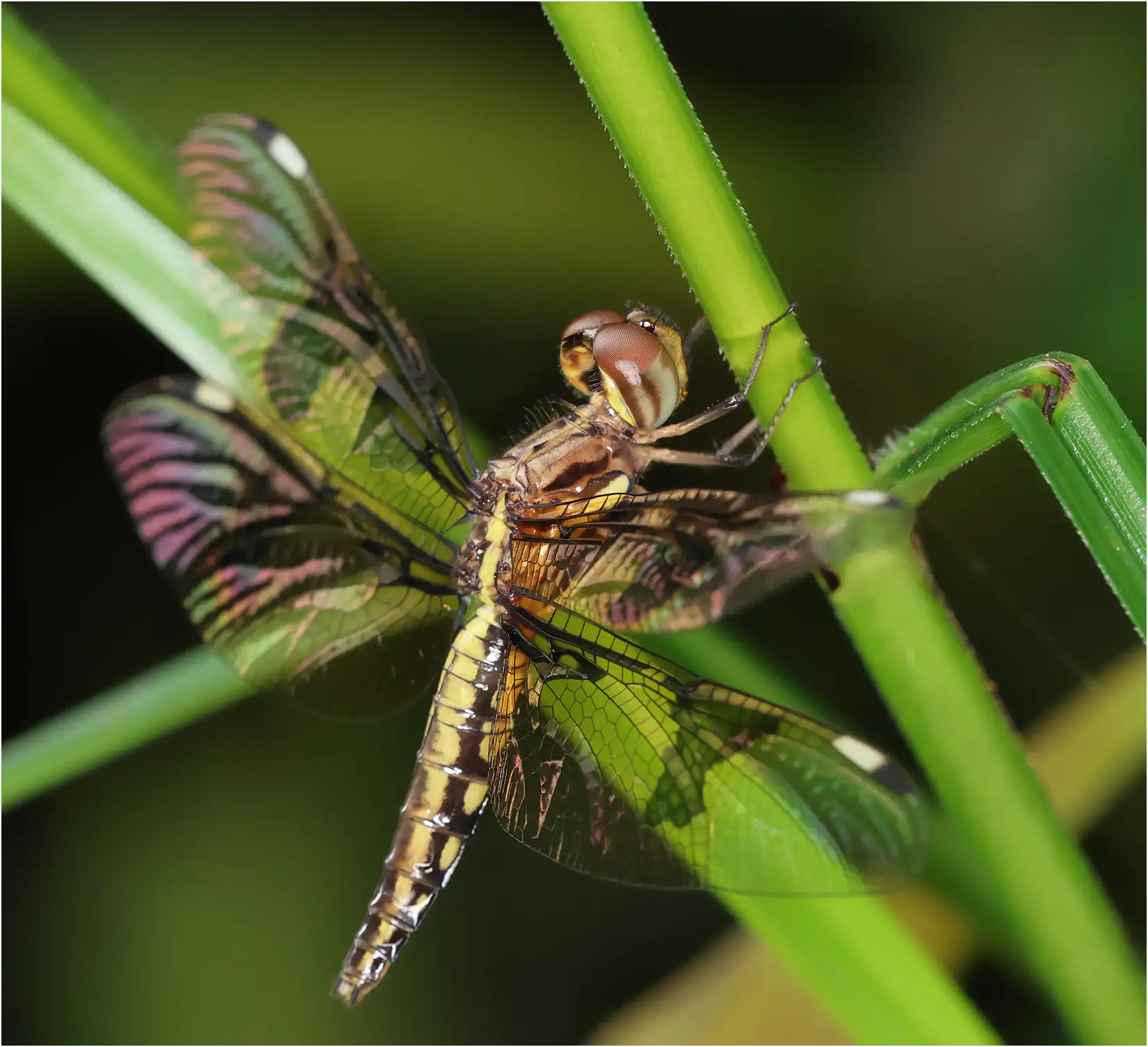
Two even younger specimens below, the one on the right in its immature plumage, which makes it resemble females (although the wing colouration is different).
Females
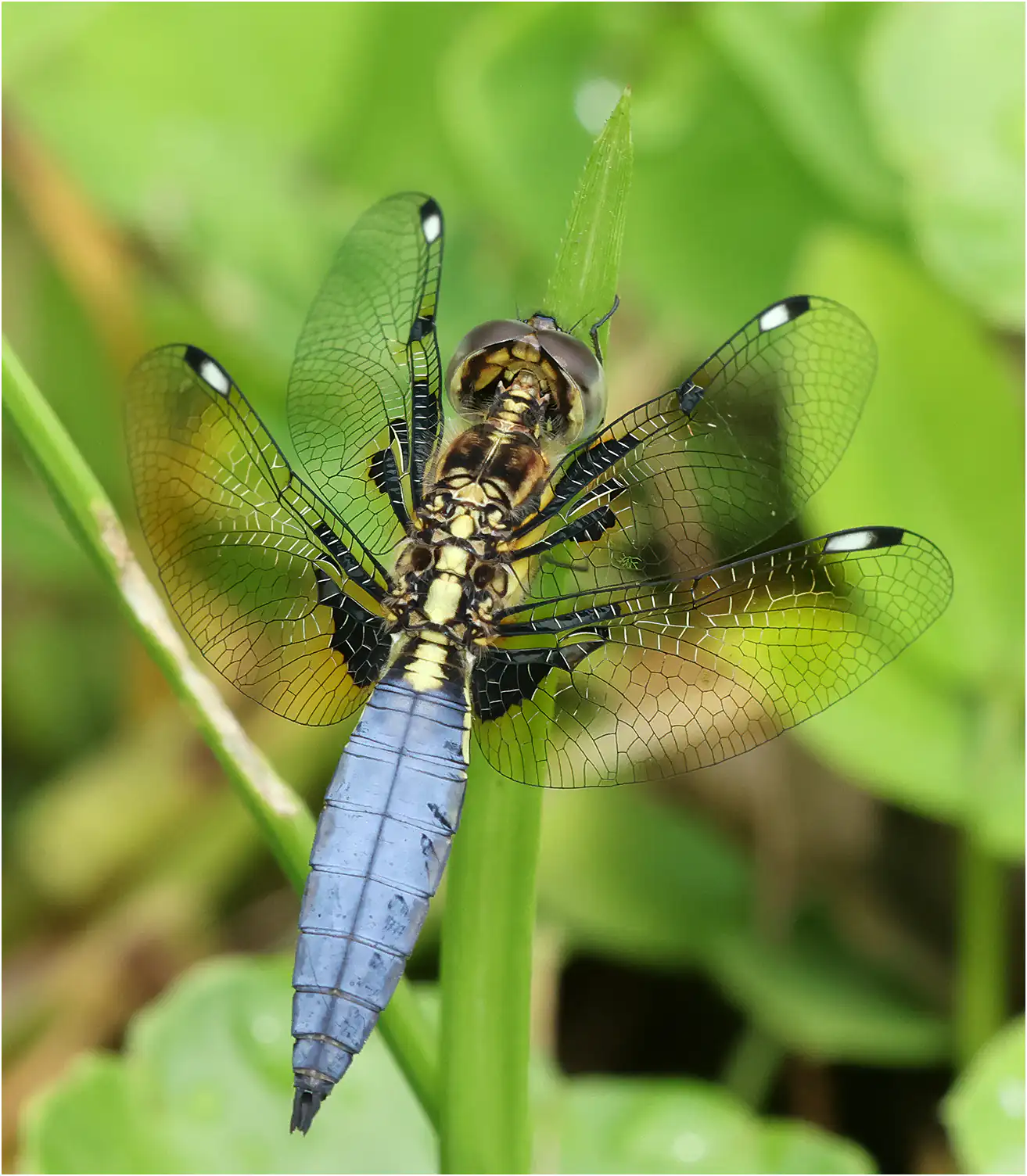
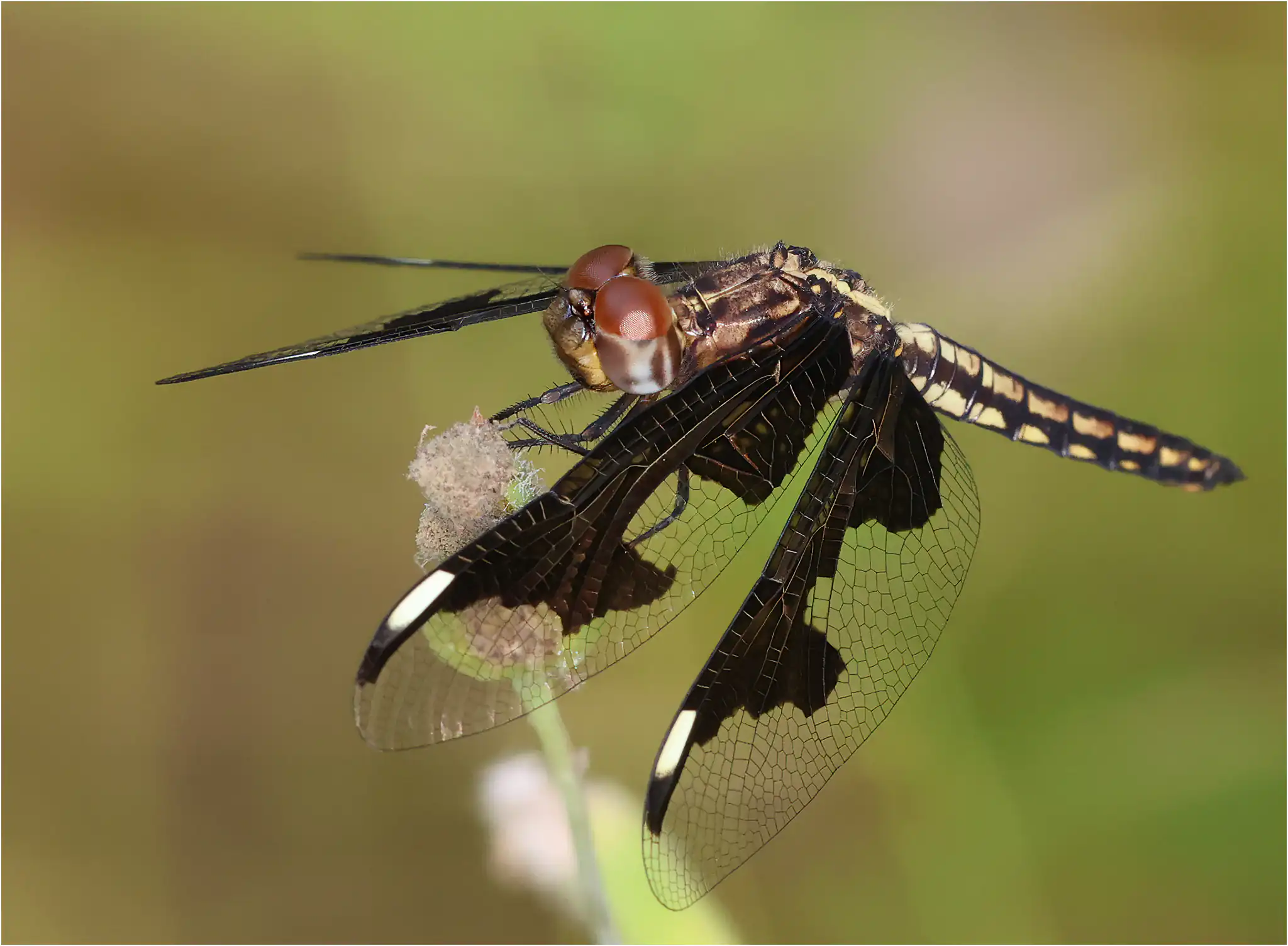
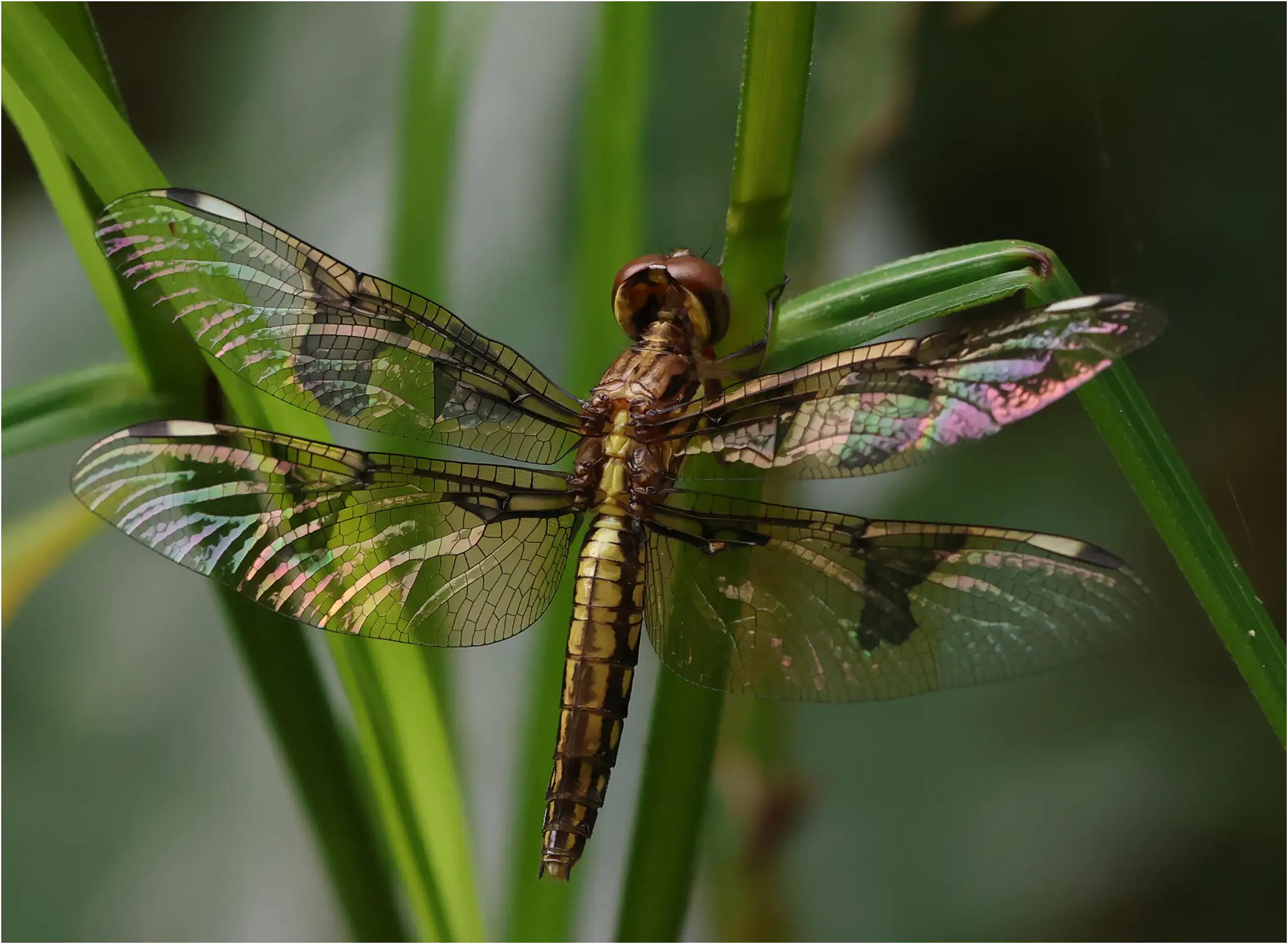
Females are much more difficult to separate from P. lucia females, and in some cases, it is probably impossible because the species are sympatric, and it seems that all intermediate extents of colouration can occur… This identification is therefore also based on the lesser extent of the wing colouration and in particular on the narrower width of the most apical band on all four wings.
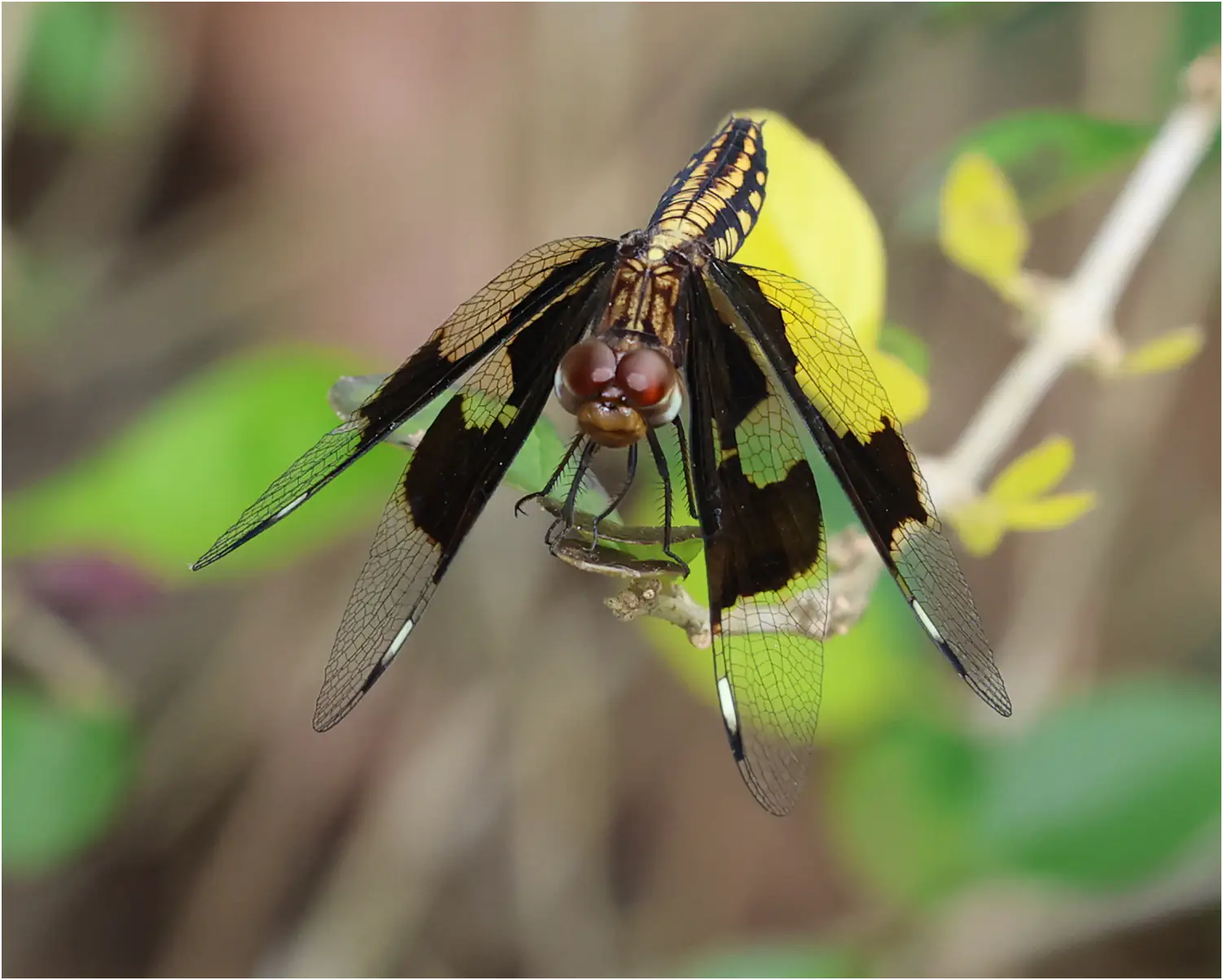
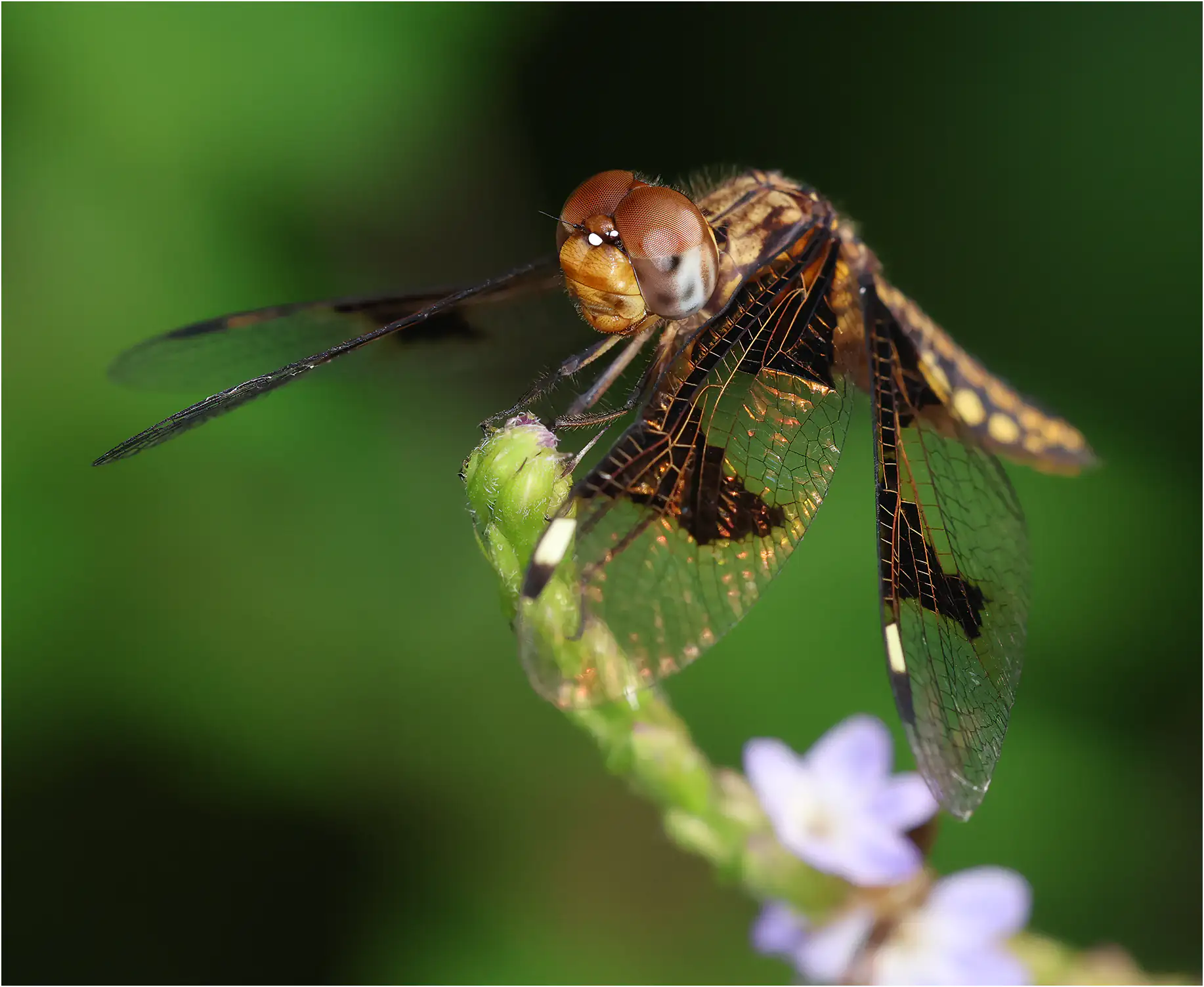
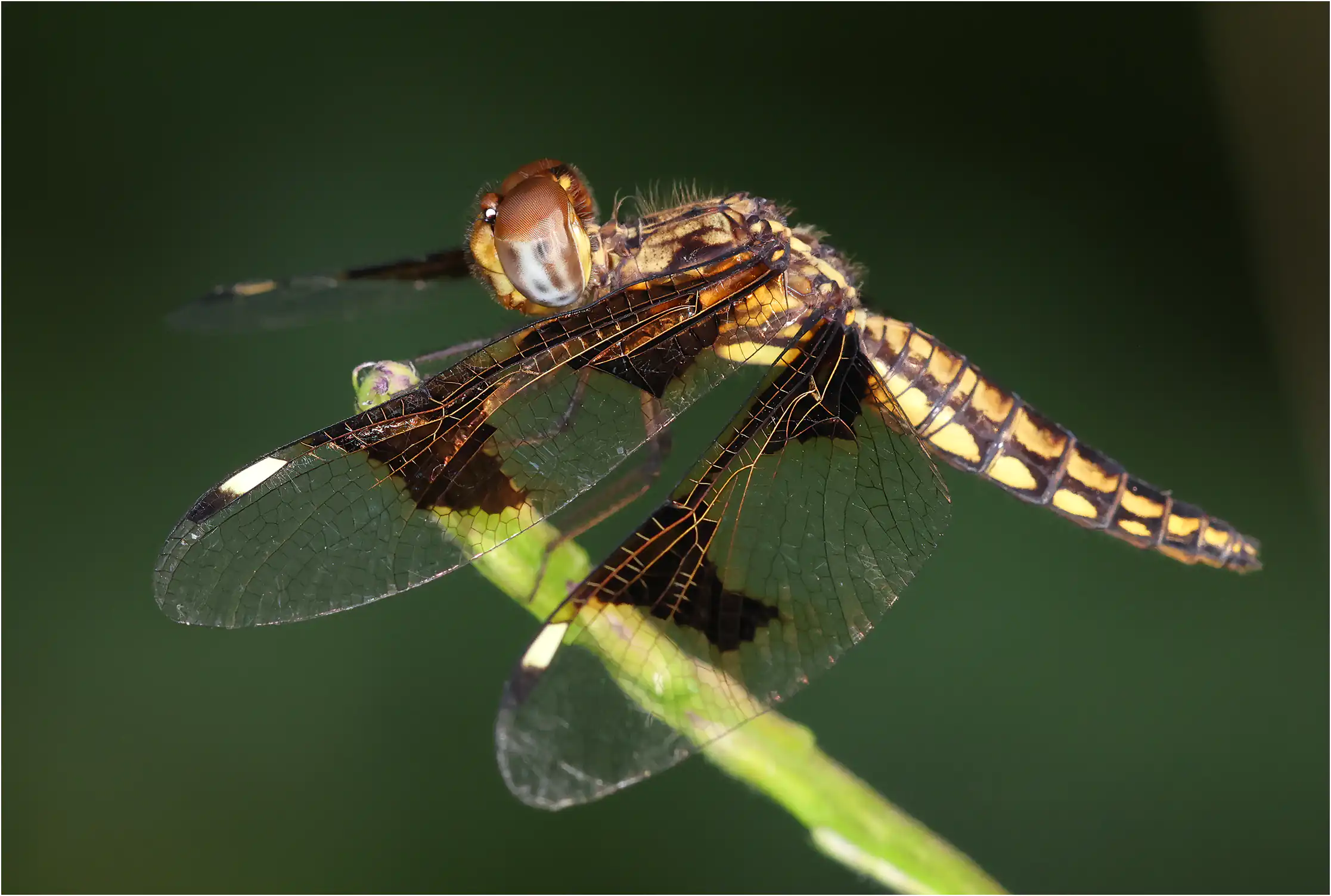
Unfortunately, I only encountered young females (only one male in my photos is truly mature) whose wings display magnificent reflections.
Note the distinctly bicolored pterostigmas, a trait shared with their cousins.
Habitat and geographical distribution
We mainly encountered immature specimens, and our perception of their habitat is probably skewed; it is known that Libellulidae often leave their "birthplace" to mature in more suitable locations, and it was along forest tracks that we observed them.
On ADDO, it is stated that it frequents often temporary standing waters, in open environments, and clearings in forests.
In South Africa, it thrives on the banks of streams and rivers, flooded plains, and seasonal pans (Tarboton, 2015).
It is present throughout subtropical Africa, from Senegal to Somalia, but only reaches the north-east of South Africa, is said to be absent from Botswana, and is limited to northern Namibia.
I had already encountered females in Ethiopia.
IUCN Red List.
Etymology of Palpopleura portia
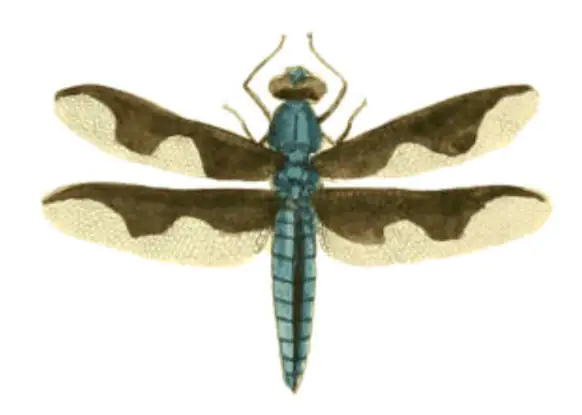
Drury described the species under the name Libellula portia; I do not think this description is accessible on the Web; however, it is repeated by Westwood (1837) along with the original plates, a copy of which I reproduce below.
Palpopleura ;The first part of the generic name comes from the Latin verb palpo, meaning "to feel", "to touch", "to caress", "to palpate", and there is no truly satisfactory explanation for the choice of this term. Pleura in Greek means "side" or "rib", and pleura could be an equivalent of the Latin costa, because Rambur (1842), creator of the genus, emphasizes the characteristic notch of the costal vein (the vein that forms the wing margin). Unless Rambur is simply suggesting that the anterior margin of the wing is deformed and concave, as if it had been touched. See Fliedner (2006).
Lucia is part of the long series of names drawn from classical antiquity or mythology by Drury; thus, in the same volume, he calls upon Lucretia, Paulina, Tullia, Fulvia, without there being any link between these figures and any characteristic of these odonates.
In English, it bears various names, the most common undoubtedly being Portia Widow. But also Shadow-bridge Widow (from the bridge-arch shape of the dark colouration!) or Silver-winged Widow. Widow is a metaphor for the dark/black colouration of the wings.
Dijkstra, K.-D.B. (editor, 2024). African Dragonflies and Damselflies (ADDO).
Drury, Dru. (1770). Illustrations of natural history. Printed for the author and sold by B. White.
Fliedner, (2006). The scientific names of the Odonata in Burmeister’s "Handbuch der Entomologie".
Mitchell, A. & Samways, M. J. (2005). The morphological 'forms' of Palpopleura lucia (Drury) are separate species as evidenced by DNA sequencing (Anisoptera: Libellulidae). Odonatologica, 34(3), 173-178.
Tarboton Warwick & Michèle (2015). A Guide to the Dragonflies & Damselflies of South Africa. Struik Nature.
Westwood, J. O. (éd.). (1837). Libellula lucia Drury. In D. Drury, Illustrations of exotic entomology (J. O. Westwood, Éd., nouvelle édition, Vol. 2, Plate XLV, fig. 1). Henry G. Bohn.