* Trithemis aenea : a new species for Ghana *
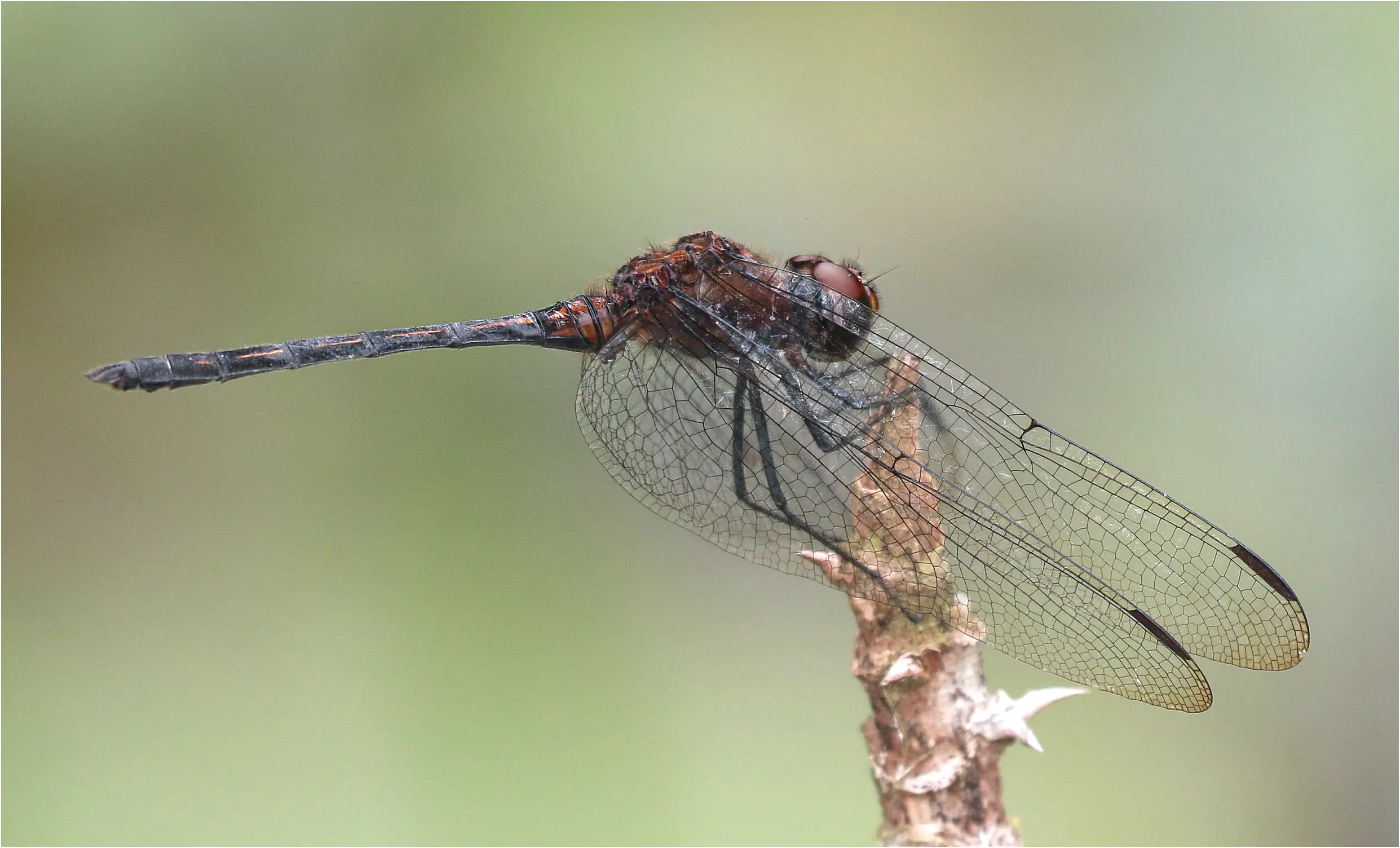
Trithemis aenea is one of those extraordinary encounters; our minibus is having a lot of trouble getting out of the ruts on the track due to the abnormal rainfall this January, and the first puddle on the track is therefore a relief, and what a surprise! No fewer than 3 new species for Ghana, including one very rarely seen, Urothemis venata. Unfortunately, I didn't take any photos of this puddle, as I was too caught up in all these discoveries.
In the field, we were unable to identify this Trithemis, which is absent from the lists for the Ghana region. Especially since the research we were able to carry out in the evening was difficult, without network coverage or with a fickle internet connection. It was far away from us, and the photos were taken with a 300 mm equivalent lens.
It was only back in France that I had the chance to identify it; it is one of those likely to be encountered in West Africa; Klaas-Douwe Dijkstra shows very few photos on iNaturalist, but this species is one of them!
It was already known from Liberia, Nigeria, Cameroon, Gabon, Congo-Brazzaville, the Democratic Republic of the Congo, and neighboring Ivory Coast. Its presence in Ghana is therefore not out of place.
The IUCN Red List is a little behind compared to ADDO (African Dragonflies and Damselflies Online), which unfortunately disappeared in 2024 and can sometimes be reached using a Wayback Machine or via web.archive.org.
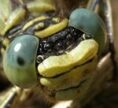
It is very unusual among the Trithemis with its brown thorax; the pairs of yellow stripes on the abdomen are more common, but the combination of these two criteria is unique in West Africa, especially if we add the slightly tinted wingtips.
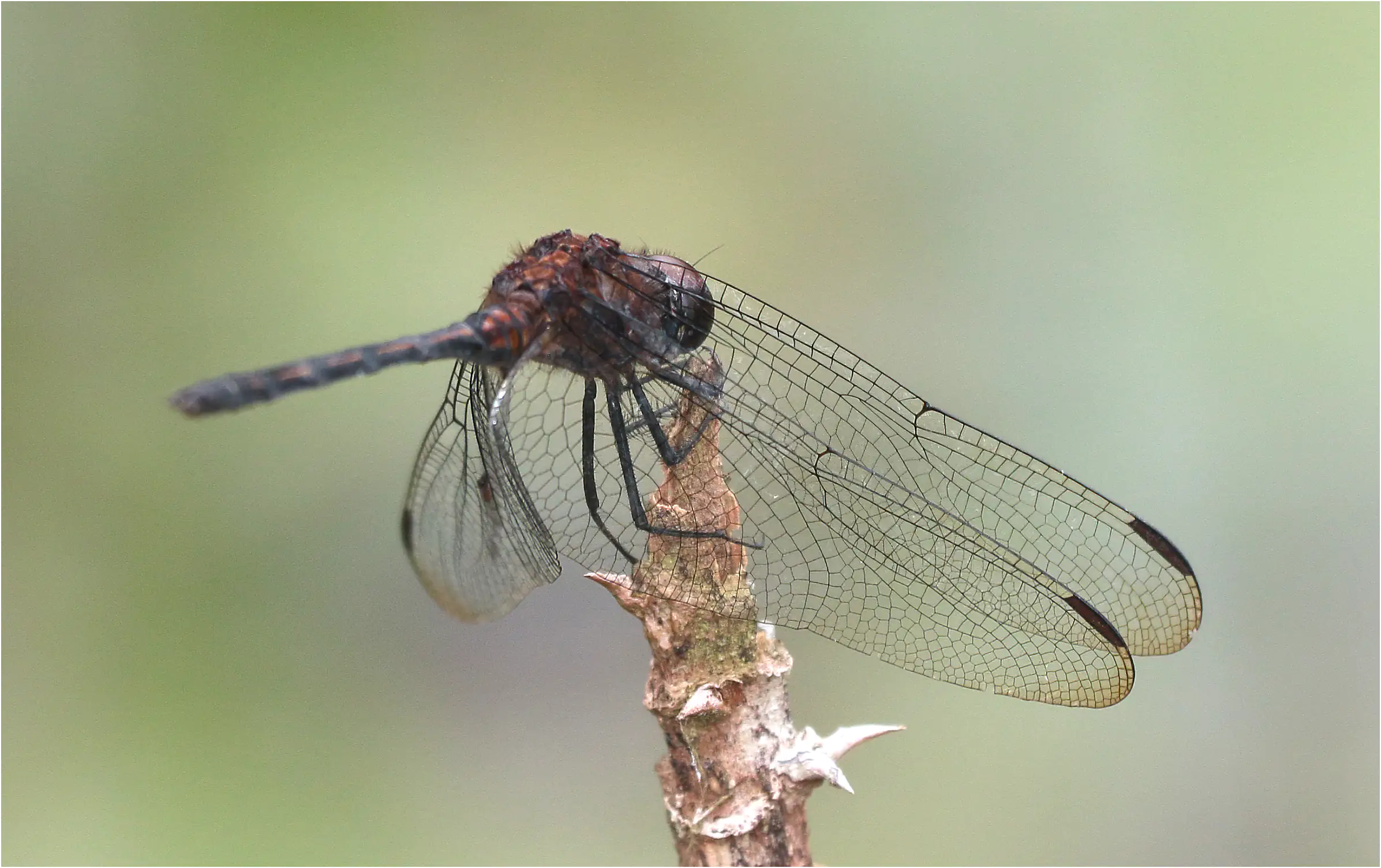
Pinhey tells us that it is a large Trithemis (of the stictica group) and that its hindwing measures 32 mm and its abdomen 27 to 28 mm; it is about 40 mm long.
On the ADDO website, we read that it likes rivers, standing water, and even temporary pools in open areas within the forest. It prefers blackwaters (humic, dystrophic), emergent vegetation, and/or a sandy or soft bottom (such as mud). Our observation took place at a roadside pool with a very muddy bottom, and it was perched on an emergent twig; part of the pool was bordered by trees, without one being able to truly speak of a forest.
As already mentioned, the odonate assemblage was impressive: Urothemis venata and Agriocnemis victoria, two other new species for Ghana; Aethriamanta rezia in numbers; Trithemis grouti and arteriosa; Crocothemis erythraea; Hadrothemis defecta; and Ceriagrion glabrum.
Etymology of Trithemis aenea
Trithemis is made up of the prefix tri, for "three", certainly because the posterior margin of the pronotum in species of this genus is trilobed, and of Themis, who is the goddess of divine law, order, and justice. But why Themis? Certainly because other dragonfly names included the names of gods like Echo or Nehalennia, and when Brauer created the genus Trithemis, the fashion was still "for mythology." This goddess name has been used, according to Fliedner (2006), more than 50 times to name odonates, and it is only fitting because "as the goddess of order, Themis is a very suitable patron of taxonomists."
Aenea comes from the Latin aeneus, an adjective meaning "bronze-colored," and Pinhey writes, "It is named from its bronze coloration." He also describes "the frons and bronze vesicle" and "bronze-brown thorax." This evolution of the thorax toward a bronze color, which cannot be seen in any photos on iNaturalist, is undoubtedly related to age.
Fliedner, 2006. The scientific names of the Odonata in Burmeister’s "Handbuch der Entomologie"
Pinhey, 1961. Dragonflies collected on an expedition from Rhodesia to Nigeria in 1958. Part 1. Entomologists Monthly Magazine, 96, 256-271.