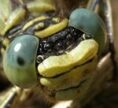
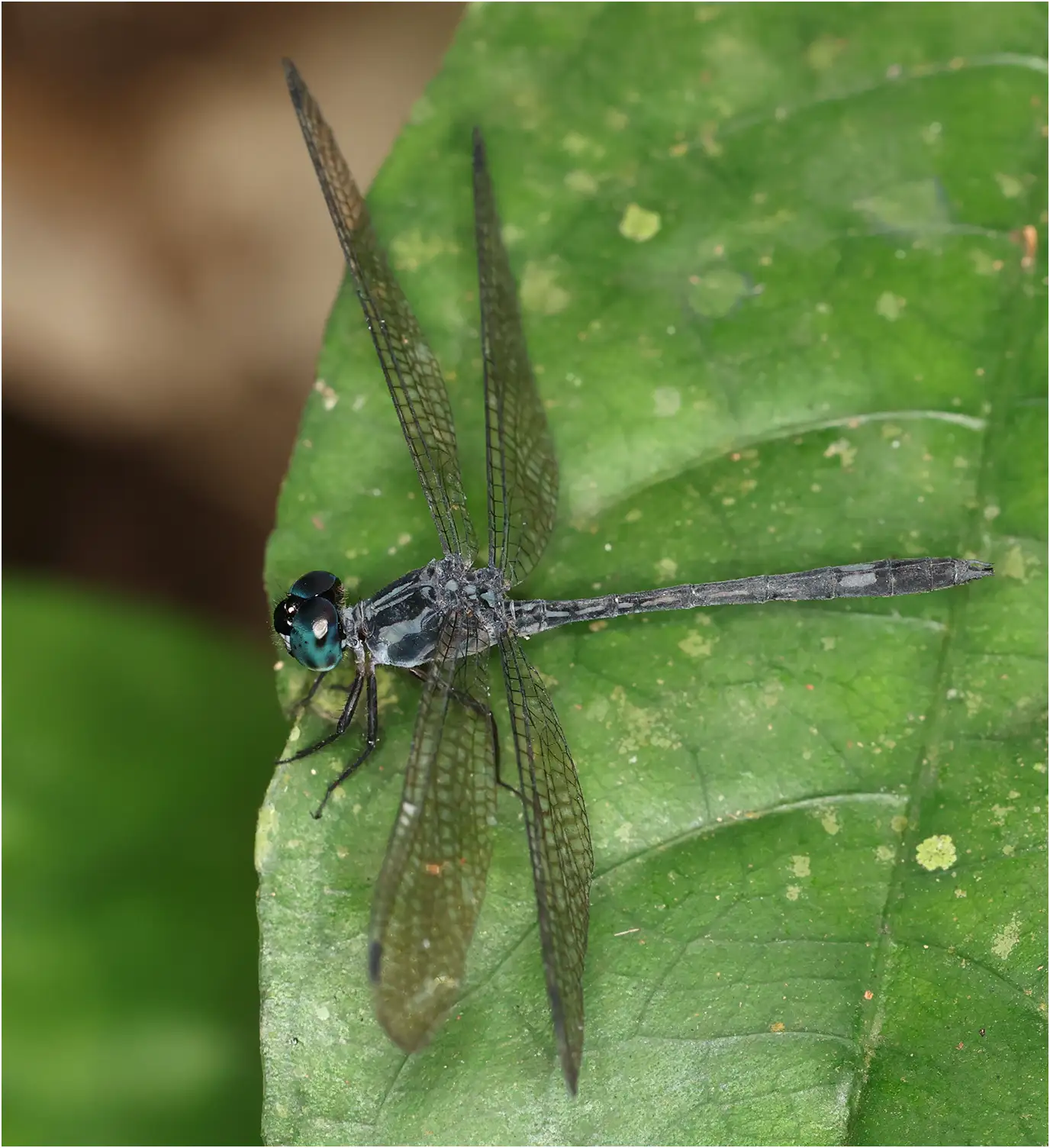
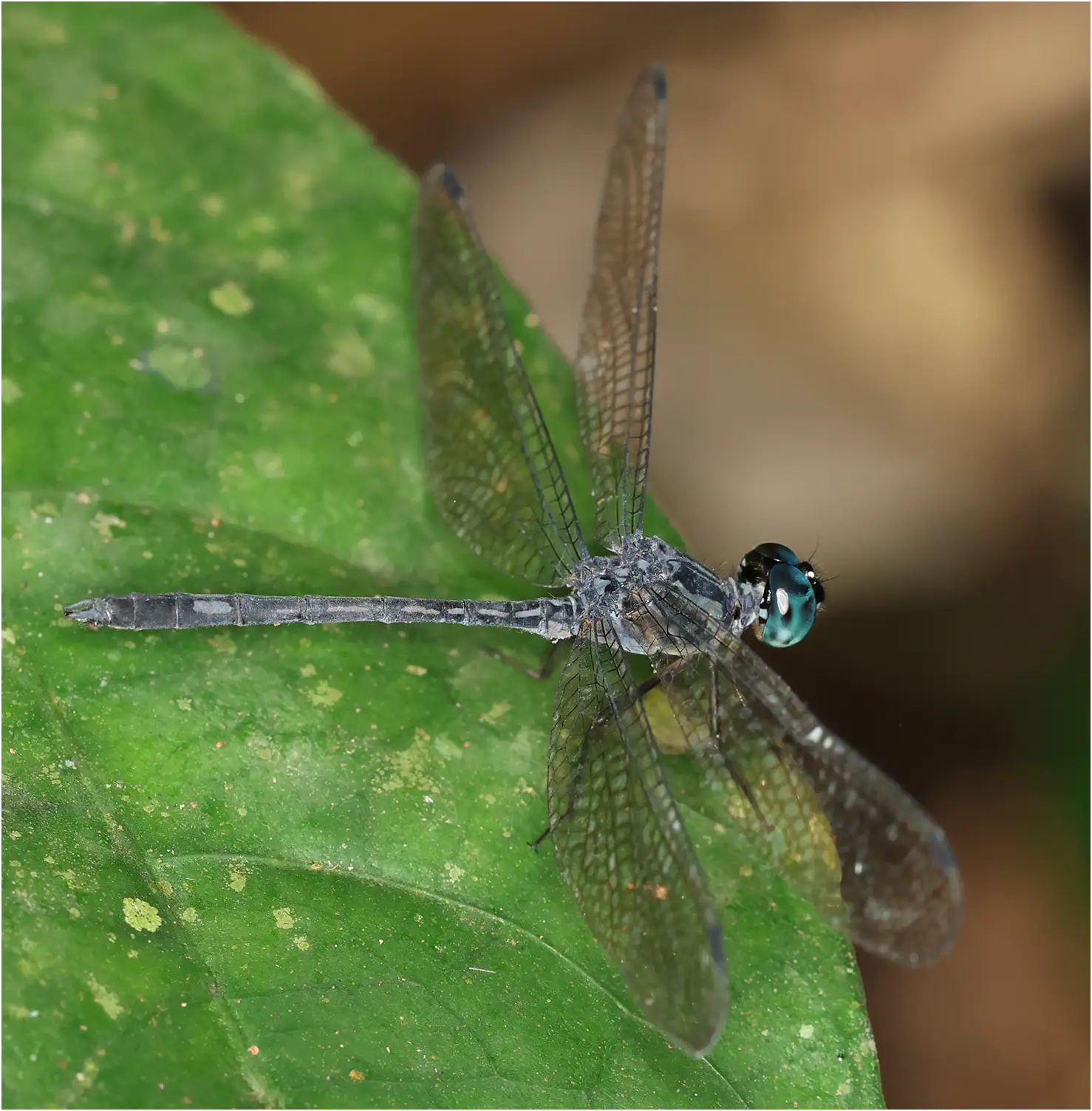
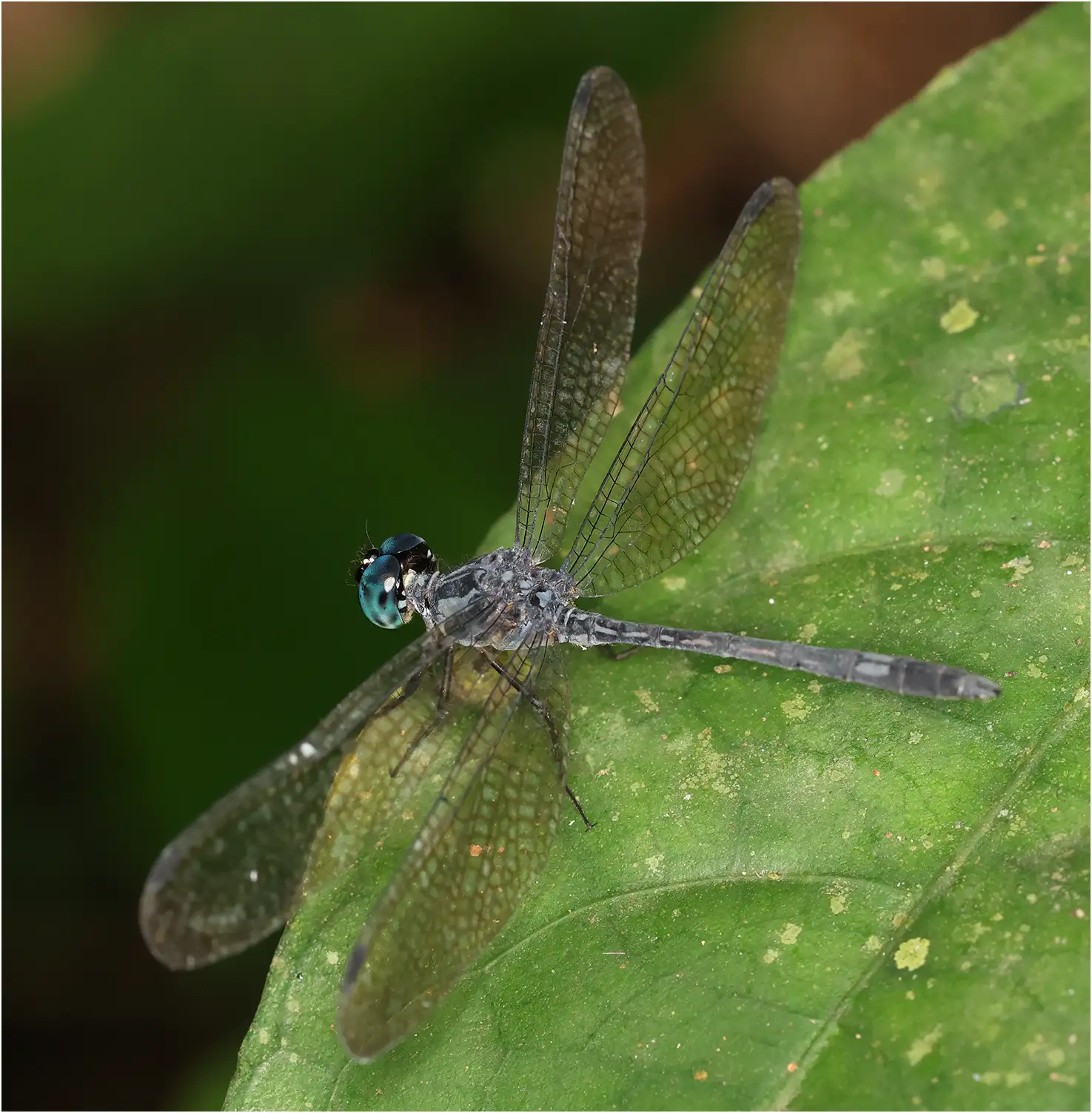
Micromacromia zygoptera (Libellulidae) was hiding, perched on a leaf above a small stream with a sandy bottom and decomposing leaves, meandering through the dark forest. Despite a few take-offs, it let itself be photographed quite patiently—fortunately so, as throughout the entire trip we would only see this male and a female. This genus comprises only four species, all of which are rare and very infrequently observed; prior to our survey, the species had only 6 observations on iNaturalist between 2012 and 2022.
Yet, it has a rather amusing English common name (can we really speak of a common name for such rarities?): Small Micmac.
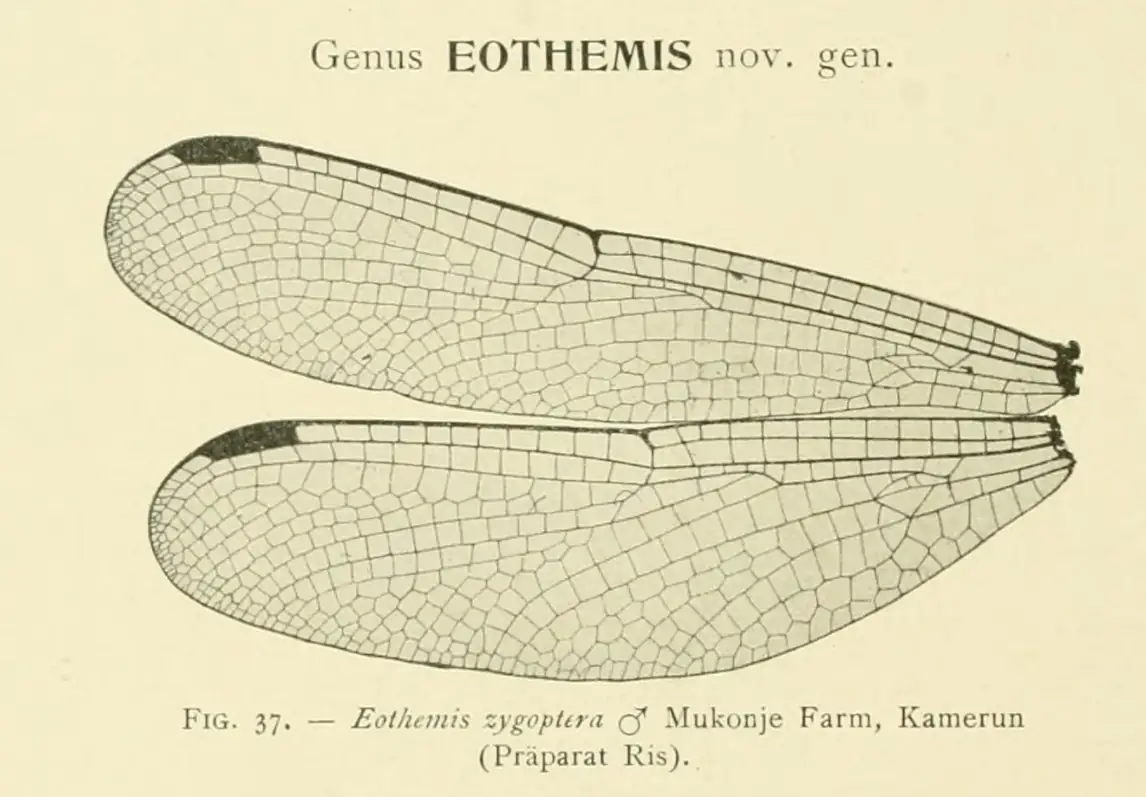
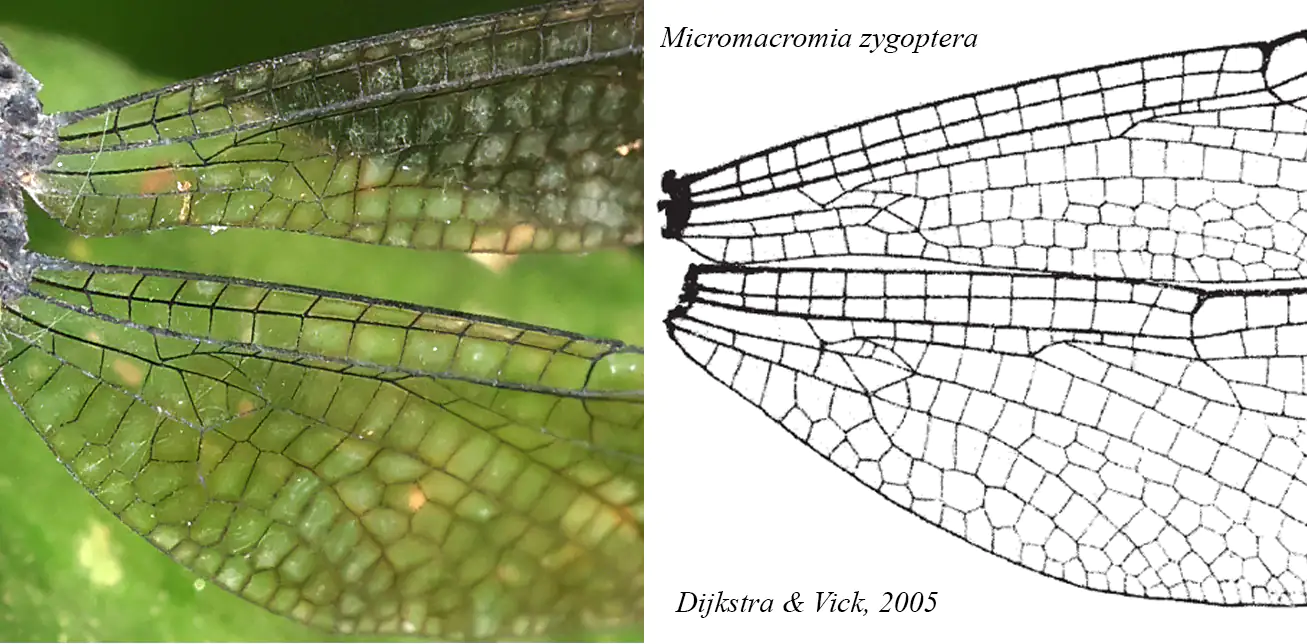
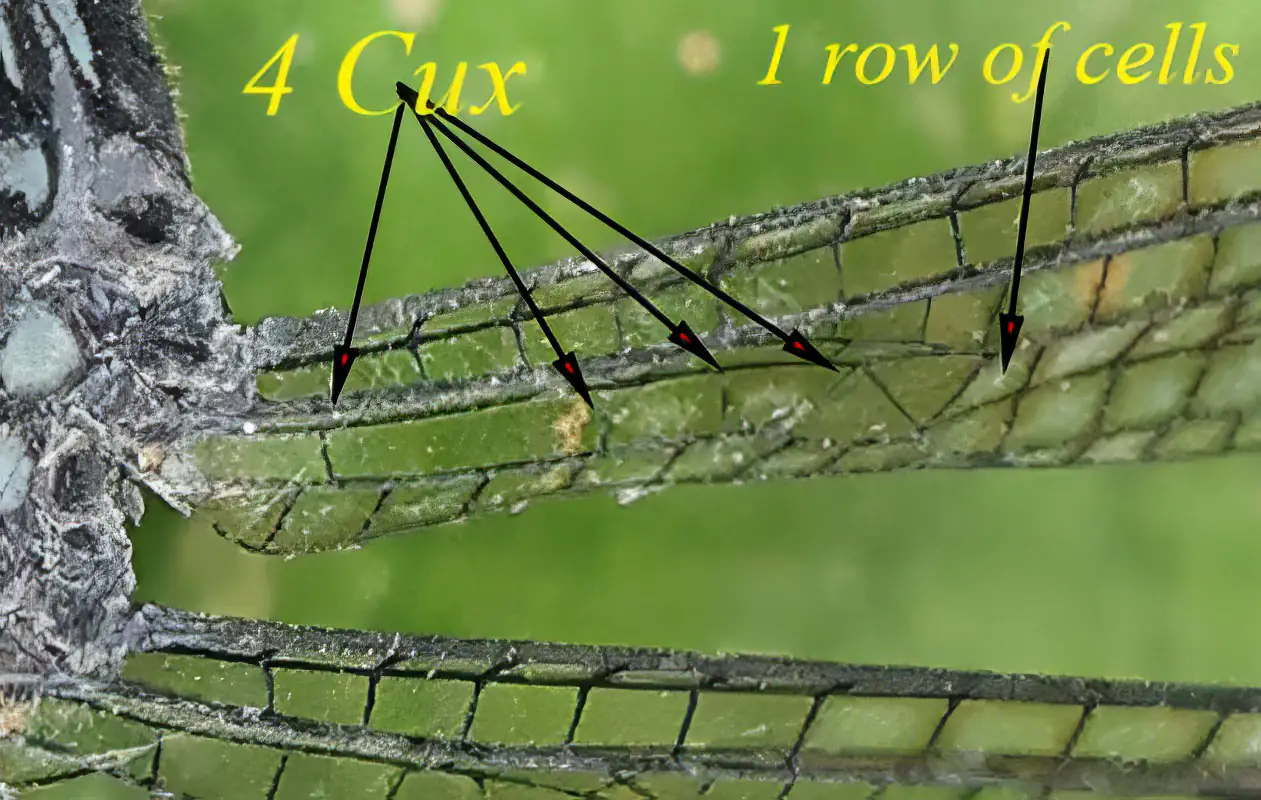
Micromacromia (Karsch, 1890) is very close to Neodythemis and is distinguished from it in principle by the fact that the discoidal field of the forewing begins with only 2 cells, except for Micromacromia zygoptera, which, like Neodythemis, has only one! And it is undoubtedly for this reason that Ris (1909) described it under the now-defunct genus name Eothemis.
M. zygoptera is in principle the only species in Ghana; another is very close, M. camerunica, but it therefore presents 2 rows of cells at the origin of the discoidal field of the forewing.
The genera and species are very close, and the taxonomy has been rich in complex debates, settled by Dijkstra and Vick (2006): M. zygoptera has been called Eothemis zygoptera (Ris, 1909) and Neodythemis scalarum (Pinhey, 1964).
Ris measures its abdomen at 21.5 mm, and Pinhey at 22 mm without the anal appendages; its total length barely reaches 34 mm.
We found it entirely within the environment described by Dijkstra (ADDO, 2020 & ADDO, 2020), namely a small rainforest stream.
Its distribution extends from Guinea to Gabon, though its presence is not confirmed in Benin or Equatorial Guinea.
IUCN Red List.
The only female we encountered was out of luck. Probably on the very day of her emergence, her journey ended in a spider's web. Note the very characteristic dark quadrangular mark in the center of her thorax.
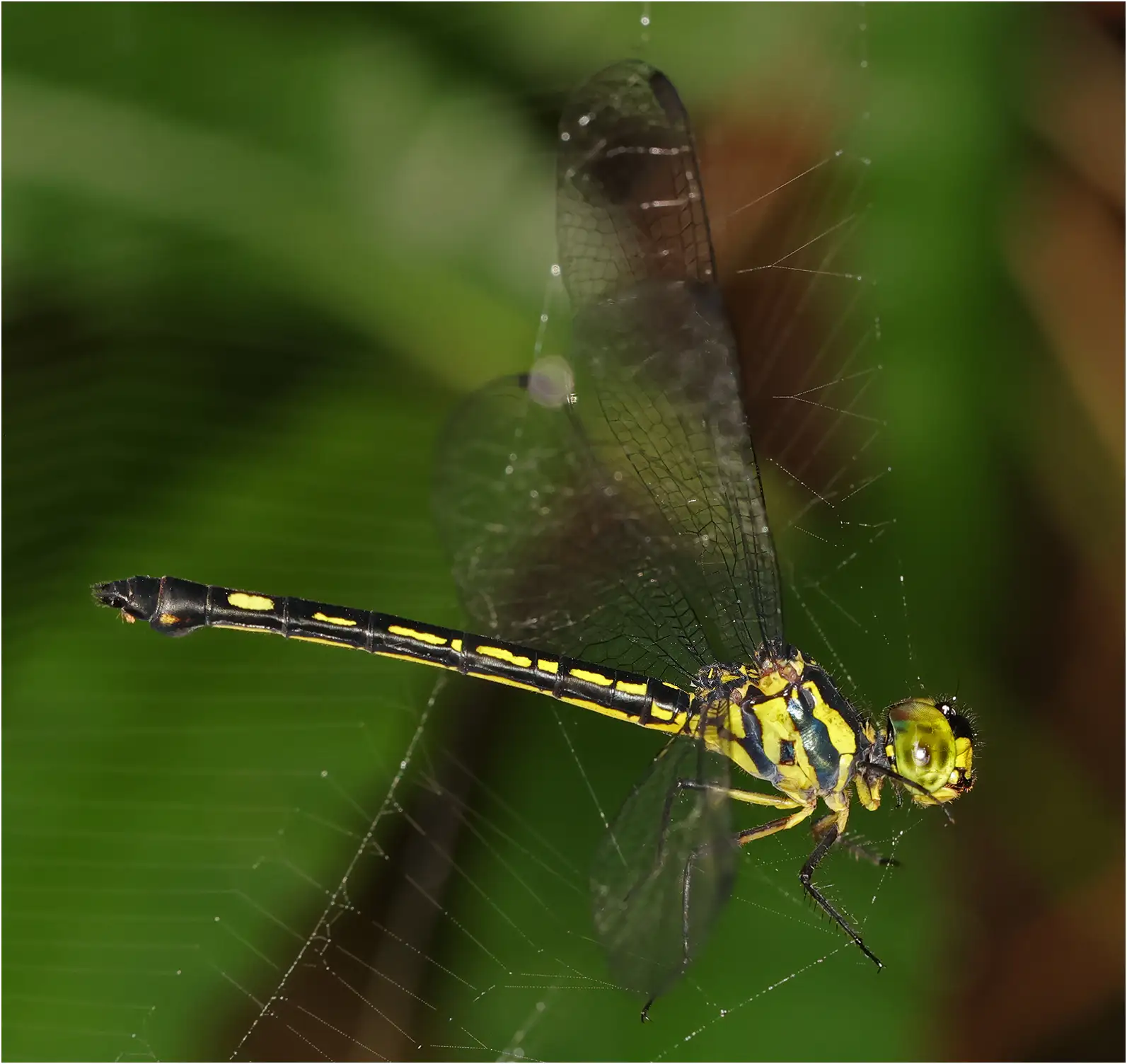
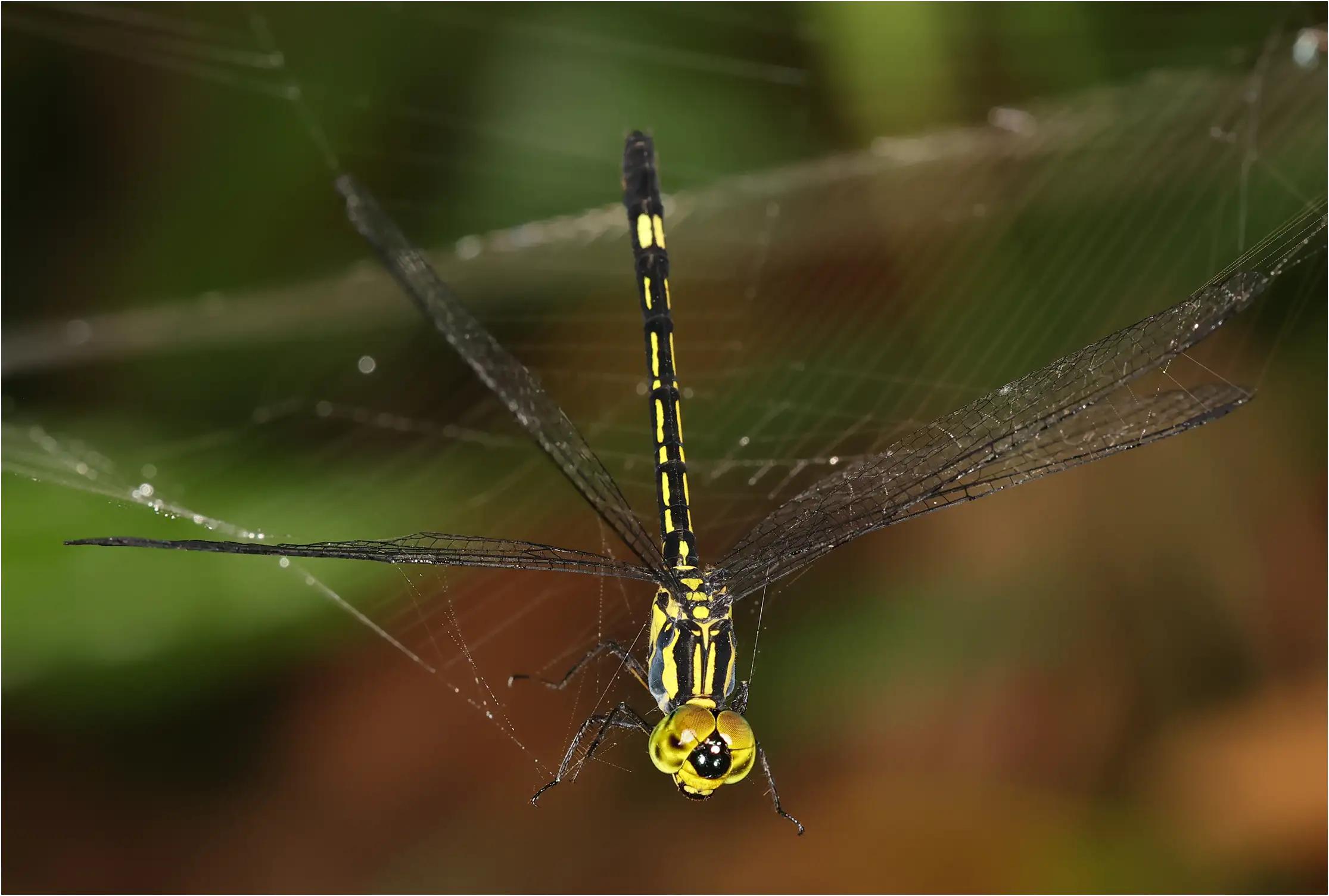
Note the broad expansion of S8 on the upper left photo; this dilation is normally absent in female Neodythemis.
Its abdomen can be compared with the one shown in Dijkstra & Vick (2006):
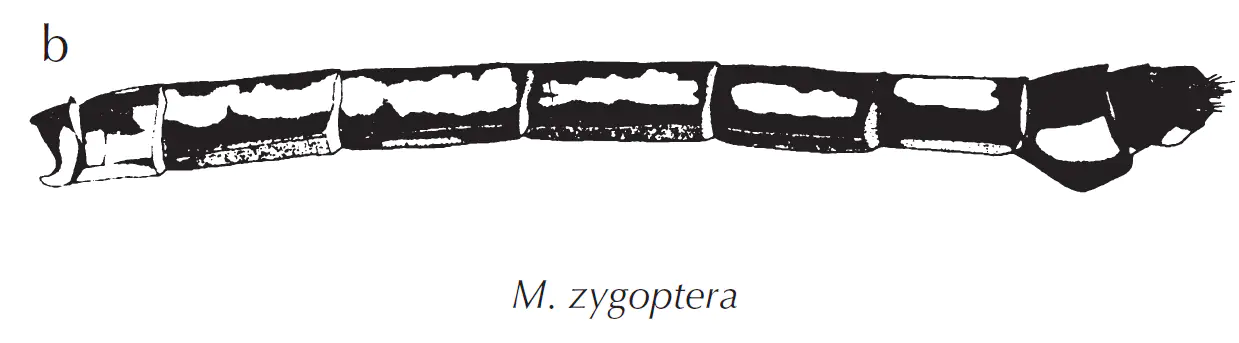
Etymology of de Micromacromia zygoptera
Micromacromia; from the Greek micro meaning small, and macromia, which is constructed from the Greek macro meaning large or broad, and omos meaning shoulder, to emphasize the massive thorax. It is a very surprising name for a Libellulidae, and I will let Fliedner try to explain it...
"Karsch's description of this libellulid genus does not mention Macromia at all. Perhaps, as with Hagen's genus Macrothemis, the claw tooth led to the name [claws below the middle with a distinct tooth]. But it should be noted that the only species on which Karsch based this taxon bears some superficial similarity to the genus Macromia: it has long, narrow wings, a dark, shiny ground color with yellow (greenish) markings, and the thorax is dark metallic green (for Macromia, see Wildermuth & Martens 2019: 540-542). Be that as it may, with a total length of about 30 mm, it is a rather small libellulid."
It should be noted that the specimens described by Ferdinand Karsch in 1890 were captured between 1887 and 1888 (by Dr. Paul Preuss, a German botanist and explorer who worked extensively in Cameroon at that time). Their coloration, having been in collections for 2 or 3 years, likely bore little resemblance to that of the living insect. Furthermore, the male we observed was old, covered in grey pruinescence, while the female was very young, closer to the coloration of Macromia.
Zygoptera, from the Greek zygo, meaning a yoke or a homogeneous pair, and ptera for wing. Indeed, damselflies are called Zygoptera because they have forewings and hindwings that are almost identical. Yet Karsch writes: “Von allen mir bekannten Libellulinen zeigt diese die geringste Differenzierung der Vorderflügel und Hinterflügel” [Of all the libellulines I know, this one shows the least differentiation between the forewings and hindwings].
Dijkstra & Vick, 2006 - Inflation by venation and the bankruptcy of traditional genera: the case of Neodythemis and Micromacromia, with keys to the continental African species and the description of two new Neodythemis species from the Albertine Rift (Odonata: Libellulidae). International Journal of Odonatology, 9, 51-70.
Fliedner Heinrich, 2021 - The scientific names of Ris' odonate taxa - Journal of the International Dragonfly Fund.
Pinhey, 1964 - Some new Odonata from West Africa. Bulletin Institut français Afrique, 26, 1144-1153.
Ris, 1909 - Libellulinen vol. 1, fasc. 9-11 - P. 71.