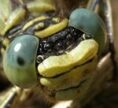
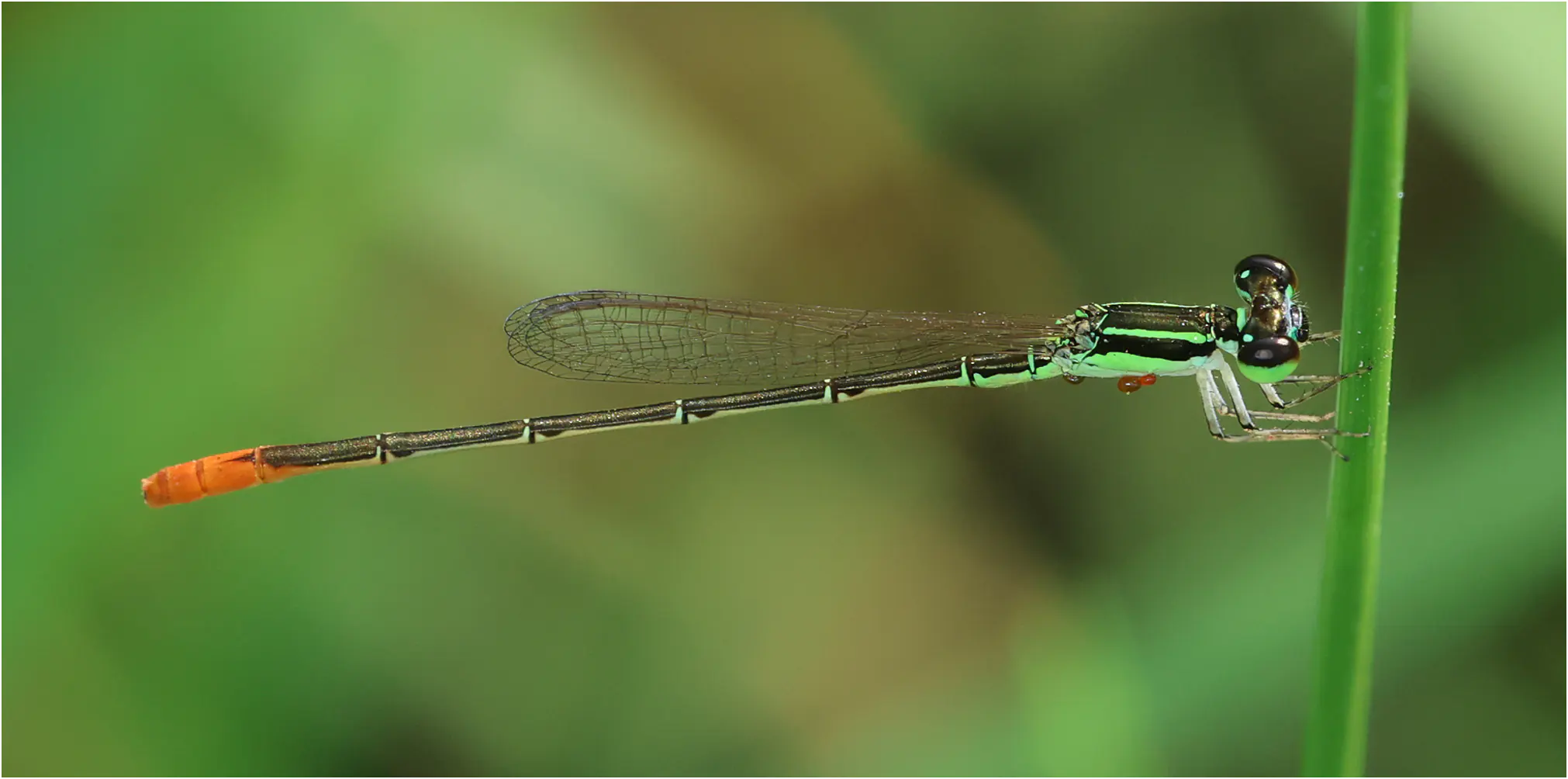
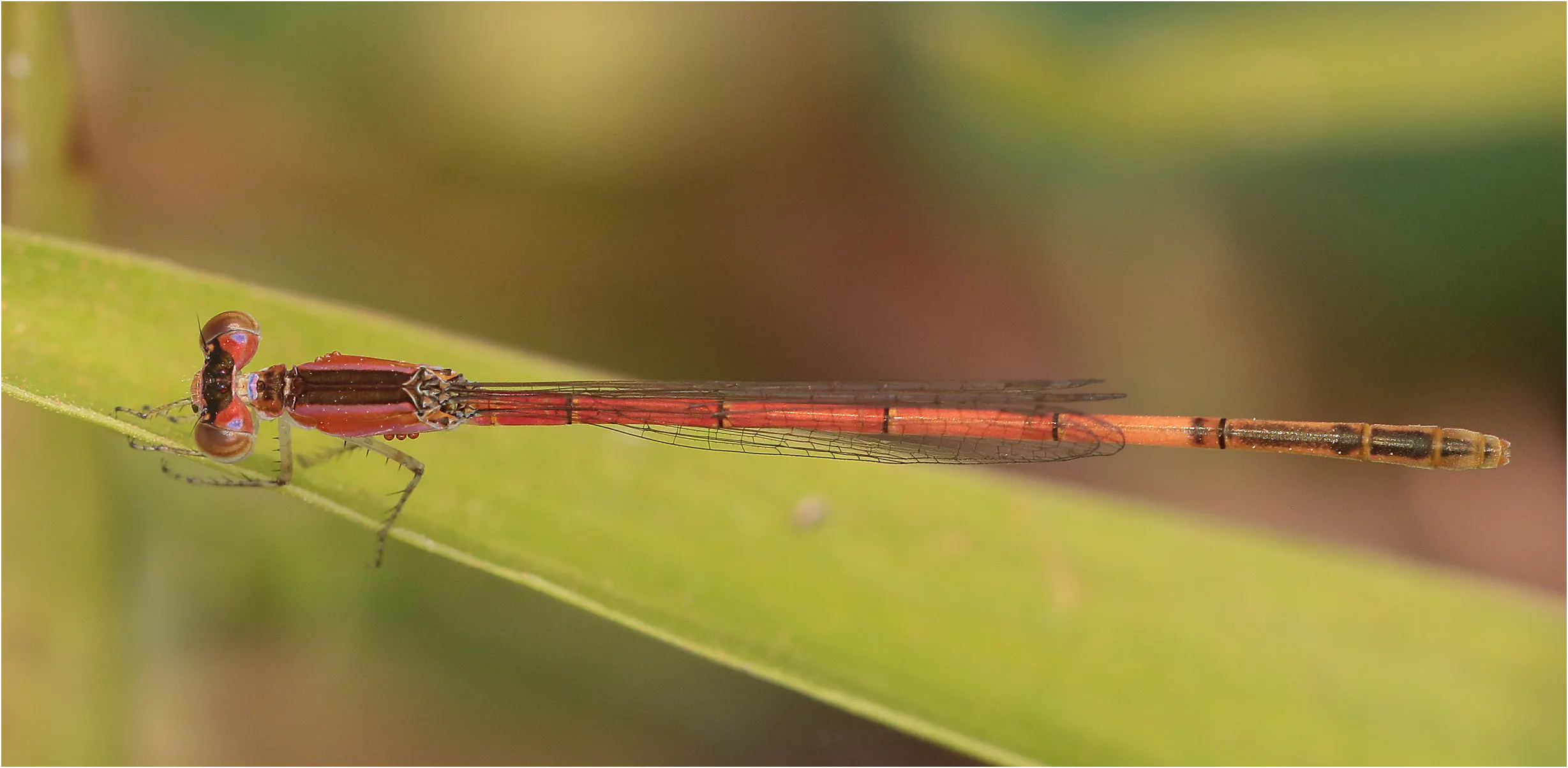
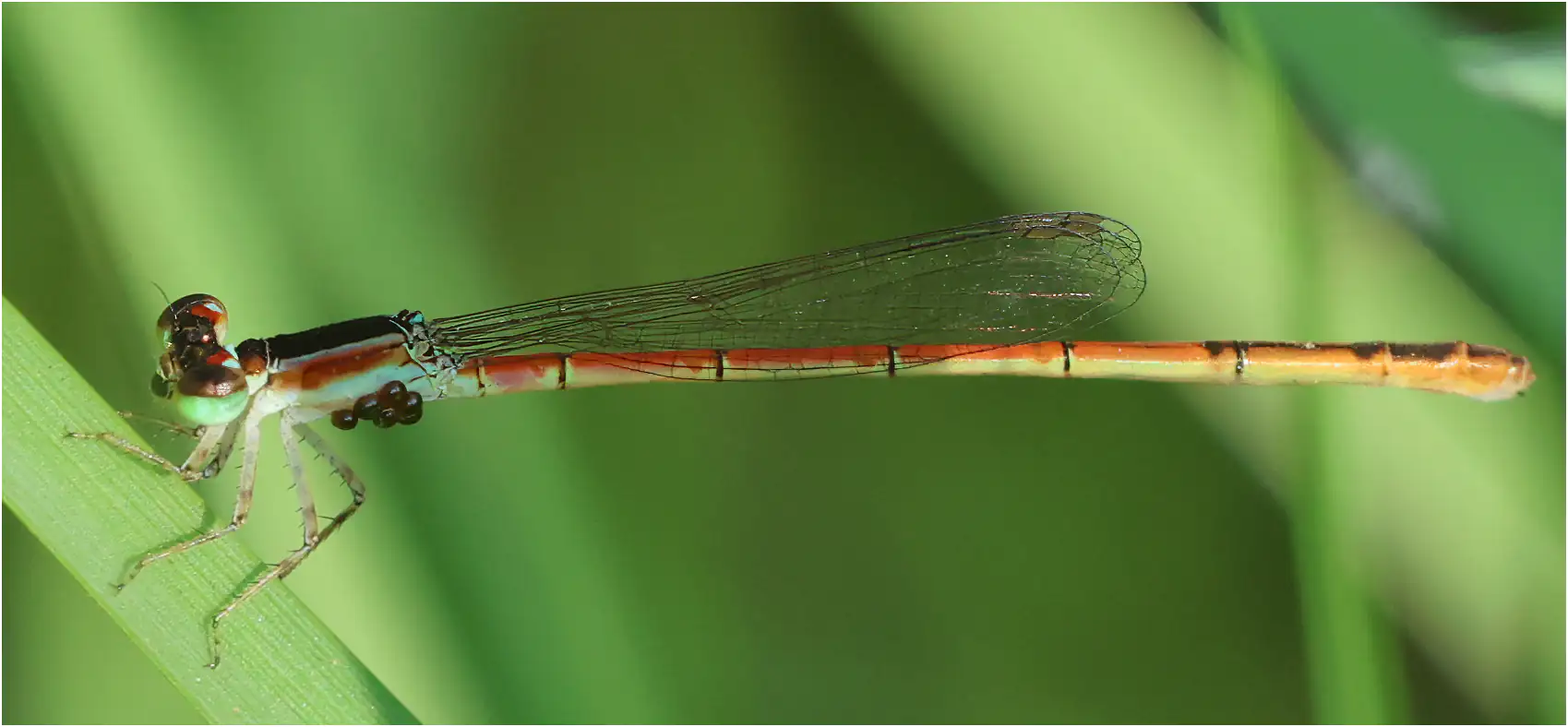
These photos of Agriocnemis zerafica (Coenagrionidae) are the very first ones from the trip, providing an opportunity to take my first odonate photographs with a new camera body. Transitioning from a "small sensor" to a "full frame", I likely didn't have the reflex to get close enough. And at the time, I thought I was dealing with A. exilis, which is visually very similar and which I believed to be the most widespread in this region. Many of these photos were taken in the Sakumono Lagoon, in the suburbs of Accra.
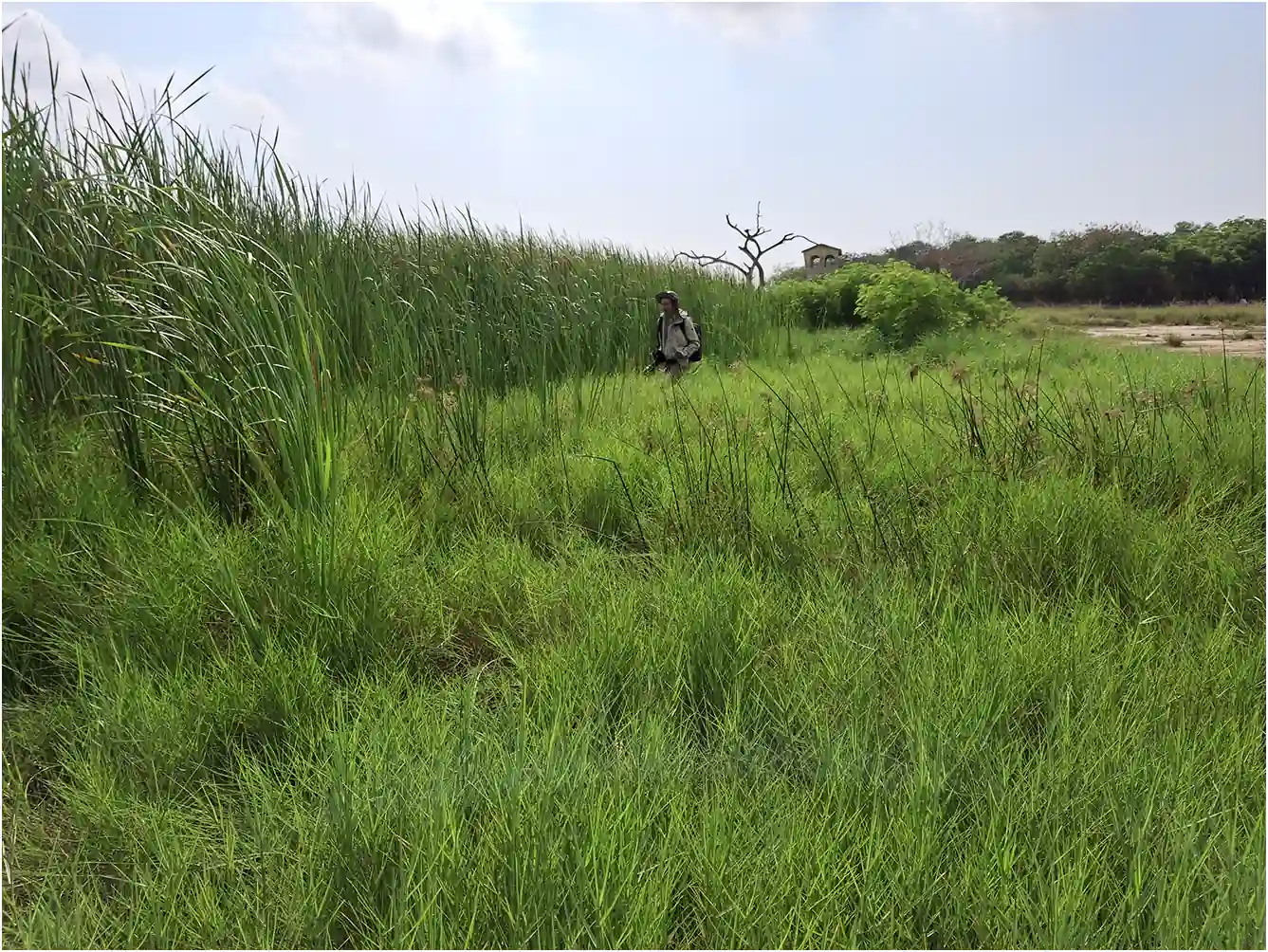
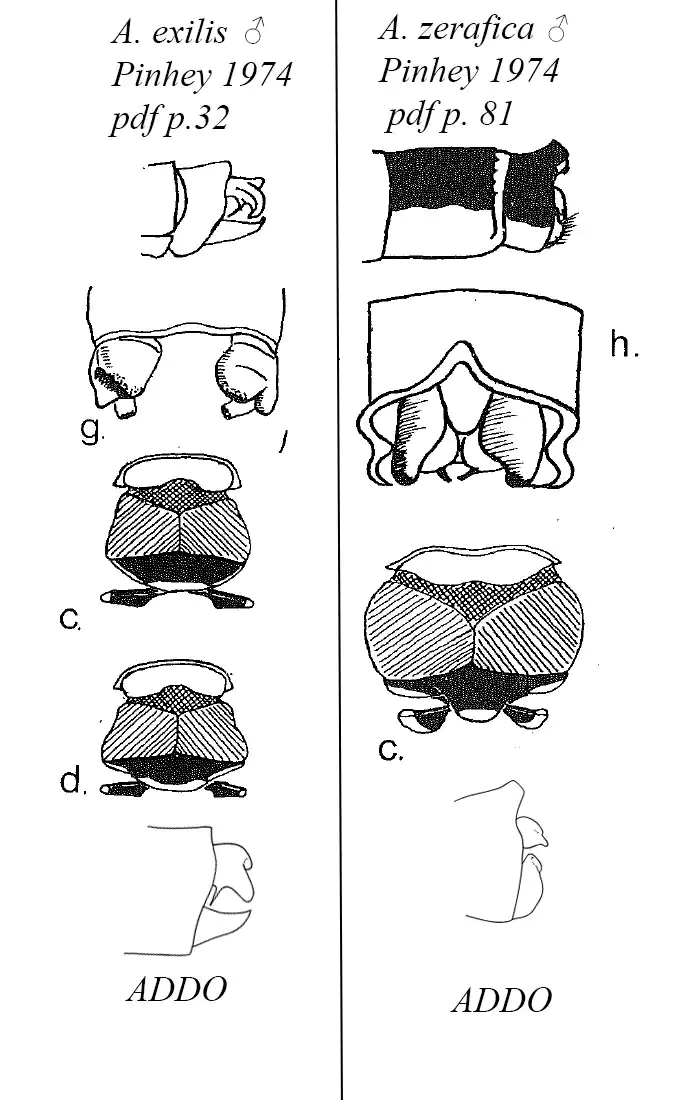
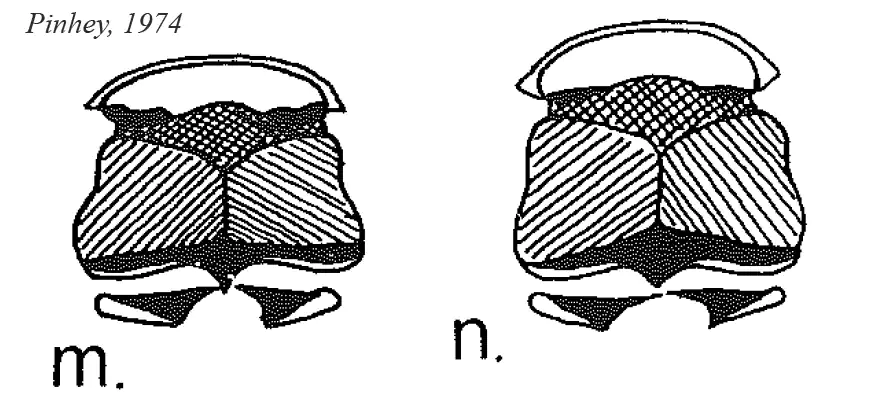
A few clearly visible details distinguish it, but because of its size, you have to click on the photos: Le Roi (1915) notes that the female's abdomen measures 16 mm, making it barely more than 20 mm in total length. Its pronotum is not as rounded as that of A. exilis; instead, it features a nearly straight posterior margin, broken by a small, rounded, colored lobe on its border. And in fact, as will be seen later, females have a pronotum that is simply a variant of this one.
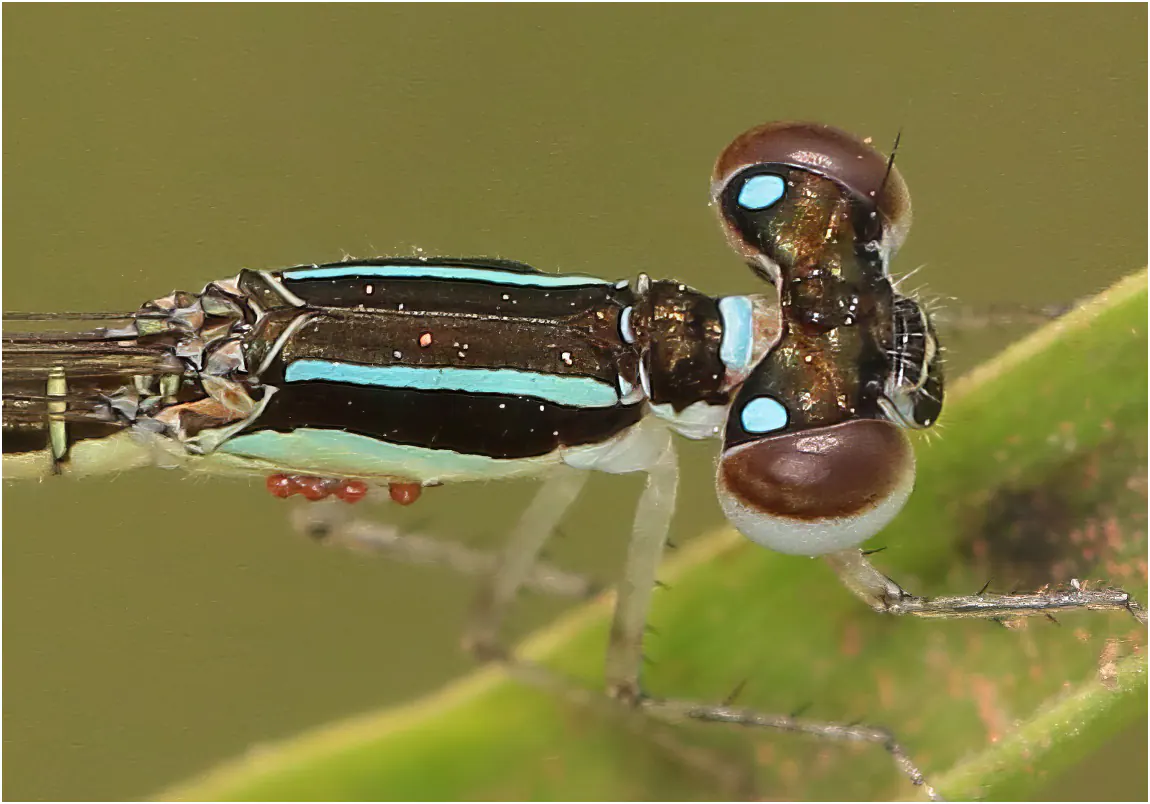
Of course, its anal appendages are also different in that they are barely visible because they are so short; furthermore, the distal end of S10 is stretched upward.
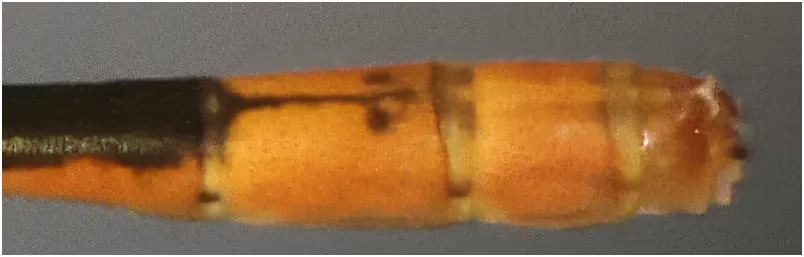
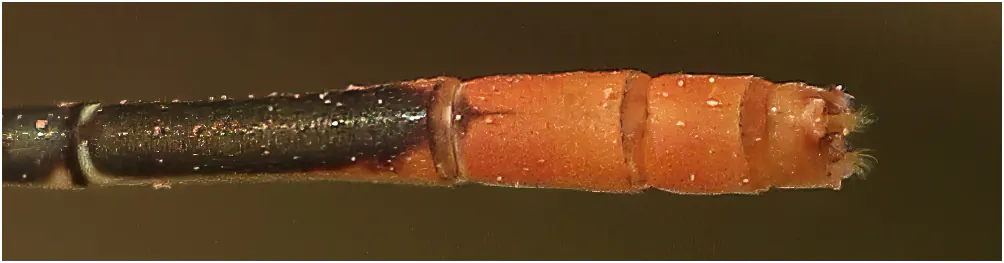
Since Le Roi described the species from a female, he did not provide a drawing of the appendages.
However, numerous drawings and diagrams can be found in Pinhey's (1974) revision of African Agriocnemis and on the ADDO pages by K.-D. Dijkstra. Opposite, based on the cited works, I have compared the male pronota and the anal appendages of A. exilis and Agriocnemis zerafica; Pinhey provides two drawings for A. exilis due to its variability across its vast distribution range.
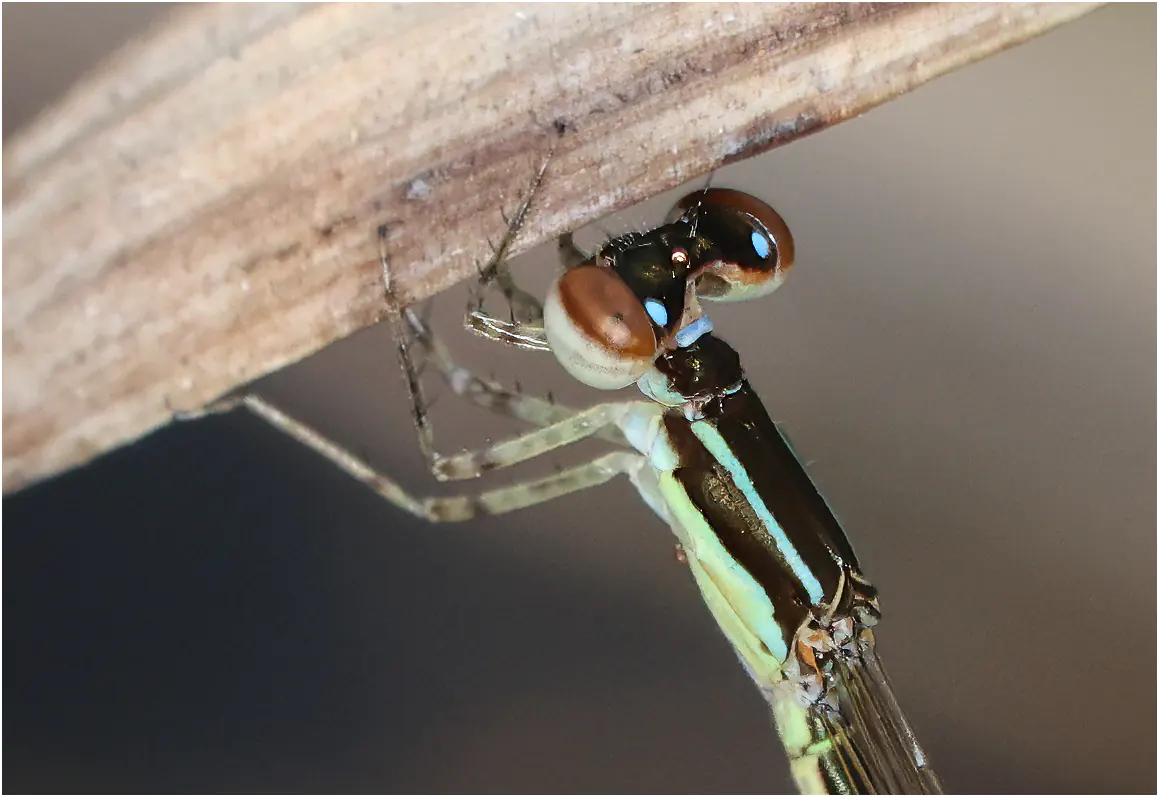
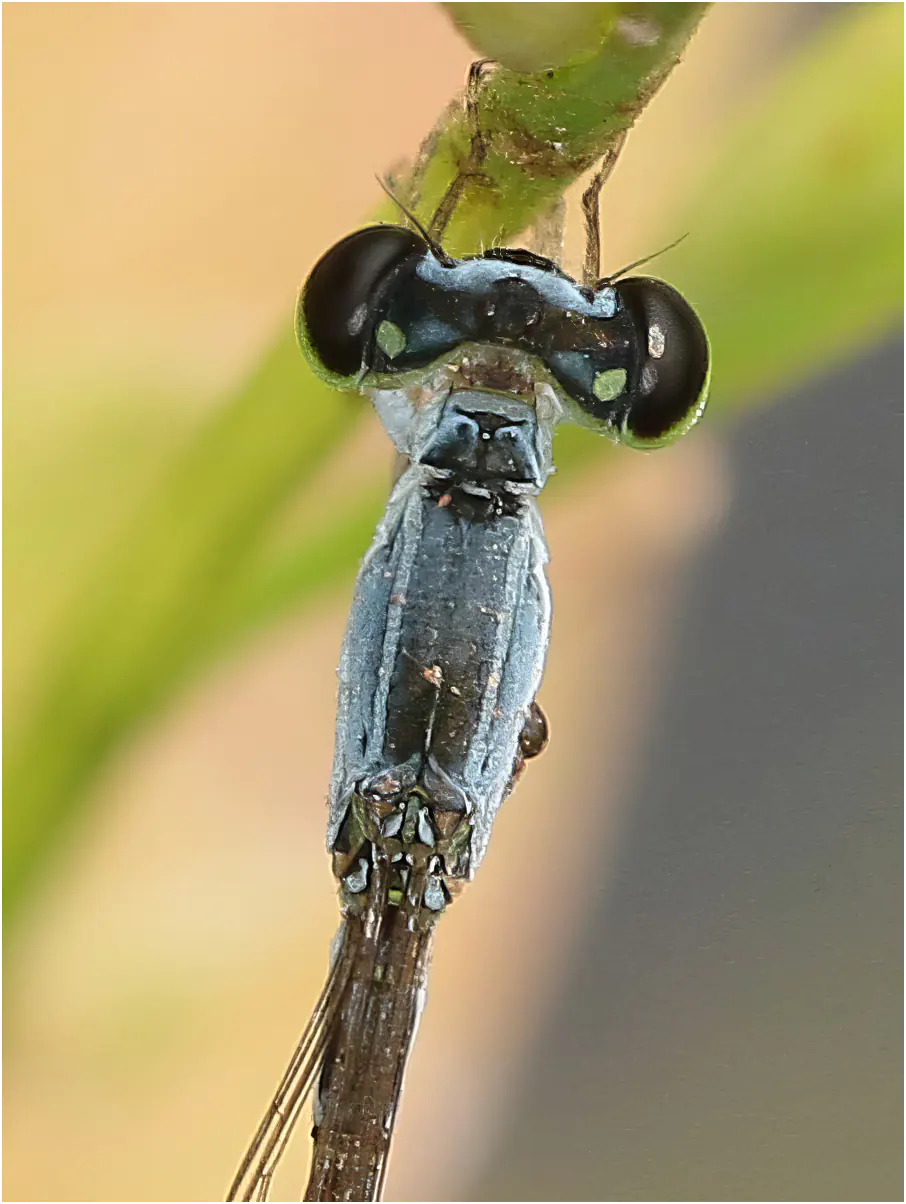
Another difference with A. exilis is visible here: aging males become covered with a whitish pruinosity on the thorax and most of the body, which is never the case for A. exilis (ADDO).
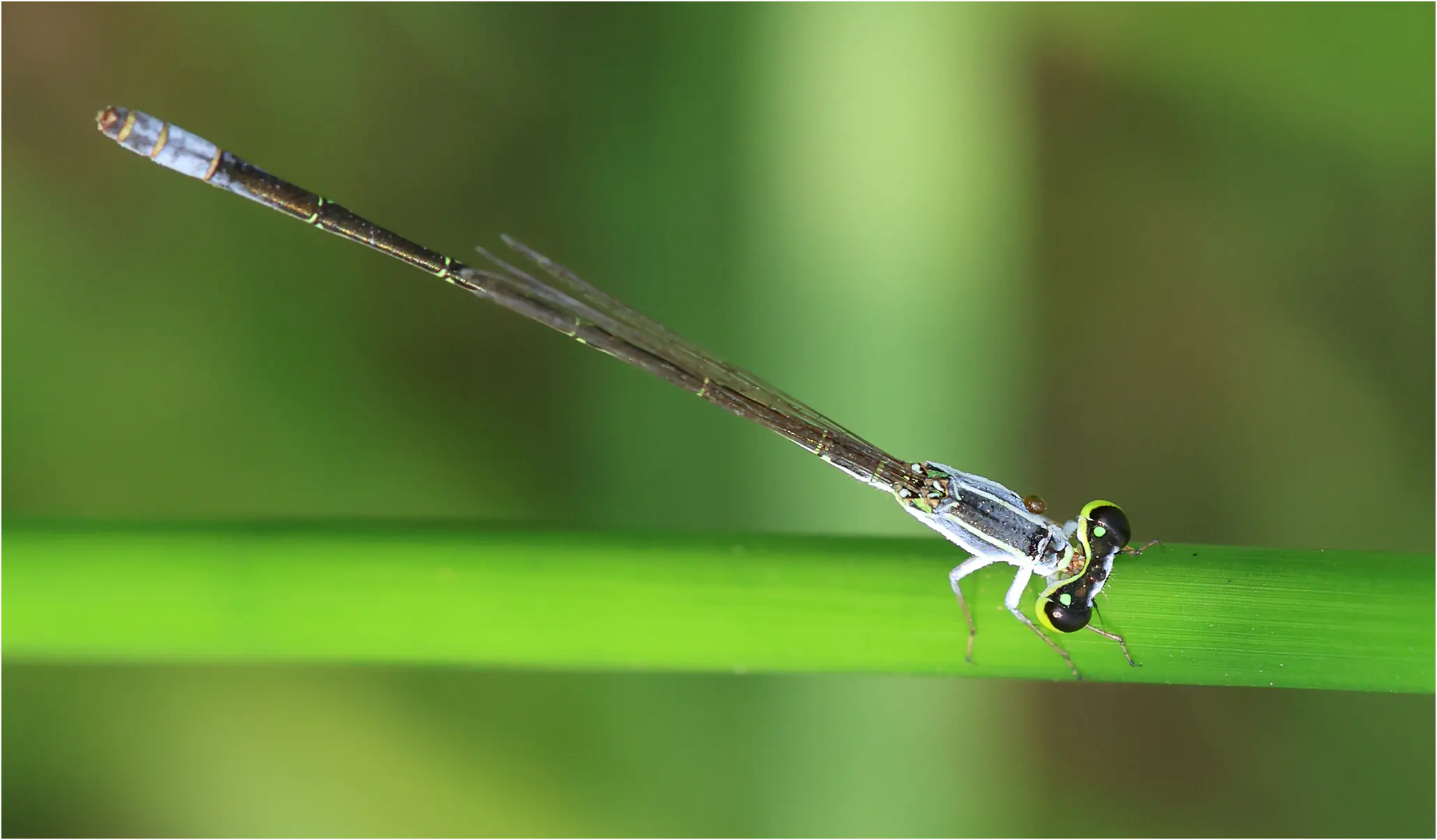
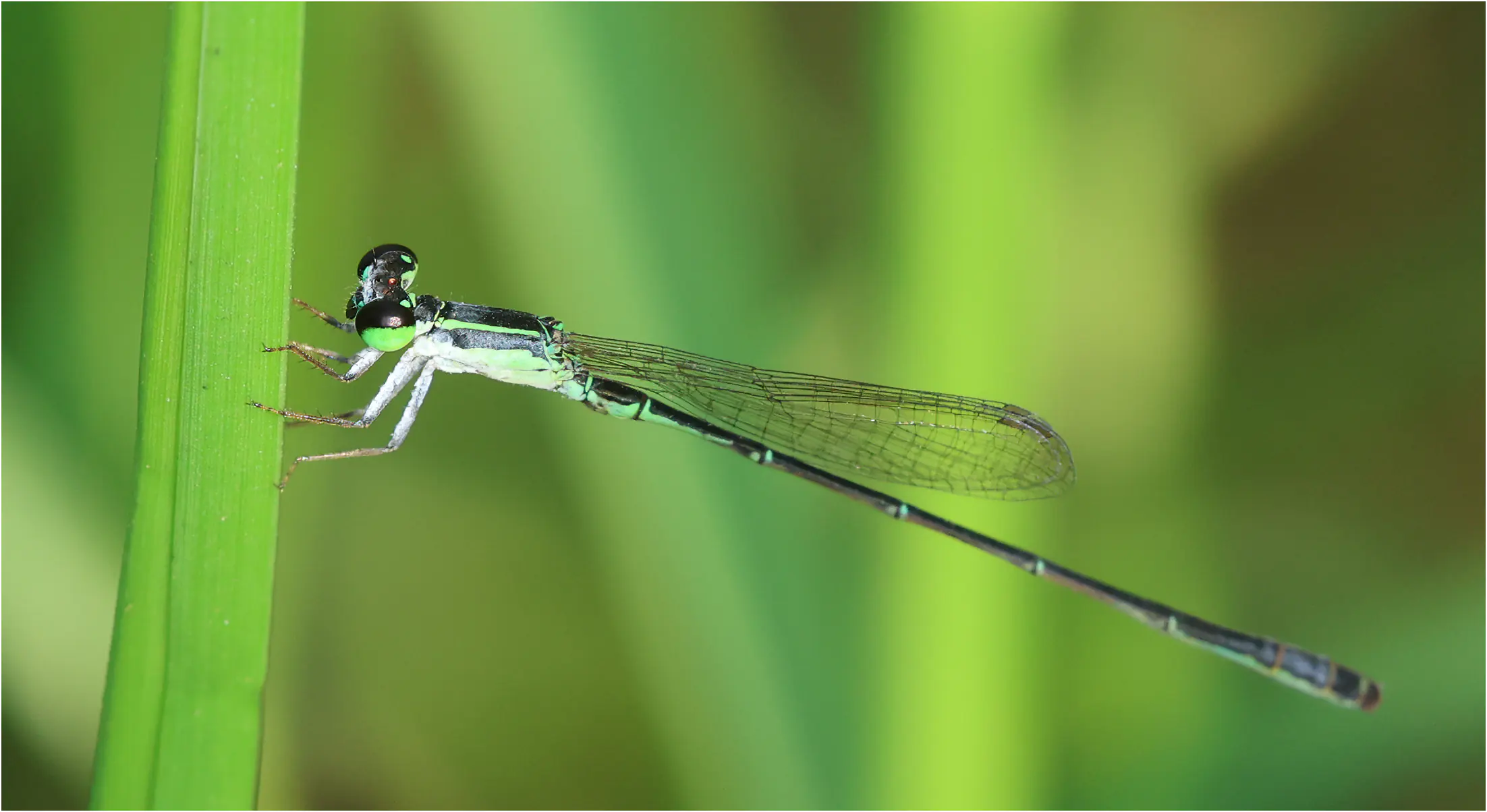
It favors standing waters, predominantly in temporary habitats; like all Agriocnemis, it hides within the emergent vegetation along the edges of water bodies, where the water depth is shallow. They are often perched very low above the surface, which explains why it is so difficult to capture true profile shots that clearly display the anal appendages.
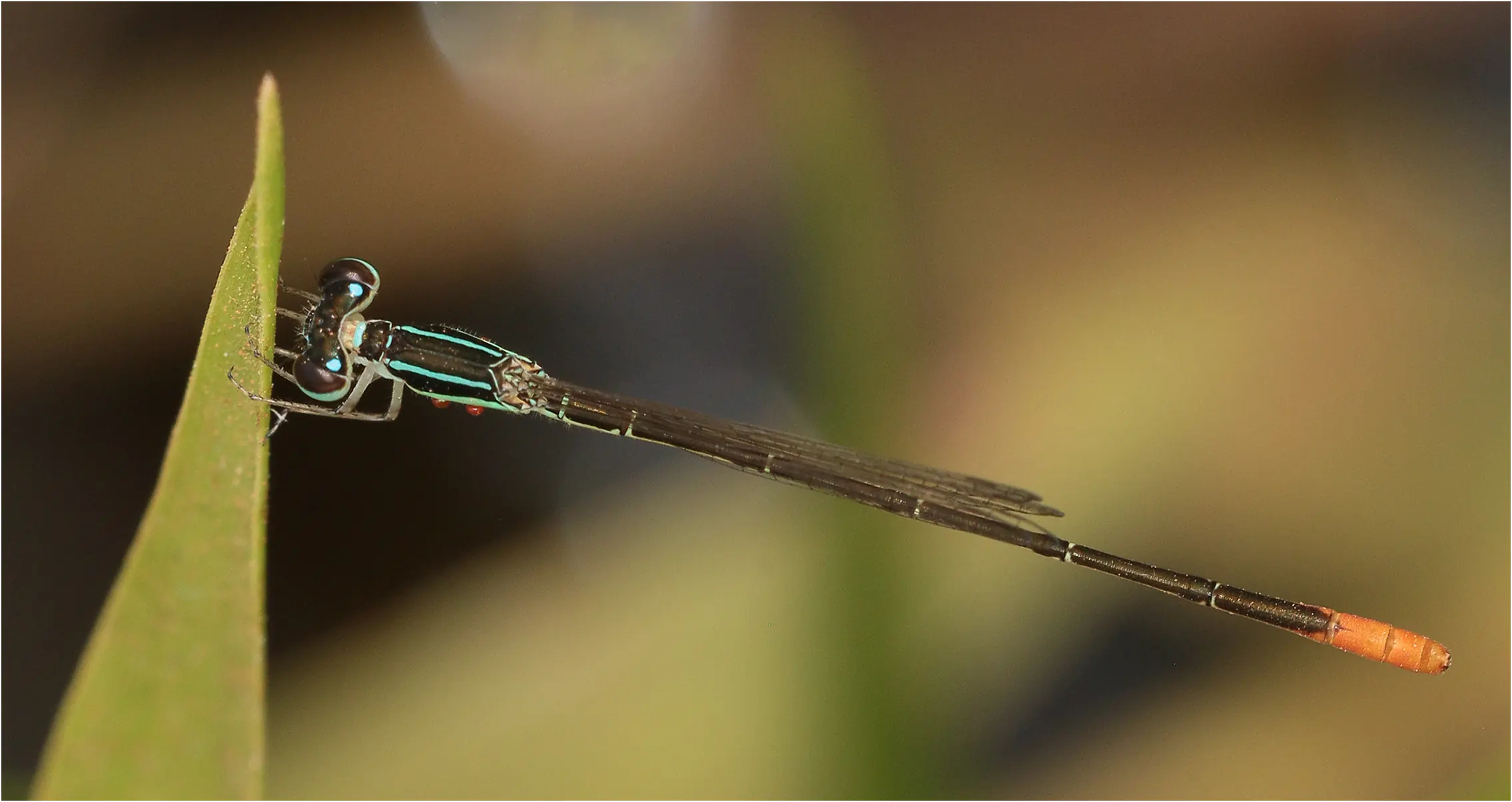
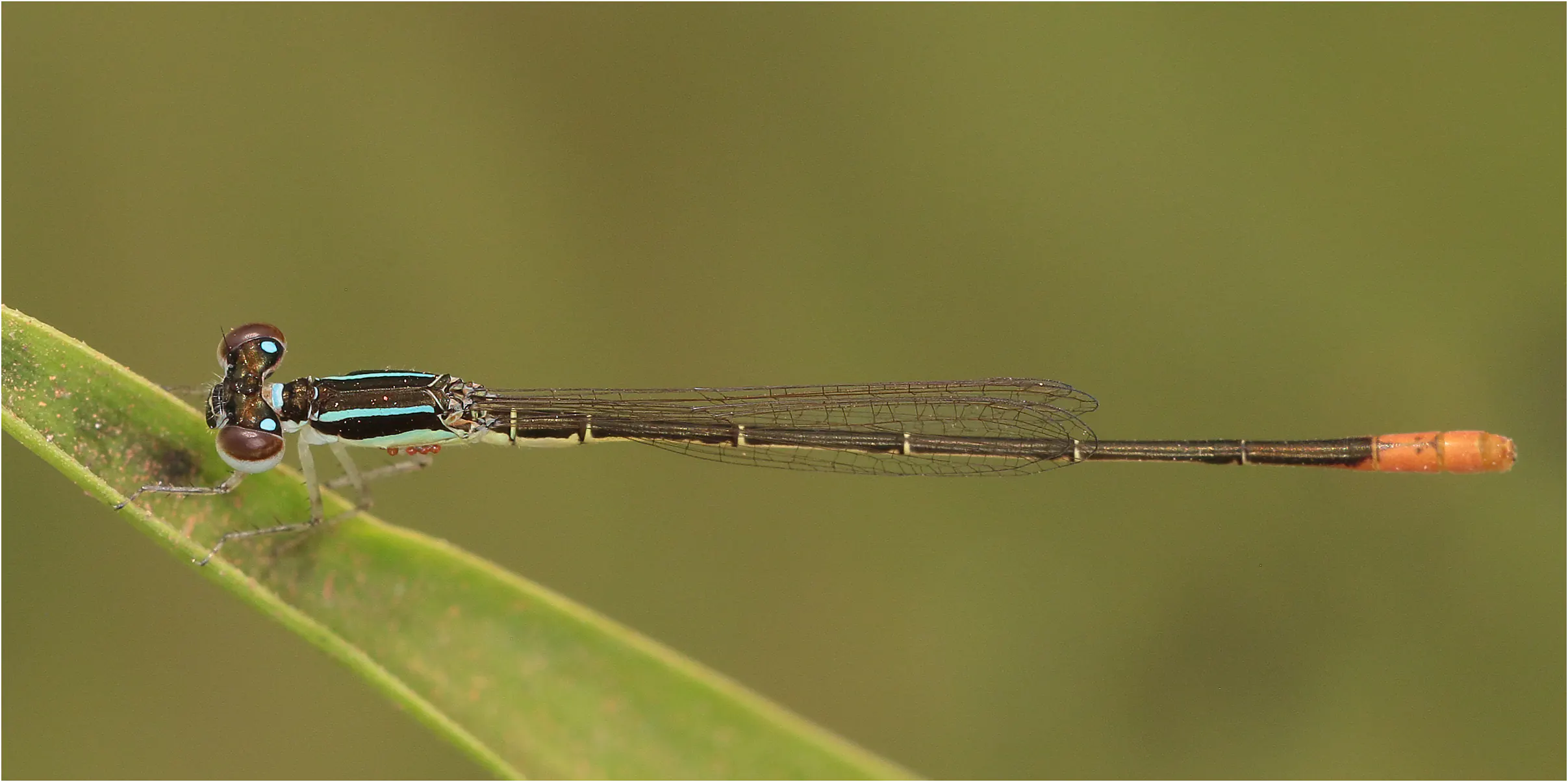
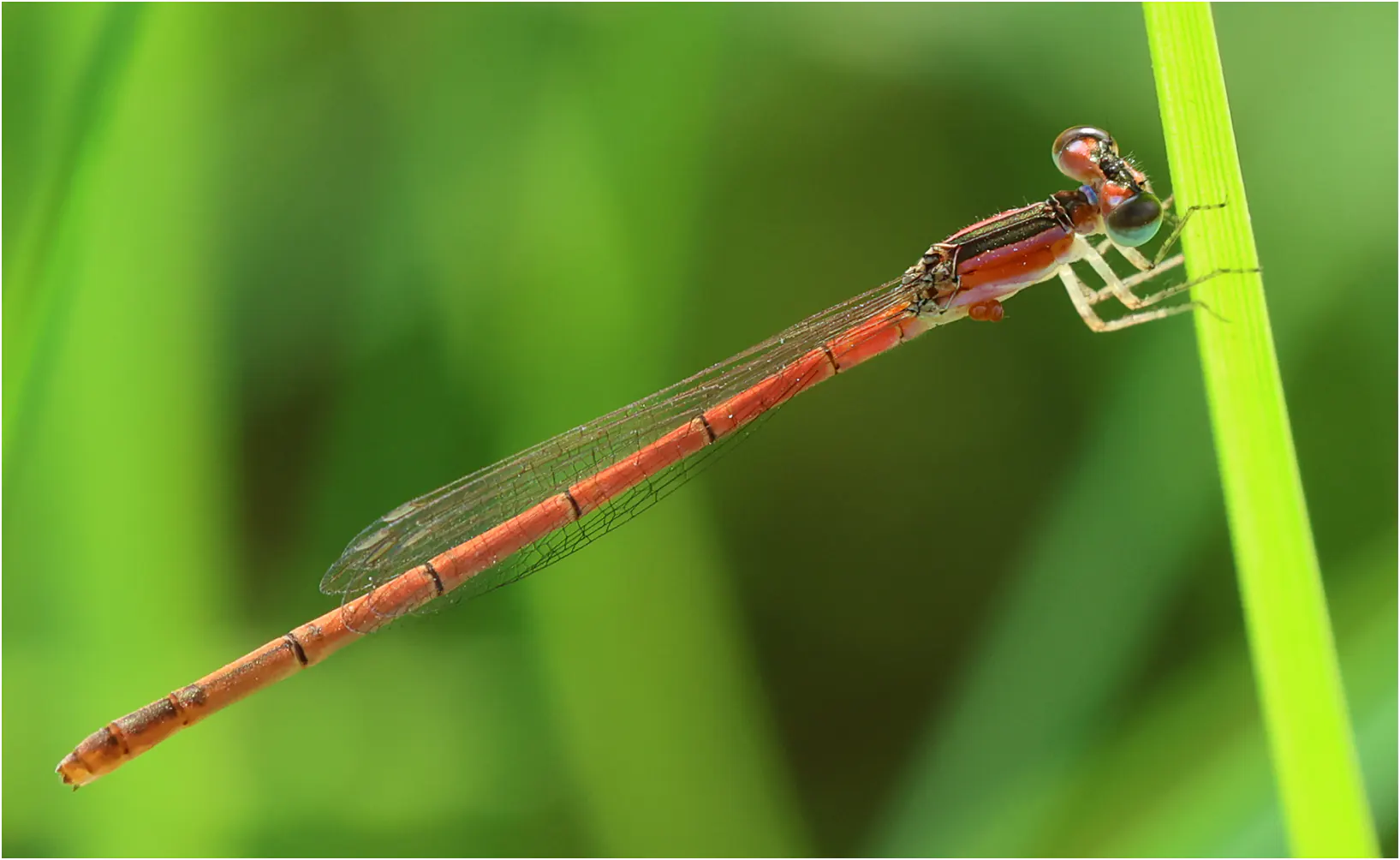
Females are highly variable as they undergo a radical transformation with age. Thus, the only way to identify them is, once again, to rely on their pronotum.
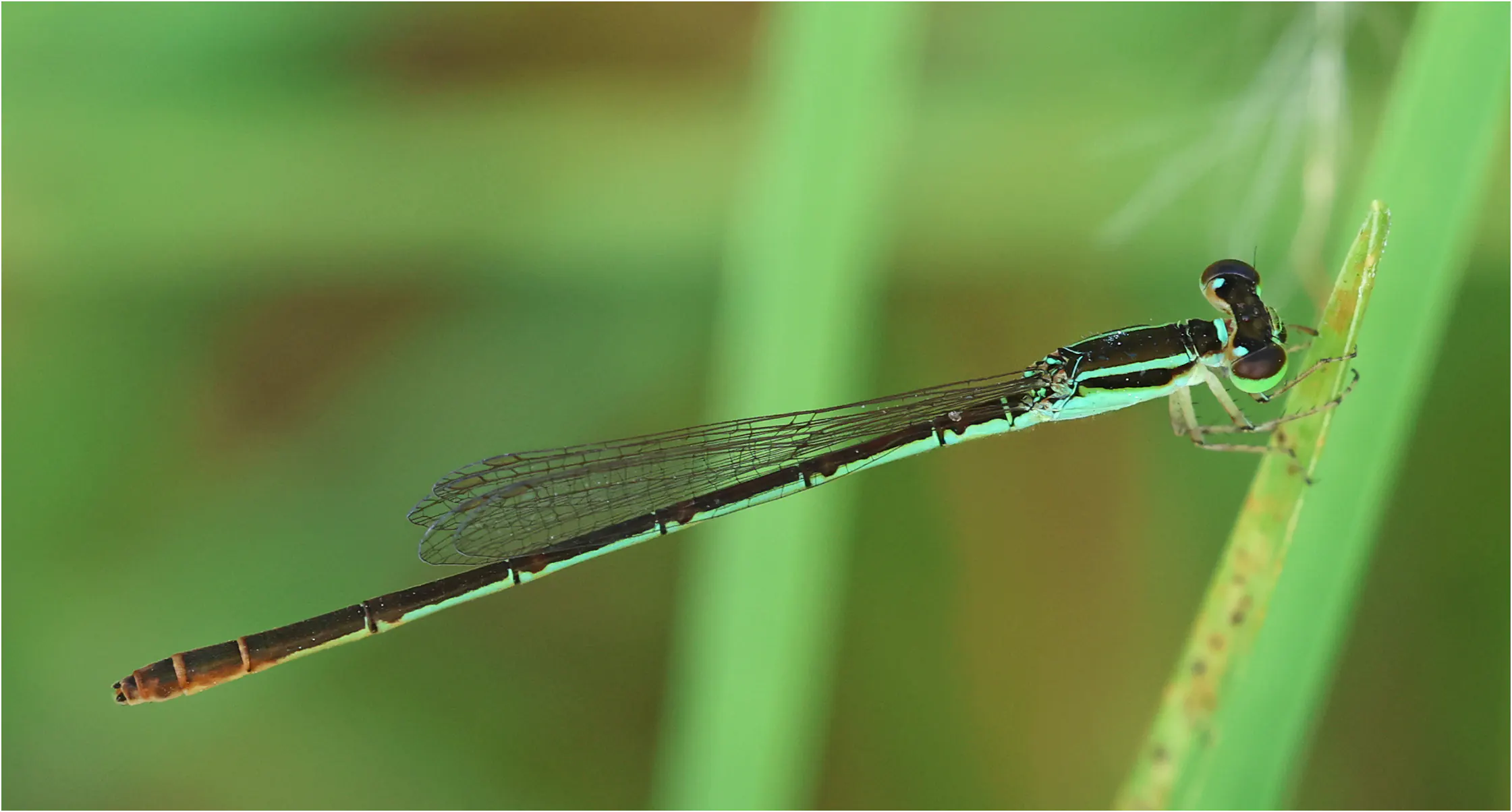
And this "curly bracket" shape is clearly visible, with a sharp point in the middle of the posterior lobe, as shown by Pinhey (1974) in his revision.
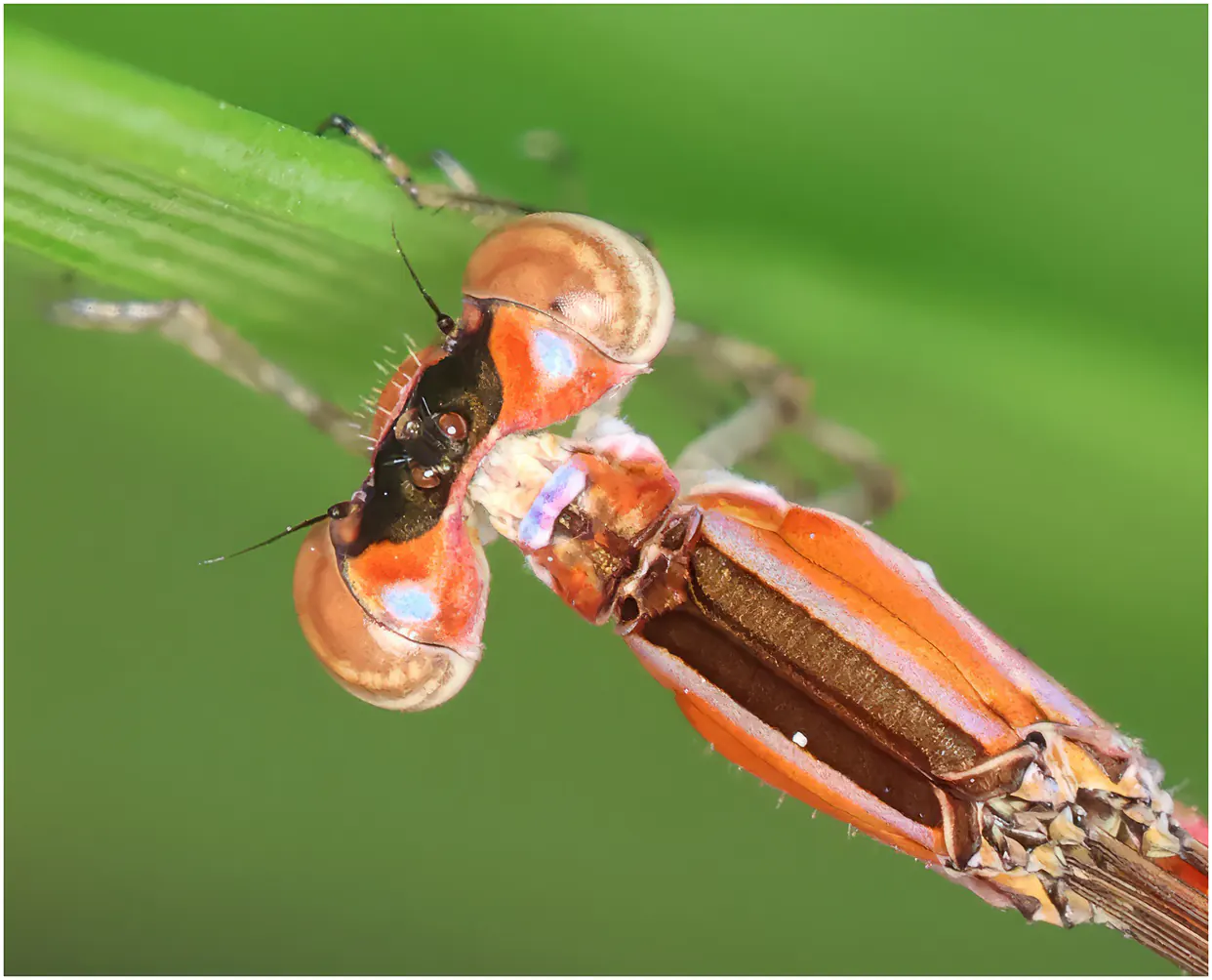
Note the large number of individuals parasitized by these water mites (small red or brown spheres), likely of the genus Arrenurus, which attach themselves to the cuticle during the dragonflies' emergence to feed on their hemolymph; once fully fed, they drop into the water to continue their life cycle.
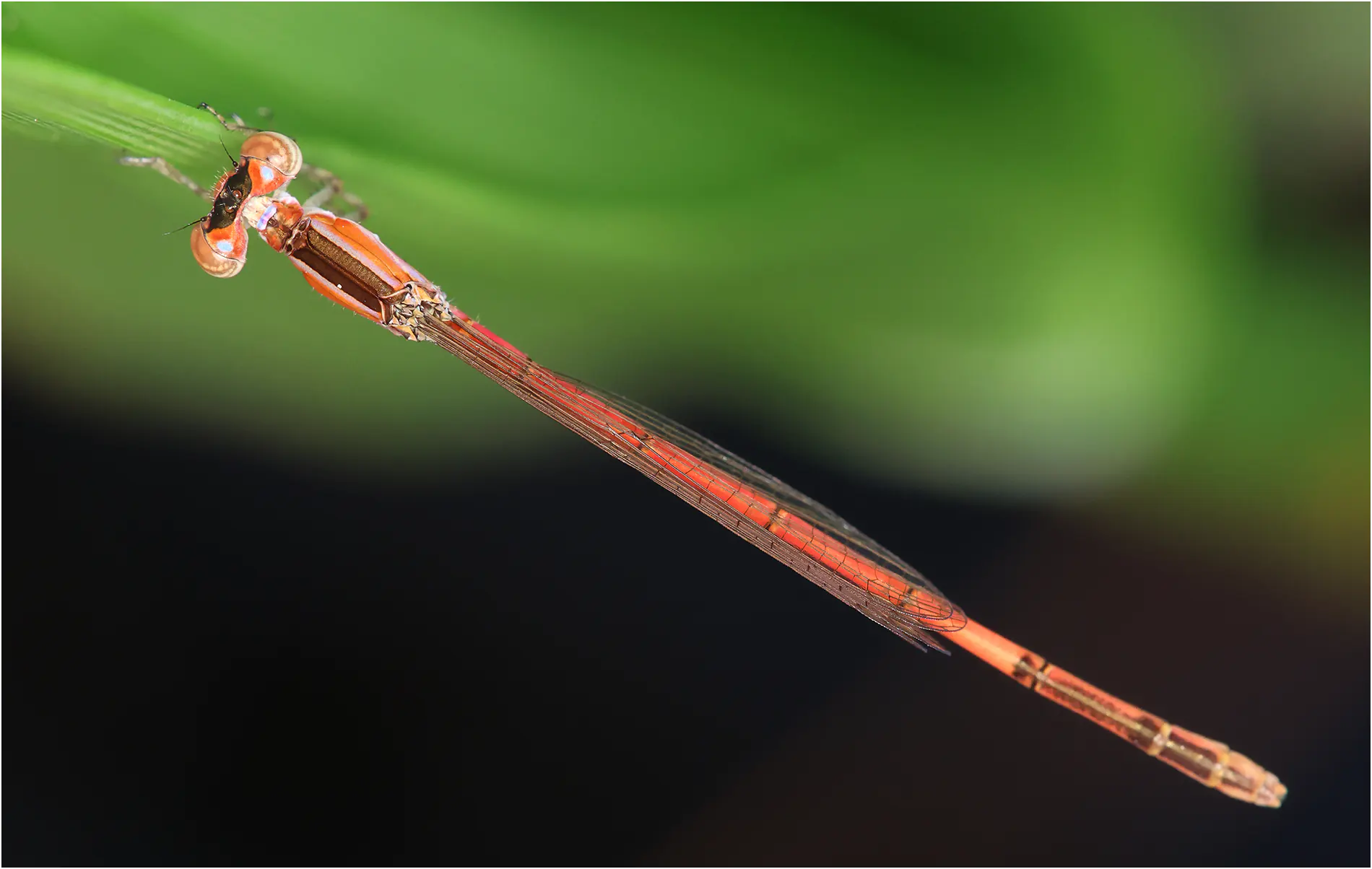
Its distribution extends from southern Mauritania in the west to Sudan and South Sudan in the east. It reaches Gabon and the Congo Basin to the south. It is given the English common name of Sahel Wisp.
IUCN Red List.
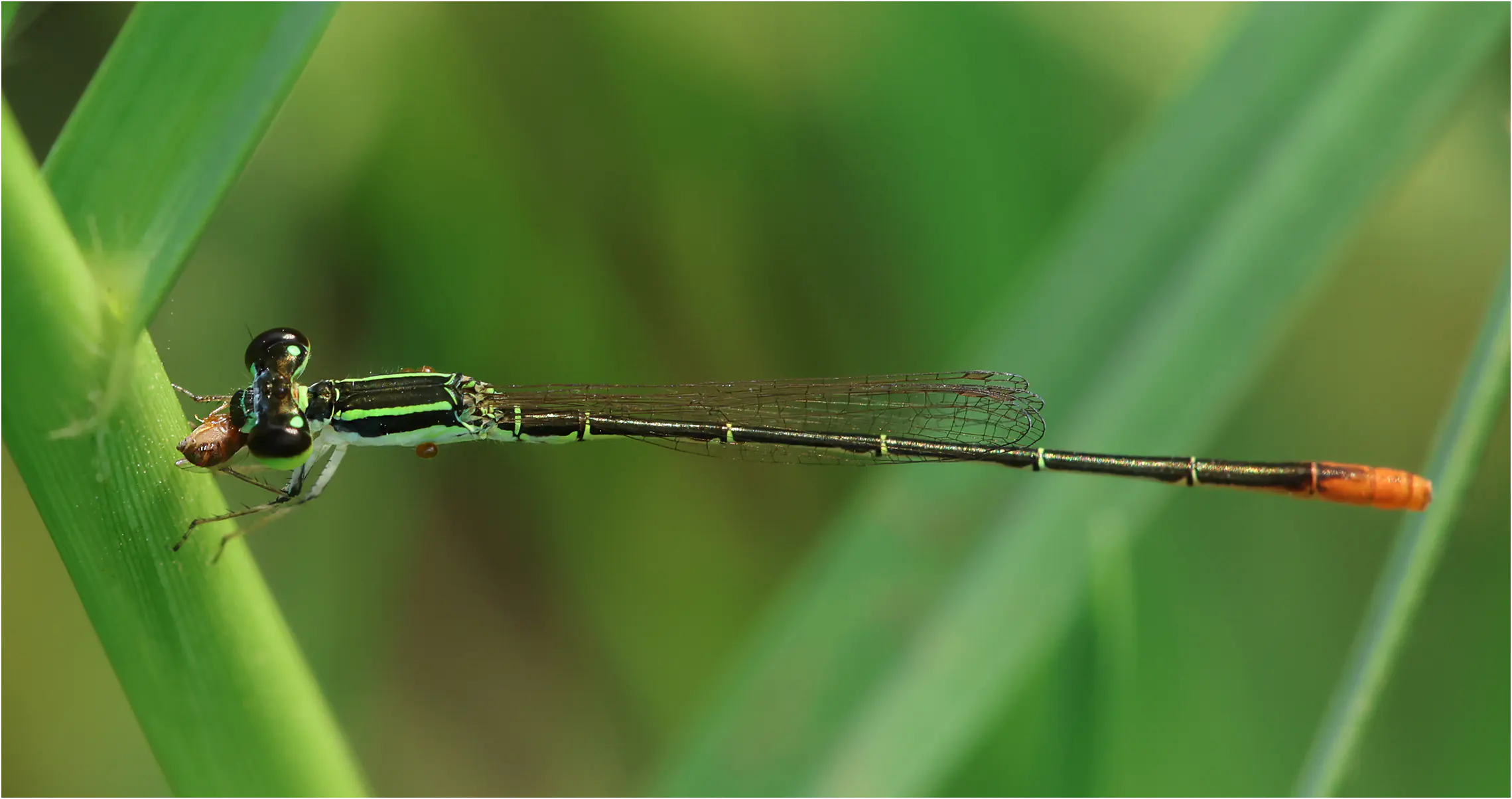
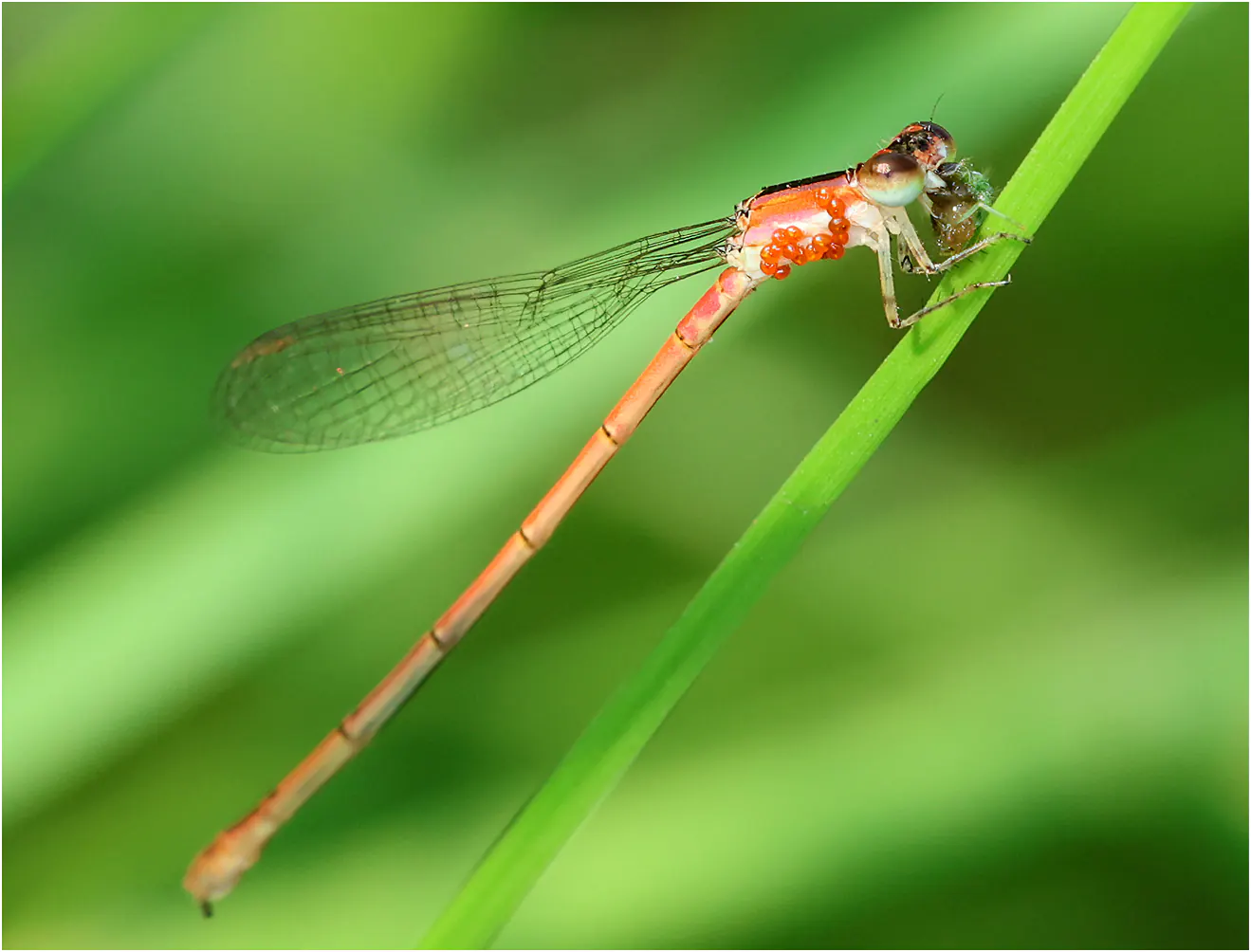
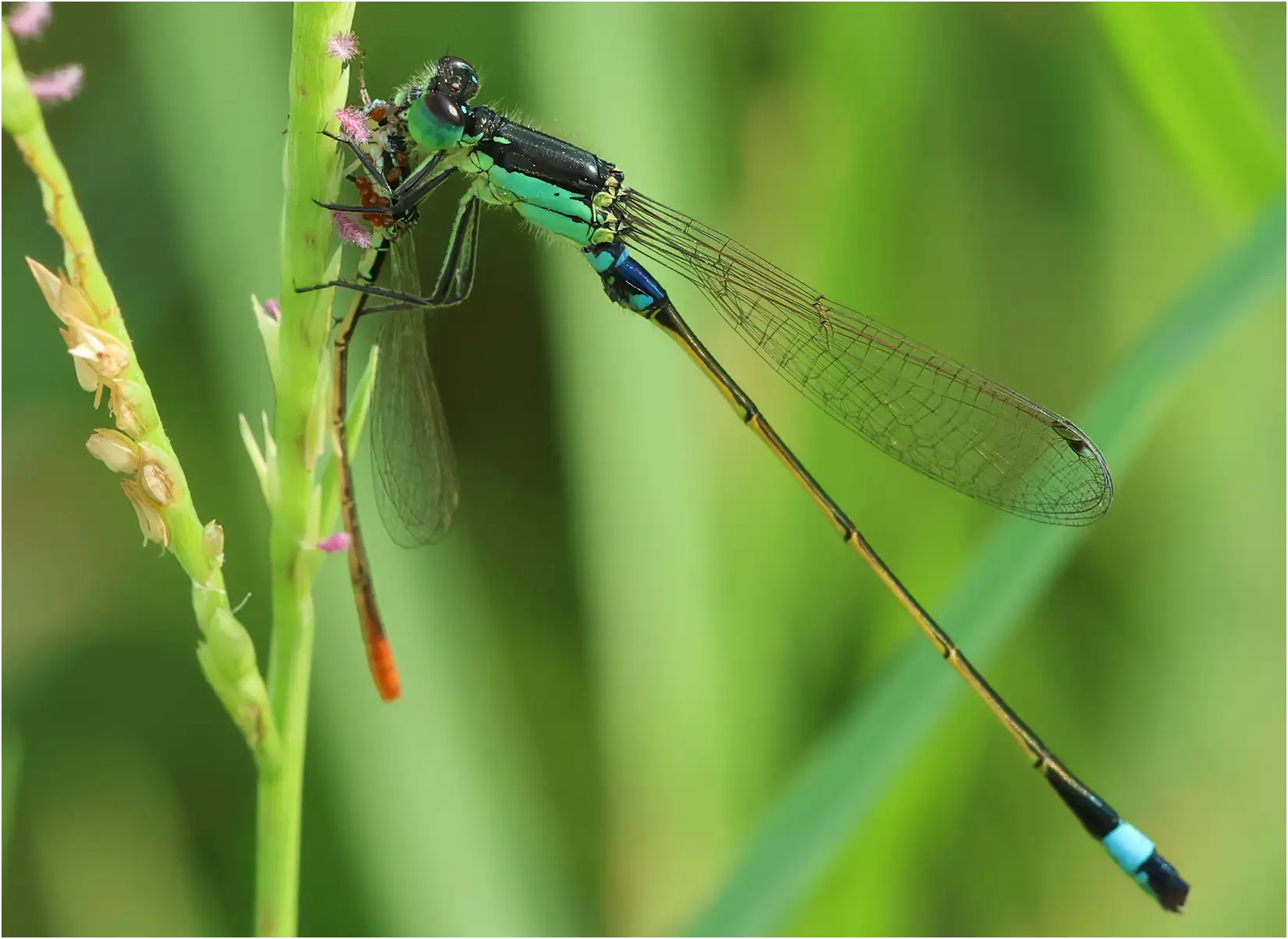
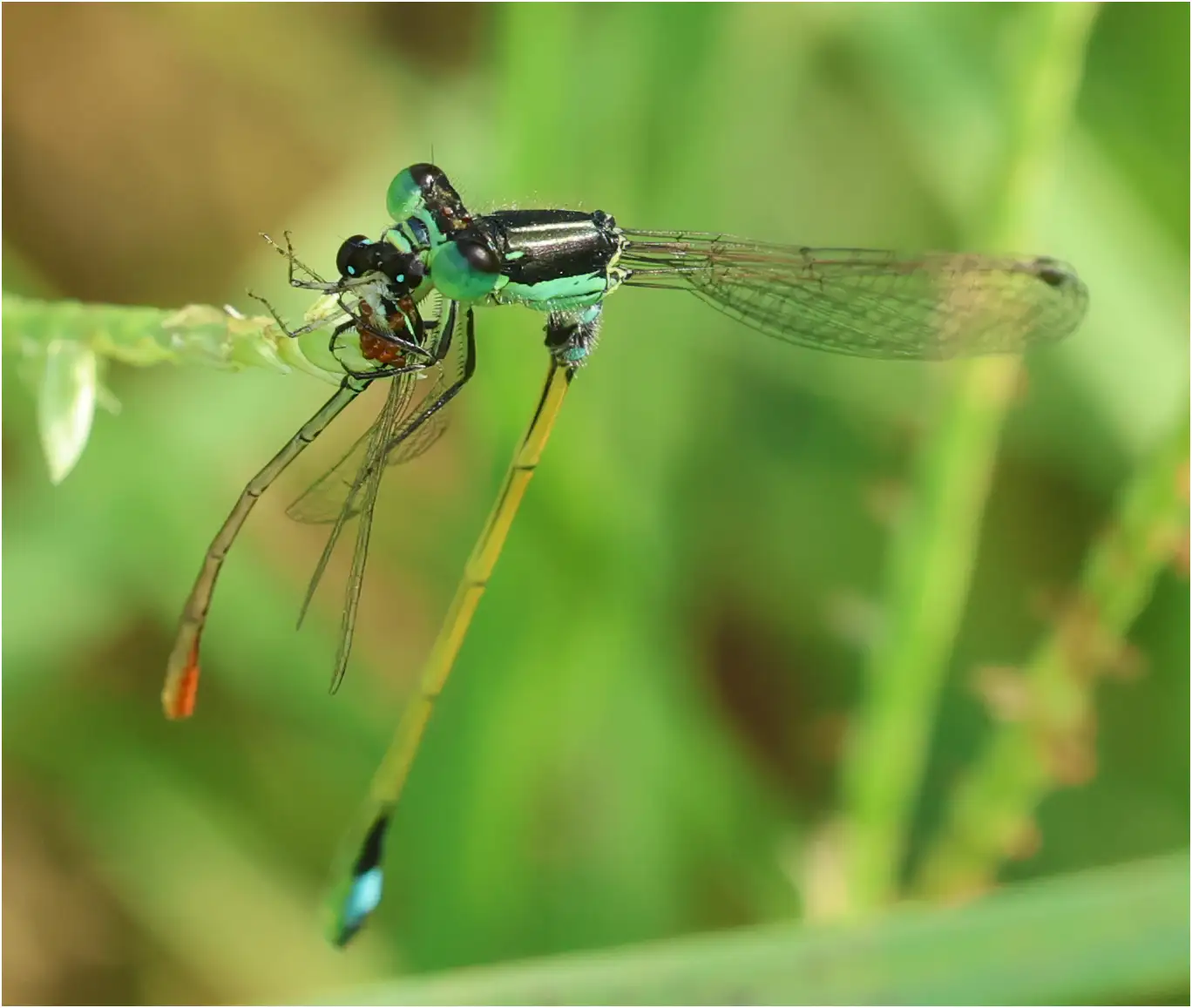
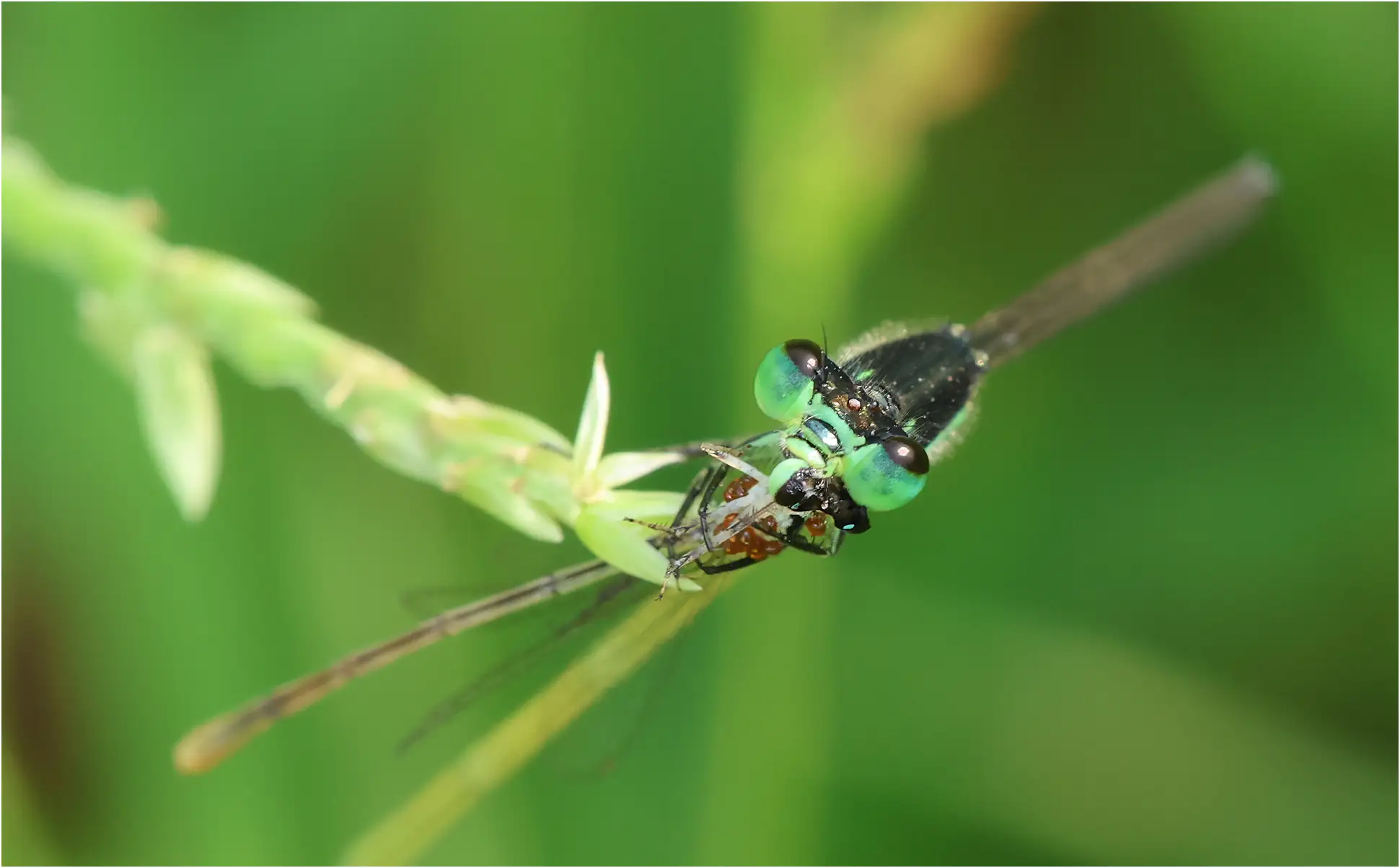
In the photos below, Agriocnemis zerafica is not the main actor... It is a male Ischnura senegalensis devouring this male A. zerafica, which is heavily infested with parasitic water mites. Ischnura species are all extremely aggressive toward other odonates, not just toward damselflies, even if they only prey on the latter. They are also the undisputed champions of cannibalism, as I showed in this study.
Etymology of Agriocnemis zerafica
Agriocnemis, from the Greek agrios—wild, meaning living in the fields—and knemis, which means greave or legging (or more precisely cnemis, the tibial shin guard of ancient Greek armor), as with our European Platycnemis. Selys believed the genera to be closely related with regard to their tibiae, which I do not observe at all. Those of Agriocnemis do not seem to me any wider than those of other Coenagrionidae. But "cnemis" in many compound genus names should rather be understood as "belonging to the Coenagrionidae" (see Endersby & Fliedner (2015)).
Zerafica is a reference to Bahr el Zeraf, the Giraffe River, a branch of the White Nile in South Sudan where the female holotype was captured.
Dijkstra, K.-D.B (editor ADDO), 2019 – African Dragonflies and Damselflies (ADDO) – Agriocnemis zerafica – [Le lien peut ne pas fonctionner ; lien web.archive à partir du site ADDO, maintenant hors ligne.]
Ian Endersby & Heinrich Fliedner, 2015 – The Naming of Australia’s Dragonflies, Ian Endersby & Heinrich Fliedner, Busybird publishing.
le Roi, O., 1915 - Odonaten aus Äquatorial-Afrika - Die zweite deutsche Zentral Afrika Expedition, 319-360. P. 343.
Pinhey, 1974 – A Revision of the African Agriocnemis Selys and Mortonagrion Fraser (Odonata : Coenagrionidae) – Occasional papers of the National Museums and Monuments of Rhodesia. [Le lien peut ne pas fonctionner ; lien web.archive à partir du site ADDO, maintenant hors ligne.]