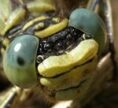
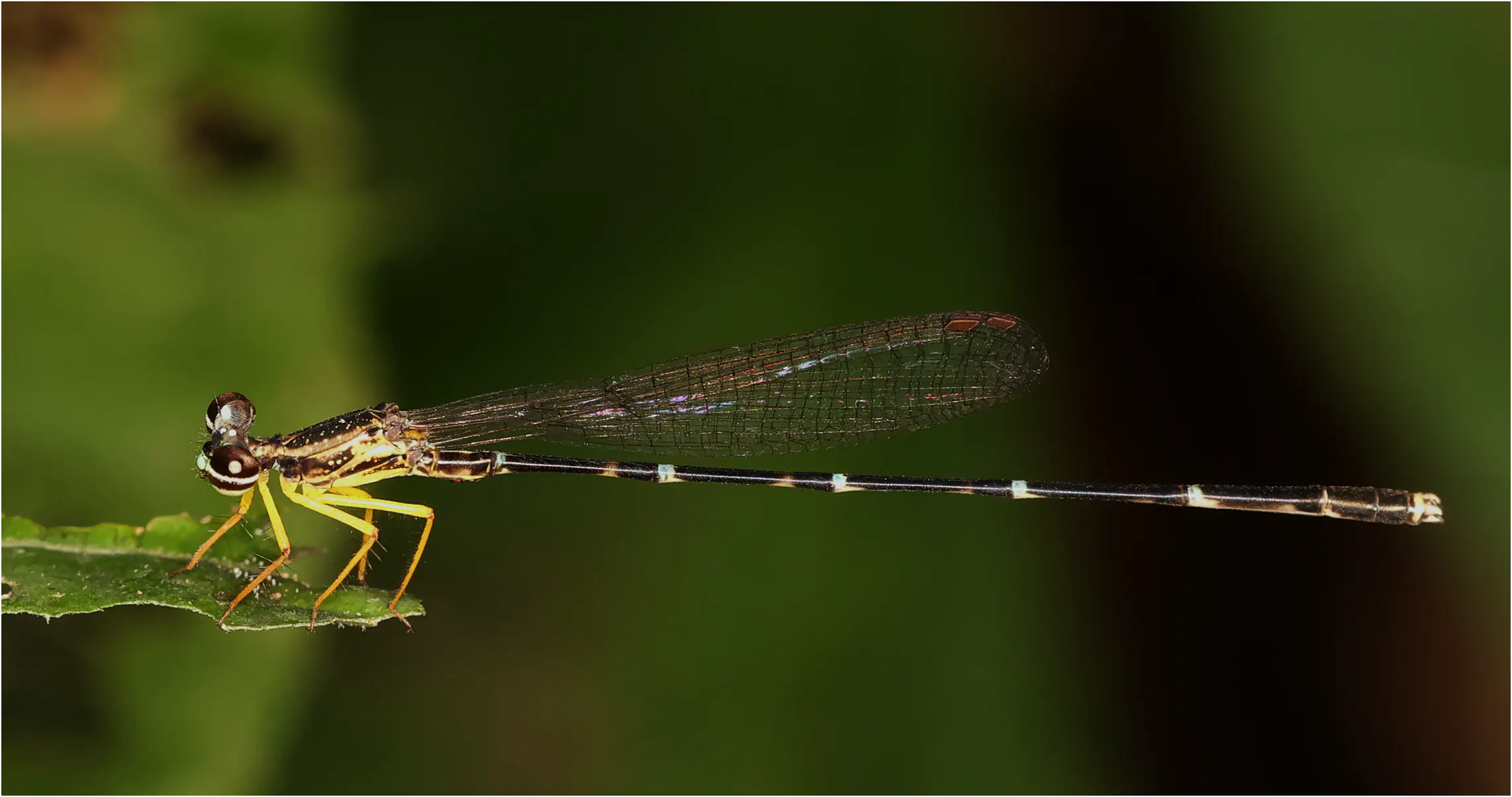
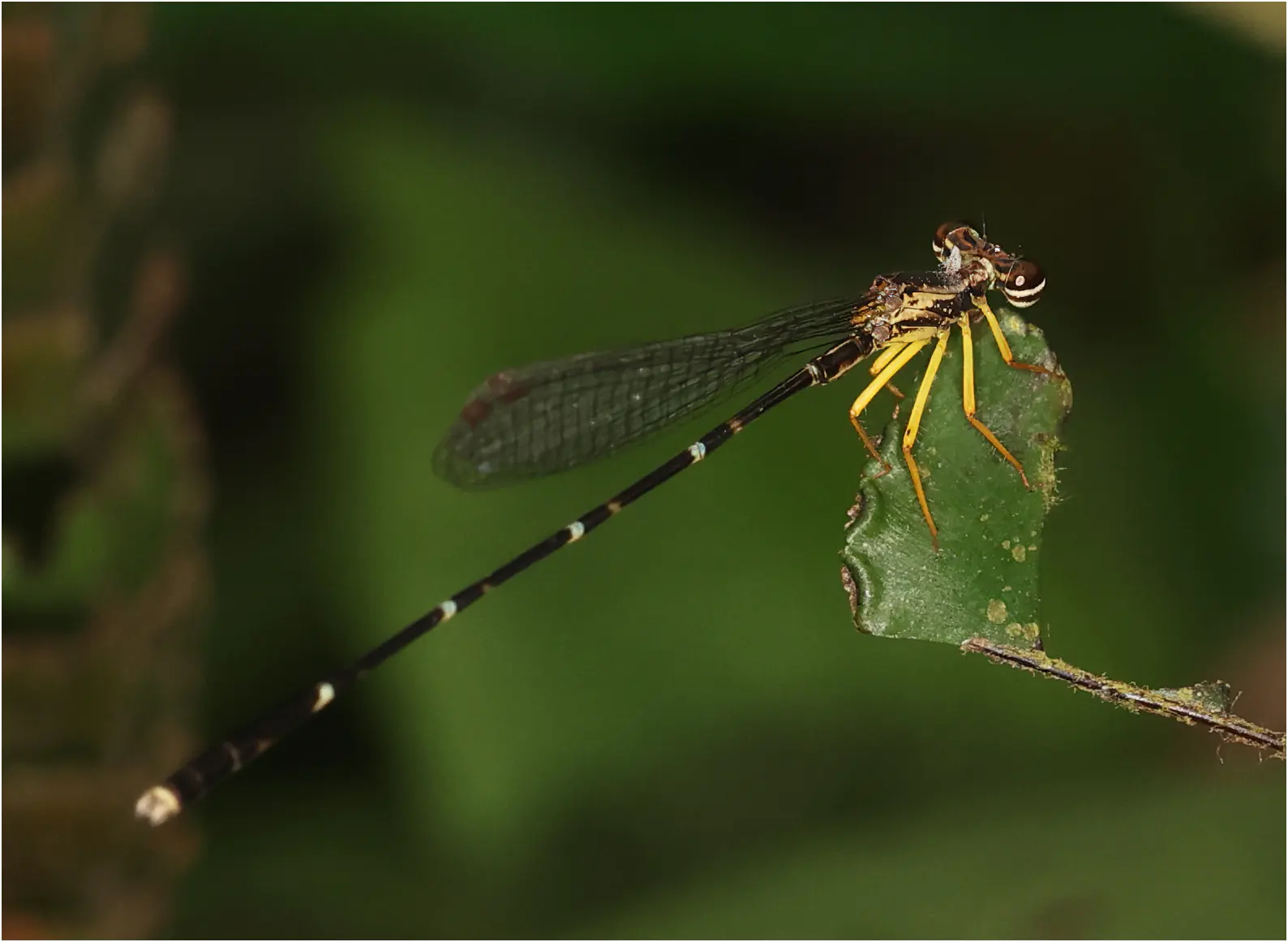
Copera guttifera belongs to the Platycnemididae family and was actually described by Fraser (1950) as Platycnemis guttifera. There are five Copera species in Africa, only two of which occur in Ghana, and we encountered C. sikassoensis more frequently. It is an easy genus to recognize once you have been to Asia and encountered Copera marginipes there,for example: they have brightly colored legs, often yellow or orange, sometimes markings on the thorax, widely separated eyes, pale rings at the segment joints, and thick, colored, trapezoidal pterostigmas.
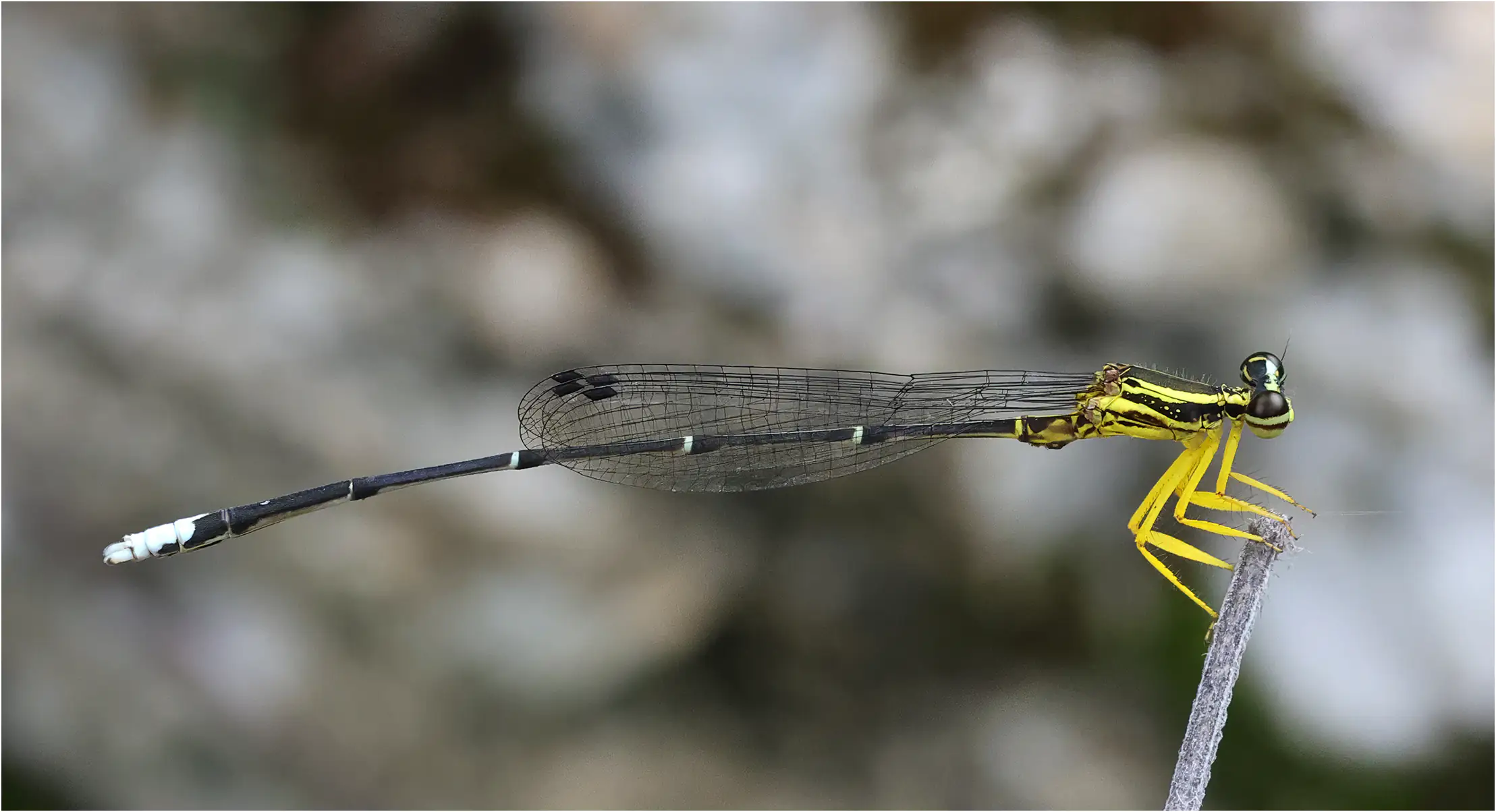
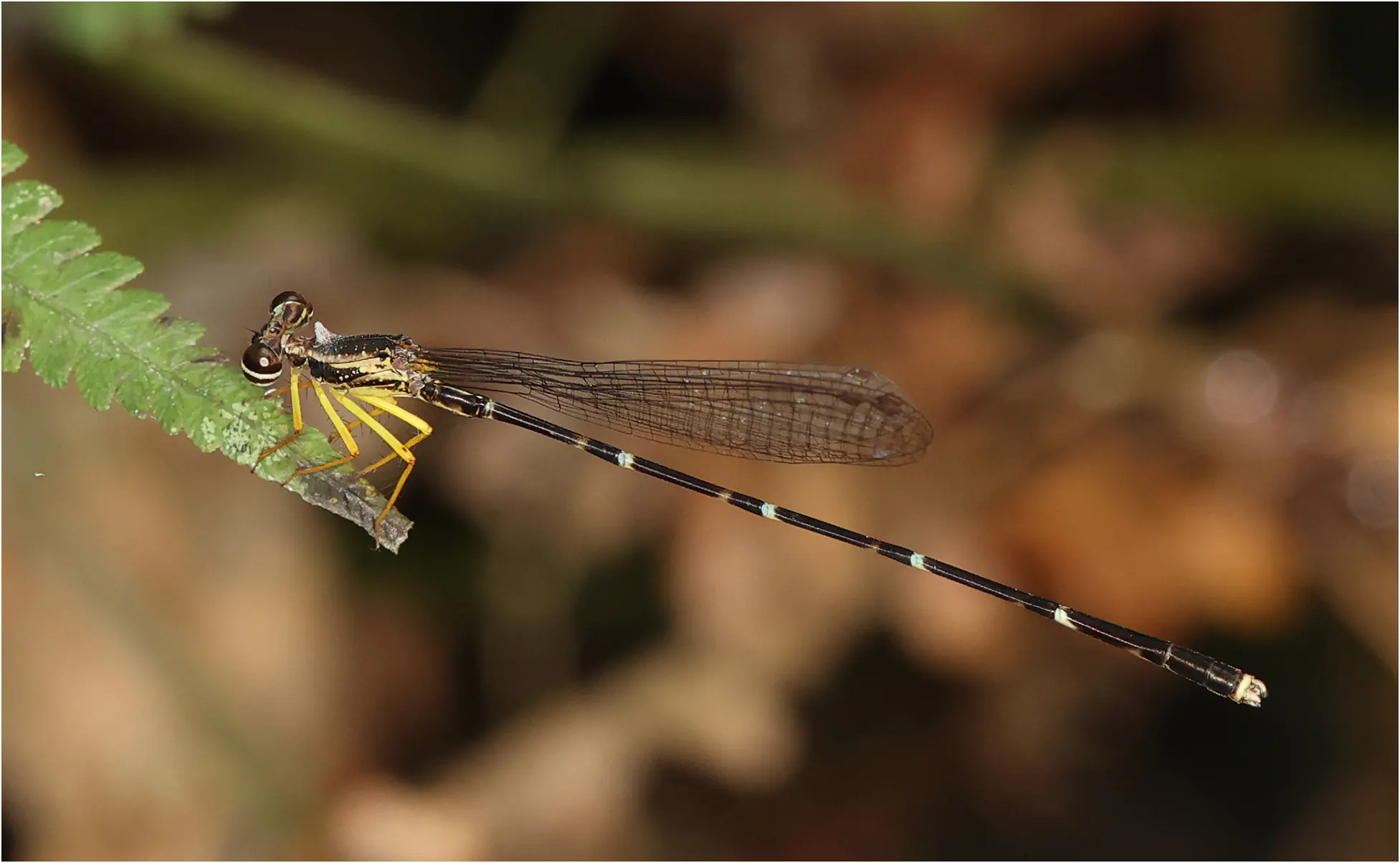
It is easily distinguished from C. sikassoensis by the yellow coloration of its legs and thorax rather than orange, the absence of blue markings on the head and face, and anal appendages of equal length, whereas for C. sikassoensis, the inferior ones are distinctly longer.
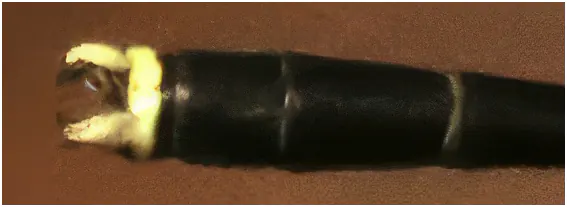
Fraser tells us that the abdomen of Copera guttifera measures 34 mm, making the total length just under 40 mm. We only encountered it on a forest pool—a pool that was not particularly deep, but where moving around was difficult and so rich in new species for me that I forgot to take photos of it: C. rubellocerinum, A. maclachlani, T. equivocata, T. camerunensis…
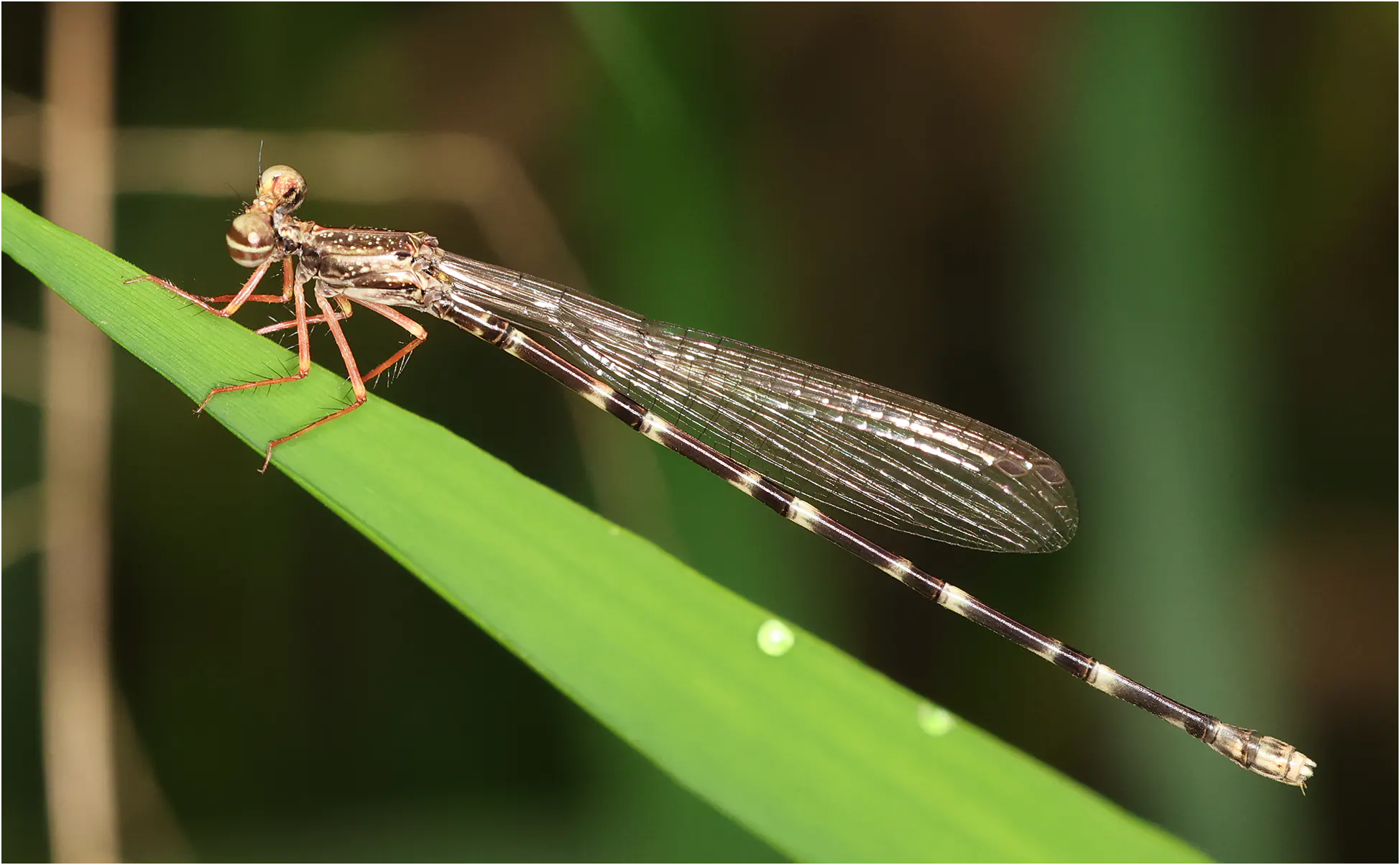
The only female, an immature one, that we encountered was perched in one of those dozens of more easily accessible spots that I explored along a wide forest track. I must admit I hesitated before deciding between our two Copera species for its identification; ultimately, the double white markings on the abdomen are very similar to those of the male. Females of C. sikassoensis, even those of the "ghost" form, do not display this type of pattern.
Its range extends from Liberia to Nigeria.
In English-speaking countries, it is known as the Western Featherleg. IUCN Red List.
Etymology of Copera guttifera
Copera (Kirby, 1890) is thought to be an informal term of Spanish or Argentine origin (suggested by Rhainer Guillermo, Professor of Biological Sciences in Brazil), derived from the Latin copa, meaning "cabaret hostess"; in Kirby's era, male patrons of these establishments used the term to refer to the female dancers. Indeed, the flight behavior of these Platycnemididae—with their legs extended, or rather not folded in, along with their ability to appear to "hover" or fly in a jerky fashion—could well resemble a dance…
Guttifera, from the Latin gutta, meaning drop, and the verb ferre, meaning to bear or carry. These "drops" are of course the markings on the thorax.
Fraser, 1950 - Report on a collection of Odonata from Liberia - Bulletin Institut francais Afrique noire, 12, 611-624.