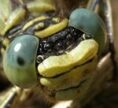
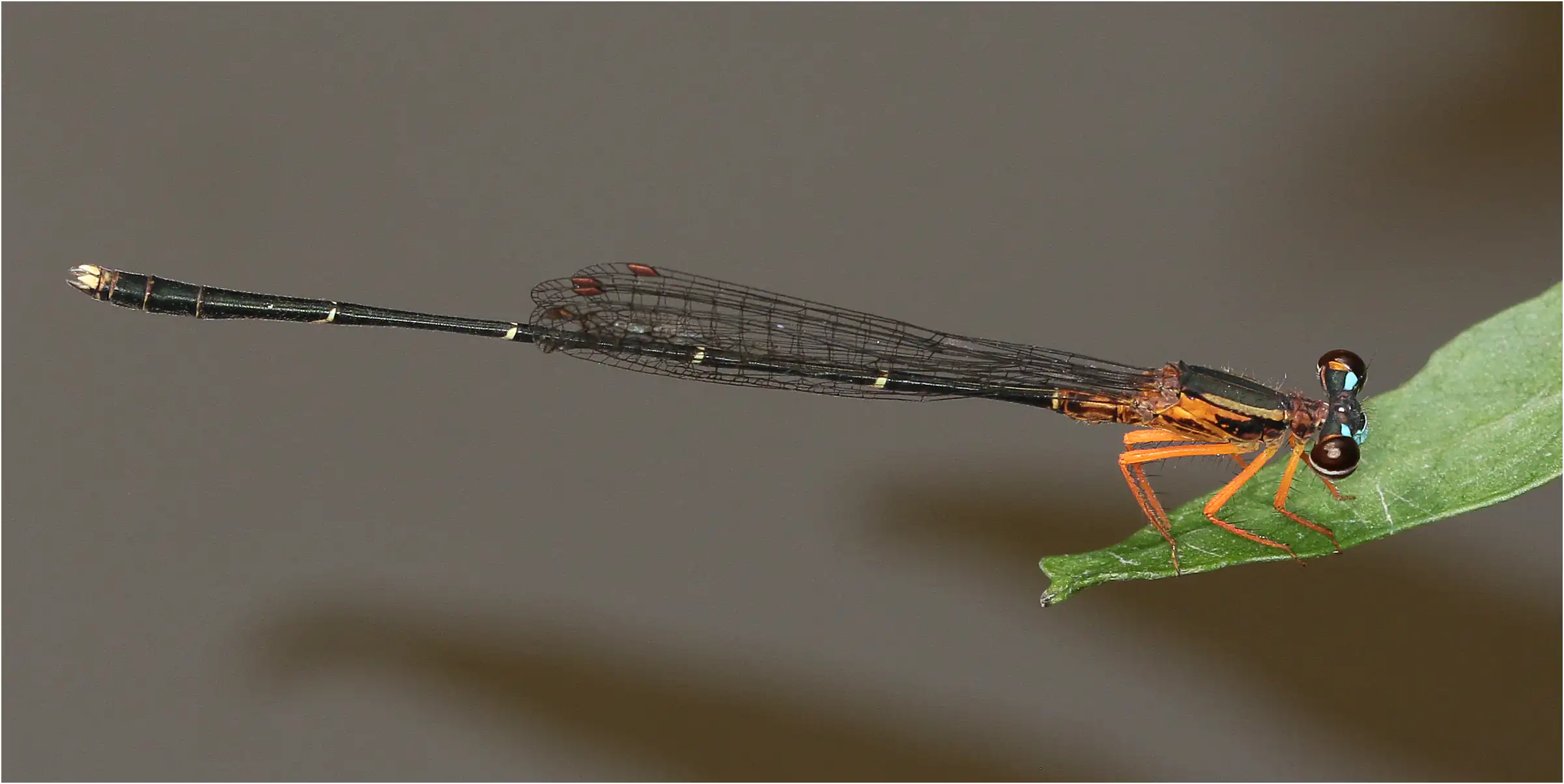
Copera sikassoensis is a magnificent Platycnemididae, one of two found in Ghana alongside C. guttifera. The genus comprises 5 species in Africa, but the Asian species are very similar, such as C. marginipes, seen here in Thailand.
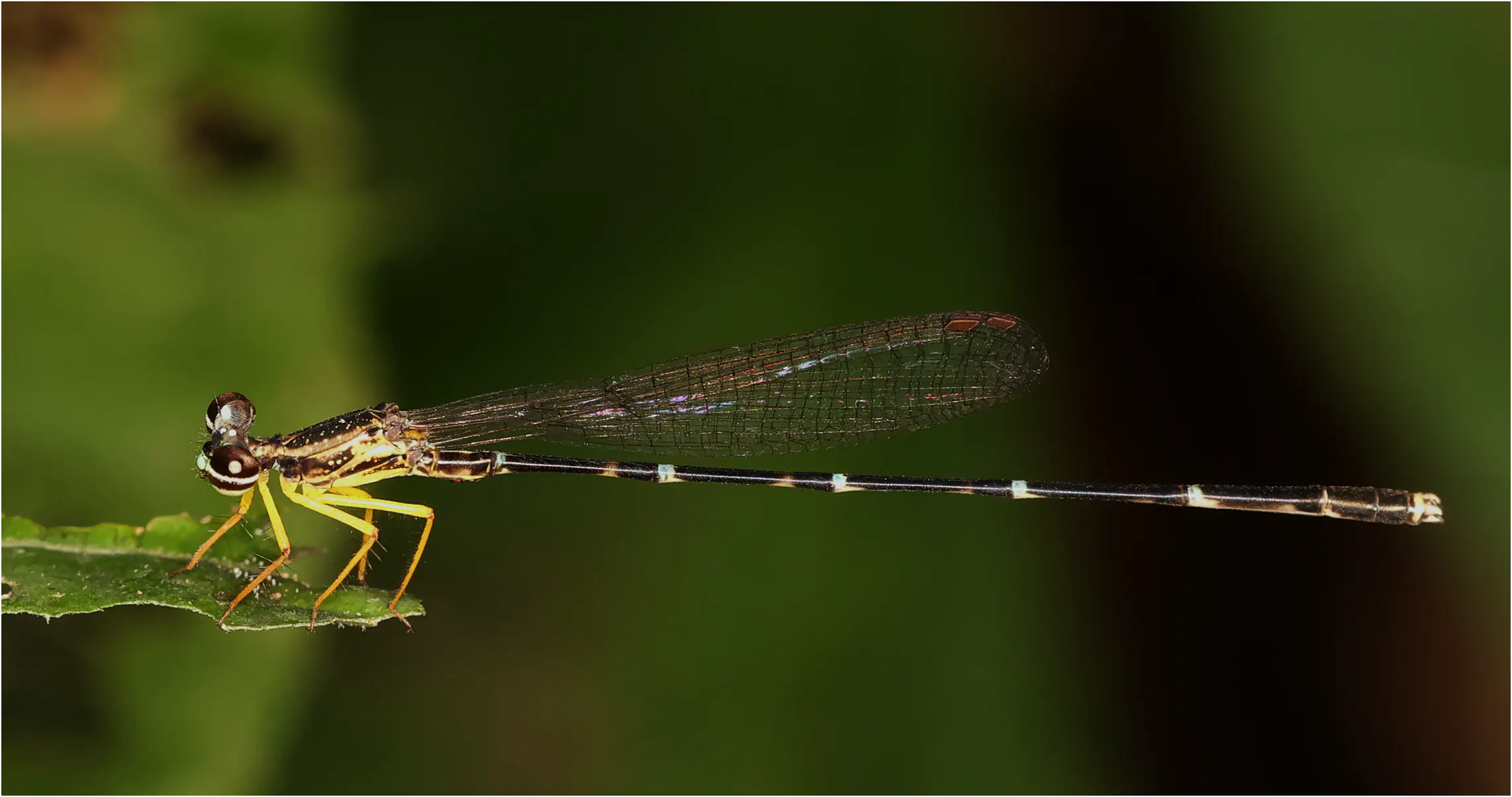
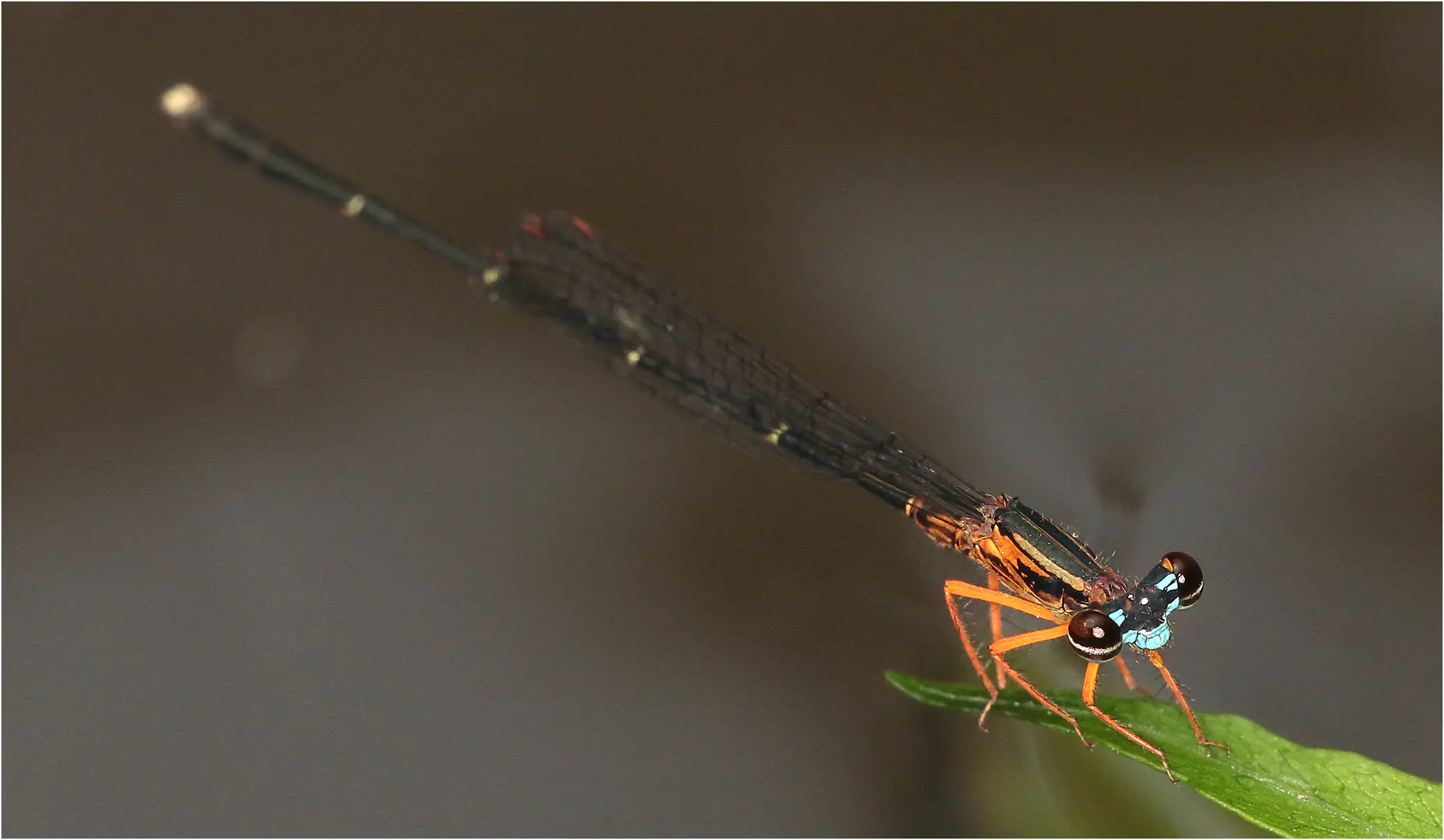
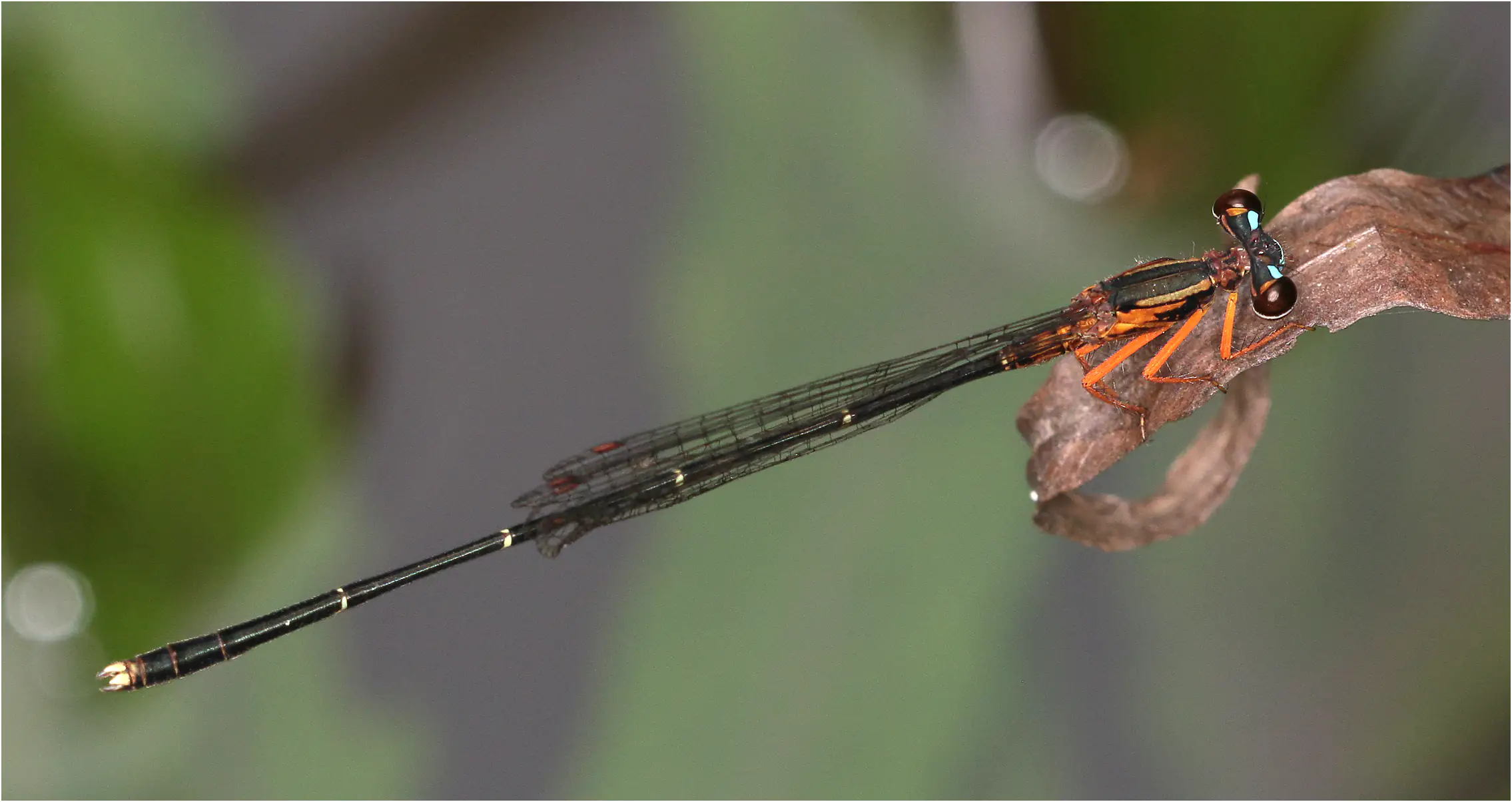
There is no risk of confusing Copera sikassoensis with C. guttifera or with any other damselfly in Ghana, as it is so distinctive with its small size (Little Featherleg), its orange legs, its blue spots on the vertex and face, and its pale anal appendages. These spots on the vertex are astonishing; they are not the classic postocular spots found in so many Coenagrionidae but are located on the vertex, well forward.
I actually thought they were variable, sometimes divided, and that we had photographed different individuals, but it is the antennae that form a black line across these pale spots, creating the appearance that can be observed when inspecting the photos on this page (above left, for example).
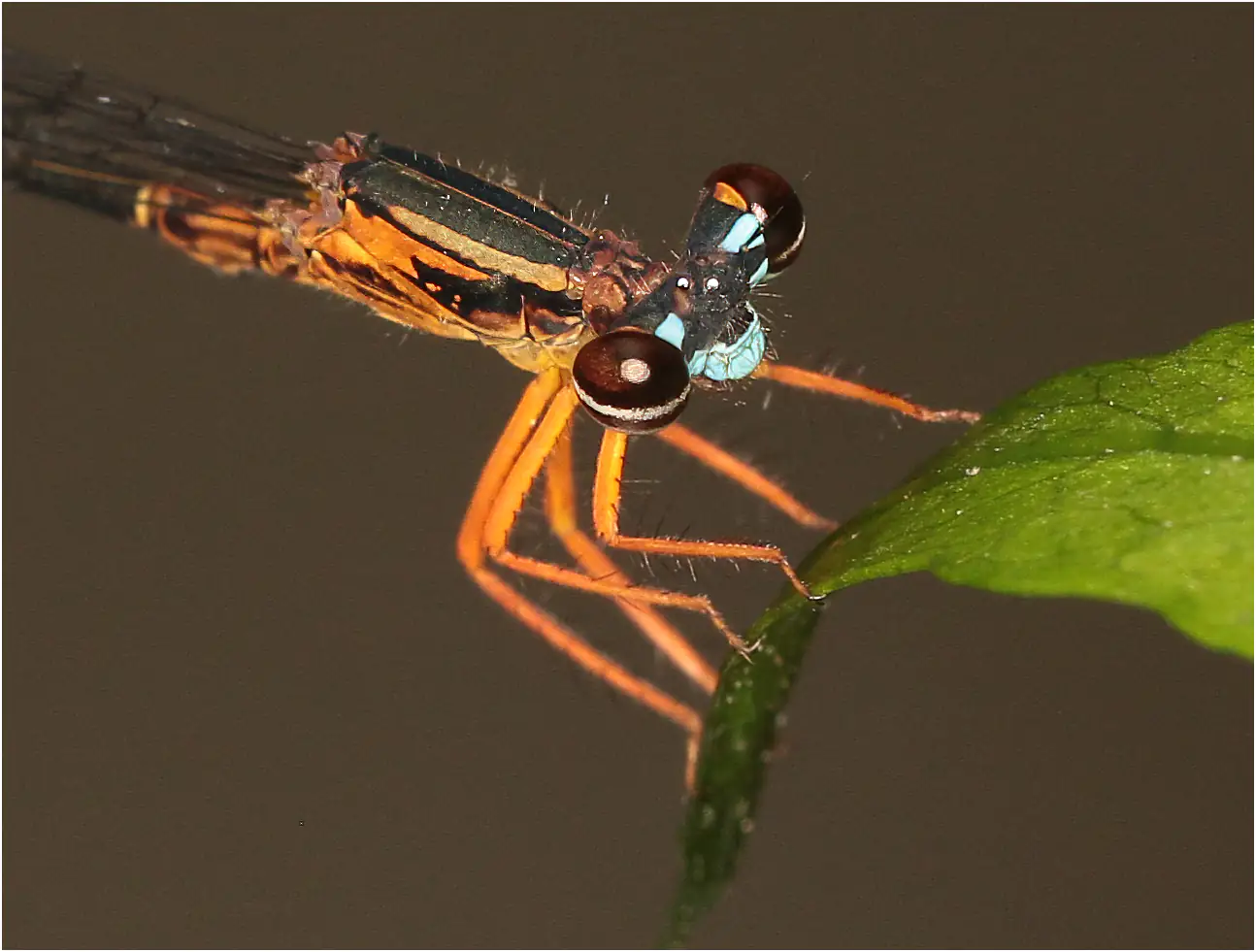
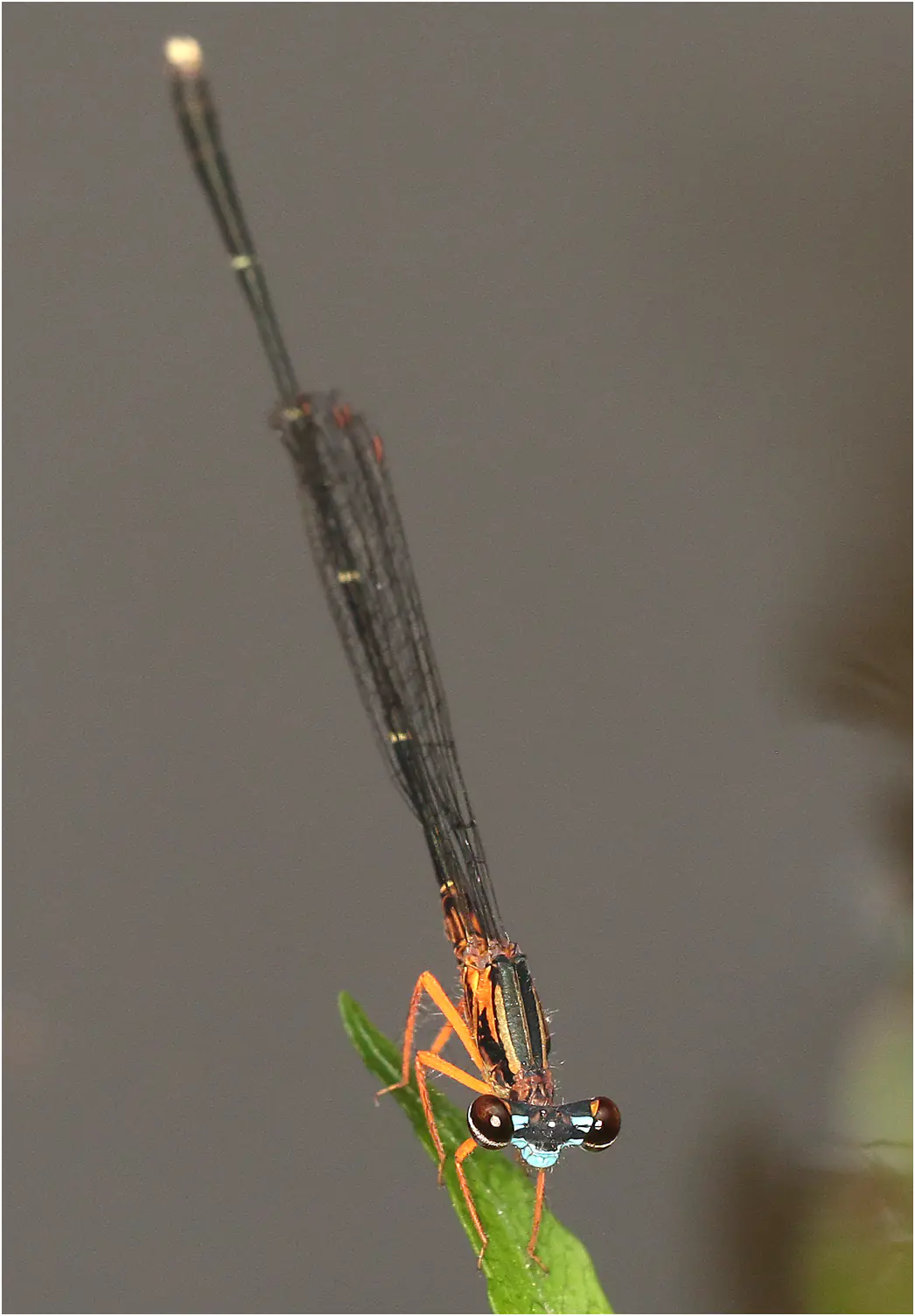
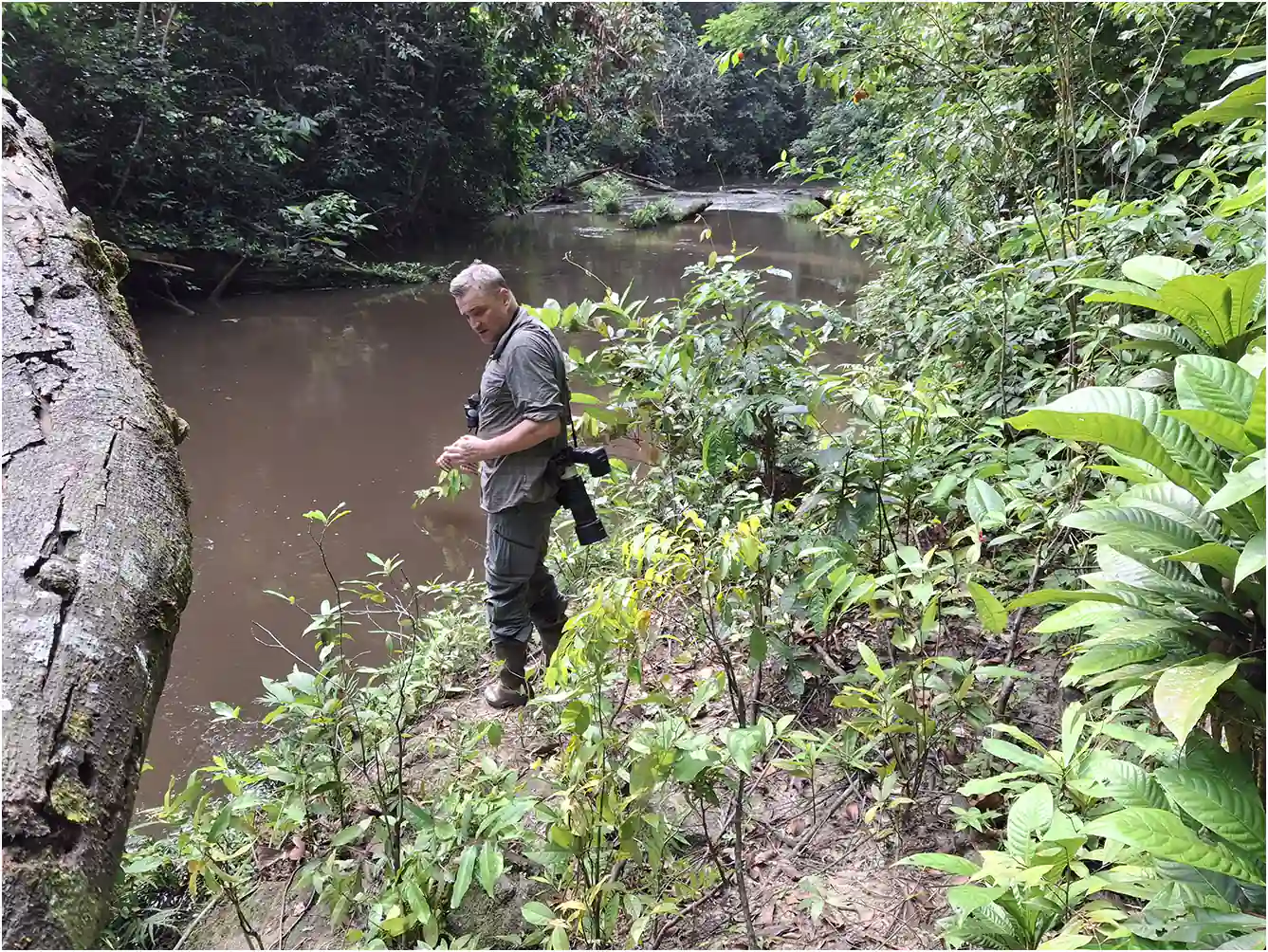
Although all the photos on this page were taken in the same location, in the forest, along the Ankasa river, in one of the rare accessible spots where the bank was clear and not too steep, we also encountered this species around a large pond, near Cape Coast. Two very different habitats, and only the first is cited in ADDO.
Martin (1912) states that its abdomen measures 27 mm; the entire insect measures about 32 to 33 mm.
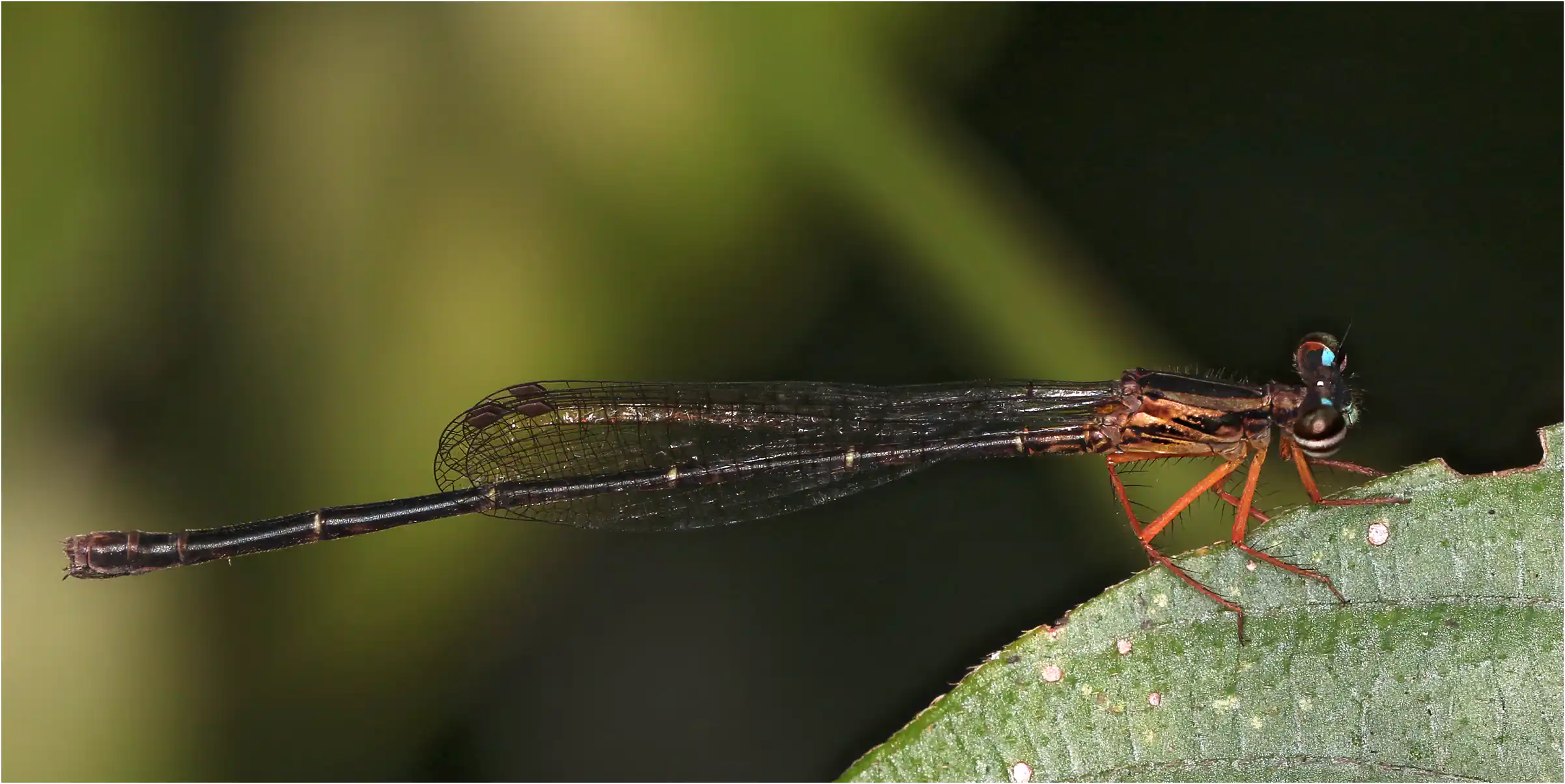
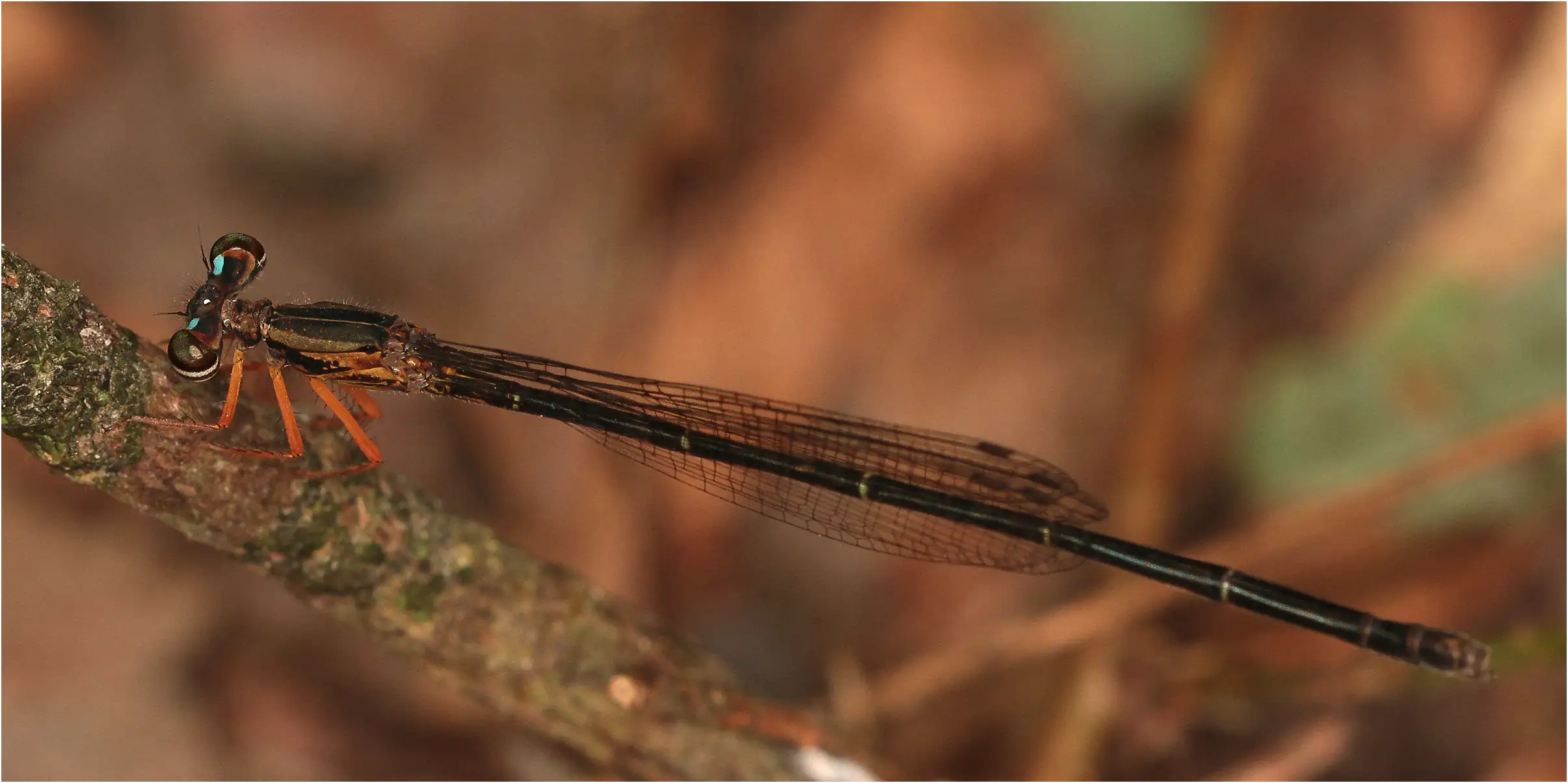
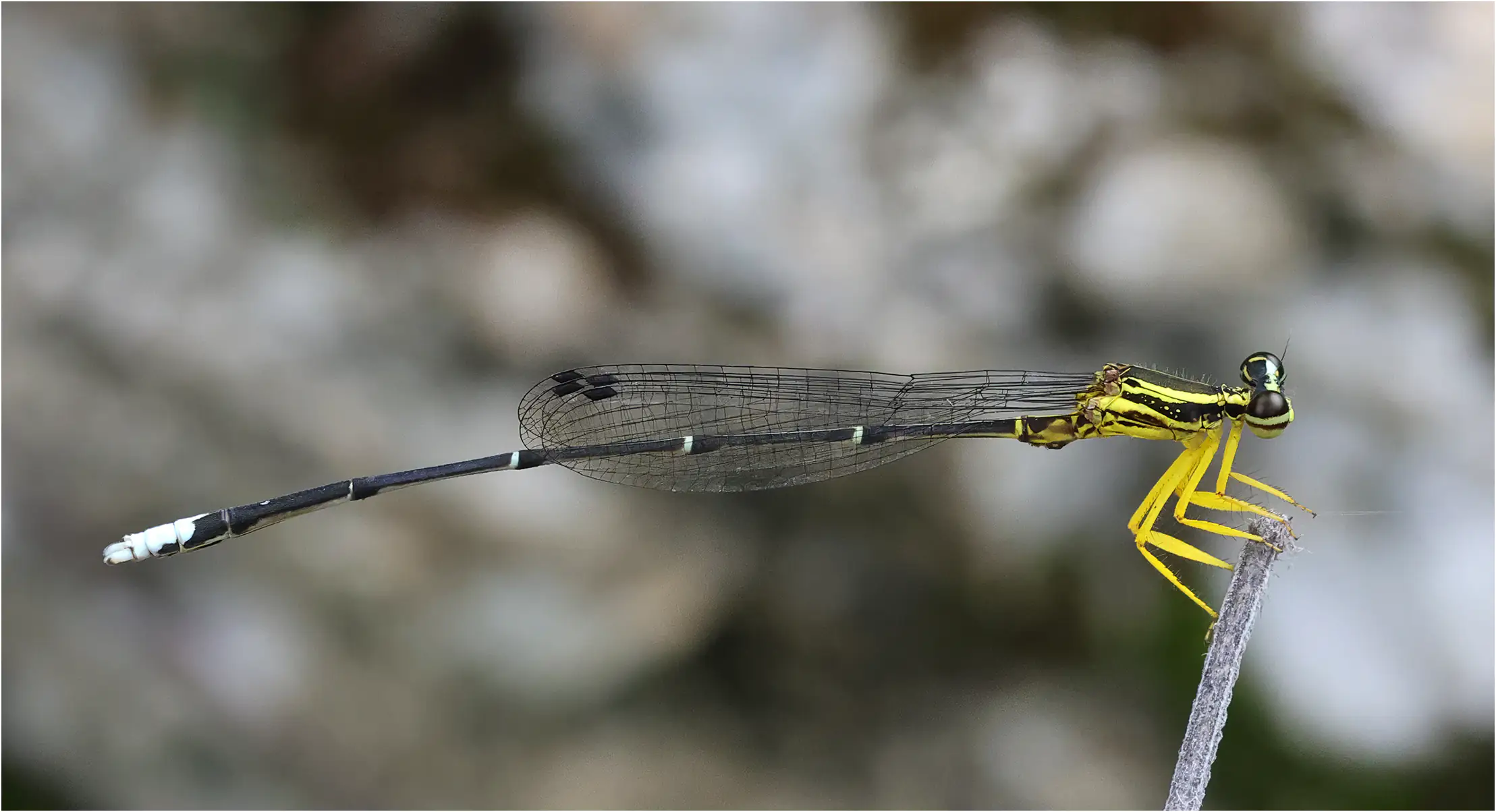
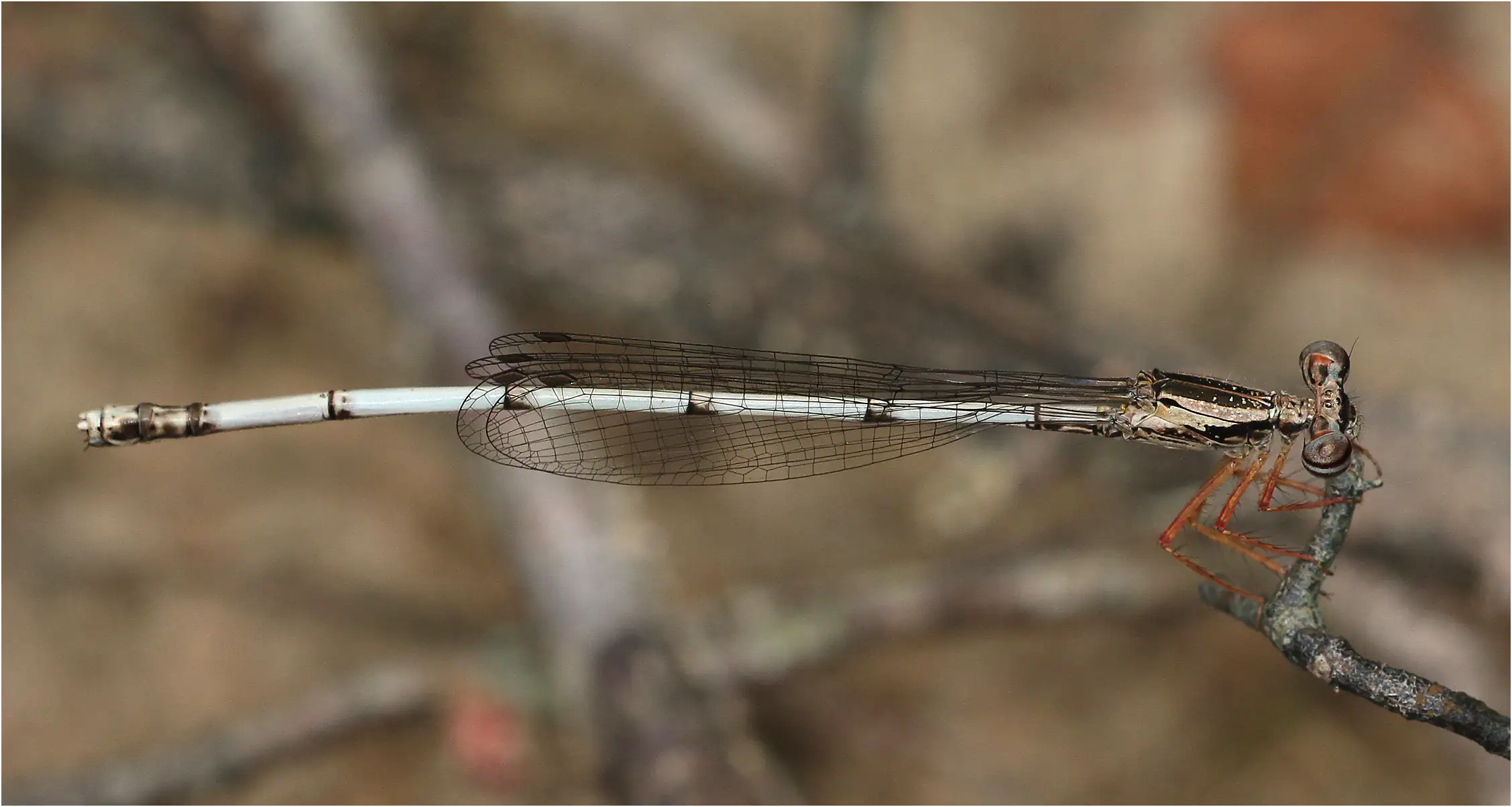
Some females, as shown above, are androchrome; their face is less spectacularly blue than that of the males, but only this detail and their sexual characteristics distinguish them. Others are completely different and belong to a "ghost" form—at least, that is the term used in Asia for certain female Copera.
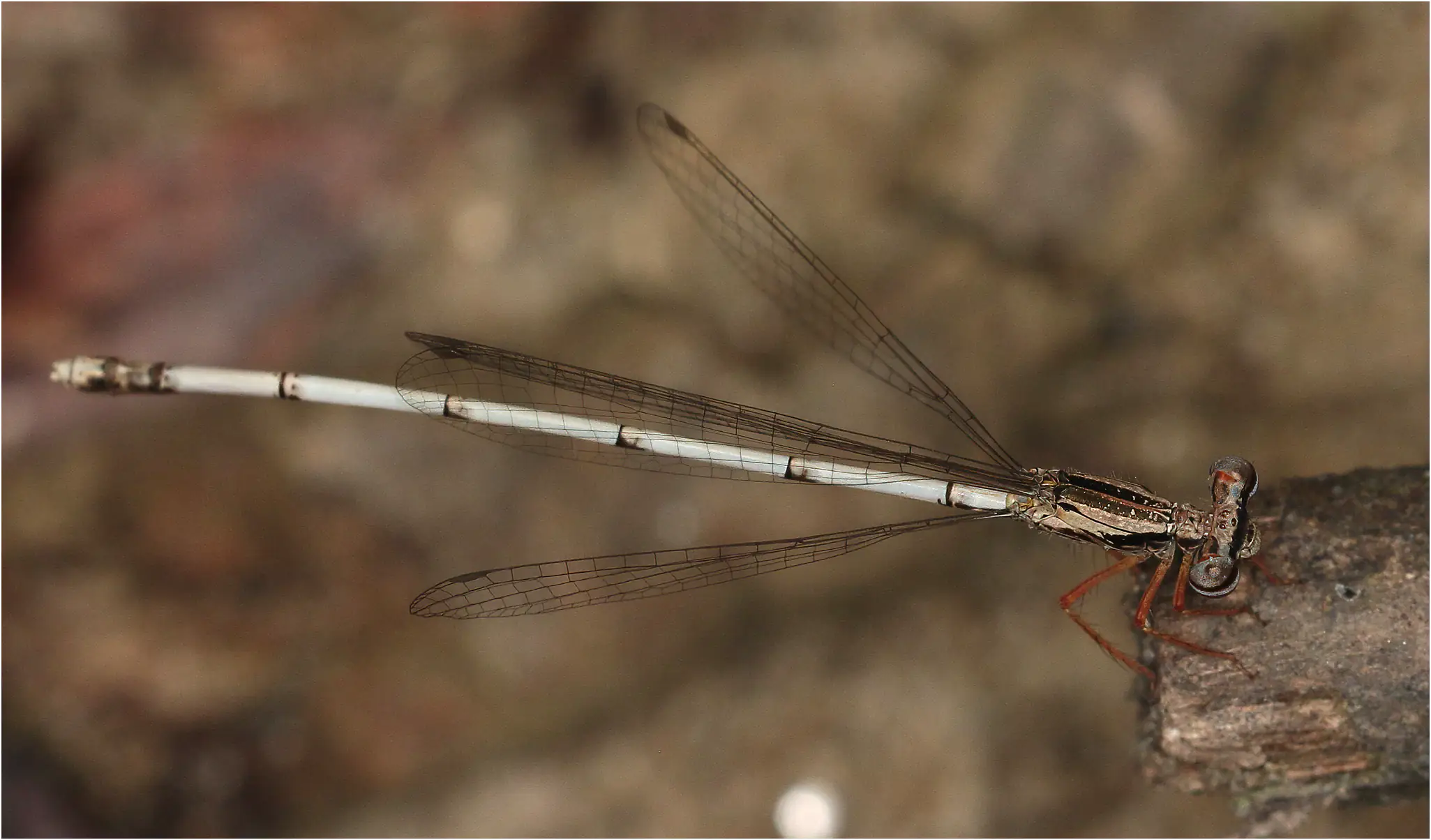
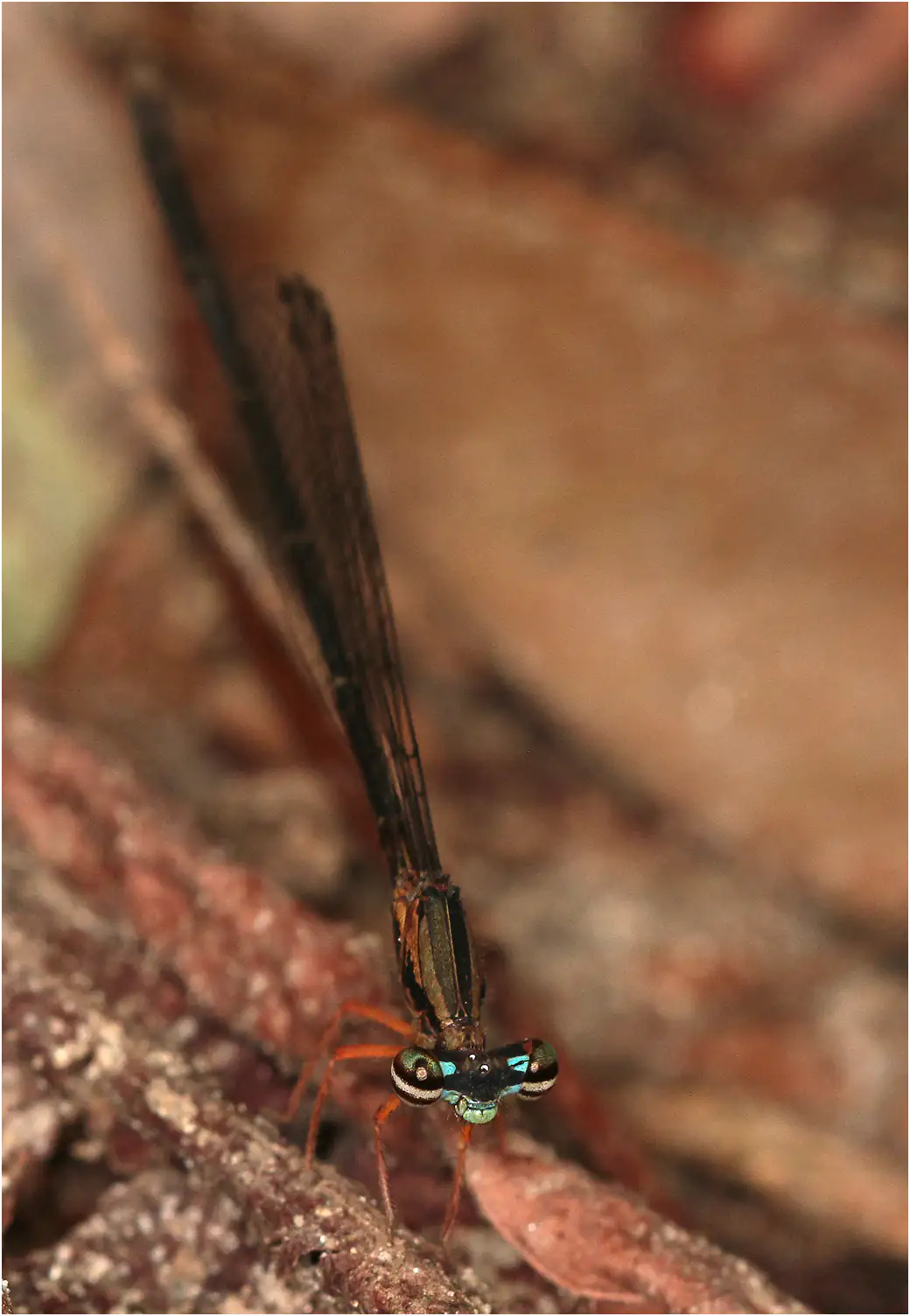
Its distribution area extends from the Gambia (and undoubtedly Senegal) to the Central African Republic and Uganda.
IUCN Red List.
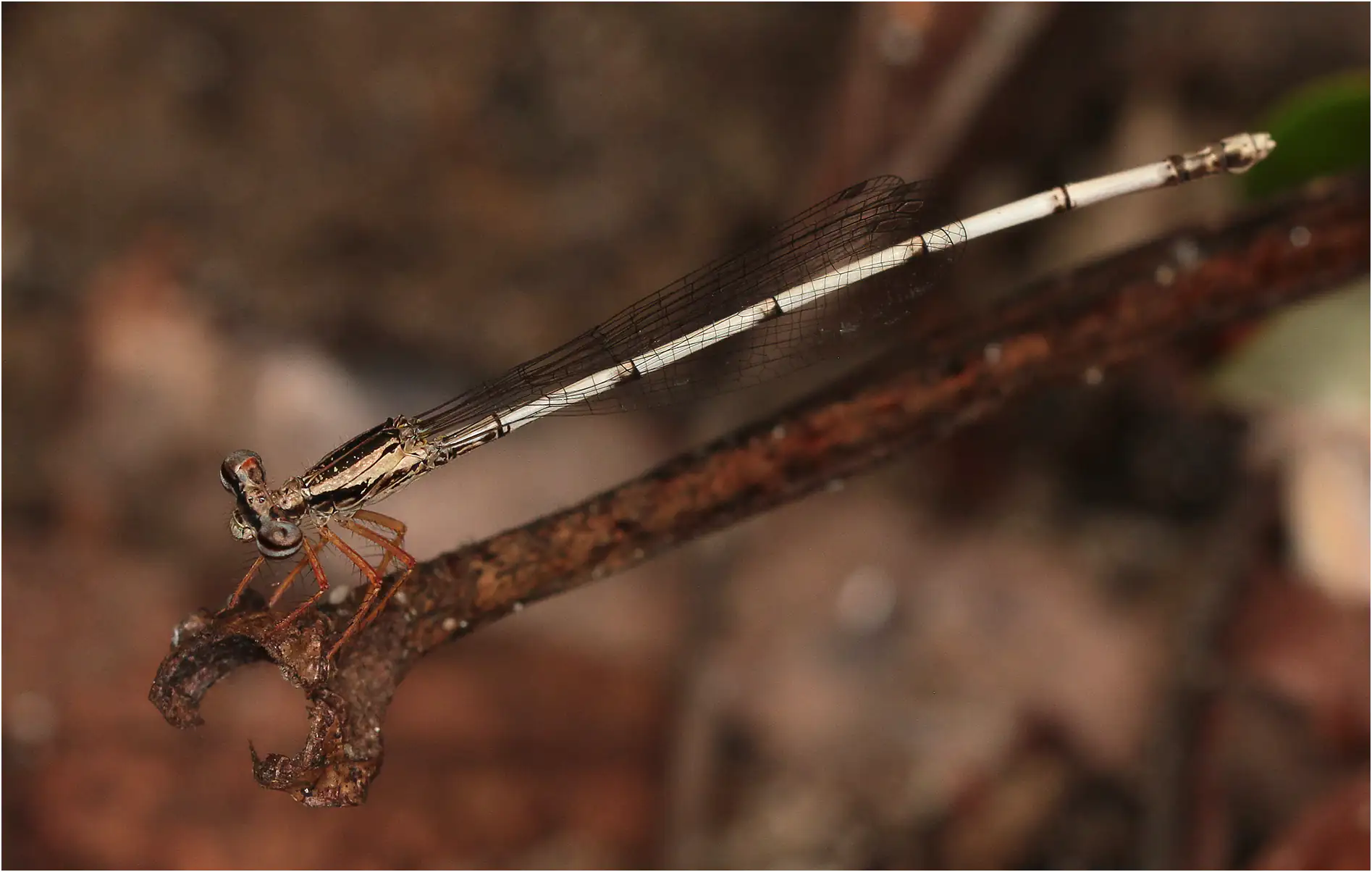
Copera sikassoensis females, Ghana, Ankasa Forest Reserve, 18/01/2026
Étymologie Copera sikassoensis
Copera (Kirby, 1890) is said to be an informal term of Spanish or Argentine origin (suggested by Rhainer Guillermo, Professor of Biological Sciences in Brazil), derived from the Latin copa, meaning "cabaret hostess"; in Kirby's time, male patrons of these establishments used the term to refer to the dancers. Indeed, the flight behavior of these Platycnemididae—with their legs remaining extended, or rather un-folded, and their habit of appearing to "hover" or fly in a jerky, dancing motion—could well resemble a dance...
Sikassoensis is formed from Sikasso, a city in southern Mali (then French West Africa, AOF) where the holotype was collected, and the suffix -ensis, indicating origin. It is worth noting that Martin described the species in the genus Psilocnemis, likely using a young specimen that exhibited yellow spots rather than blue ones.
These African Copera have previously been placed in several other genera, including Platycnemis; morphological and molecular analyses conducted by K-D Dijkstra et al. in 2014 established the genus Copera.
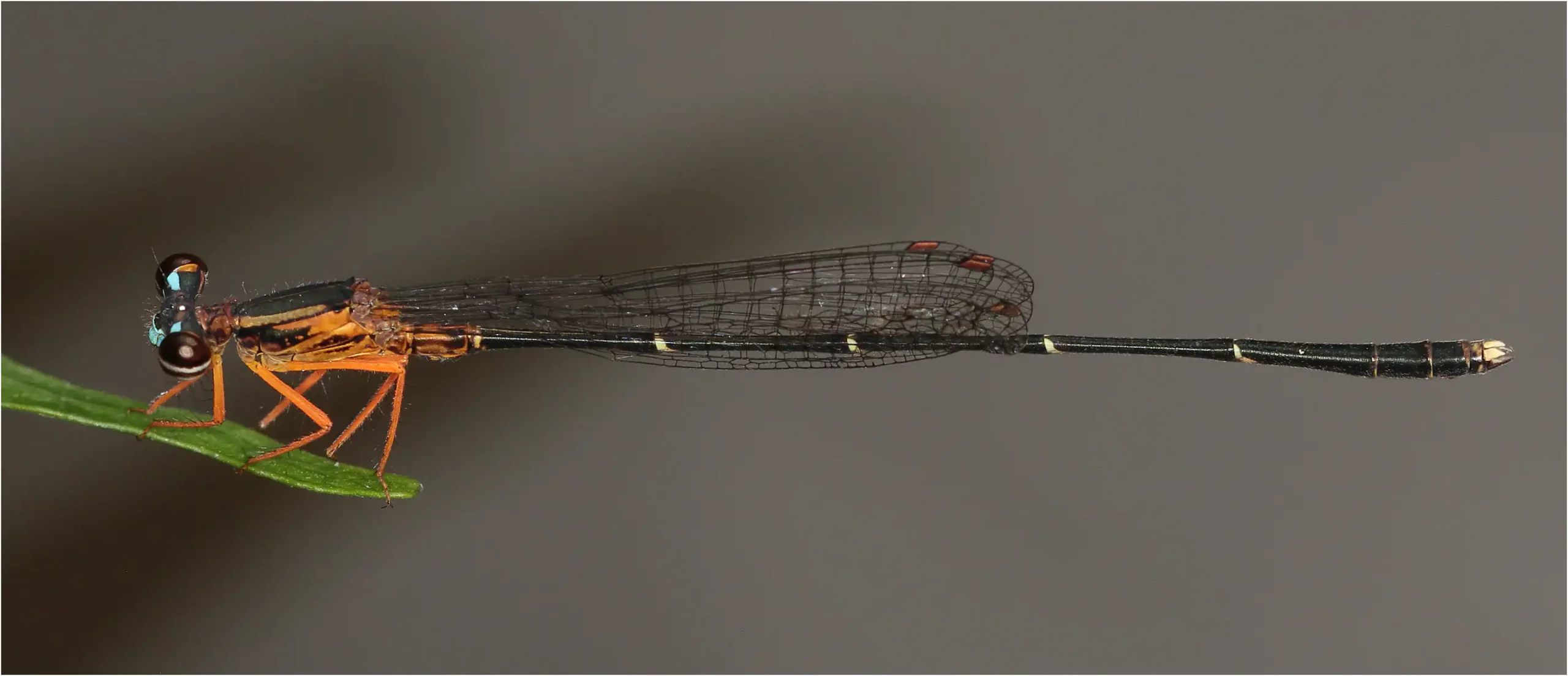
Dijkstra, K.-D.B (editor ADDO), 2019 – African Dragonflies and Damselflies (ADDO) – [Le lien peut ne pas fonctionner ; lien web.archive du site ADDO, maintenant hors ligne.]
Dijkstra, K.-D. B., Kalkman, V. J., Dow, R. A., Stokvis, F. R., & van Tol, J. (2014) - Redefining the damselfly families: a comprehensive molecular phylogeny of Zygoptera (Odonata). Systematic Entomology, 39 (1), 68–96.
Martin, 1912 - Les Libellules du cercle de Sikasso - Feuille jeunes Naturalistes, 42, 92-99. P. 92.