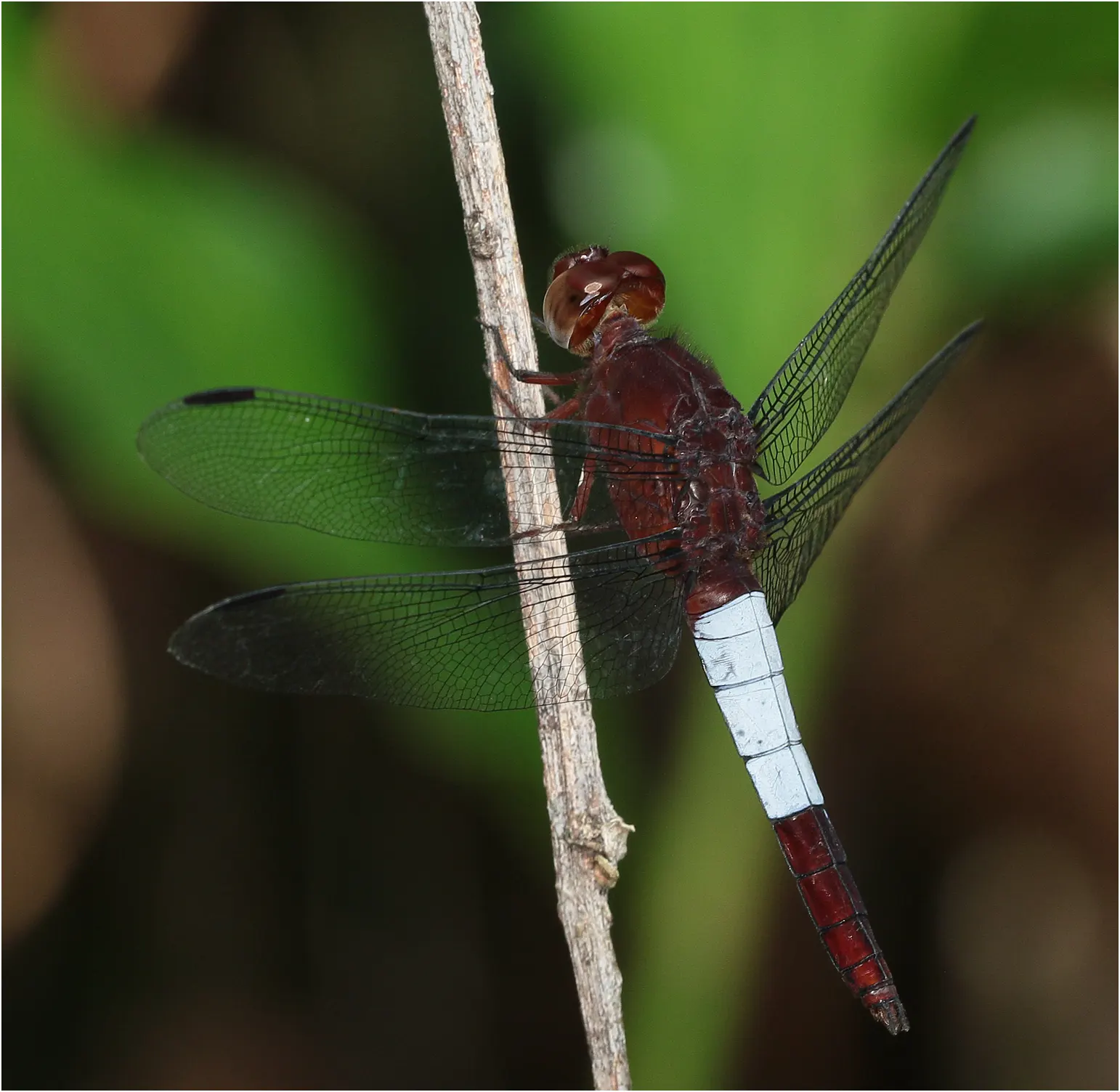
We encountered Hadrothemis coacta 5 or 6 times, always in the forest, particularly along logging tracks. It is a heavy and robust libellulid (Robust Jungle-skimmer in English) that resembles its West African cousins (H. vrijdaghi is absent from there) by the pruinescence it bears on segments 2 to 5 (6 sometimes?); that of H. camarensis and H. infesta is shorter, that of H. versuta is very similar, but its interalar space is marked with a yellow band that continues onto the dorsal surface of the thorax. As for the last 2 representatives of the genus (which comprises 7 in total), H. defecta and H. scabifrons, they are very different, without pruinescence, and their abdomen is red.
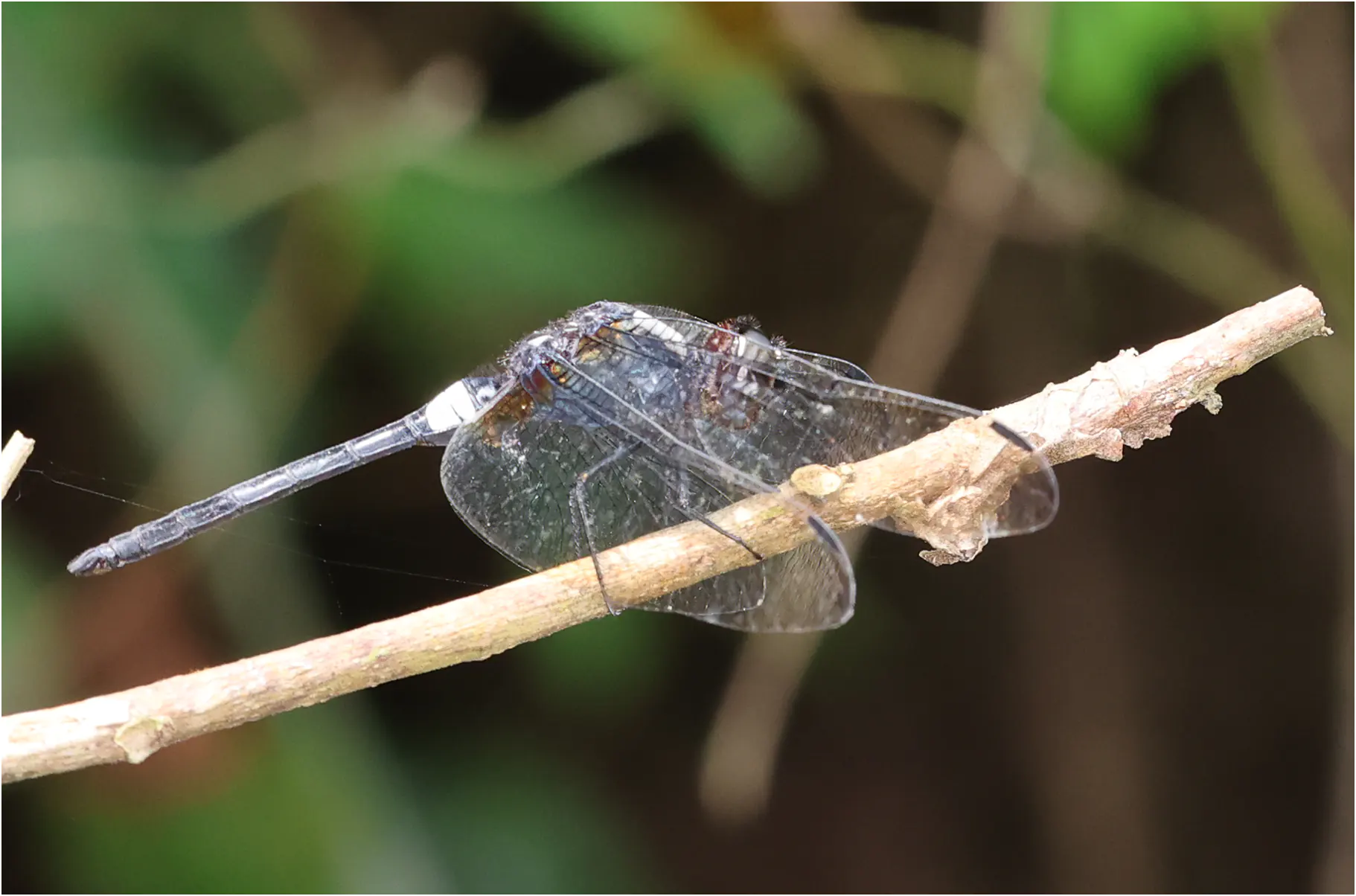
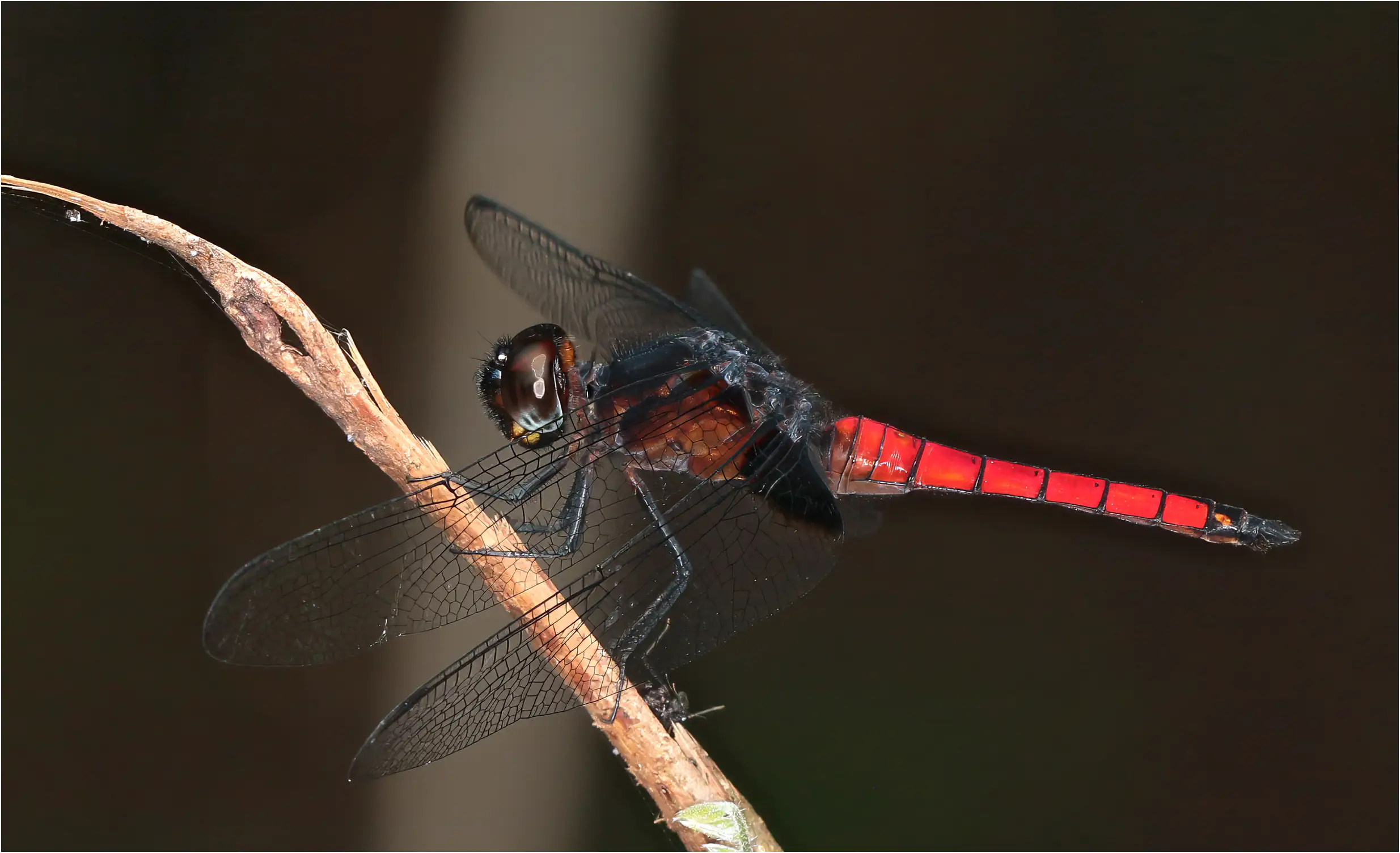
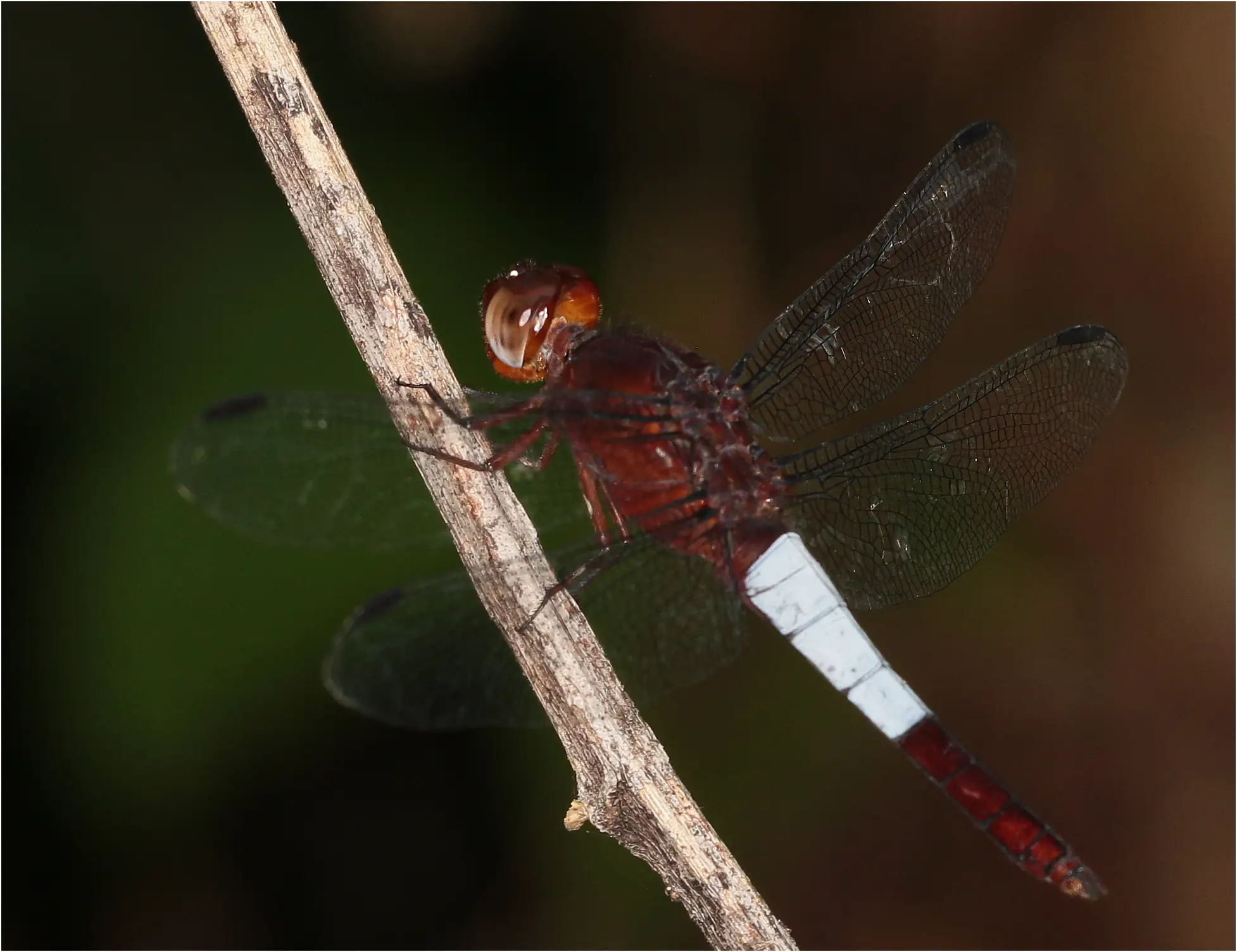
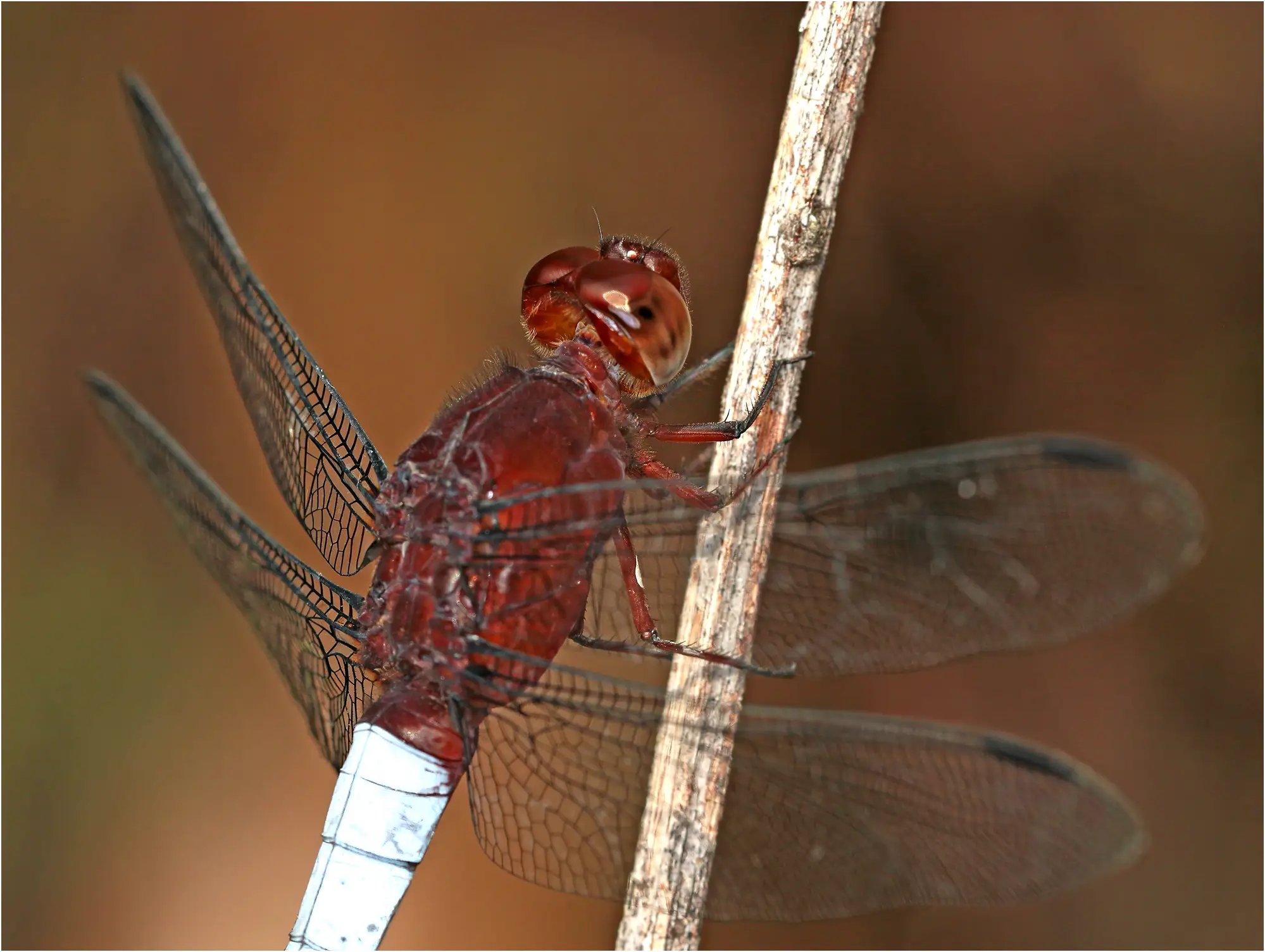
From a distance, its non-pruinescent parts appear very dark, but up close the flash gives them a distinctly red tone. Karsch (1891), who describes it in the genus Thermorthemis, gives a total length of 47 mm for the male and 50 mm for the female.
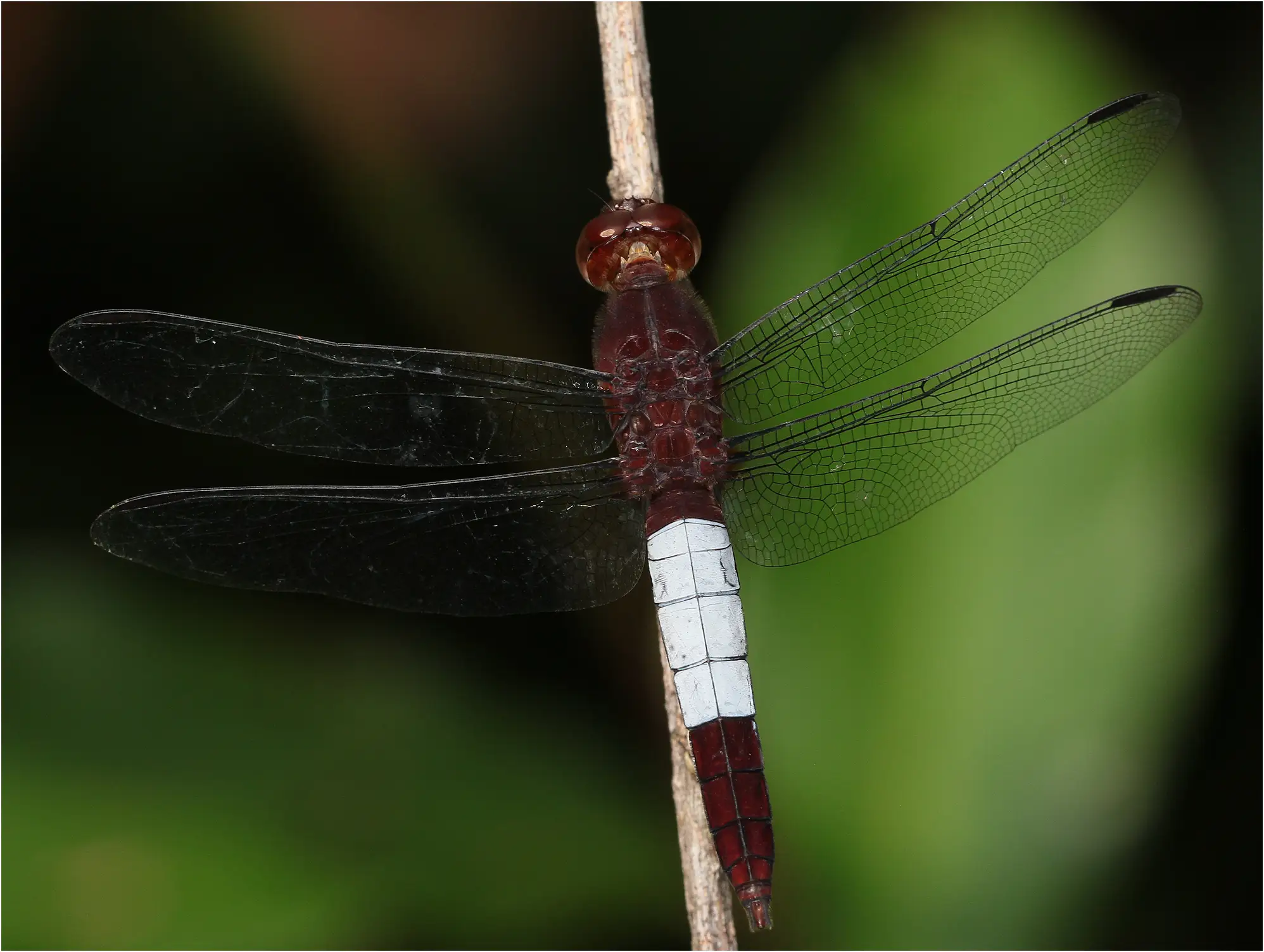
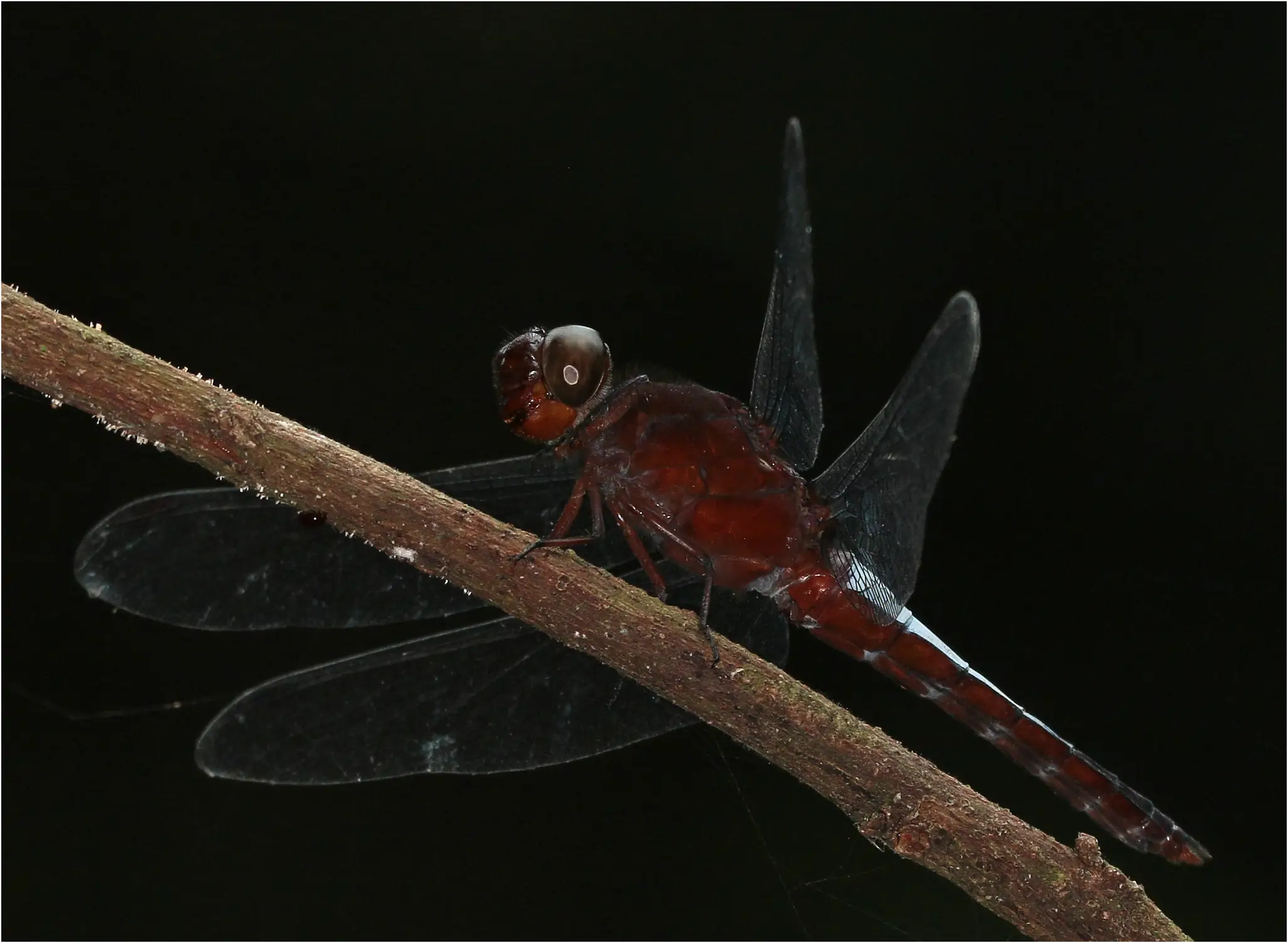
All Hadrothemis live in forests, and it is along forest paths that we encountered them.
It is found from Liberia to the Central African Republic; to the south, it reaches Angola.
IUCN Red List.
Females are an example of sexual dimorphism in Libellulidae!
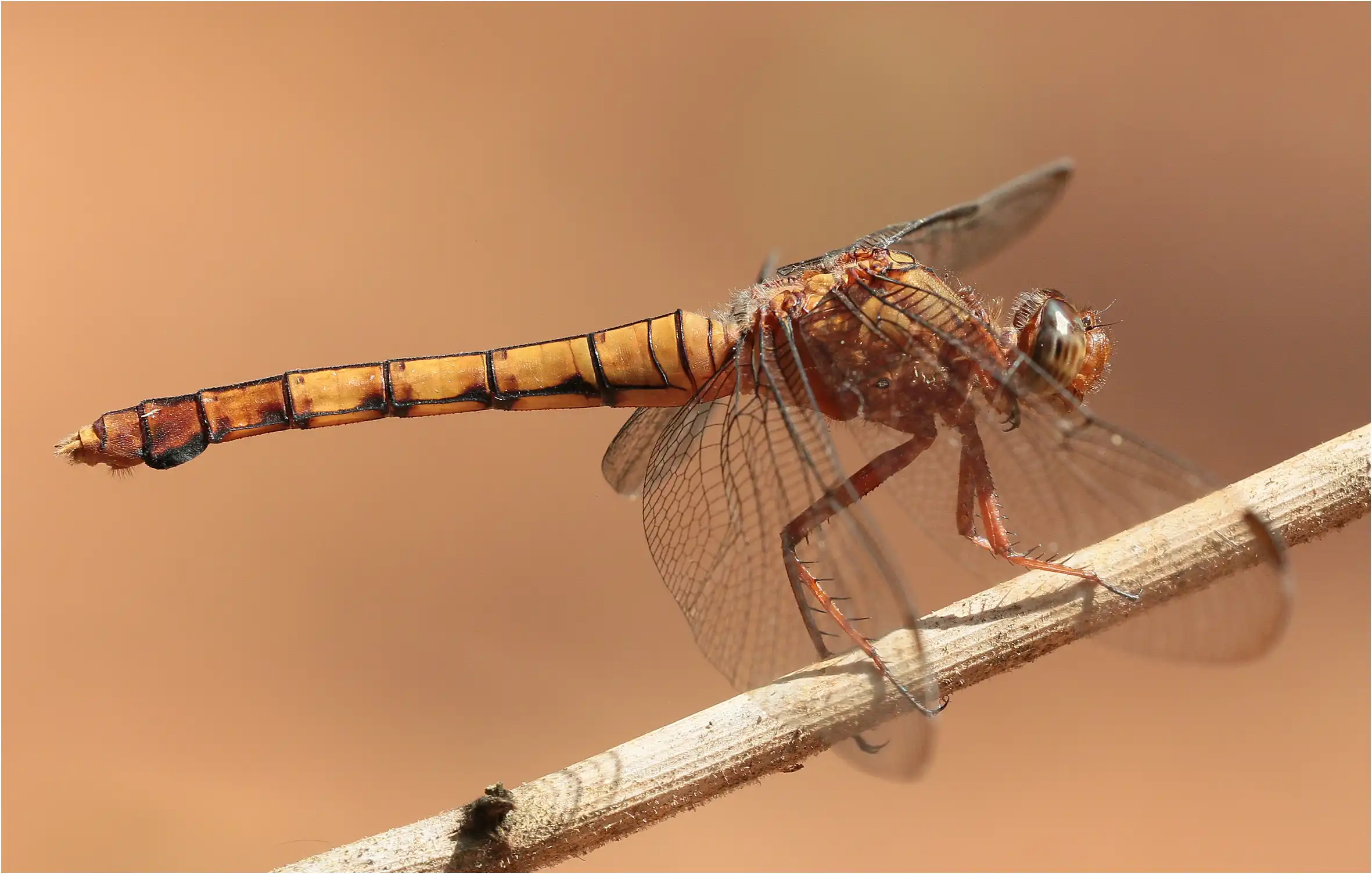
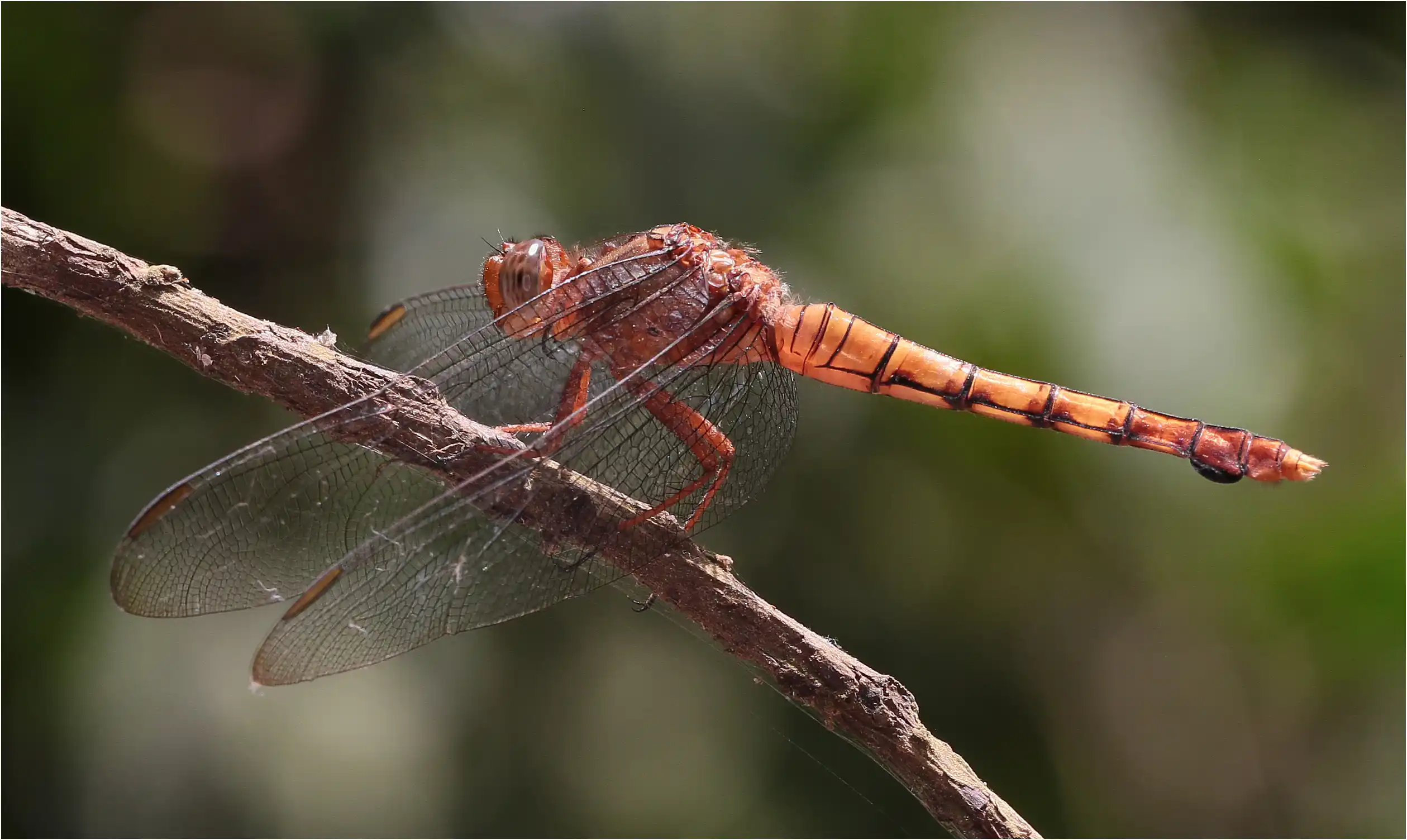
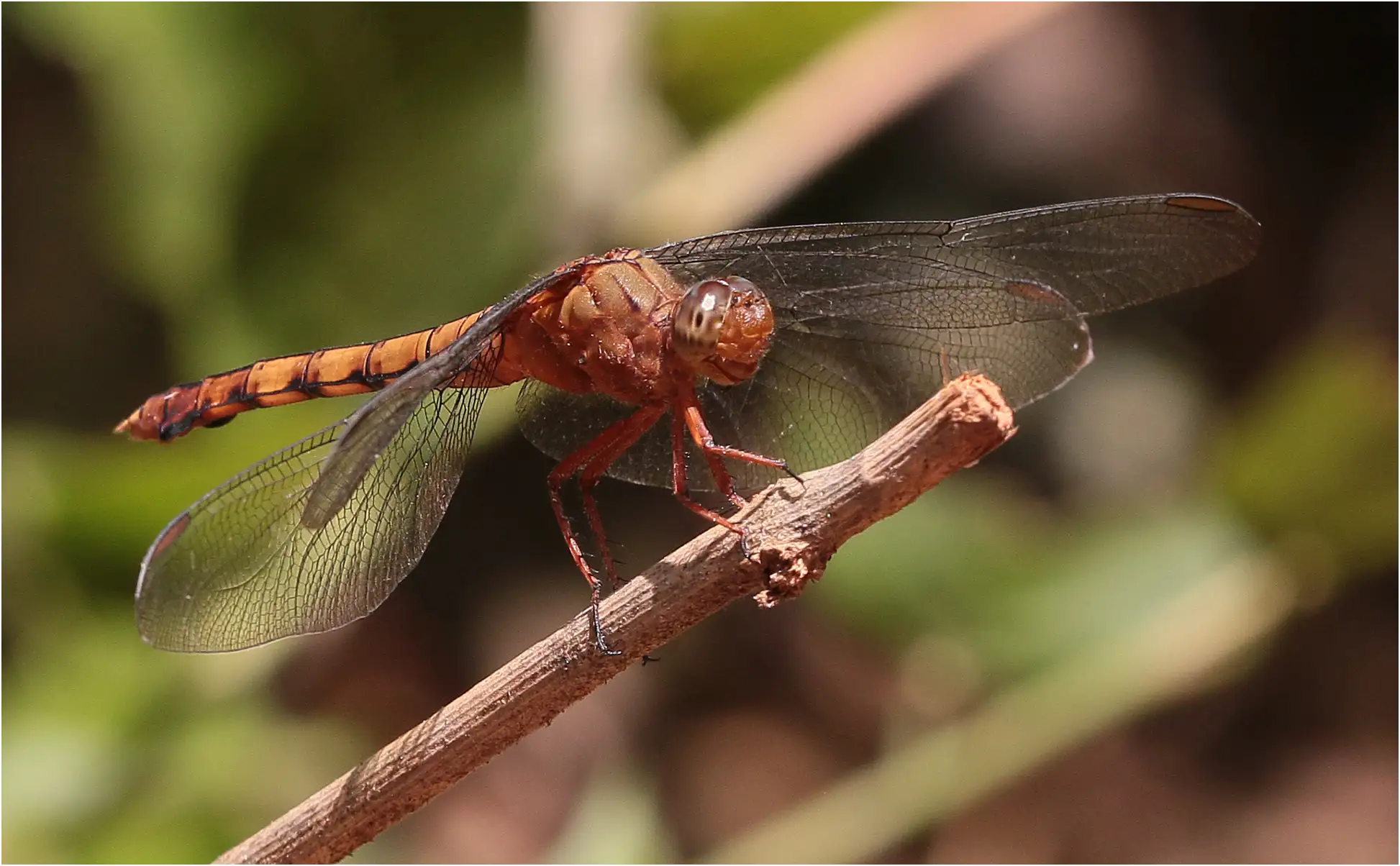
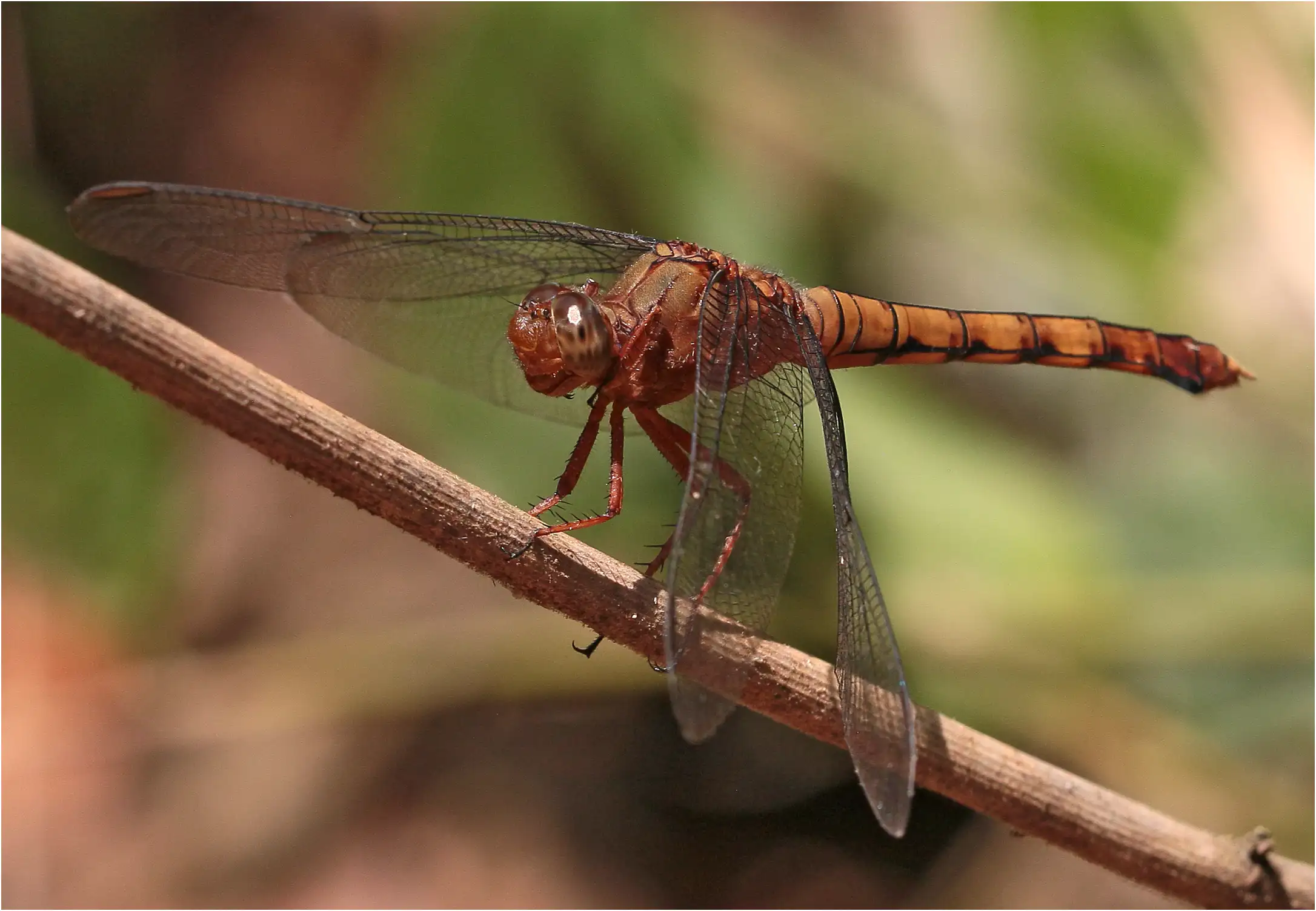
Females are even more massive than males, and one naturally notices the broad ventral expansions carried by the 8th abdominal segment.
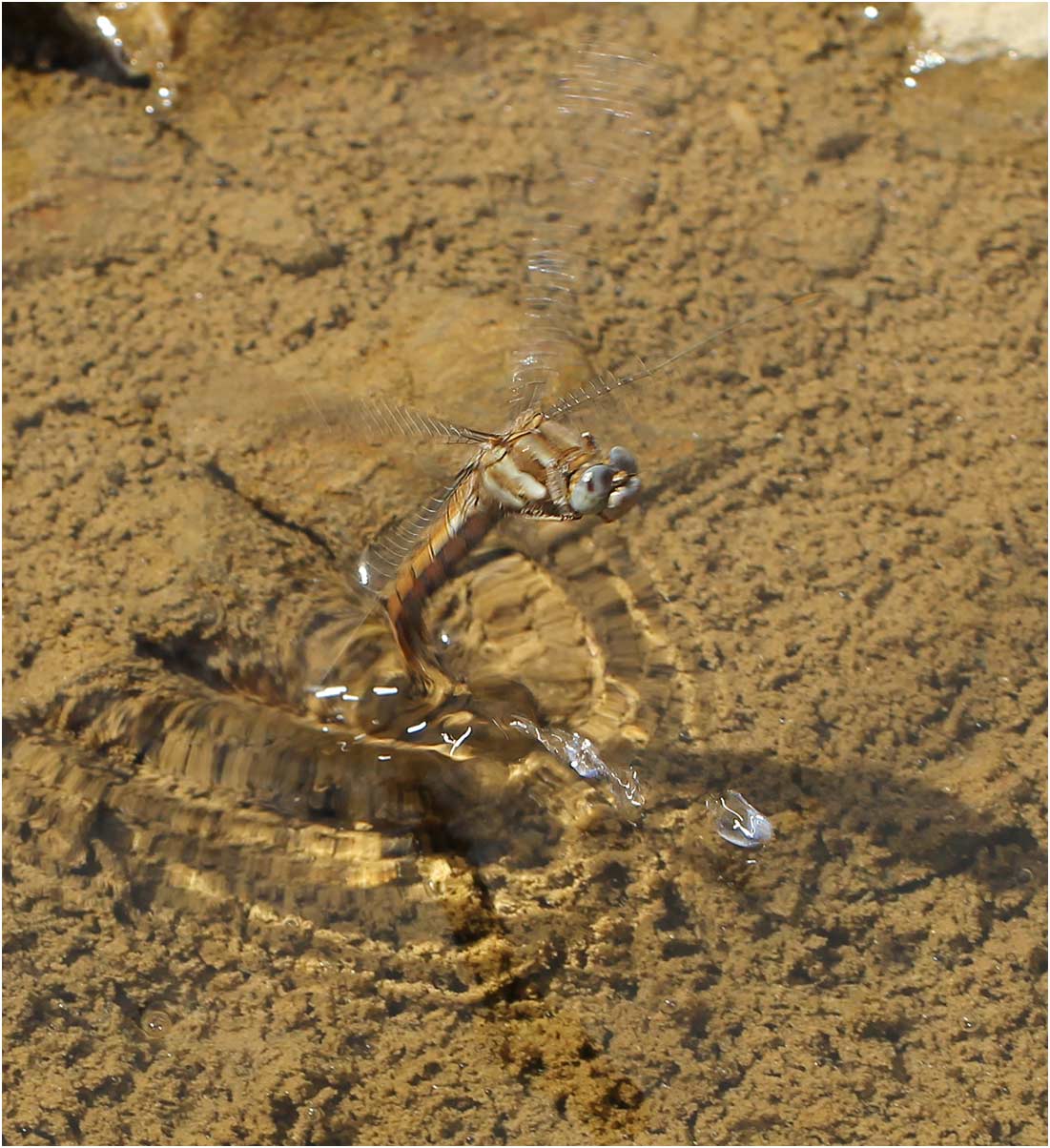
As in some Orthetrum (here O. brunneum in France) or Orthemis (here O. discolor in Panama), and a few other genera, these expansions are used by the female, during oviposition, to splash water with her eggs toward the bank of the puddle to prevent them from drying out. The ripples created by the impact can be seen.

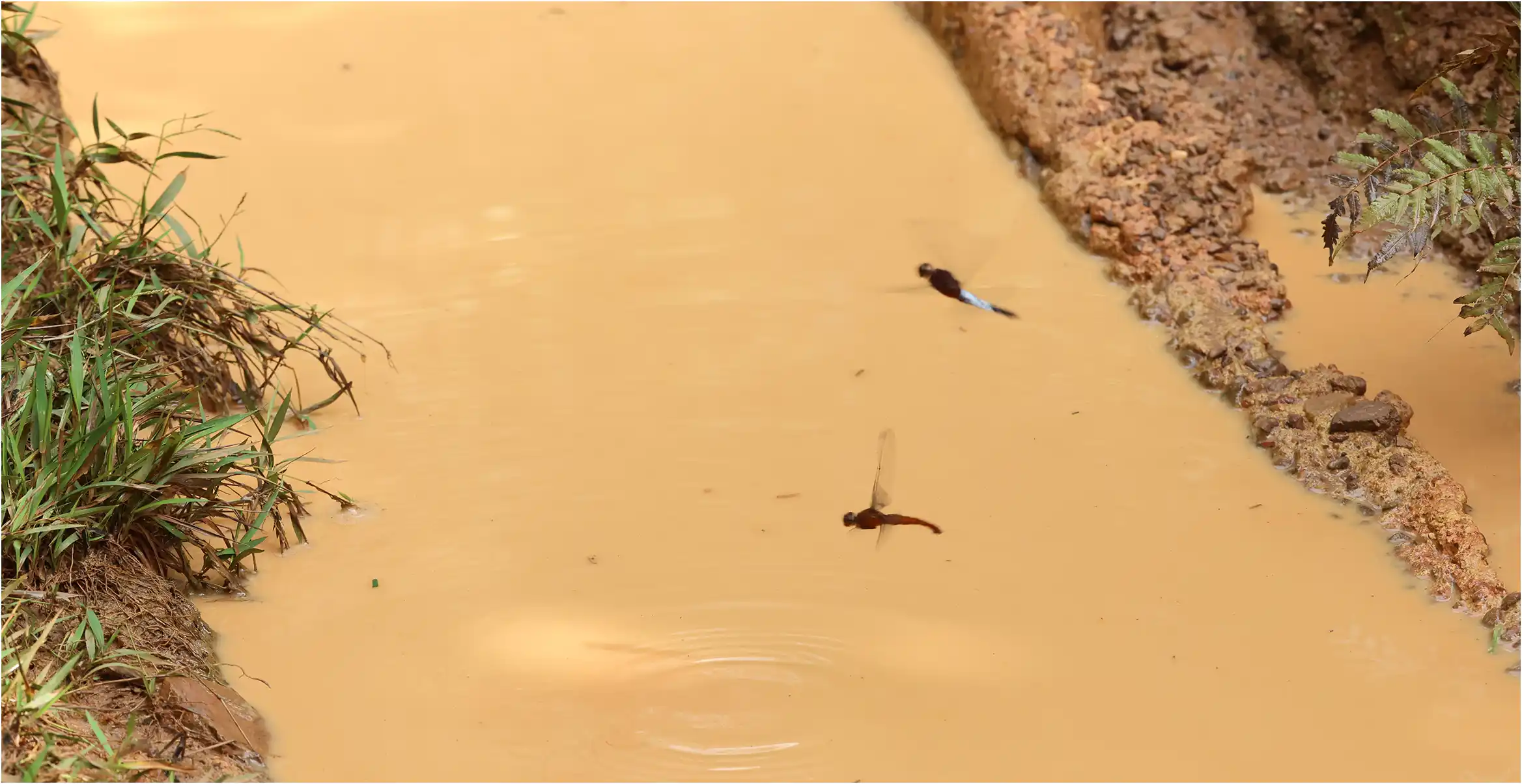
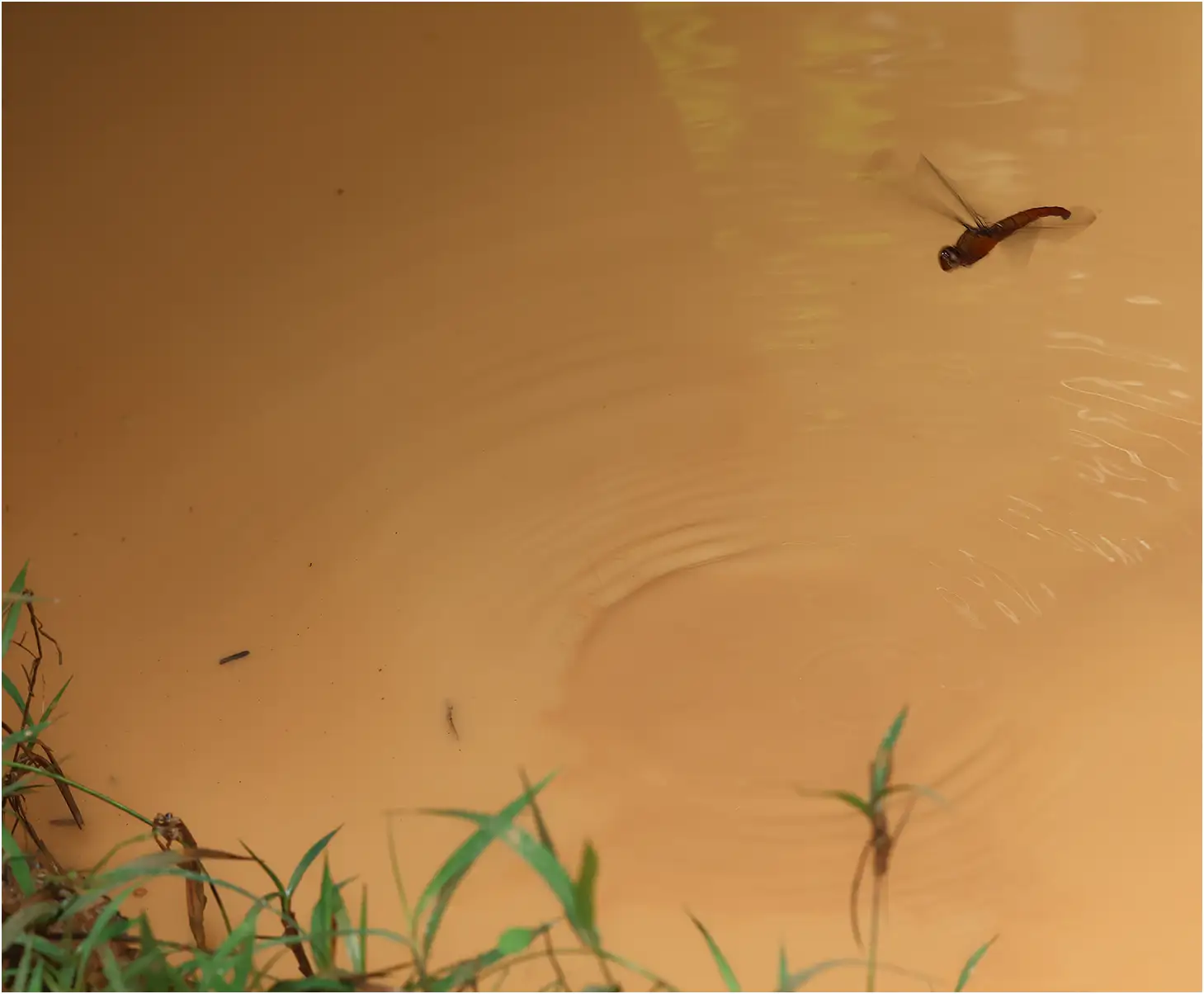
Females strike the water with their abdomen repeatedly and raise droplets that can be seen very well below. This time, the spectacle takes place on a logging track; the vehicles passing through have dug (very) deep ruts in the mud, an ideal terrain for these Hadrothemis coacta that we had the pleasure of observing for a few moments.
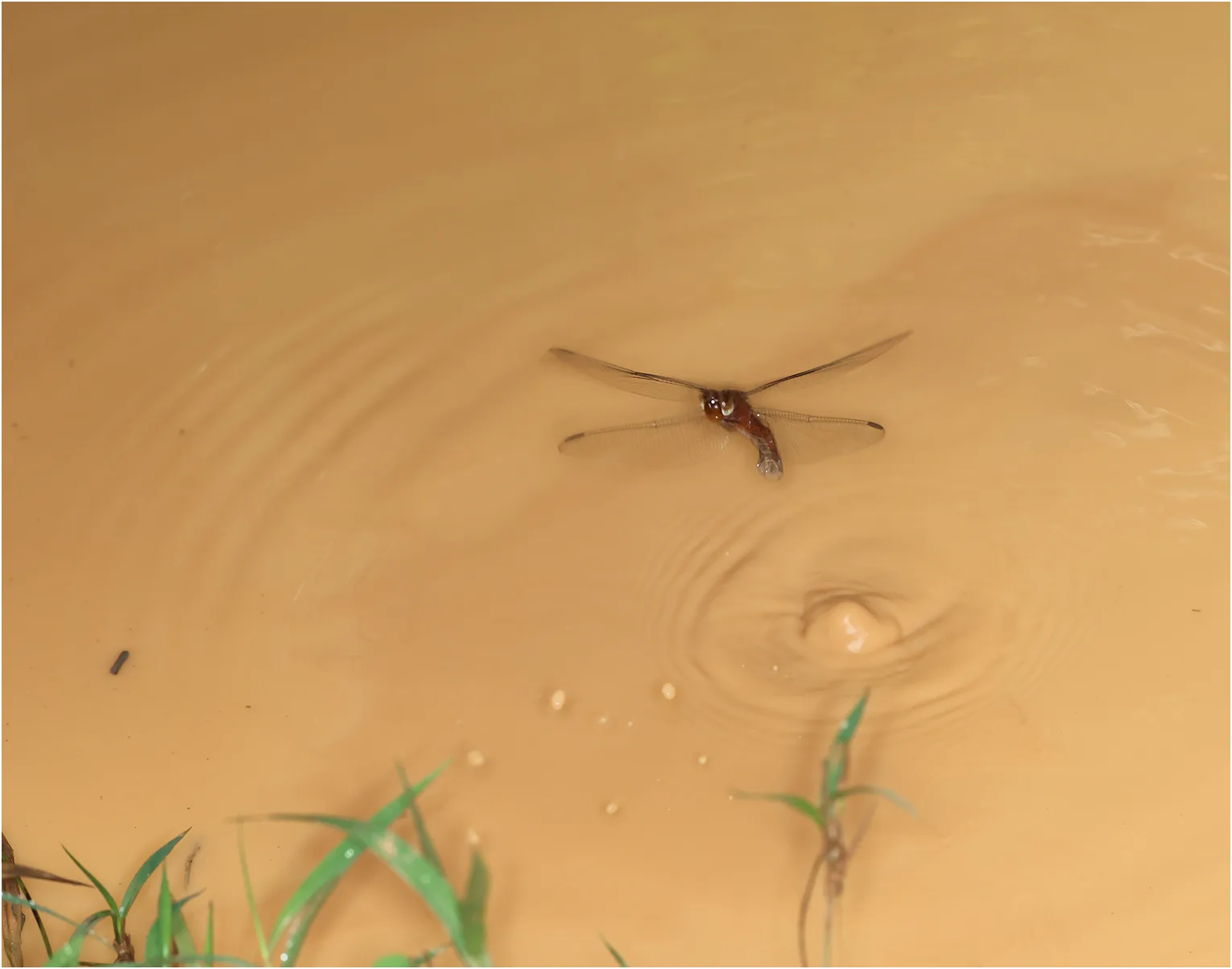
Étymology of Hadrothemis coacta
Hadrothemis, from the Greek hadros meaning strong, robust, and well-developed, and Themis, the Greek goddess of order and justice, has been used many times since Hagen (1861). The name of the goddess of order is particularly well-suited to taxonomy, the science aimed at describing and ordering families, genera, and species. This suffix -themis has in fact become a signal of belonging to the Libellulidae. Karsch, describing the genus Hadrothemis, writes, "Kurz, plump und dick – Short, heavy, and thick," which refers to its massive thorax.
Coacta is the past participle of the Latin verb cogere, meaning to gather, condense, force. There is no explicit indication in Karsch's text. One can assume that this qualifier refers to the denser venation of this species, denser than that of the 2 other species he describes, H. defecta and H. versuta.
Karsch, 1891 - Entomologische Nachrichten (Vol. 17, Issue 4, p. 60). (1875).