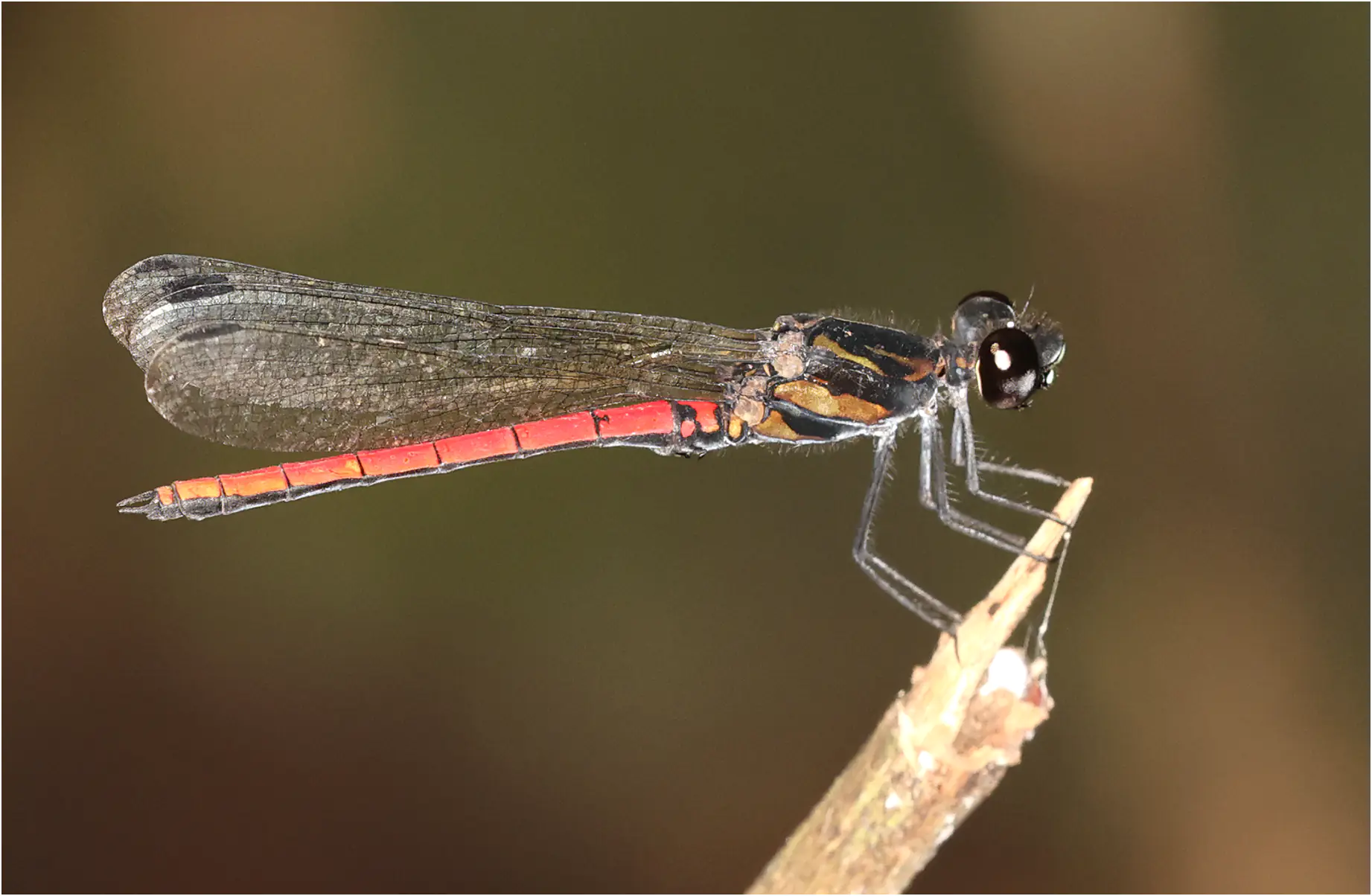
Chlorocypha selysi is the seventh and final representative of the Chlorocypha species of Ghana that I present on the website; we could not have done better, as among the thirty or so species endemic to tropical Africa, only seven are present in this country.
It is close to the other Chlorocypha species whose abdomen is entirely red; C. rubida being more pinkish, C. dispar shows a completely black thorax, C. pyriformosa presents a thin, bright yellow line on the dorsal thoracic carina, yellow spots on the vertex, and a dark face, whereas that of Chlorocypha selysi is blue (anteclypeus and labrum); this characteristic earns it its English name: Blue-faced Jewel.
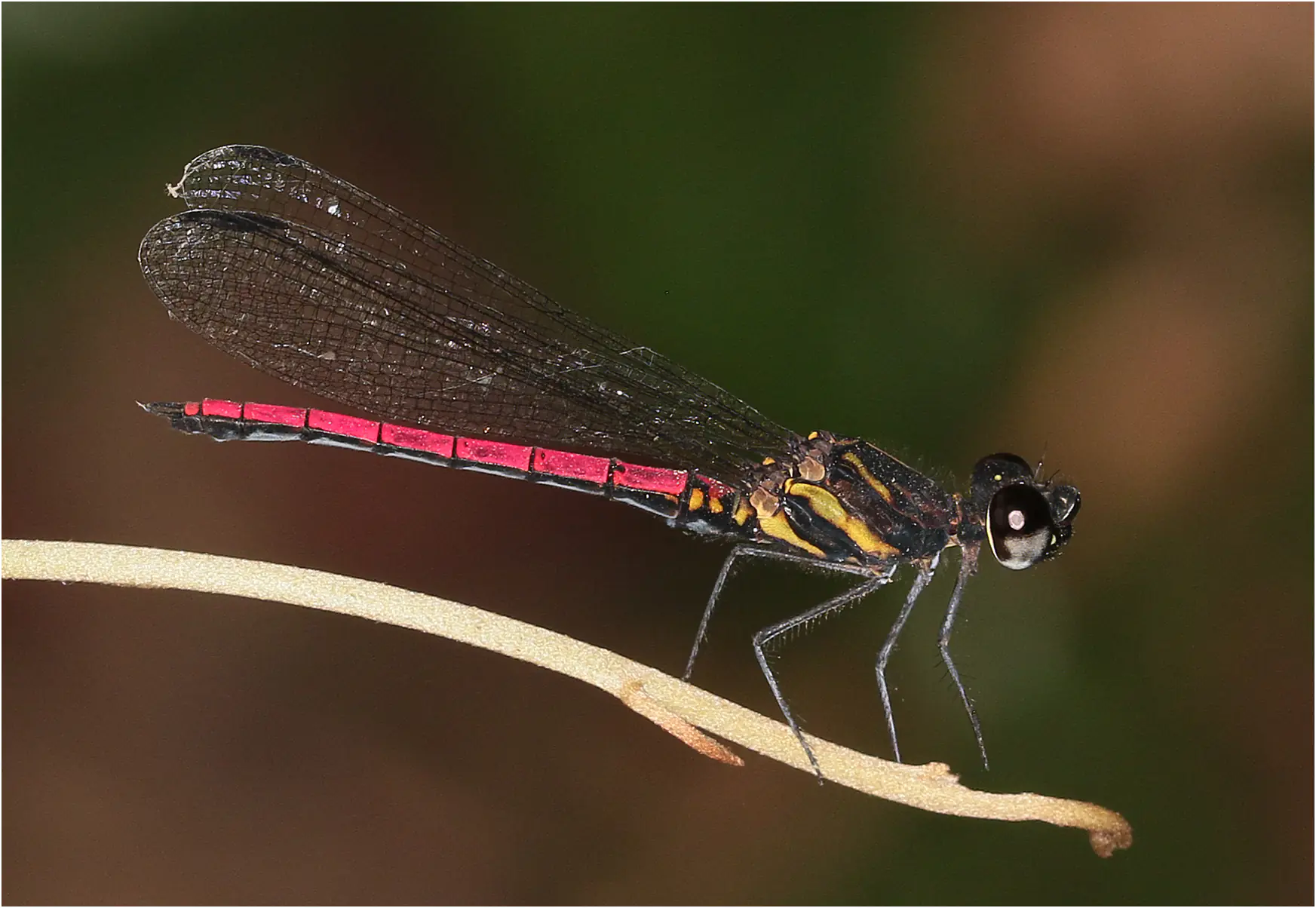
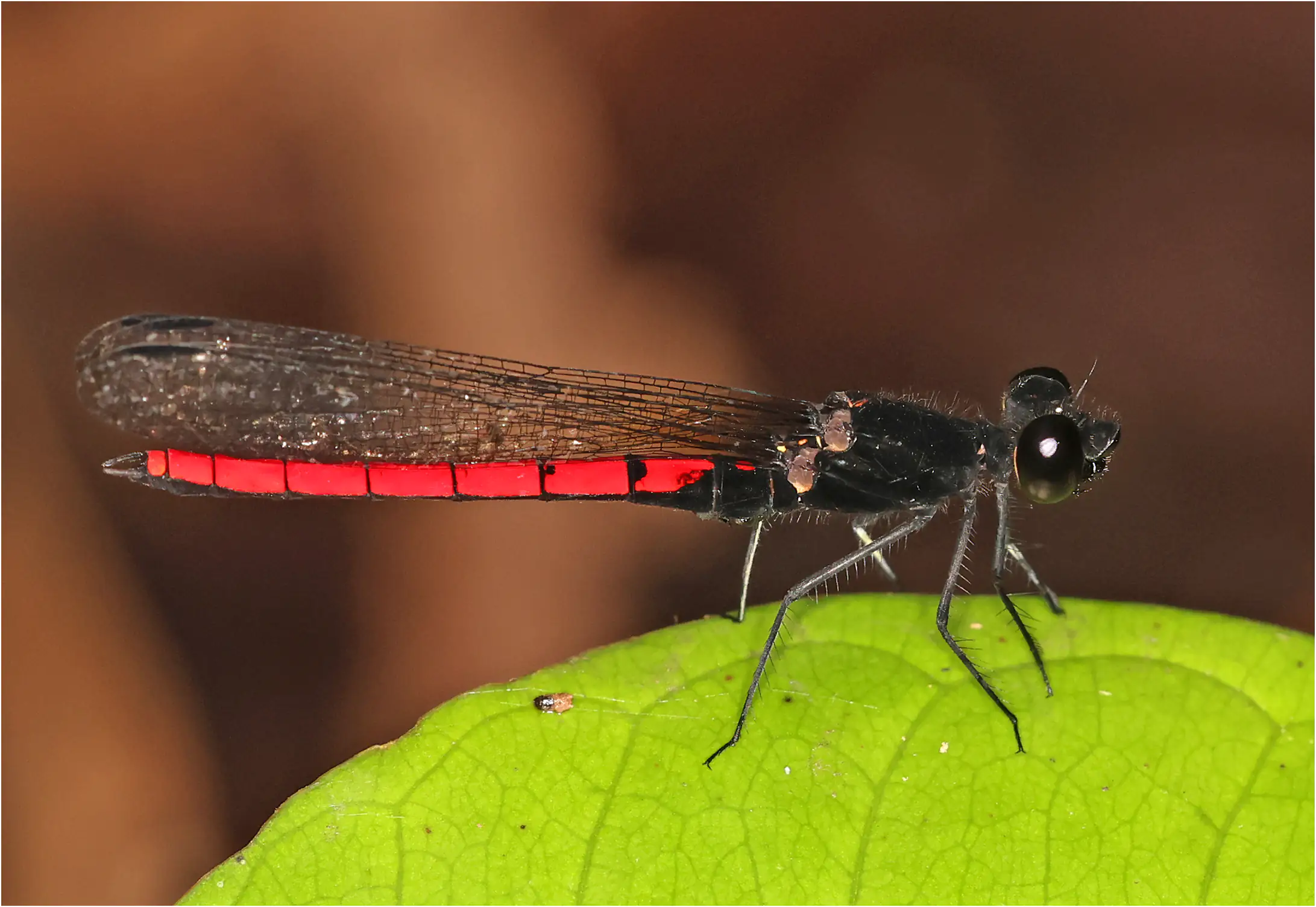
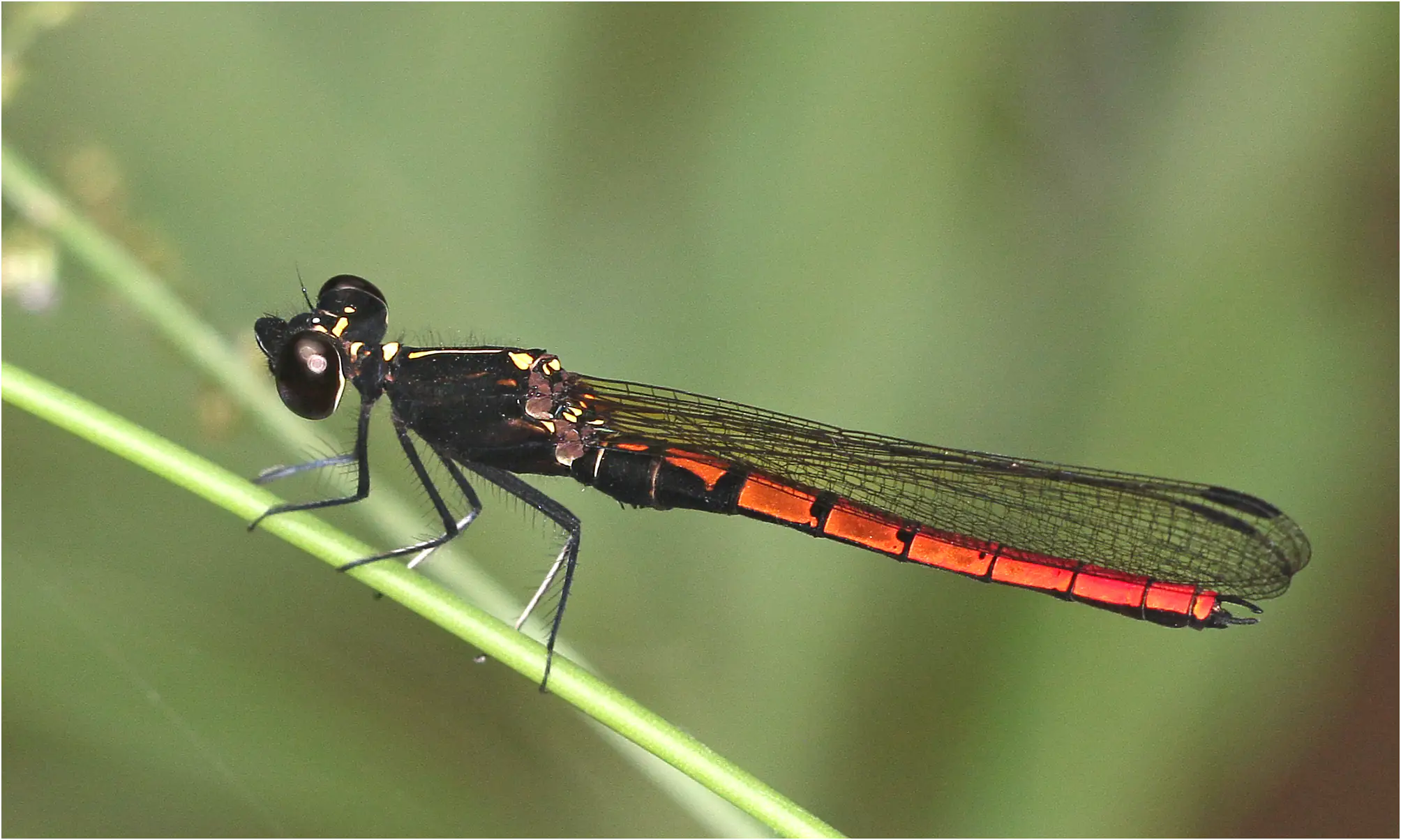
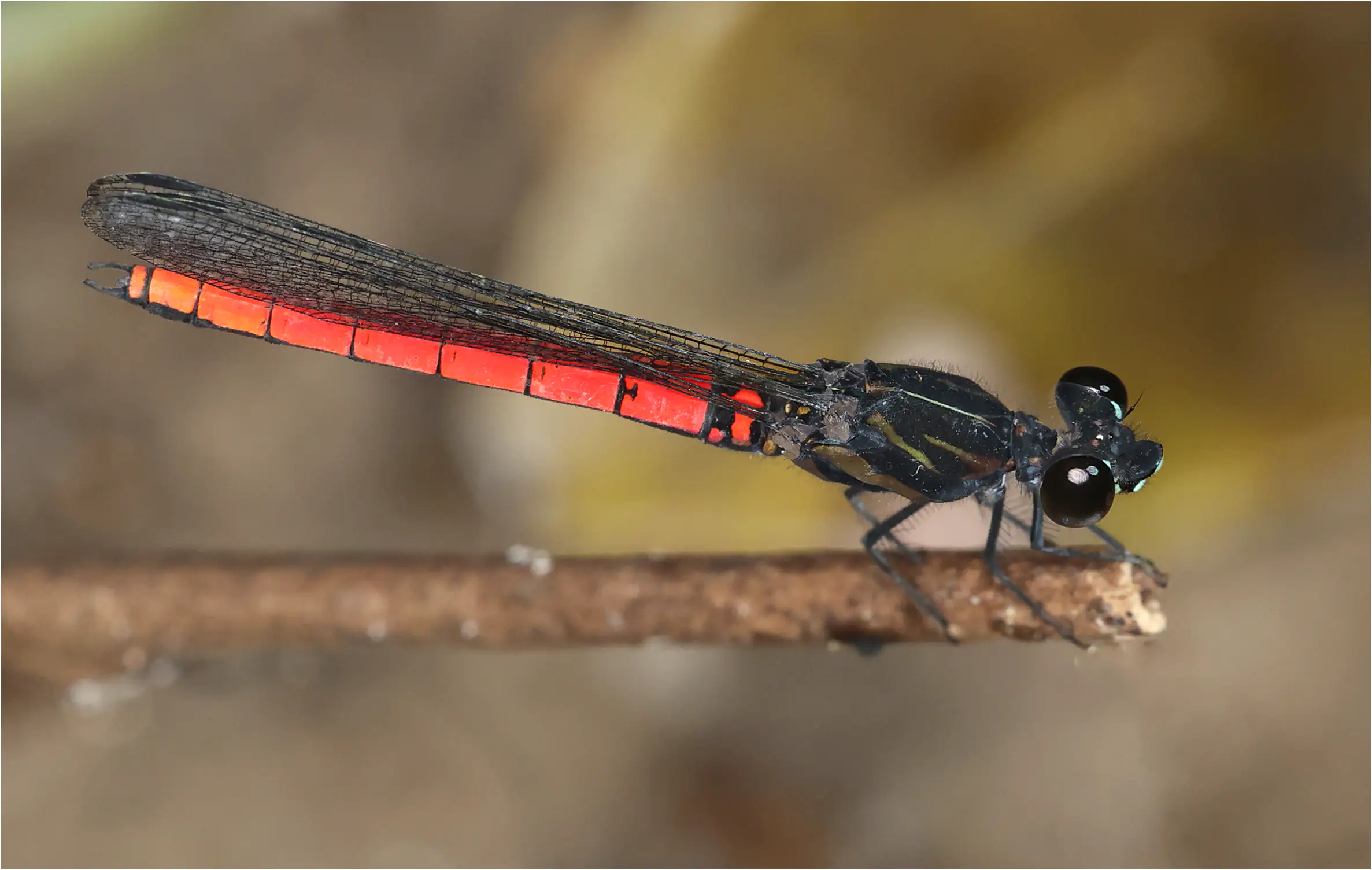
I could not find a description mentioning its size (it is not in Pinhey (1967)); Karsch, to whom the species is attributed, only mentions it as a remark: "Libellago curta Selys 1879 could now be called L. selysi", highlighting that in his Quatrièmes Additions au Synopsis des Caloptérygines, Selys mentions for the first time for this species "lèvre supérieure et devant de l'épistome jaunâtre (upper lip and front of the epistome yellowish)". However, Chlorocypha curta (ex-Libellago) does not indeed have a pale face.
What is truly astonishing is that Selys describes an adult male: yet male C. curta have the last four segments blue. In any case, he tells us that this species has a "size intermediate between rubida and dispar (Taille intermédiaire entre la rubida et la dispar)", the former reaching 33 mm and the latter 29 mm.
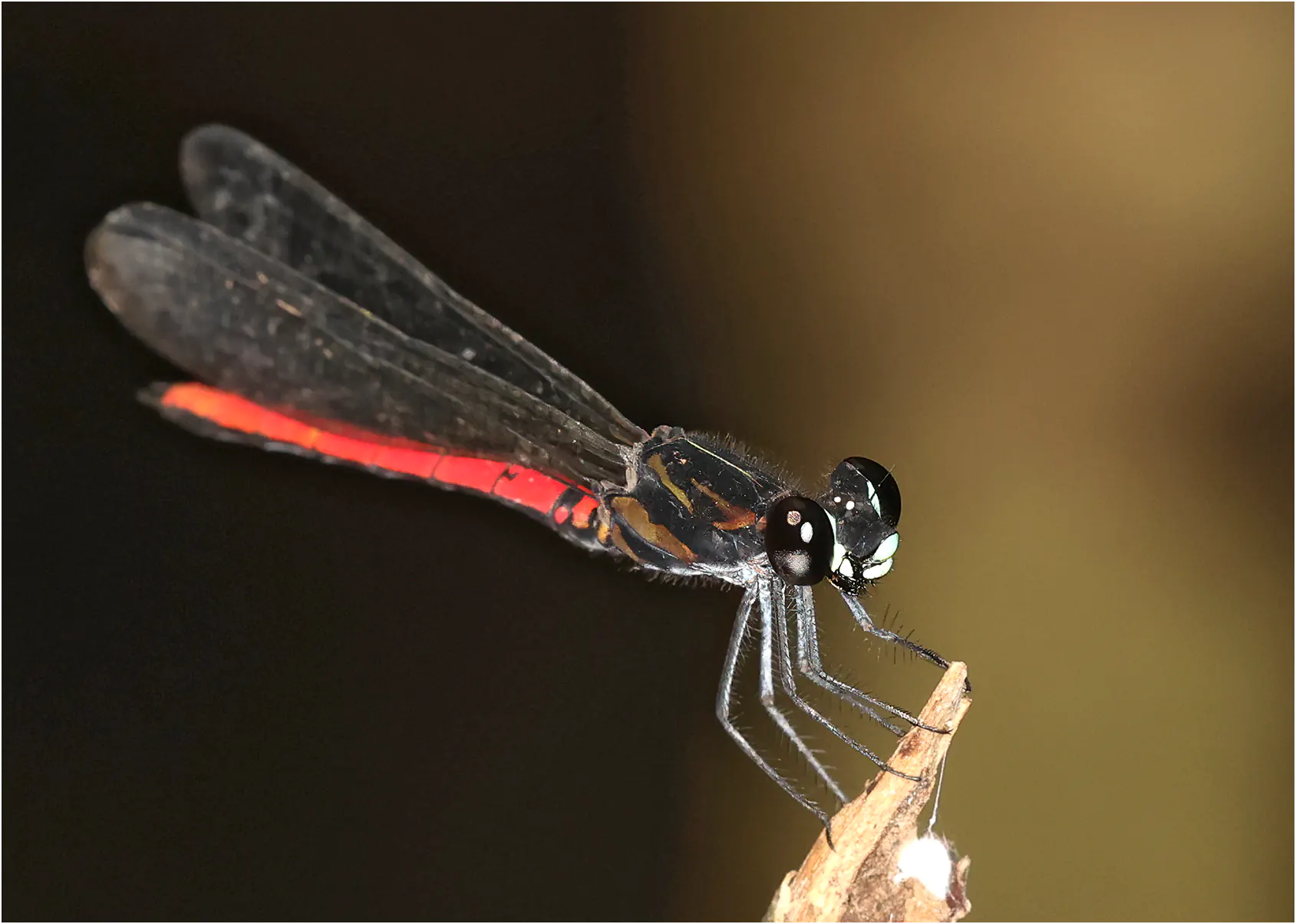
We observed one, perhaps two different individuals, in a heavily shaded forest stream, which is typically the habitat described in ADDO.
Its distribution extends from Guinea and Sierra Leone to Gabon, Uganda, and the Central African Republic.
IUCN Red List.
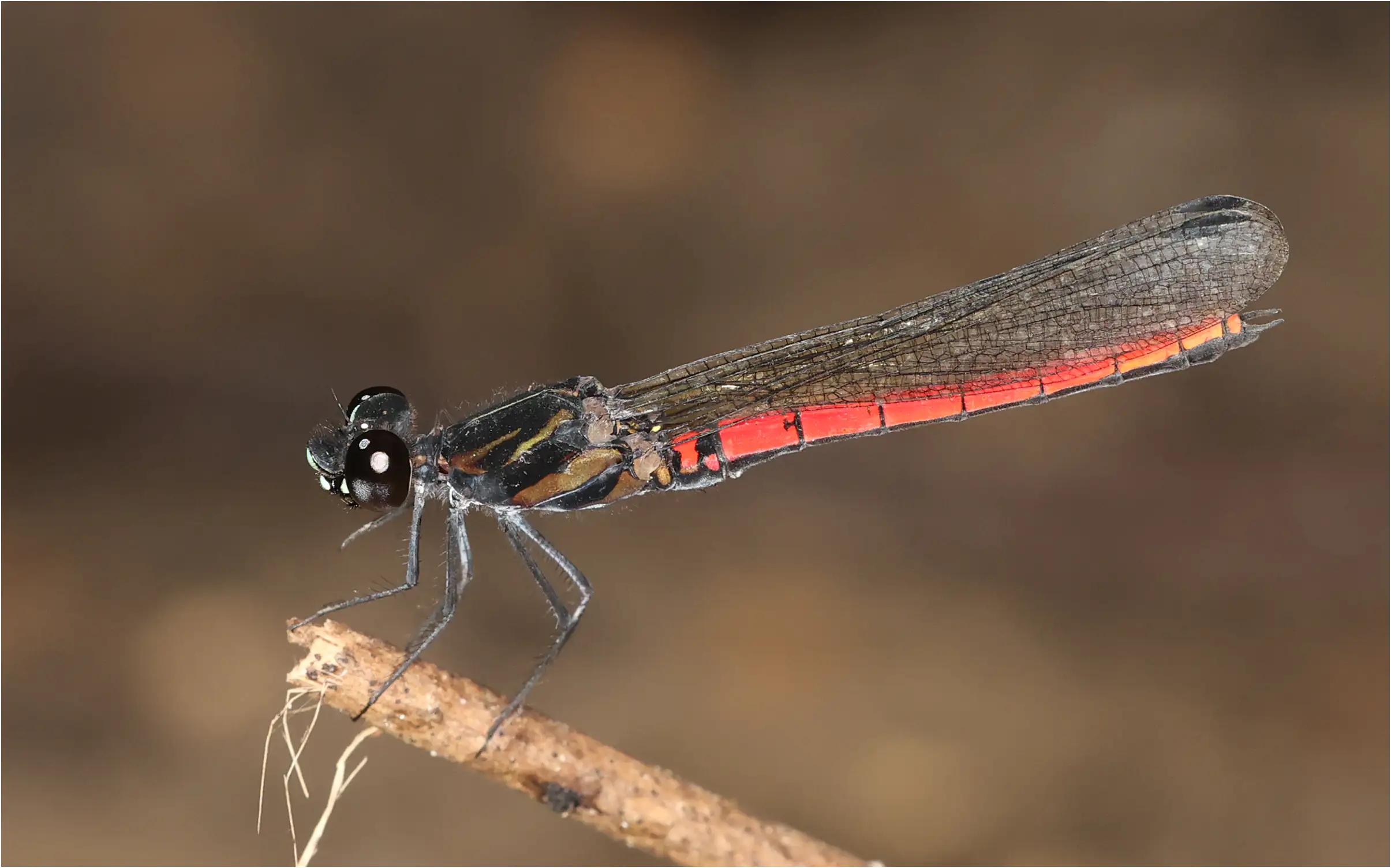
Étymology of Chlorocypha selysi
Chlorocypha, from the Greek chloro, for yellow or green, and cyphos, meaning humpbacked or hump, referring to the color of the curious clypeus of the species, certainly in an immature specimen. Fraser wrote: "I have chosen the name Chlorocypha for this genus, based on the specific character mentioned by Palisot de Beauvois for the type species dispar : « le chaperon [Clypeus] est d’un jaune-verdâtre » [the clypeus is of a greenish-yellow]." I am certain that Palisot de Beauvois never wrote these words in his description, nor did Selys in his Synopsis des Caloptérygines, nor in his Monographie des Caloptérygines. The origin of Fraser's quote remains a mystery to me.
Selysi is, of course, a direct tribute to Michel-Edmond de Sélys Longchamps, a Belgian liberal politician, entomologist, ornithologist, and mammalogist, but best known in our field for his monumental work in Odonata taxonomy; he is said to have described over 1,000 species.
Dijkstra, K.-D.B (editor ADDO), 2019 – African Dragonflies and Damselflies (ADDO) – Chlorocypha rubida – [The link may not work; web.archive link from the ADDO website, which is now offline.]
Karsch, 1899 - Odonaten von Johann-Albrecht-Höhe (Nord- Kamerun), gesammelt von Herrn Leopold Conradt. Entomologische Nachrichten, 25, 161-176, p.165.
Pinhey, 1967 – African Chlorocyphidae (Odonata), Journal Ent. Soc. S. Africa: Vol. 29.
Selys, 1879 - Quatrièmes additions au Synopsis des Caloptérygines, p. 382.