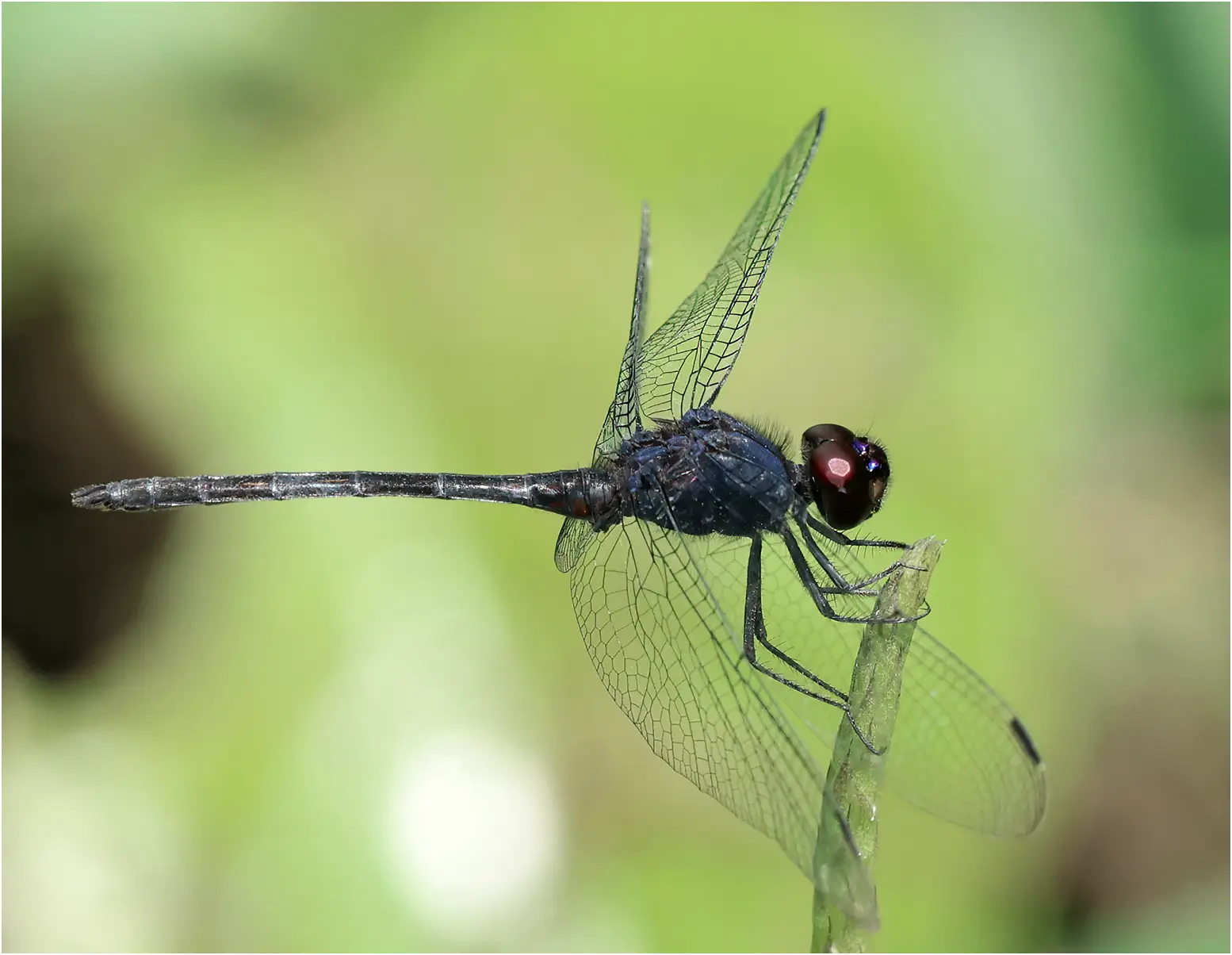
Trithemis grouti belongs to a genus that includes 51 species worldwide and 43 in Africa. It is a difficult genus, almost as much as the genus Orthetrum which has 36 species in Africa.
13 species were known in Ghana, and we have added a fourteenth with T. aenea.
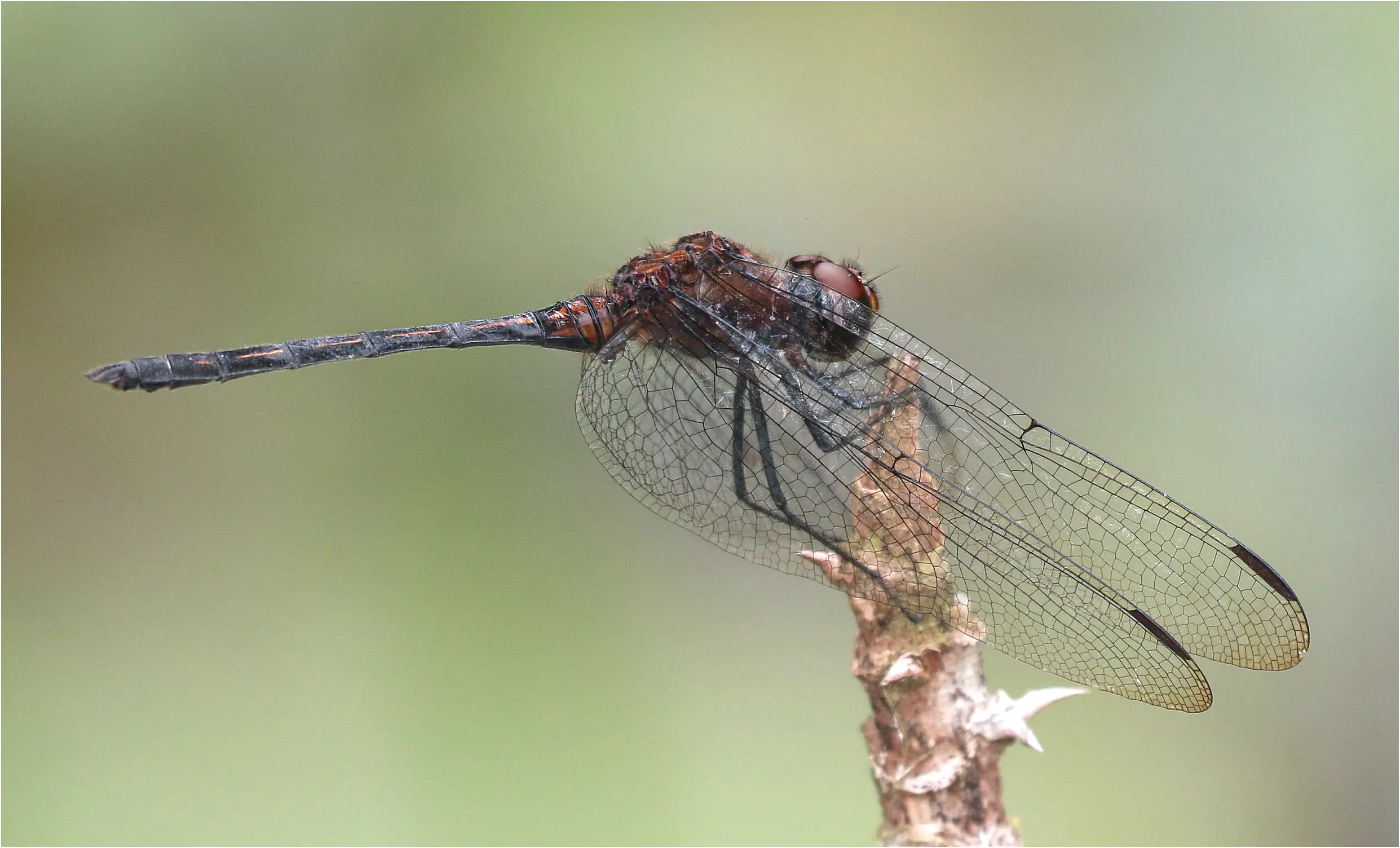
They are classified by group and Trithemis grouti belongs to the stictica group (like T. aenea)... although it is reminiscent of the species of the dorsalis group (ADDO).
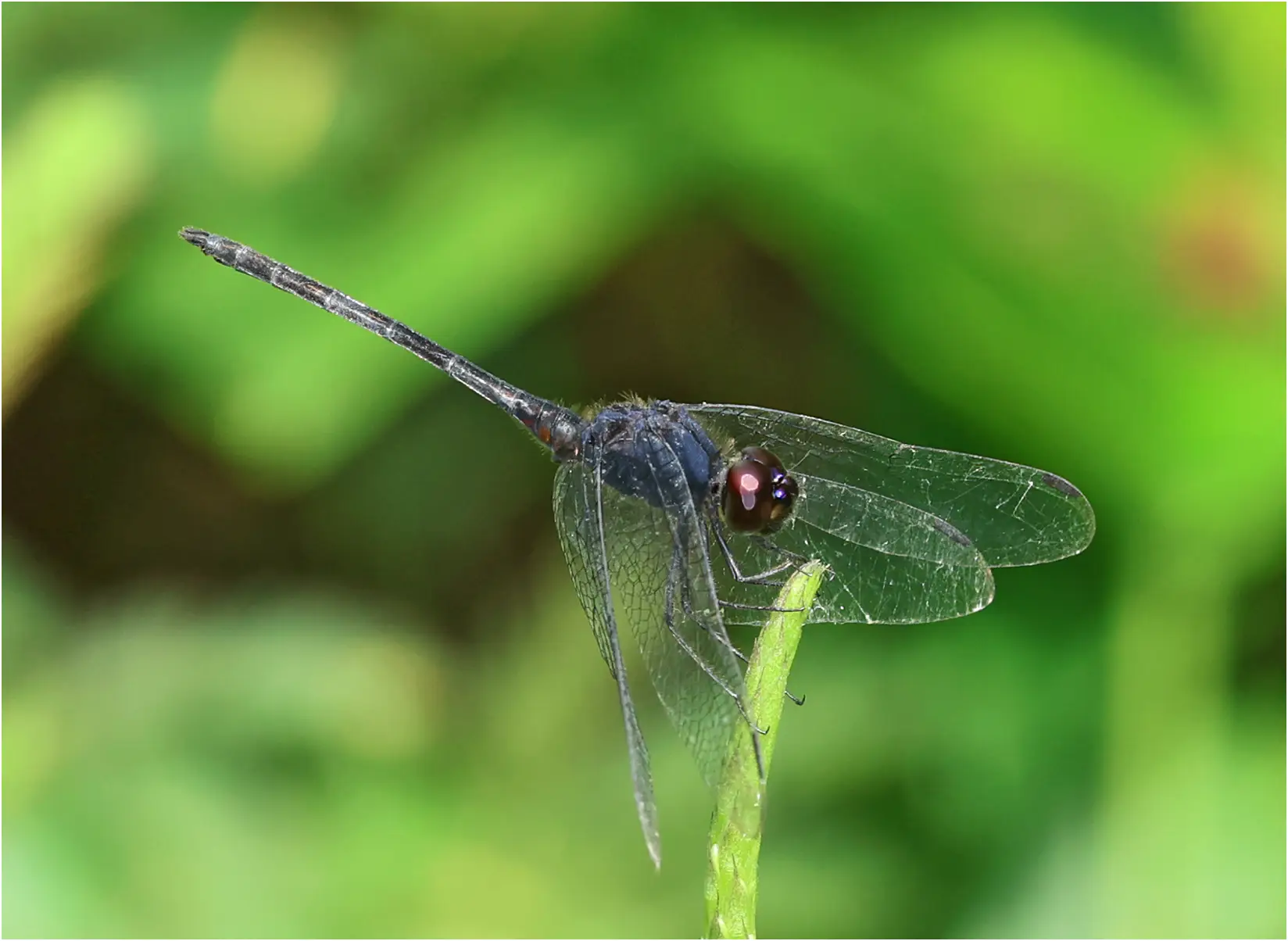
The vertex and the top of the frass are noted as metallic violet, sometimes purplish-blue, abdominal segments S4 to S7 with a single row (or none) of thin yellow bands (barely visible below), and an abdomen very dark, almost black, like the thorax.
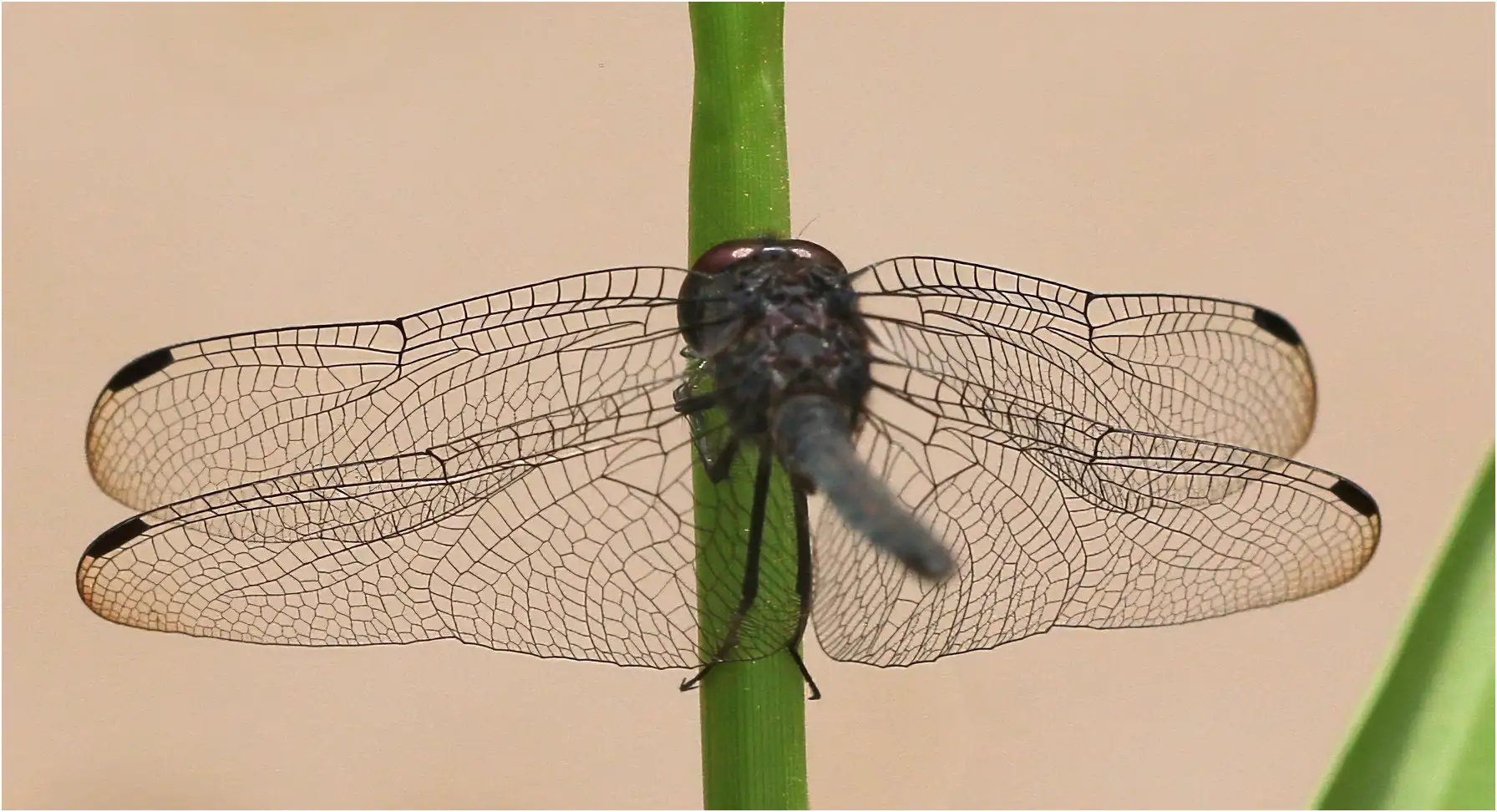
Several blue Trithemis have a dark abdomen, but the combination of a dark abdomen and thorax with these reddish eyes and metallic purplish frass and vertex is unique (the closest would be T. nuptialis (ADDO)). The number of antenodal crossveins reaches 11½ to 12½.
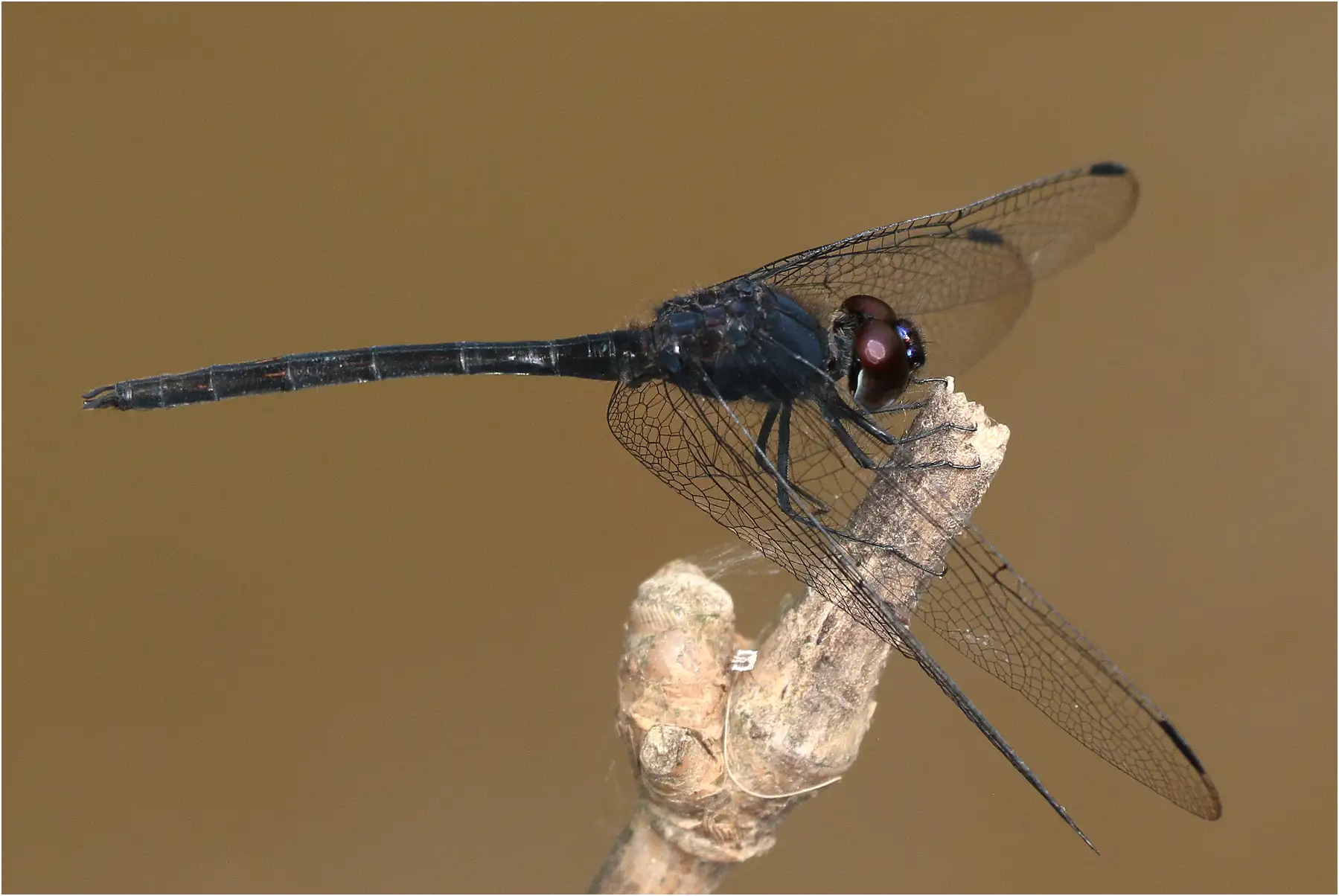
Pinhey (1961) describes Trithemis grouti as a "large black Trithemis" (Black Dropwing or Dark Dropwing in English) and measures its abdomen at 26 mm, excluding the anal appendages. It therefore measures barely more than 40 mm in total (T. annulata, which we know well in France, reaches 32 to 38 mm).
We encountered it four times, including once near a forest pool and two others on slow streams widening in places into pools, in a very open environment. This notion of habitat diversity is fully reflected in the description given by K.-D. Dijkstra on the Addo website.
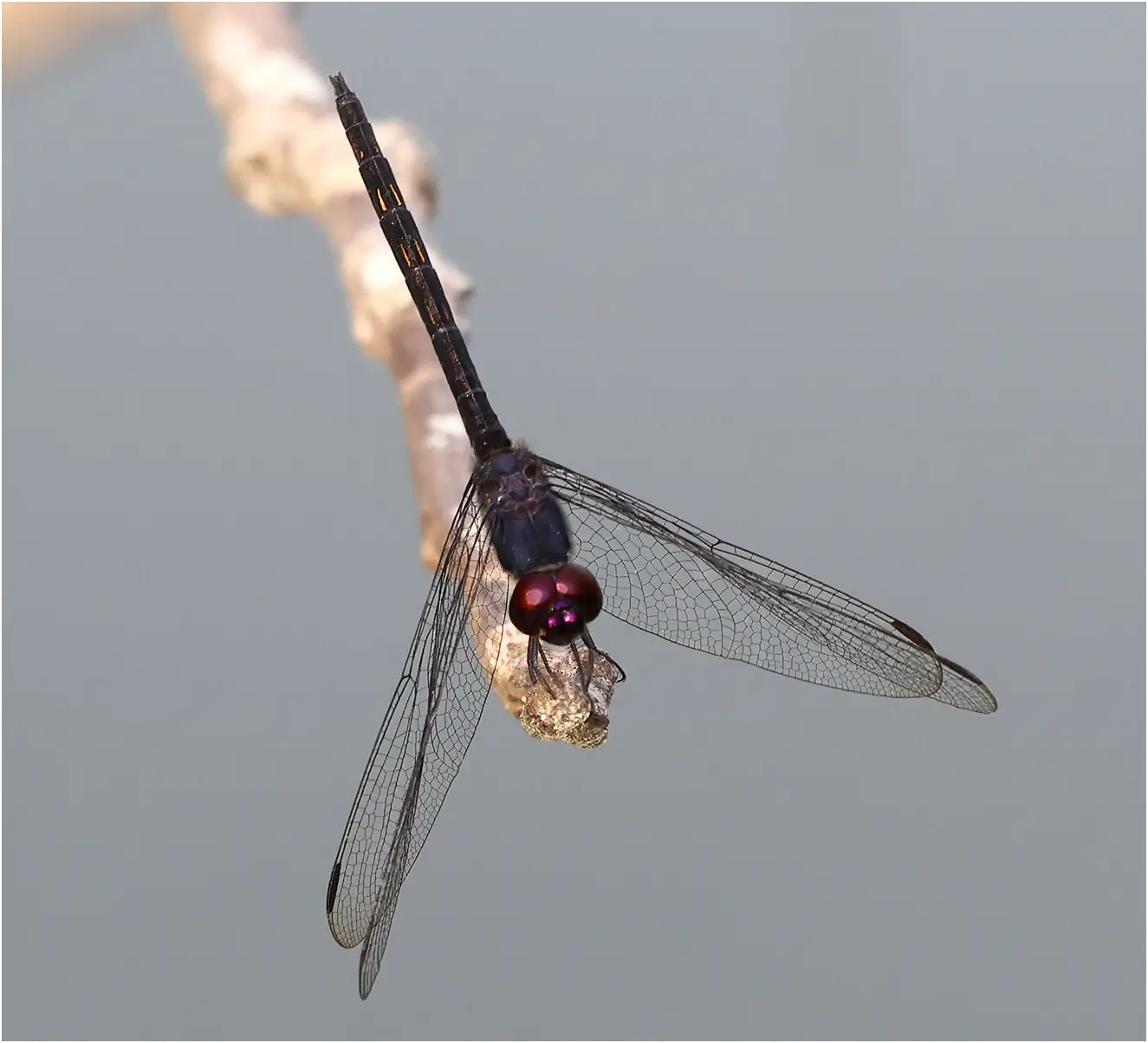
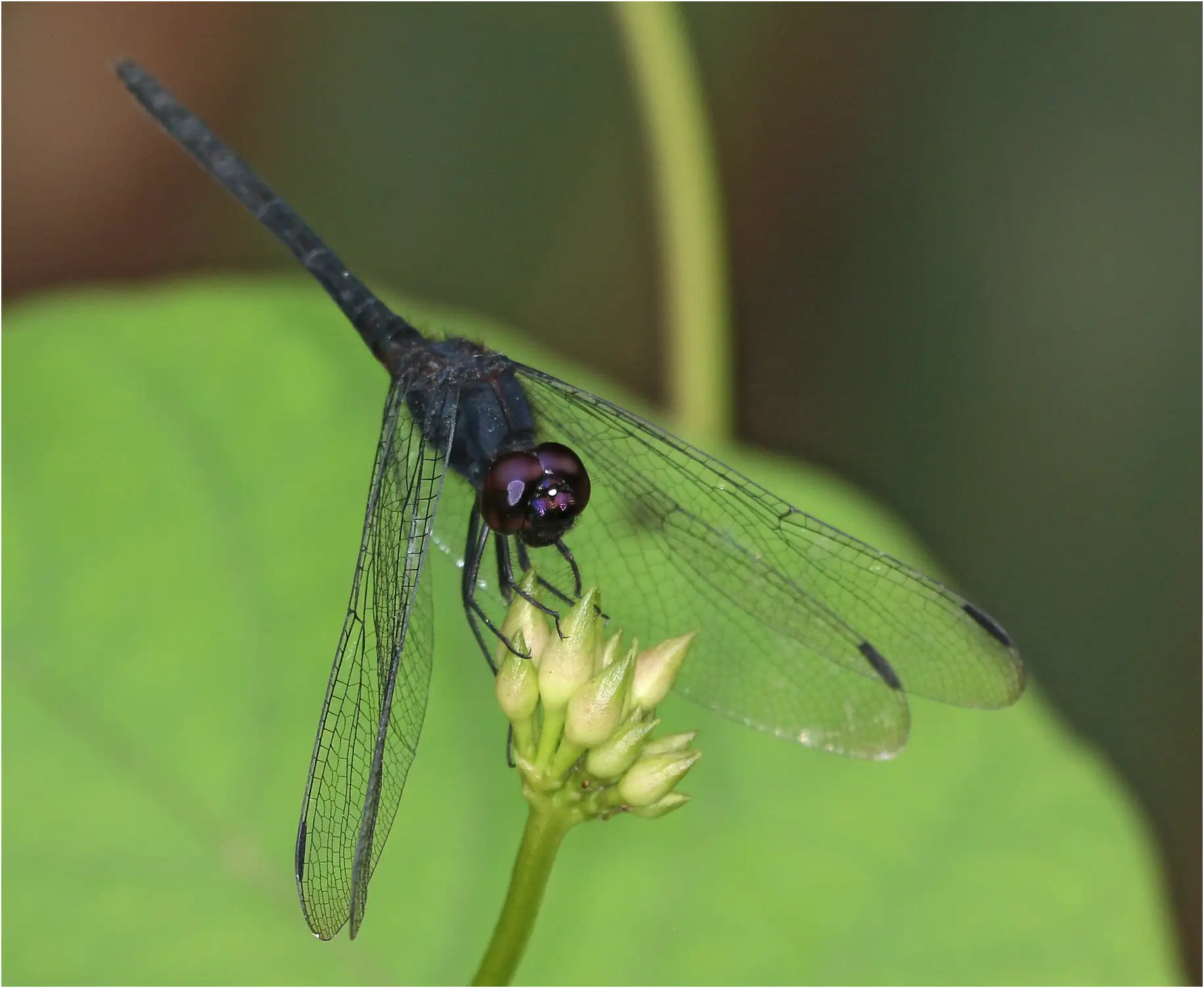
It has a wide distribution from Uganda, Tanzania, and Zambia in the east, across West Africa, to Senegal and The Gambia.
IUCN Red List.
I had some doubts afterwards about the photo below because I only counted 10 1/2 antenodal crossveins on the right, which I found low for this species, but there are indeed 11 1/2 on the left (you have to zoom in and brighten the photo to see the first one).
Etymology of Trithemis grouti
Trithemis is composed of the prefix tri, for three, likely because the posterior margin of the pronotum in species of this genus is trilobed, and of Themis, who is the goddess of divine law, order, and justice. But why Themis? Certainly because other dragonfly names included names of gods such as Echo or Nehalennia, and when Brauer created the genus Trithemis, the fashion was still "mythology-oriented." According to Fliedner (2006), this goddess name has been used more than 50 times to name odonates, and rightly so, because "as the goddess of order, Themis is a very fitting patron for taxonomists."
grouti: Pinhey writes, "This insect is dedicated to Mr. and Mrs. Grout, who so kindly offered their hospitality when the author was indisposed during the expedition."
Fliedner, 2006. The scientific names of the Odonata in Burmeister’s « Handbuch der Entomologie »
Pinhey, E.C.G., 1961 - 21. Entomologists Monthly Magazine, 96, 256-271, p. 269.