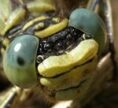
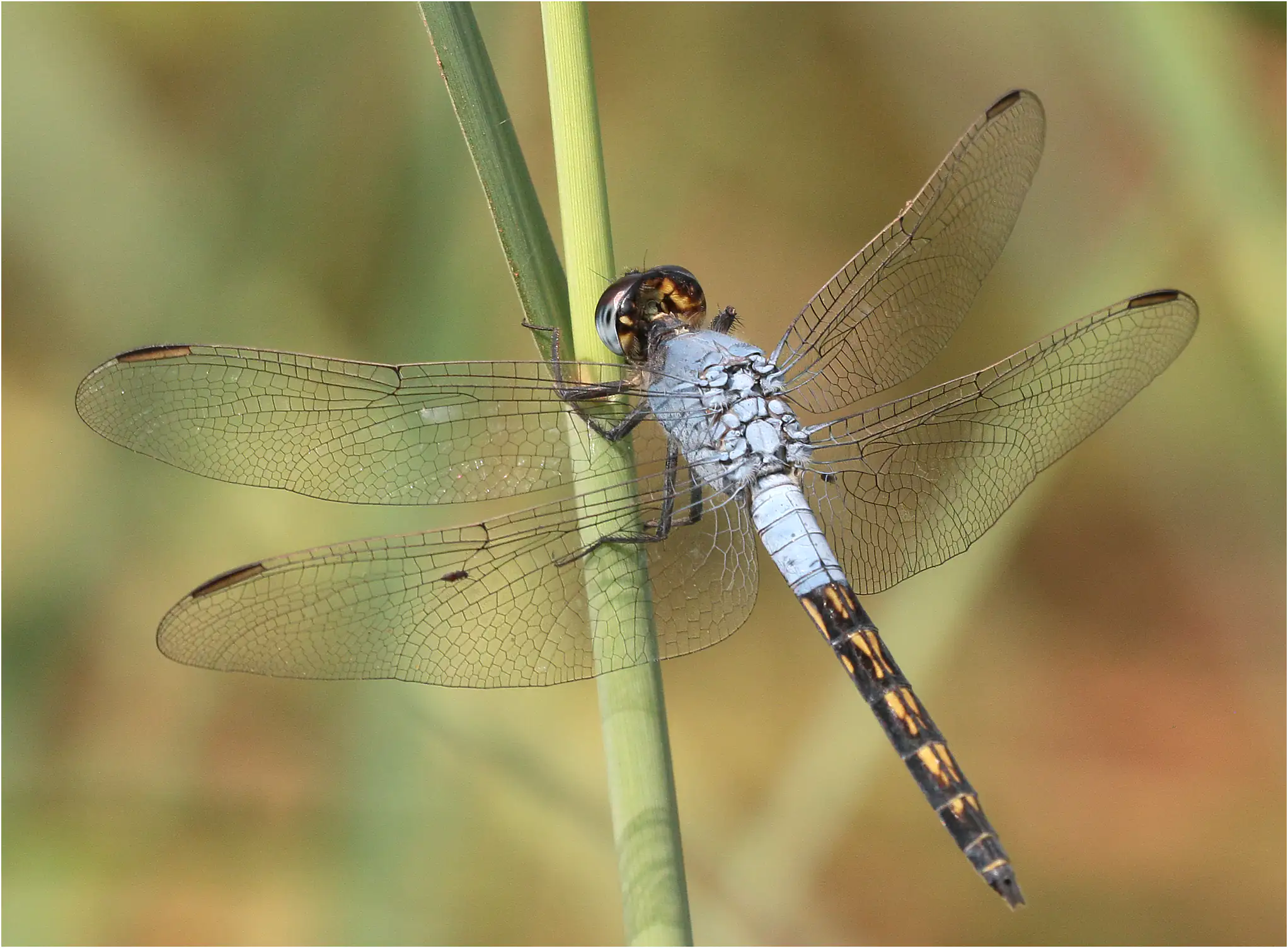
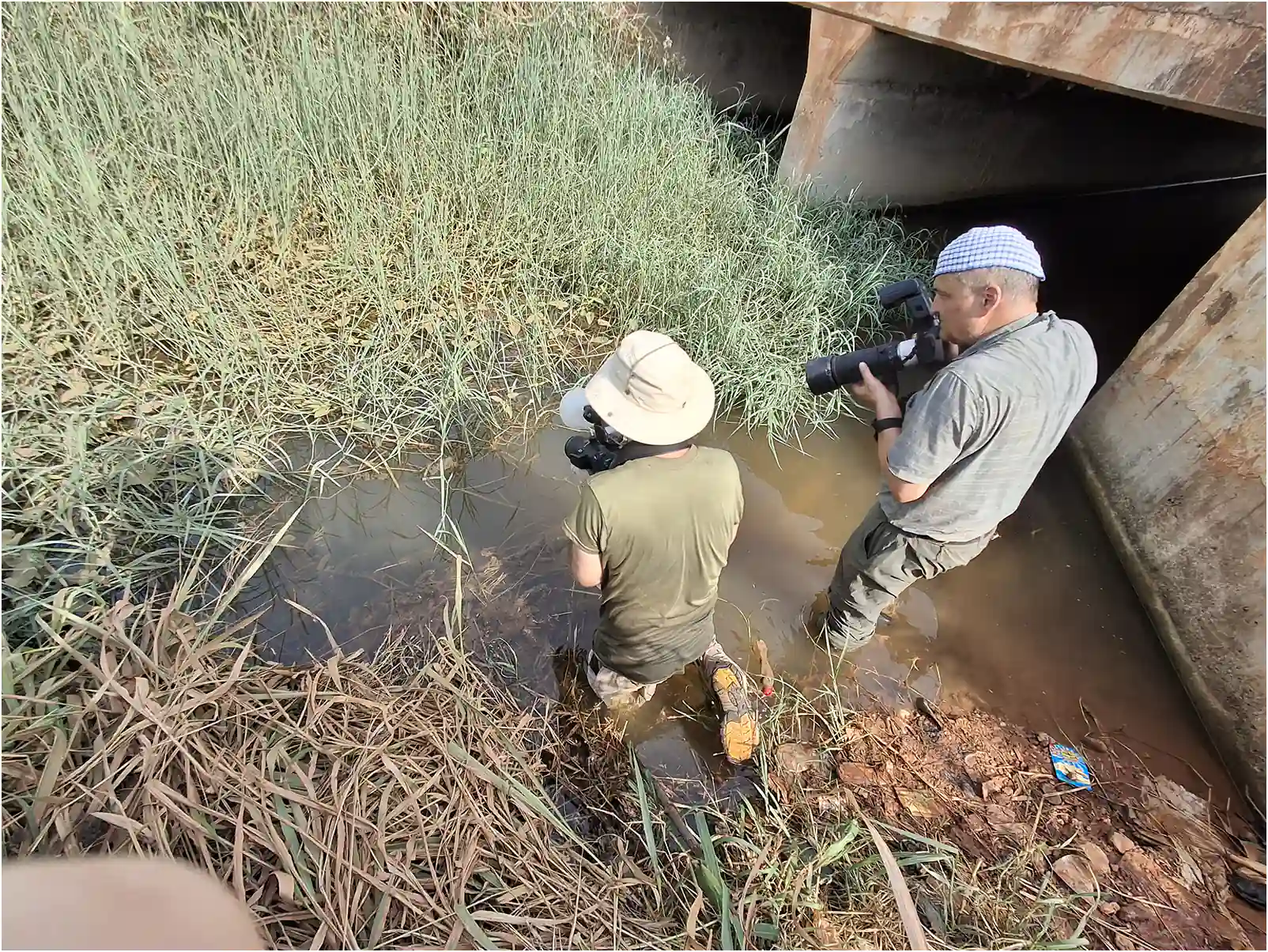
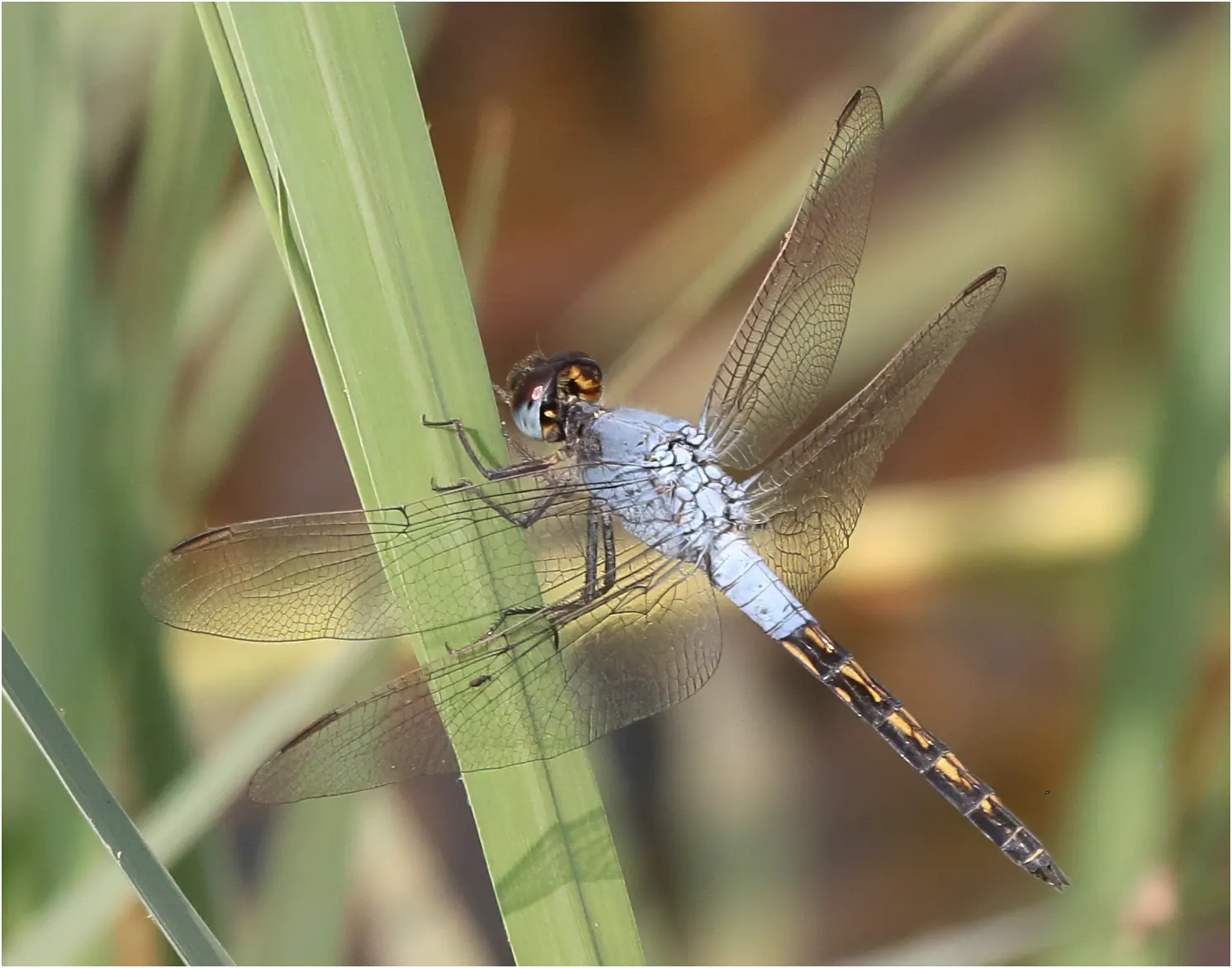
Nesciothemis pujoli, Libellulidae, is a very elegant and uncommon odonate that we unexpectedly encountered by the roadside at the foot of a bridge, clinging to tall grasses shaken by the wind. It belongs to a genus comprising 5 species, only 2 of which are present in Ghana: Nesciothemis pujoli and N. minor, which unfortunately we did not encounter.
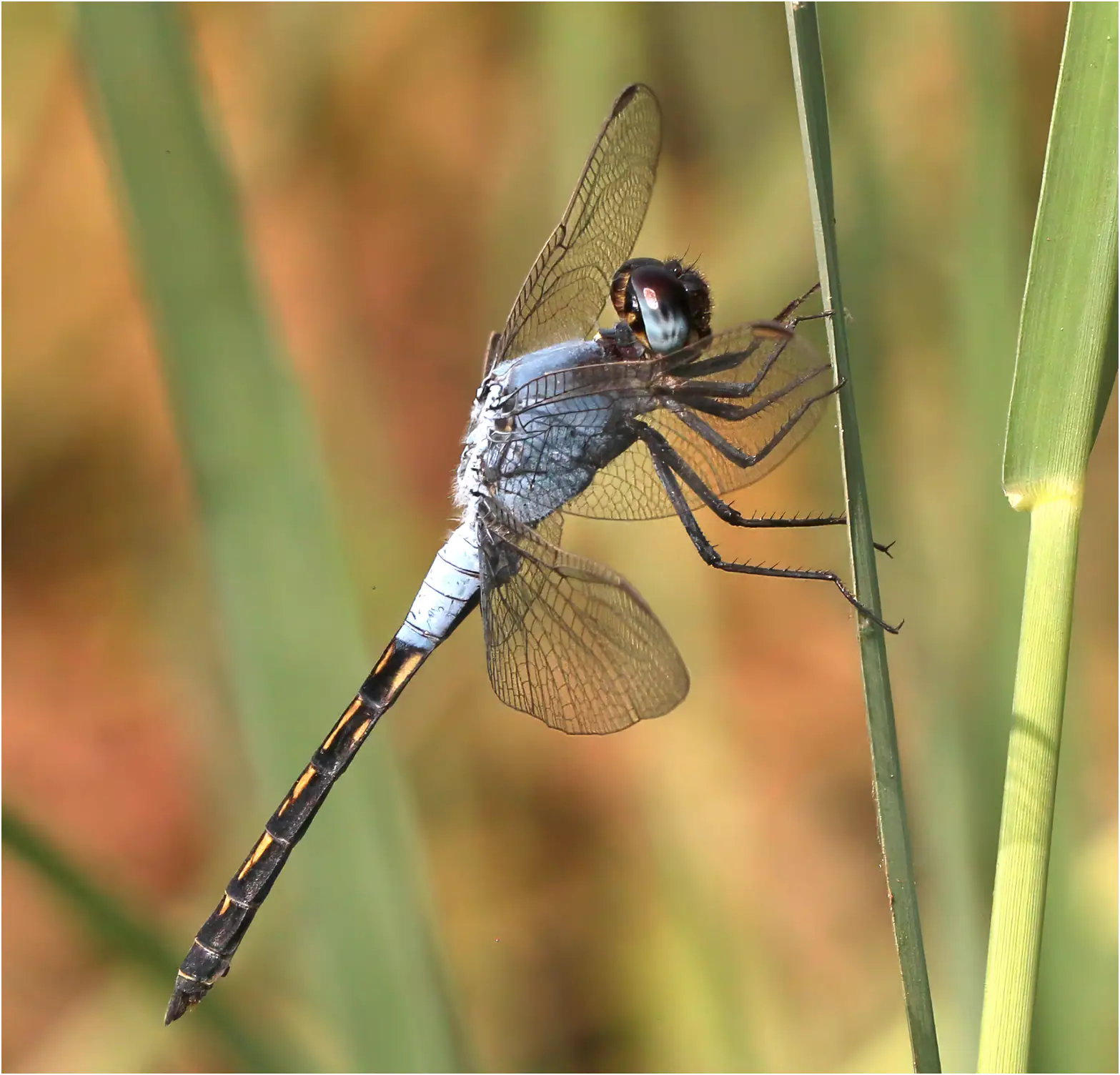
The specimen we observed, the only one of the trip, is mature but has not completed its development because the double yellow bands on its abdomen will become black, specifically on segments 4 to 10. And this dark coloration helps distinguish it from N. minor, in which only segments 7 to 10 are black. It also goes by the English name Western Blacktail.
Pinhey measured the abdomen of his holotype at 26.5 mm; it therefore measures just over 39 mm in total length.
On ADDO, we read that it is found on standing waters and rivers in open habitats.
Its distribution extends from Sierra Leone, Guinea, and southern Mali to the Central African Republic.
IUCN Red List.
Note the presence of a parasitic dipteran on its left wing, perhaps of the genus Forcipomyia.
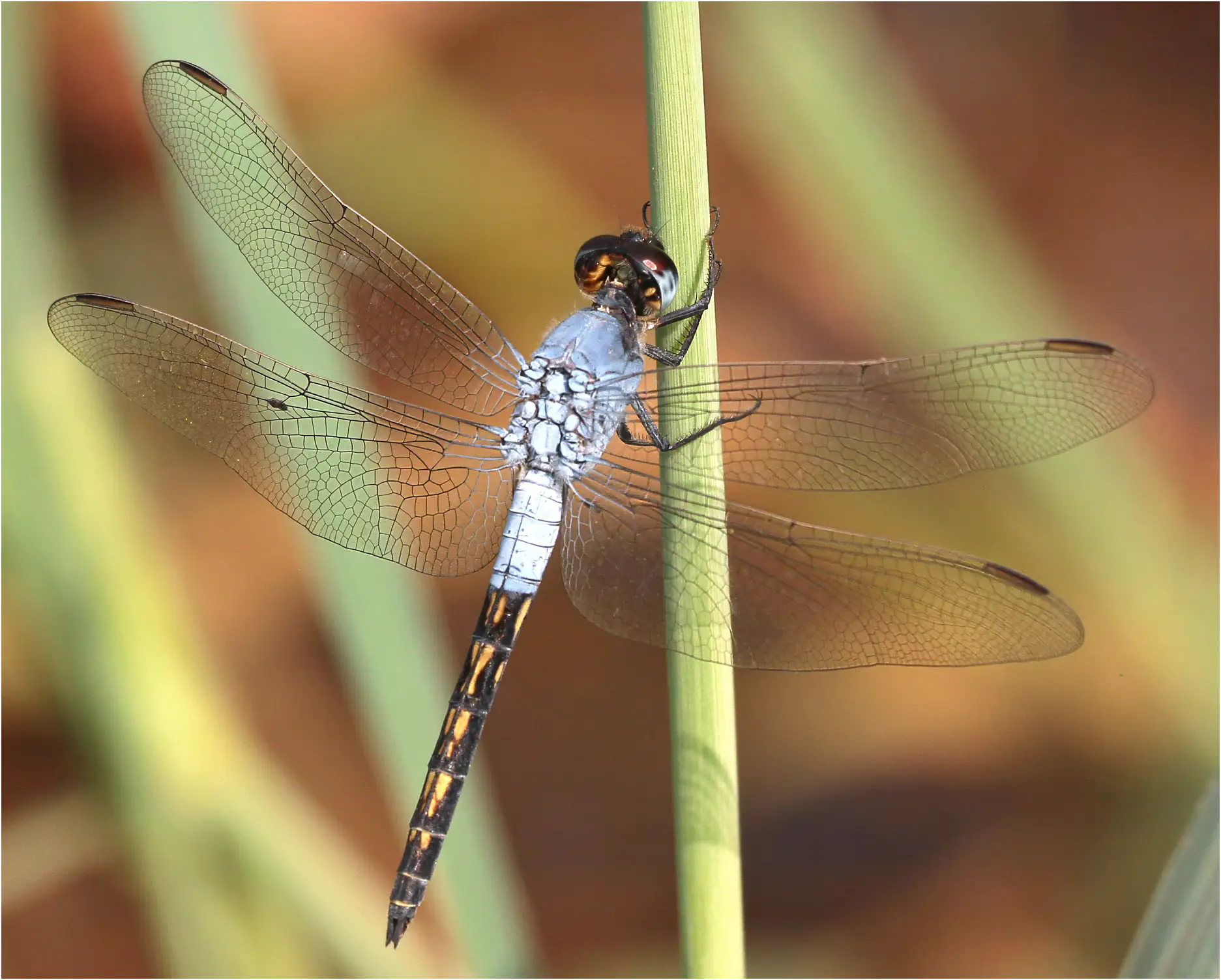
Origin and etymology: Nesciothemis pujoli
Nesciothemis: Suhling & Martens (2007) provide the explanation, which Longfield (1955) also gives, though I was unable to access the paper where the latter author established the genus. Nescio comes from the Latin verb nescire, meaning "I am ignorant" or "I do not know," with Cynthia Longfield thus confessing that she was uncertain where to place this odonate (N. farinosa), which had previously been placed in Orthetrum. Themis, as has been almost customary since Brauer first used it, is simply a marker of belonging to the family Libellulidae; it is the Greek goddess of order and justice, and the name of this goddess of order is particularly well-suited to taxonomy, the science aimed at describing and ordering families, genera, and species.
Pujoli: Pinhey pays tribute to the French professor and researcher Raymond Pujol (1927–2023), a field agronomist and ethnobiologist, and later professor of ethnozoology at the National Museum of Natural History (MNHN) in Paris. This scientist amassed a collection of over 500 odonates around Bangui, Central African Republic, between 1965 and 1969, a collection that was handed over to Elliot Pinhey.
Dijkstra, K-D. (editor), 2020. African Dragonflies and Damselflies Online (ADDO).
Longfield, 1955. The Odonata of N. Angola. Part I. Publicacoes culturais Companhia Diamantes Angola, 27, 11-63.
Pinhey, E.C.G., 1971. Odonata collected in Republique Centre-Africaine by R. Pujol. Arnoldia, 5, 1-16, p. 13.
Frank Suhling & Andreas Martens, 2007. Dragonflies and Damselflies of Namibia, , Gamsberg Macmillan.
Western Blacktail male, Ghana, Ejisu, 22/01/2026