Palpopleura lucia belongs to a genus that includes seven species: one is Asian and magnificent (P. sexmaculata), one is endemic to Madagascar (P. vestita), and five are African. Among the latter, only three are present in Ghana: Palpopleura lucia, fairly common; P. portia, undoubtedly abundant; and P. deceptor, which I have never seen. The latter shows almost hyaline wings.
Identification of Palpopleura lucia
A. Males
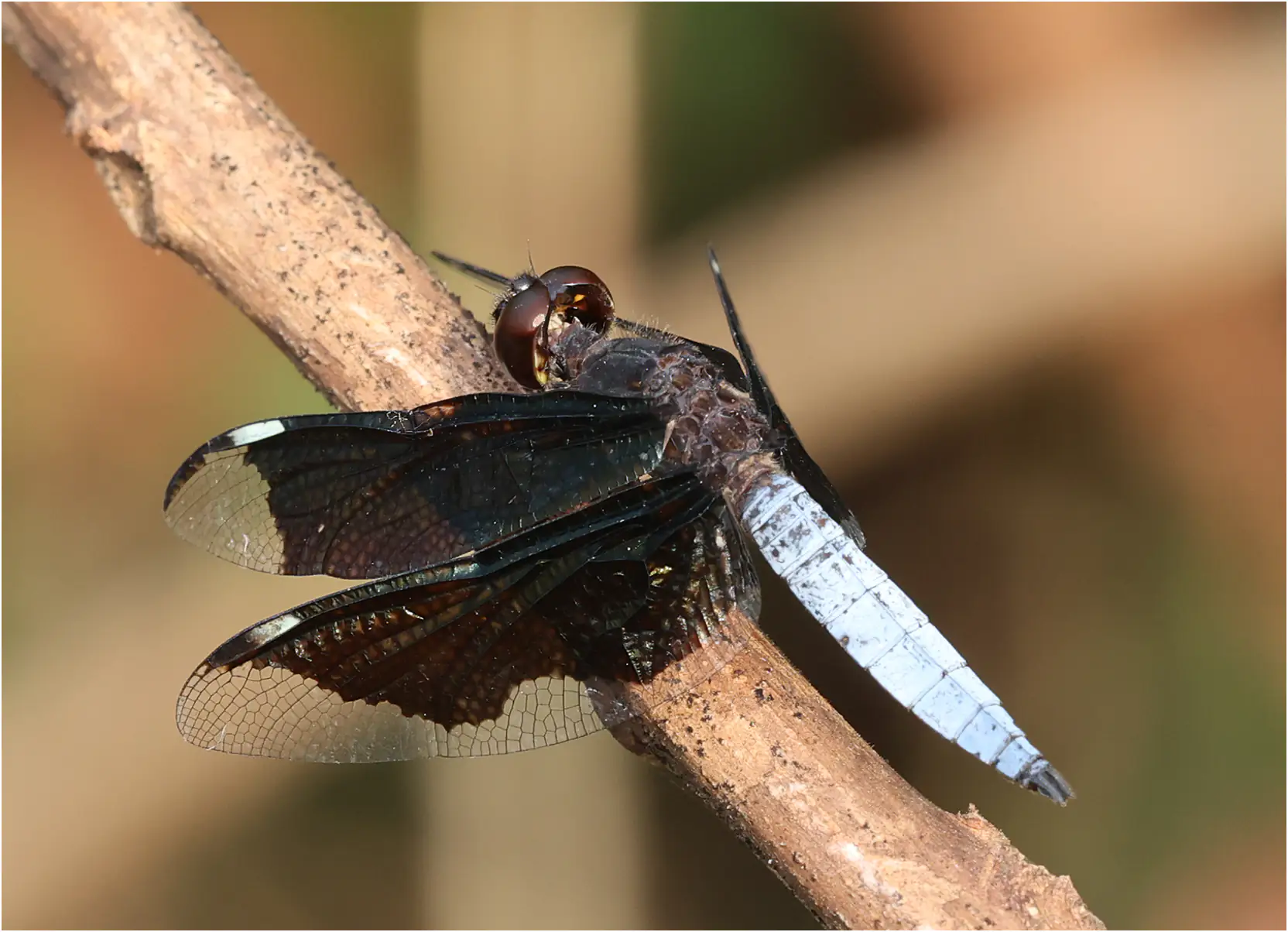
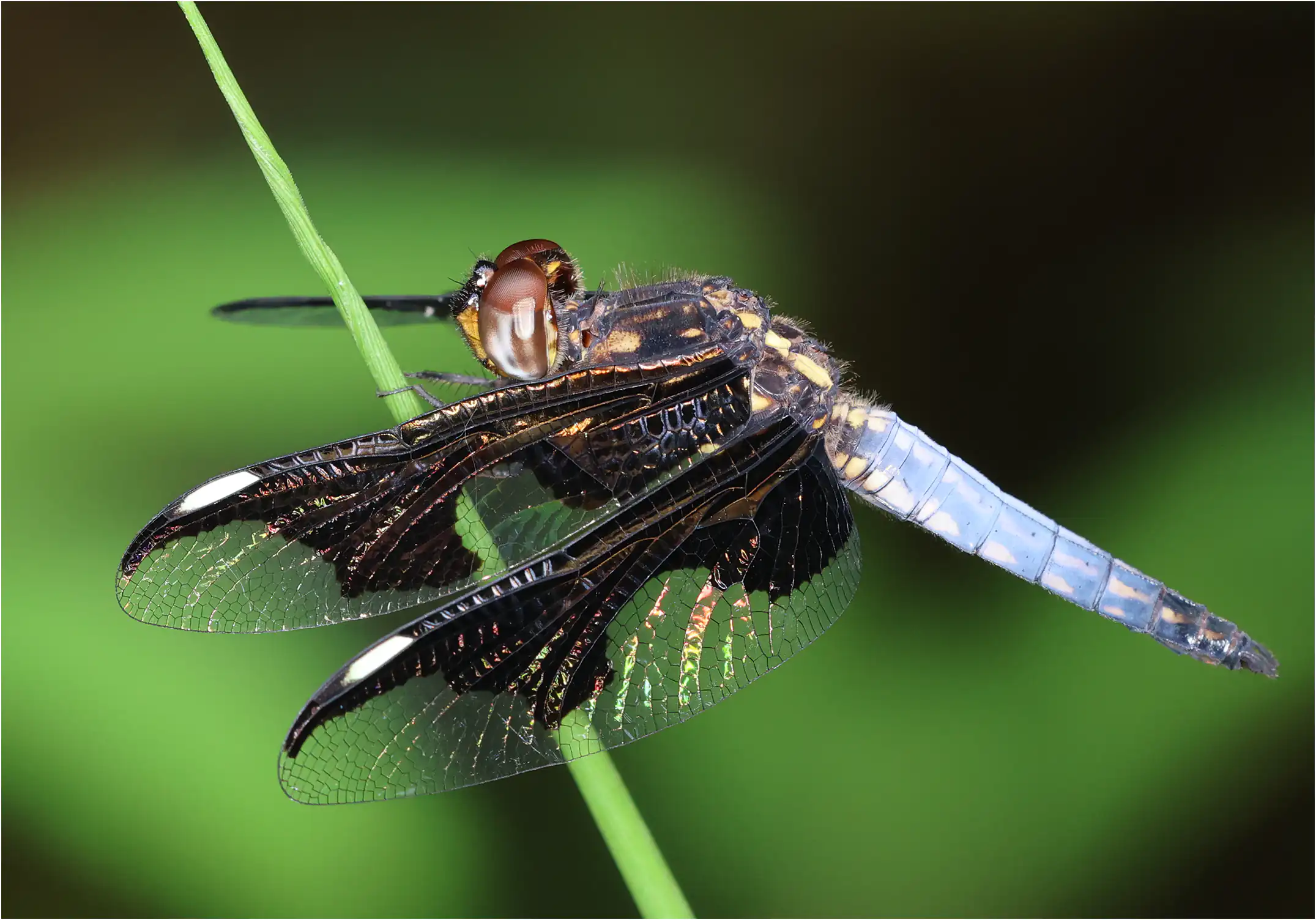
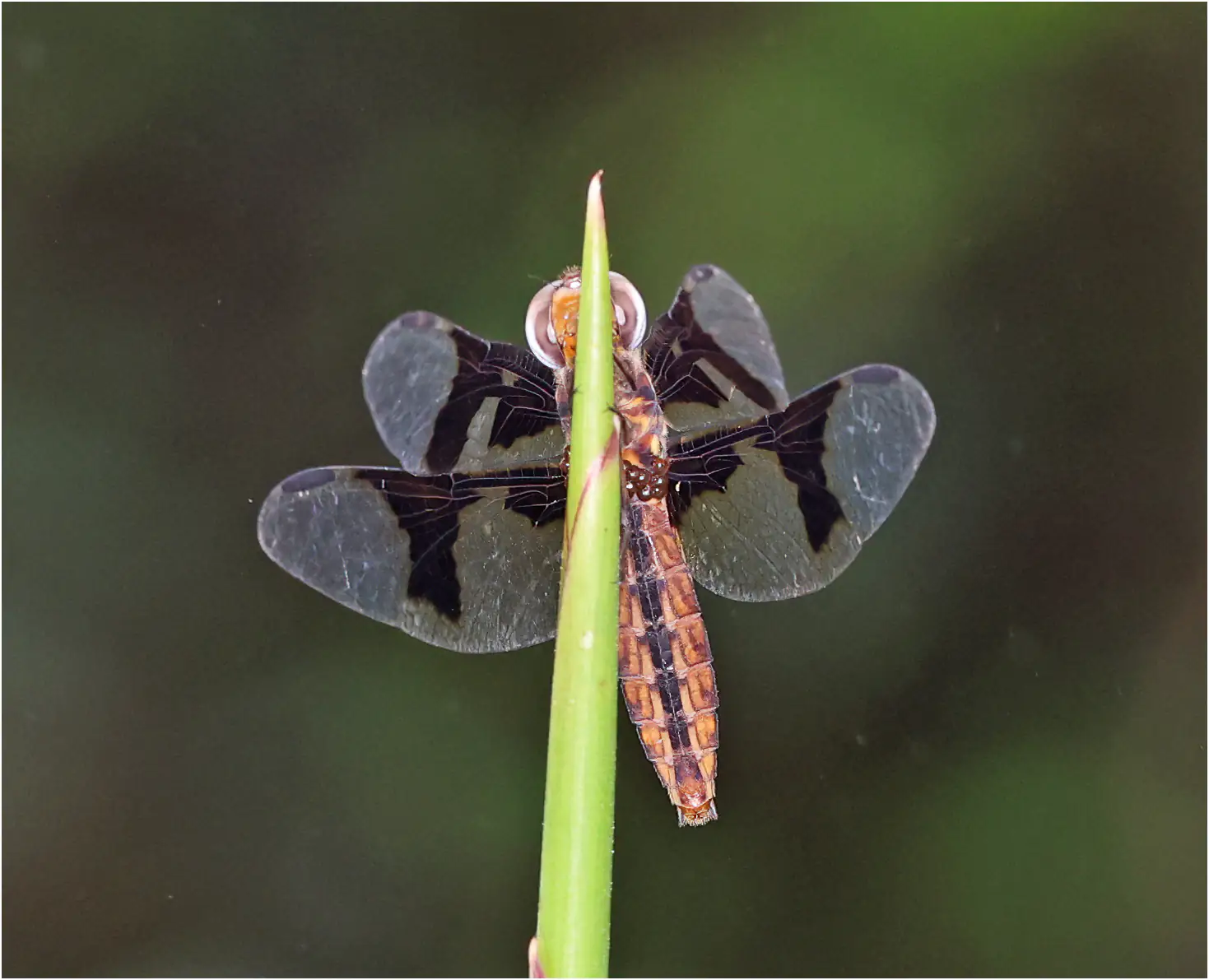
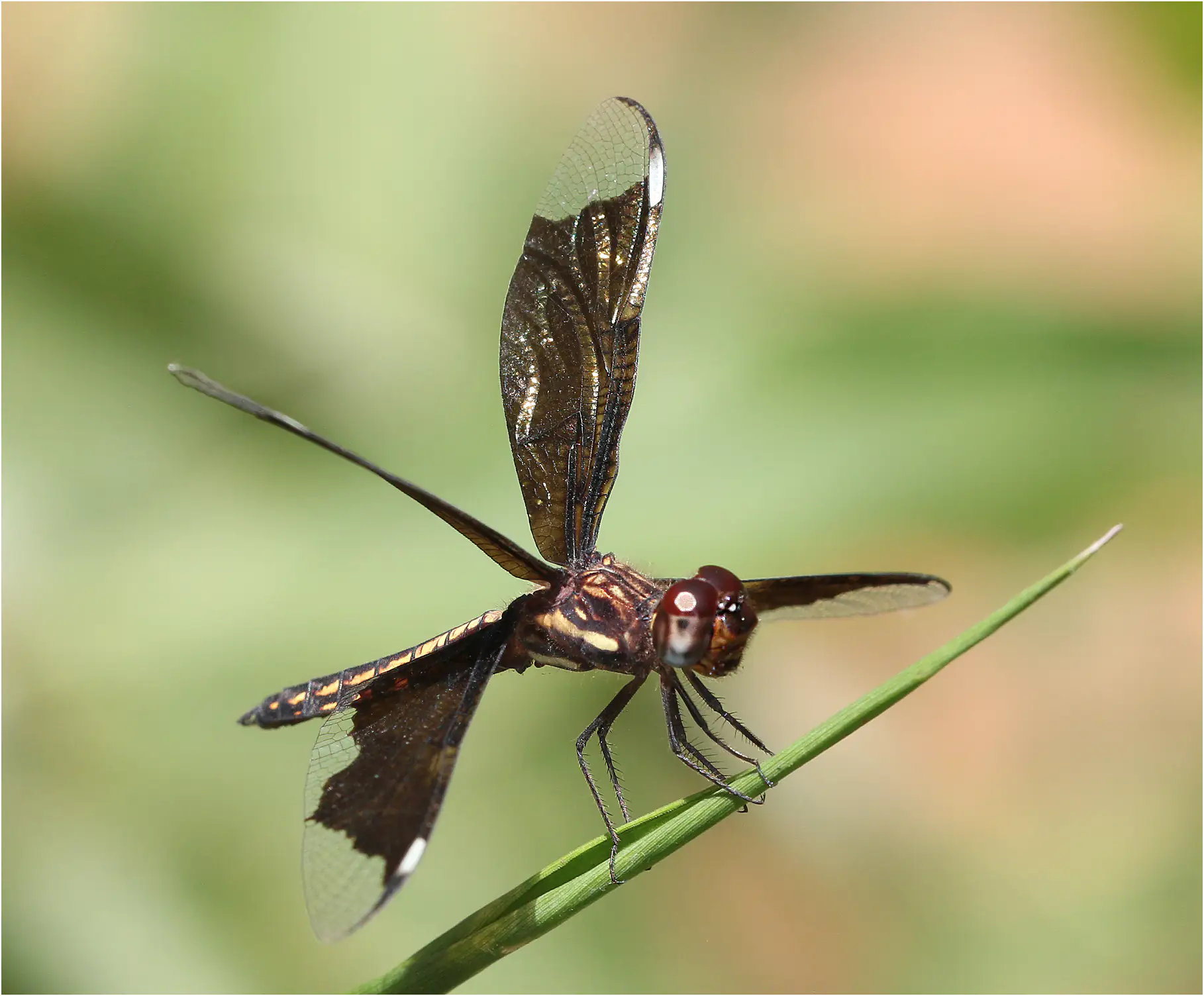
Confusion is indeed only possible between Palpopleura lucia and P. portia, but the wing colouration is truly different: the forewings of Palpopleura lucia are almost entirely dark (except at the apex), those of P. portia are deeply notched. Similarly for the hindwings, those of Palpopleura lucia are barely notched (even if the wing colouration is never complete); those of P. lucia are deeply notched.
More simply, the wing colouration of male Palpopleura lucia is much more extensive than that of male P. portia.
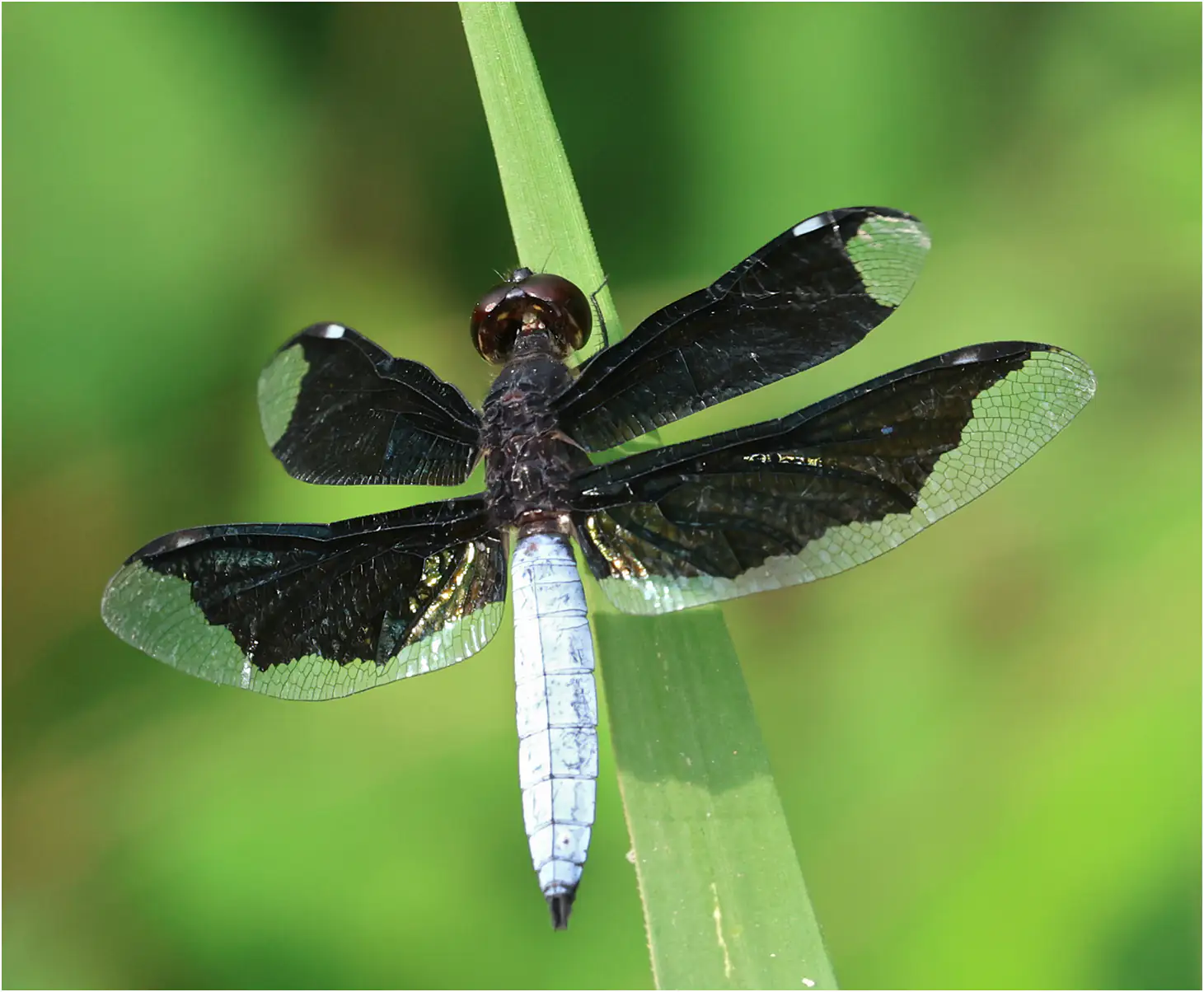
Curiously enough, I only have two photos of mature males, even though I have the impression of having seen it very often along forest paths, in open areas. But without getting close, it is still difficult to distinguish between the two species; I actually have more photos of P. portia, which was therefore perhaps more abundant. I have also noticed several times that when a species is very abundant, one ends up taking few photos of it, probably having a sense of déjà-vu and saturation…
The two species are sympatric, and for a long time it was debated and thought that P. portia was merely a form of Palpopleura lucia. Mitchell & Samways (2005) put an end to this debate by validating both species through a genetic study.
B. Females
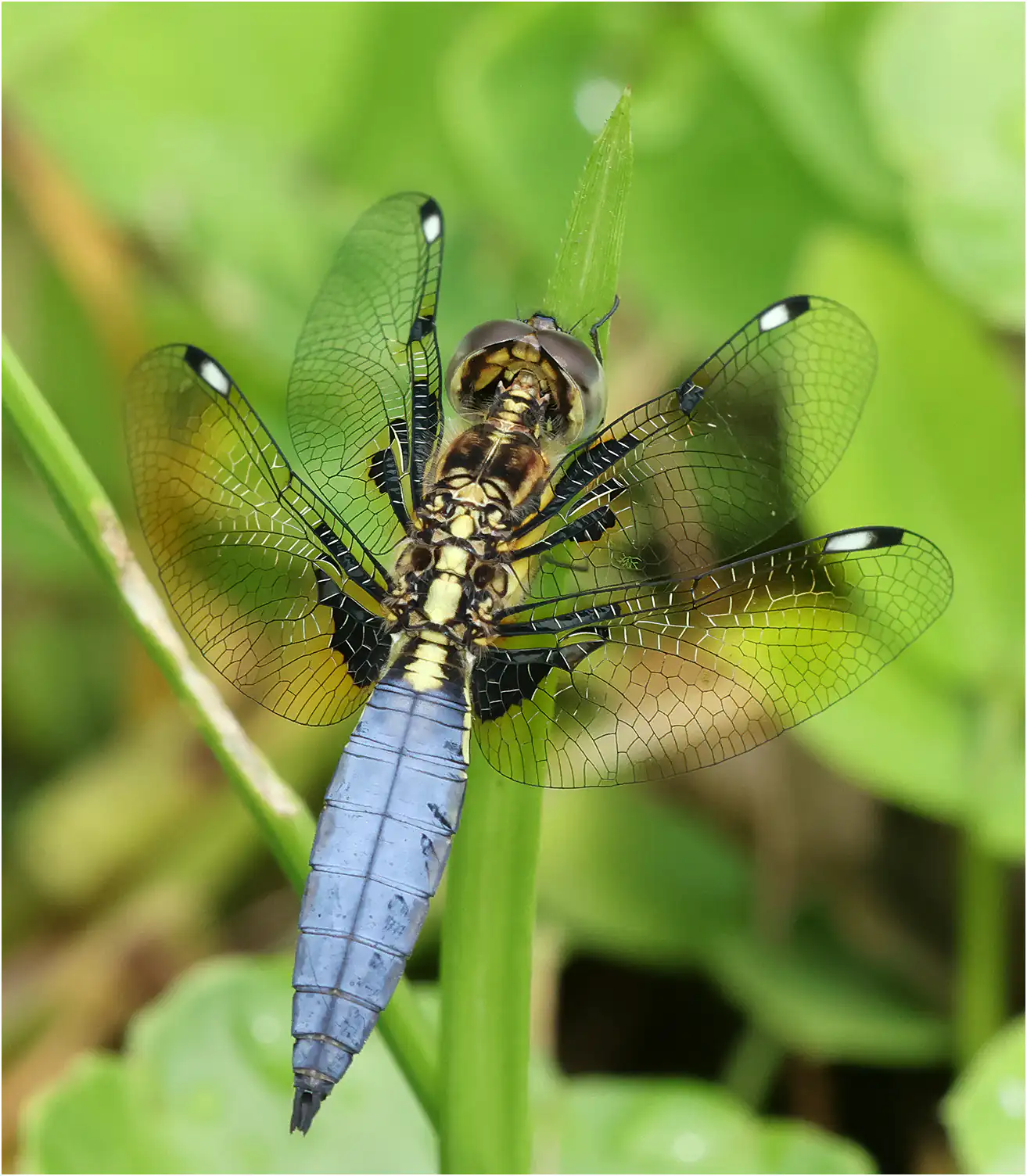
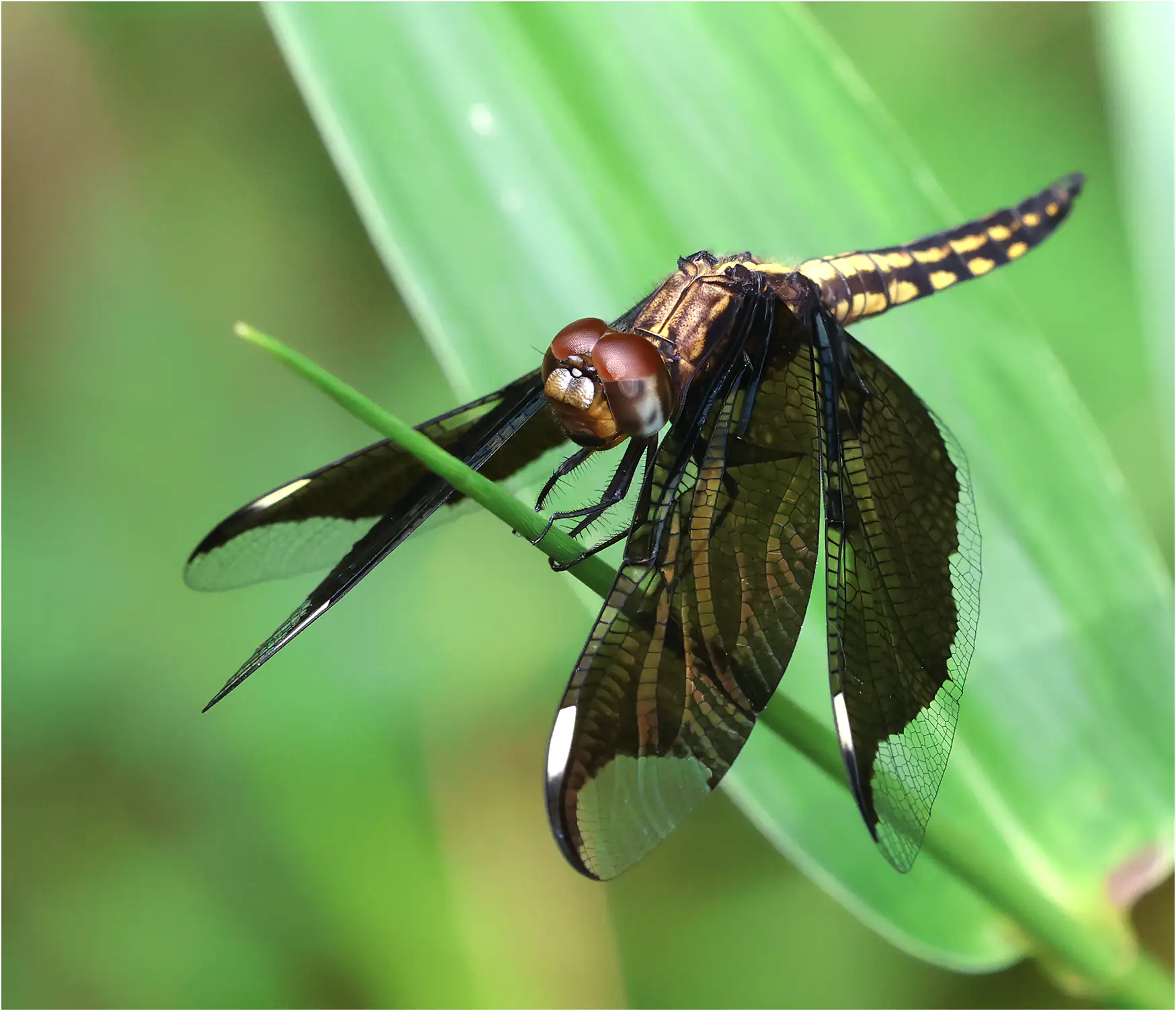
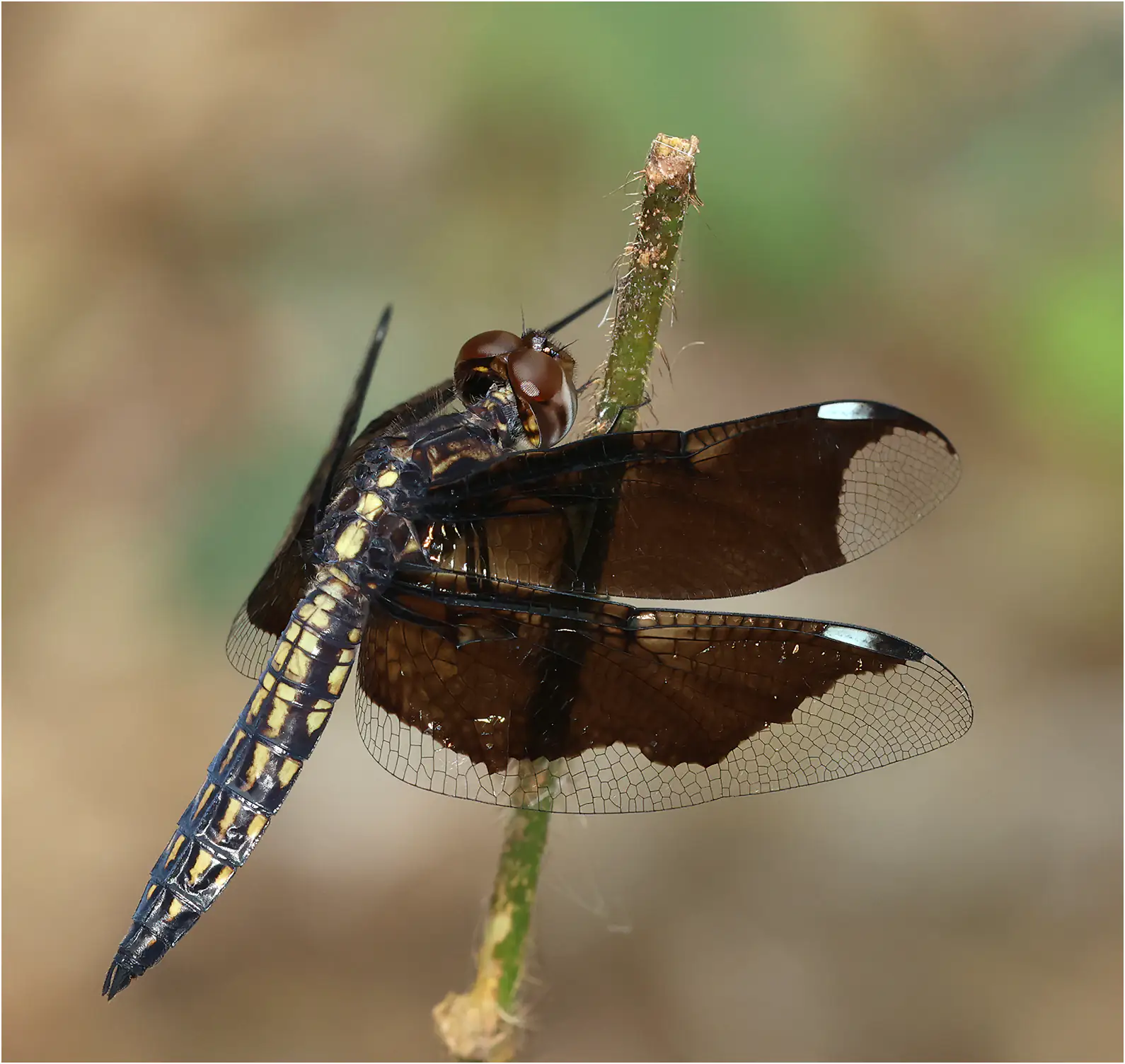
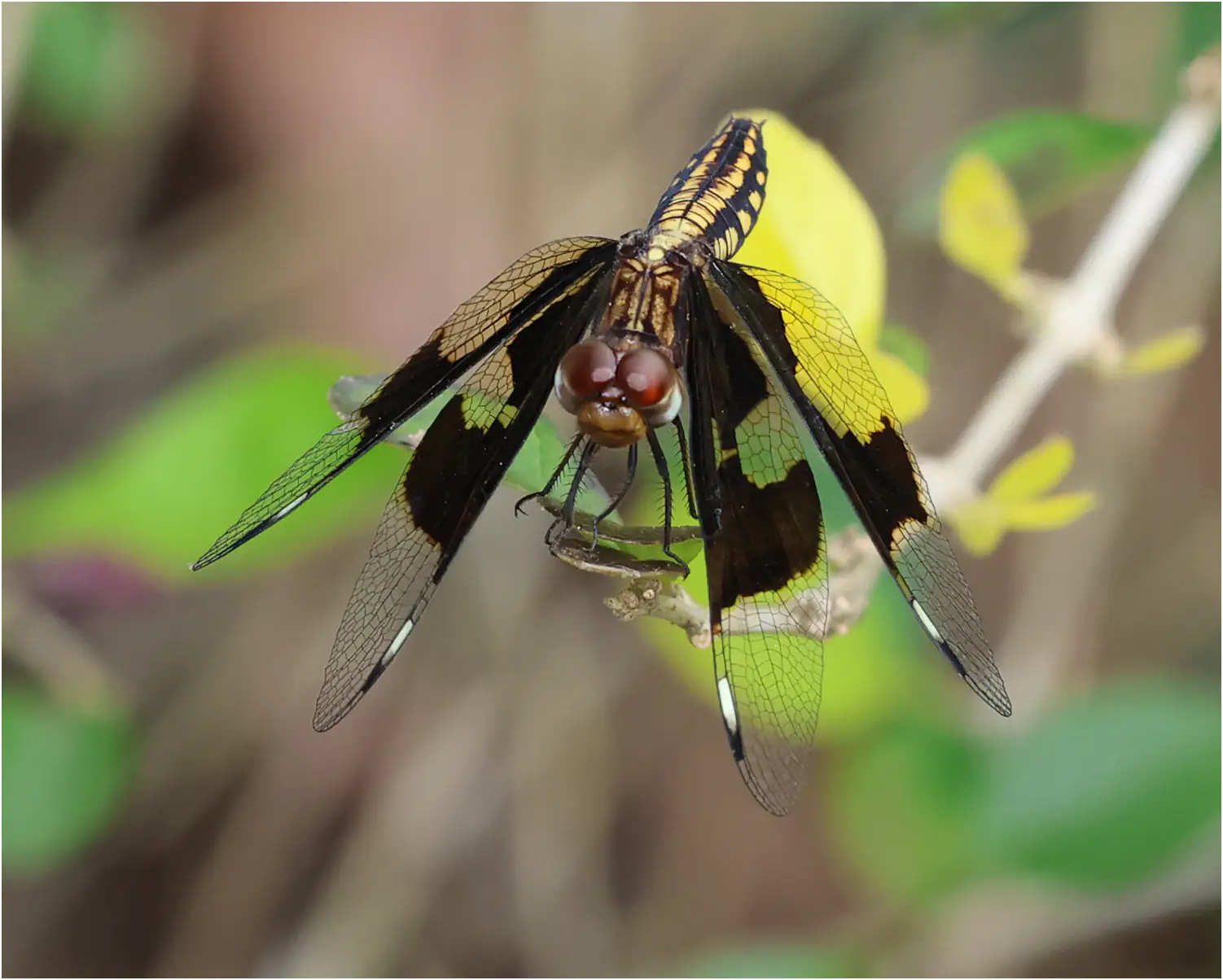
If the males or immature males are fairly easy to differentiate (at least on the individuals we saw in Ghana), the same cannot be said for the females, which nevertheless follow the same rule: the wing colouration of Palpopleura females is more extensive than that of P. portia.
But the difference is sometimes subtle, and doubts may remain; I don't know how one goes about separating them then, as I have never read that there is any other way (apart from genetics) to distinguish them. Moreover, ADDO (2024) states, "Females of both species strongly resemble P. portia males but cannot yet be distinguished from each other."
Size, habitat and geographical distribution
These two very small species are of the same size, between 24 and 32 mm (Palpopleura lucia would be 1 mm smaller than P. portia!).
It is also not surprising to read that in South Africa (Tarboton W. & M., 2015) they are found in the same habitats: the banks of streams and rivers, flooded plains, and temporary pools. But on ADDO (2024), we read that Palpopleura lucia frequents stagnant and often temporary waters in open or shaded environments, or in clearings of gallery forests (ditto for P. portia!). I frankly don't remember finding it anywhere other than along forest paths.
It is present in almost all of subtropical Africa and reaches South Africa, remaining confined to the north-east. It is only present in eastern Botswana and northern Namibia.
IUCN Red List.
I had already glimpsed the species in Benin, then in Ethiopia.
Etymology of Palpopleura lucia
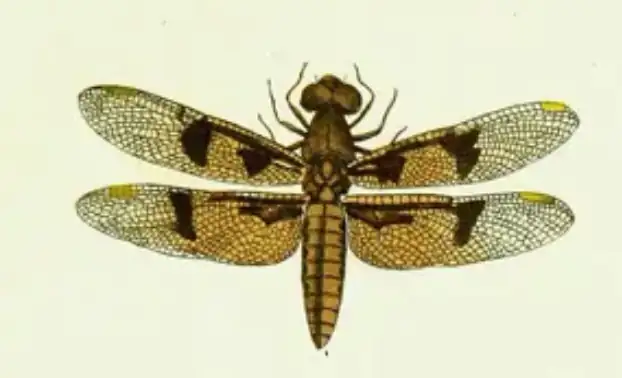
Drury described this species as Libellula lucia and provided this engraving, certainly of a female. I have not been able to find the attached description in any work by Drury.
It is, however, included in Illustrations of Exotic Entomology by Westwood (1837).
Palpopleura; the first part of the generic name comes from the Latin verb palpo, which means "to feel", "to touch", "to caress", or "to palpate", and there is no truly satisfactory explanation for the choice of this term. Pleura in Greek means "side" or "rib", and pleura could be an equivalent of the Latin costa, because Rambur (1842), who established the genus, emphasises the characteristic notch of the costal vein (the vein that forms the wing margin). Unless Rambur is simply suggesting that the anterior margin of the wing is distorted and concave, as if it had been touched. See Fliedner (2006).
Lucia; like almost all the names Drury gave to dragonflies, Lucia is a feminine name from classical antiquity. A very "well-known" Lucia died a martyr during the reign of the Roman emperor Diocletian. She belongs to numerous folklores, associated of course with light.
It has two English names, one undoubtedly "official", Lucia Widow, the other more pragmatic and less poetic, Black-winged Widow.
Dijkstra, K.-D.B. (editor, 2024). African Dragonflies and Damselflies (ADDO).
Drury, Dru. (1770). Illustrations of natural history. Printed for the author and sold by B. White.
Fliedner, (2006). The scientific names of the Odonata in Burmeister’s "Handbuch der Entomologie".
Mitchell, A. & Samways, M. J. (2005). The morphological 'forms' of Palpopleura lucia (Drury) are separate species as evidenced by DNA sequencing (Anisoptera: Libellulidae). Odonatologica, 34(3), 173-178.
Rambur (1842) . Histoire Naturelle des névroptères, p. 129.
Westwood, J. O. (éd.). (1837). Libellula lucia Drury. In D. Drury, Illustrations of exotic entomology (J. O. Westwood, Éd., nouvelle édition, Vol. 2, Plate XLV, fig. 1). Henry G. Bohn.