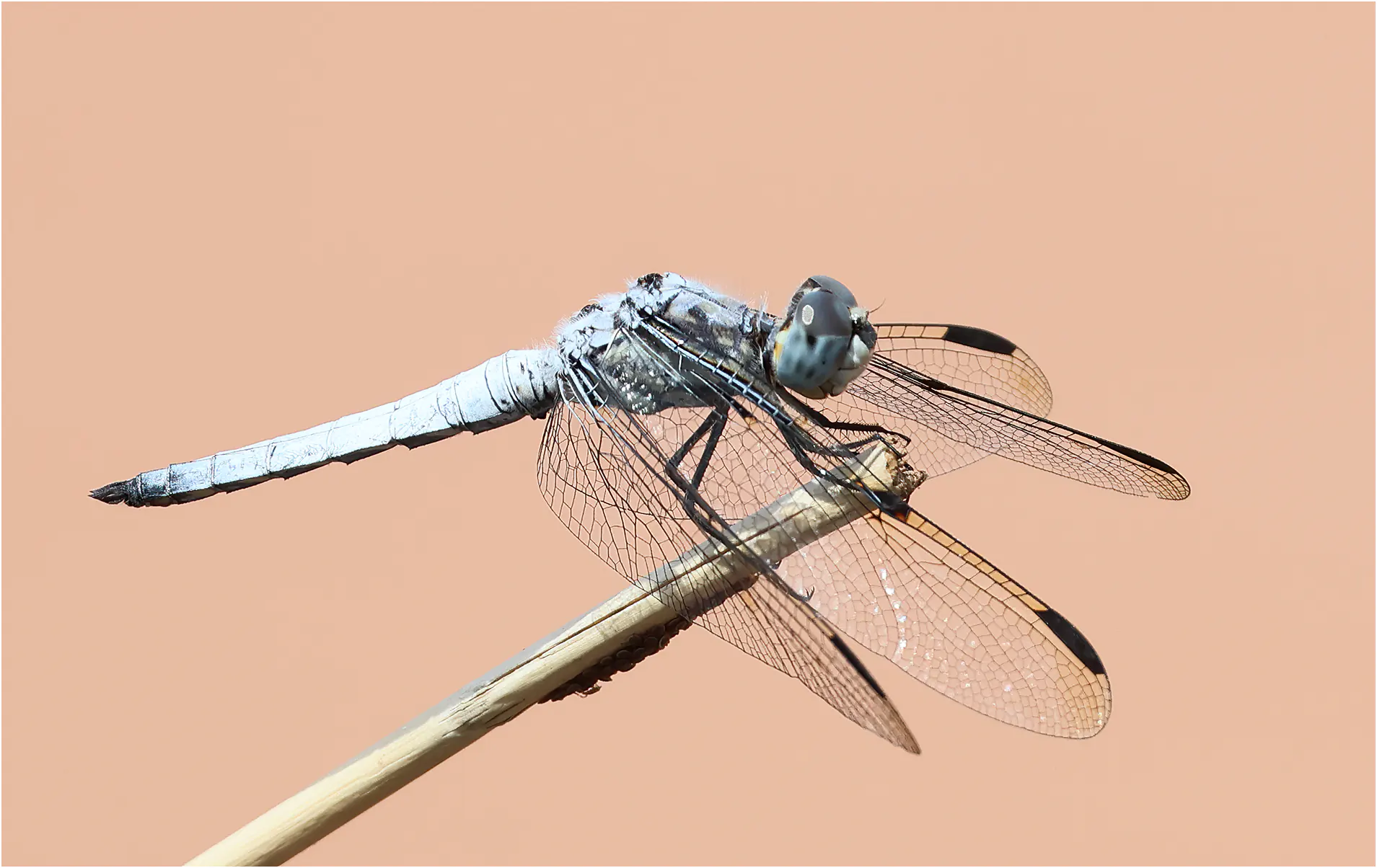
Palpopleura deceptor is a Libellulidae belonging to a genus comprising seven species: one is Asian (P. sexmaculata), another is endemic to Madagascar (P. vestita), and five occur in continental Africa. Among the latter, four are present in Kenya: Palpopleura deceptor; P. portia; P. lucia; P. jucunda, which I have never seen.
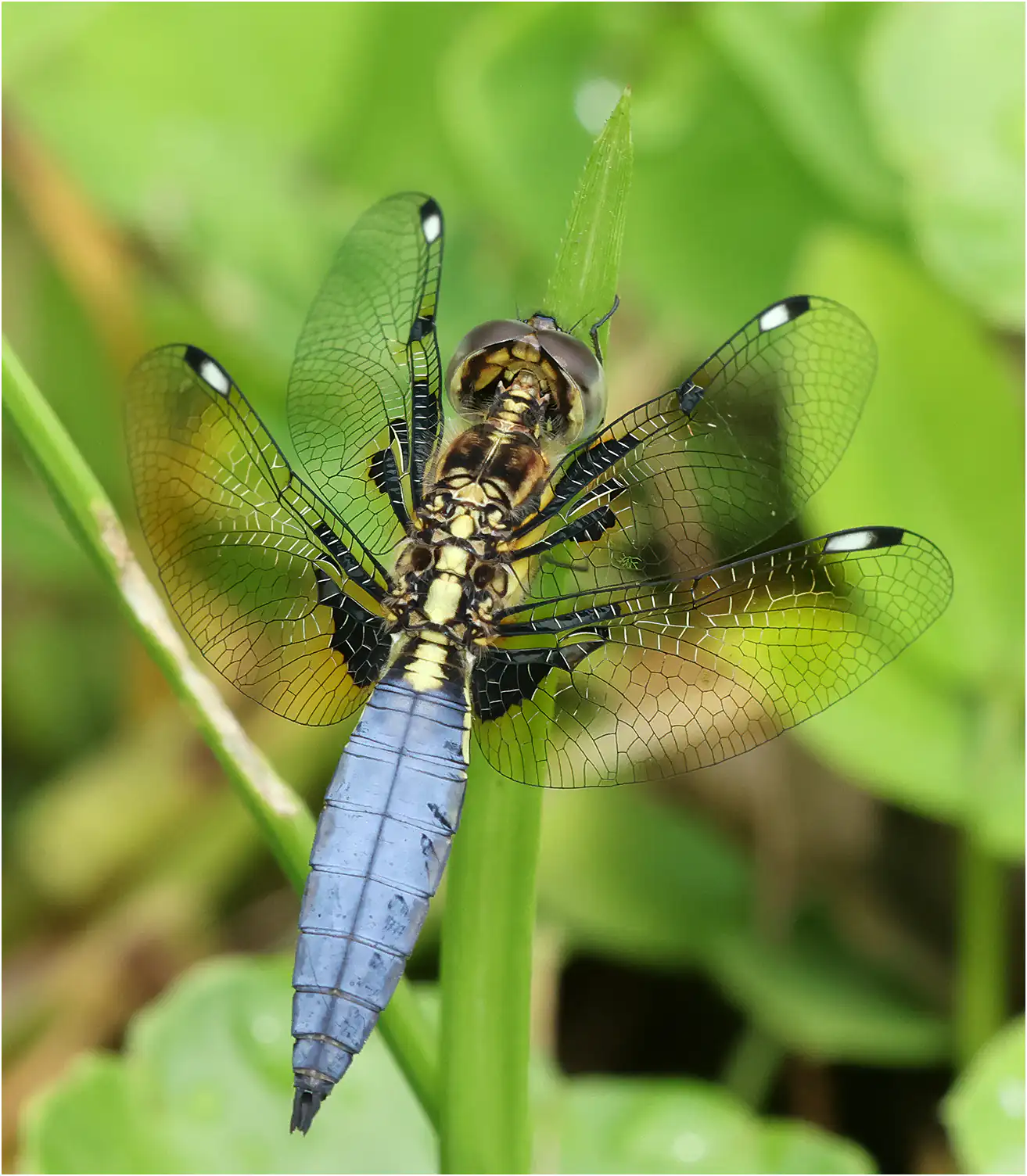
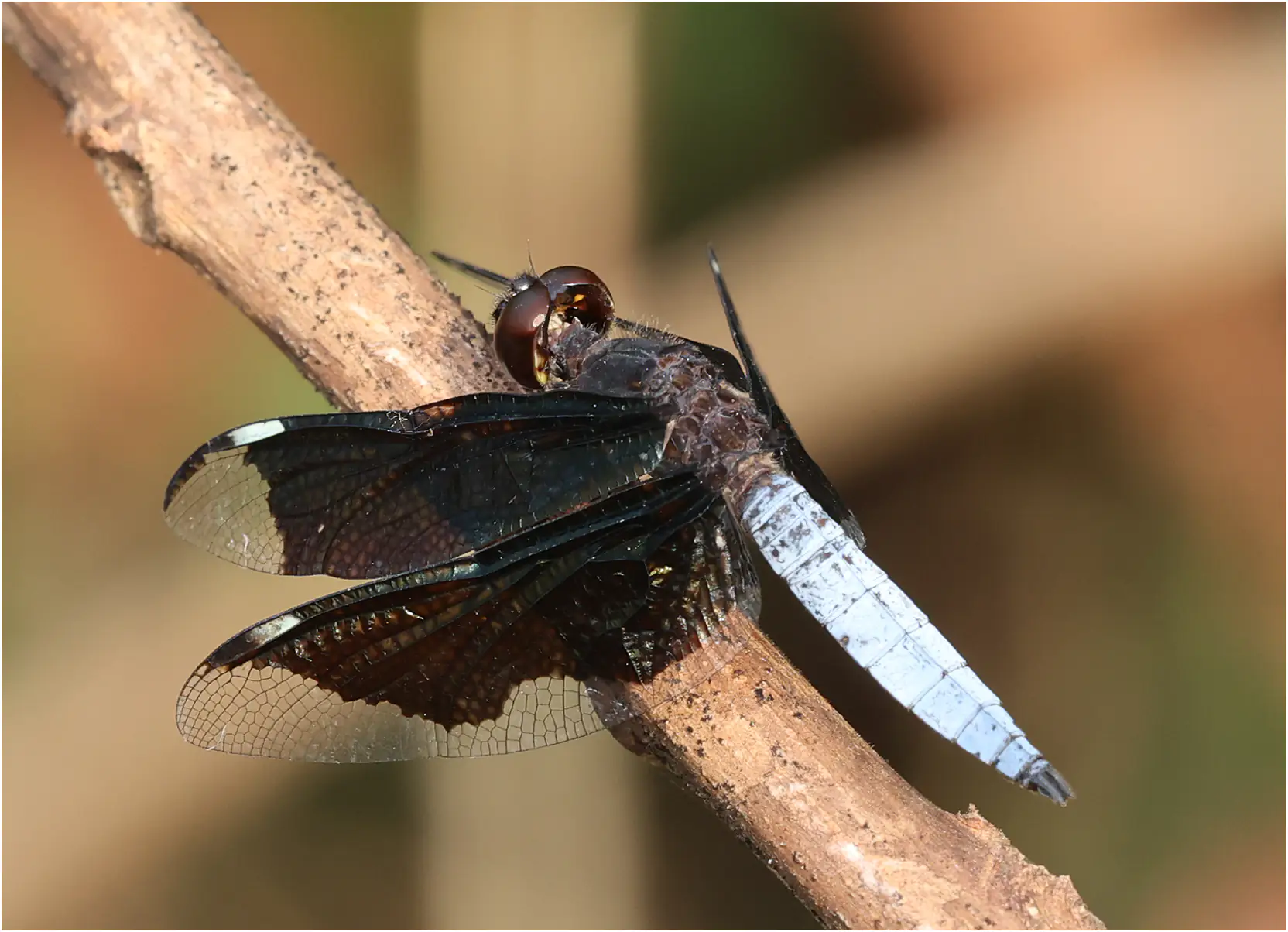
Identification of Palpopleura deceptor
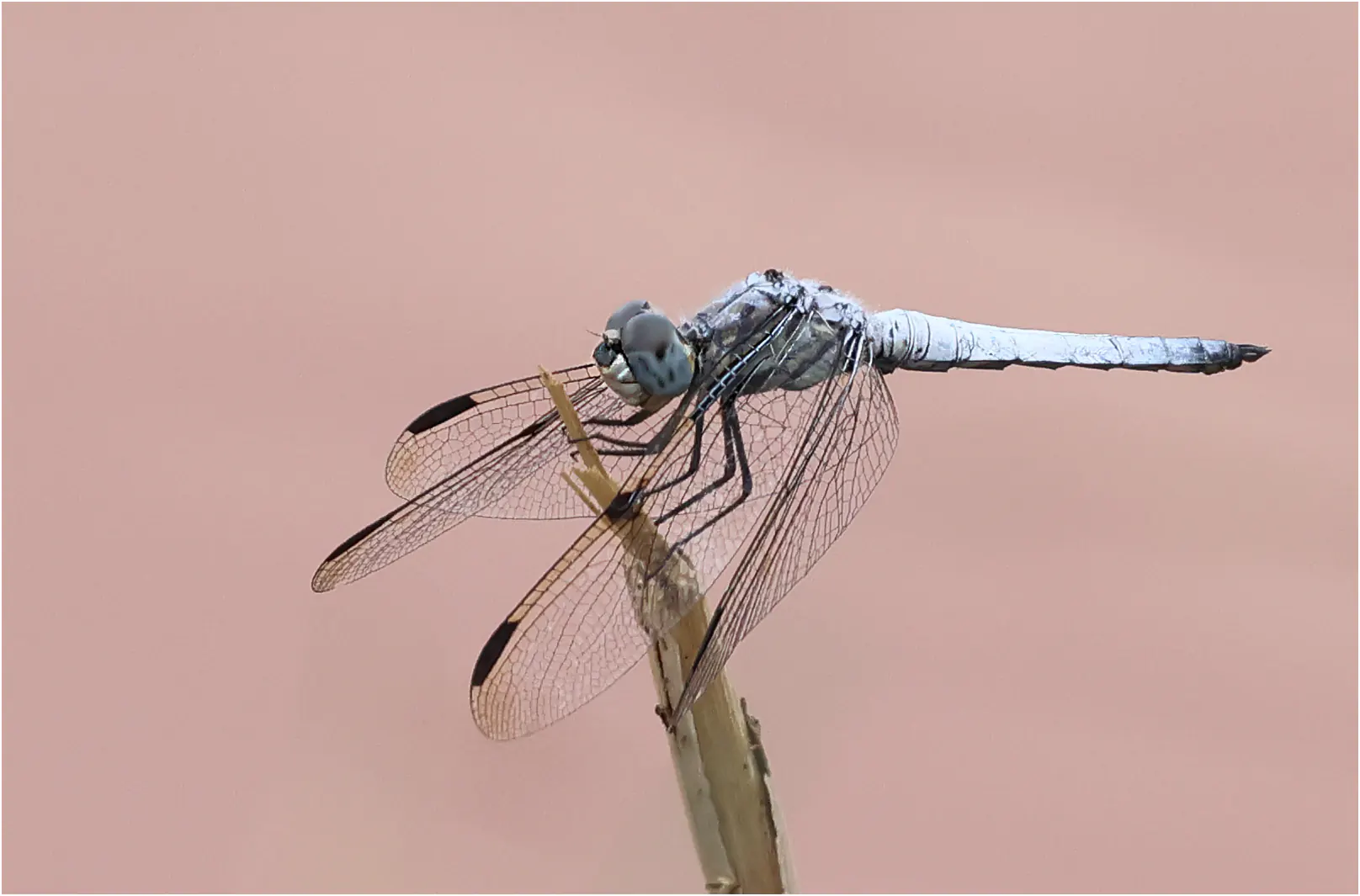
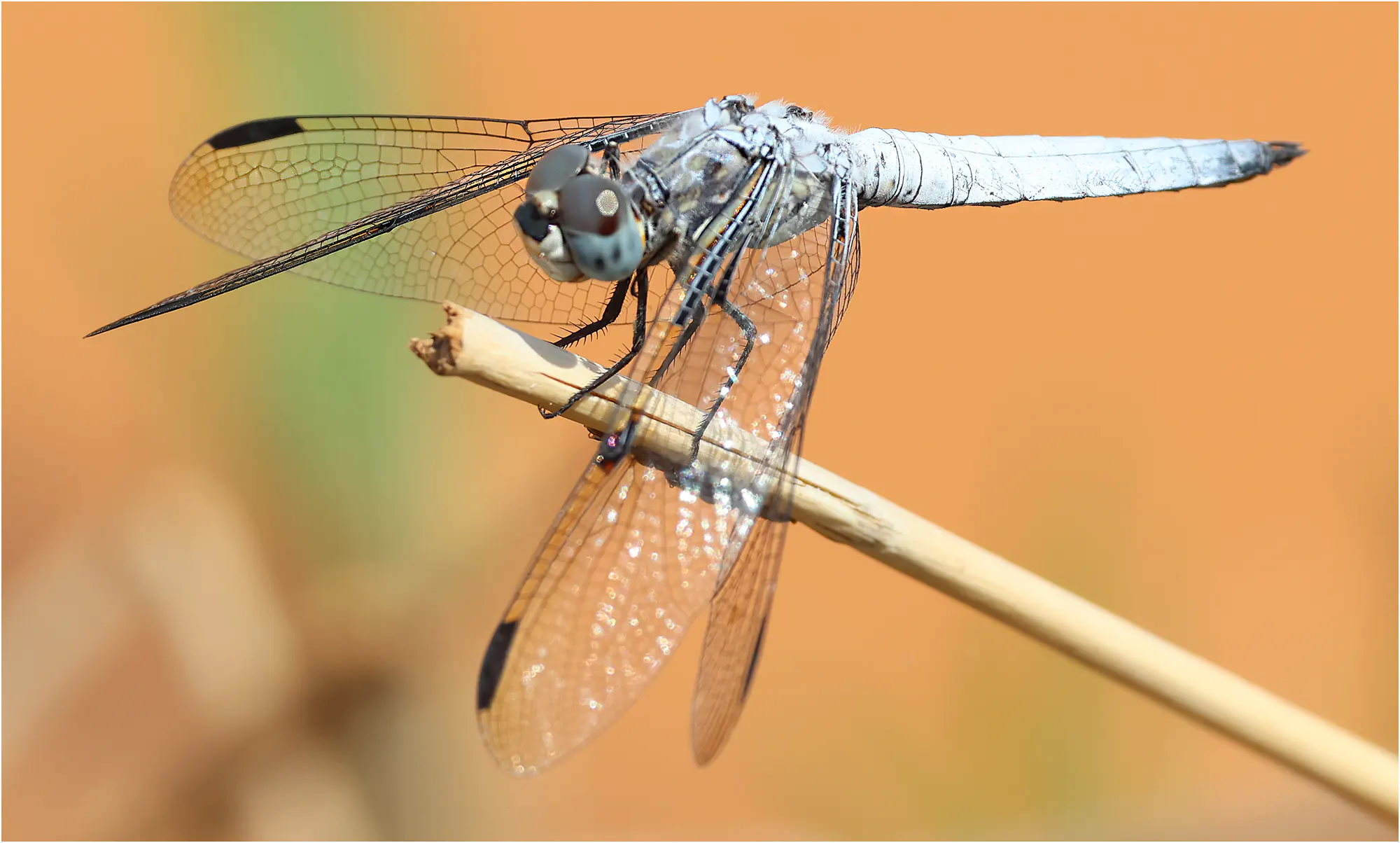
It is a small odonate (yet the largest of the Palpopleura) with a pale face and a metallic black frons; the eyes are blue capped with grey. At maturity, the thorax and abdomen become covered with a bluish pruinosity, while the last segment or segments are dark without a sharp boundary.
It is easily distinguished from the other Kenyan species by its mostly hyaline wings; only the nodus and the subcostal area of the forewing can be amber, or even very dark. The pterostigma is bicoloured, black and white, but this feature fades as they age.
I encountered only a single individual, rather untypical; it has only a spot at the nodus and the subcostal space of the forewing is uncoloured, the venation in that area being tinged bluish by pruinosity.
It is sometimes confused with Hemistigma albipunctum because of the subcostal colouration and its bicoloured pterostigmas. However, it is much more slender and lacks a nodal spot on the forewings.
Size, habitat and geographical distribution
Calvert gives a total length of 33 mm for an individual from Ethiopia. Tarboton W. & M. (2015) measure the insect between 30 and 32 mm in South Africa.
I encountered it at an elevation of about 650 m in grassy savanna, where a small, slow stream widens into a vegetation-choked pond to pass through a culvert under the road (the photos are taken from a 4x4).
Pinhey (1961) tells us that it likes stagnant waters or streams.
Dijkstra (2022) on ADDO specifies that it stays over stagnant waters, mainly temporary, in open habitat, in clearings in forest, or in the shade of gallery forest.
Its distribution range is very wide; in the north, it is bounded by the southern edge of the Sahara, extending from Senegal to Eritrea. In the south, it reaches northern South Africa, but it is much less conspicuous in the western half of the continent.
IUCN Red List.
Etymology of Palpopleura deceptor
Calvert describes the species in the genus Hemistigmoides; this was of course to recall its visual proximity to the genus Hemistigma (from Greek hemi for "half", stigma for "mark" or "spot", then the suffix -oides, meaning "similar in appearance").
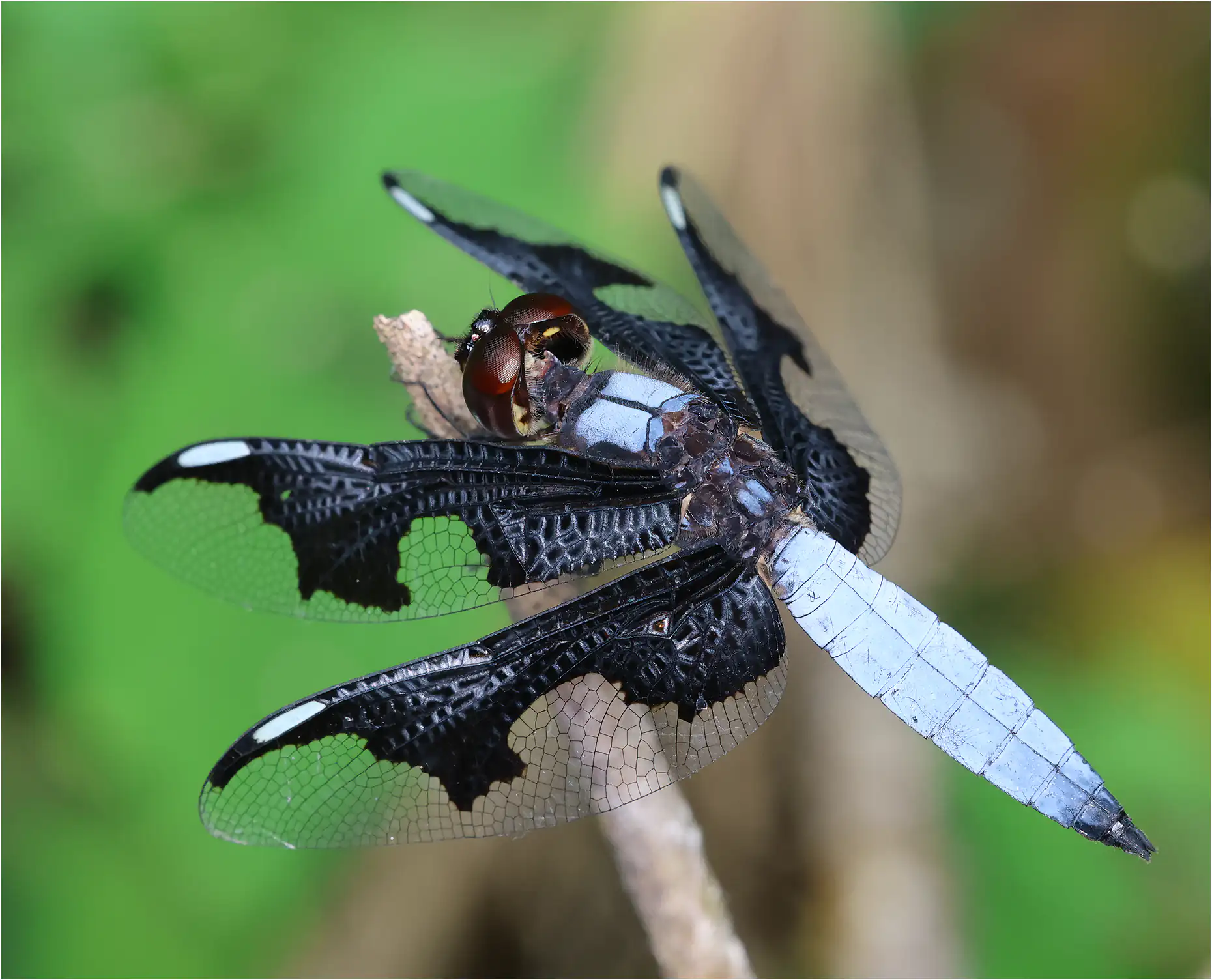
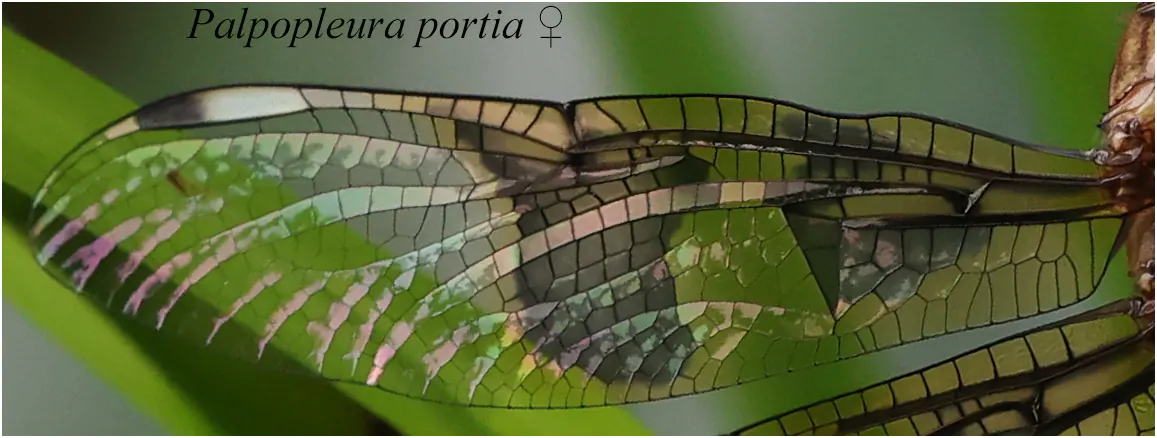
Palpopleura ; The first part of the genus name comes from the Latin verb palpo, meaning "to feel", "to touch", "to caress", or "to palpate", and there is no truly satisfactory explanation for the choice of this term. Pleura in Greek means "side" or "rib", and pleura could be an equivalent of the Latin costa, because Rambur (1842), creator of the genus, emphasises the characteristic indentation of the costal vein (the vein forming the wing margin) in its pre-nodal part. Rambur probably suggests that the anterior margin of the wing is deformed and concave, as if having been touched. See Fliedner (2006).
Shown below is the wing of a female Palpopleura portia to illustrate this detail; I do not have a photo of sufficient quality for P. deceptor, in which this "wave" of the costal vein is much less pronounced.
Deceptor is a Latin name meaning "deceptive", "impostor", recalling that the species can be confused with Hemistigma.
Calvert, Philip Powell, 1899. Neuropterous Insects Collected by Dr. A. Donaldson Smith in Northeastern Africa. Proceedings of the Academy of Natural Sciences of Philadelphia, 51, 228--244. P. 241.
Dijkstra, K.-D.B. (editor, 2022). African Dragonflies and Damselflies (ADDO).
Pinhey E. C. G., 1951. The Dragonflies of Southern Africa. Transval Museum Memoir n°5.
Warwick et Michèle Tarboton (2015). A Guide to the Dragonflies & Damselflies of South Africa. Struik Nature.