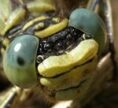
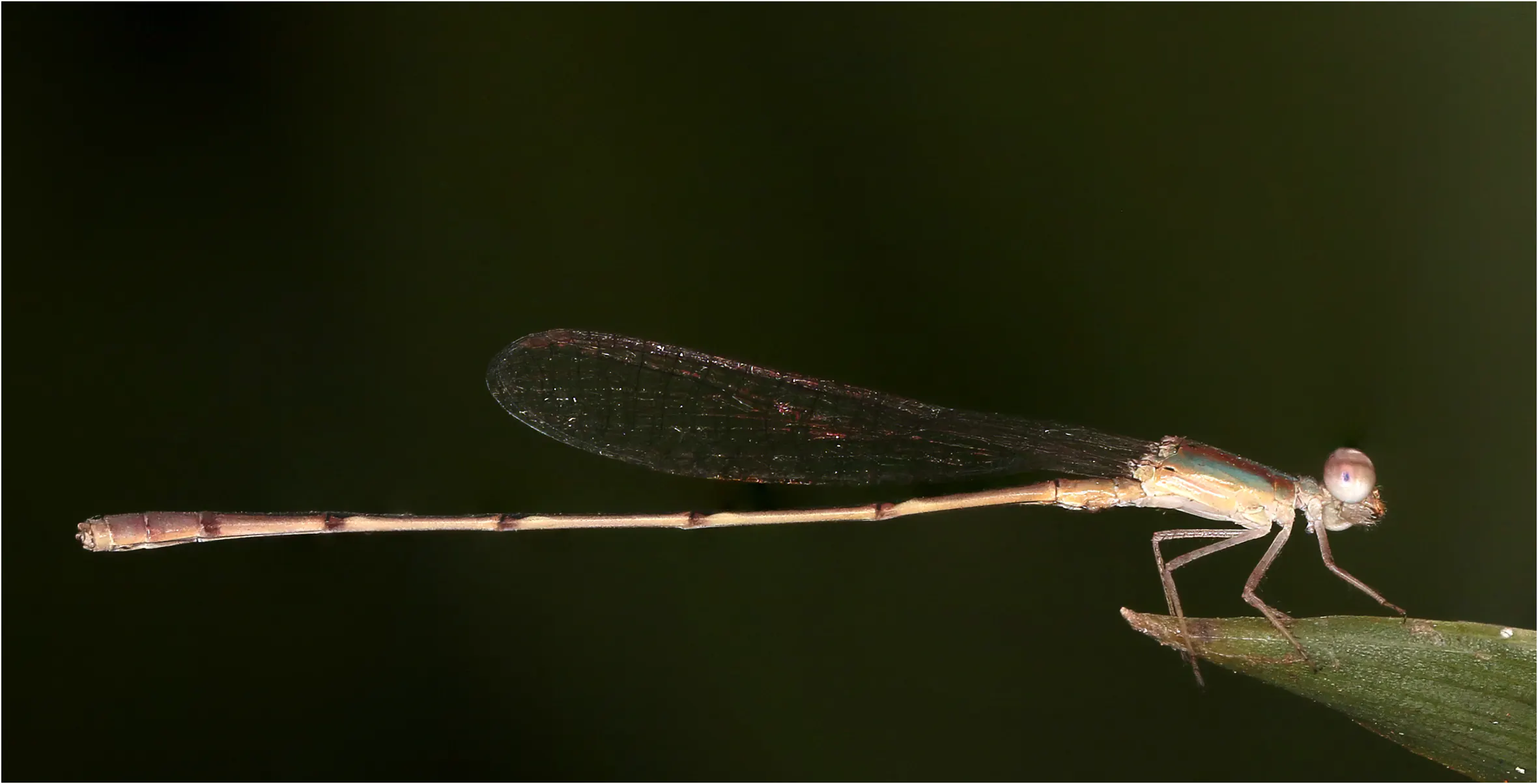
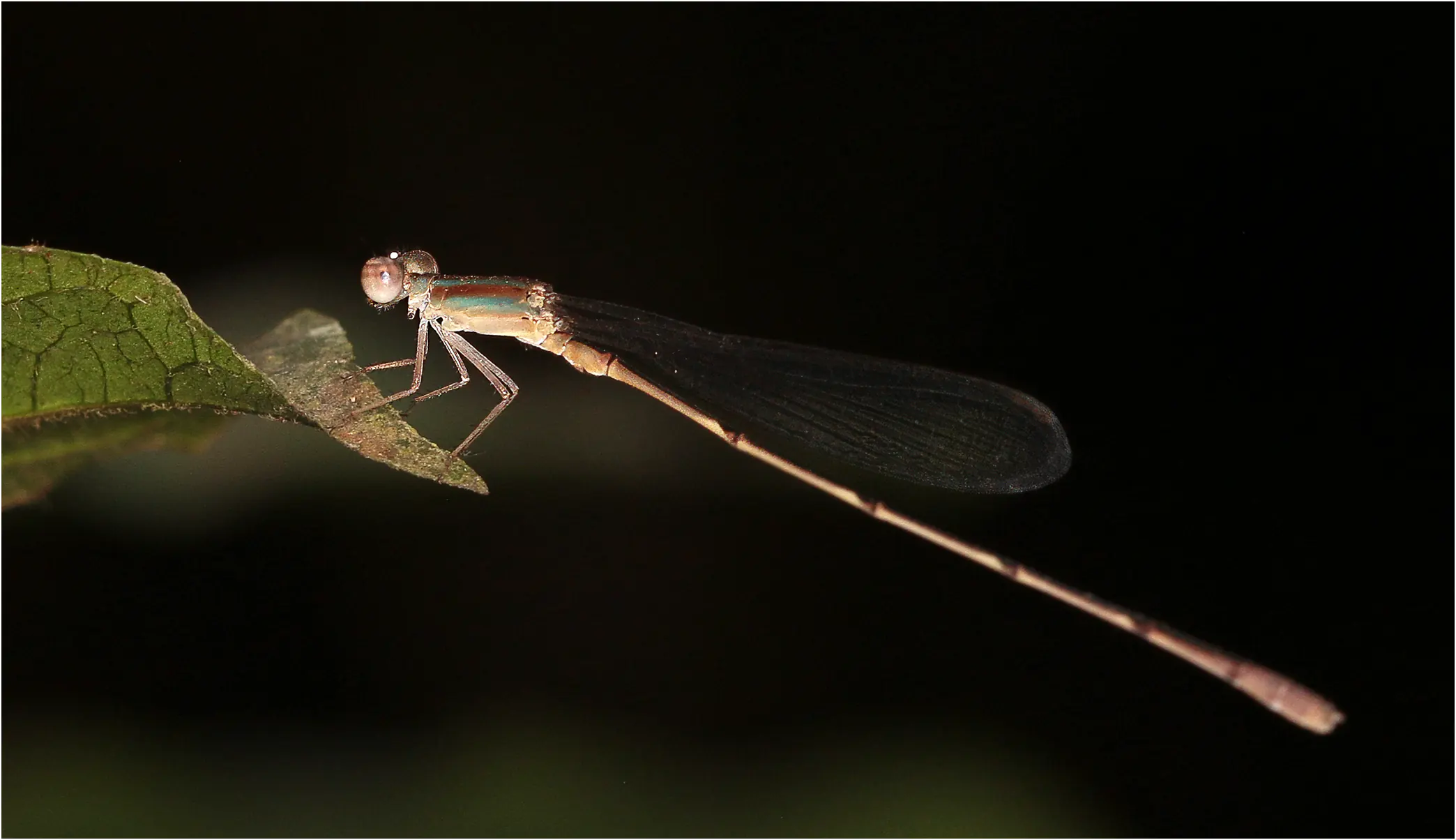
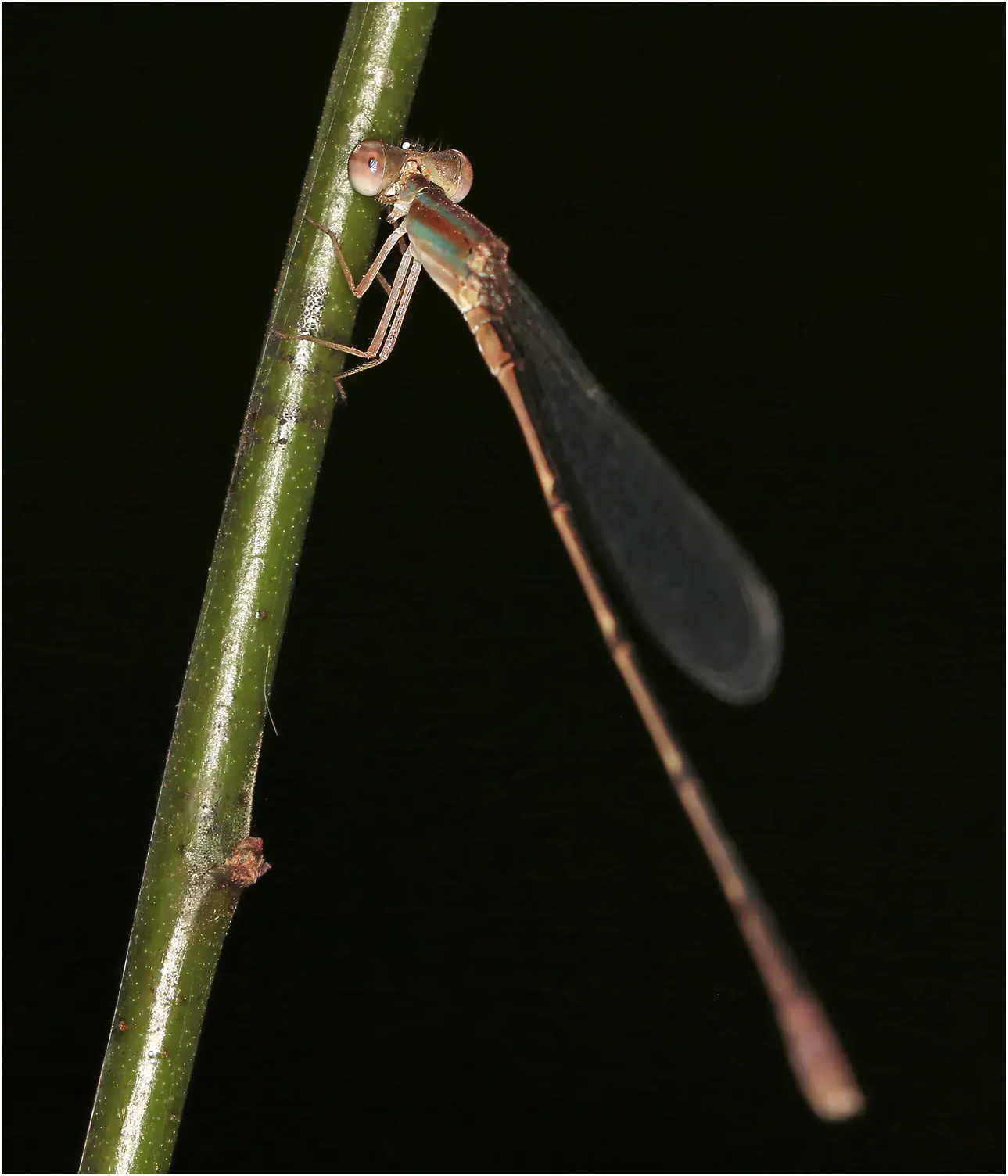
Africallagma subtile is a surprise, as the species was not previously known from Ghana, where only A. glaucum was known (here in South Africa) and A. vaginale, which I have never encountered, which is even rarer, apparently green, and whose S8 is two-thirds black, with only the distal third bearing a very distinct blue pattern (here S8 is almost entirely light or "non-black").
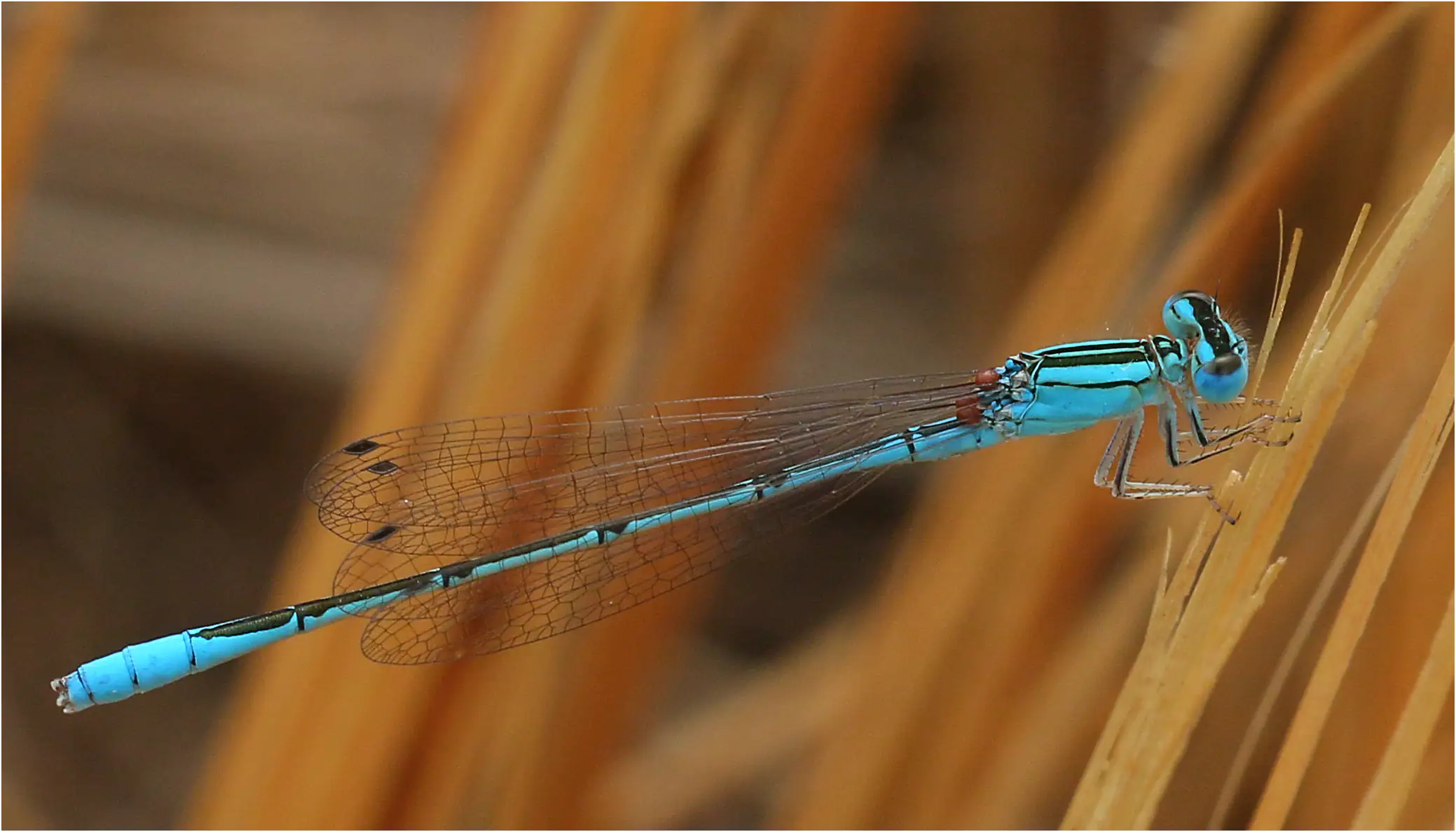
This is the "pale" form of the male Africallagma subtile, as a dark form also exists; I do not know whether these forms appear depending on the season or geography.
I had encountered the light form of the female Africallagma subtile in Namibia.
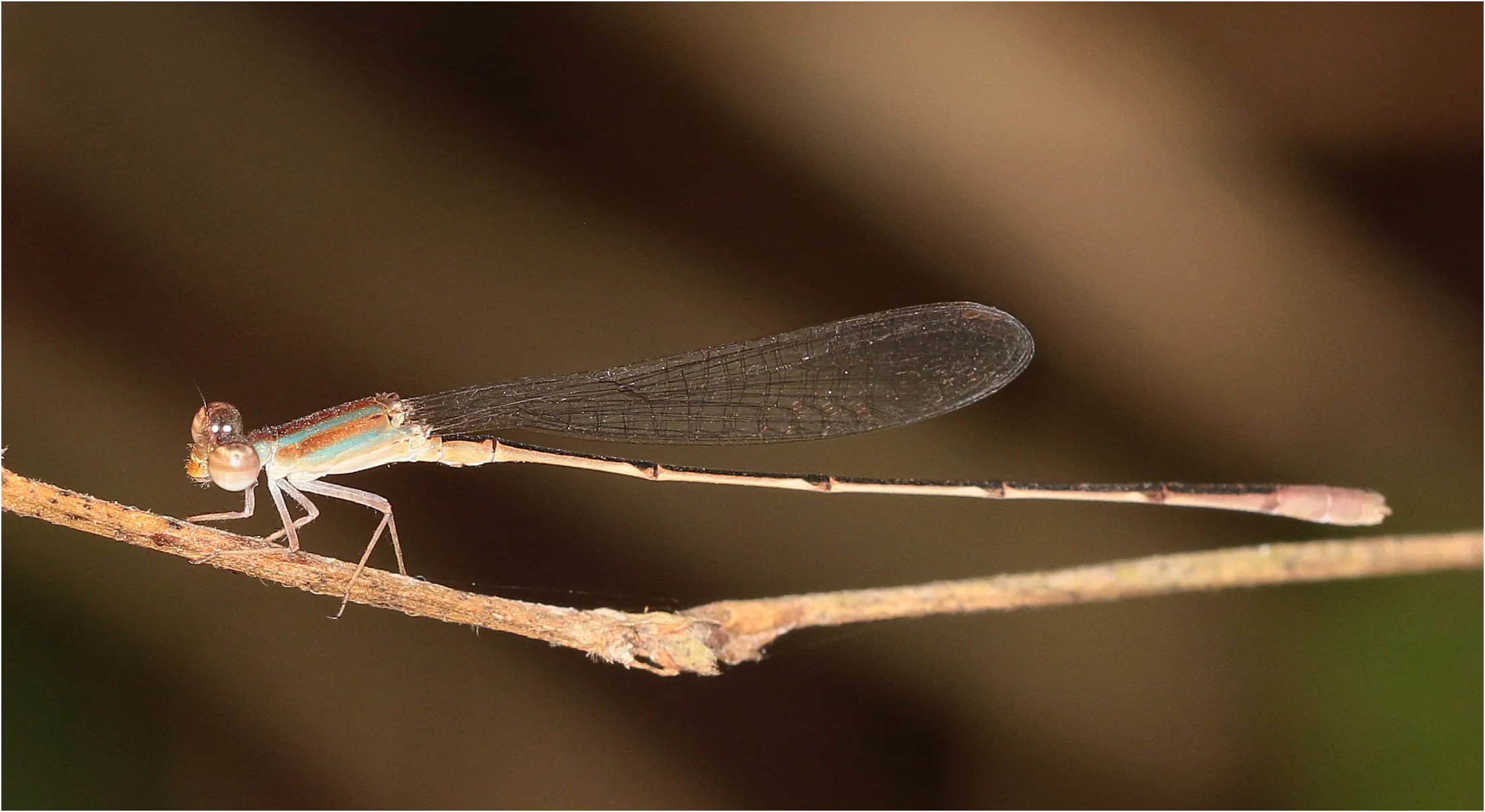
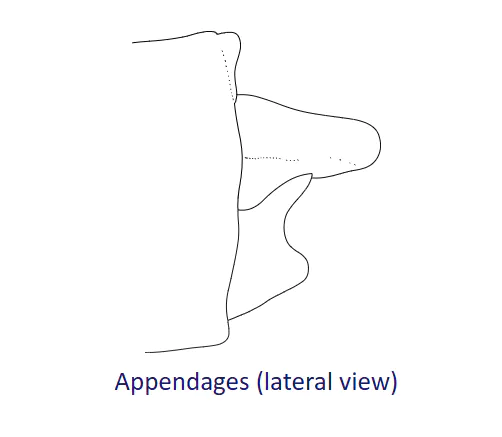
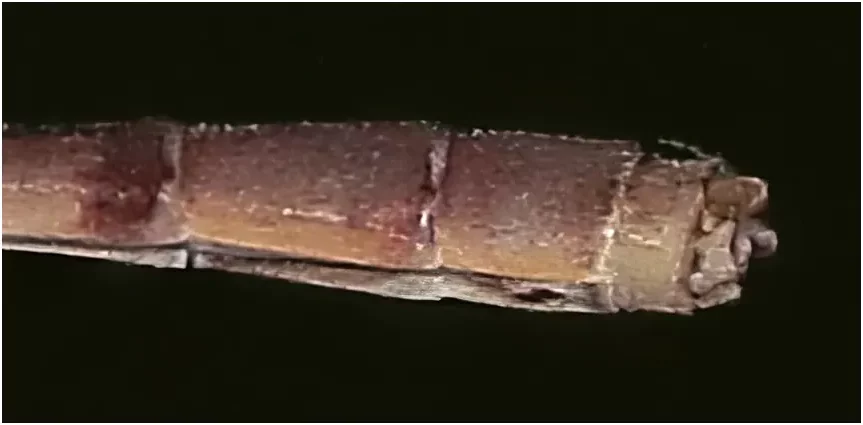
Of course, it is better to rely on the anal appendages rather than on color distributions that are susceptible to individual variations. A drawing of these appendages can be found in Ris (1921) or on the now offline ADDO site (African Dragonflies & Damselflies Online), which can often still be reached via Web.archive.org.
Even though the photo I took of these anal appendages is not a true profile view, the similarity in shape of the paraprocts (inferior appendages) is noticeable.
Ris tells us that its abdomen measures 25 mm, so it reaches a total length of a little over 30 mm, with a hindwing of 15 mm.
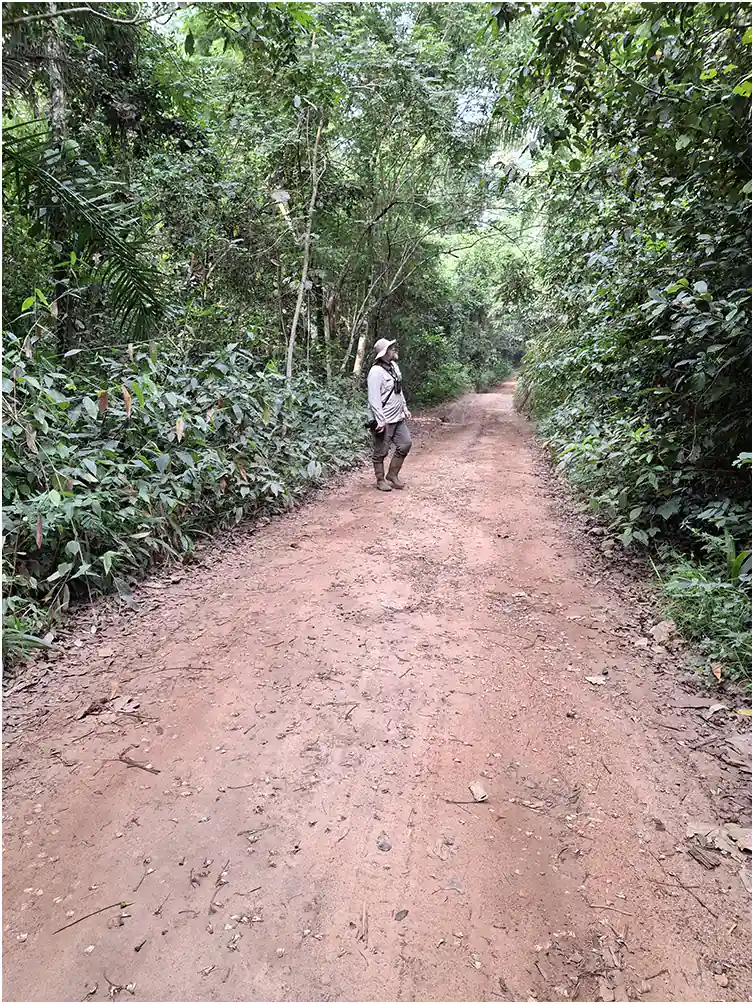
We encountered it around 8:50 am while walking along a forest trail, looking for Gynacantha perched for the day; I ventured off to the sides of the trail several times whenever the forest was less dense, and that is where I stumbled upon it.
K.-D. B. Dijkstra, on ADDO, specifies that it frequents "stagnant and often temporary waters in open landscapes, open areas in forest or shaded by gallery forest. Often with emergent and usually aquatic vegetation."
It is found from Senegal to Ethiopia in the north; its presence is not proven in Gabon and the Congos, and to the south it is restricted to northern Namibia, northern Botswana, and southern Mozambique, without reaching South Africa. On the IUCN map, it is shown as "suspected" in a number of countries, including Ghana, so it is not that surprising to have found it there, even if it was only a single individual.
It is rarely seen. Prior to our survey, there were only 7 or 8 distinct observations of the species on iNaturalist since 2019.
Étymology of Africallagma subtile (Fliedner, 2021)
Africallagma is composed of a reference to the African continent and Enallagma, from the Greek enallax – alternating, succeeding one another, and agma – fragment, which might evoke the alternation of blue and black markings on the thorax.
Charpentier devised the term Enallagma as "changing" or perhaps "varying", to group all European Coenagrionidae in which the male abdomen is blue with black markings—that is, the current Enallagma species as well as Coenagrion and Erythromma lindenii. He intended the name to be understood as "liable to cause confusion" due to the similarity among species.
Subtile, from the Latin subtilis, meaning fine, slender, delicate. Ris writes: "Abdomen very slender..."
English speakers call it the Fragile Bluet.
Dijkstra, K.-D.B (editor ADDO), 2023 – African Dragonflies and Damselflies (ADDO) – [Le lien peut ne pas fonctionner ; lien web.archive à partir du site ADDO, maintenant hors ligne.]
Fliedner, 2021 – The scientific names of Ris’ odonate taxa – Journal of the International Dragonfly Fund
Ris,1921 - The Odonata or Dragonflies of South Africa. Annals South African Museum, XVIII, 245-452, p. 332.