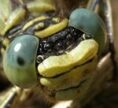
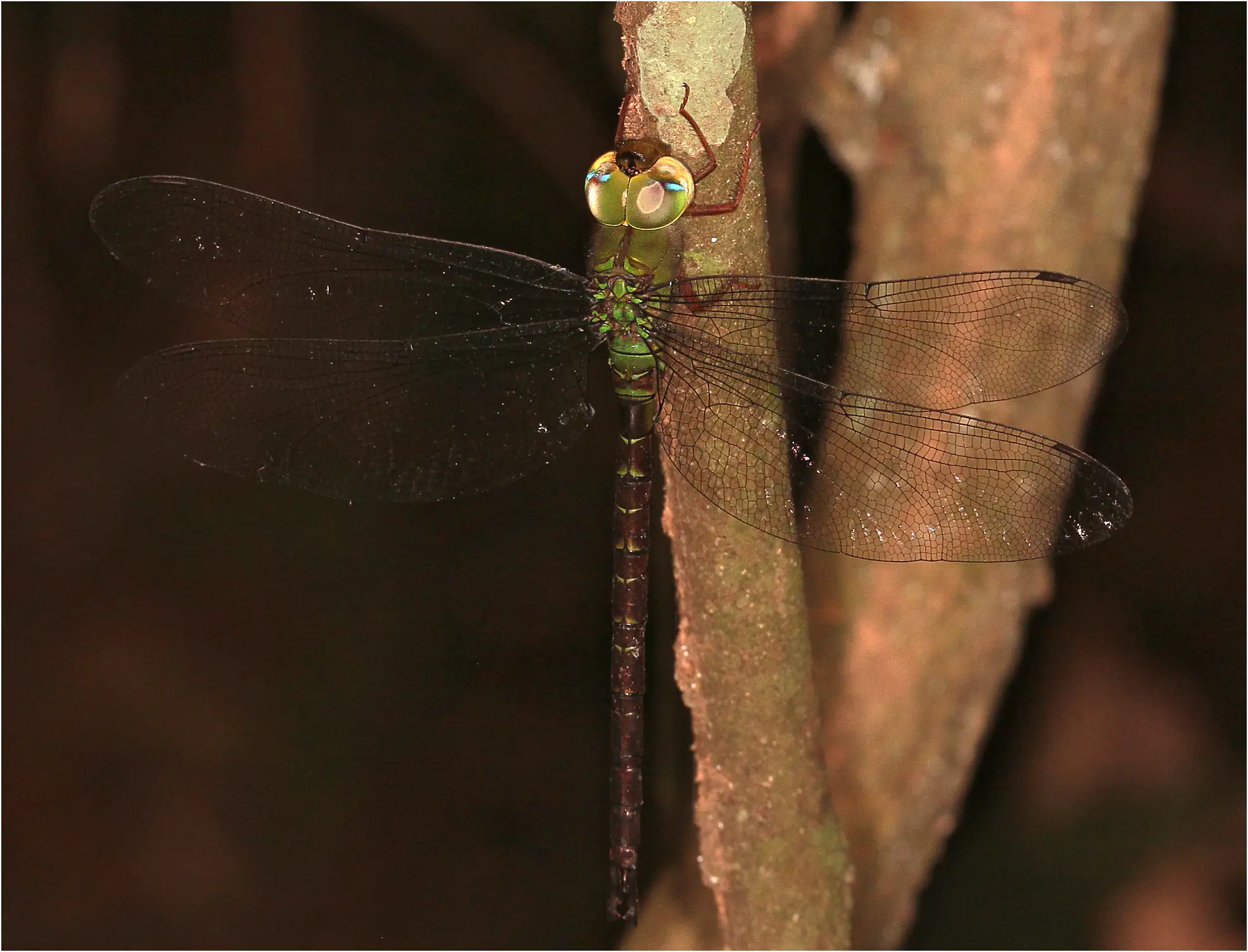
Yet there are 7 Gynacantha species in Ghana (13 in Africa), but I had already encountered Gynacantha cylindrata in Benin back in 2008. Fortunately, we would encounter another one on multiple occasions, G. bullata.

We searched for these nocturnal species in the morning (before other species became active), along logging trails, entering the forest wherever vegetation allowed, inspecting branches, shrubs, and vertical lianas; indeed, they are always found hanging vertically along a support.
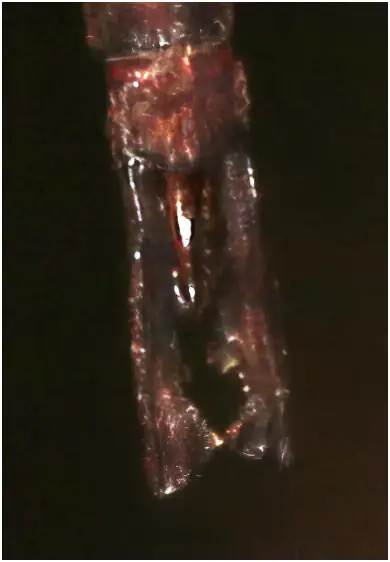
It is very close to G. vesiculata, which we were hoping to encounter; it is distinguished from it, among other features, by its anal appendages. These present a deep excavation before the apex (the extremity appearing triangular), this excavation being preceded by a prominent tuft of setae.
The photo below is an enlargement of one of the featured photos and is therefore of very poor quality... but sufficient to confirm the identification.
Karsch gives the length of the male's abdomen as 60 mm; the entire insect measures about 81 to 82 mm (the equivalent of a fine Anax imperator).
It is generally found away from its breeding areas, which are ponds, often temporary ones, in forest environments; they are crepuscular (large eyes), flying at dawn or dusk, sometimes in the rain, and staying in the vegetation during the day.
It is found from Guinea in the west to Uganda in the east and south from Gabon to Tanzania.
IUCN Red List.
In English, it is named the Greater Girdled Duskhawker, highlighting that it is larger than G. bullata.
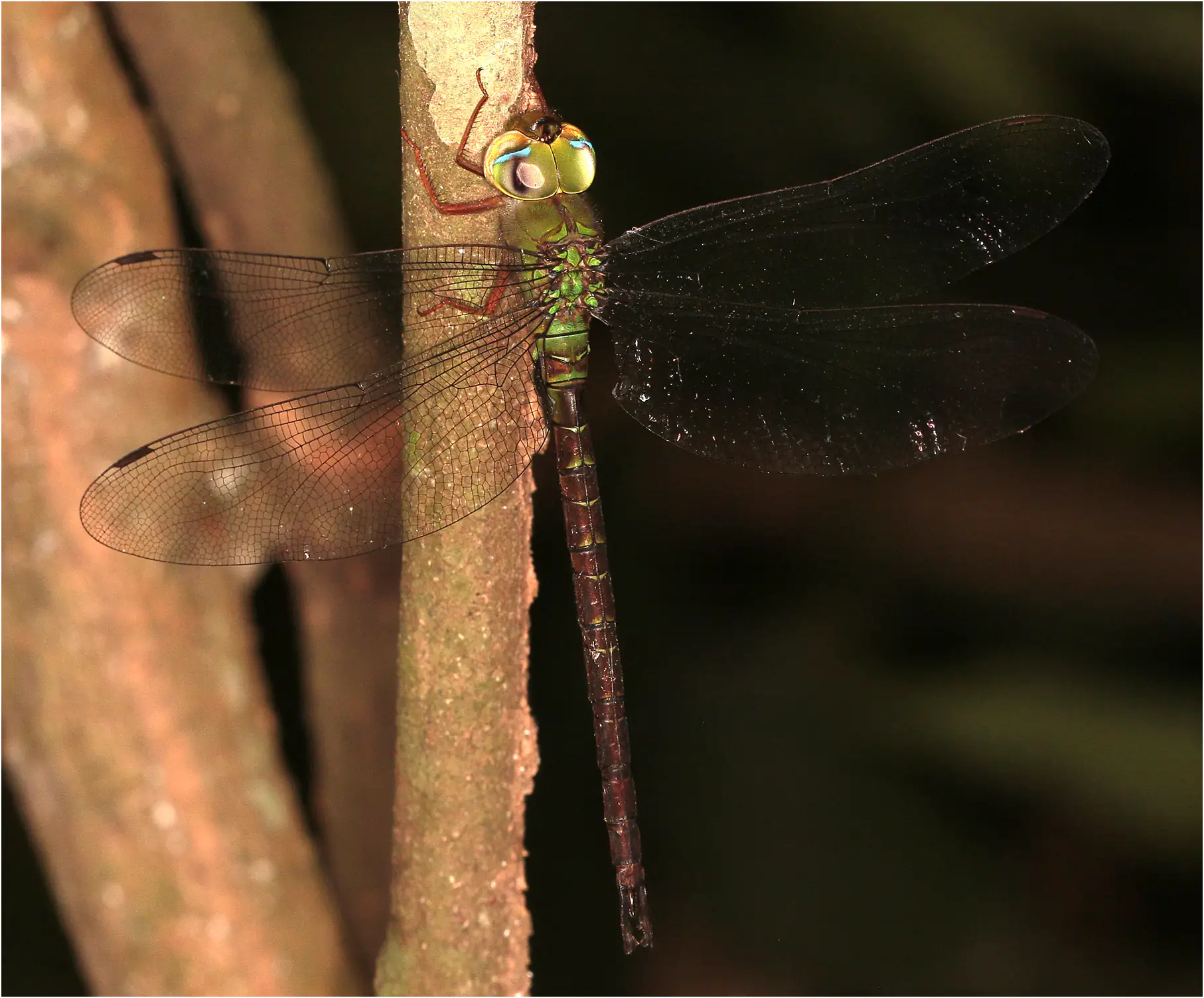
Etymology of Gynacantha cylindrata
The term Gynacantha (see Endersby & Fliedner) was coined by Rambur from two Greek words: "gyne" for female and "acantha" for thorn, because the females of this genus bear 2 spines beneath the 10th segment. Rambur writes: "… dernier segment chez les femelles, saillant et prolongé inférieurement, garni d’épines longues (2 à 3 seulement dans les espèces que je connais) – ... last segment in females, prominent and prolonged underneath, furnished with long spines (only 2 to 3 in the species I know)."
Cylindrata, from the Latin cylindrus for "cylinder" and the suffix -atus meaning "endowed with," for its "cylindrical abdomen, not swollen at the base" [when compared to Gynacantha bullata].
Endersby Ian & Fliedner Heinrich -- The Naming of Australia’s Dragonflies - Busybird publishing.
Karsch,1891 - Kritik des Systems der Aeschniden. Entomologische Nachrichten, Vol. 17, issue 18, 273-290 - P. 282.
Karsch,1891 - Acht neue Aeschniden - Entomologische Nachrichten, vol. 17, issue 20, 305-313 - P. 308.