Identification
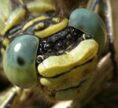
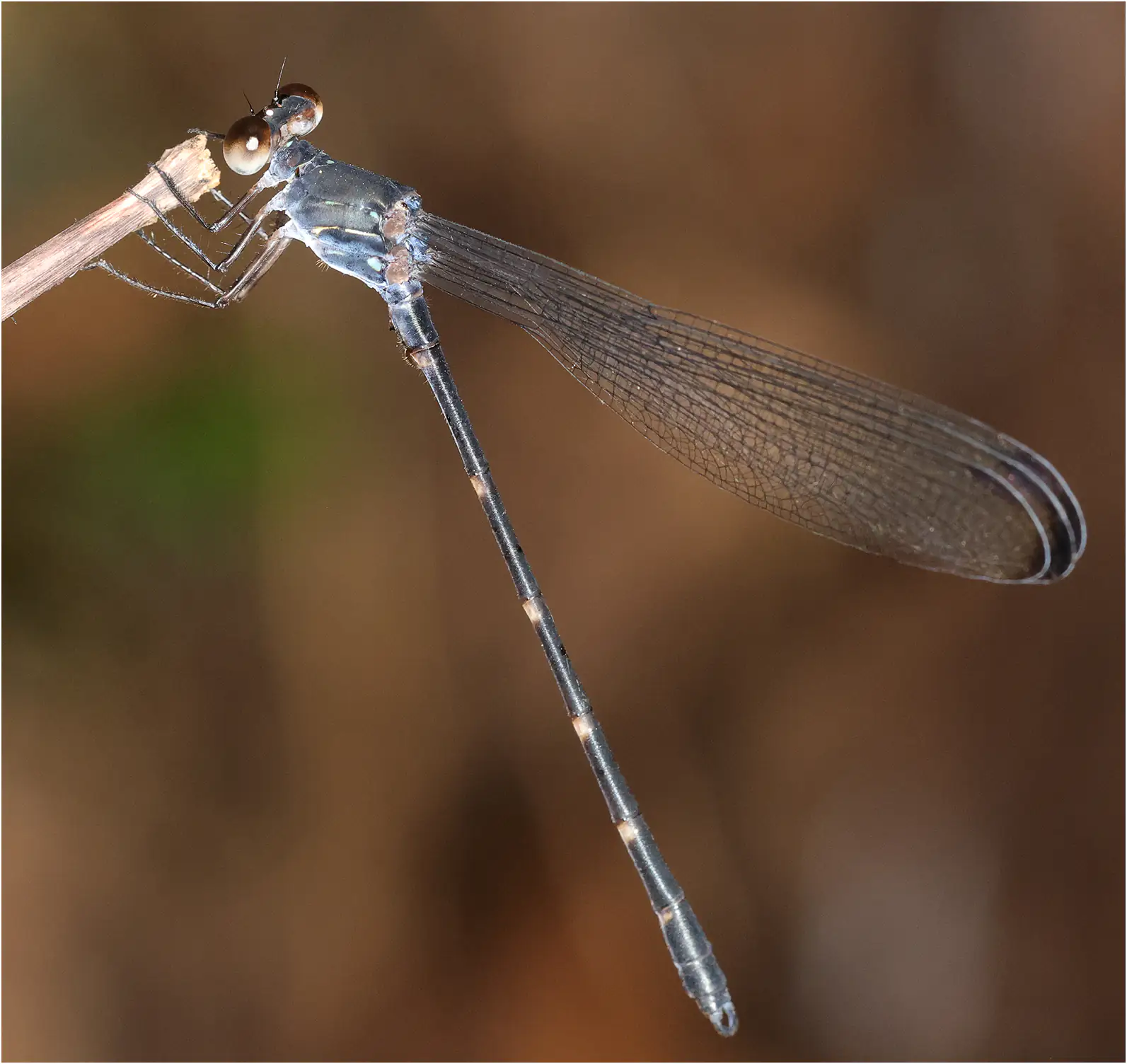
The Devadattidae of Borneo, including Devadatta podolestoides, are very rare and difficult to separate; their thoracic and abdominal patterns are very close and, as almost always, vary in intensity with the age of the insect. Since the 2015 revision of the genus by Dow, Hämäläinen, and Stokvis (1), we know that there are (at least!) six Devadatta species in Borneo. Only two are believed to be present in the area we surveyed: Devadatta podolestoides and D. clavicauda.
However, I must specify that I cannot classify a few subjects I photographed into either of these two species for 2 reasons:
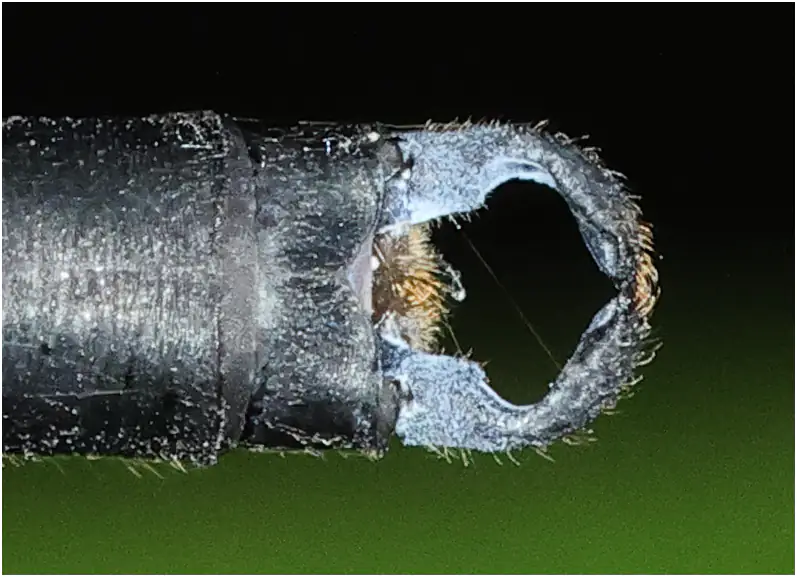
– Identification requires good photos of the anal appendages, and they can only be compared with the drawings of strict dorsal or strict lateral views by the aforementioned authors; unfortunately, insects are not always patient enough for this kind of exercise to be possible, and the lateralisation of views can distort the features one seeks to highlight on the appendages (all my photos are taken without capture).
– One must reckon with the (relative) variability in the shape of the appendages, which is much higher than one might think. Another hypothesis would be that it is an undescribed species.
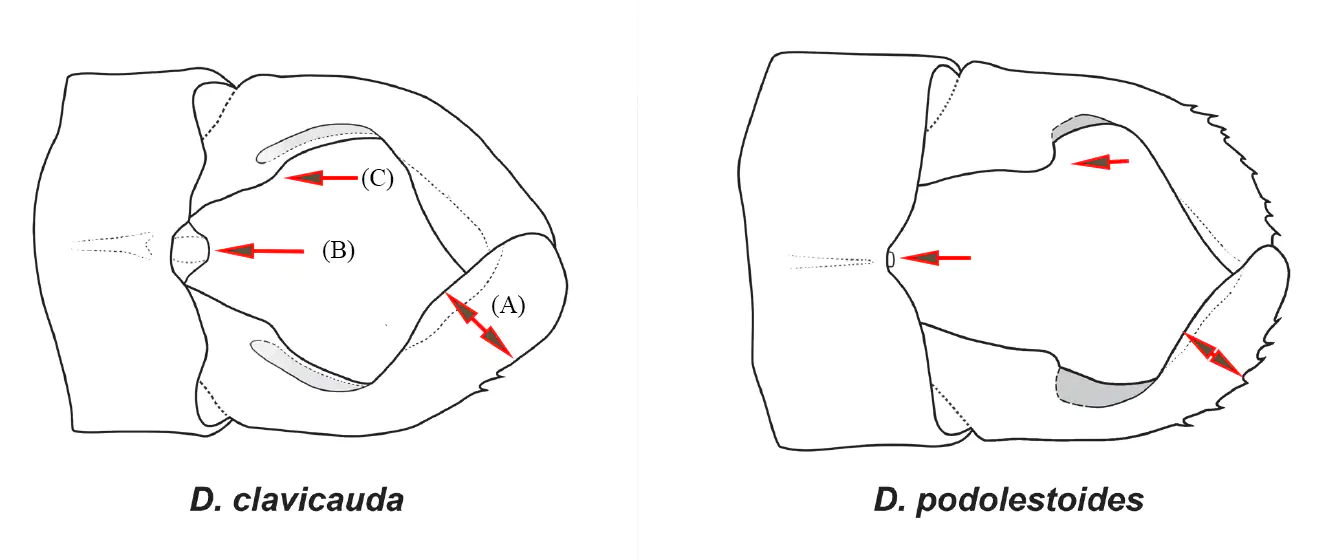
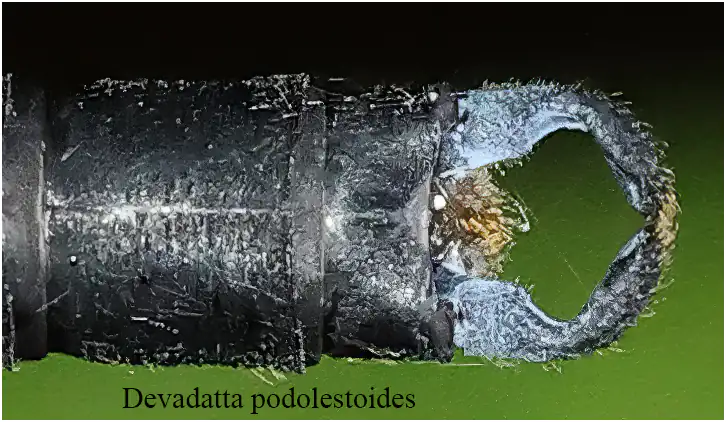
The drawing above shows the anal appendages of the two species present; the details that distinguish them are highlighted by arrows. While the criterion of the width of the tip of the cerci (A) proves difficult, the swelling near the base (C) for Devadatta podolestoides seems easier to assess, as do the extremely reduced (B), nearly invisible paraprocts.
Habitat, size and geographical distribution
We encountered these subjects along a small river, with a sandy and rocky bottom, in a rather dark forest. It seems to like placing itself at the foot of small waterfalls in hilly terrain; it was indeed in this type of environment that we encountered Devadatta clavicauda (2).
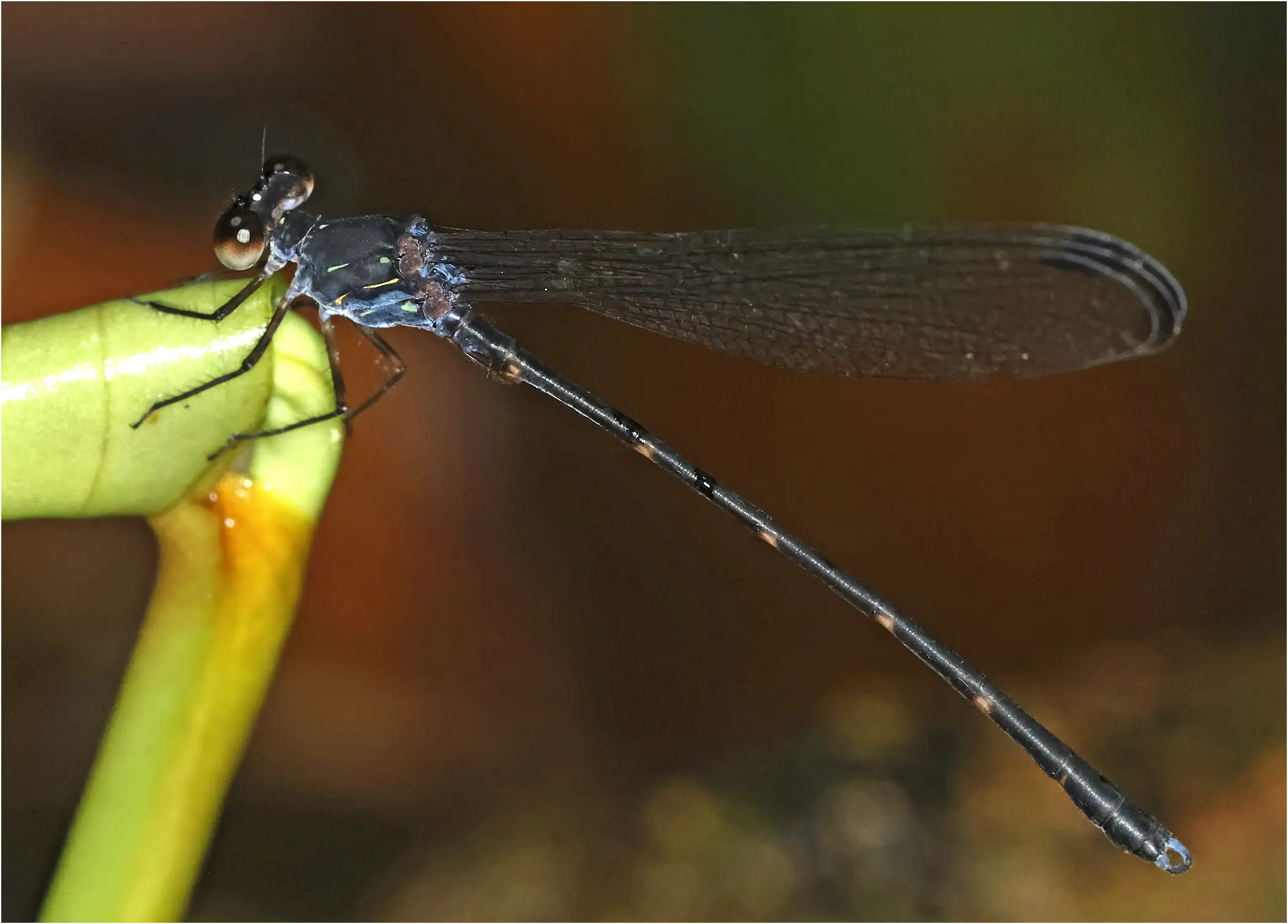
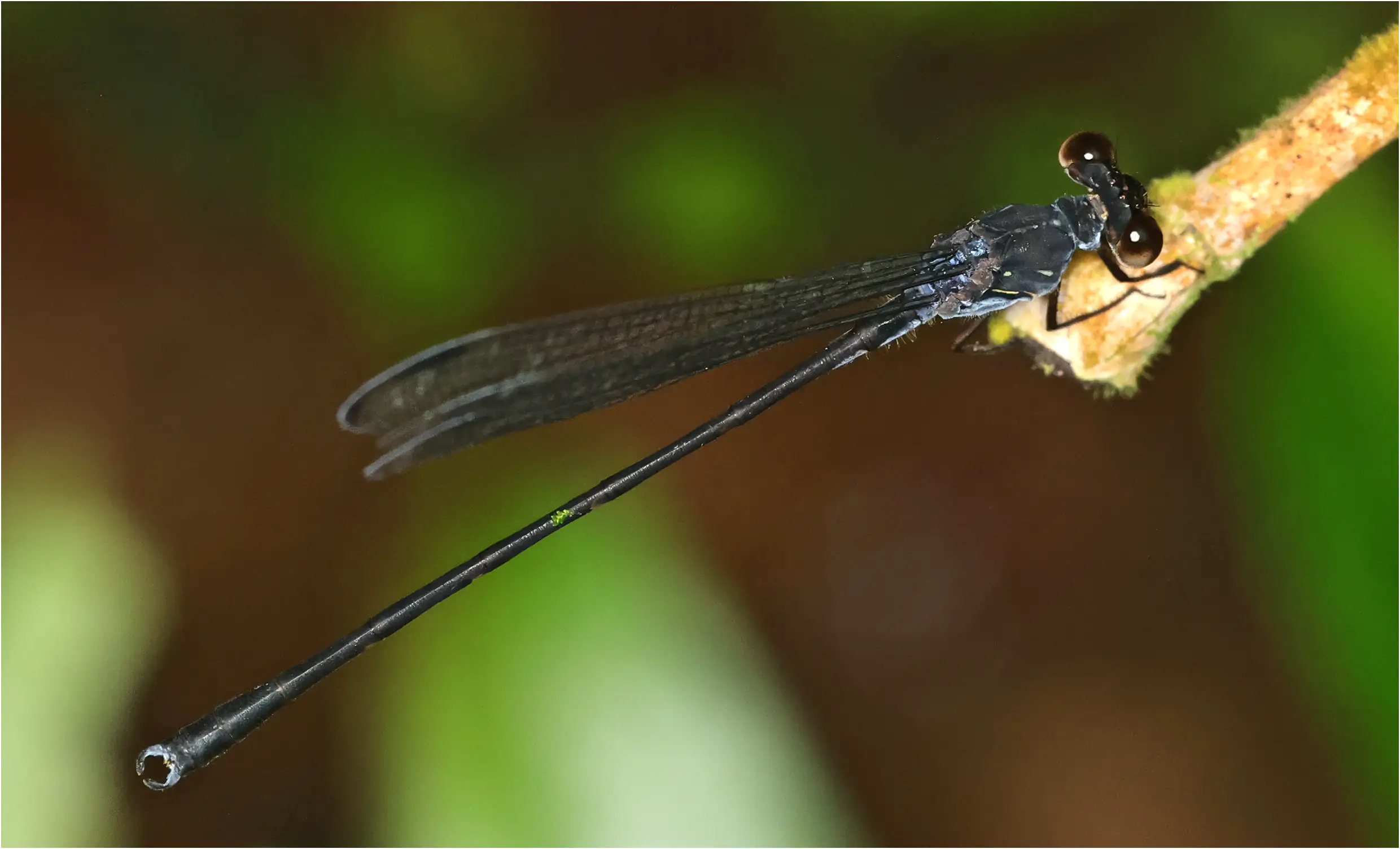
Its abdomen, excluding the anal appendages, is highly variable (1), from 32 to 40 mm, giving a total length of about 40 to 51 mm.
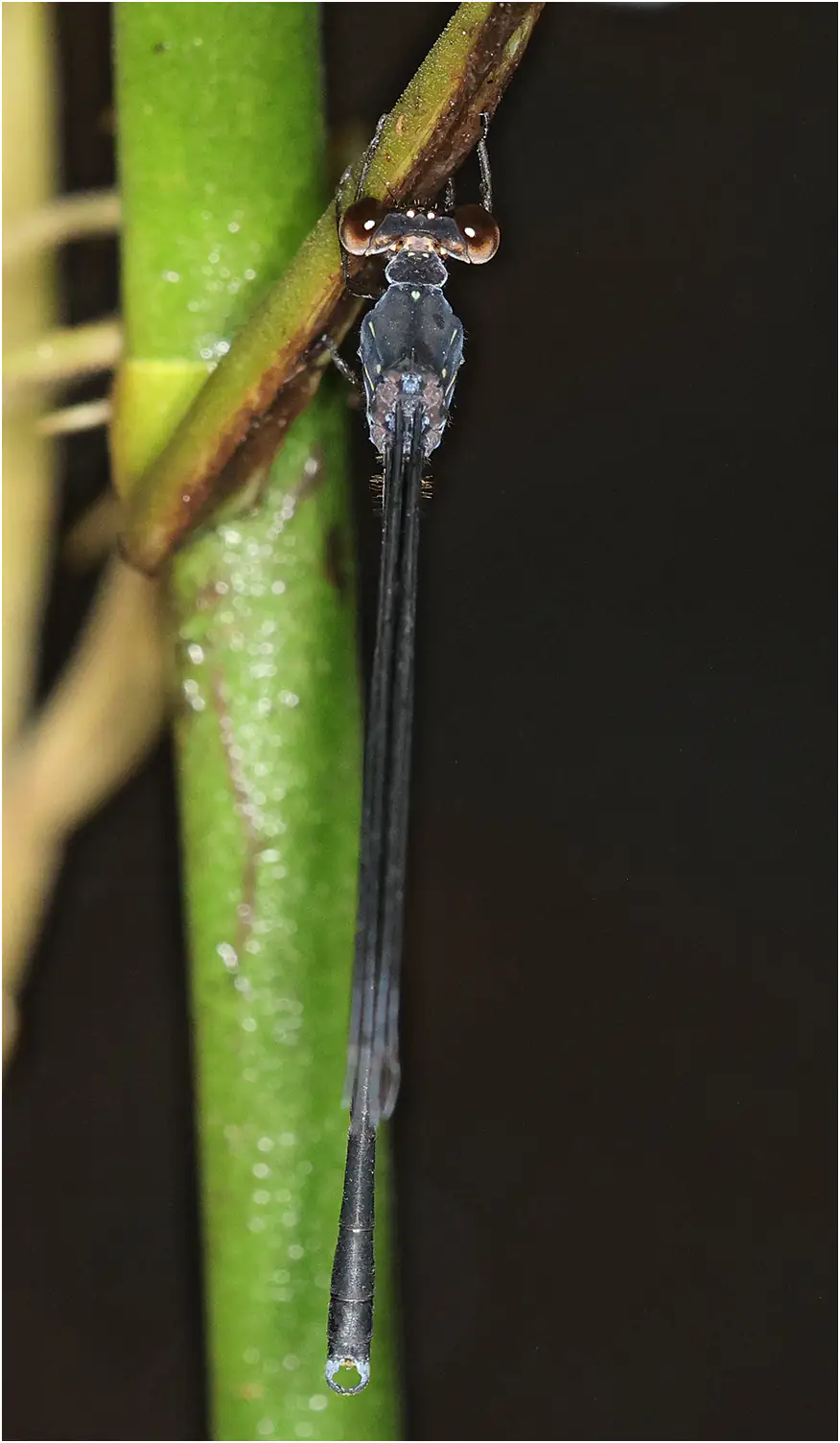
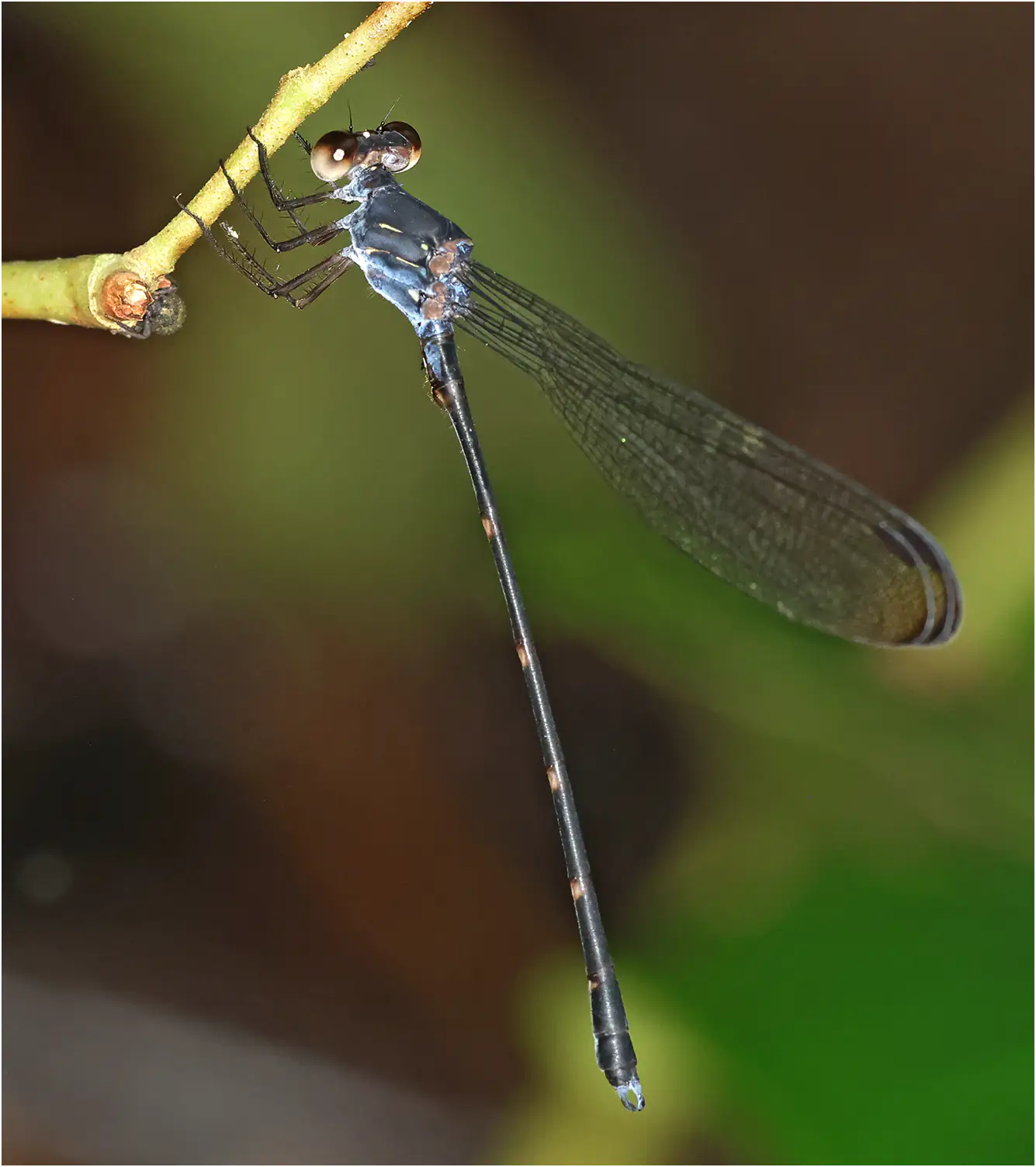
It is endemic to Borneo, where its distribution is limited to West Kalimantan and southwestern Sarawak. It is even less common than D. clavicauda.
IUCN Red List.
On the territory of these males, we encountered a female and assumed it belonged to the same species. To be certain, a dorsal view of her pronotum would be required, but that is the only angle she allowed me.
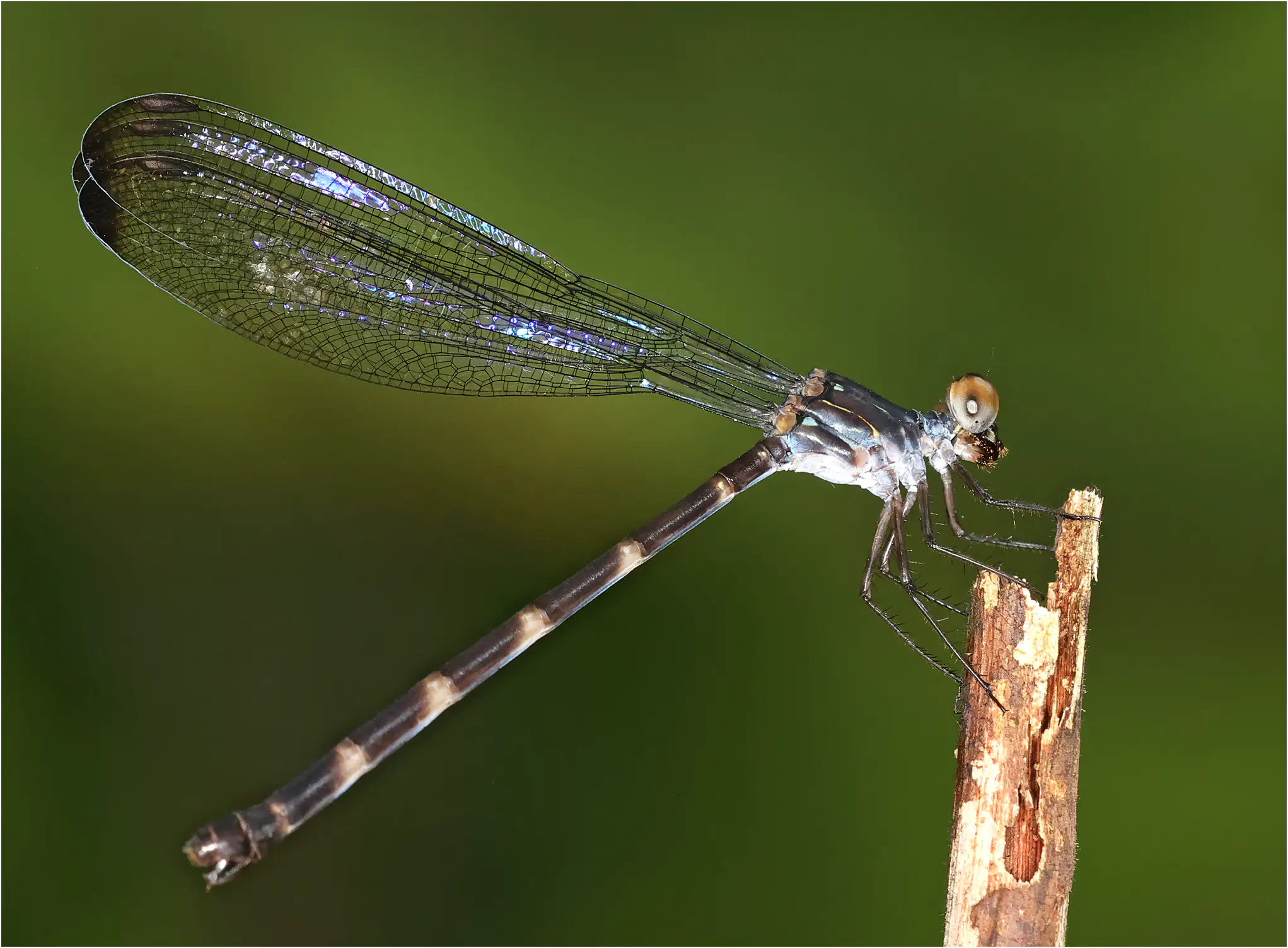
Etymology of Devadatta podolestoides
Devadatta ; in Sanskrit, this term means "god-given," and it is unknown why Kirby in 1890 used the name of this monk, the cousin of the Buddha, as well as his rival and bitter enemy...
Podolestoides: from Podolestes, a genus of the family Argiolestidae, and the suffix -oid to indicate the resemblance of this Devadatta to Podolestes (whereas the latter perch with open wings).
Podolestes itself is formed from the Greek pous–podo, meaning "foot" or "leg," and lestes. Lestes was coined by Leach (1815) and comes from the Greek word lēstēs, meaning 'thief' or 'pirate', very likely because of the shape of the anal appendages of this genus, which evokes the curved, serrated cutlass of pirates (5). Selys writes: "Pieds longs, longuement ciliés, à onglets des tarses simples. - Long legs, long-ciliates, with simple tarsal claws." Selys is therefore certainly referring to the particular "feet" of this genus, whether concerning their length or their specific tarsal claws mentioned in italics, or both.
1- Dow, Hämäläinen, Stokvis, 2015 – Revision of the genus Devadatta Kirby, 1890 in Borneo based on molecular and morphological methods, with descriptions of four new species (Odonata: Zygoptera: Devadattidae) – Zootaxa 4033 (3): 301–349 -P. 333.
2- A Guide to the Dragonflies of Borneo, their identification and biology. A.G. Orr, Natural History Publication (Borneo) – 2003.