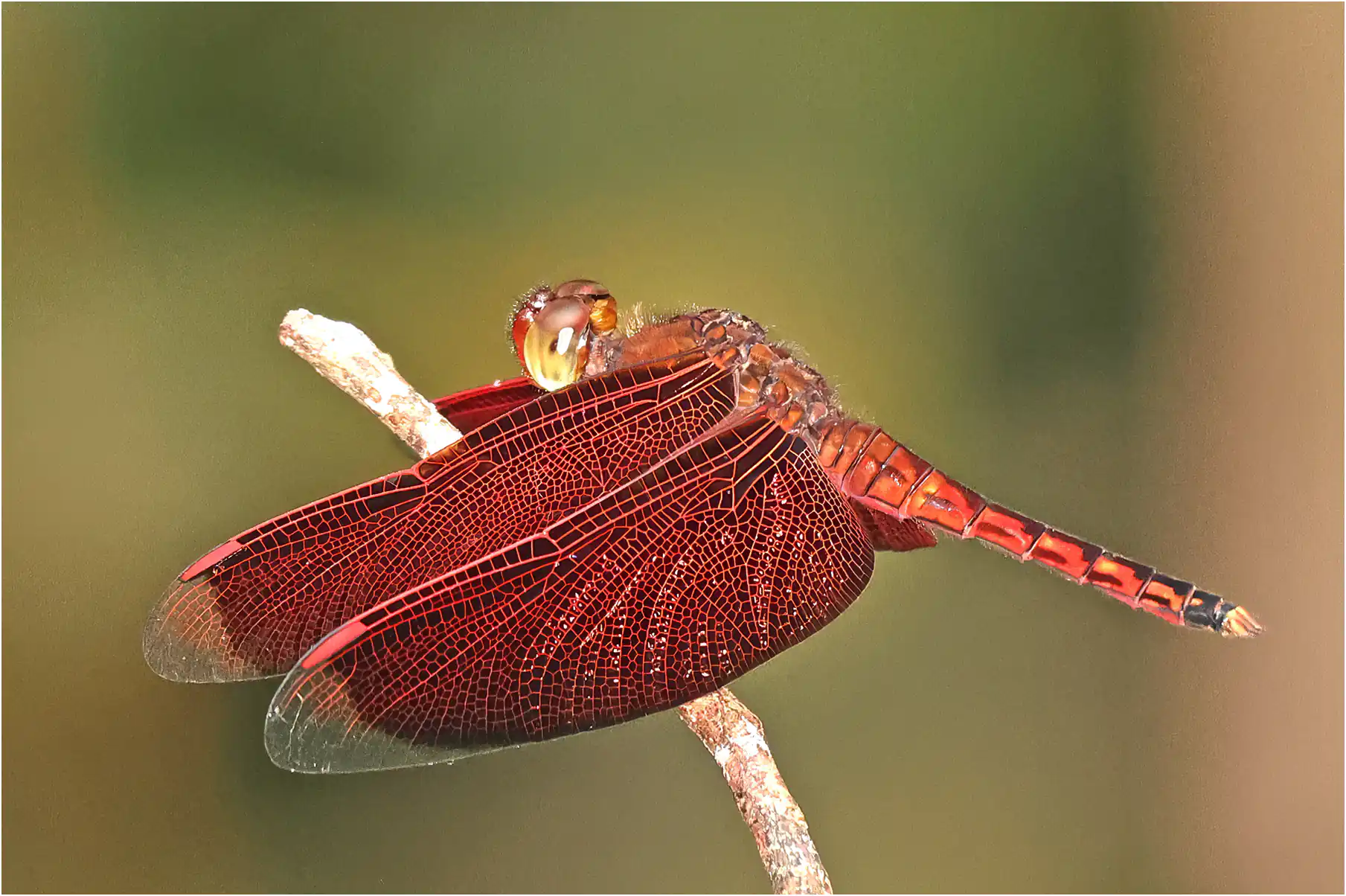
I thought I had already encountered Neurothemis ramburii in 2013, in Malaysia, an identification confirmed by A.G. Orr (5), but after making progress in identifying these Libellulidae, notably thanks to Seehausen & Dow, 2016, this would appear to be an error, and this species is reportedly not present on the peninsula (1).
In Borneo, there are only 3 Neurothemis species, and their wing colouration makes it impossible to confuse them with any other genus: Neurothemis ramburii, fluctuans, and terminata. In photographs, identification relies on the black abdominal markings, the shape of the hyaline area of the wings, and the venation, particularly of the forewing triangle.
The description of the species appears in a work by Brauer, 1866 (2) under the name Polyneura ramburii. In 1867, he would establish the genus Neurothemis.

Description and identification of Neurothemis ramburii
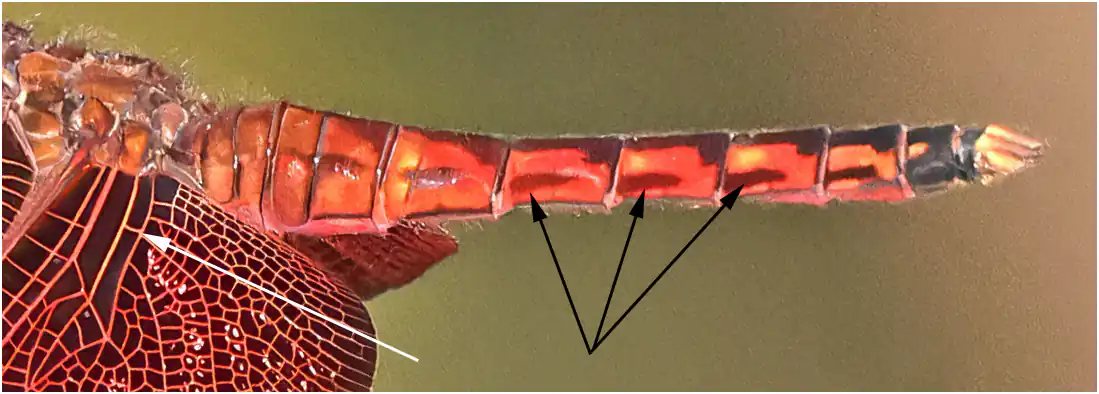
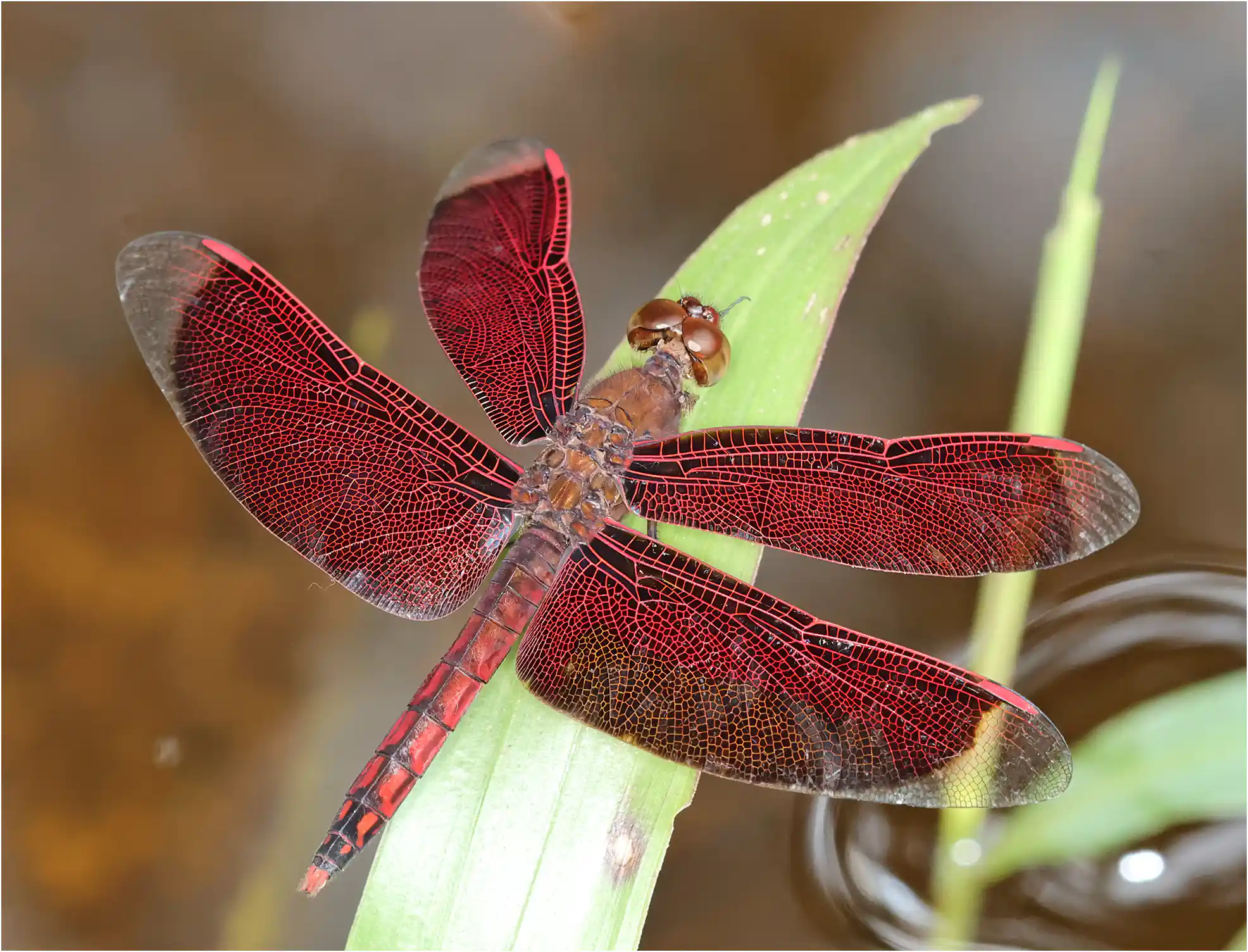
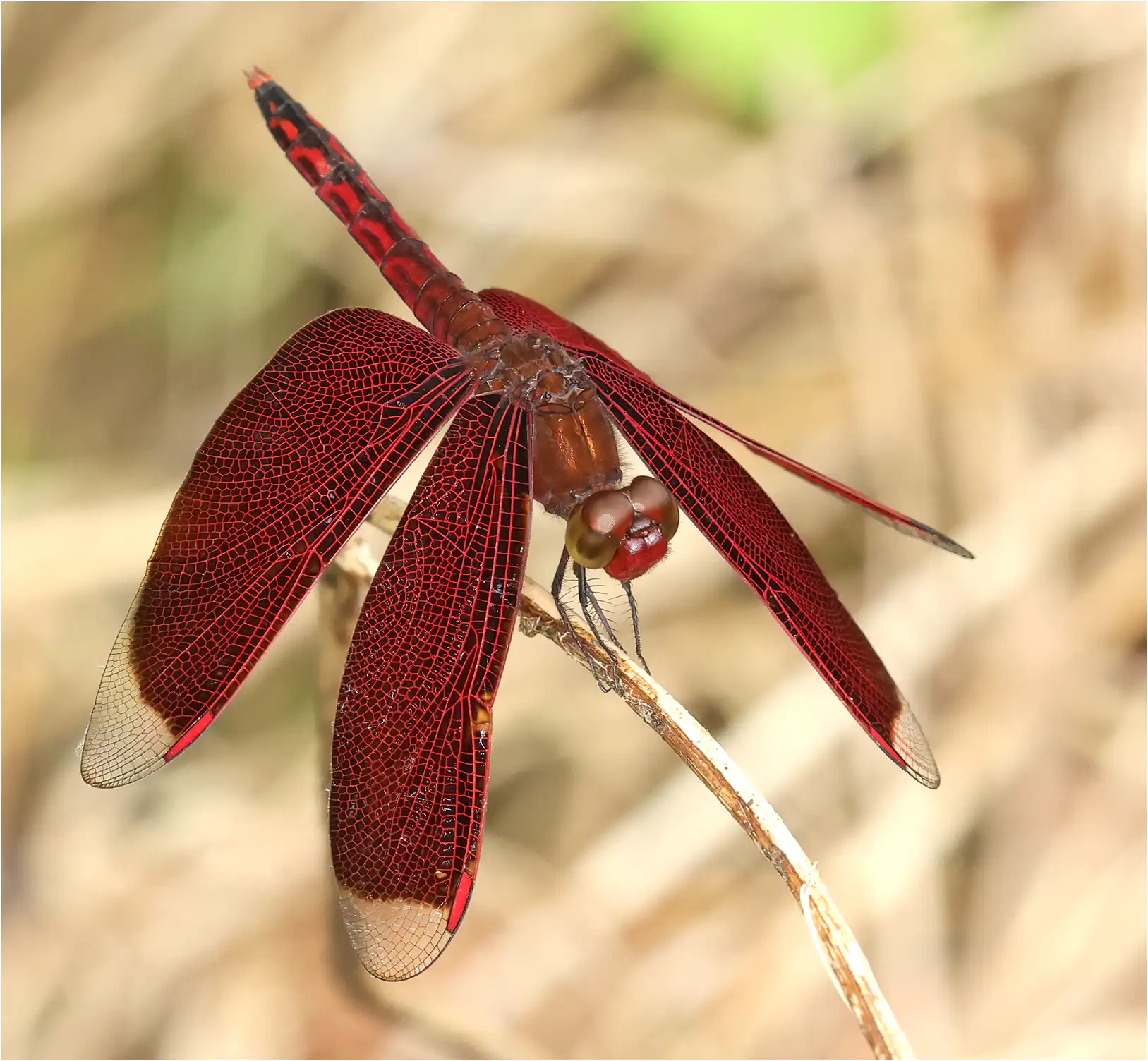
Indeed, we note that the lateral abdominal markings of these subjects touch the proximal part of each segment or are shifted forward; for N. fluctuans, they are in the middle of the segments; for N. terminata, they touch or are close to the apex of the segments.
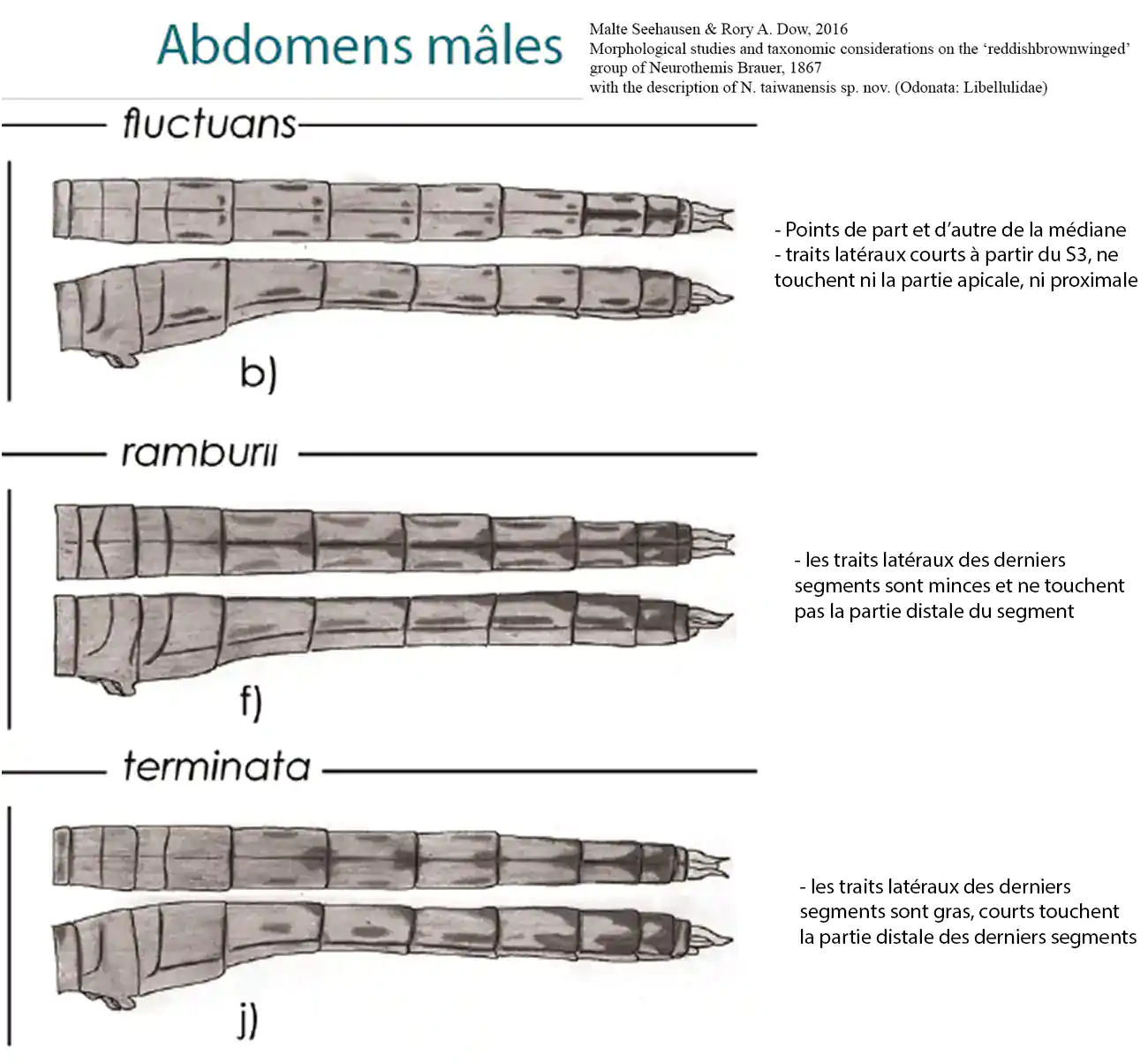
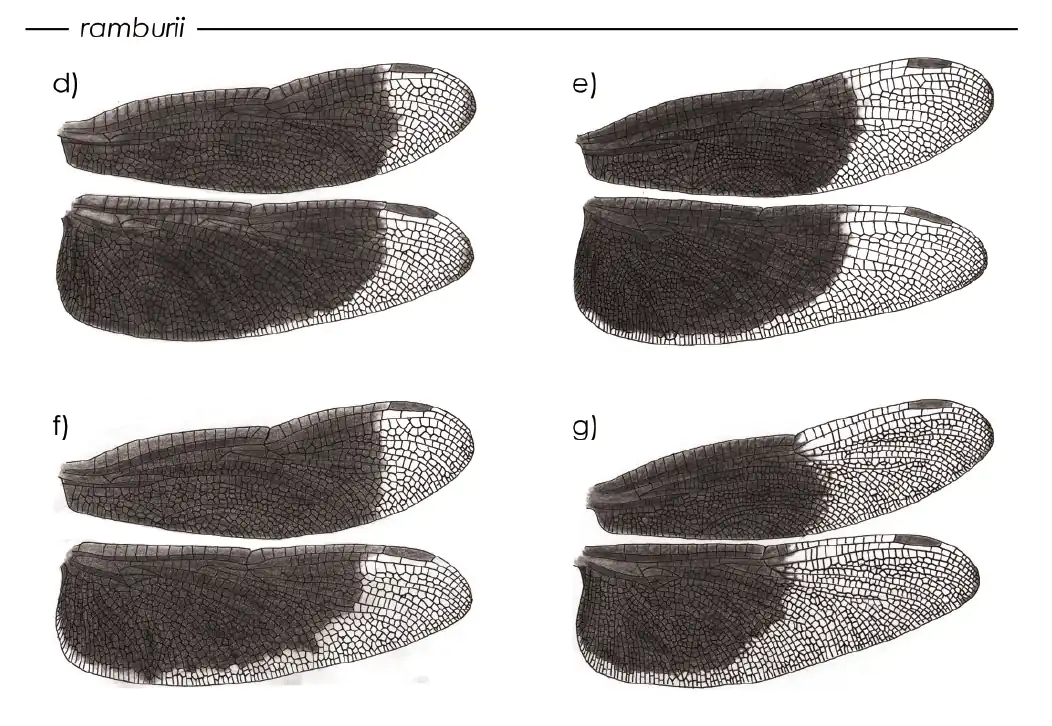
Malte Seehausen & Rory A. Dow, 2016 (1)
The colouration of the forewing reaches the beginning of the pterostigma here and meets the posterior margin of the wing in an almost straight line, whereas for the hindwing, it forms a curve, very slightly broken in the middle. For N. fluctuans, this curve is not broken and extends further towards the base of the wing; for N. terminata, the colouration meets the posterior margin in a straight line.
Note, still from the same document, the very high variability in the extent of the colouration, which has made it possible to define several geographically localised subspecies.
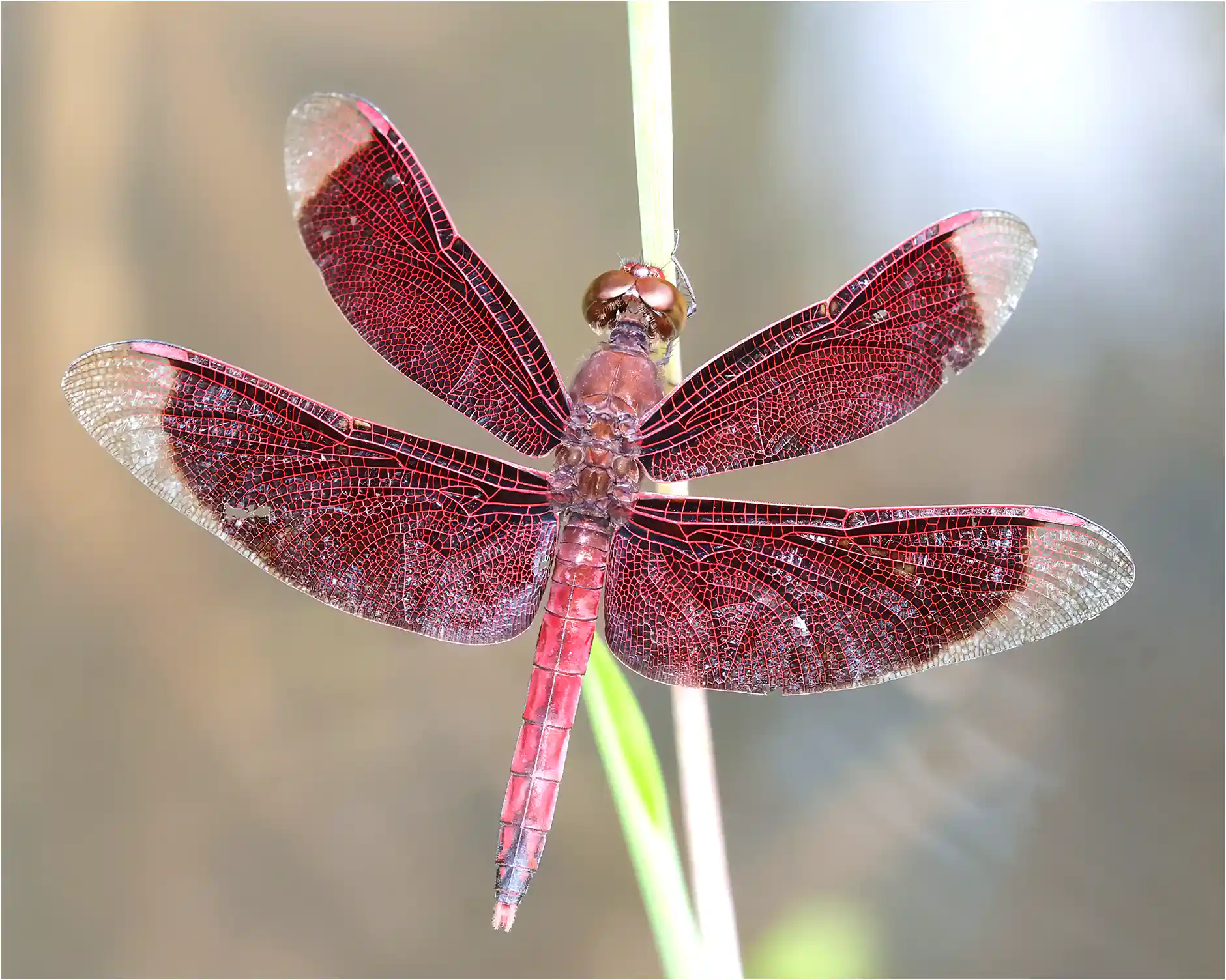
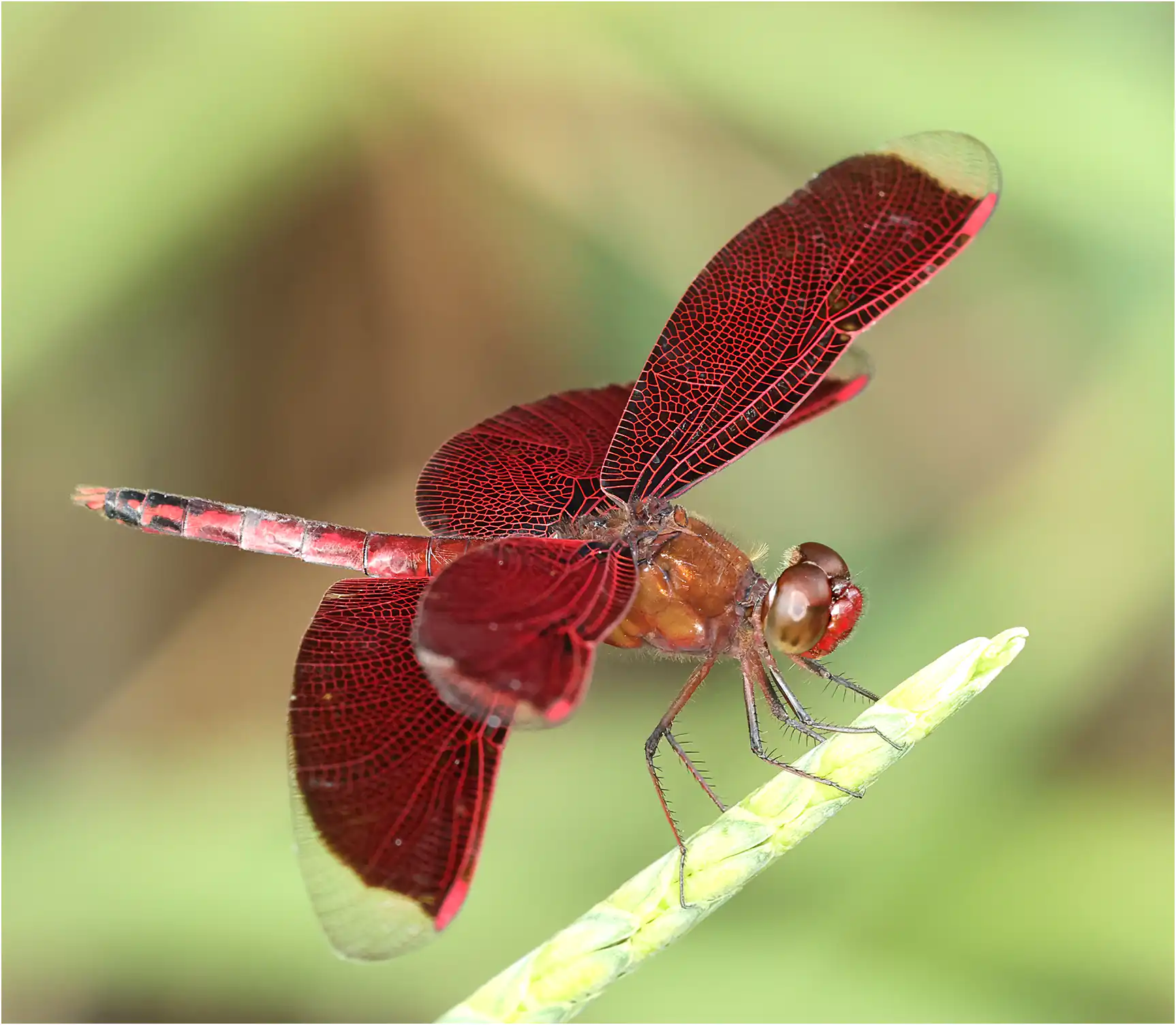
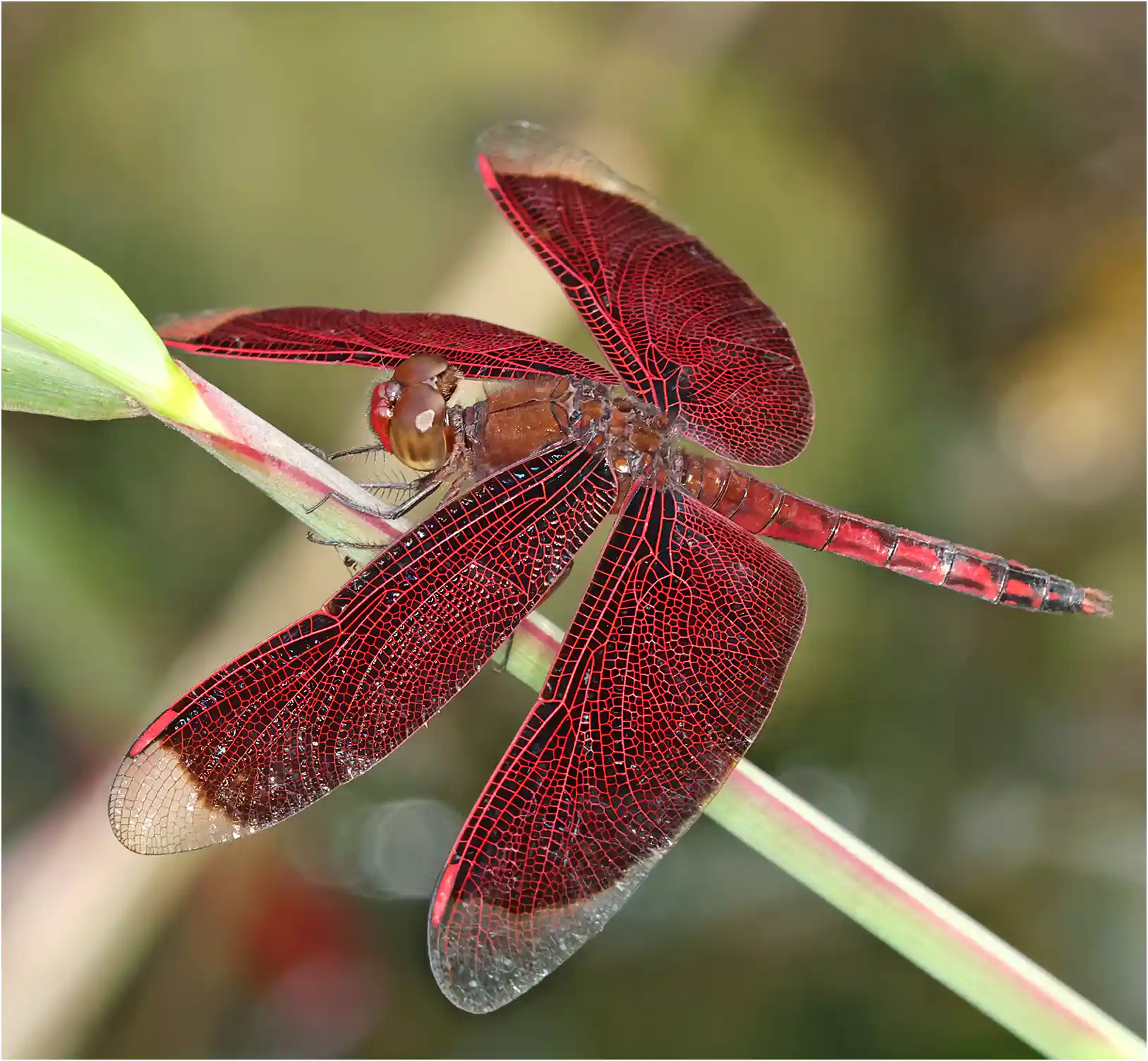
Also note the variability in the intensity of the black markings on the abdomen from one subject to another, undoubtedly due to aging. The "break" in the curve of the hindwing coloration is clearly visible on the subjects below.

In Dragonflies of Japan (3), we find the drawing below, which is very interesting for females, because the forewing triangles are very different. Unfortunately, I have not seen, and in any case have not photographed, a female N. ramburii [see below!]. These exhibit two forms, one with coloured wings and the other with hyaline wings, though marked at the apices.
As for males, the triangle of N. fluctuans is very different from the other two, which are quite similar. It does not appear that the analysis of the triangles provides elements to separate N. ramburii and N. terminata.

It is certainly necessary to remain cautious when identifying Neurothemis species and to always combine multiple criteria, particularly associating abdominal markings with wing colouration. Furthermore, the existence of hybrids is considered between N. ramburii and N. terminata, as well as between the latter and N. fluctuans (1)...
Brauer gives it a total length of 41 mm; it undoubtedly ranges from 37 to 41 mm. It is smaller than N. terminata (about 43 mm) but significantly larger than N. fluctuans, which measures around 30 mm.
Habitat and geographical distribution
It is found in a wide variety of biotopes: swampy forest edges, ponds, pools, ditches, rice fields, or irrigation canals. Watanabe & al. (4), who produced a paper on the larva of Neurothemis ramburii, found it particularly abundant in agricultural ditches, especially where there was a few centimeters of sand.
They describe copulation as taking place either in flight or while the specimens are perched intermittently, followed by oviposition with the female striking the water with the tip of her abdomen while guarded by the male.
I am nevertheless surprised that the photograph illustrating this article shows wing characters that seem to me incompatible with what is read in Seehausen & Dow, 2016 (1).
Furthermore, if we follow the same authors, the distribution of the species does not reach these islands east of Taiwan.
It is encountered in Borneo, Java, the Lesser Sunda Islands, the Moluccas, the islands off the west coast of New Guinea, the Philippines, Sumatra, and Sulawesi.
IUCN Red List.
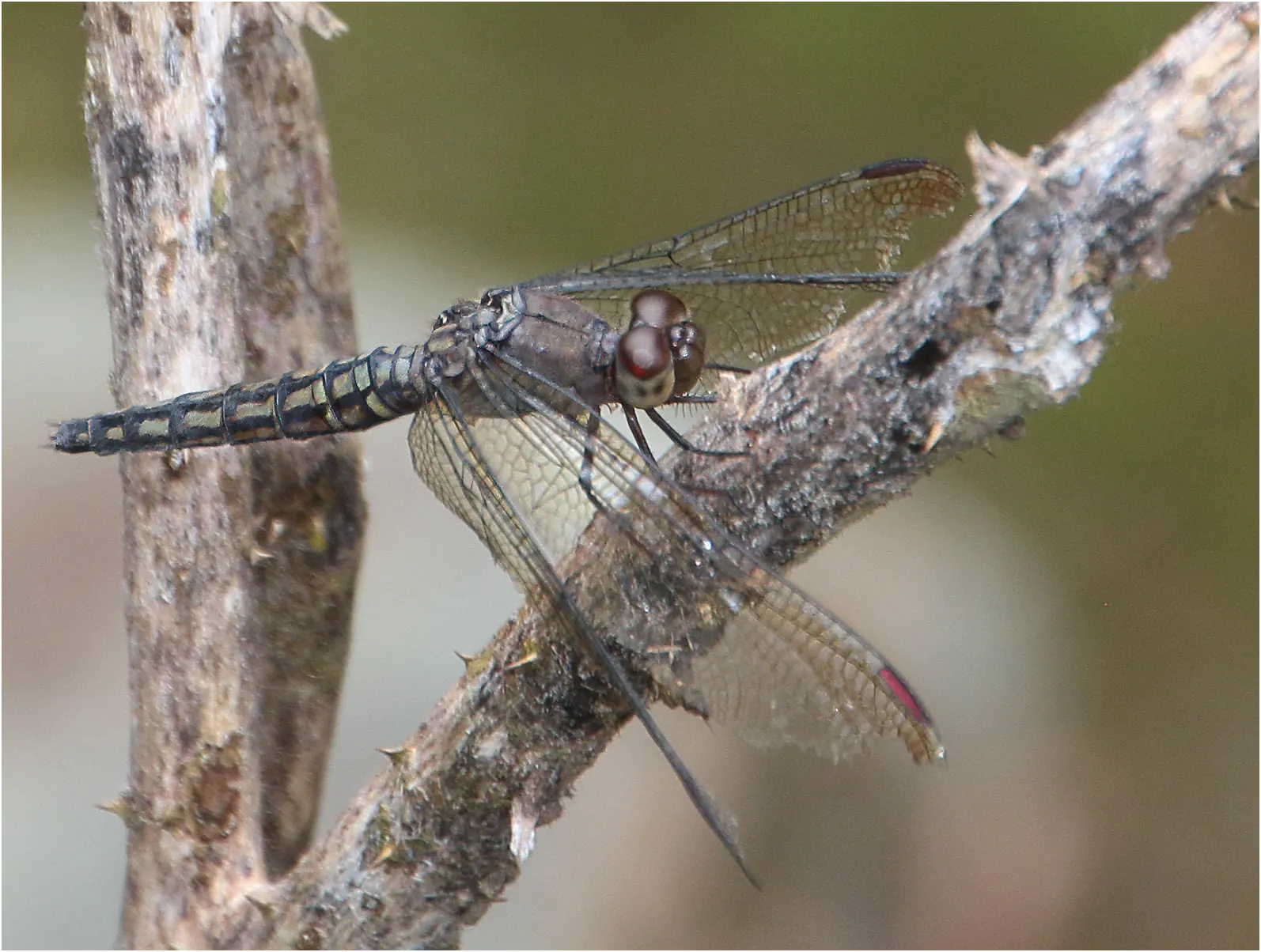
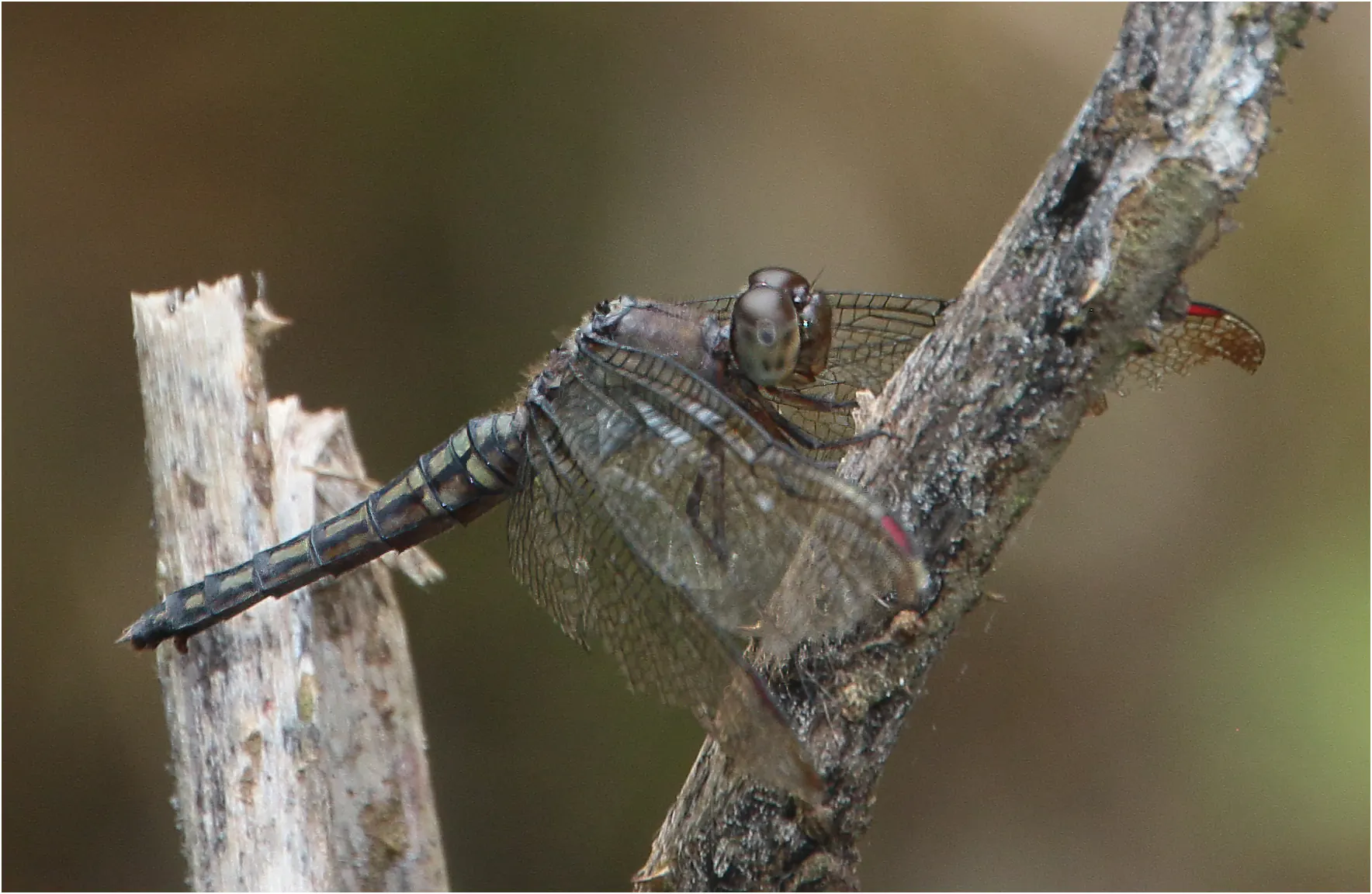
A few months after writing this page on the males, I discovered some photographs of a female taken in a fairly dense forest area where we did not encounter any males.
Its identification relies on the prominent, long, and orthogonal vulvar lamina, the very bold "ladder-like" pattern on the dorsal surface of its abdomen, and the presence of a single crossvein in the cubito-anal space, as shown in the document (1).
Etymology of Neurothemis ramburii
Neurothemis (6), from the Greek neuro for "nerve" or rather "wing venation" in entomology, and from Themis—the Greek goddess of order and justice, which has been used many times since Hagen (1861). The name of the goddess of order is particularly well suited to taxonomy, the science that aims to describe and order families, genera, and species. Brauer created this generic name in 1867 to replace the genus Polyneura, created by Rambur in 1842, because the latter was already in use among Hemiptera. This generic name, like the current name, was intended to emphasize the large number of cells in their wings.
Ramburii is of course a tribute to Jules Rambur, a physician and entomologist, descripteur of many Odonata species and author of the famous Histoire Naturelle des Insectes (1842).
1- Malte Seehausen & Rory A. Dow, 2016 - Morphological studies and taxonomic considerations on the ‘reddishbrownwinged’ group of Neurothemis Brauer, 1867 with the description of N. taiwanensis sp. nov. (Odonata: Libellulidae) - Journal of the International Dragonfly Fund.
2- Brauer, F. 1866. Beschreibung neuer exotischer Libellen. Verhandlungen der Kaiserlich-Königlichen Zoologisch-Botanischen Gesellschaft Wien 16: 563-570. P. 568.
3- Akira Ozono, Itsura Kawashima, Ryo Futahashi, 2012 - Dragonflies of Japan - Bun-ichi Sogo Shuppan Co.
4- Ken’ichi Watanabe, Itsuro Kawashima & Akihiko Sasamoto, 2013 - Notes on the larva of Neurothemis ramburii ramburii (Kaup in Brauer, 1866) obtained from Iriomote-jima Island, Yaeyama Islands,southern Ryukyus, Japan (Anisoptera: Libellulidae) - TOMBO, Fukui, 55: 83-87. May. 15, 2013
5- A.G. Orr, 2005. Dragonflies of Peninsular Malaysia and Singapore- Natural History Publication (Bornéo) A.G.
6- The Naming of Australia’s Dragonflies, Ian Endersby & Heinrich Fliedner, Busybird publishing.