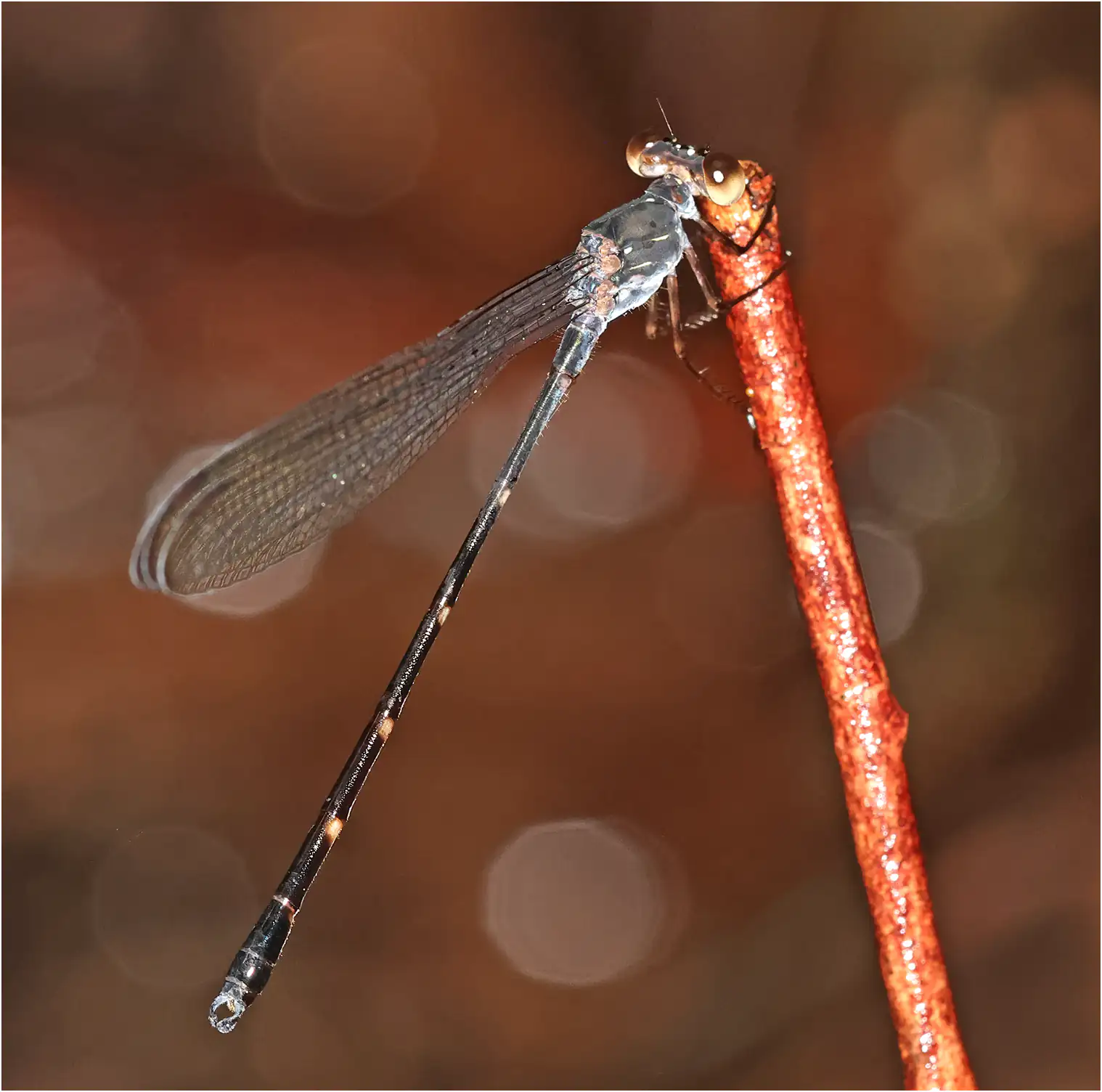
Devadatta clavicauda of the Devadattidae family (Dijkstra et al., 2014, ex-Amphipterygidae) is a rarity, yet it is (1) the most common Devadatta within its distribution range.
In 2015, the genus included seven species, six of which were described that year, including 4 in Borneo.
Only one species was recognized when A. G. Orr published his Dragonflies of Borneo in 2015 (2), but this author suspected the presence of at least one or several other species, due to the inconstant presence of a spine of variable size on the pronotum of certain females. Unfortunately, this detail does not make it possible to identify the only Devadatta female we encountered.
Fortunately, however, the region we surveyed has only two, Devadatta clavicauda and D. podolestoides, and this is already enough to pose identification problems. Indeed, they are very similar, exhibiting the same pale markings on the pronotum and thorax, and one must rely on the appendages to tell them apart.
Identification,
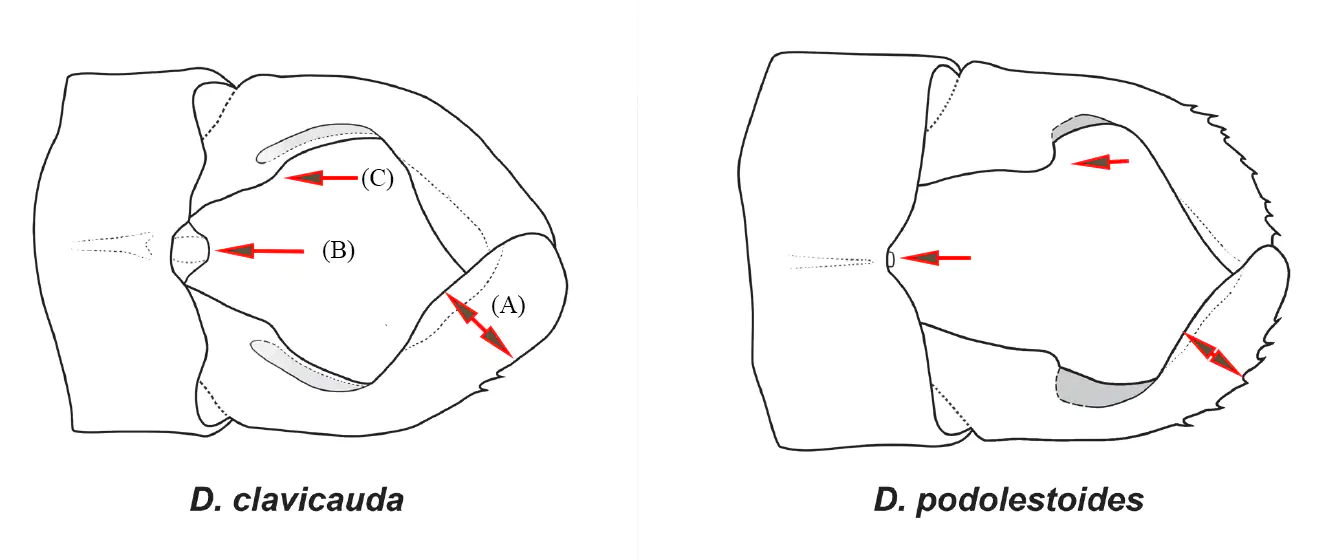
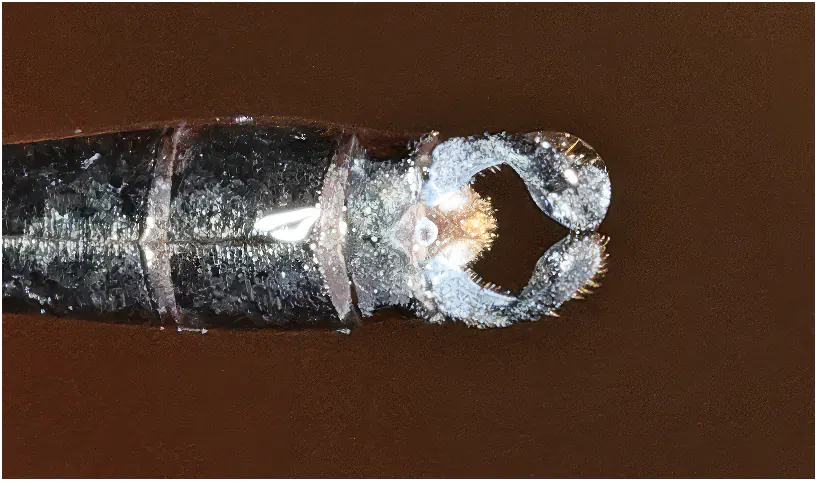
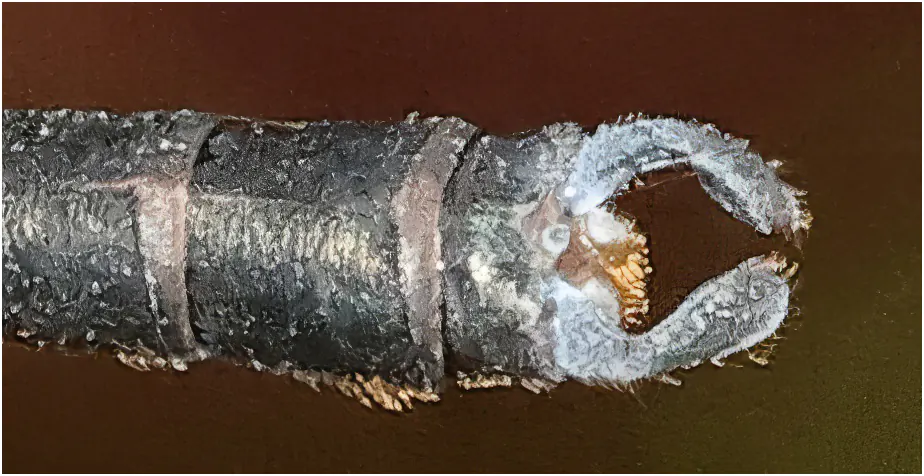
It is certainly best to rely on the work of Dow, Hämäläinen, and Stokvis (1); I have added arrows highlighting the points of difference between these two species. While all this seems obvious in drawings, it is less easy in photographs and difficult in the field!
For instance, I am pretty certain that the first photo is correct, even though the right appendage (at the top of the photo) is artificially enlarged by a water droplet. However, one can still clearly recognize that (golf) club-like shape, heavily dilated distally, of the left appendage.
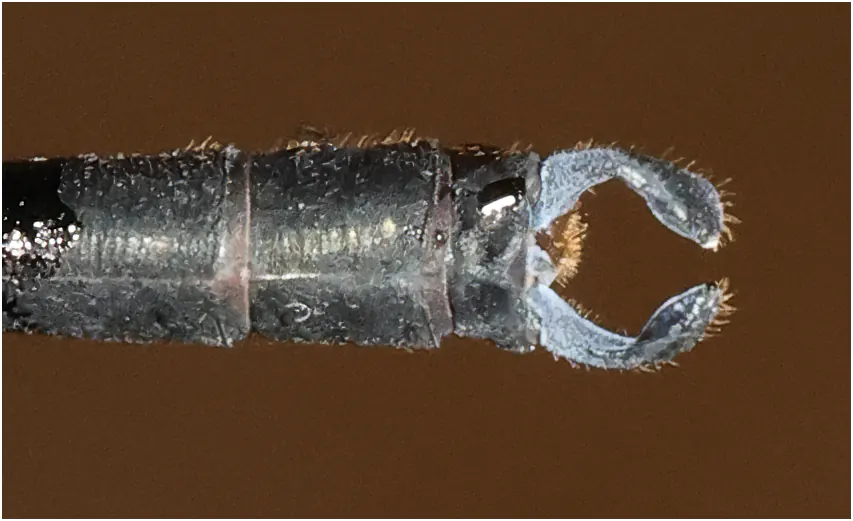
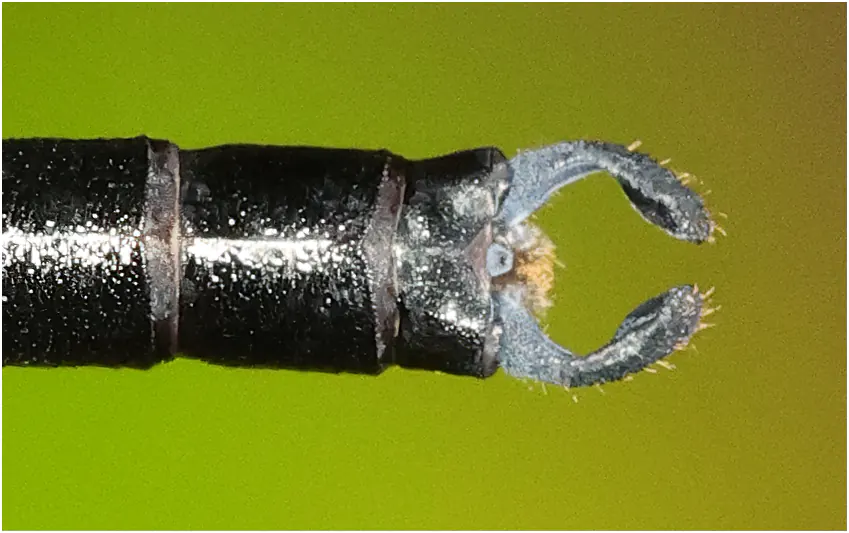
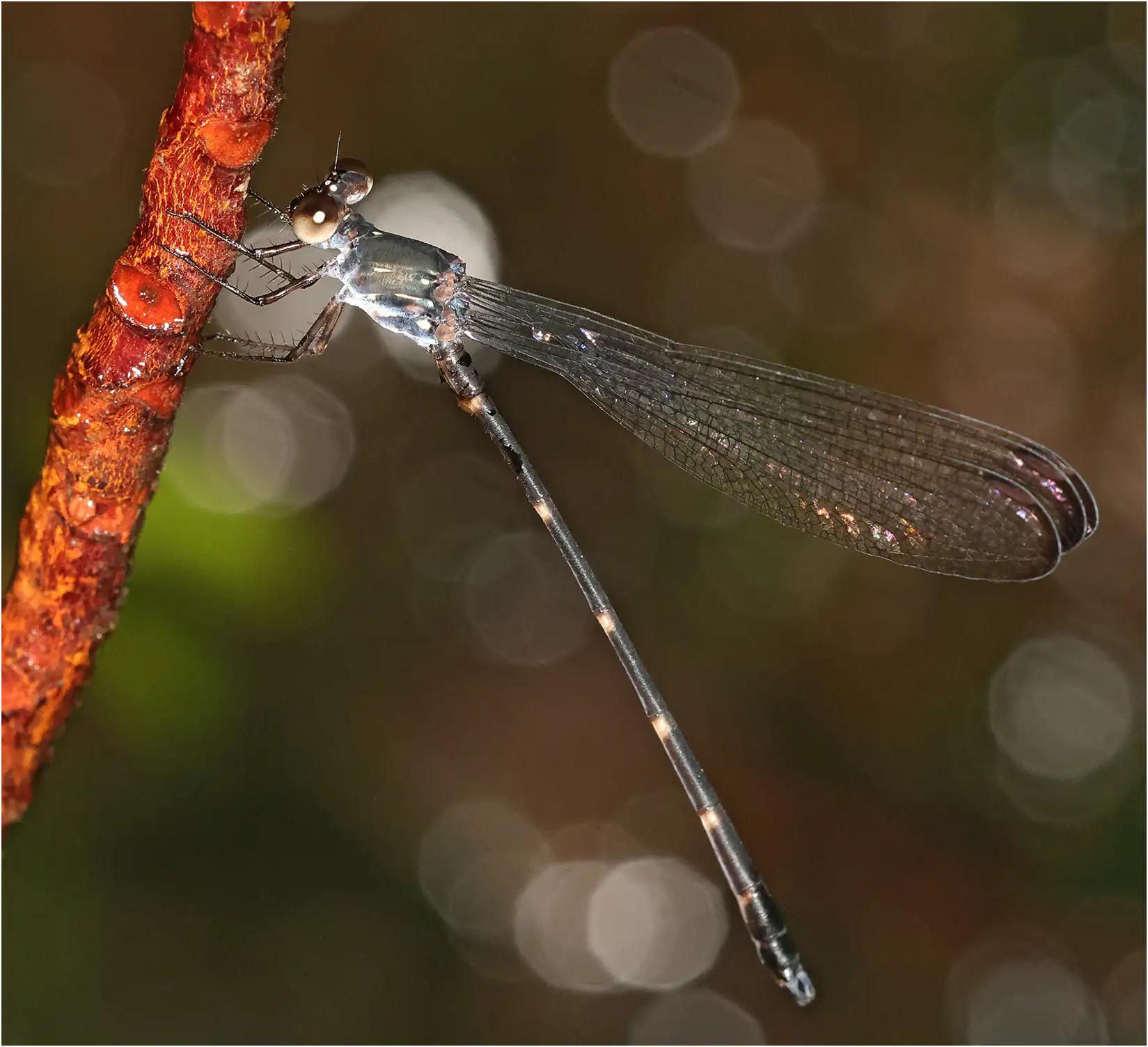
The other two photos are less clear regarding this (golf) club-like aspect; however, one notes that the outgrowth (B) is present, but that the notch (C) observed in D. podolestoides is absent in these specimens.
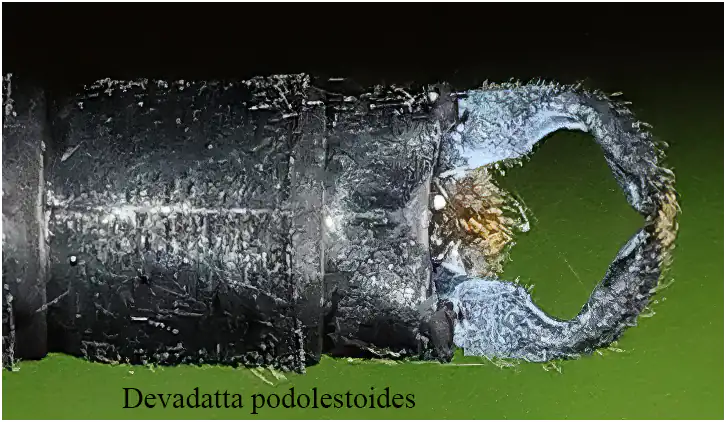
Below, for comparison, are the anal appendages of a typical D. podolestoides: the tips of the appendages are less dilated, the small tuberosity at the tip of S10 (B) is invisible, and the notch (C) on the cerci is well marked.
Size, habitat, geographical distributio
The authors already cited tell us that its abdomen, excluding the anal appendages, measures 31 mm; it must reach a total of 40 mm.
We observed it in the lower mountain forest, under intermittent rain, along a stream feeding a roadside ditch, where we also encountered Stenagrion dubium and Coeliccia cf. nemoricola. This is our only encounter with this species.
It is endemic to Borneo, where it is known only from Brunei, Sarawak, and West Kalimantan.
IUCN Red List.
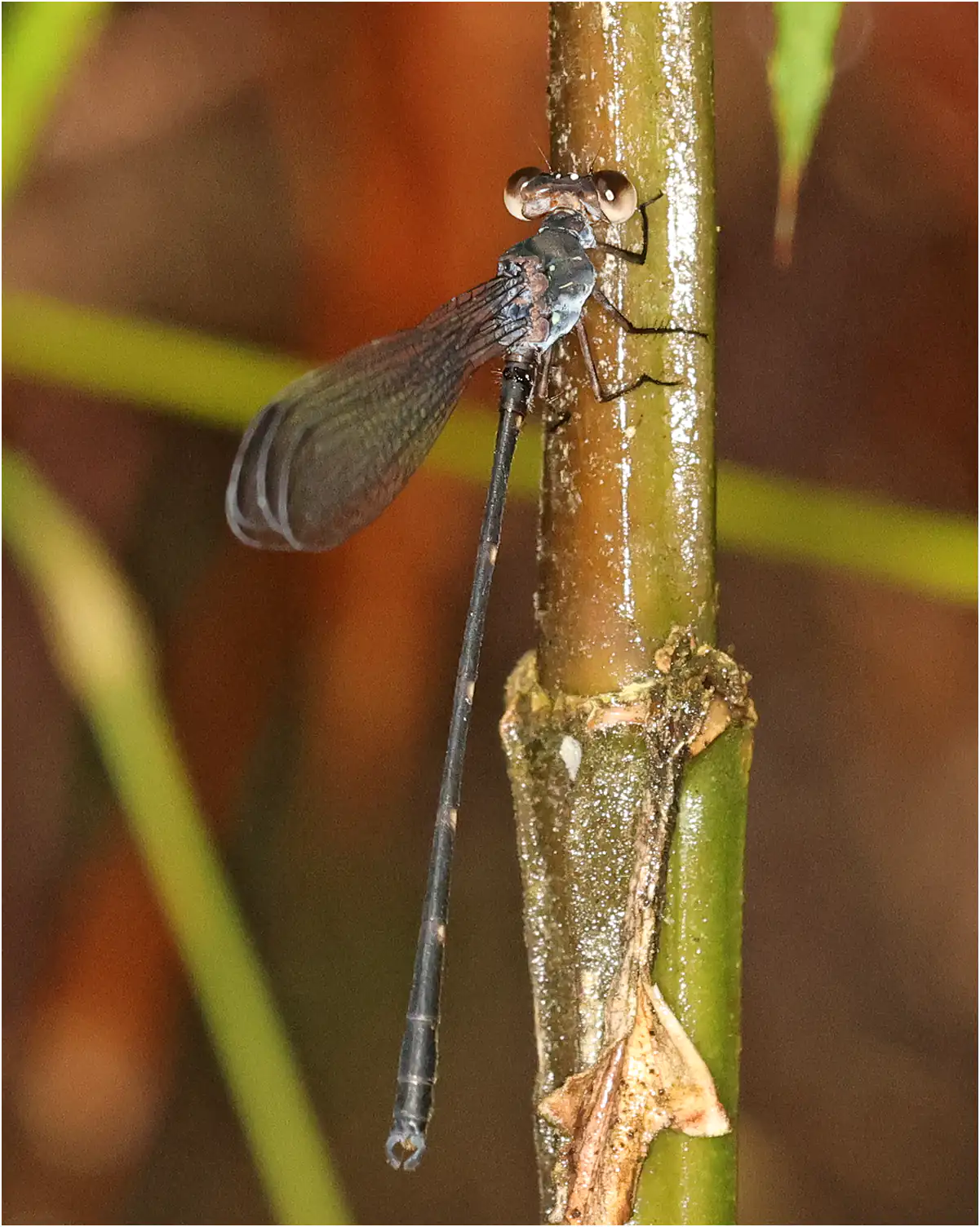
Devadatta clavicauda male, Sarawak, Sri Maha Mariamman Temple Matang, 20/03/2025.
Etymology de Devadatta clavicauda
Devadatta ; in Sanskrit, this term means "god-given," and it is unknown why Kirby in 1890 used the name of this monk, the cousin of the Buddha, as well as his rival and bitter enemy...
Clavicauda, from the Latin clava for "club" or "mace" and cauda for "tail," refers to the club-like shape of the tip of the cerci (superior anal appendages).
Devadatta clavicauda male, Sarawak, Sri Maha Mariamman Temple Matang, 20/03/2025
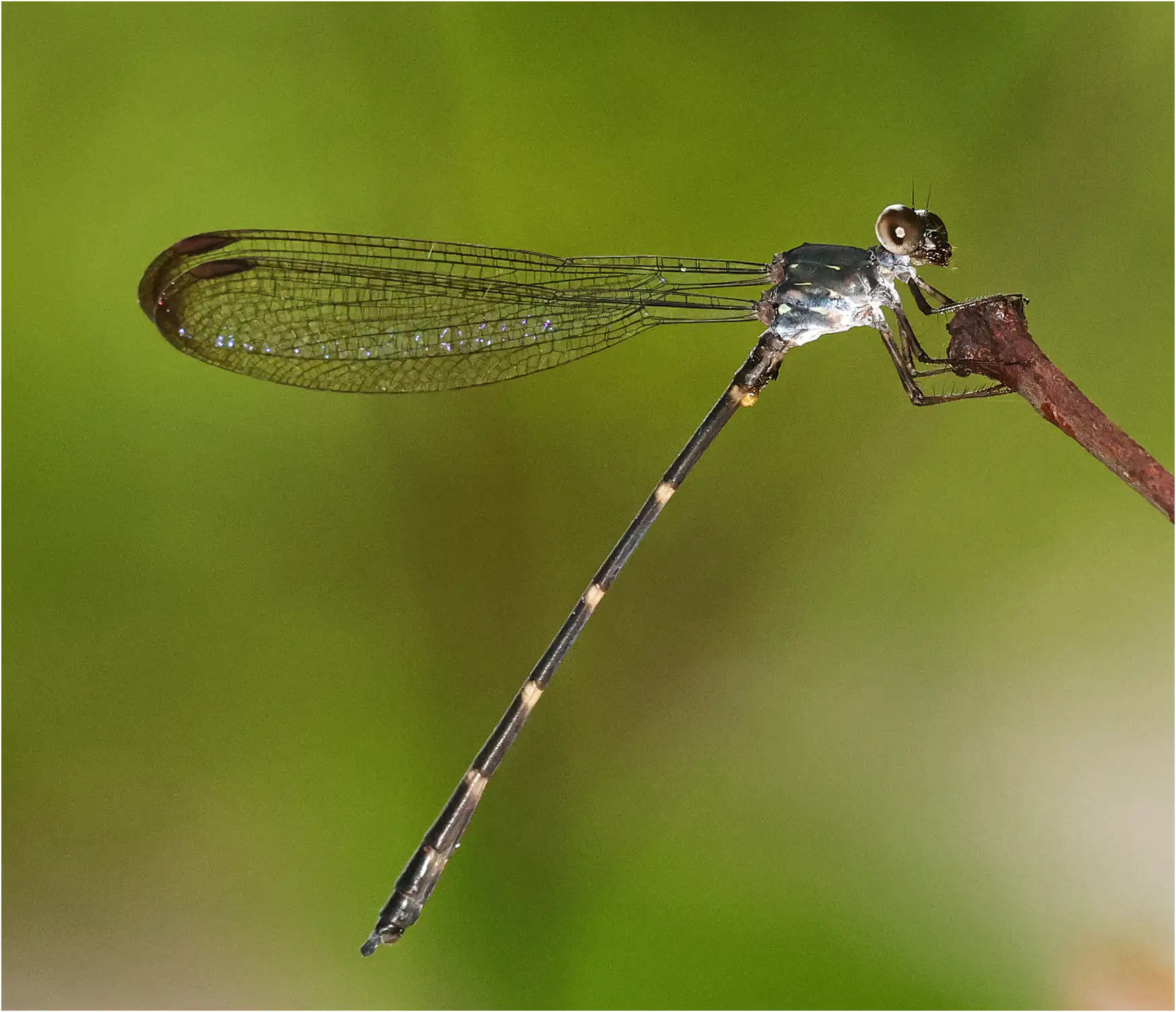
After continuing to sort through my photos, I think this other subject, classified among the "Devadatta to be identified," corresponds well to Devadatta clavicauda, based on its anal appendages.
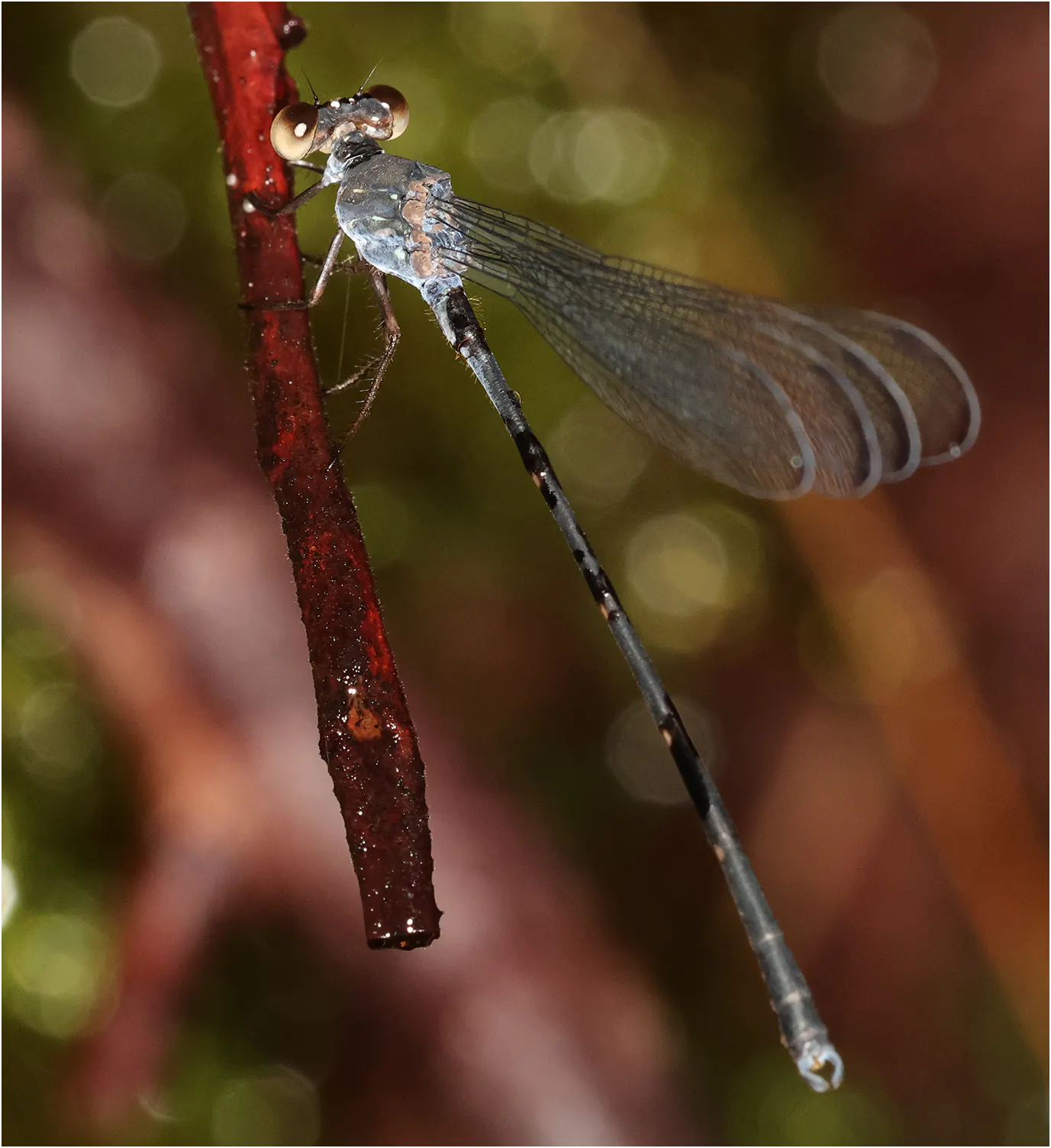
And since in Santubong National Park we presumably only encountered Devadatta clavicauda, I am adding—with the appropriate caveats—this photo of a female and a tandem.
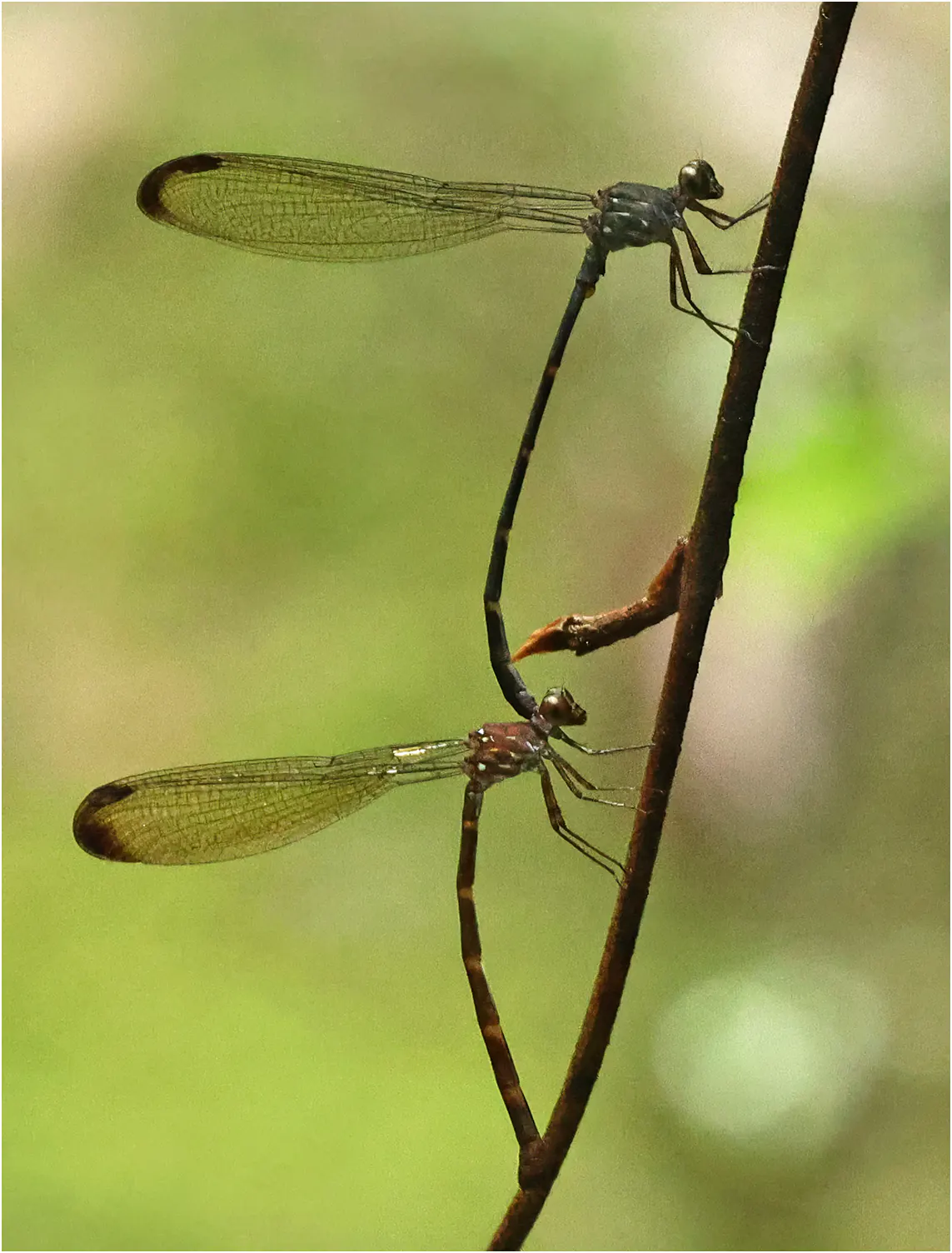
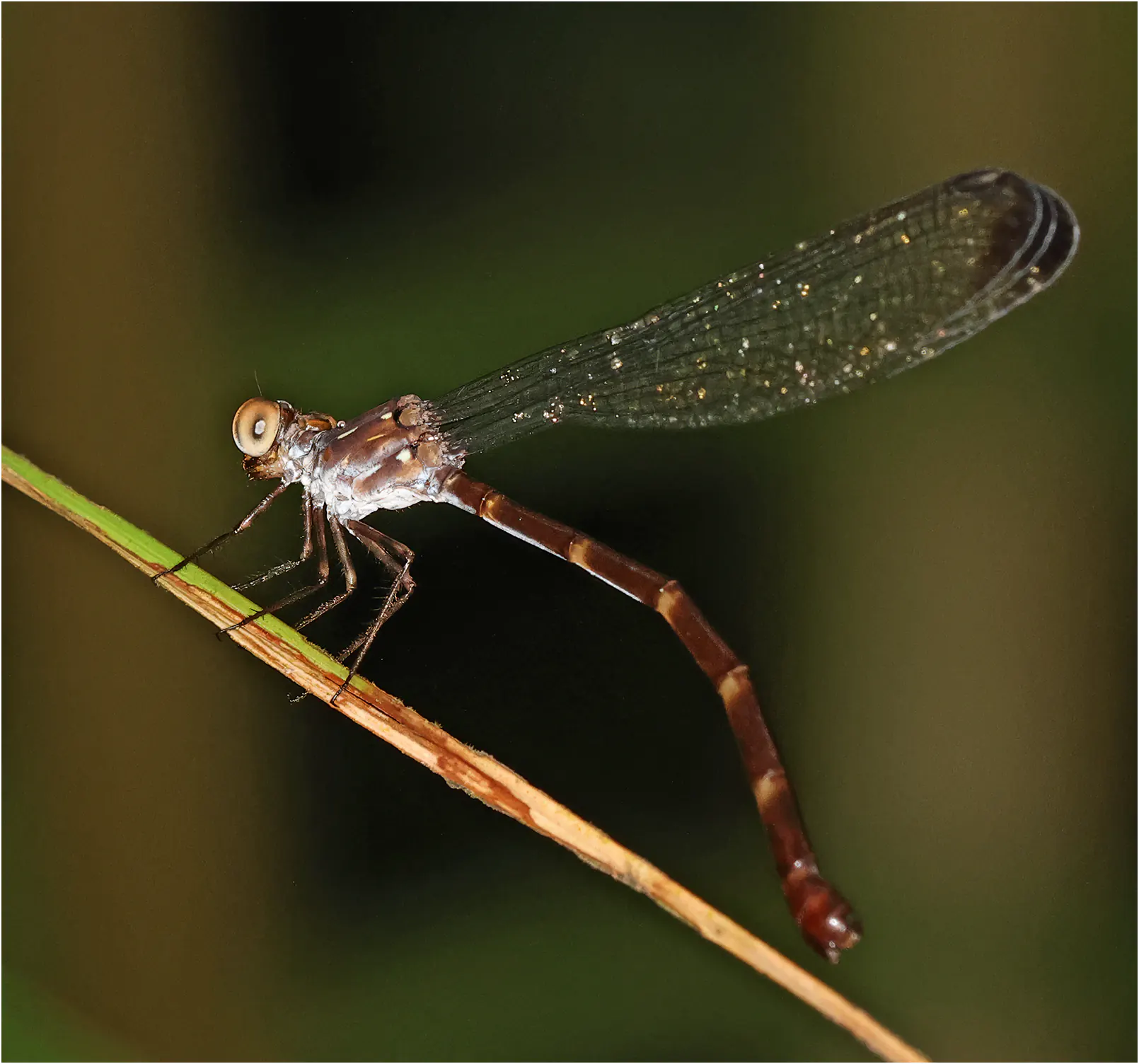
Devadatta clavicauda tandem et femelle, Sarawak, Santubung National Park, 21/03/2025
1- Dow, Hämäläinen, Stokvis, 2015 - Revision of the genus Devadatta Kirby, 1890 in Borneo based on molecular and morphological methods, with descriptions of four new species (Odonata: Zygoptera: Devadattidae) - Zootaxa 4033 (3): 301–349 -P. 327.
2- A Guide to the Dragonflies of Borneo, their identification and biology. A.G. Orr, Natural History Publication (Borneo) – 2003.