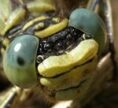
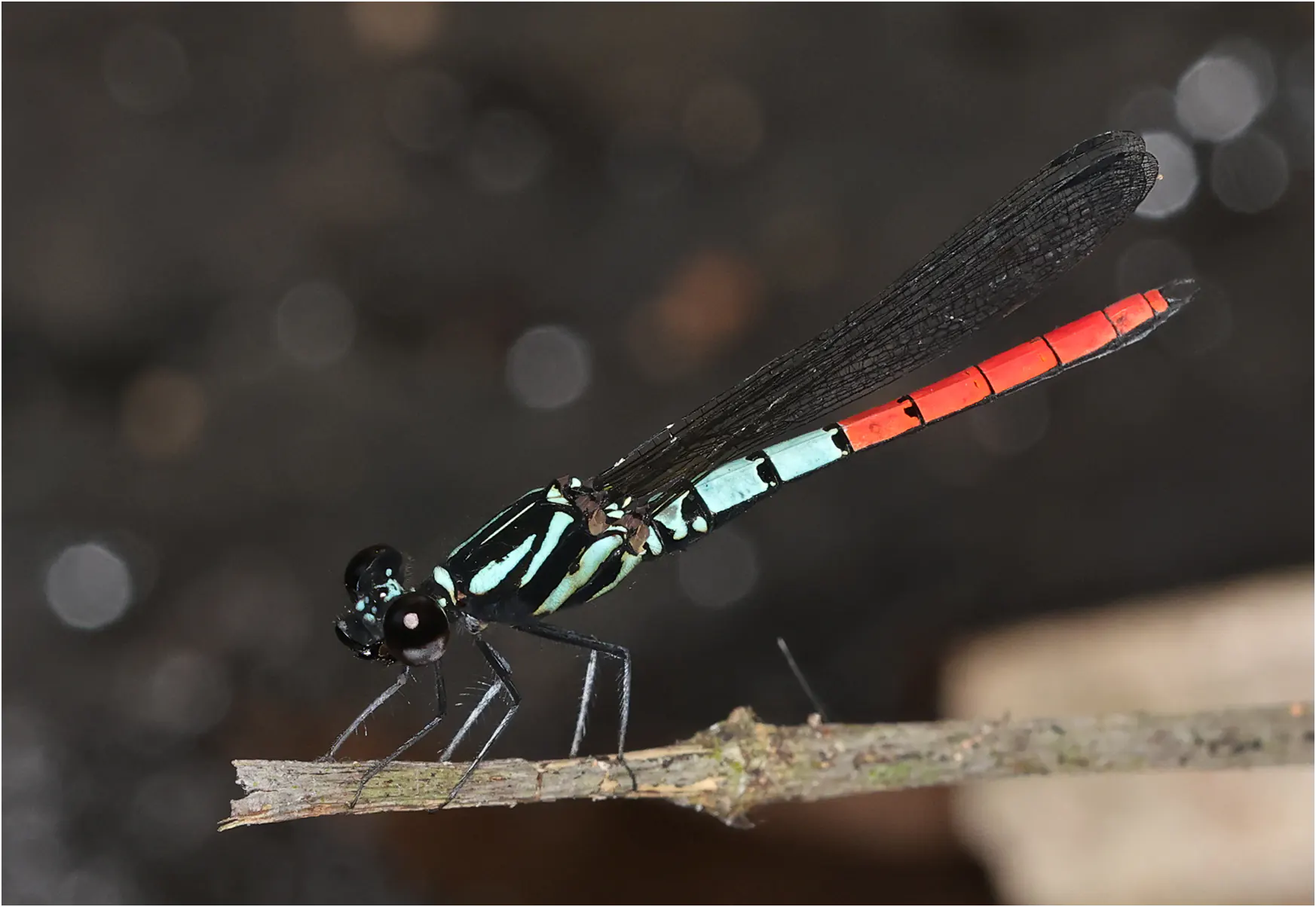
Chlorocypha radix is one of the most beautiful species of this spectacular genus, which counts about thirty species—all endemic to tropical Africa, including seven in Ghana. All members of the Chlorocyphidae family bear a prominent clypeus that allows for immediate identification; they also share the characteristic of having wings as long as or longer than the abdomen.
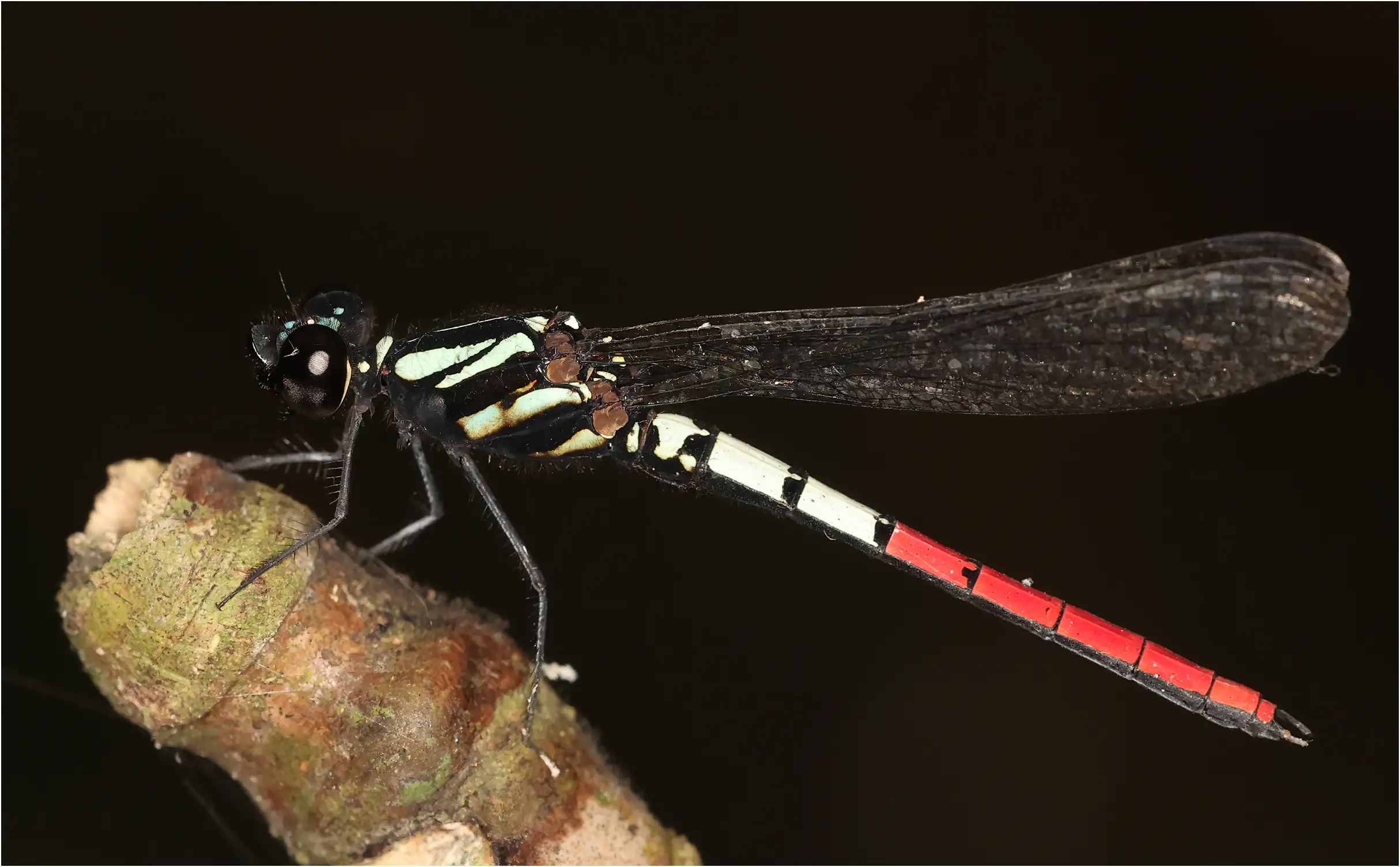
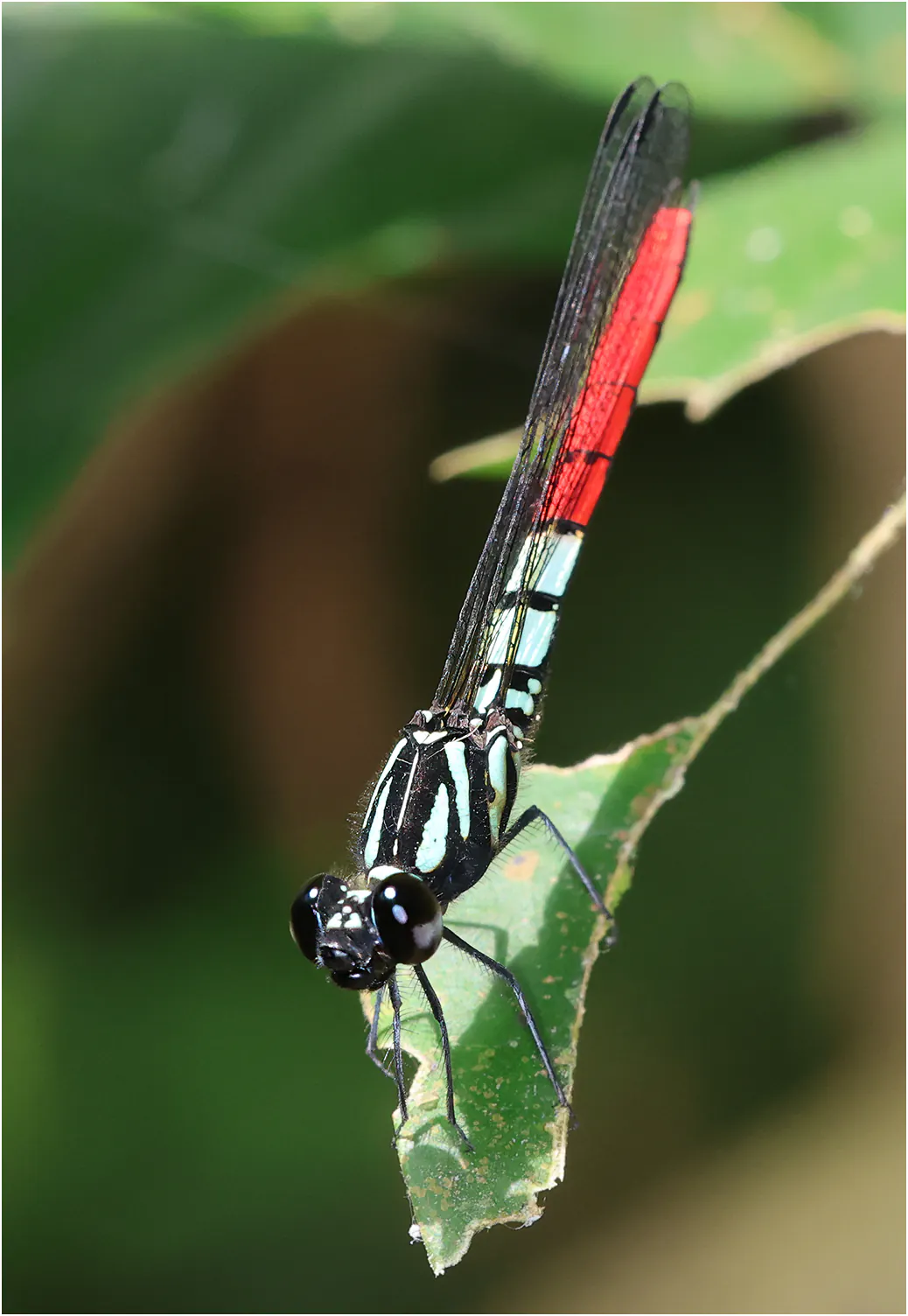
It is noted that the pale markings on the thorax or on the first four segments are blue, or white depending on maturity and lighting, while the last 6 segments are bright red; in English, it is called the Western Red-tipped Jewel.
It is very close to C. glauca and was initially described by Longfield (1959) as a subspecies of the latter; she distinguished at the time C. glauca glauca, a high-altitude species, and C. glauca radix, a coastal or lowland species.
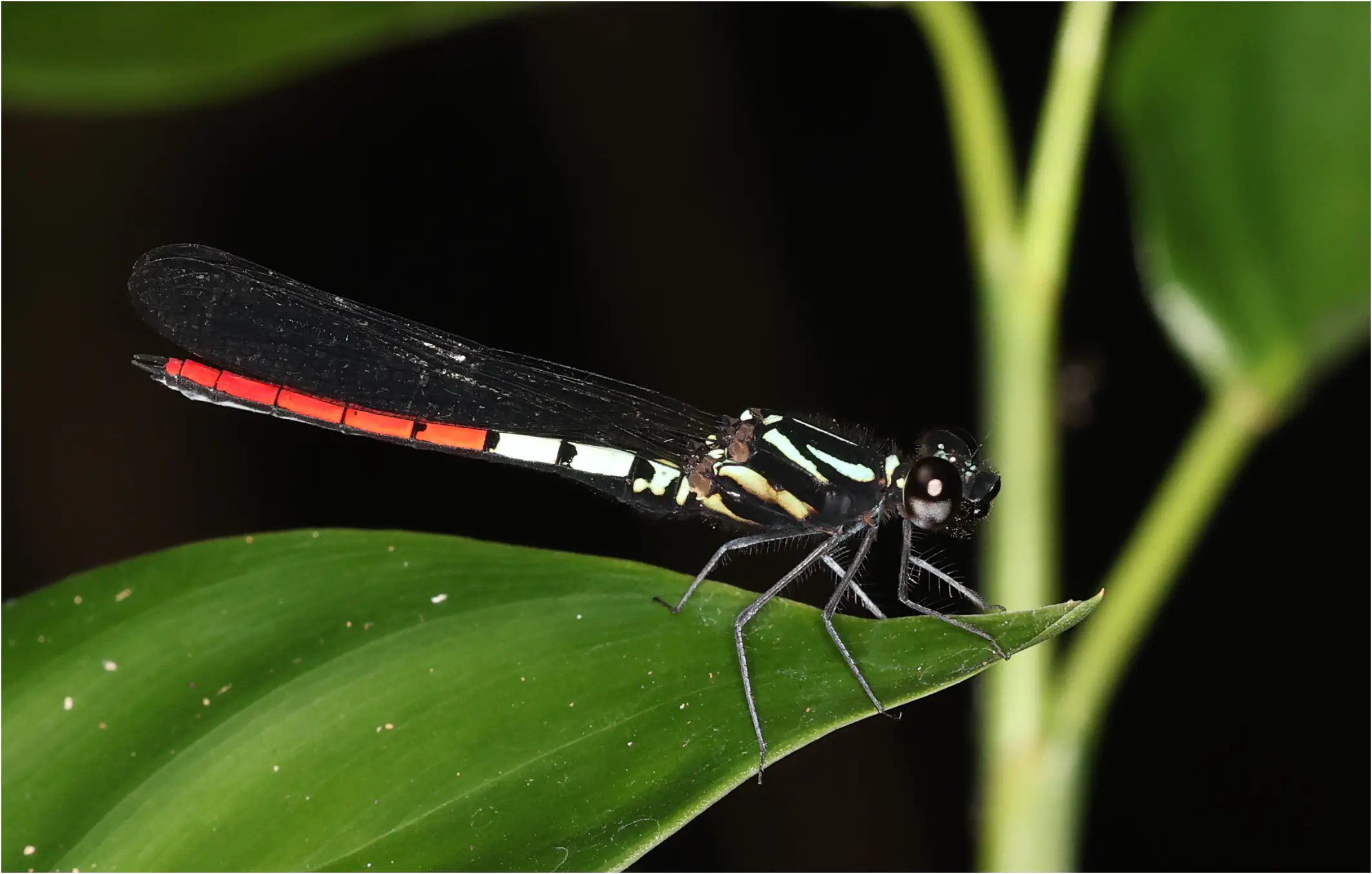
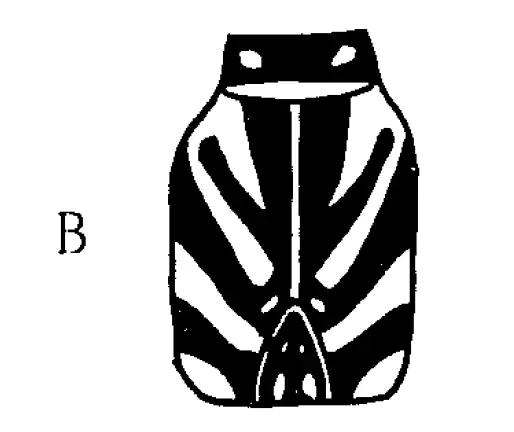
However, while Chlorocypha radix shows red coloration on segments 5 to 10, that of C. glauca is less extensive, covering segments 6 (rarely 5) to 10. The thoracic markings are also very similar, though those of C. radix are more extensive and broader (though they do not match the drawings provided by Longfield, see below), making it appear paler.
It is K.-D. Dijkstra (2003) who validated the species based on differences in abdominal and thoracic coloration, noting that the distinctions from other species (C. glauca, aphrodite, and seydeli) are subtle yet reliable. Unfortunately, neither Longfield nor K.-D. Dijkstra provides its abdominal length; to be fair, this is not critical since in these works it is compared directly with other species.
However, Lieftinck (1973) described a Chlorocypha pavonis that also turned out to be a junior synonym of C. radix, and he gives us its abdominal length: 22.5 mm, including the anal appendages. It therefore measures approximately 34.5 mm in total length.
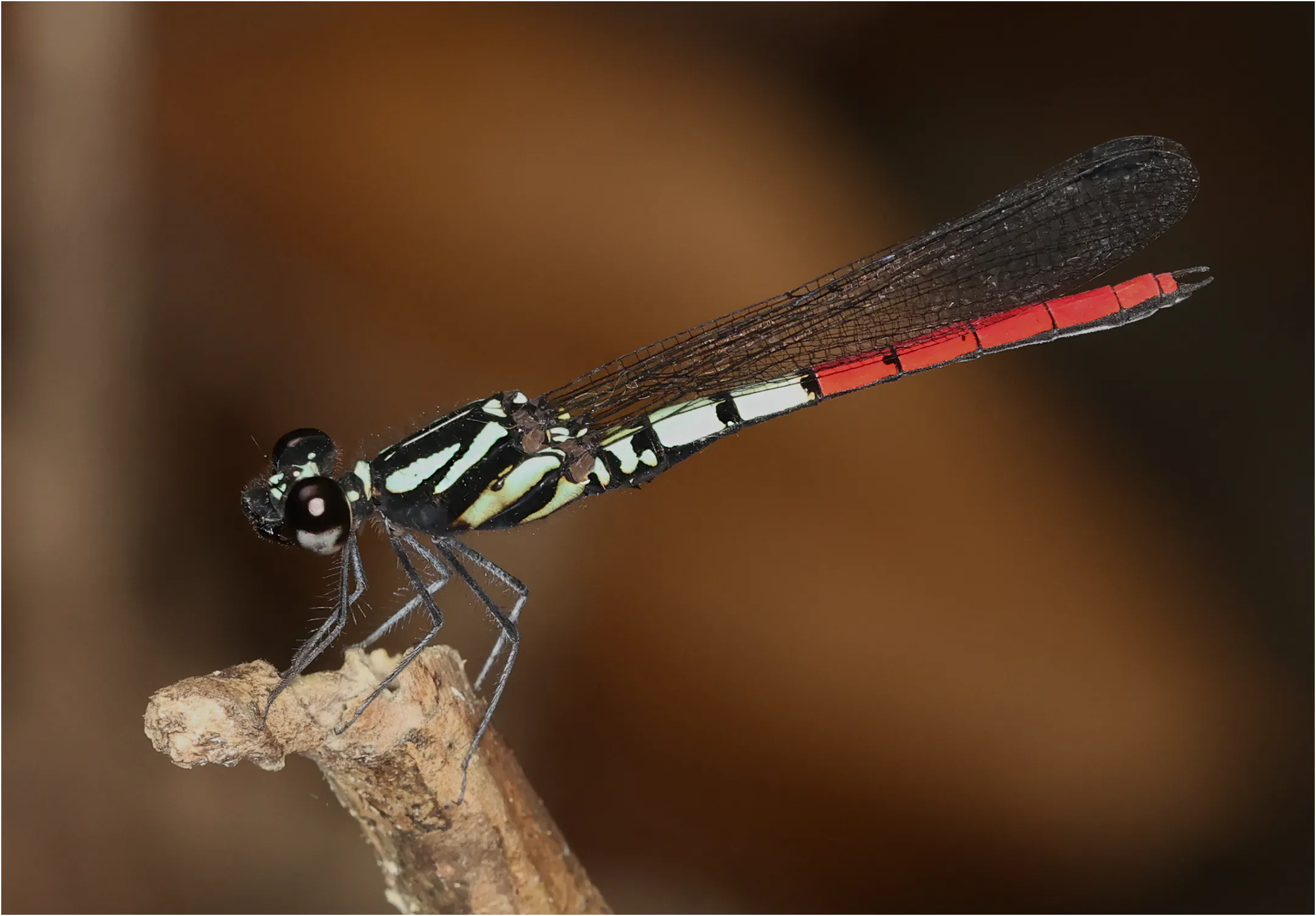
We encountered it on two occasions; the first time in a somewhat more open section of a forest stream, in the company of Chlorocypha luminosa, Pseudagrion melanicterum, and Elattoneura villiersi. The second time, near a pond, very close to Copera guttifera, Ceriagrion glabrum, and Trithemis grouti.
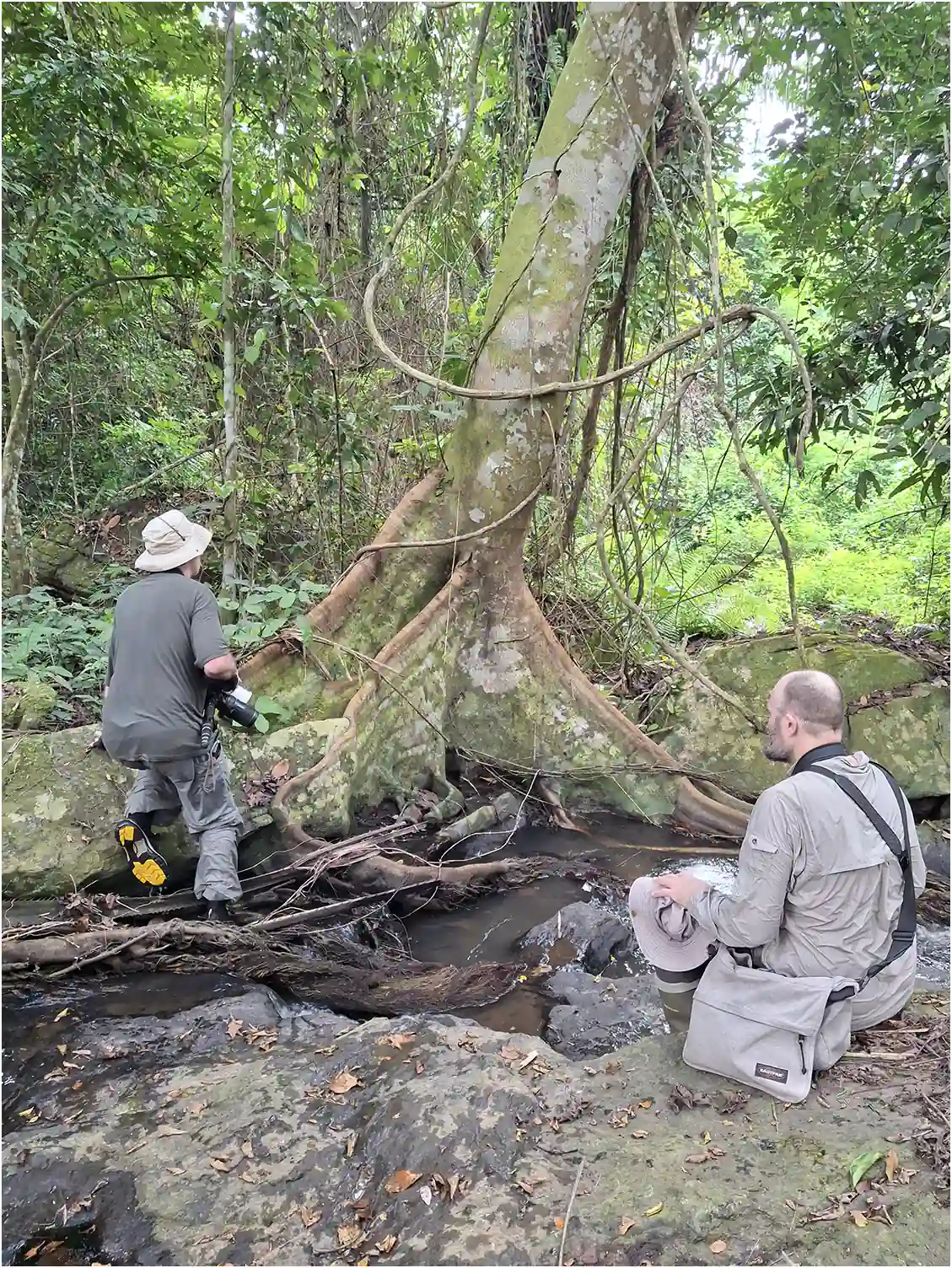
Its distribution extends to Liberia, Guinea, and Sierra Leone up to Nigeria. However, its presence in Benin remains unconfirmed.
IUCN Red List.
Below, a female encountered with the male further below: On this individual, one finds the two upper thoracic stripes fused anteriorly, just as Longfield illustrates in her drawing. This is likely a variation, as none of the males we encountered, nor any of the photos I was able to find on the web, match this feature.
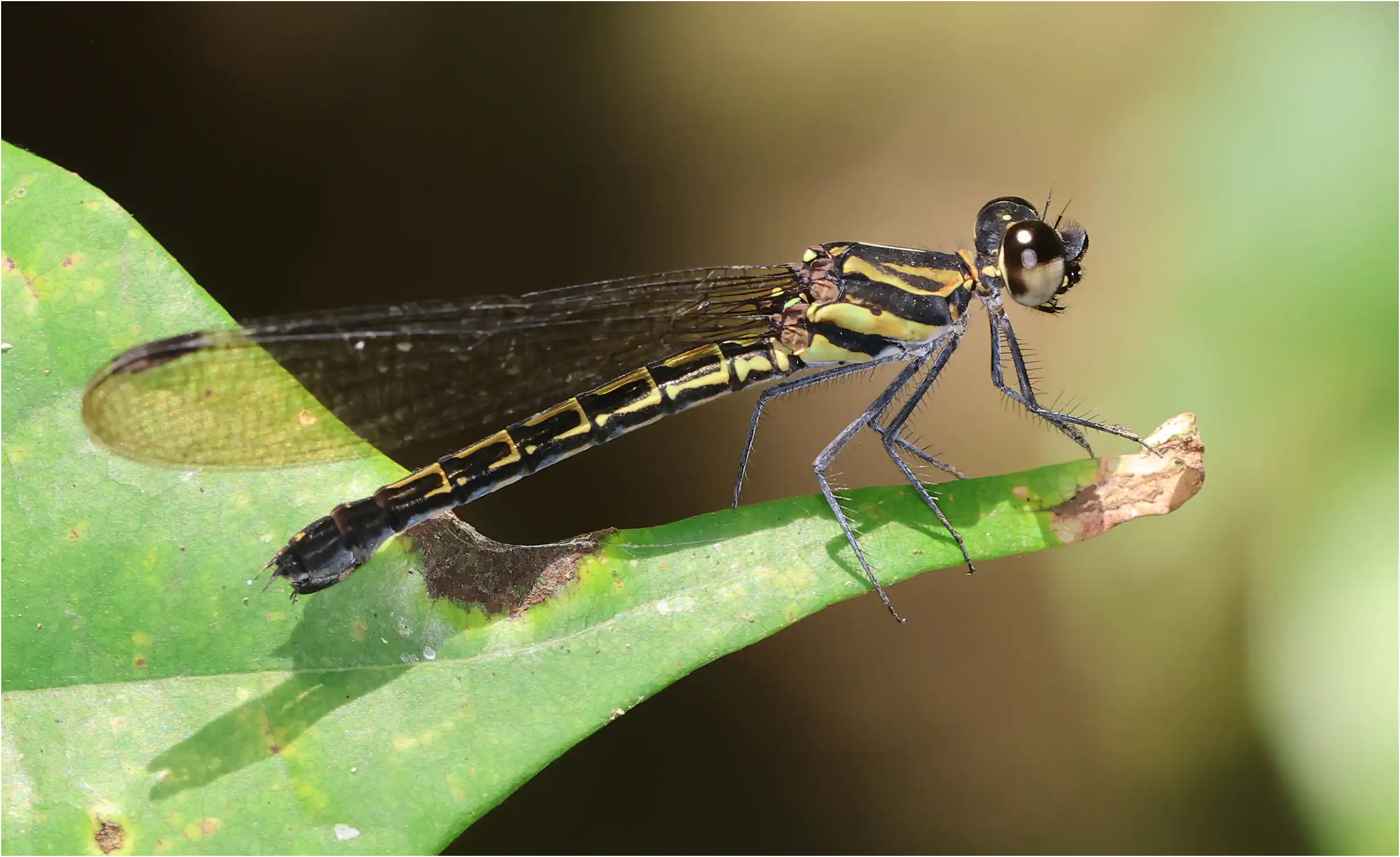
Chlorocypha radix female, Ghana, Kakum National Park, 14/01/2026
Étymology of Chlorocypha radix
Chlorocypha, from the Greek chloro, for yellow or green, and cyphos, meaning humpbacked or hump, referring to the color of the species' curious clypeus, certainly in an immature specimen. Fraser wrote: "I have chosen the name Chlorocypha for this genus, based on the specific character mentioned by Palisot de Beauvois for the type species dispar : "le chaperon [Clypeus] est d’un jaune-verdâtre" [the clypeus is of a greenish-yellow]." I am certain that Palisot de Beauvois never wrote these words in his description, nor did Selys in his Synopsis des Caloptérygines, nor in his Monographie des Caloptérygines. The origin of Fraser's quote remains a mystery to me.
Radix: Cynthia Longfield, in a footnote, explains that this word means root, or foot of a mountain, emphasizing its lowland habitat, as mentioned above.
Chlorocypha radix male, Ghana, Kakum National Park, 14/01/2026
Dijkstra, 2003 – Problems in Chlorocypha classification: four cases from West Africa and a discussion of the taxonomic pitfalls (Odonata: Chlorocyphidae) – International Journal of Odonatology, Volume 6, Issue 2, Pages 109-125, 2003.
Longfield, C., 1959 - The Odonata of N. Angola. Part II. Publicacoes culturais Companhia Diamantes Angola, 45, 13-42. P. 28.
Lieftinck, M.A., 1973 - Chlorocypha pavonis spec. nov., a new chlorocyphid dragonfly from West Africa
(Odonata). Entomologische Berichten, Amsterdam 33: 32-37. P. 34.