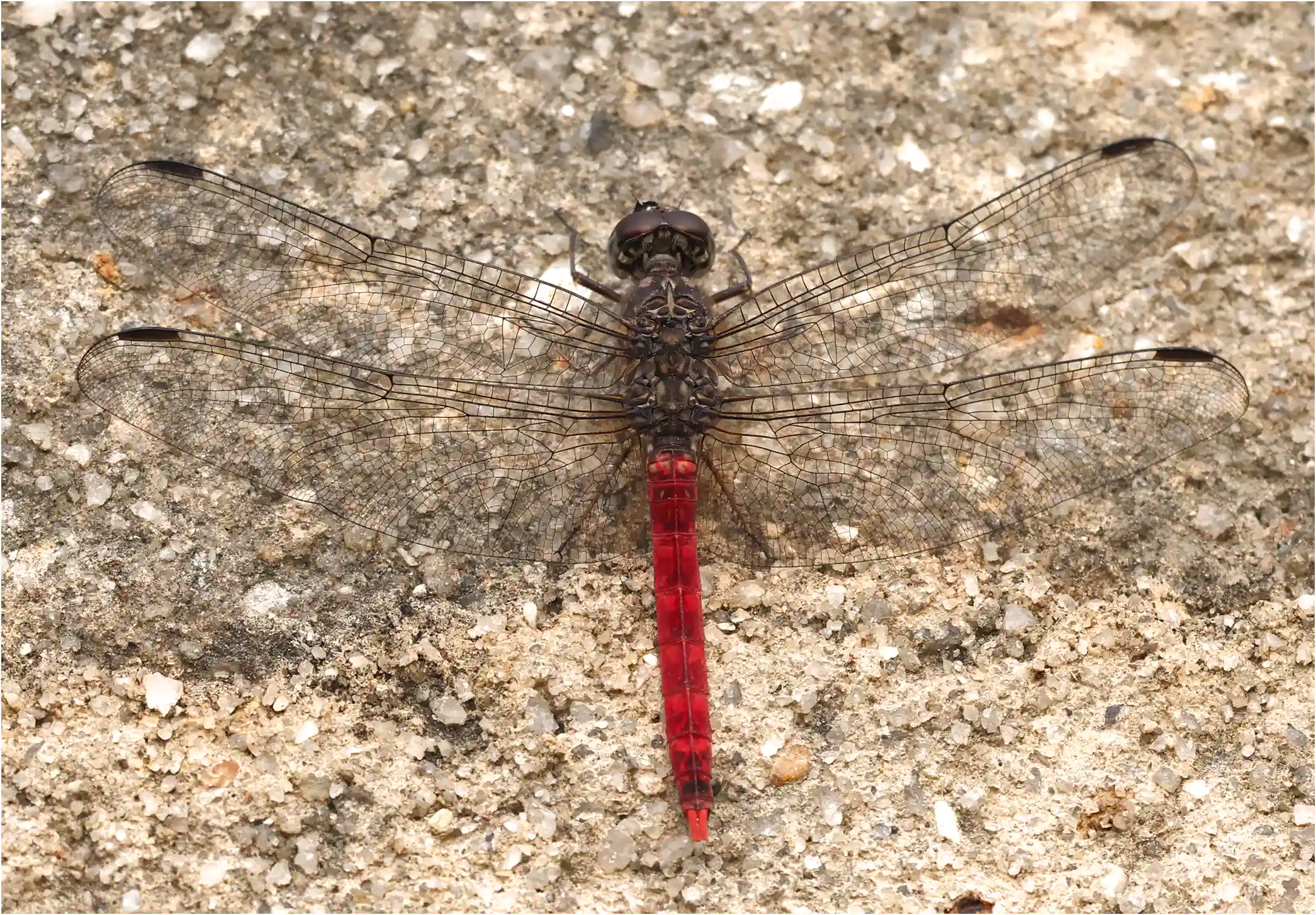
Bradinopyga strachani (Libellulidae) has always astonished me with its specific and generic names (having already encountered it in Benin); this surprise only grew when I learned that Kirby (1900) originally placed it in the genus Apeleutherus—a genus that has since disappeared.
Yet, Kirby had already created the genus Bradinopyga in 1894 for the only Asian species known at the time, B. geminata. It was Ris, in 1911, who corrected this inaccuracy and integrated strachani into the genus Bradinopyga.
Until 2020, only three species were recognized in the genus Bradinopyga: the two species mentioned above and B. cornuta, found in southern Africa. However, in 2020, Joshi & Savant added a fourth species in India, B. konkanensis.

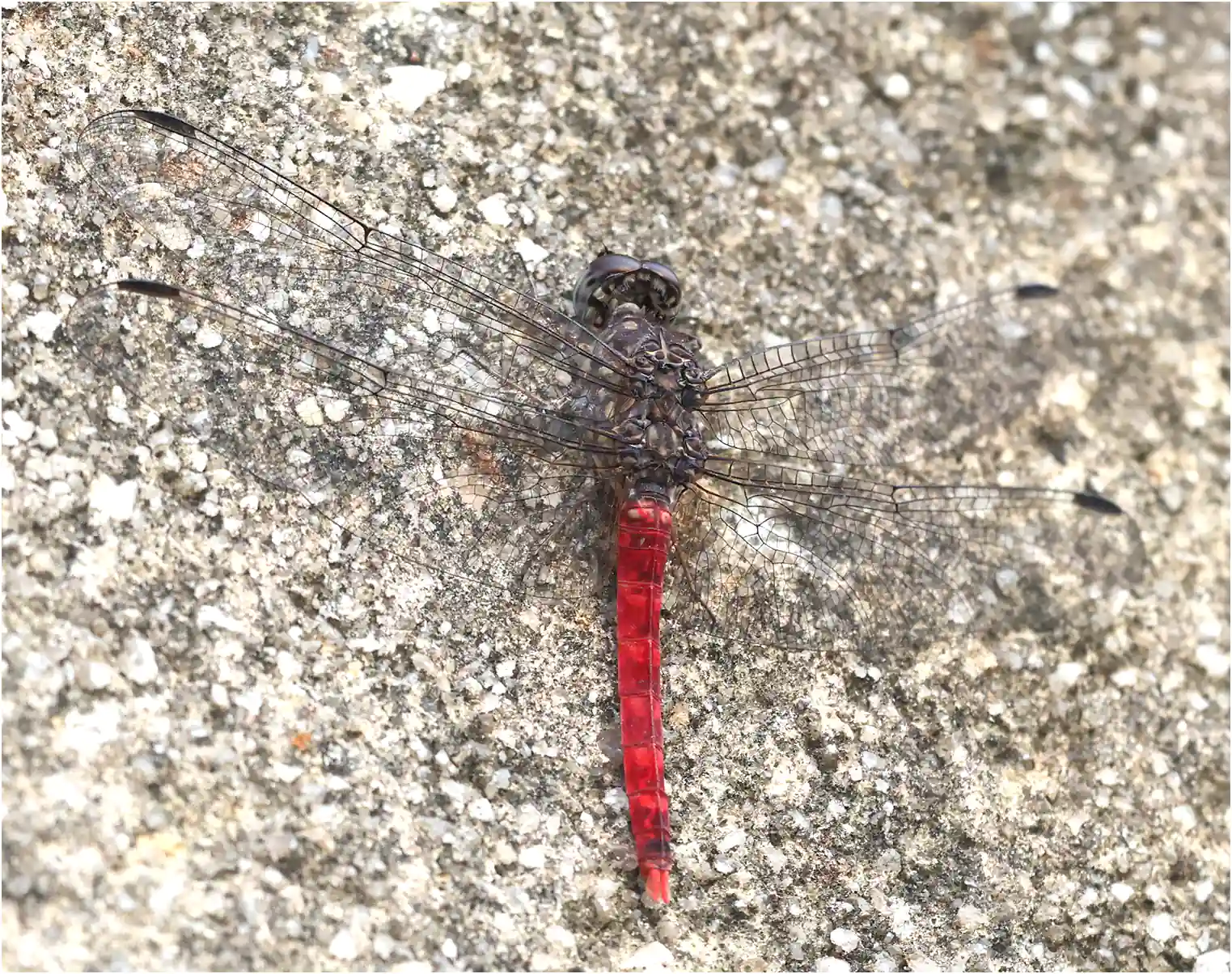
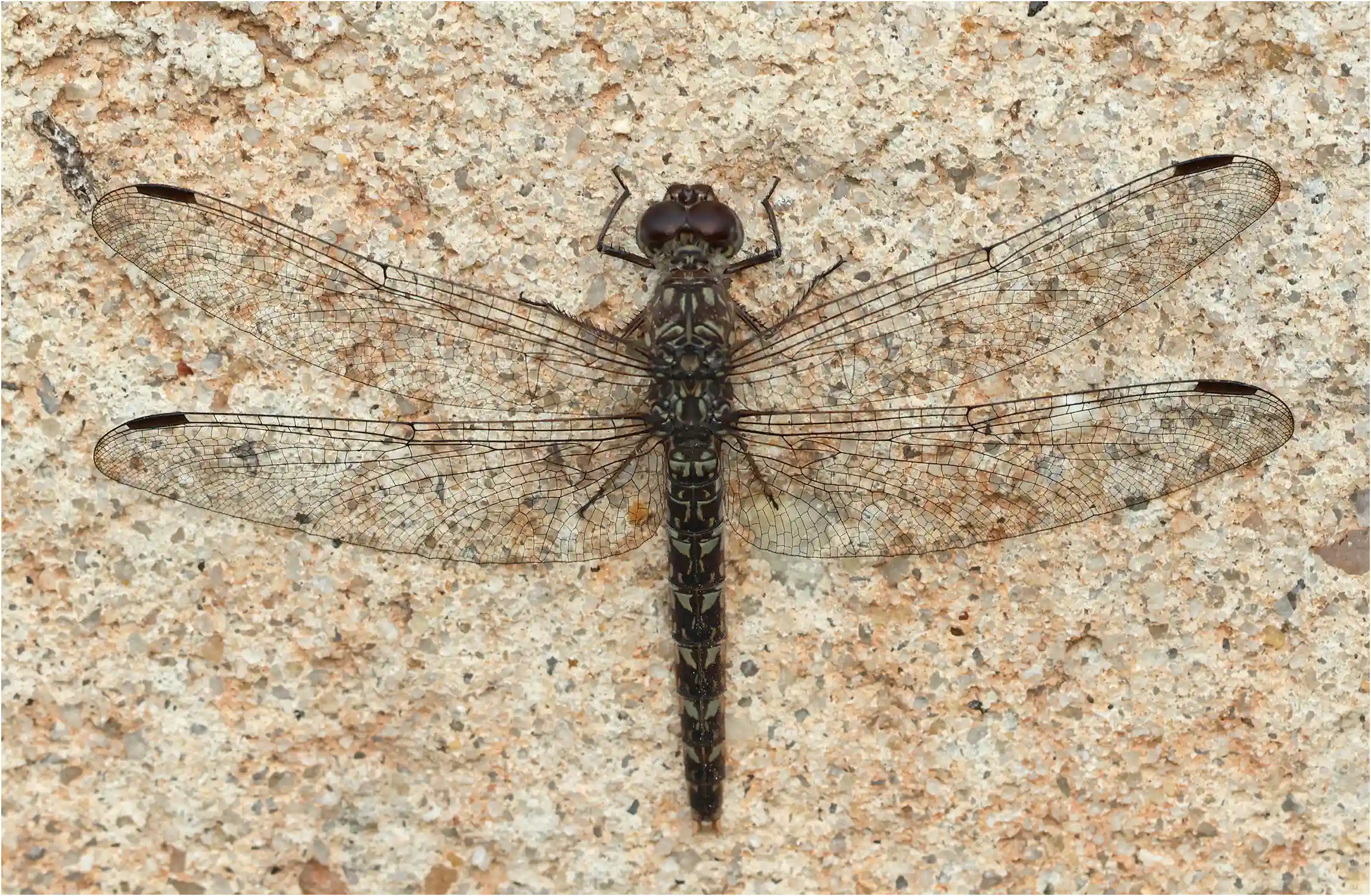
All Bradinopyga are particularly thermophilic and are rarely seen perching anywhere other than on building walls or rocks—a cunning choice that makes immature males and females particularly difficult to spot due to their camouflage coloration. This is reflected in its English common name, Red Rockdweller, which highlights both its color and its preference for rocky surfaces.
They are so distinctive with this camouflage pattern that it is impossible to confuse them with any other species.
According to Kirby, the total body length reaches 38 to 40 mm.
It is found primarily around temporary standing waters, such as rainwater puddles or river overflows in open landscapes, though occasionally in open areas within forests. Here, we observed this pair on the wall of a building right at the edge of the forest.
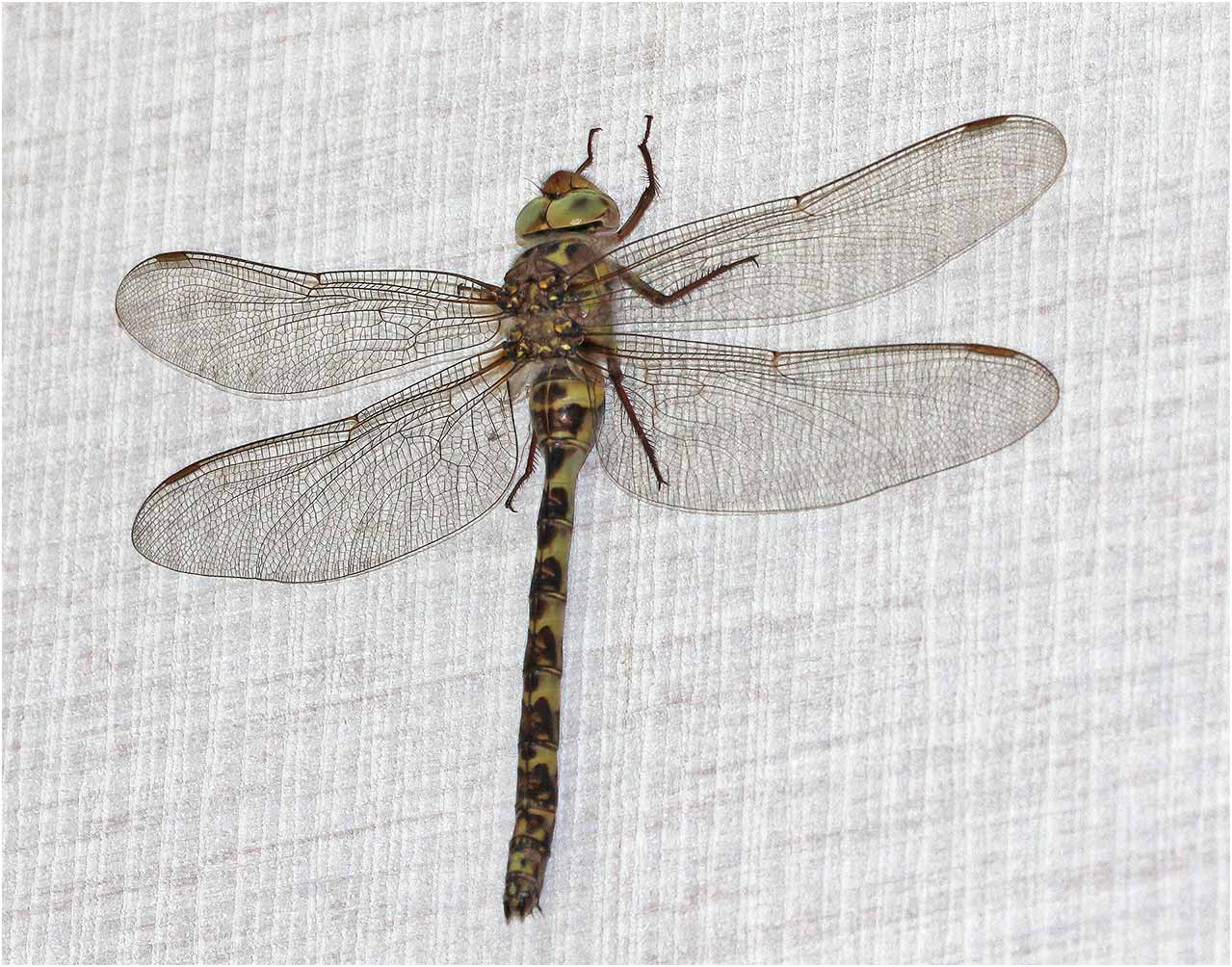
In its coloration alone, the female is reminiscent of our Boyeria irene...
Its distribution extends widely from Guinea-Bissau to Ethiopia. To the south, it reaches Congo, the Democratic Republic of the Congo, and Uganda.
IUCN Red List.
Etymology of Bradinopyga strachani
Apeleutherus, the generic name originally assigned by Kirby, comes from a Greek root (apheleutheros / apèleutheros) meaning a freedman or, more precisely, "a man who was not born free but became so." It is a striking choice, and nothing in Kirby's description offers a definitive hypothesis for it, though it likely reflects the sense that this taxon breaks away from established generic norms.
Bradinopyga, from the ancient Greek bradinos meaning "thin or slender" and pyge meaning "rump", "buttocks", and by extension "abdomen" in insects—doubtless highlighting the contrast between the massive thorax and the slender abdomen, particularly in its terminal segments.
Strachani is a tribute to Dr. Henry Strachan, a prominent British colonial physician and naturalist whose career greatly enriched the collections of the British Museum at the end of the 19th century. He captured the specimens described by Kirby in Lagos, Nigeria.
Kirby, 1900 - Report on the Neuroptera Odonata collected by Mr. E.E. Austen at Sierra Leone during August and September 1899. Annals Magazine Natural History, 6, 67-79. P. 74.
SHANTANU JOSHI & DATTAPRASAD SAWANT, 2020 - Description of Bradinopyga konkanensis sp. nov. (Odonata: Anisoptera: Libellulidae) from the coastal region of Maharashtra, India. Zootaxa 4779 (1): 065–078.