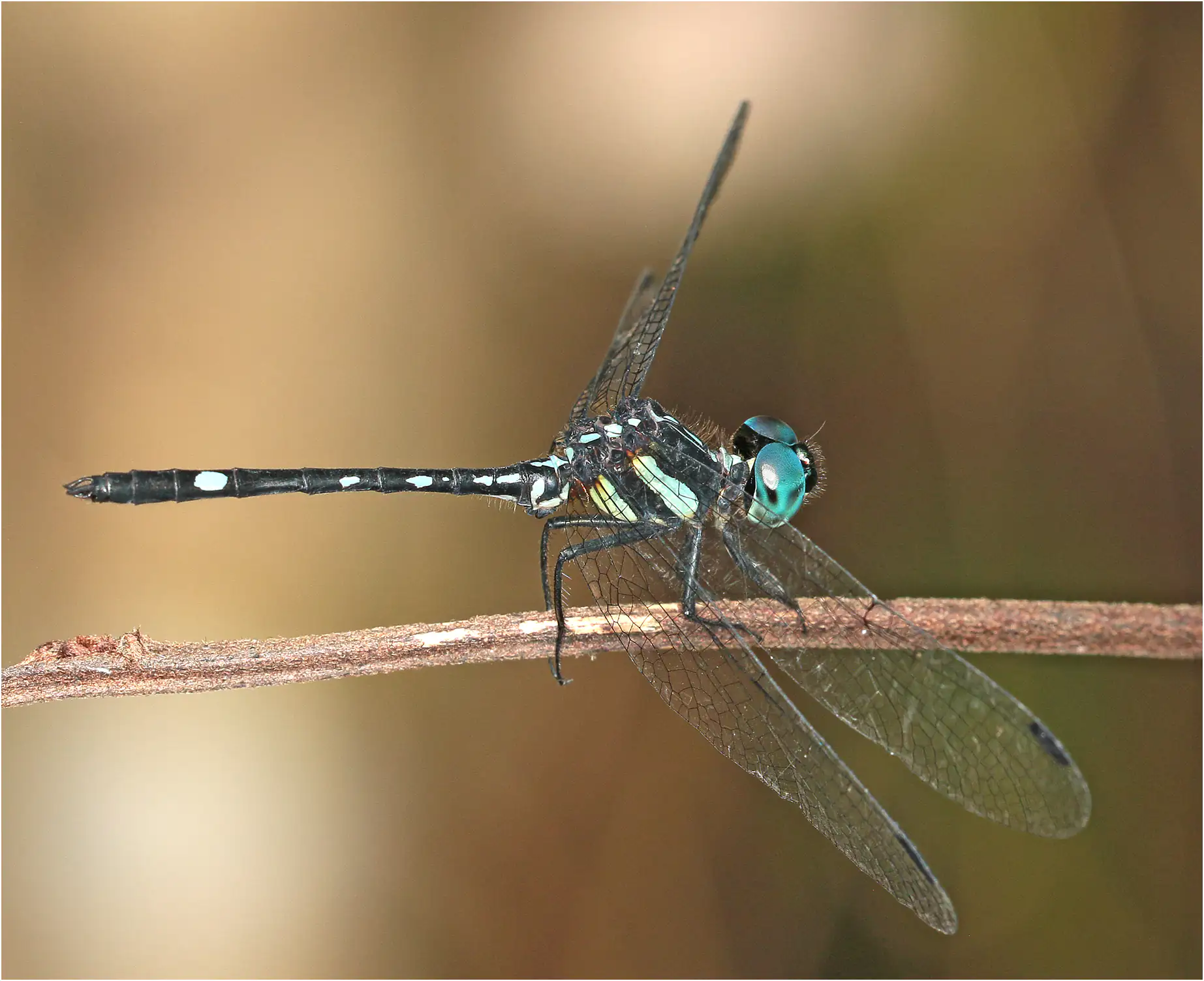
Neodythemis klingi belongs to a genus with 14 species, 10 in tropical Africa and 4 in Madagascar. However, it is the only one present in Ghana and is the most common, most frequently encountered in Africa.
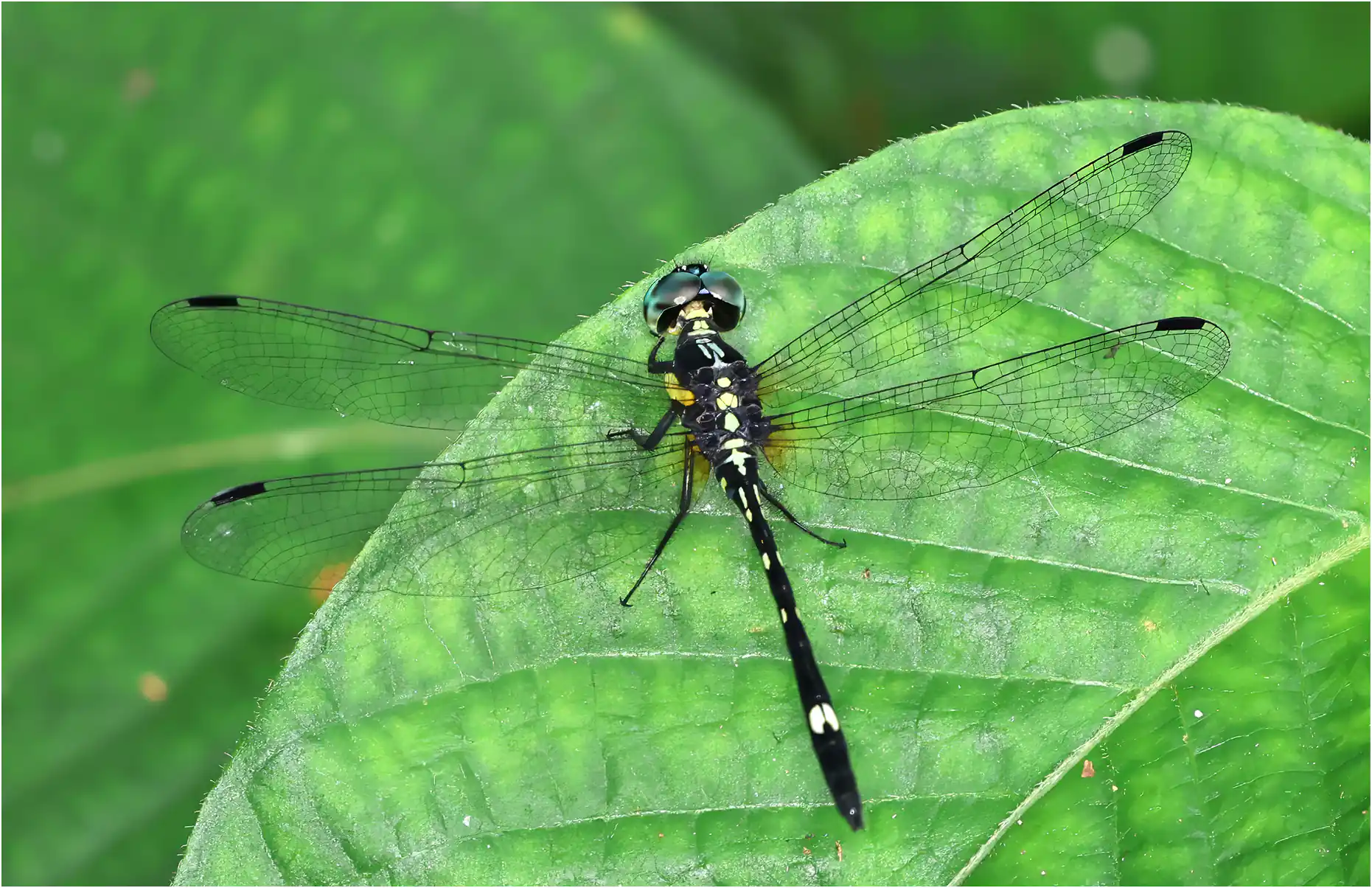
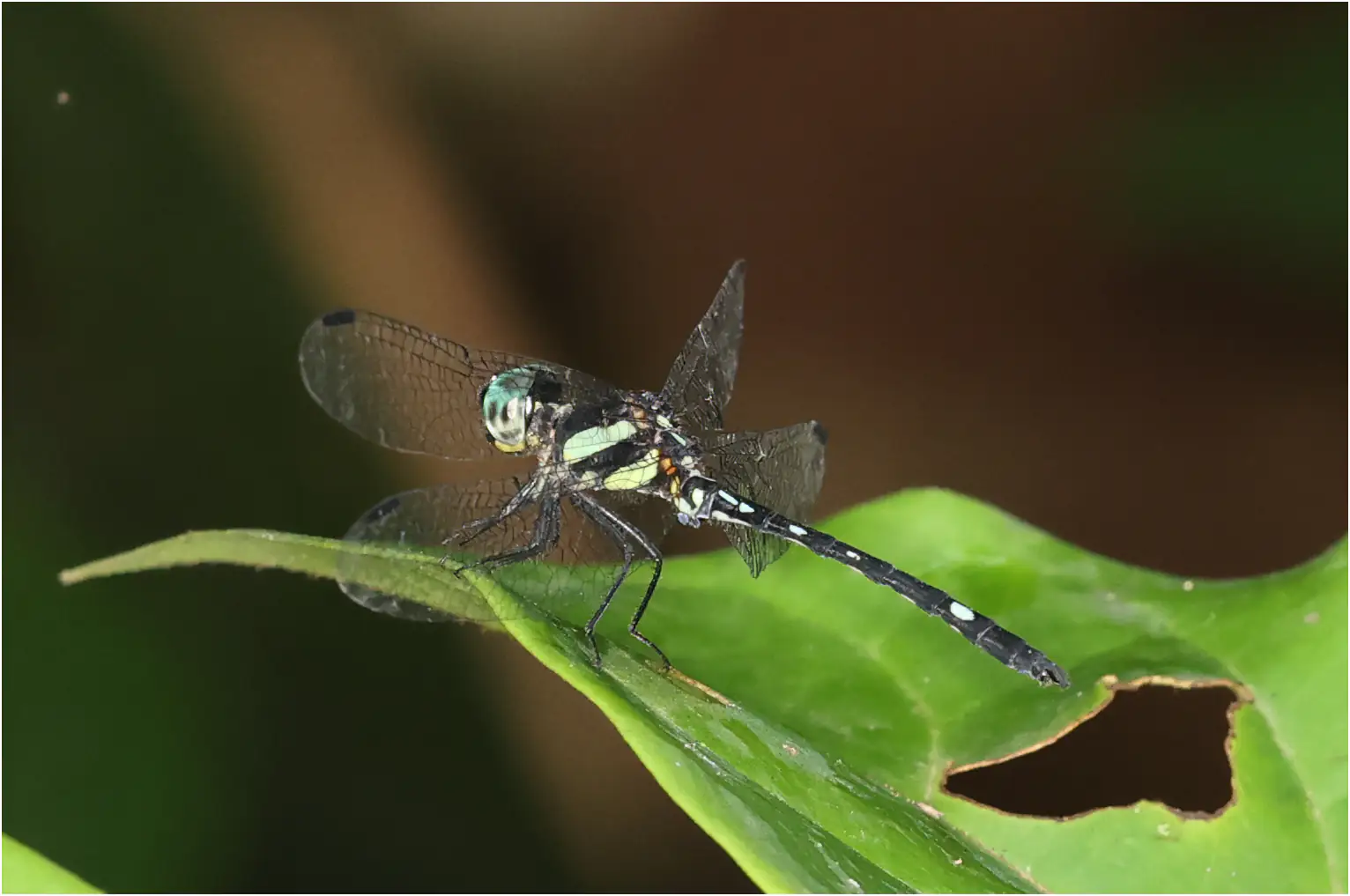
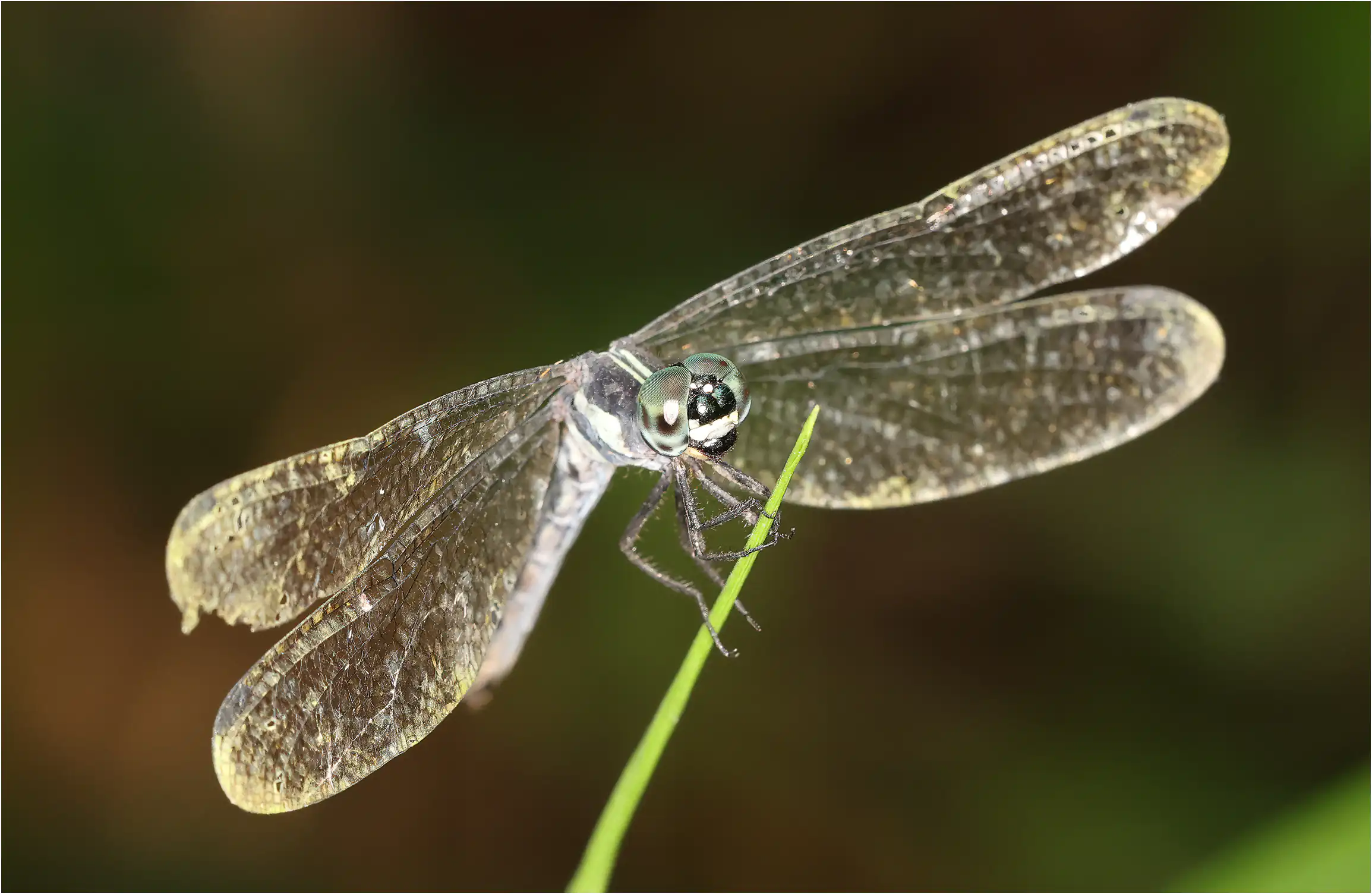
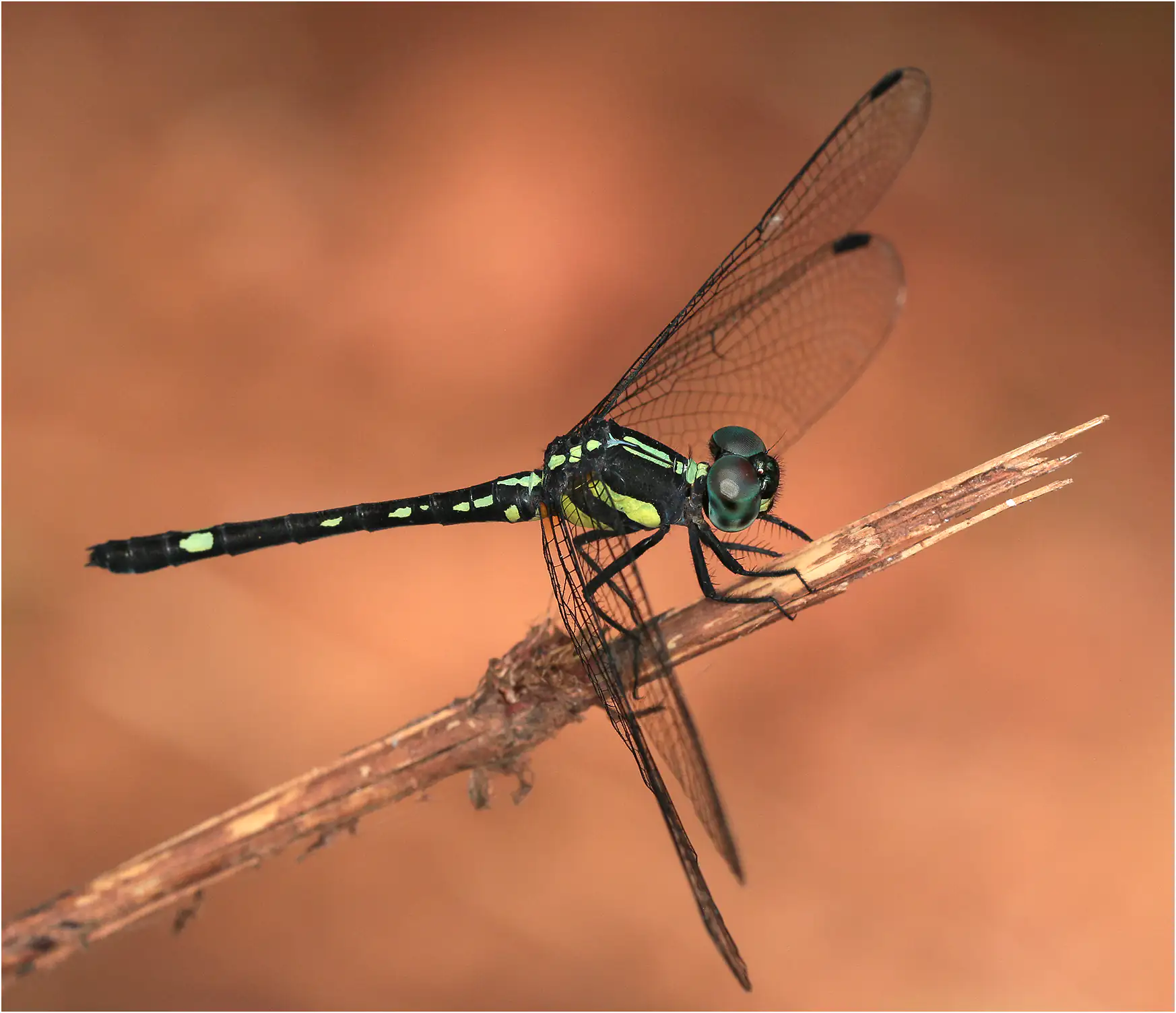
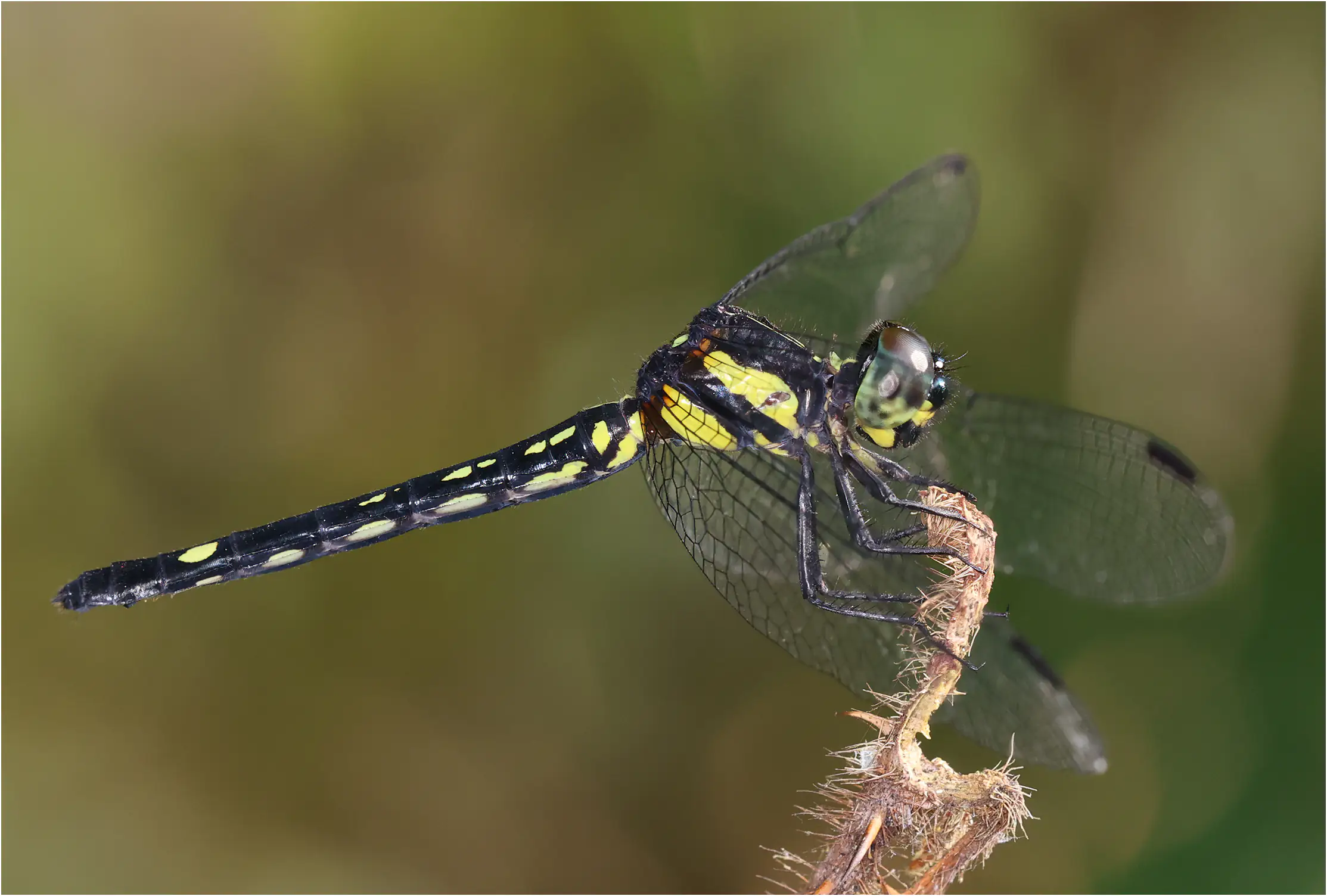
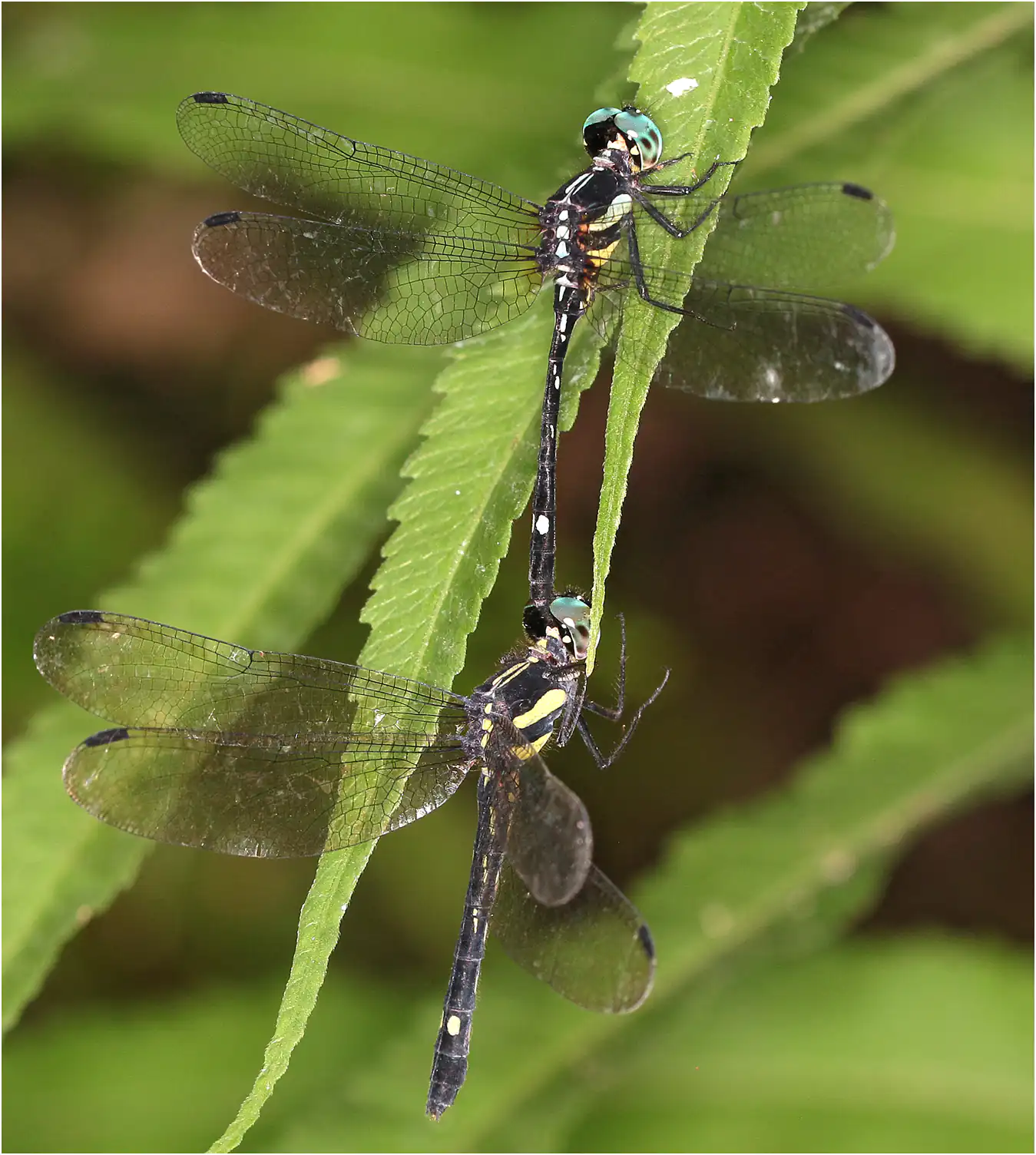
On a side profile view, it is easy to identify if you combine the large pale spot on the seventh segment, the punctuation on segments 3 to 5, and the two broad pale lateral stripes on the thorax, which lacks an antehumeral stripe.
Karsch tells us that the male measures 30 to 32 mm.
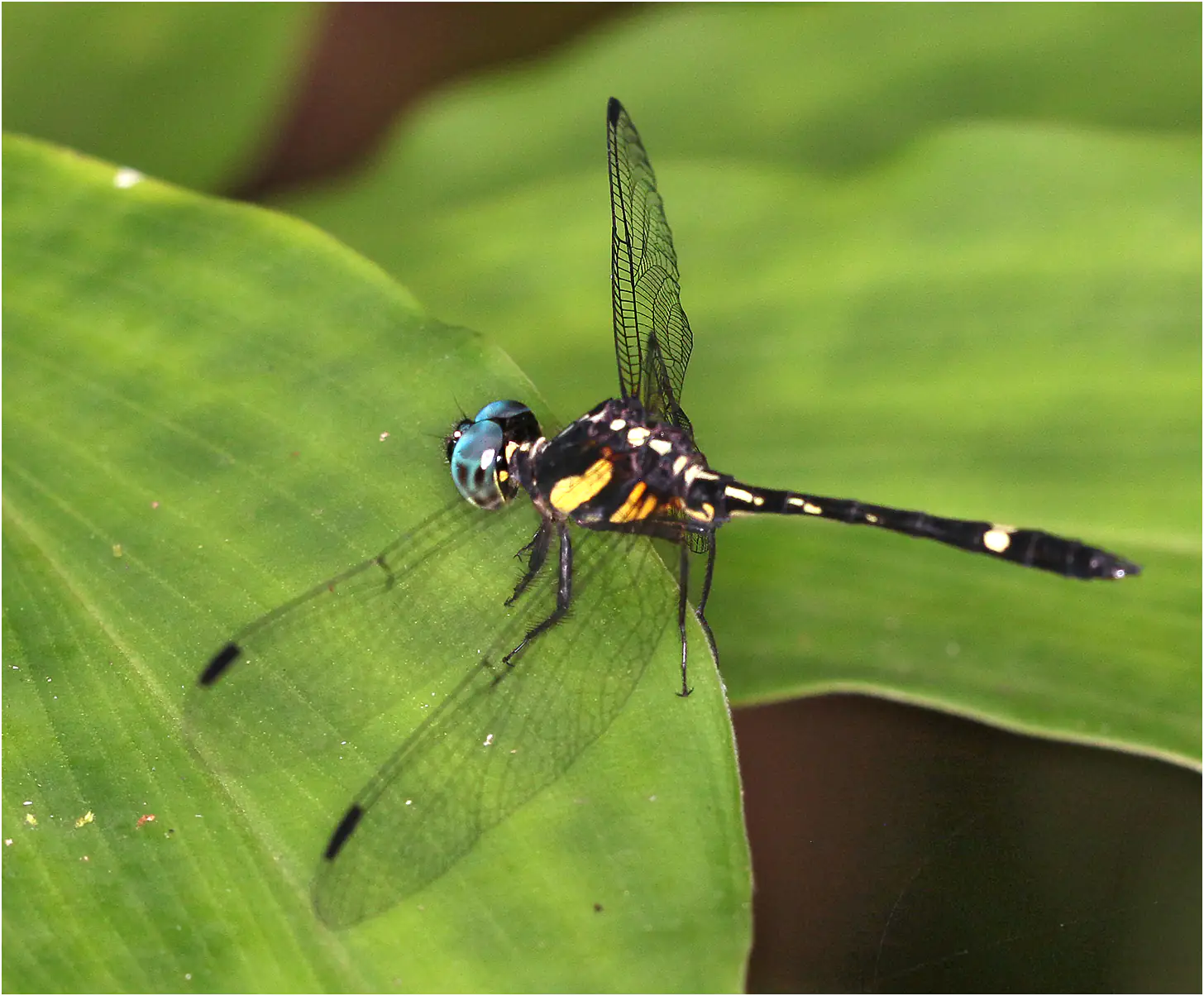
If the thoracic spots are most often whitish, on a few individuals, both males and females, they are curiously yellow, without this coloration appearing to be linked to age.
Even more surprisingly, we encountered many more females than males; they are very close to these males and bear the same pale spots on the abdomen and thorax. Their abdomen is, however, more massive, as is very often the case for Libellulidae.
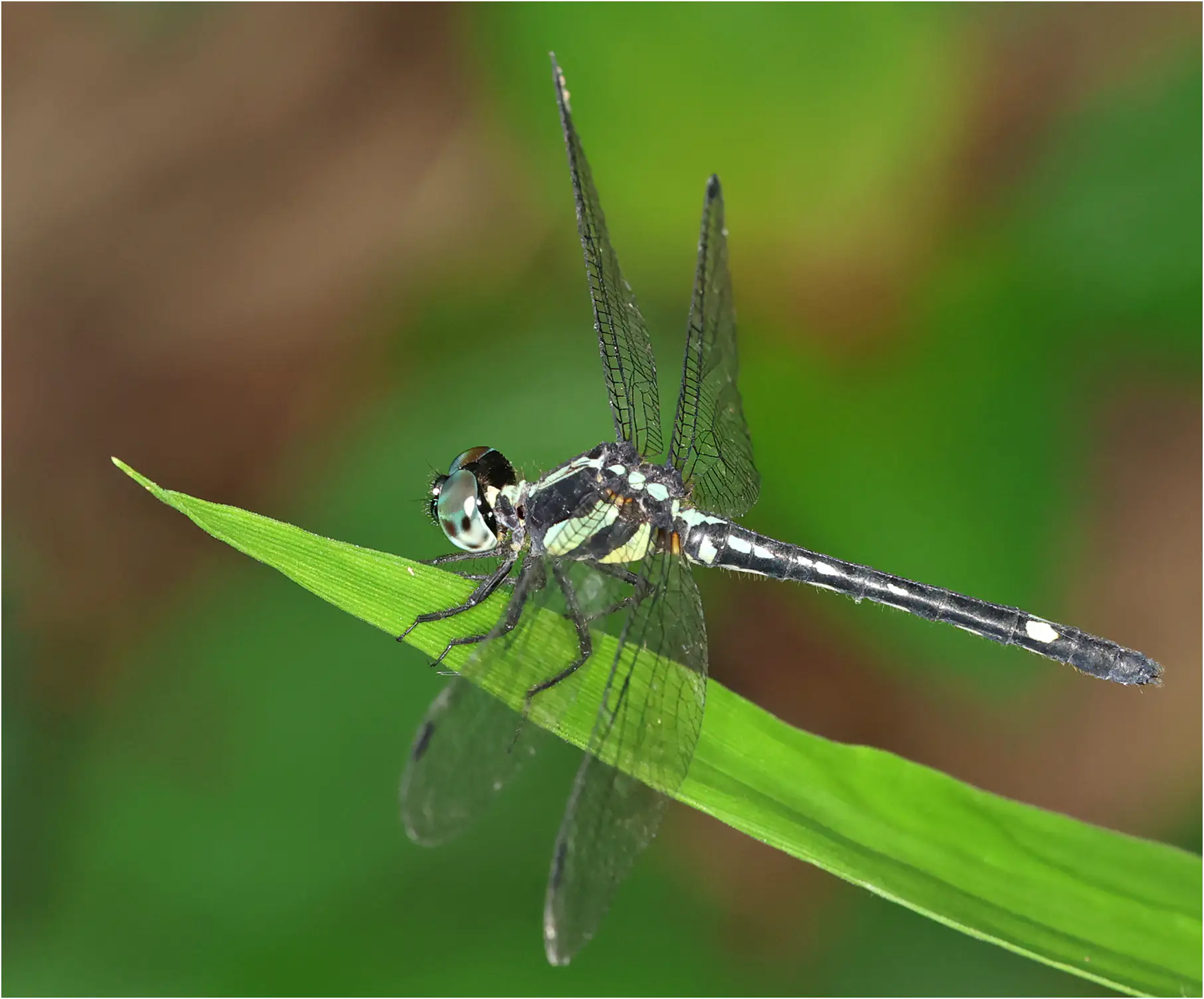
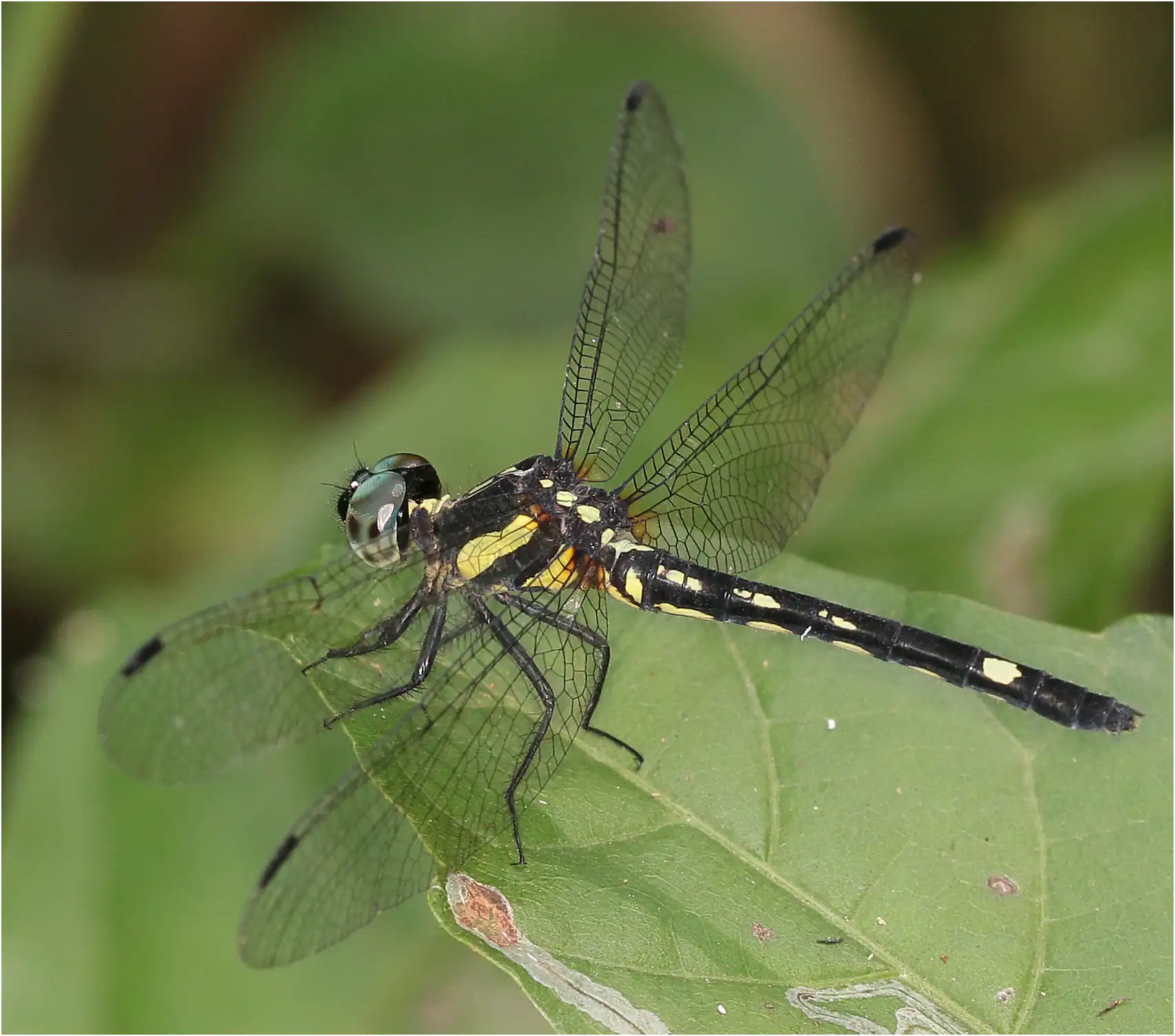
We encountered them in the forest, essentially along forest tracks, most often in patches of sunlight.
K.-D. Dijkstra, on the ADDO website, specifies that they are found on streams shaded by the forest (Stream Junglewatcher in English), but sometimes in clearings.
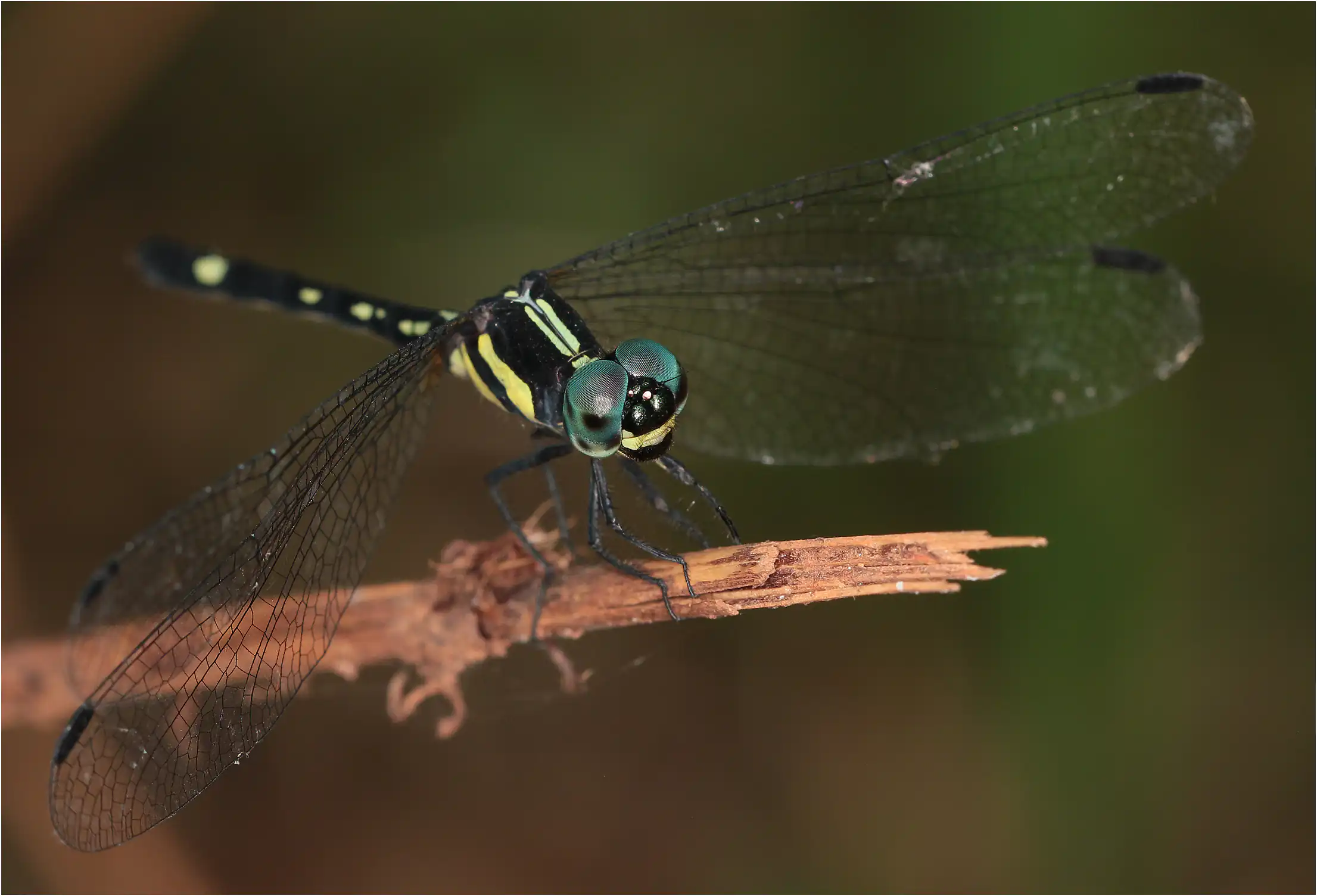
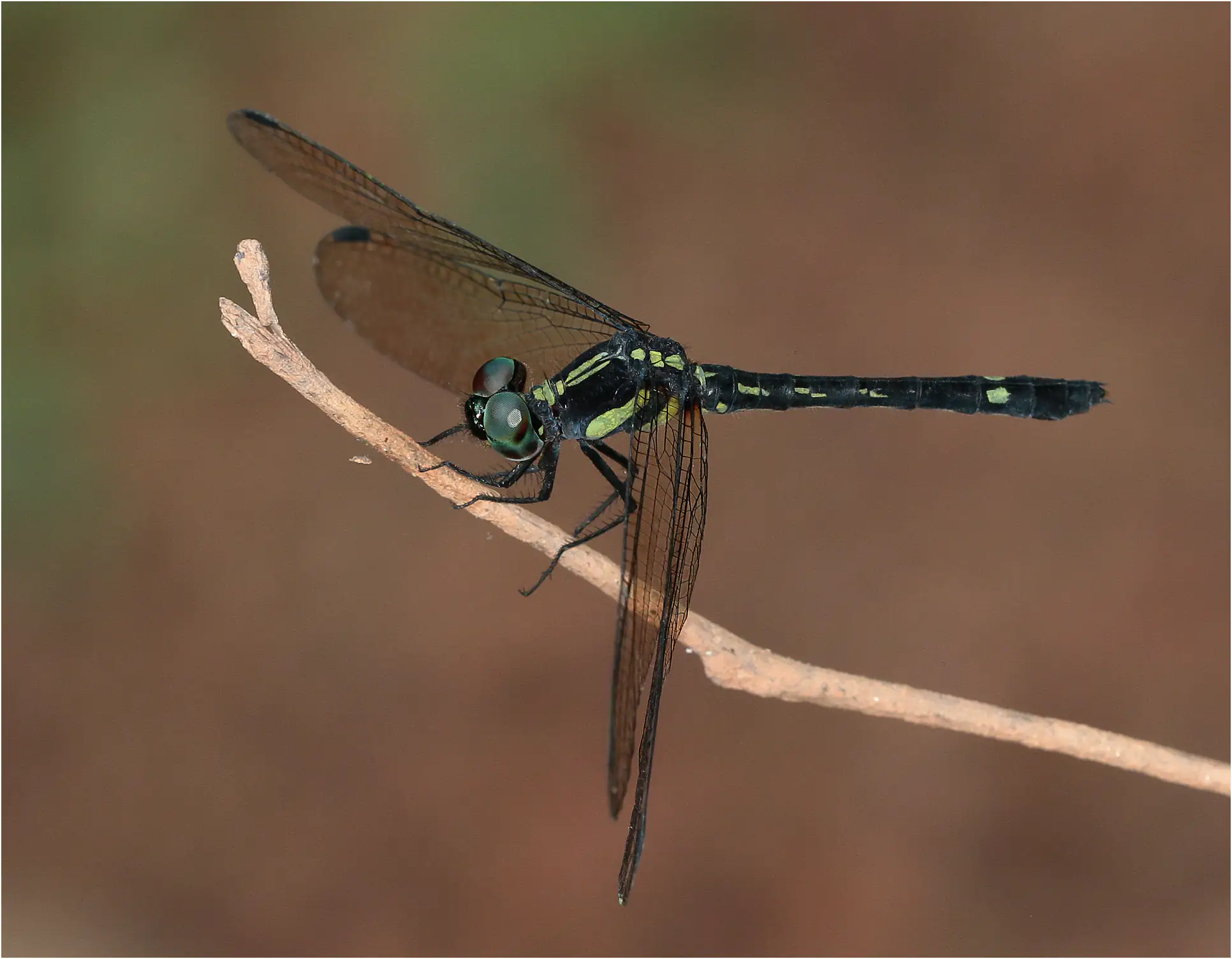
On the lower left, a rather poor photo of an old female covering herself with bluish pruinescence, a photo I kept anyway to show this greenish tint on her wings; the humid forest is an environment conducive to the growth of moss on all substrates!
Its distribution range extends from Sierra Leone and Guinea in the west to the Central African Republic, the Democratic Republic of the Congo, and Zambia in the east.
IUCN Red List.
Étymologie Neodythemis klingi
The species was described by Ferdinand Karsch under the generic name Allorrhizucha, and it was Dijkstra & Vick (2006) who demonstrated its placement within Neodythemis, a genus originally created by Karsch (thus the genus Allorrhizucha became obsolete).
Neodythemis, from the Greek "neo" meaning "new", and Dythemis, a genus of South American odonates. Dythemis, according to Fliedner & Endersby (2019), is constructed from the Greek word dy meaning "two" and Themis. We must assume that if Hagen chose Themis—the Greek goddess of order and justice—it was both to follow the then-fashionable trend of using mythological names and because she is particularly well-suited to taxonomy, the science aimed at describing, ordering, and classifying families, genera, and species. "Two" might refer to the 10th segment of the female, which features two tubercles.
The invocation of this South American species is explained by the resemblance of the spots on the abdomen, particularly with Dythemis nigra.
Klingi; Karsch explains that "the description is based on a single female ... as well as on a male captured by First Lieutenant Kling during his excursions from the Bismarckburg station, in the hinterland of Togo."

Dijkstra & Vick, 2006 – Inflation by venation and the bankruptcy of traditional genera: the case of Neodythemis and Micromacromia, with keys to the continental African species and the description of two new Neodythemis species from the Albertine Rift (Odonata: Libellulidae). International Journal of Odonatology, 9, 51-70.
Dijkstra, K.-D.B (editor ADDO), 2023 – African Dragonflies and Damselflies (ADDO) – Genus Sapho – [Le lien peut ne pas fonctionner ; lien web.archive à partir du site ADDO, maintenant hors ligne.]
Fliedner & Endersby, 2019 - The Scientific Names of North American Dragonflies, Heinrich , Busybird Publishing.
Karsch F., 1890 - Beiträge zur Kenntniss der Arten und Gattungen der Libellulinen. Berliner Entomologische Zeitschrift, 33, 347-392, p. 390.
Neodythemis klingi tandem, Ghana, Ankasa Forest Reserve, 18/01/2026