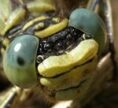
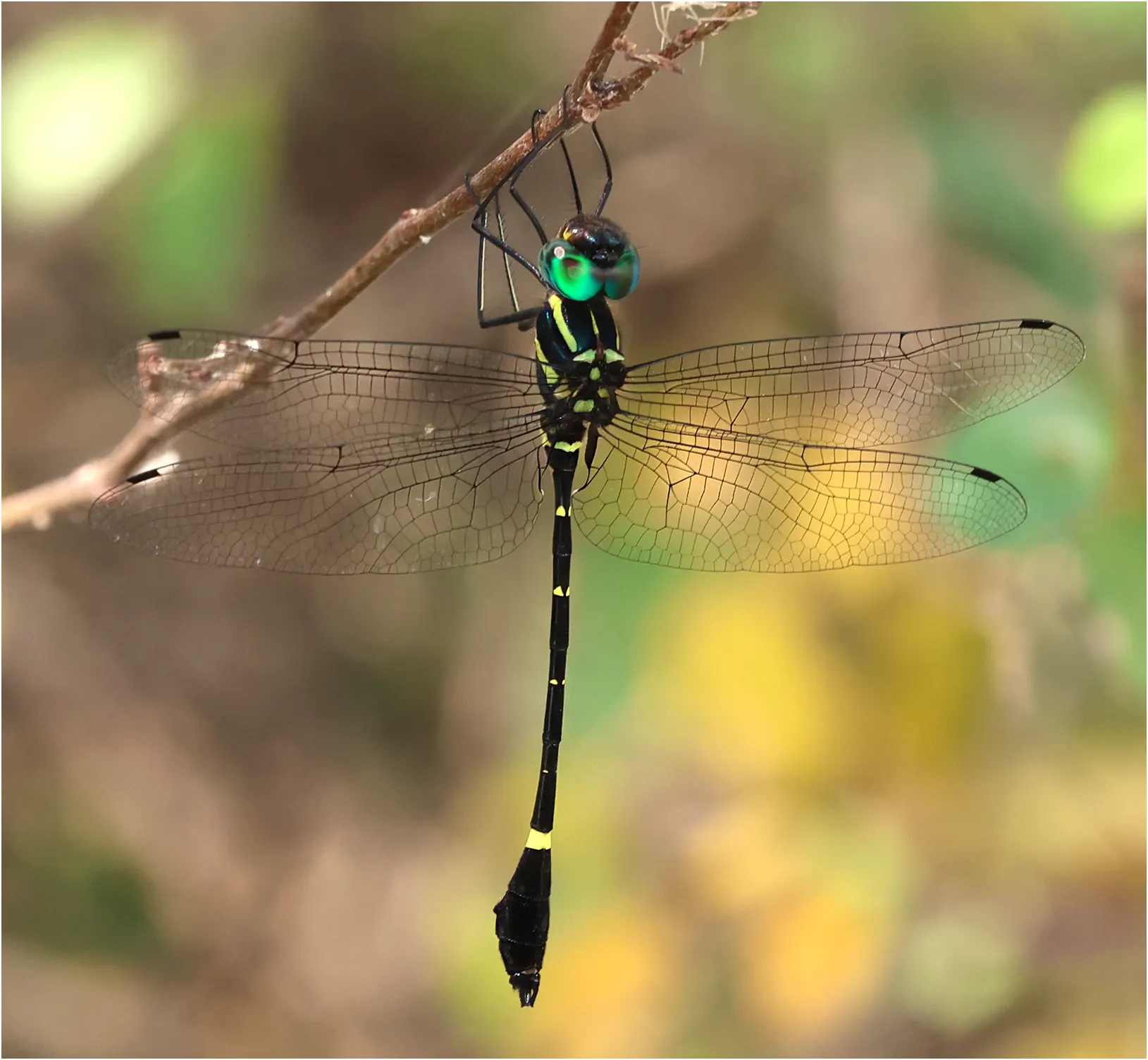
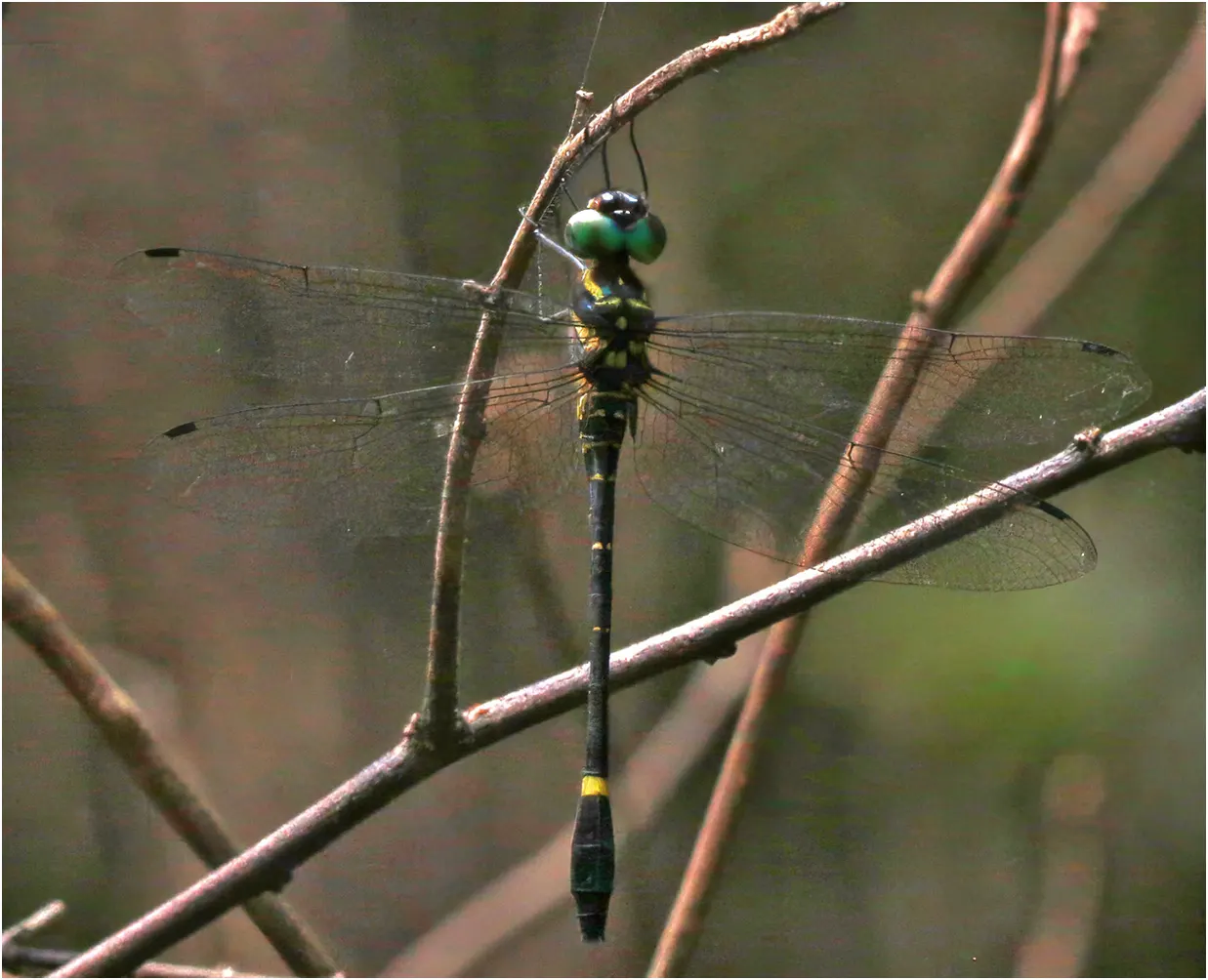
It is the first morning of surveying in Ghana; we are leaving the first site, I make a detour to the left of the path toward the forest, and I discover this magnificent male Phyllomacromia hervei hanging under a tree: this is a surveying trip that is starting well! Phyllomacromia are the sole representatives of the Macromiidae family in Africa, and there are 35 of them, with six currently known in Ghana.
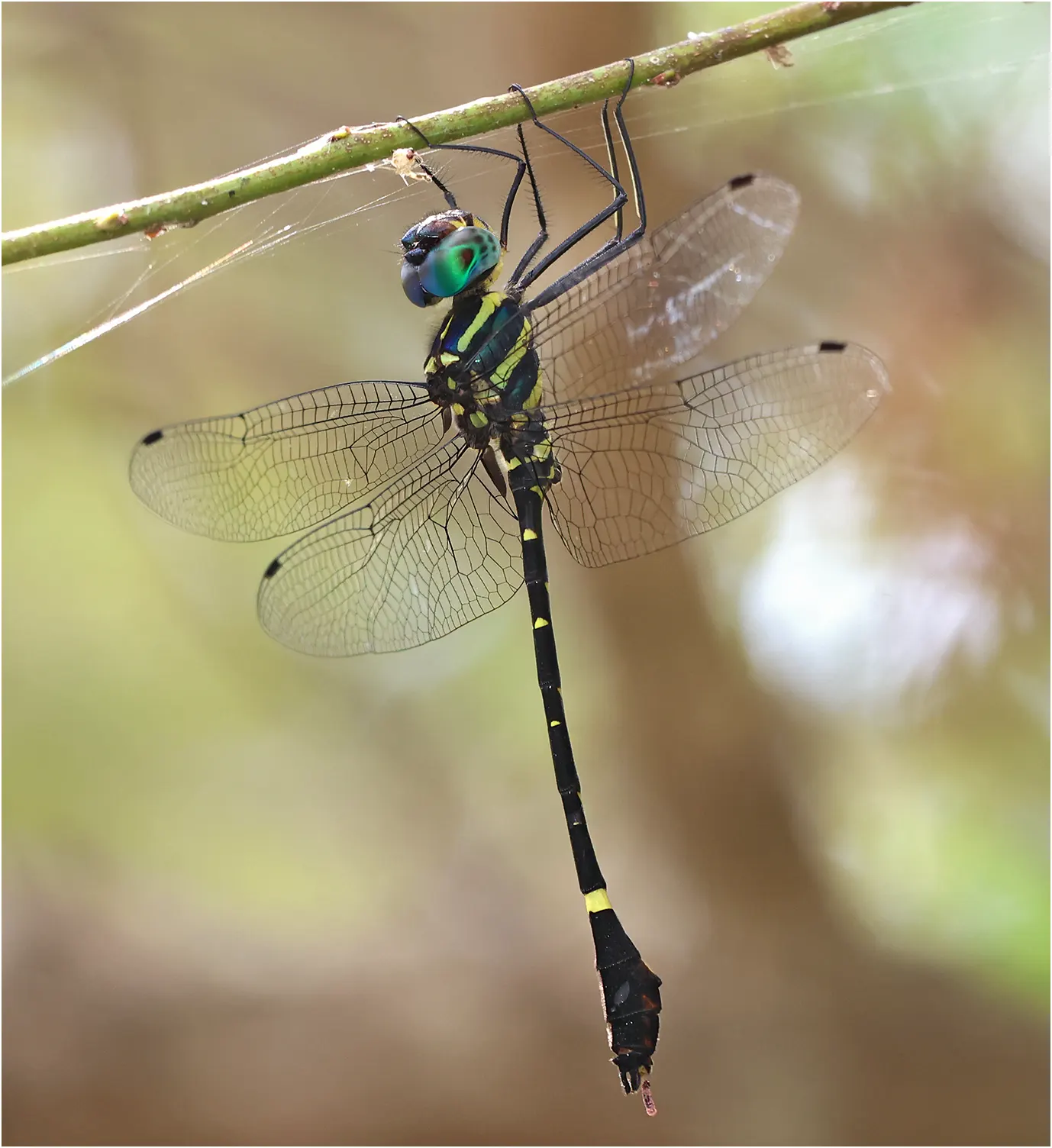
They are known to perch rarely, and we realize how lucky we were to find both a male and a female (later) at rest.
In West Africa, and particularly in Ghana, it can be identified by comparing the thoracic bands and the distribution of yellow rings on the abdomen. They all bear a pointed expansion on the tenth segment, which can be seen very clearly in the photo below.
We also note the ventral expansion of segments 7, 8, and 9.
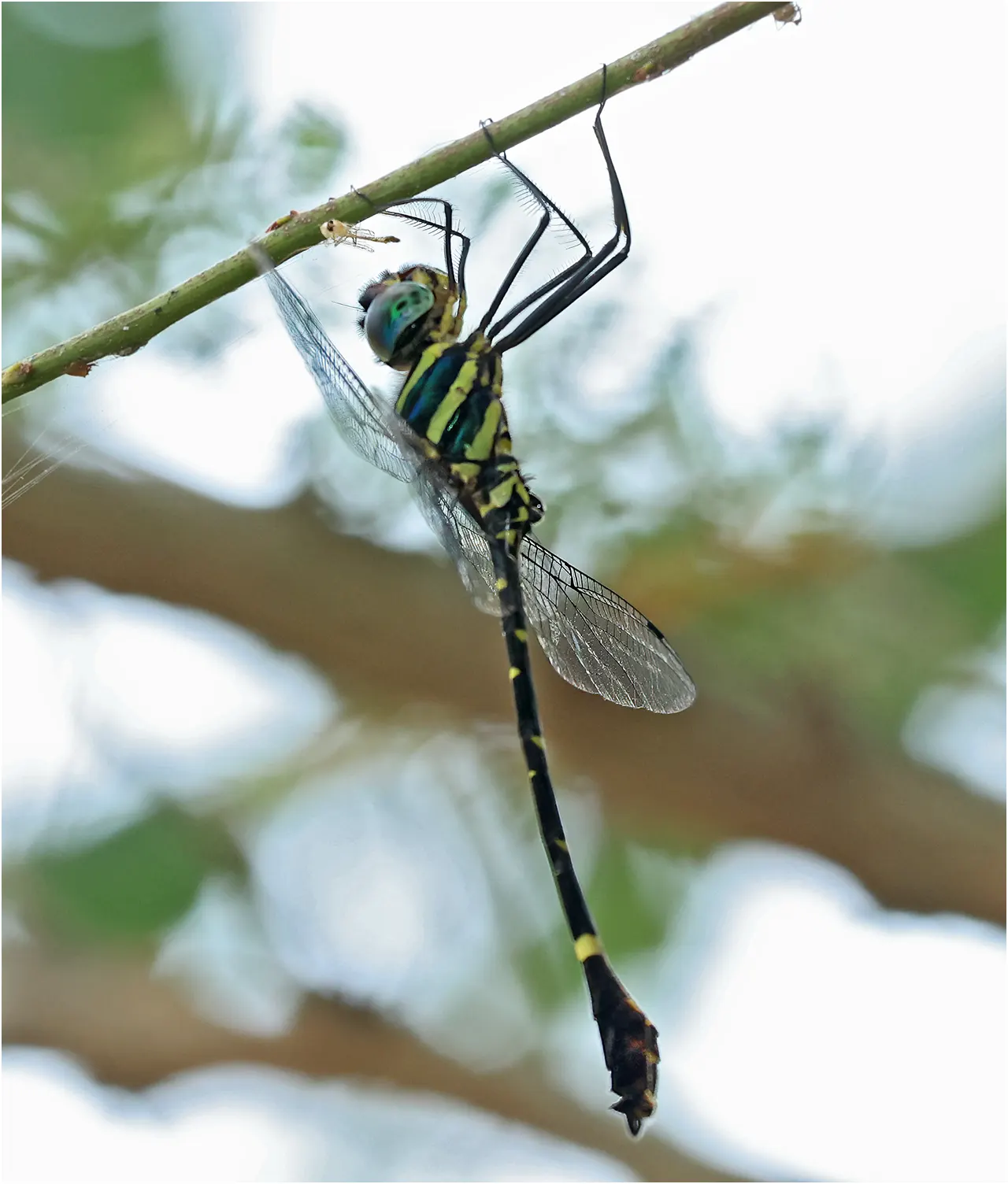
Legrand (1980) measured the total length of the specimen at 51 mm (though he notes that its abdomen measures 49 mm, which seems inconsistent). On ADDO (Dijkstra editor), we read that its habitat consists "mainly of rivers, but also streams (River cruiser, in English), in open areas in the forest." We found the male near a large wetland on the edge of the forest and the female below in a small forest clearing; we did not observe the presence of rivers or streams, but in both situations we did not enter the forest.
Its distribution ranges from Liberia to Cameroon.
IUCN Red List.
When we encountered this female, she was very far away, in the shade; I never managed to take a proper photo. The yellow markings borne by both male and female are completely identical.
Etymology of Phyllomacromia hervei
Phyllomacromia, from the ancient Greek phyllon, which as a prefix means "leaf" and refers to the leaf-like (foliaceous) expansion of segments 7 to 9. Macromia, from the Greek macro for large or broad and -omos for shoulder, emphasizing the massive thorax. Hervei is a tribute to Jean-Pierre Hervé, a medical entomologist who worked extensively on vectors of tropical diseases and spent a long time in sub-Saharan Africa and the Central African Republic, where he collected a specimen of this species in 1975.
Dijkstra, K.-D.B (editor). African Dragonflies and Damselflies Online. http://addo.adu.org.za/ [2019-08-19].
Legrand, J., 1980 - Macromia hervei n. sp. Précédemment confondue avec M. aequatorialis (Martin, 1906) (Odonata, Libellulidae). Revue francaise Entomologie Nouvelle, 2, 10-14, p. 12.