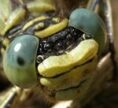
Pseudagrion isidromorai is a rarity; we were lucky enough to catch a glimpse, far away from us, of this single individual.
It was not officially recorded on Dijkstra's (2013) checklist of Odonata of Ghana, bringing the list of Pseudagrion for this country to 18. There are 172 species worldwide and 71 in Africa (though it had been known in Ghana for several years).
It belongs to group B, which contains 26 species in Africa. They are generally characterized by their small or medium size and a coloration usually paler than that of group A. They thrive in warm biotopes, stagnant or temporary waters, and often have a wide distribution.
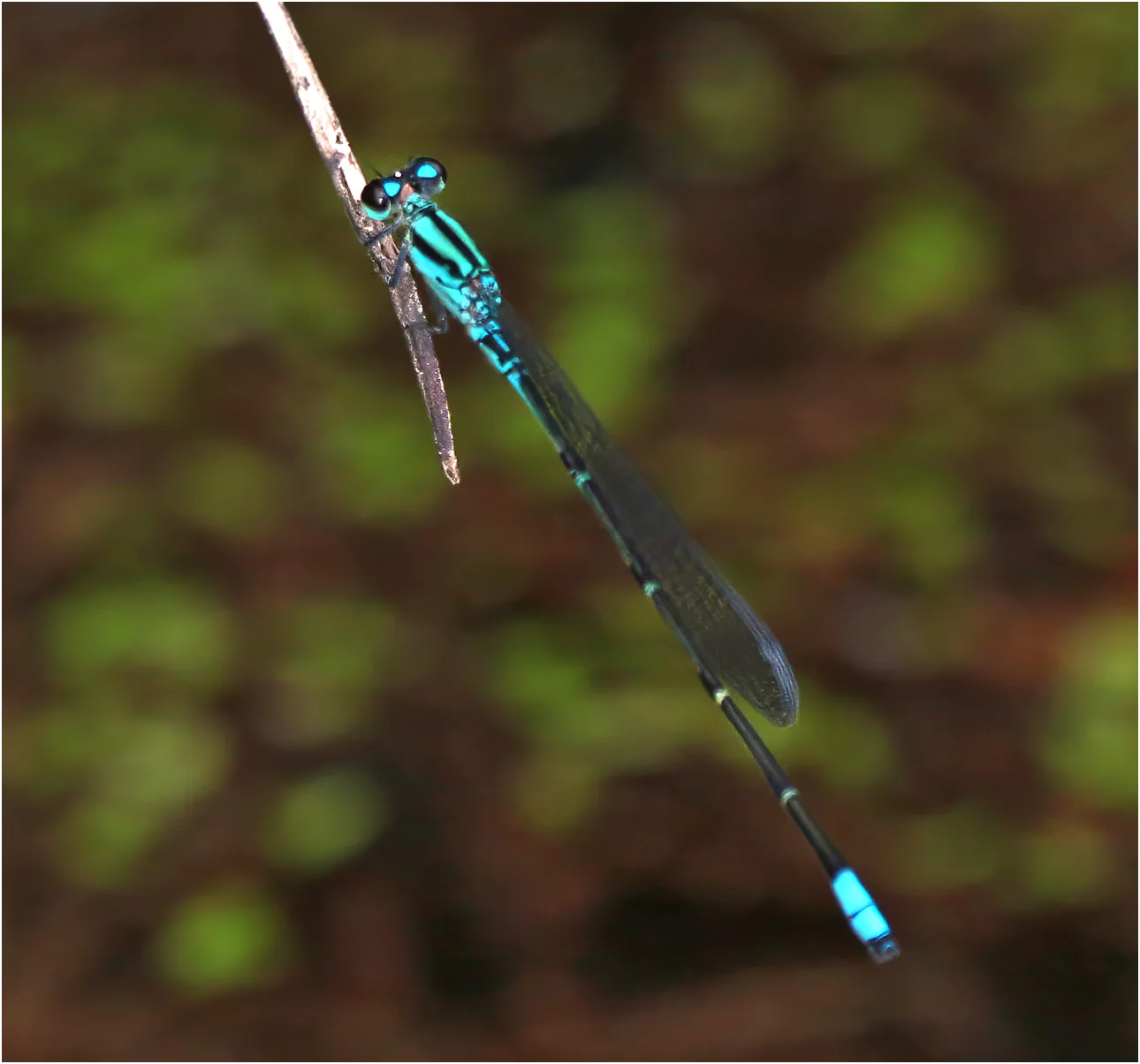
It is very close to another Pseudagrion in Ghana, P. glaucoideum, which unfortunately we did not encounter (certainly just as rare). The Large Blue Sprite (or Great Blue Sprite, according to the IUCN), its English vernacular name, is distinguished from the latter by its broad black antehumeral stripes and its very black head against which the blue postocular spots stand out. Note, on the second segment, the shape of the "U" whose base extends laterally to touch the apex of the first segment (a feature that is not exclusive).
I was unable to access the description by Compte Sart (1967), which is apparently no longer on the Web, and I do not know its exact size. The only information available to me comes from the African Dragonflies and Damselflies Online website (ADDO, Dijkstra editor), which is unfortunately now offline.
We encountered it on a narrow, deeply incised stream to which we managed to gain access for about twelve meters before it passed under a road—an environment extraordinarily rich in odonates!

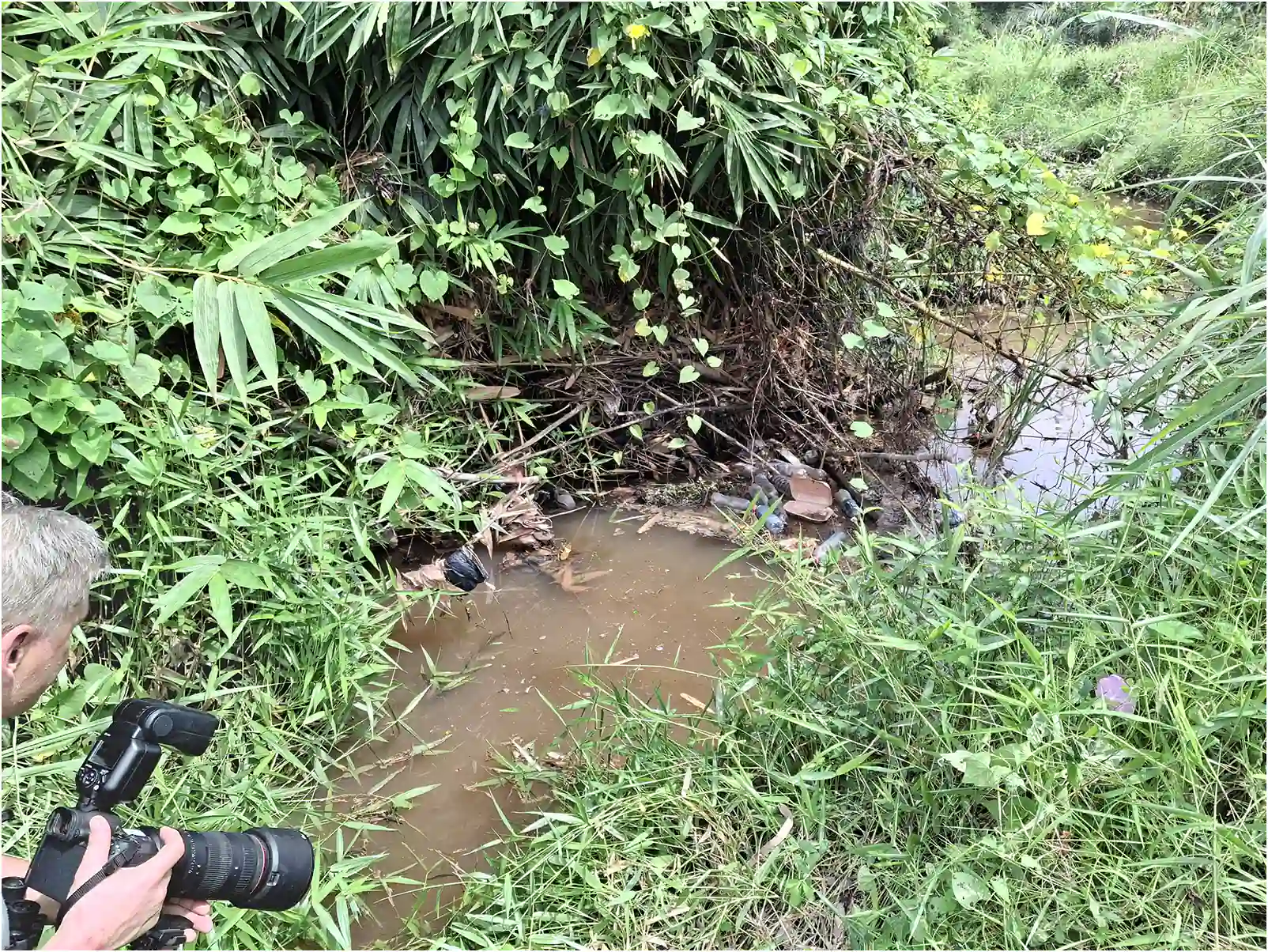
ADDO tells us that Pseudagrion isidromorai is found on "streams, but probably also rivers, situated in open areas in forest, especially calmer sections featuring emergent and aquatic vegetation, as well as a soft bottom (muddy type)."
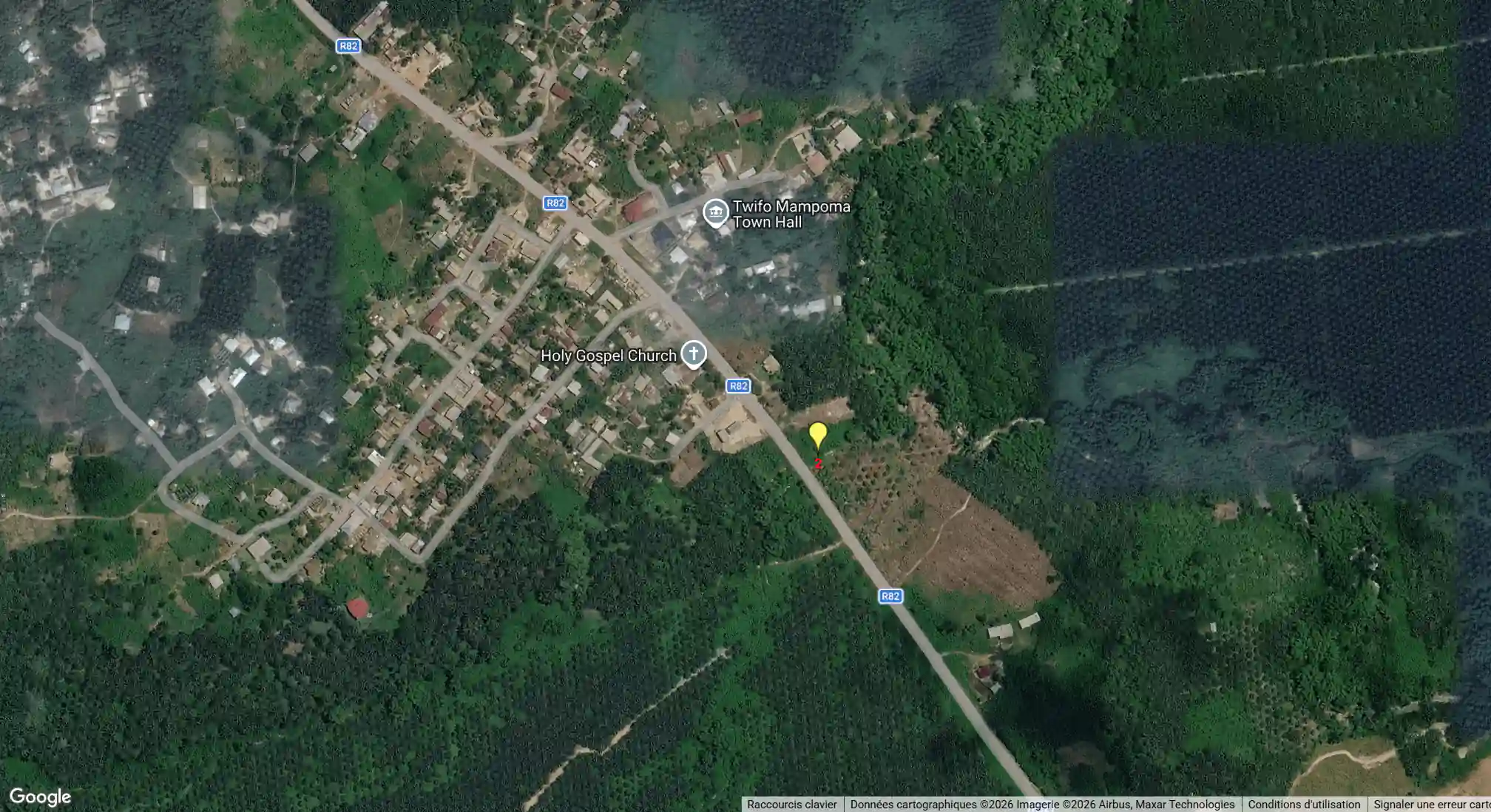
And it was indeed in this type of habitat that we found it, apart from the forest; while there were a few trees as seen in the photo, we were some distance away from the true forest. For the aerial view is worrying for this rare species; one can see that the natural vegetation has been cleared to plant oil palms (Elaeis guineensis) and that this exceptional site will not remain so for long.
Its geographic distribution extends from Sierra Leone and Equatorial Guinea down to Angola in the south and the Congo, with gaps, as it has not (yet) been discovered in Côte d'Ivoire, Togo, and Benin.
IUCN Red List.
Étymology: Pseudagrion isidromorai
Pseudagrion (Endersby & Fliedner, 2015) from the Ancient Greek, pseudo—false, erroneous, and agrion, this, as Selys (1876) wrote, to bear witness to the difficulty in separating this genus from Agrion; "les Pseudagrions semblent très voisins des vrais Agrions—the Pseudagrions seem very close to the true Agrions." Agrion, from the Greek agrios—wild, living in the fields.
Isidromorai is a tribute by Arturo Compte Sart, Spanish entomologist and taxonomist, to Isidro Mora (Matti Hämäläinen, 2016), field assistant to Fernando Martorell, a teacher at the Escuela de Artes y Oficios La Salle in Bata, who collected specimens in Spanish Guinea (now Equatorial Guinea).
Compte Sart, A. (1967). Boletin Real Sociedad Espanol Historia Natural, 65, 5-15.
Endersby Ian & Fliedner Heinrich, (2015). The Naming of Australia’s Dragonflies, Ian Endersby & Heinrich Fliedner, Busybird publishing.
Dijkstra, (2013). A Rapid Biological Assessment of the Atewa Range Forest Reserve, Eastern Ghana:137-142. 2013 - Checklist of Odonata Recorded from Ghana - Conservation International.
Matti Hämäläinen, (2016). Catalogue of individuals commemorated in the scientific names of extant dragonflies, including lists of all available eponymous species-group and genus-group names – Revised edition – Journal of the International Dragonfly Fund 1-132.
+