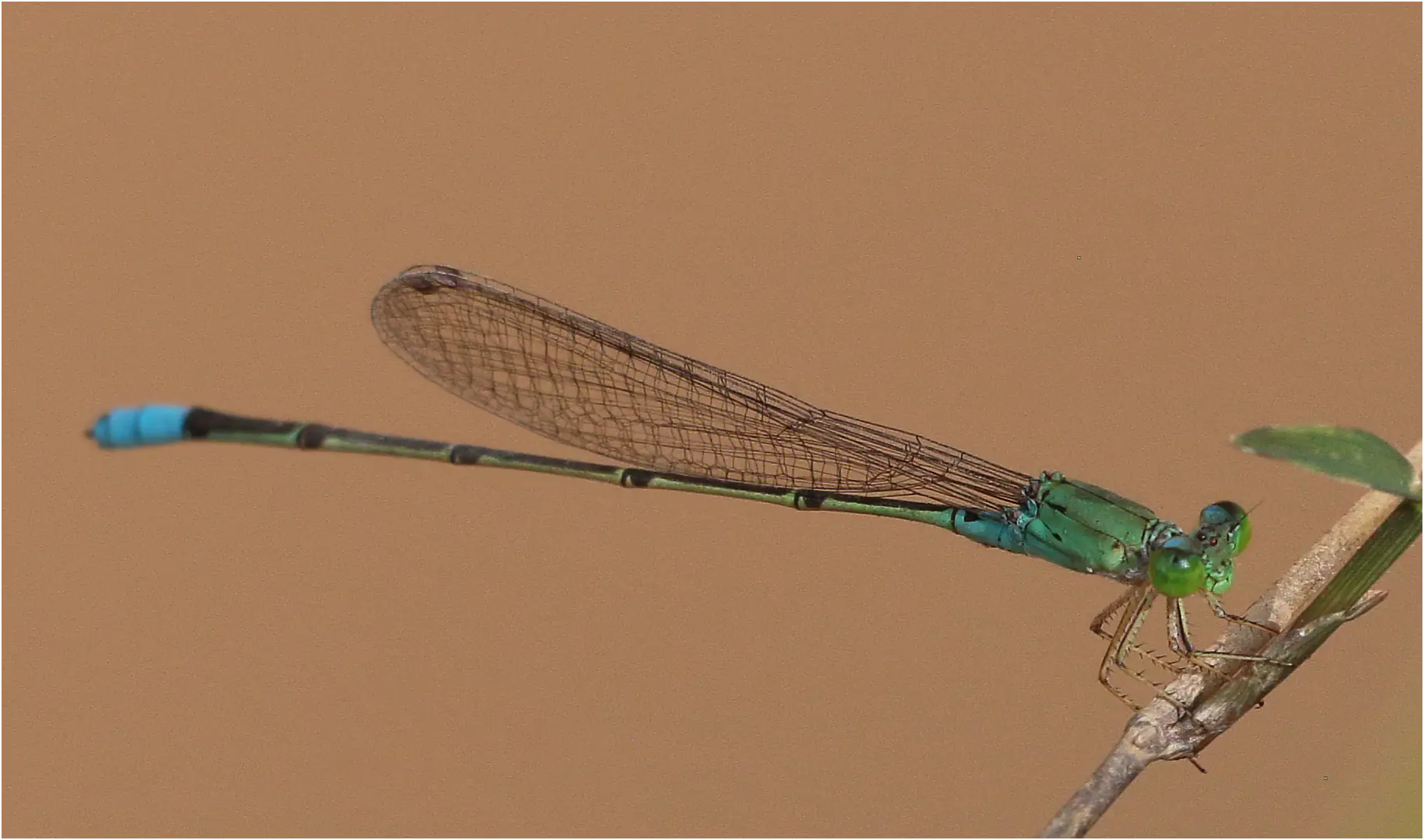
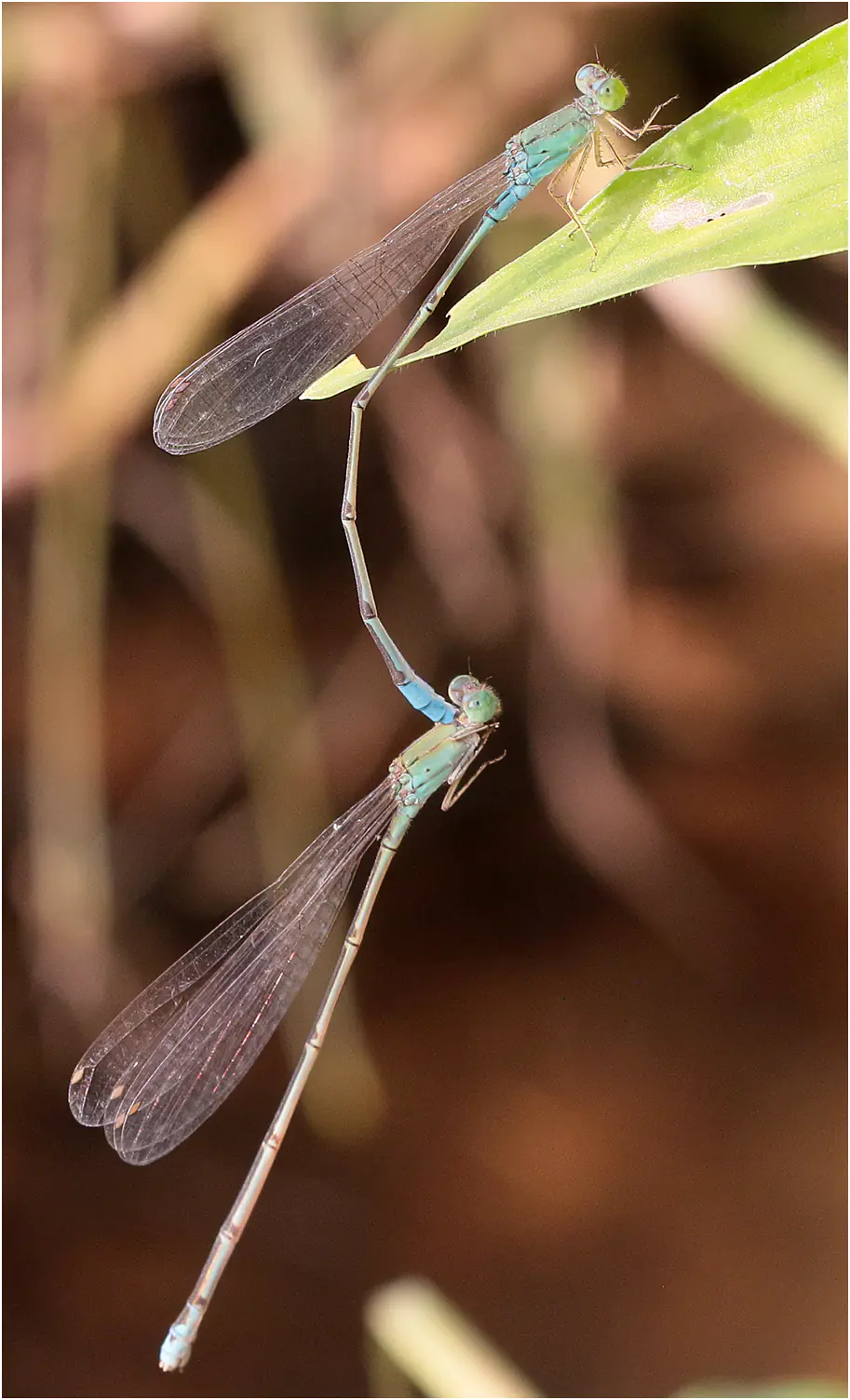
Our first encounter with Pseudagrion glaucescens took place on a wide river with banks that were too steep to attempt approaching it. We were only granted this single perched moment, 4 or 5 meters below us.
It is part of the 26 Pseudagrion of group B in Africa (71 Pseudagrion A & B in Africa, 172 worldwide !); these Pseudagrion are generally characterized by their small or medium size and coloration that is generally paler than those of group A. They thrive in warm biotopes, stagnant or temporary waters, and often have a wide distribution.
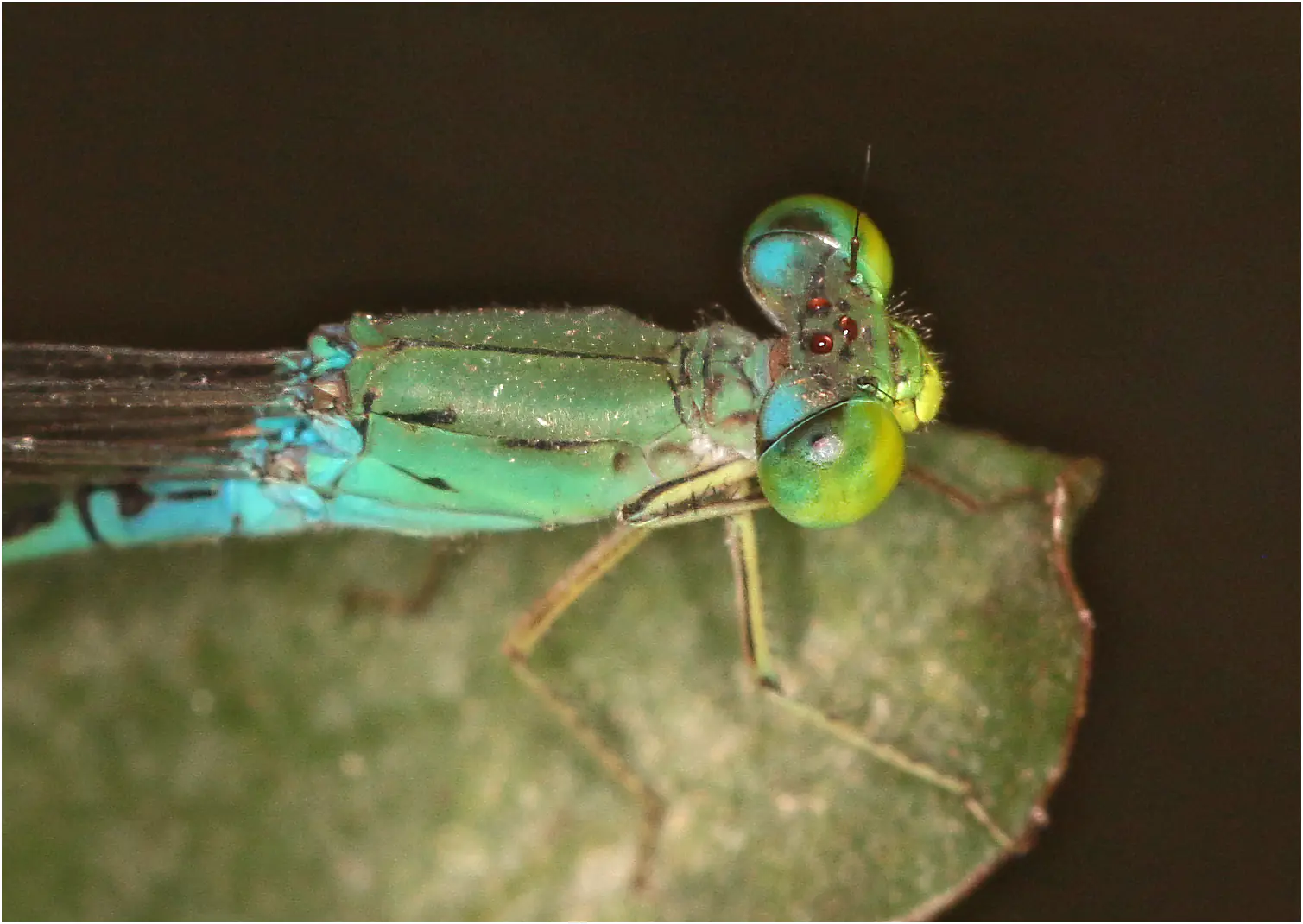
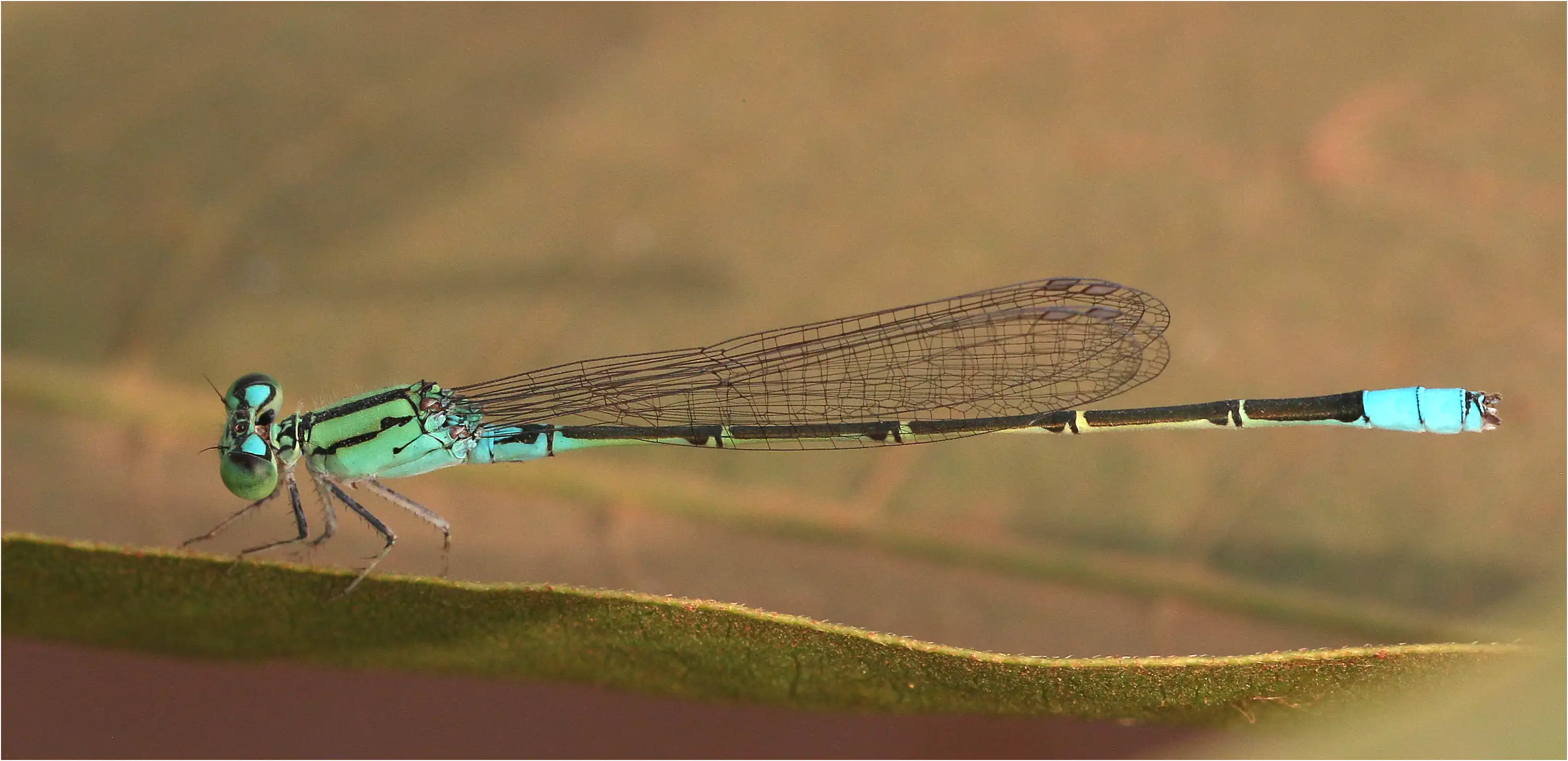
We hesitated a bit before identifying Pseudagrion glaucescens, but in the end, we saw no other Pseudagrion resembling it, with such a fine humeral suture and so few black markings (Longfield, 1936). Pinhey (1961), in his key to Pseudagrion, describes these thoracic markings as "vestigial" (Black thoracic marking vestigial), and this feature is certainly a good identification criterion. Selys measures its abdomen at 31 mm, making for a total length of 38 mm.
P. nubicum is smaller (31 mm) and its humeral suture is much broader and thicker. However, both bear a "U" or tuning fork on the second segment and a black "x" on the 10th.
It is also very close to P. torridum, which is likewise smaller (30 to 34 mm), a species also present in Ghana (though we did not encounter it).
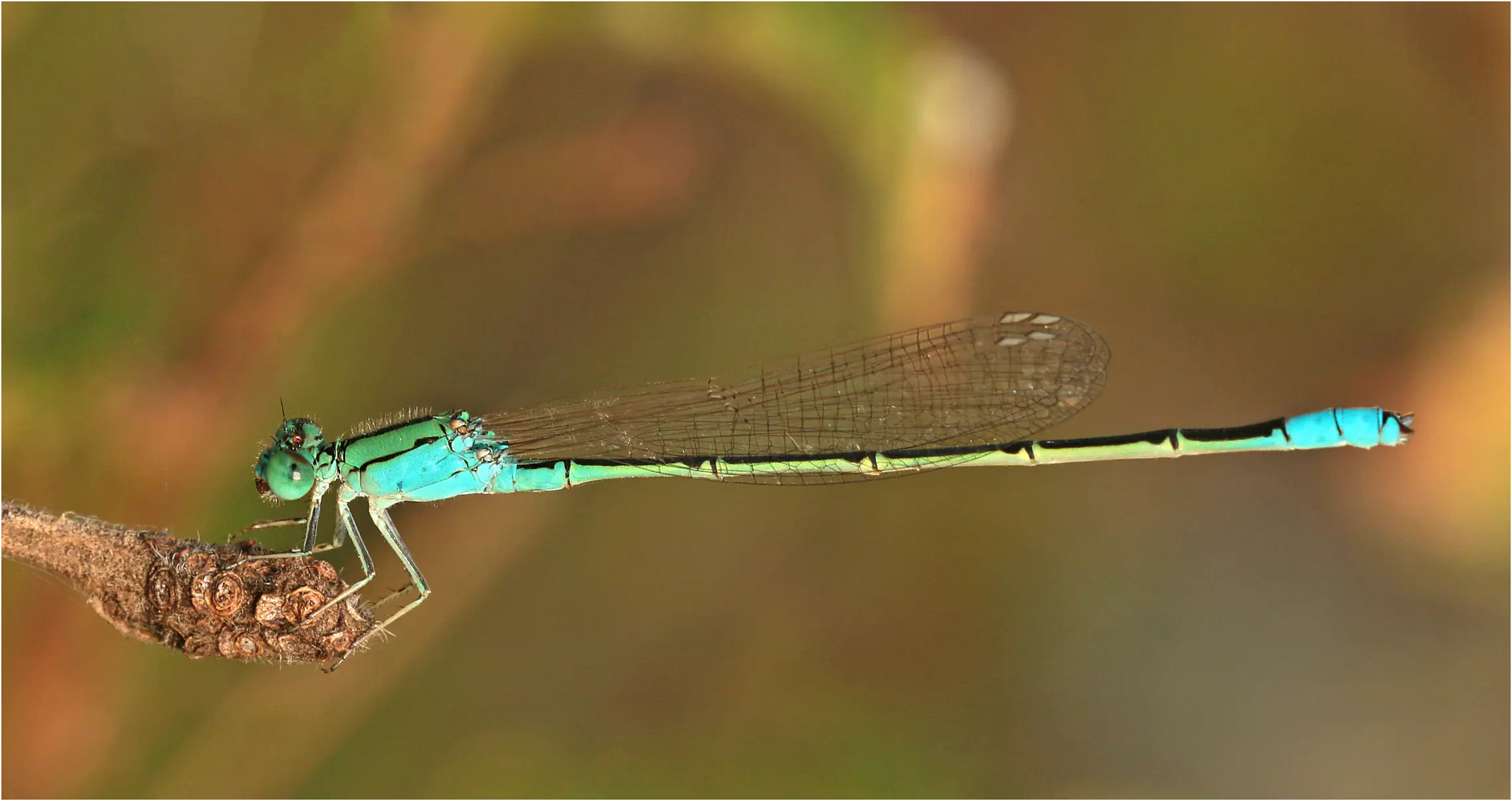
On the ADDO website, K.-D. Dijkstra writes that it also closely resembles P. helenae, which is not present in Ghana.
Of course, the best way to differentiate them requires examining the anal appendages, which I cannot show for Pseudagrion glaucescens. Note here, however, the yellow (or yellow-green) face.
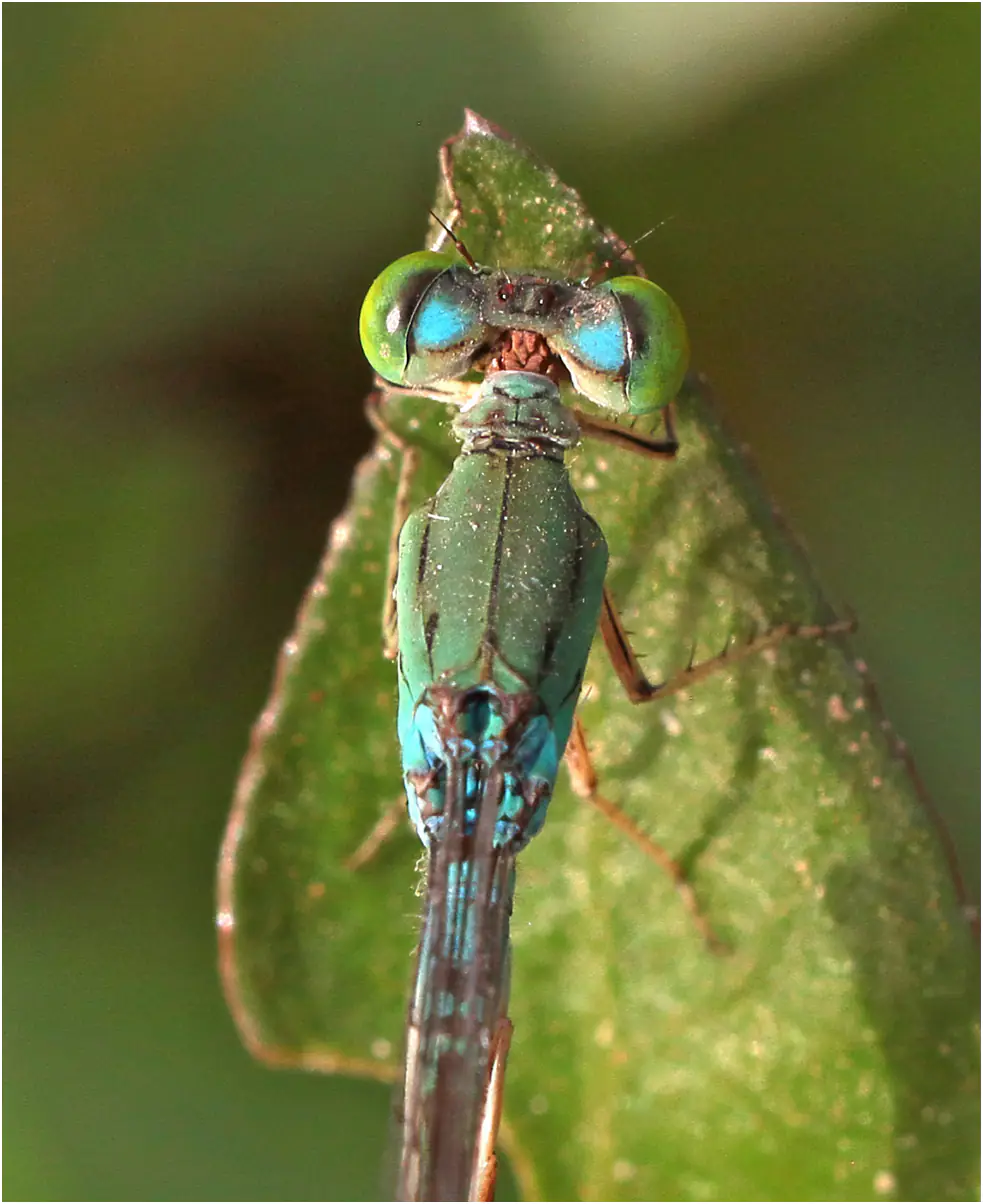
Unfortunately, I failed to take any other photos of a solitary male, except for one from a rear view, which I am still hesitating to put on the website.
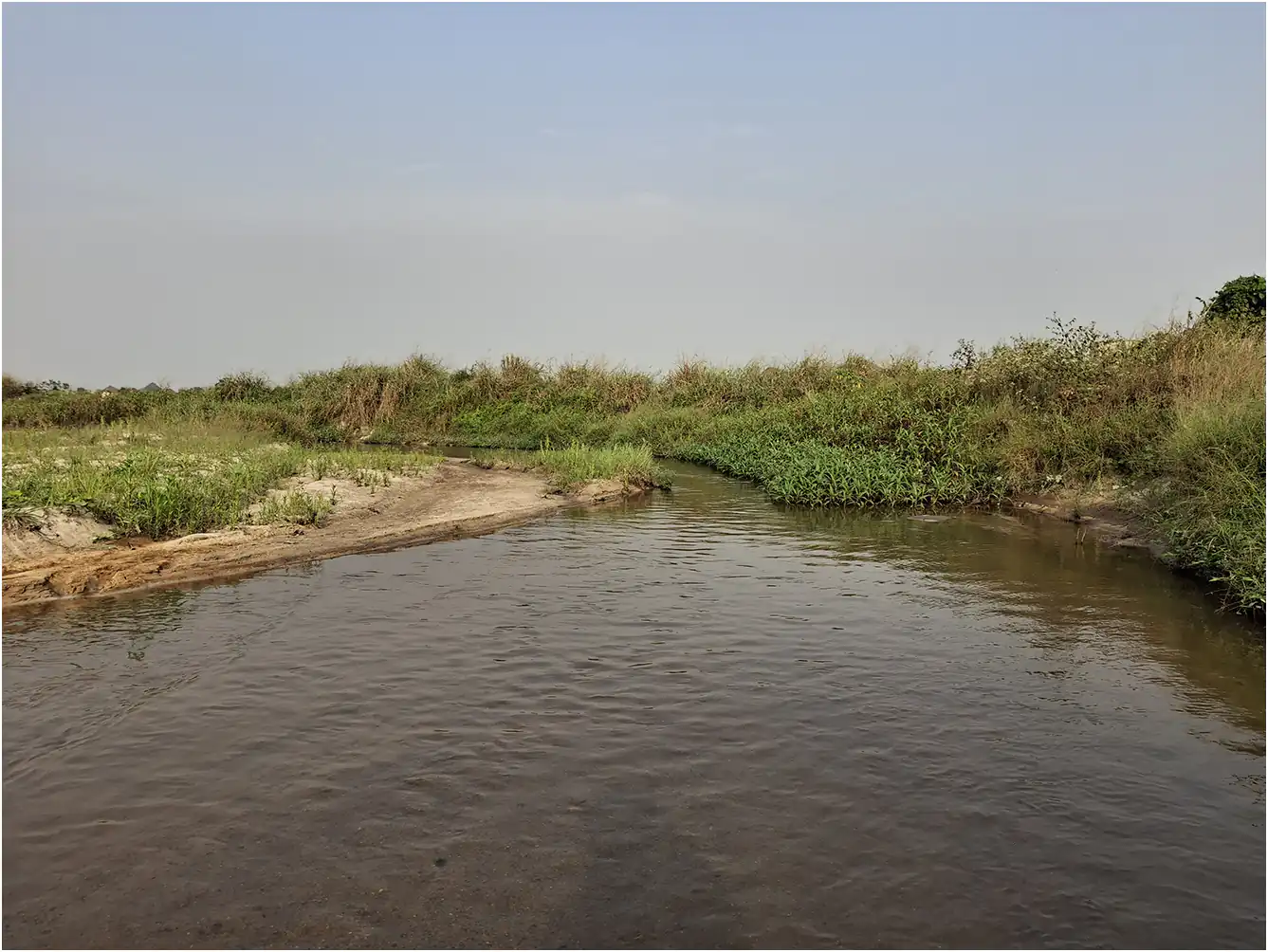
On the Bafo River, in a wide, shallow, and open section, we encountered numerous species, including several Pseudagrion, but only a single pair of Pseudagrion glaucescens in copula and tandem.
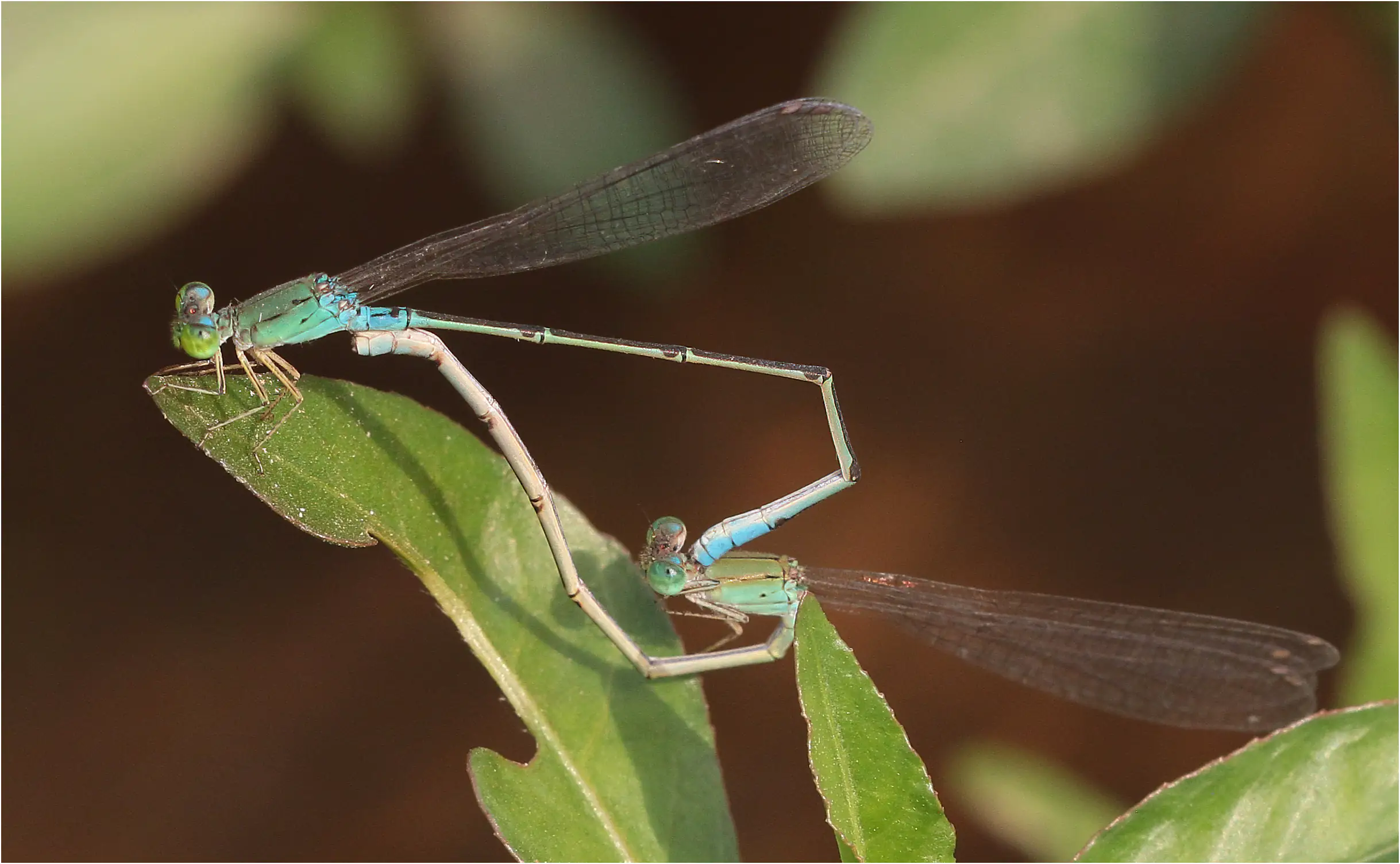
This is an opportunity to observe the female, whose habitus is very close to that of the male, with thoracic patterns that are slightly less marked, but identical.
It is a river species in an open environment with banks that are sufficiently vegetated.
The Tropical Sprite (or Blue-green Sprite in English) is found from Senegal to Kenya, and to the south and east it reaches Mozambique, and to the west, the extreme north of Namibia.
IUCN Red List.
Étymology of Pseudagrion glaucescens
Pseudagrion (Endersby & Fliedner, 2015) from the ancient Greek, pseudo—false, erroneous, and agrion, this, as Selys wrote (1876), to reflect the difficulty of separating this genus from Agrion; "les Pseudagrions semblent très voisins des vrais Agrions—the Pseudagrions seem very close to the true Agrions." Agrion, from the Greek agrios—wild, living in the fields.
Glaucescens (Suhling & Martens, 2007), from the Greek glaukos for blue-green or grey and the Latin suffix -escens meaning becoming or being faint, in reference to the blue-green coloration of this odonate.
Dijkstra, K.-D.B (editor, 2021). African Dragonflies and Damselflies (ADDO).
Endersby Ian & Fliedner Heinrich, (2015). The Naming of Australia’s Dragonflies, Ian Endersby & Heinrich Fliedner, Busybird publishing.
Longfield, C. (1936). Studies on African Odonata, with synonymy and descriptions of new species and subspecies. Transactions Royal Entomological Society London, 85, 467-498, p. 473.
Pinhey, E.C.G. (1961). Dragonflies (Odonata) of Central Africa. Occasional Papers Rhodes-Livingstone Museum, 14, 1-97.
Selys (1876) – Synopsis des Agrionines, 5ᵉ légion, Agrion (suite), p. 498.
Frank Suhling & Andreas Martens (2007). Dragonflies and Damselflies of Namibia. Gamsberg Macmillan.