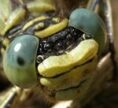
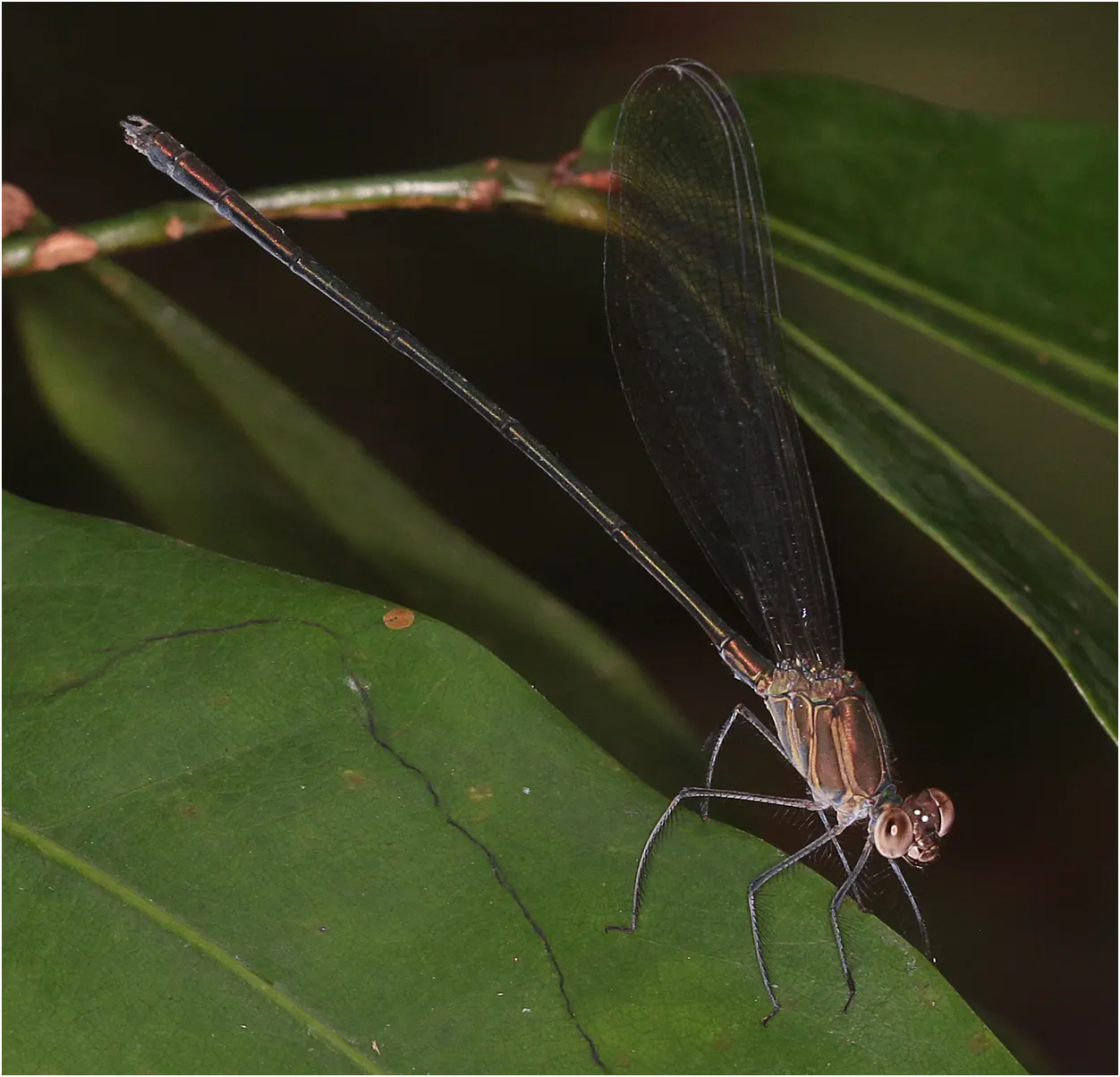
Phaon iridipennis (Calopterygidae) is a species I had previously encountered in Namibia, but I was only able to spot a single female. I had better luck in Ghana, where I was able to photograph both a male and a female at two different sites.
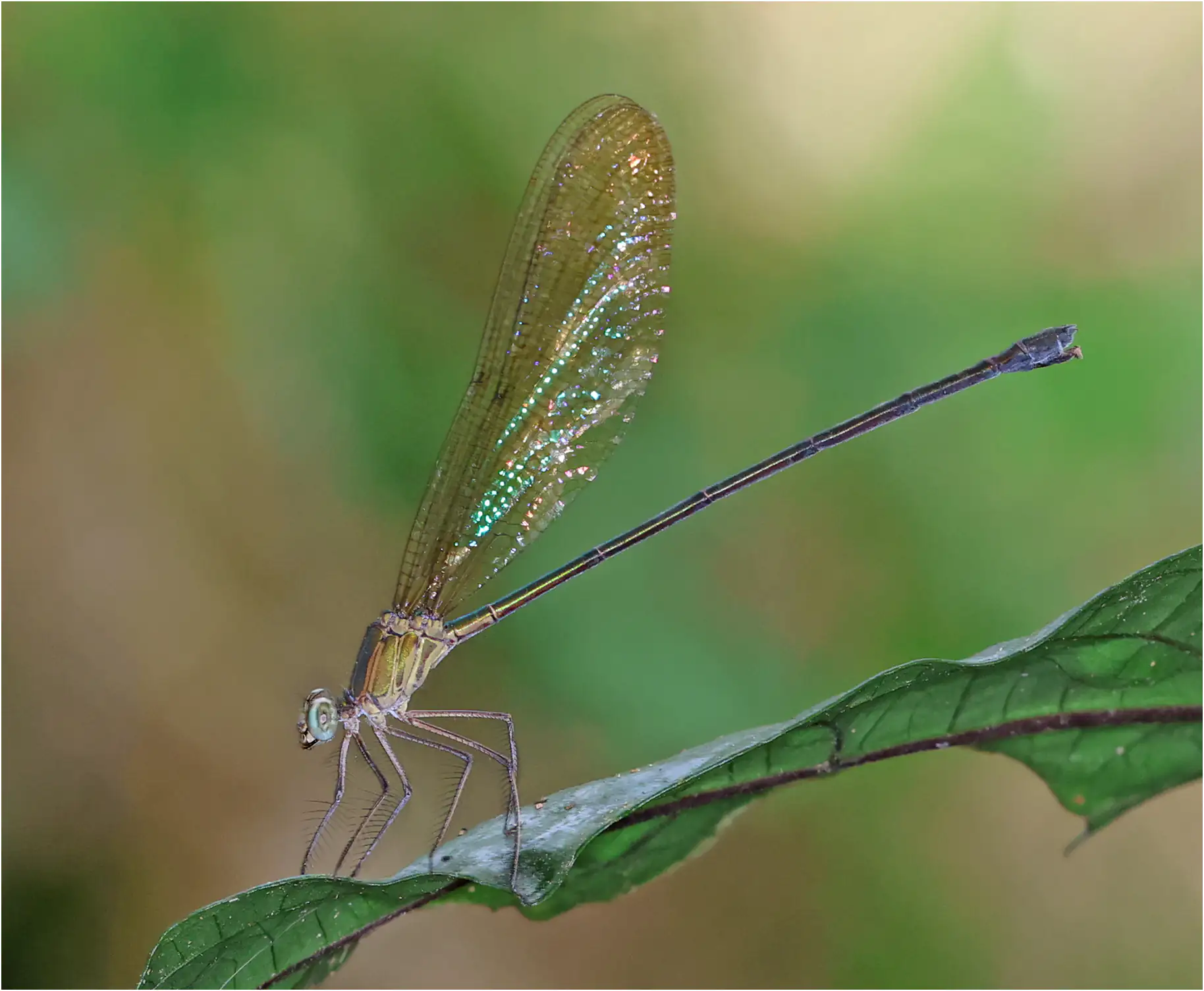
It is impressive both for its size, averaging 70 mm, and for the iridescence of its wings depending on the angle of the light, which earns it the English common name Glistening Demoiselle.
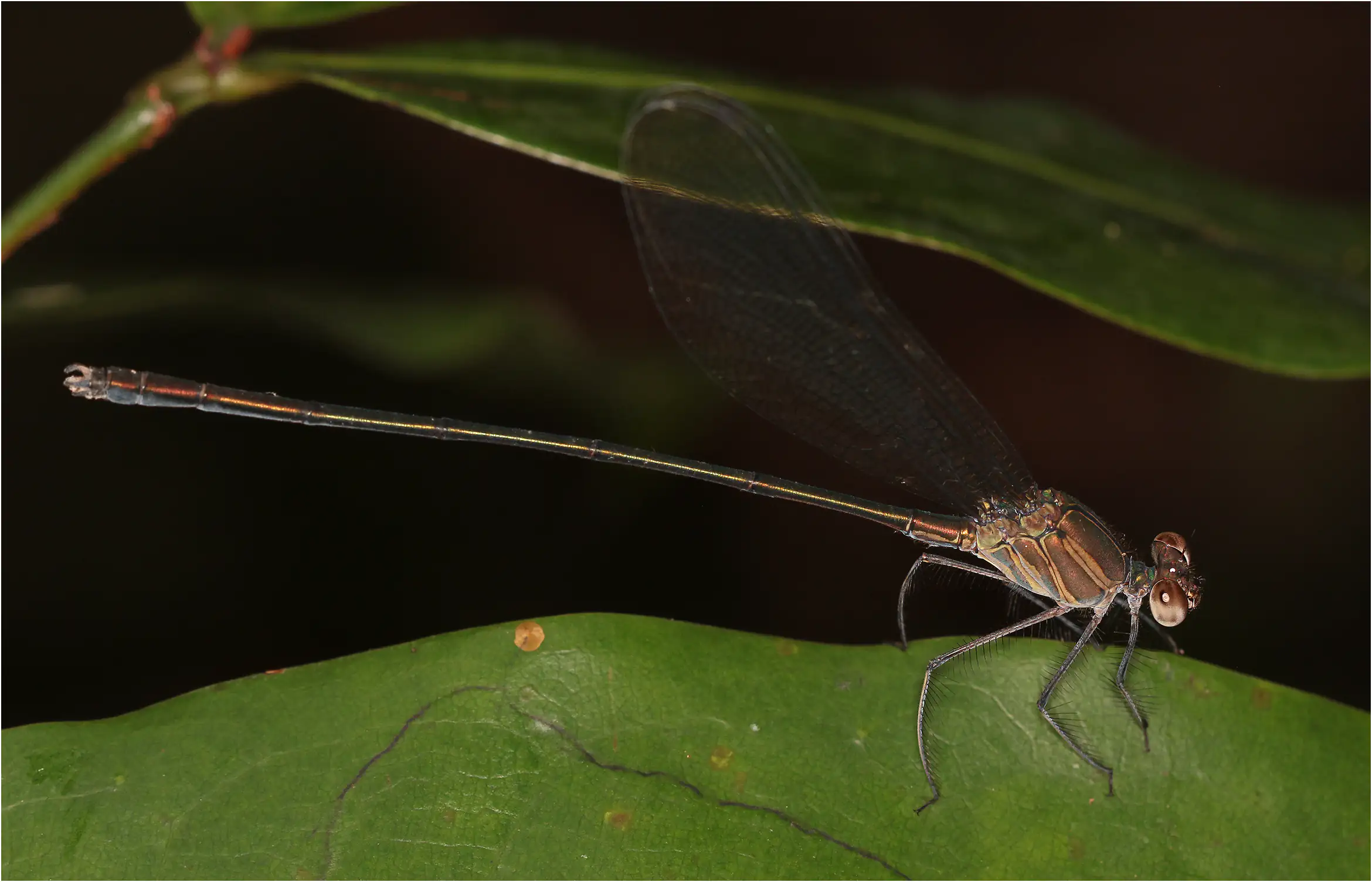
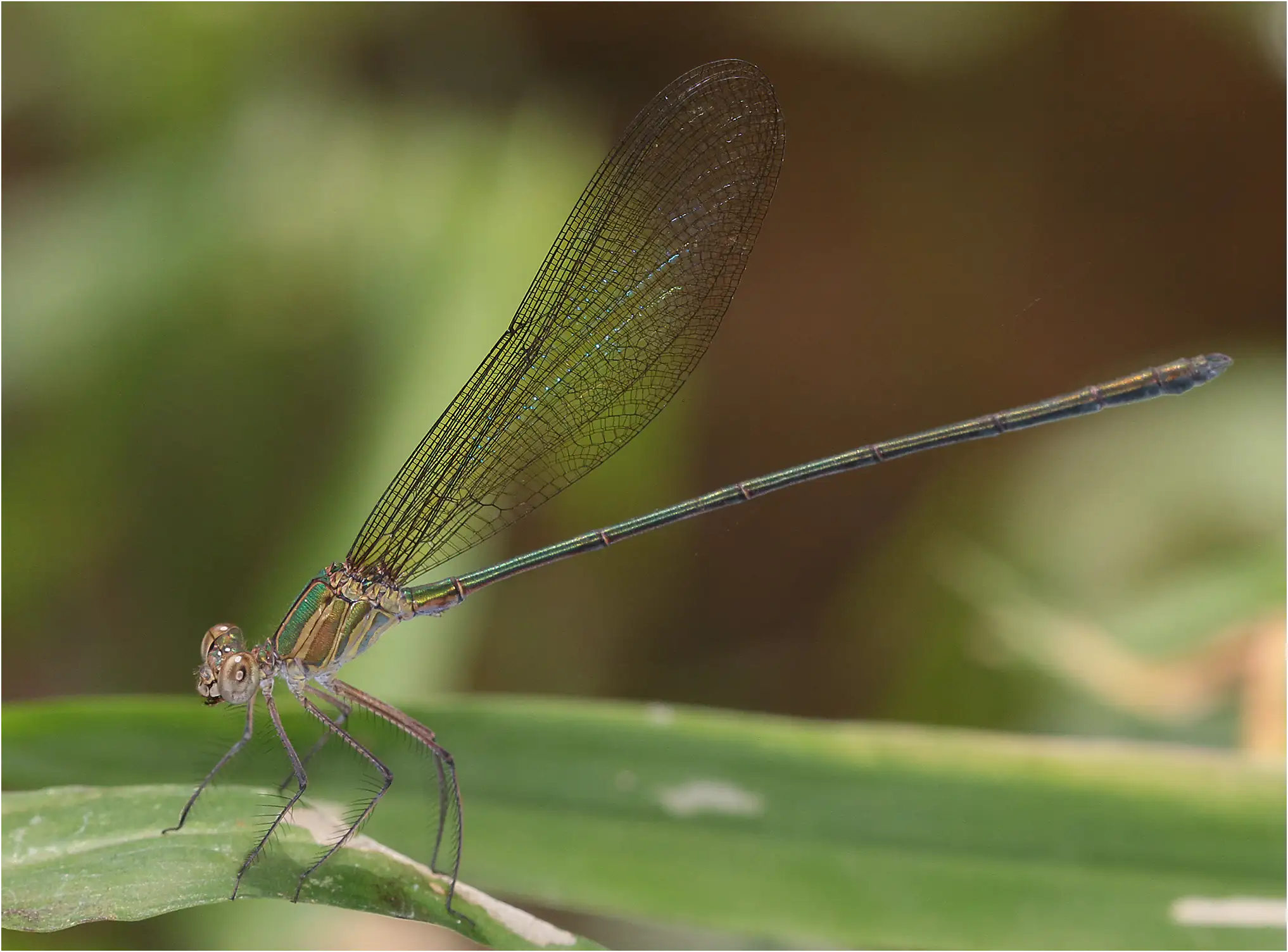
Phaon iridipennis has a rather dull appearance and on mainland Africa can only be confused with P. camerunensis, which is noticeably greener and lacks the wide beige borders along the sutures. We did not encounter the latter, and it is anyway much less common.
A third species, P. rasoherinae, is present only in Madagascar.
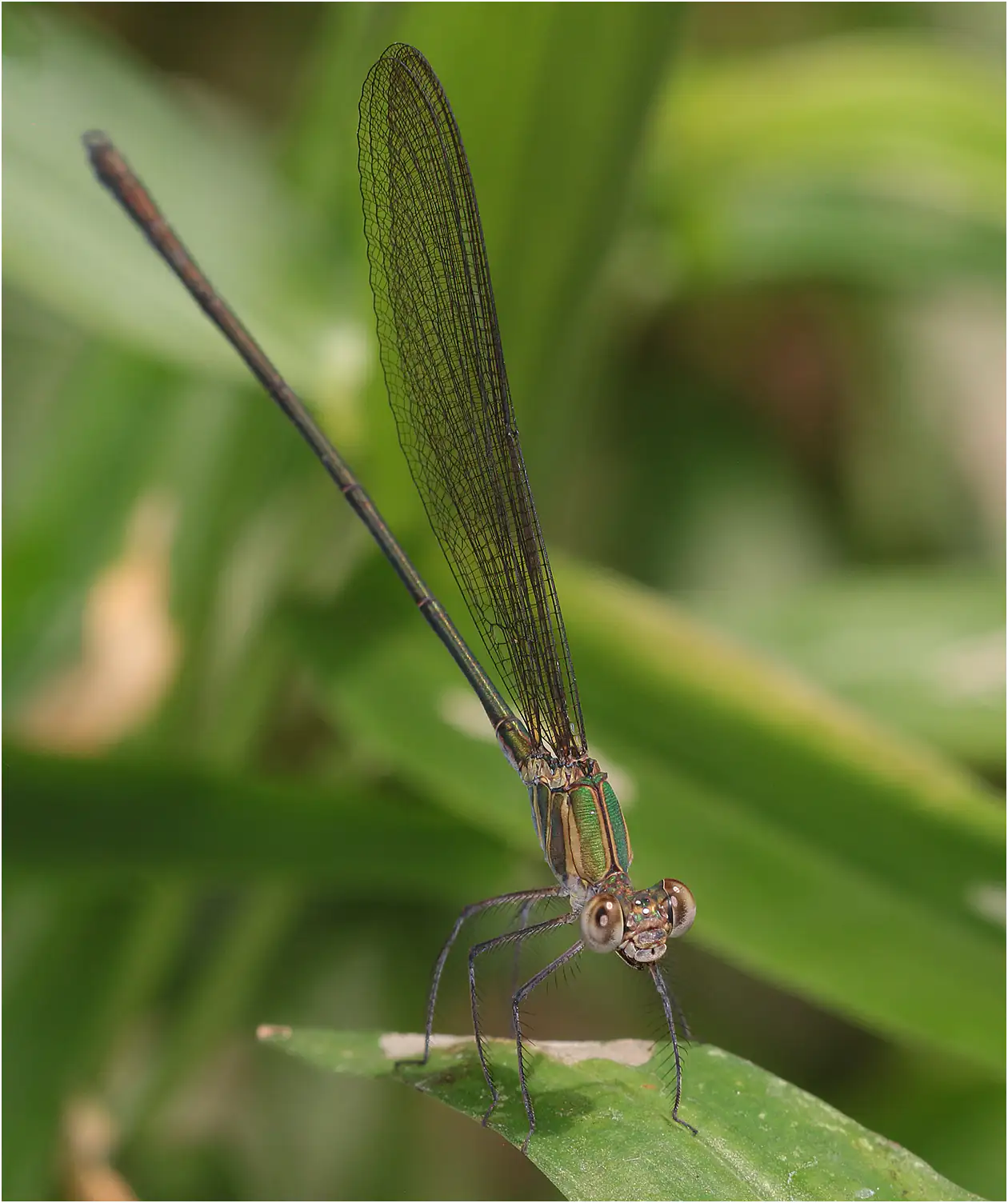
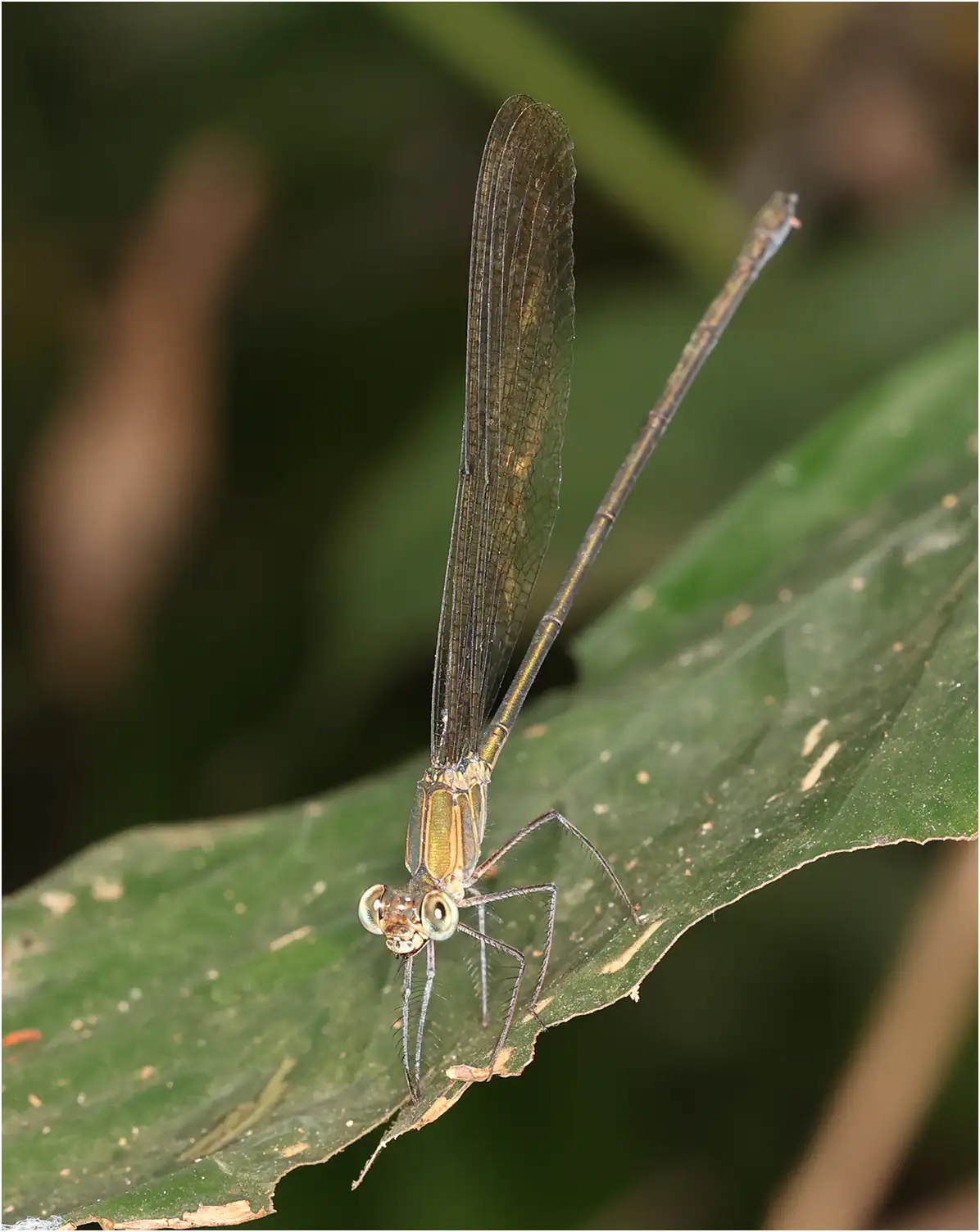
It frequents gallery forests, and the first of these photos of males was taken deep in the shade, beneath a dense, low canopy. The others were taken along a small, incised river in a semi-open environment where the vegetation had been destroyed and replaced by oil palms; nonetheless, over a stretch of about fifty meters on either side of the road, we recorded a very large number of species, including some we would not see anywhere else.

It has a very wide distribution throughout tropical Africa, but while it reaches South Africa, it does so only along its eastern flank. It is absent from western Botswana and is restricted to northern Namibia.
IUCN Red List.
Phaon iridipennis male, Ghana, Twifo Atti-Morkwa, 20/01/2026
The females are the exact mirror image of the males regarding their thoracic patterns and the width of the beige band surrounding their thoracic sutures. Here, one can clearly see the iridescence triggered by the flash, which is truly spectacular when they fly through a ray of sunlight.
Etymologie of Phaon iridipennis
Burmeister described the species in the genus Calopteryx, and it was Selys (1853) who placed it in the genus Phaon, redescribing it in his Synopsis des Calopterygines (1853).
Phaon, in Greek mythology, was an elderly boatman and ferryman from the island of Lesbos who received an ointment from Aphrodite that transformed him into a remarkably handsome young man—an elegance that Selys surely had in mind when choosing the name in 1853.
Iridipennis, from the Latin genitive iridis, evoking iridescence, and penna, meaning feather or wing.
Burmeister H., 1839. Handbuch der Entomologie (Vol. 2, Issue 2, p. 827). G. Reimer, p. 827.
Selys-Longchamps, Edm. de., 1853. Synopsis des Caloptérygines. Bull. Acad. Belg. 20, Annexe, 1-73 , p. 23.