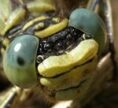
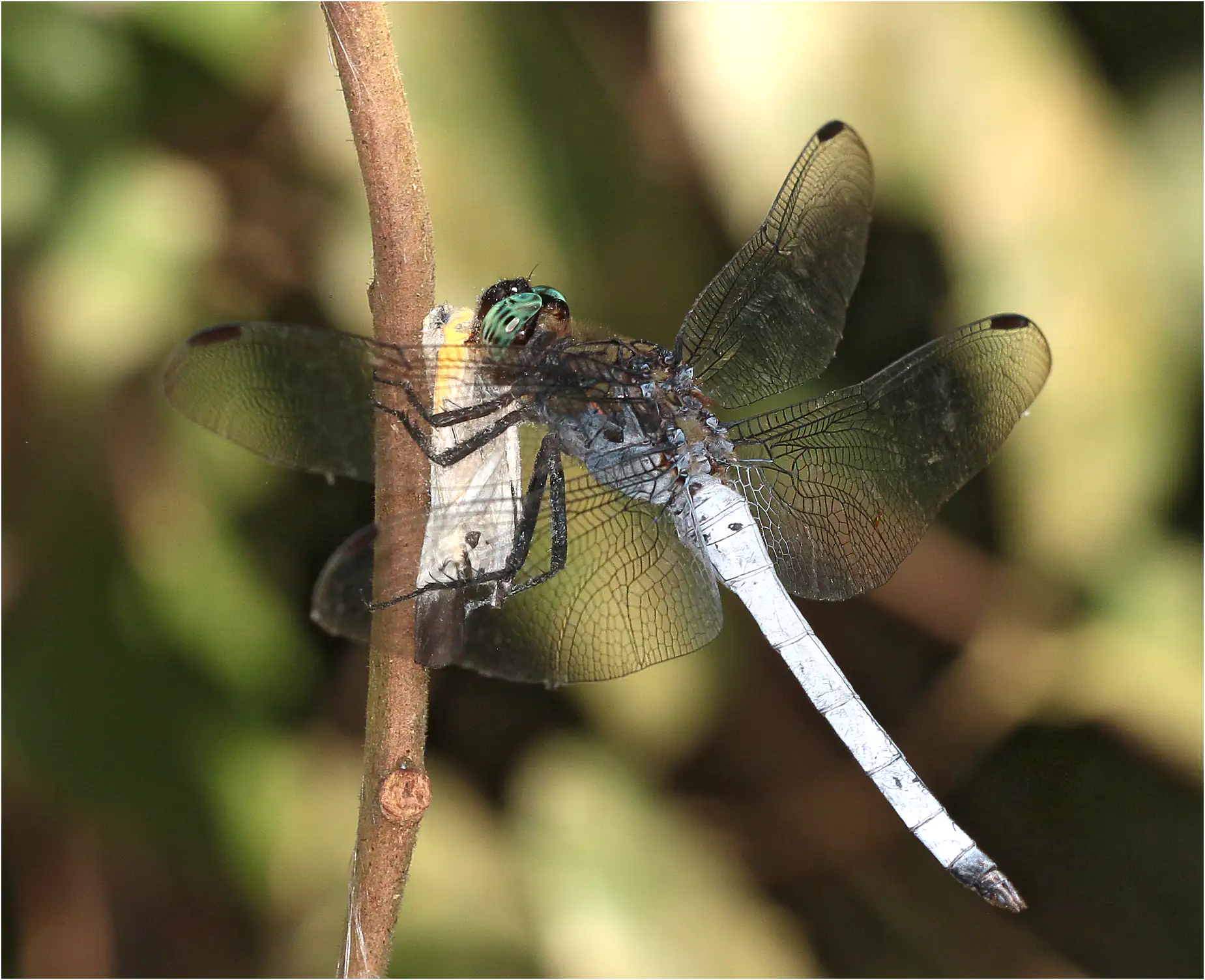
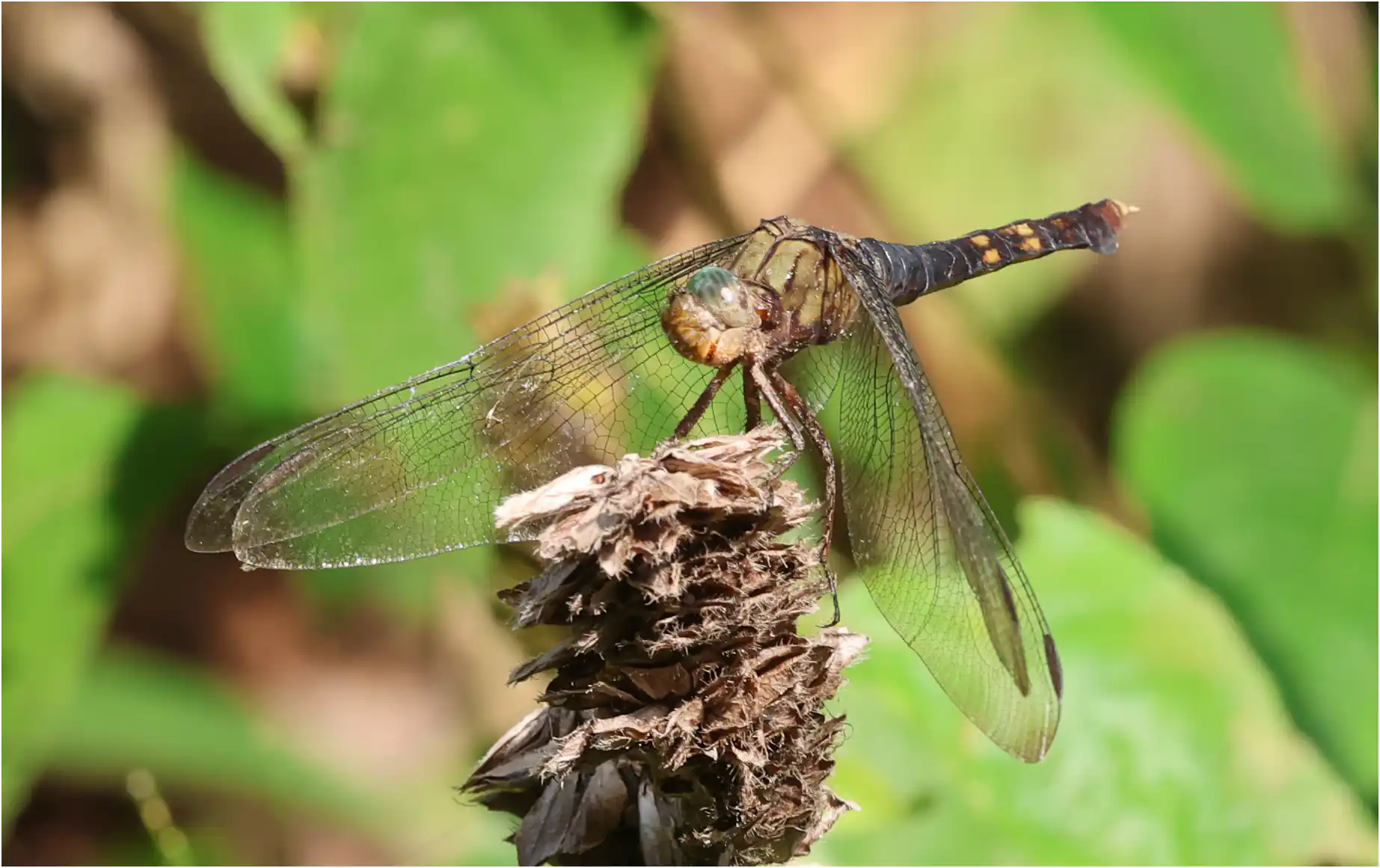
Orthetrum austeni, Libellulidae, is not one of the most difficult to identify; it is first of all the largest and most massive of all Orthetrum (Longfield, 1955), which are nevertheless numerous worldwide since the genus counts 72 species, including 36 in Africa and 15 in Ghana. According to Kirby (1900), who described it in the genus Thermothemis, it reaches 54 to 56 mm in total length and 94 to 98 mm in wingspan. Its English name is explicit: Giant Skimmer.
Its abdomen appears cylindrical, barely dilated in the first two segments (not narrowed further), and very broad, which differentiates it from all other Orthetrum, including O. angustiventre (the closest one), whose width does not exceed 3 mm. That of Orthetrum austeni reaches 4 mm; the difference seems minimal on paper, but in the field the difference in appearance is enormous, as can be seen below; this is the same subject as in the photo above, devouring a butterfly.
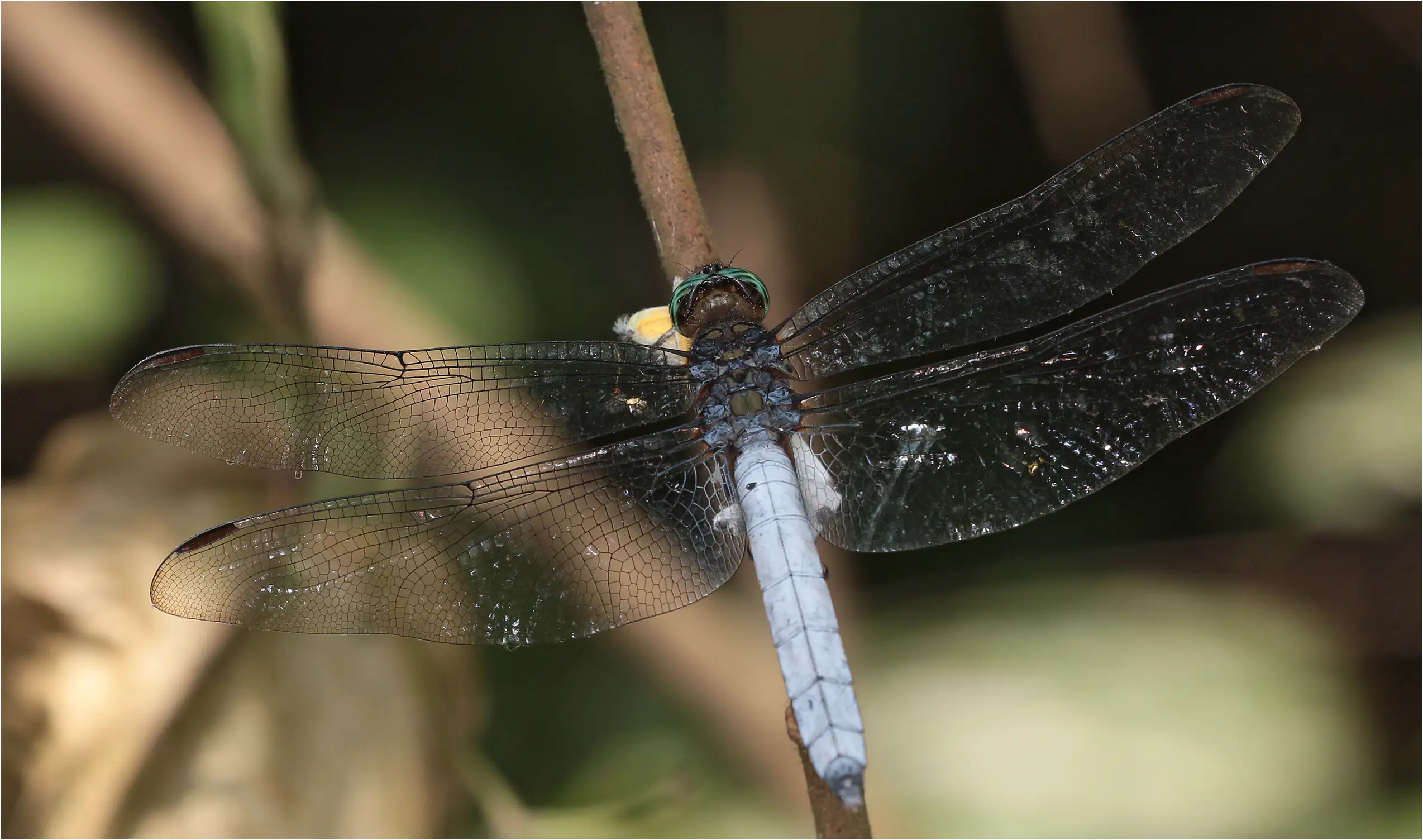
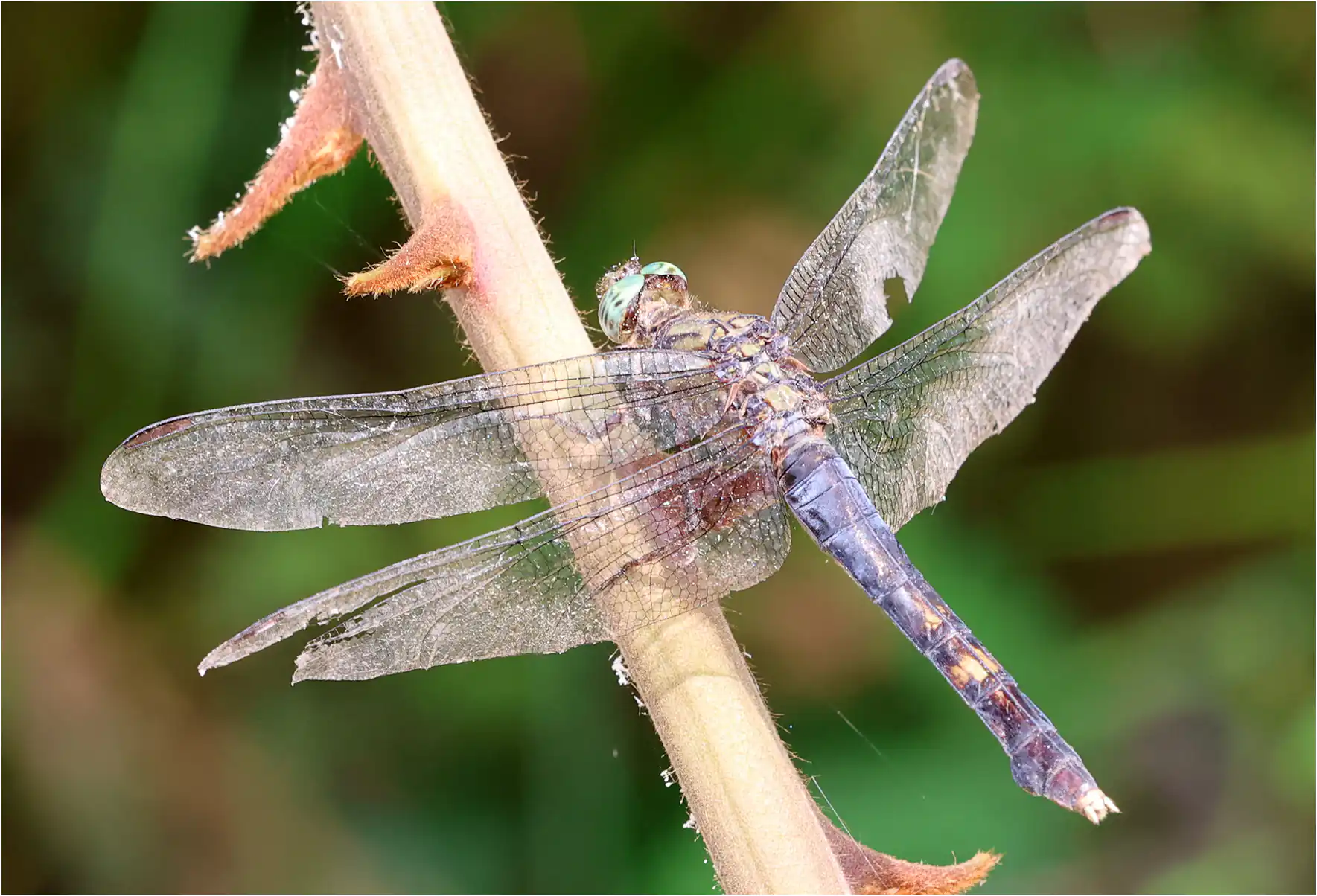
The abdomen is light brown when young and becomes covered with a bluish pulverulence that spares S10 and partially S9, reaching the base of the hindwings, the interalar space and often remaining confined to the posterior part of the thorax; some specimens, however, have their thorax almost completely invaded by pruinescence, but it remains incomplete on the anterior part.
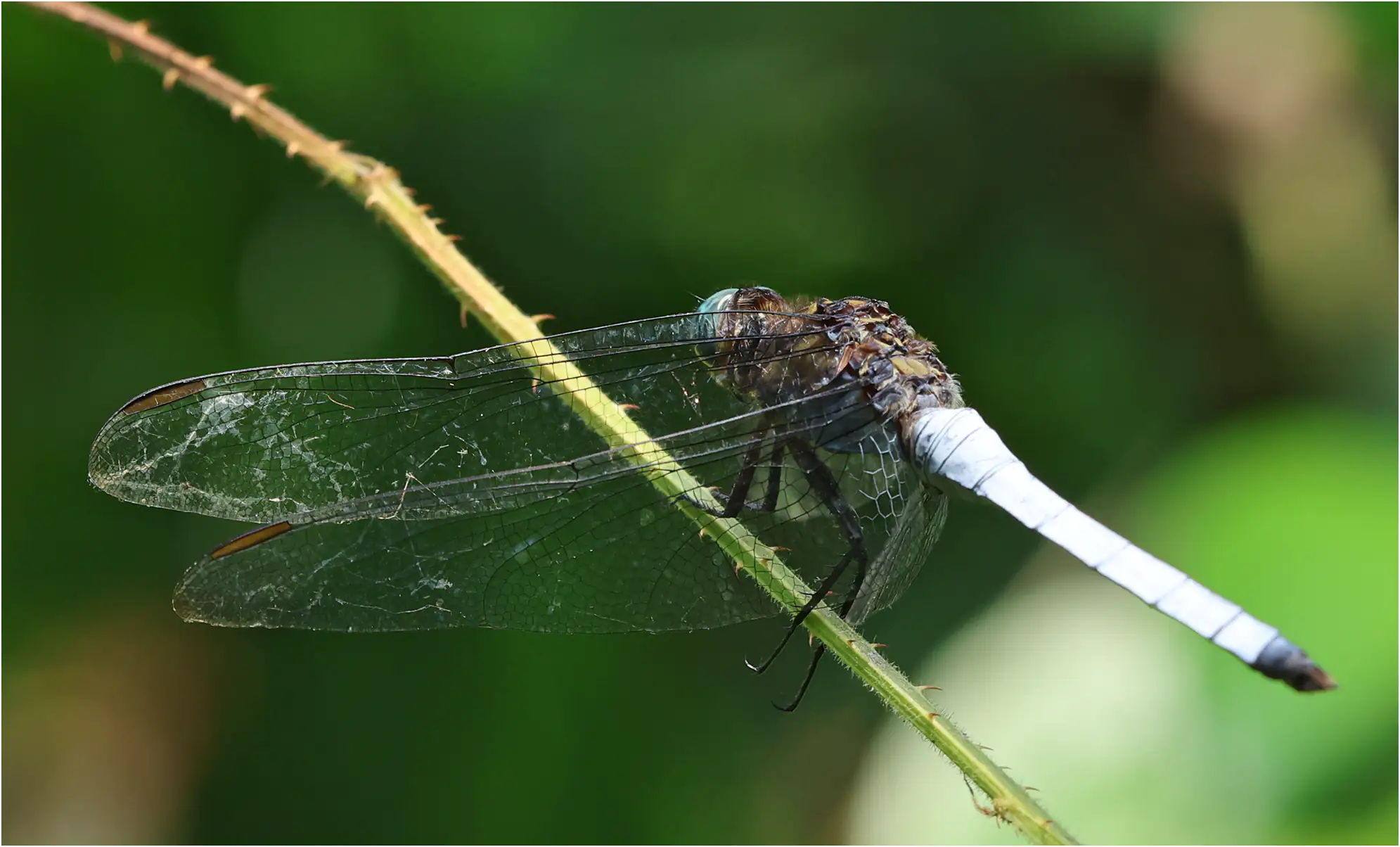
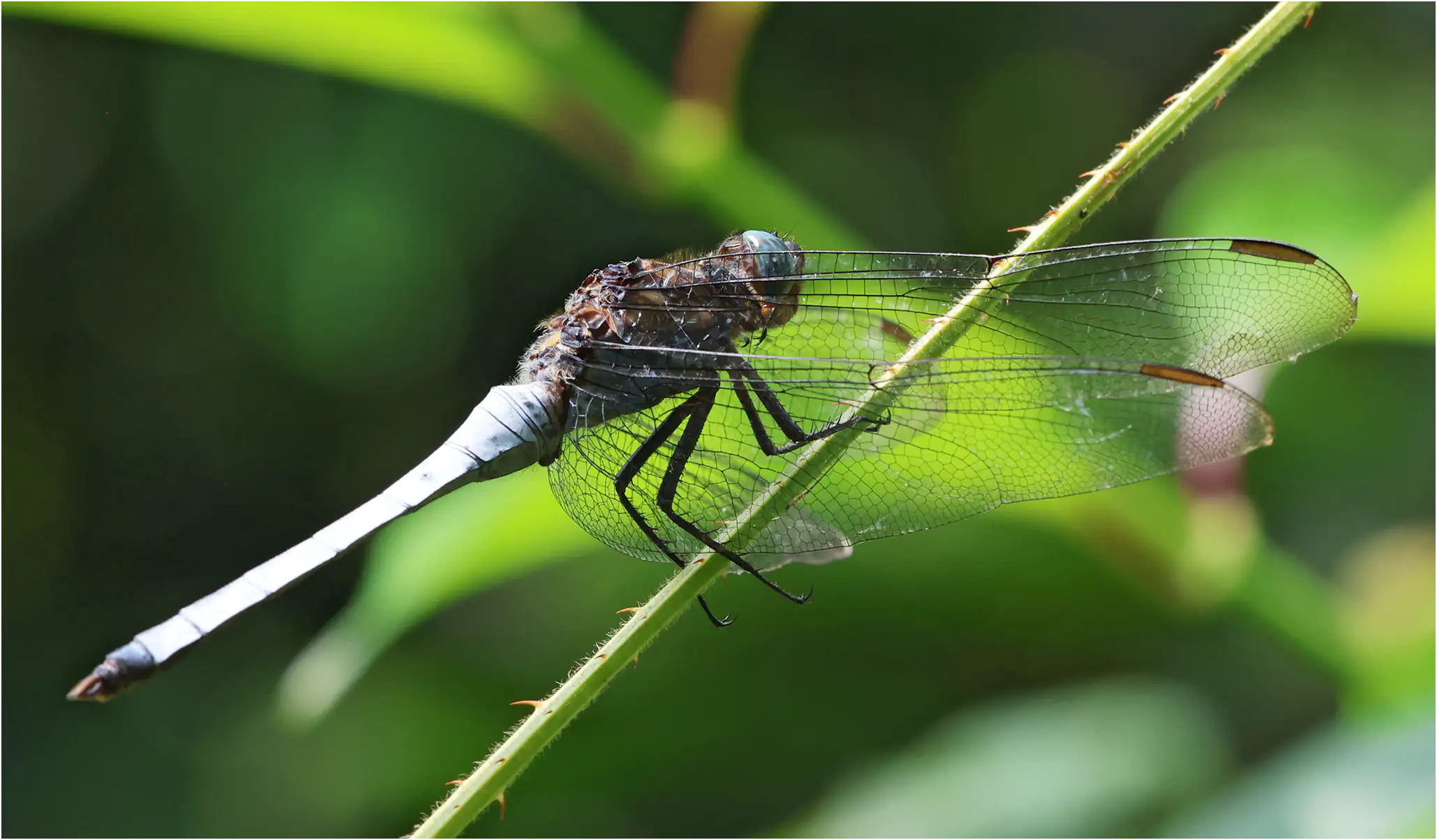
The pterostigmata are long, and the black venation (except at the base of the wing) is rich and very dense at the wing tip. The supplementary radial field (radial planate) has two rows of cells (which is best seen above on the right), rarely three.
The hindwings are longer than the abdomen, respectively 45–50 mm versus 38–40 mm (Longfield, 1955).
The thorax is very sparsely marked but bears an incomplete black antehumeral comma-shaped stripe well visible below on the right
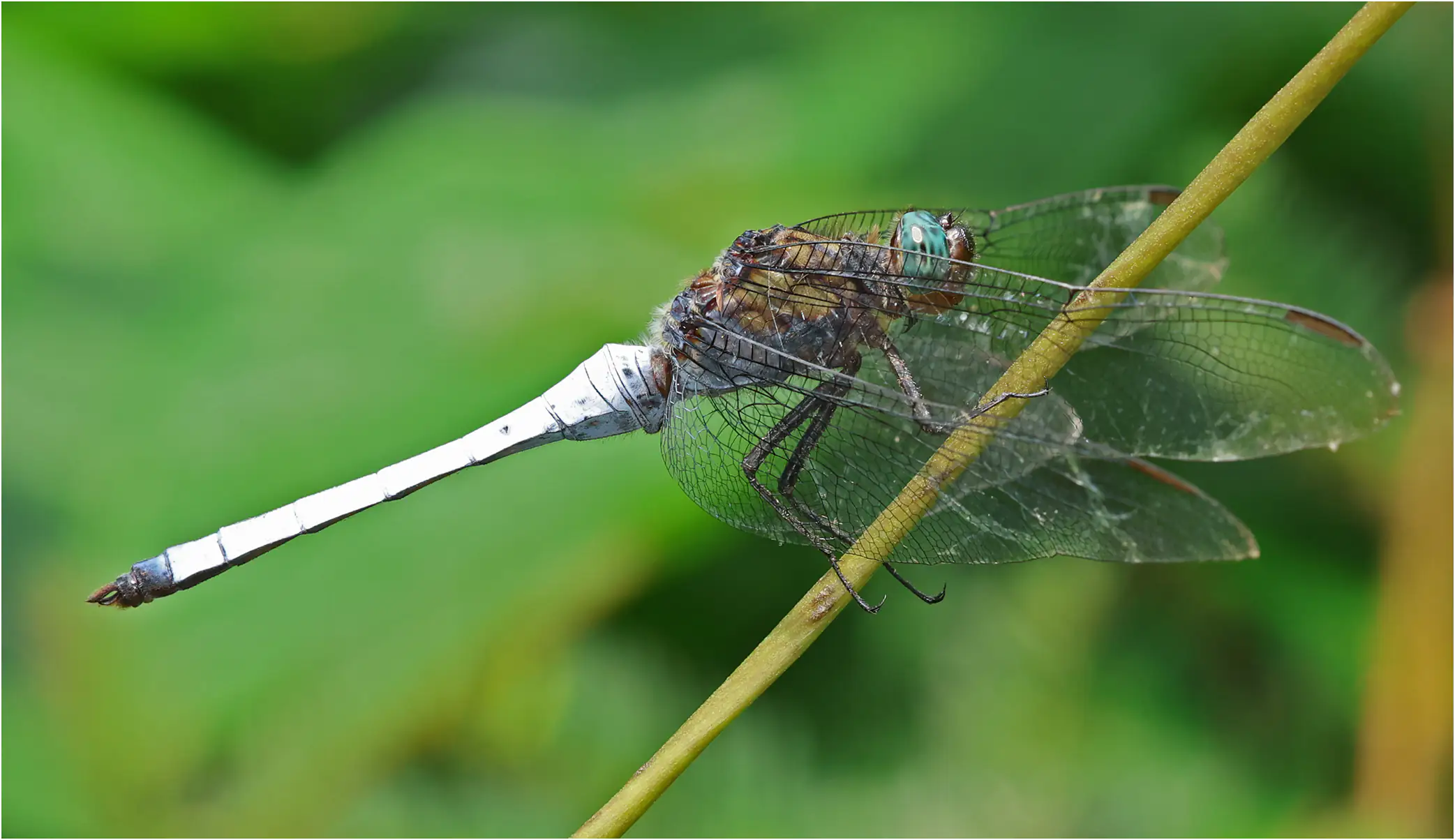
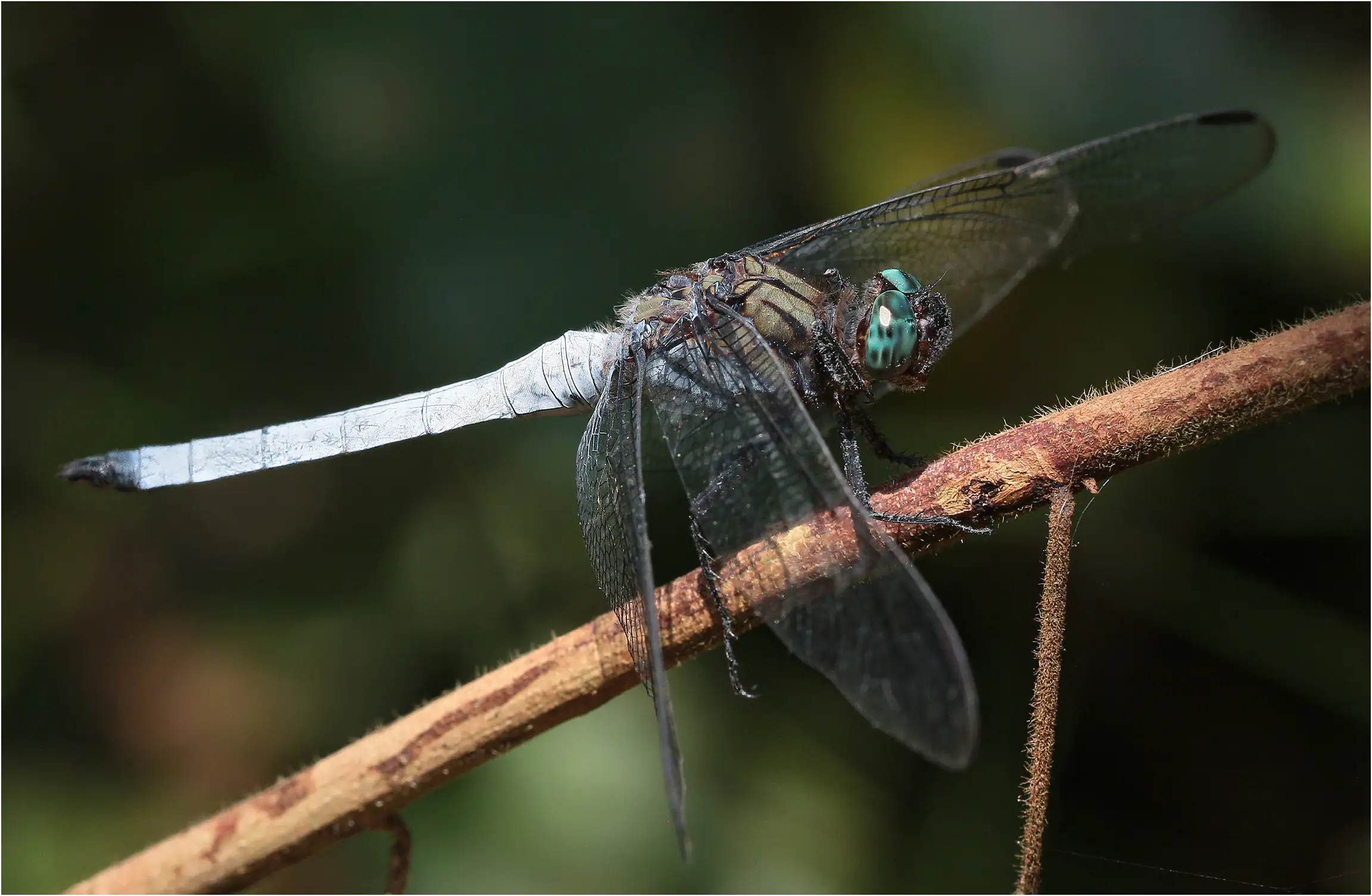
Kirby gives a curious detail: "Male—Rufo-testaceous, thorax with a slight brown line on each shoulder and the borders of the patagia black." I had never encountered this very uncommon word "patagium" (never used for odonates), neither in English nor in French, where we speak of "patagium" or "patagie." Curiously, Kirby would use this term for what we call today a membranule, which, in this definition, applies only to flying mammals. This does not explain why Kirby finds it distinctive that the "borders of the patagia are black." K.-D. Dijkstra on ADDO is content to write "dark rather than pale membranule [for O. angustiventre]."
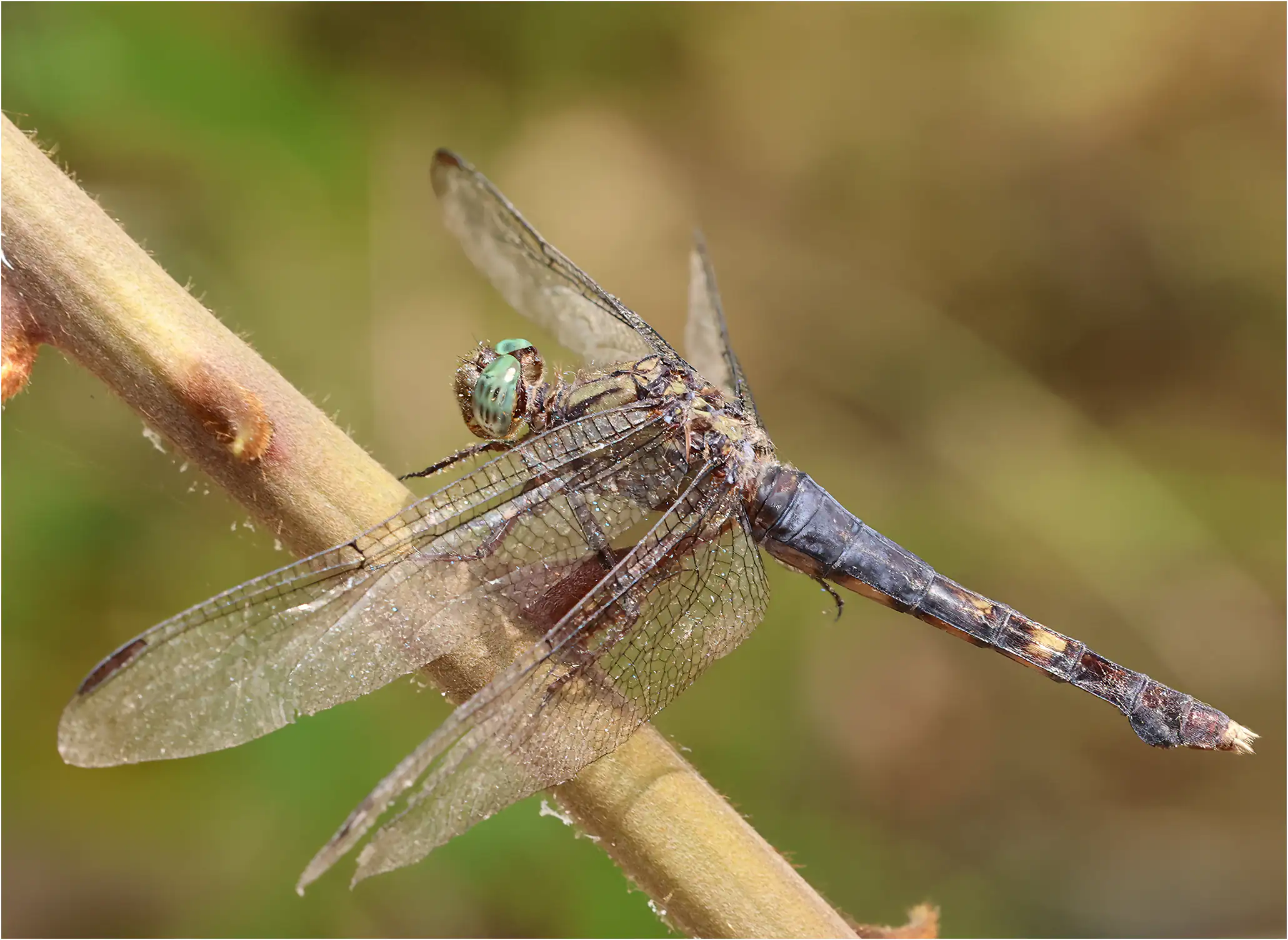
The females are also very large and very massive with strong ventral expansions on S8. They also show this dark comma-shaped antehumeral stripe on a very sparsely marked thorax. The pale spots on segments 5 and 6 seem constant.
We observed it along forest paths without being aware of any ponds nearby, other than large puddles left by the rains in the days preceding our arrival; on ADDO, it is stated that it thrives on stagnant waters, sometimes temporary, in open forest areas. It is uncommon.
Its distribution (central and western sub-Saharan Africa) extends from Guinea and Sierra Leone in the west to Uganda, extreme western Kenya, and Tanzania. To the south, it reaches Zambia and northern Angola.
IUCN Red List.
Etymology of Orthetrum austeni
Orthetrum (see Endersby & Fliedner, 2015) comes from two Greek words, "orthos," meaning straight, and "etron," for abdomen, signifying that the sides of the abdomen are parallel. This generic name (neuter) created by Newman in 1833 lost its relevance with the discovery of new species (whose sides of the abdomen are not parallel), but the genus name remained.
Austeni is a tribute by the author to Ernest Edward Austen (1867-1938), who captured 1 male in Sierra Leone, which is used, along with other West African specimens already in the collection, as material for the description. He was a colleague of Kirby at the Natural History Museum in London, an entomologist specializing in dipterans, who collected numerous insects during the Ross expedition to Sierra Leone, an expedition intended to investigate the link between mosquitoes and malaria.
Dijkstra, K.-D.B. (editor, 2024). African Dragonflies and Damselflies (ADDO).
Endersby Ian & Fliedner Heinrich (2015). The Naming of Australia’s Dragonflies. Busybird publishing.
Kirby, W.F. (1900). Report on the Neuroptera Odonata collected by Mr. E. E. Austen at Sierra Leone during August and September 1899. Annals Magazine Natural History, 6, 67-79, p. 72.
Longfield, C. (1955). The Odonata of N. Angola. Part I. Publicacoes culturais Companhia Diamantes Angola, 27, 11-63.