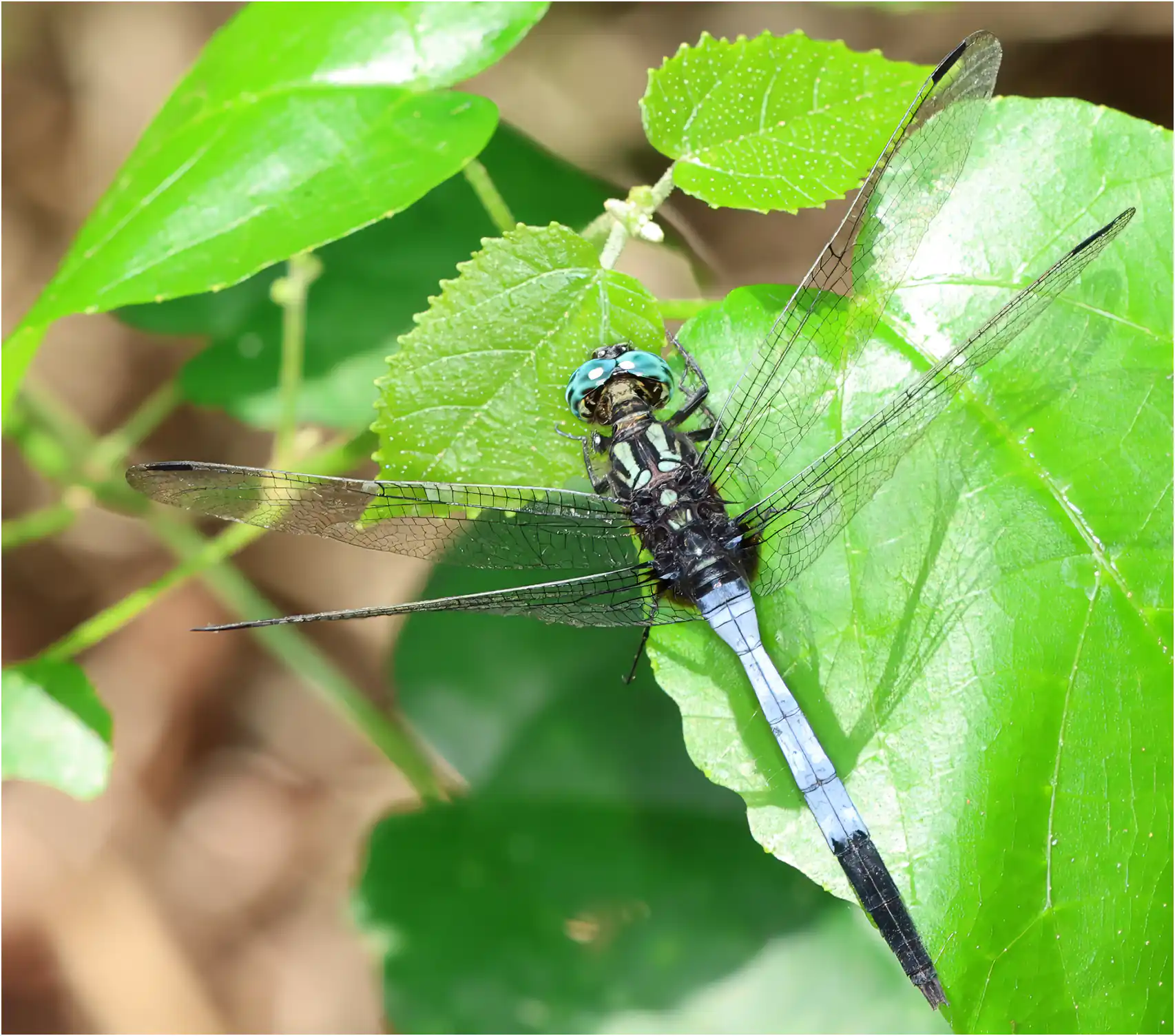
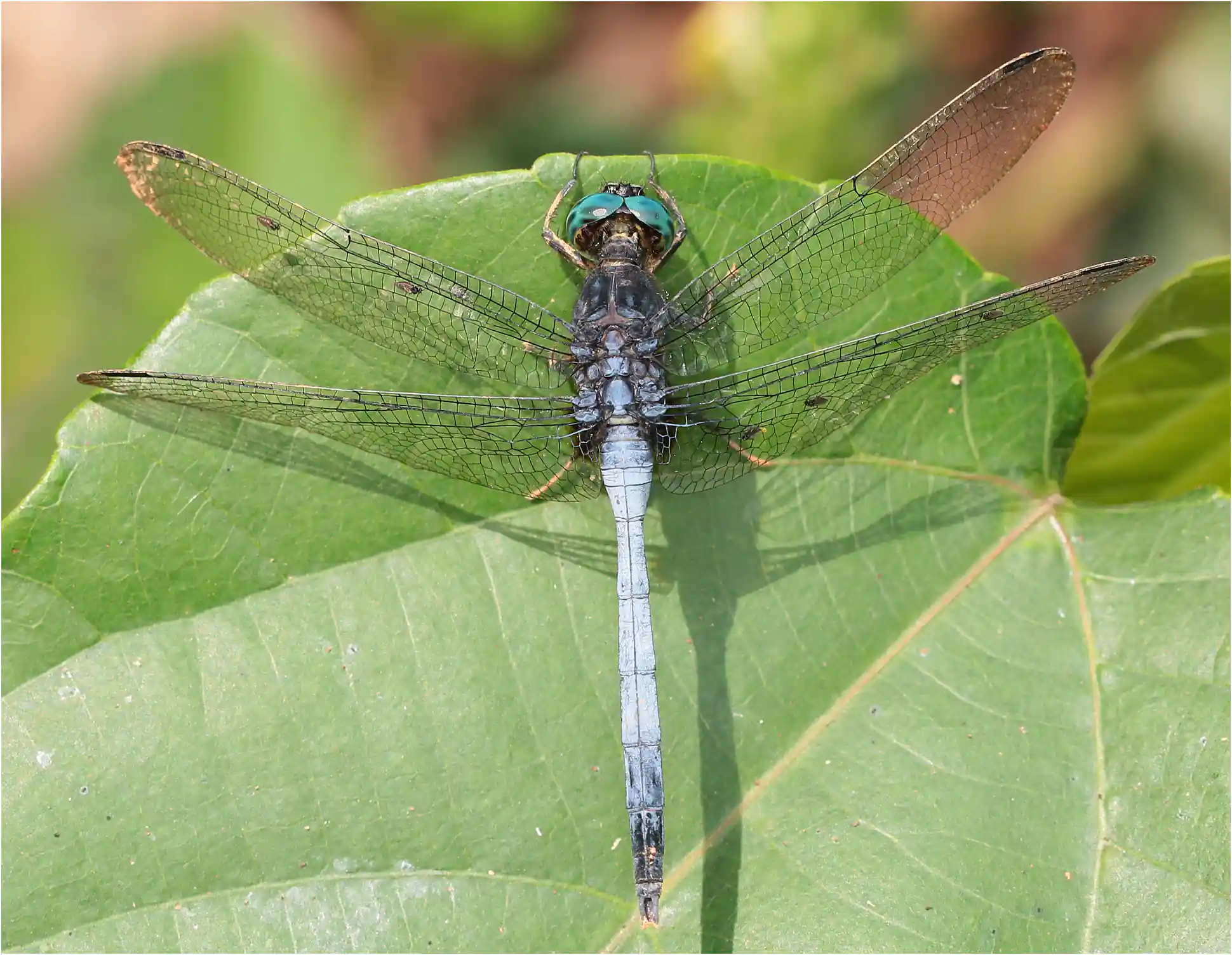
I had previously encountered Orthetrum julia in Namibia and Ethiopia, but with this limited experience I found it difficult to separate from the 15 other Orthetrum species currently known in Ghana (36 in Africa) and particularly from O. stemmale (I did not see O. brachiale in Ghana, which shows pale Ax veins). So what are the identification criteria? There is no single « exclusive » criterion allowing one to immediately separate it from other Orthetrum whose abdomen becomes blue (I did not observe any immature male in Ghana, but did in Namibia).
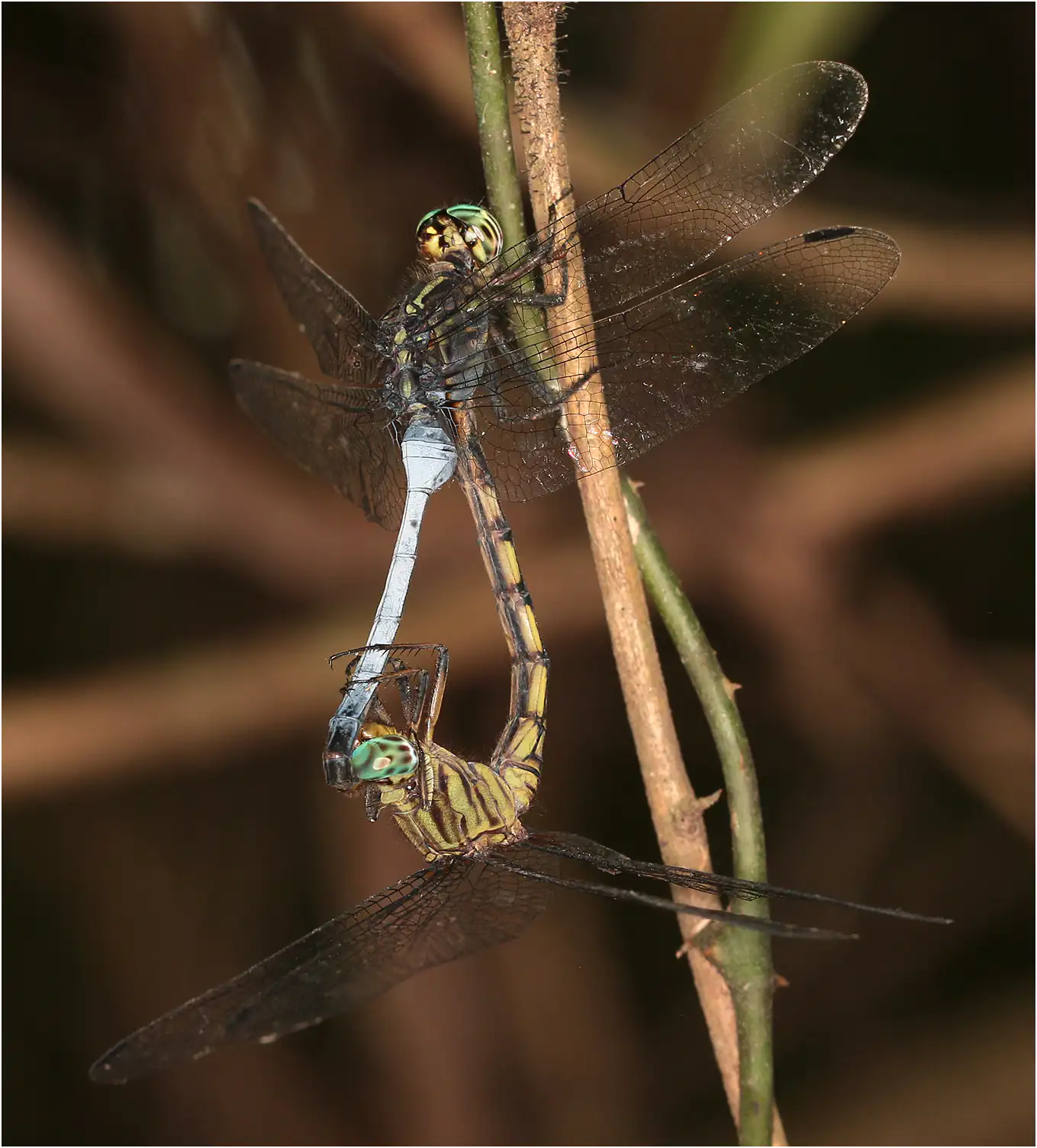
Note the presence of parasitic flies (Forcipomyia sp.?) on the wings of the subject on the right.
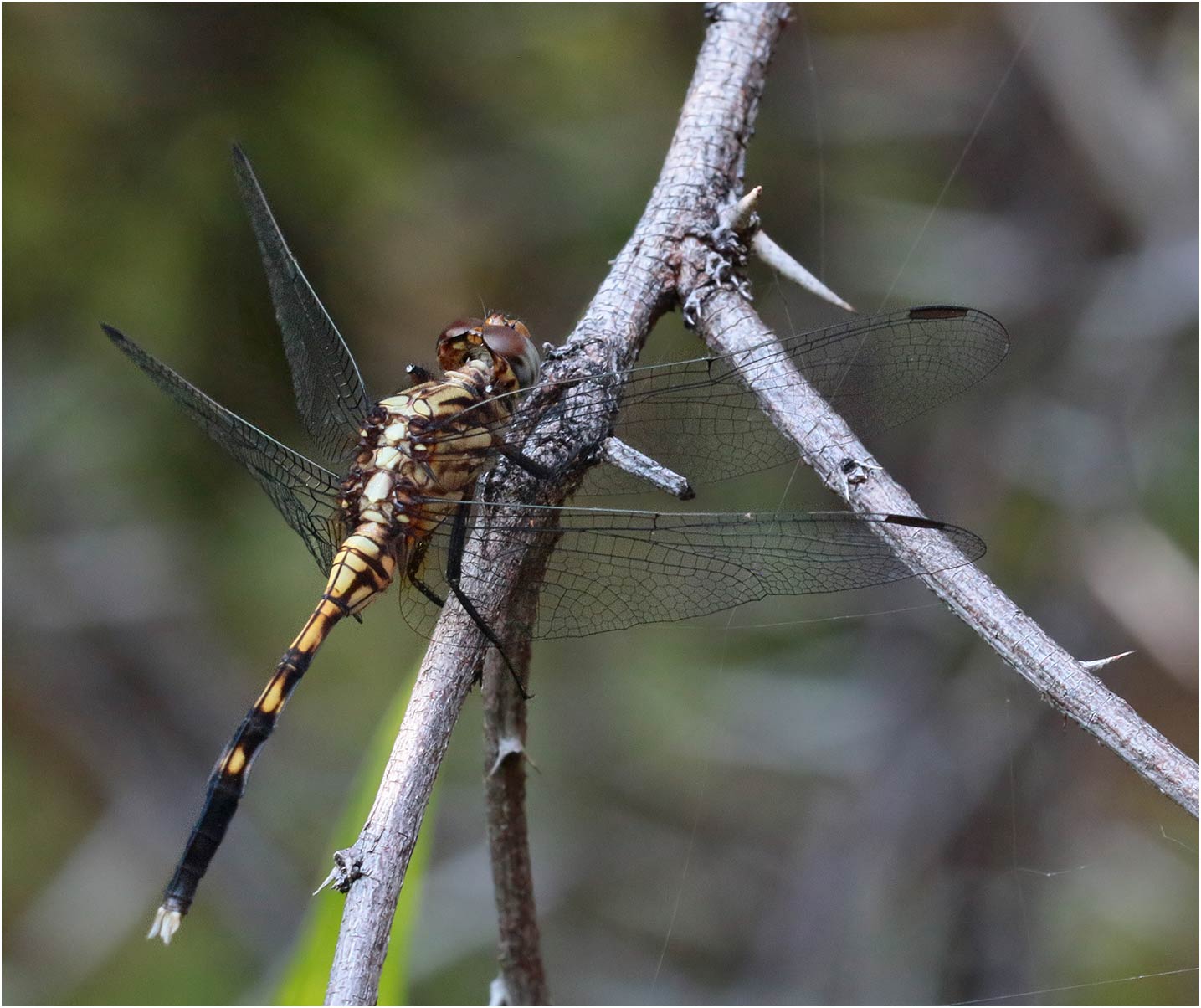
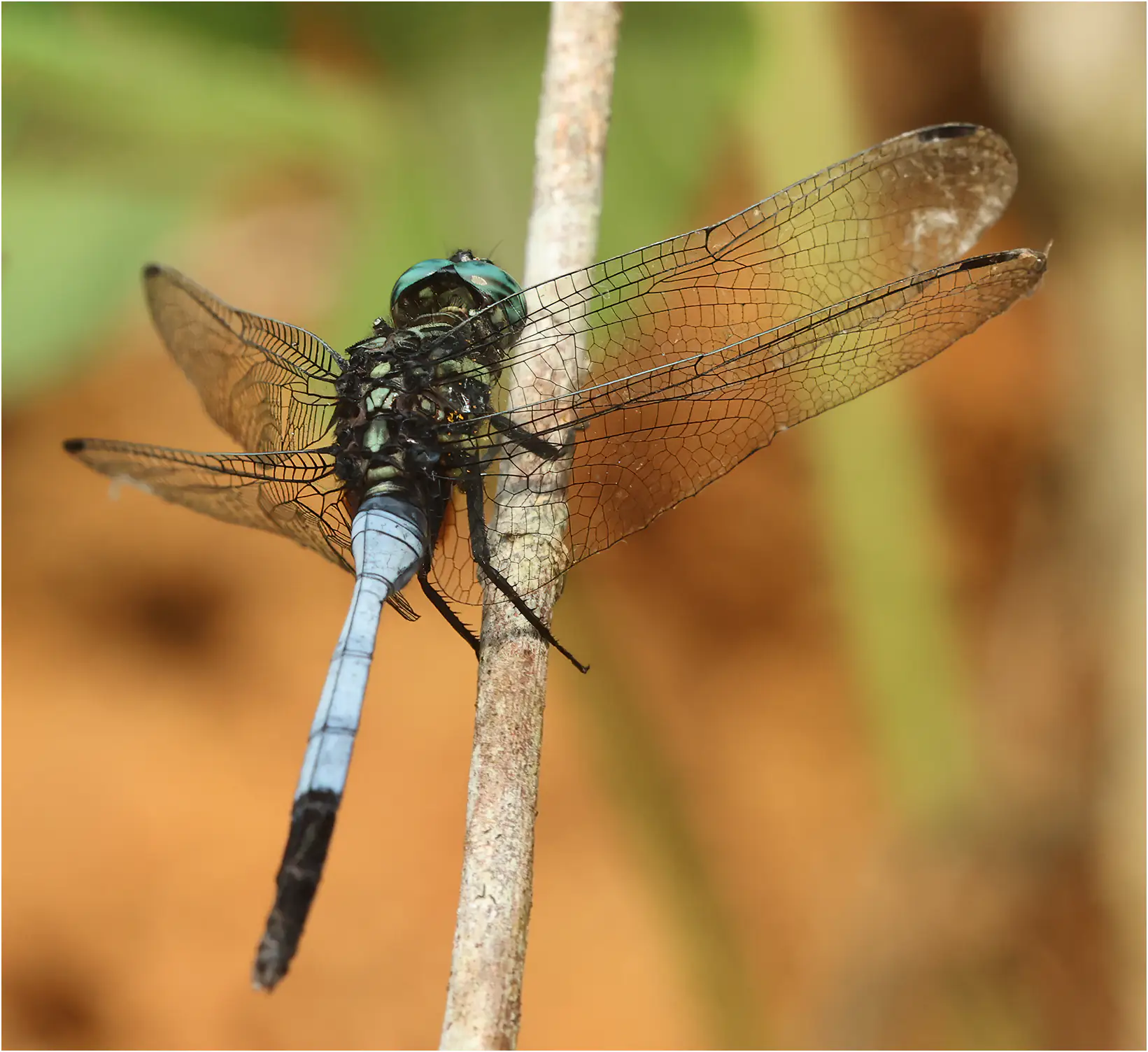
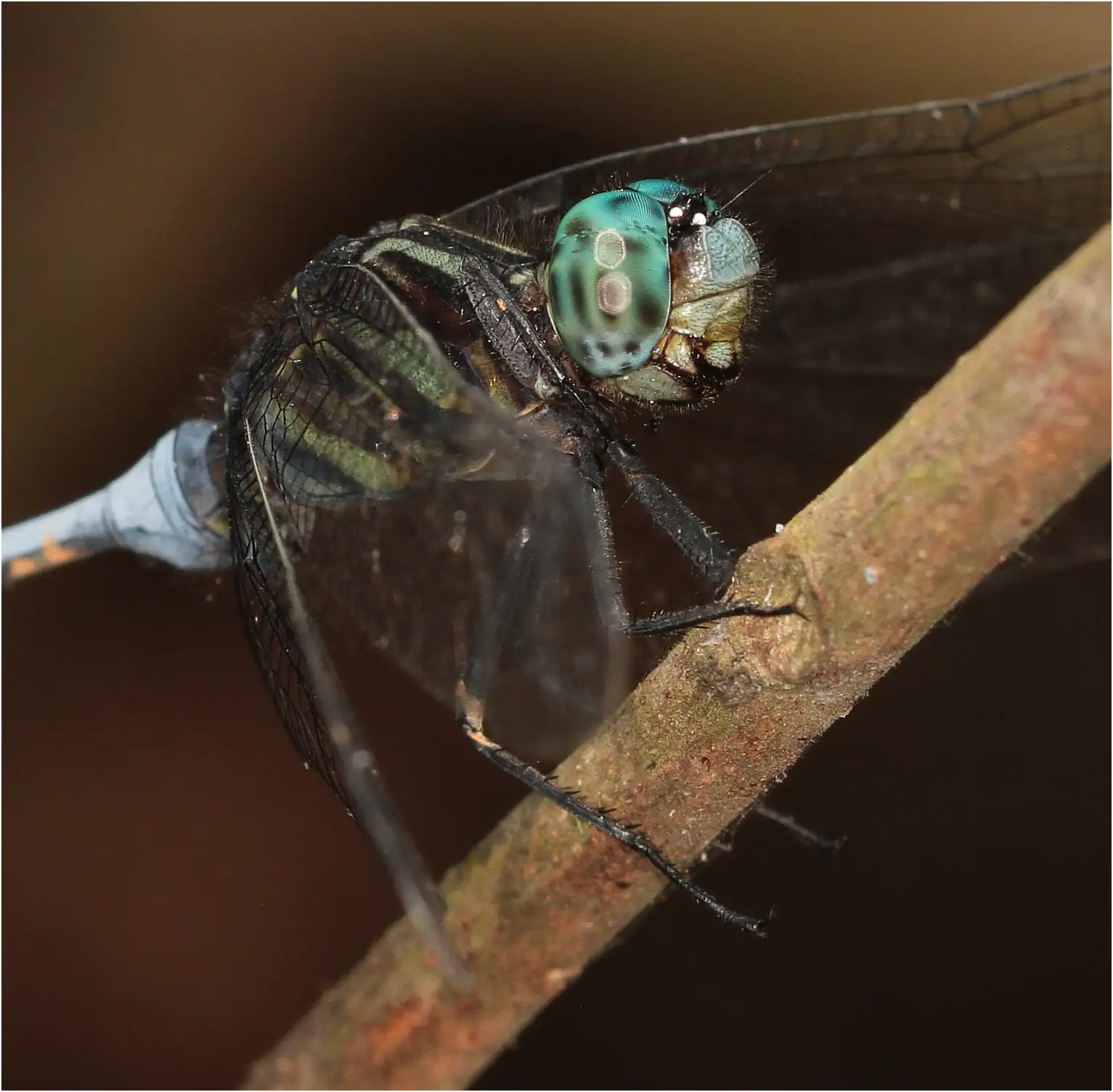
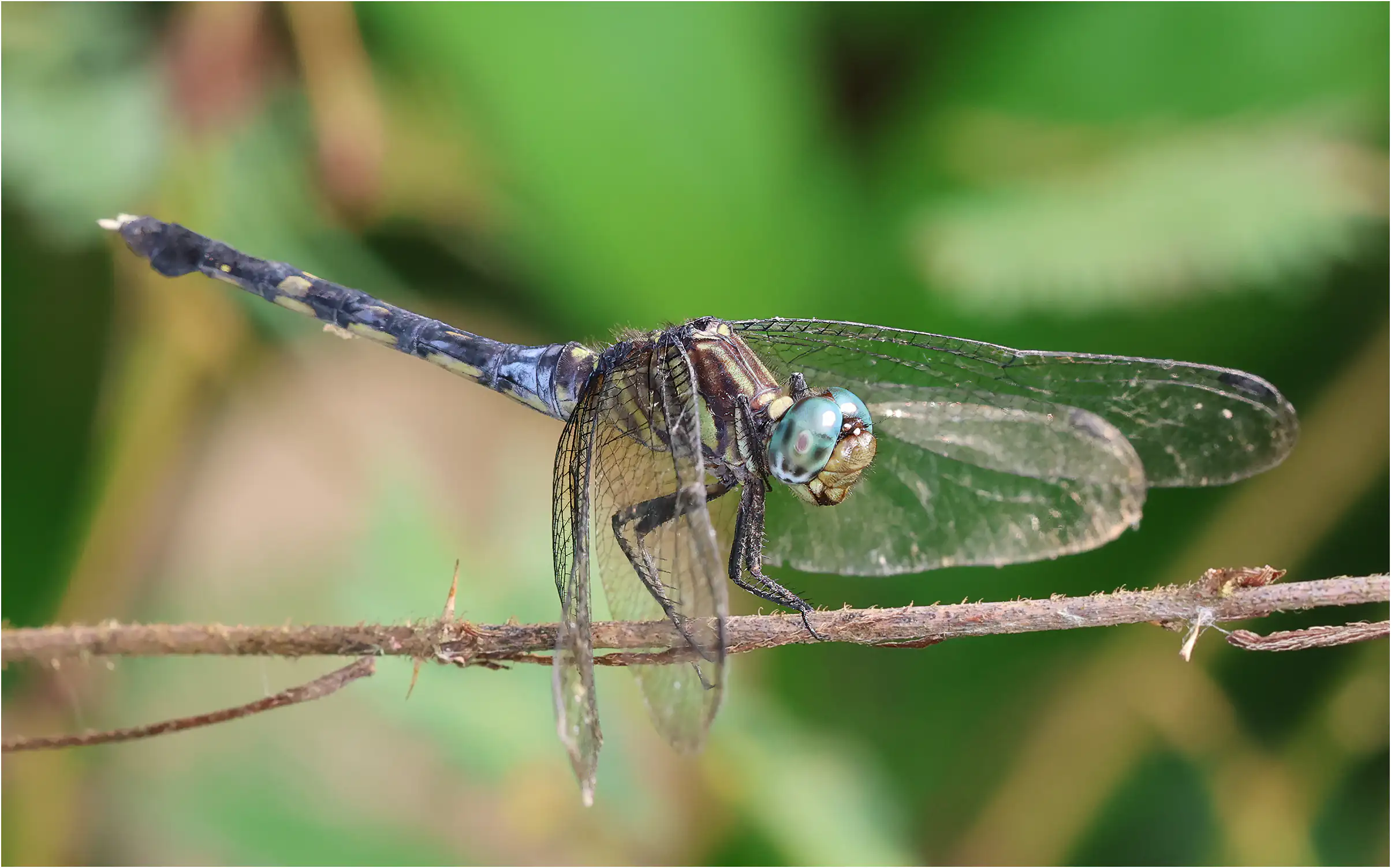
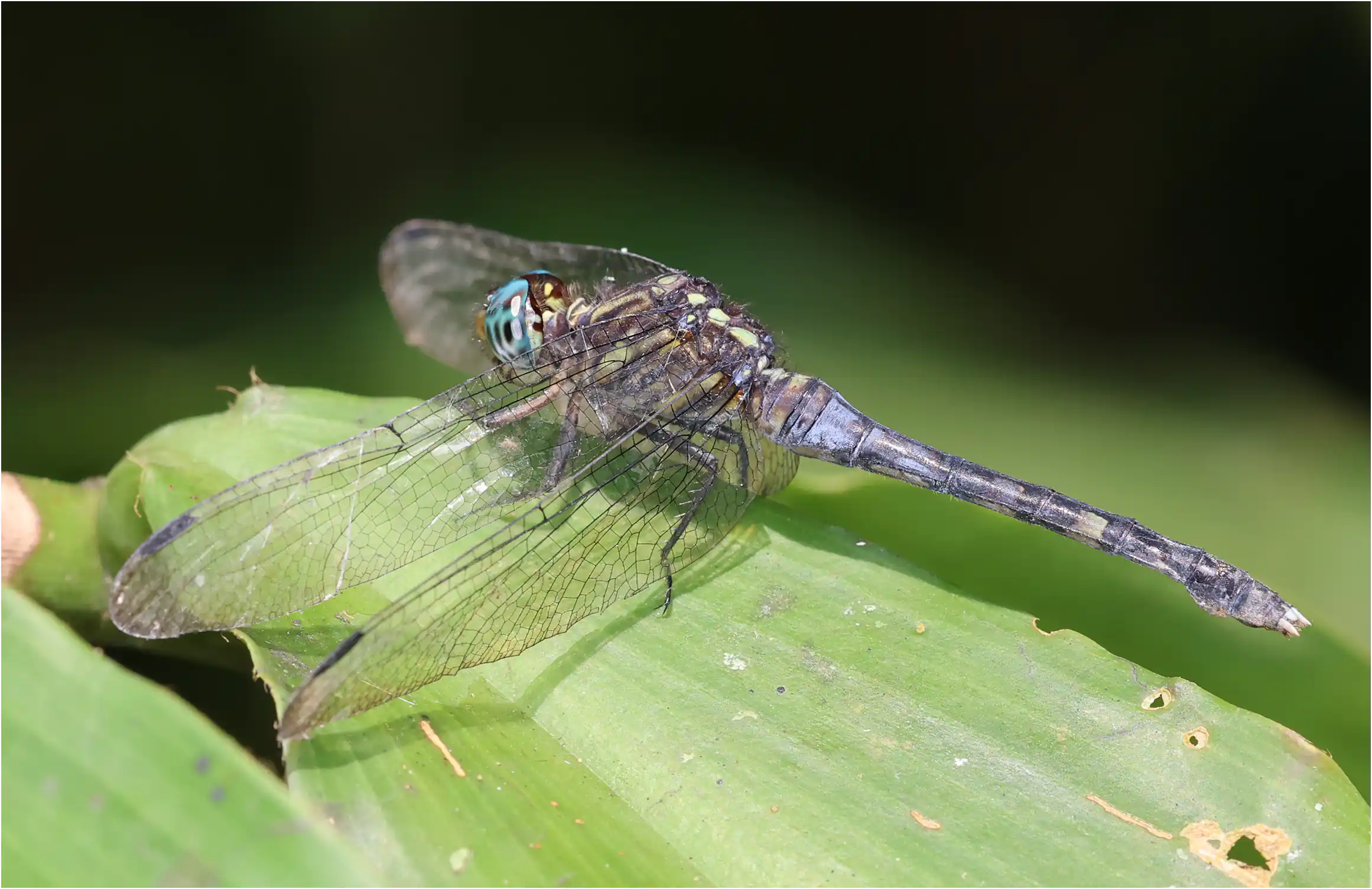
Orthetrum julia mâle from the mating couple, Ghana, Atewa Forest Reserve, 23/01/2026
Identification
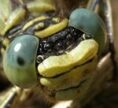
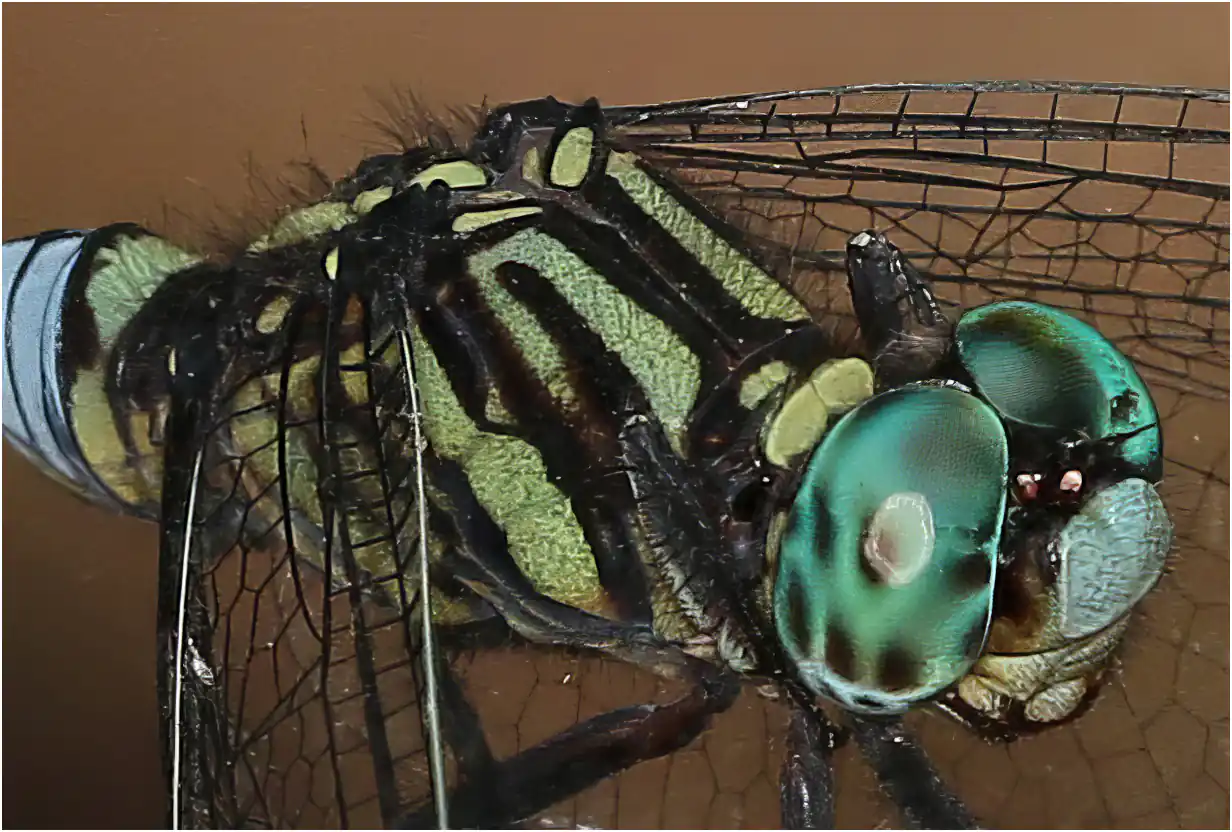
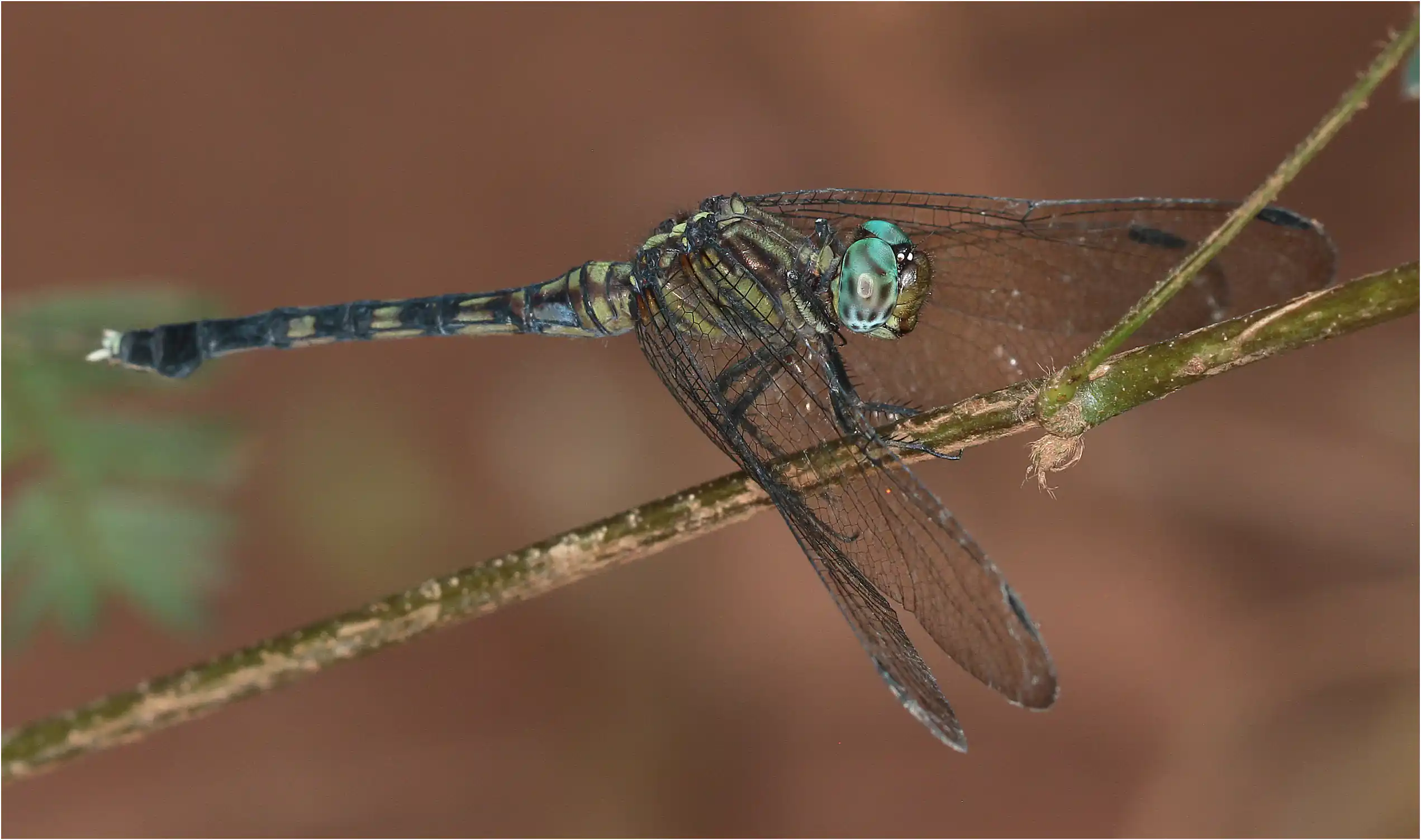
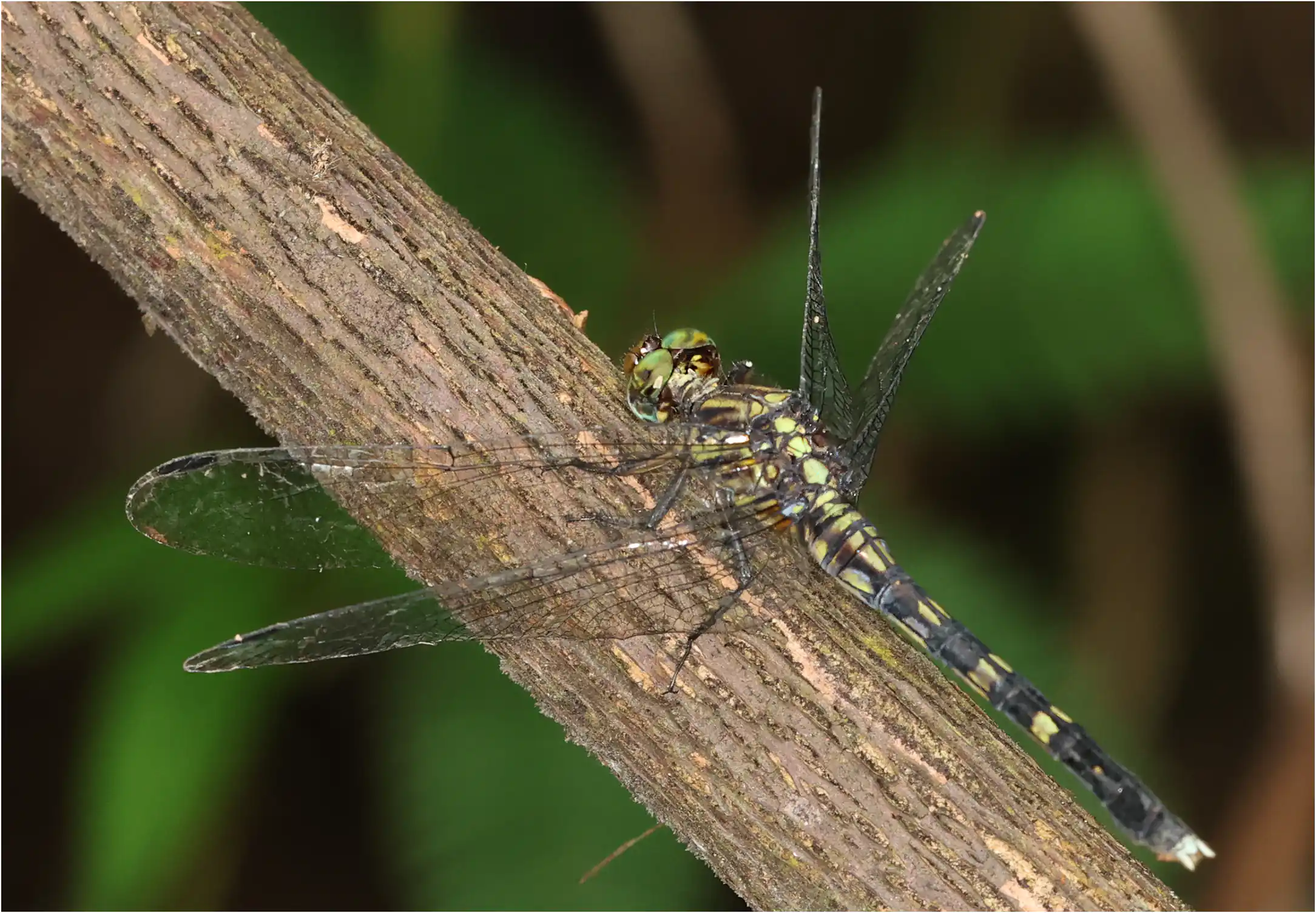
If we must dispense with the genitalia, which remains the decisive element, we must, as is often the case, combine various details: the short and dark (almost black) pterostigmata; the subcostal crossveins are black; the radial planate (the space above the radial supplement, Rspl) has only a single row of cells with a total of doubled cells across the 4 wings ranging from 0 to 10 (14 max); a dark amber patch at the base of the hindwings; segments S7 to S10 black; the face is pale, with a black frons whose coloration extends down the sides (see photo below).
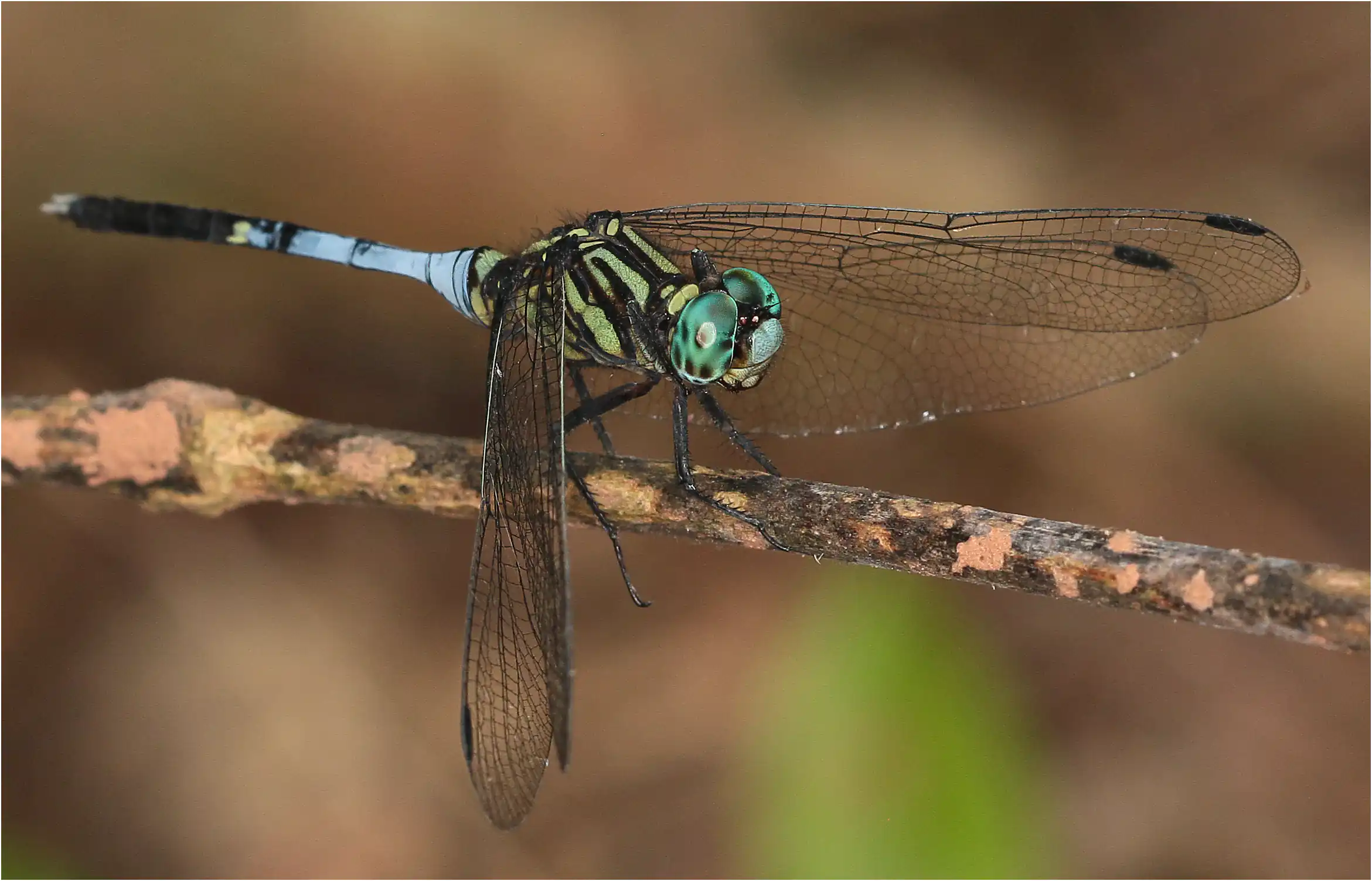
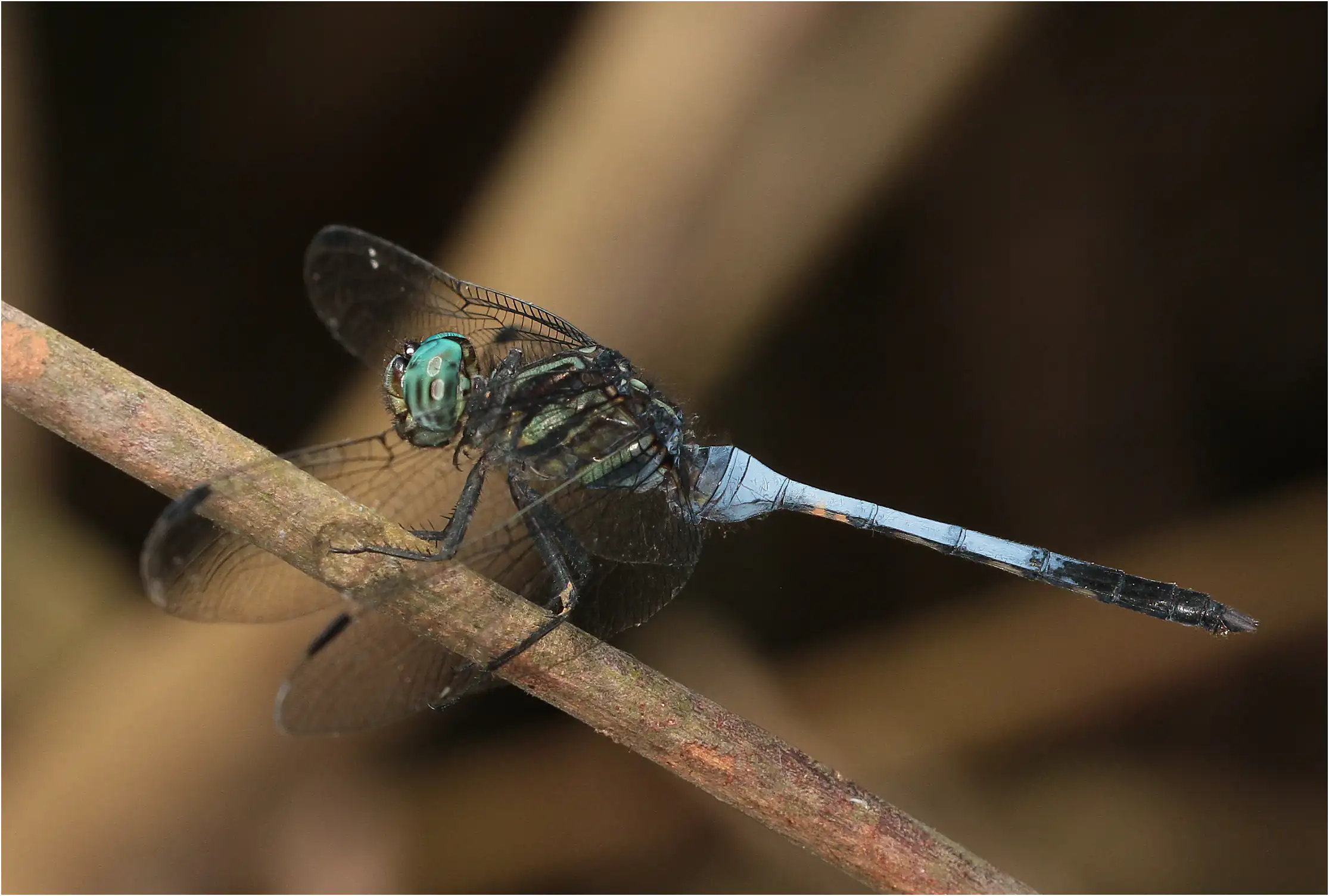
The thorax can become completely dark and usually does not develop pruinescence; the pale antehumeral stripe persists for a long time, as do two lateral stripes on the thorax. Just like O. stemmale or brachiale, it bears, with a little imagination, a "trident" on the thorax.
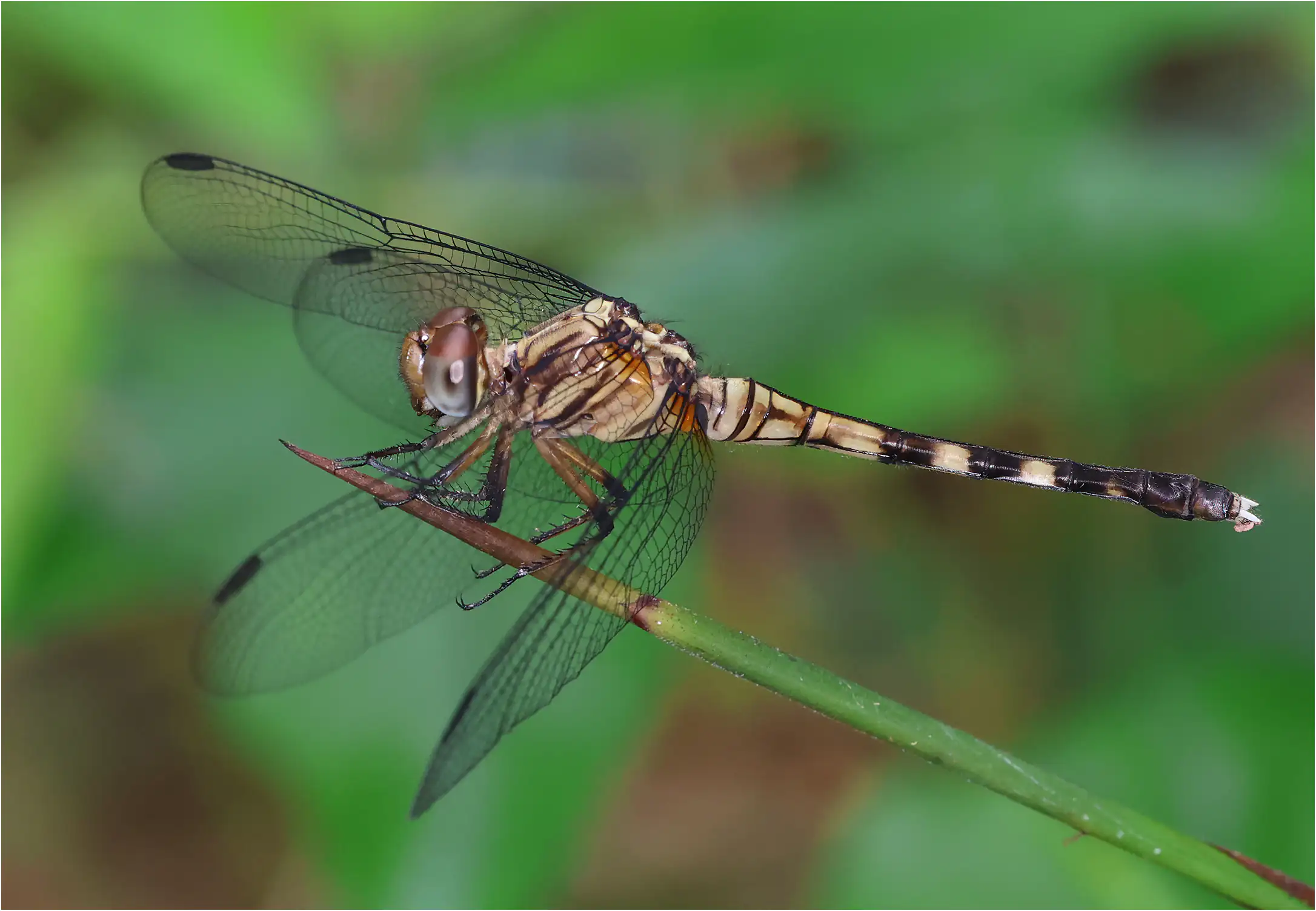
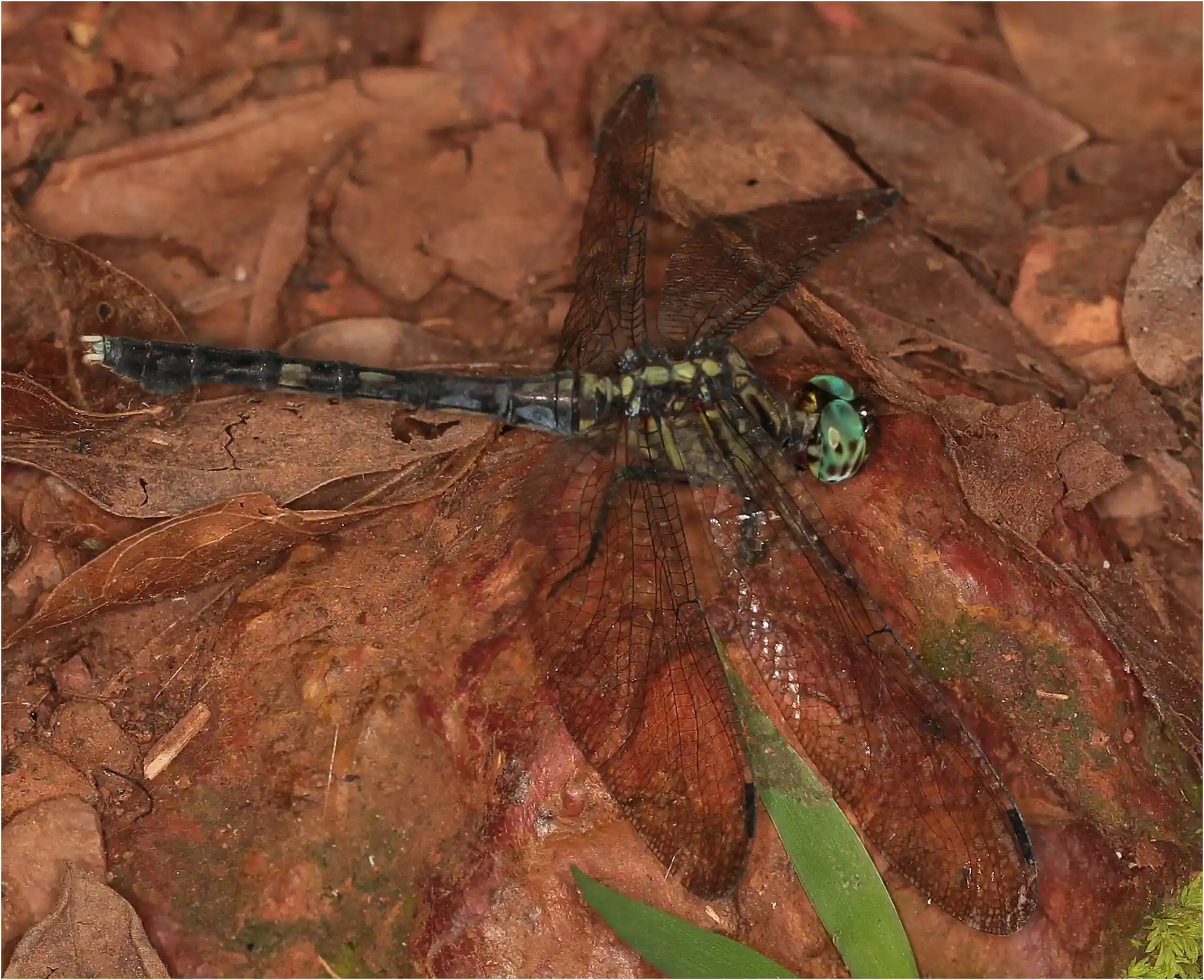
The same criteria are followed for females: dark pterostigmata, dark Ax veins, few or no doubled cells in the radial supplement, and segments S7 to S10 black with pale anal appendages.
Note the strong ventral expansion of the 8th segment.
Taille, habitat, and geographical distribution
Kirby (1900), in his description of the species, indicates that the specimens he examined measure between 39 and 43 mm.
ADDO tells us that it is found mostly on streams, springs, and seeps, but also on stagnant and probably often temporary waters, in forests, in open areas, or in gallery forests. My impression is that I mostly encountered them along forest paths.
It is present throughout subtropical Africa but is nonetheless reported absent from Botswana.
IUCN Red List.
Etymology of Orthetrum julia
Orthetrum (see Endersby & Fliedner, 2015) comes from two Greek words, "orthos" meaning "straight" and "etron" for "abdomen", to signify that the sides of the abdomen are parallel. This generic name (neuter) created by Newman in 1833 lost its relevance with the discovery of new species (whose sides of the abdomen are not parallel), but the generic name remained.
Julia; the origin of this name is not explained by Kirby.
Is he thinking of a Julia from his circle, or is he alluding to some illustrious Julia from history or mythology? We do not know.
In English, it is simply called the Julia Skimmer.
Orthetrum julia mating, Ghana, Atewa Forest Reserve, 23/01/2026
Dijkstra, K.-D.B. (editor, 2023). African Dragonflies and Damselflies (ADDO).
Endersby Ian & Fliedner Heinrich (2015). The Naming of Australia’s Dragonflies. Busybird publishing.
Kirby, W.F. (1900). Report on the Neuroptera Odonata collected by Mr. E. E. Austen at Sierra Leone during August and September 1899. Annals Magazine Natural History, 6, 67-79, p. 75.