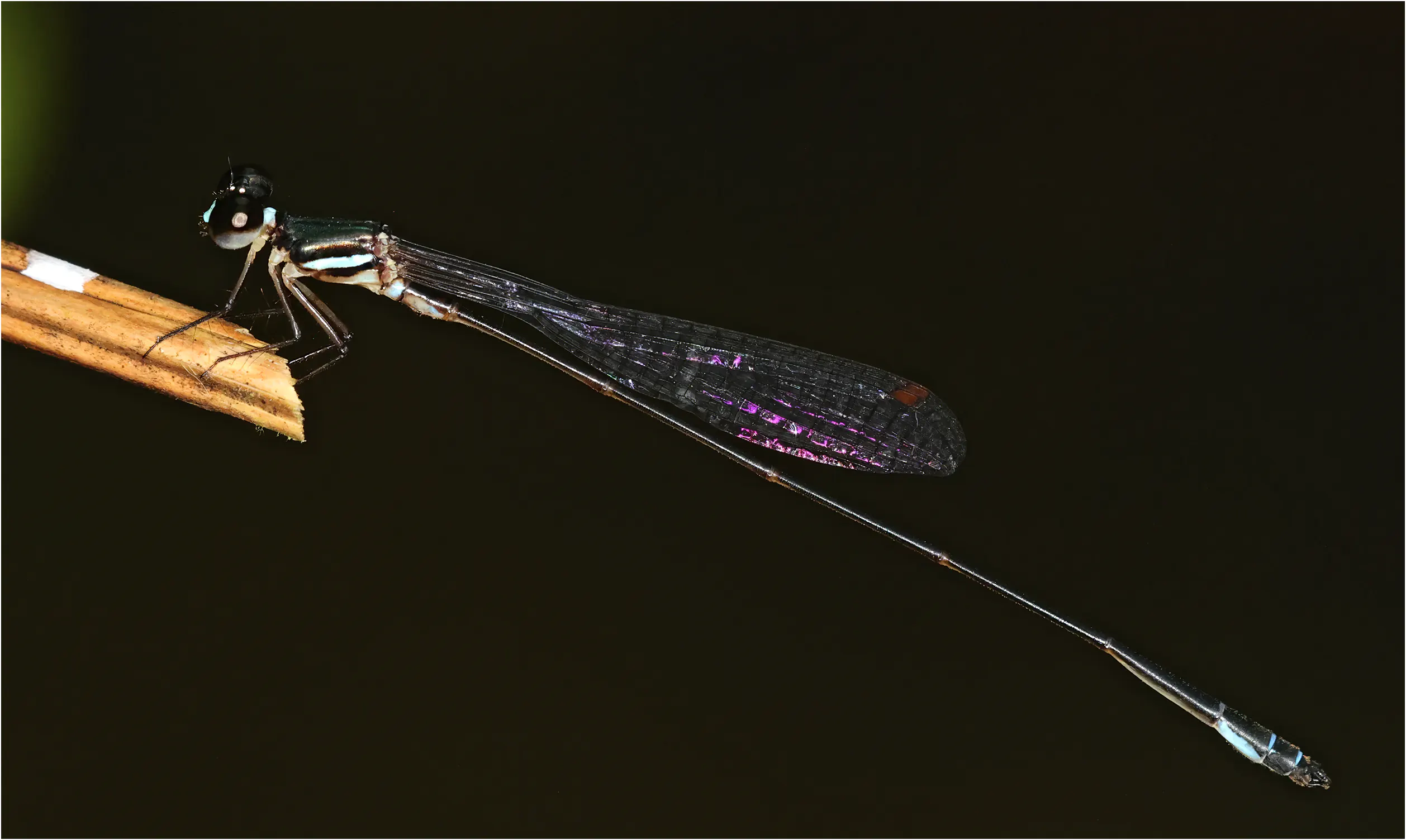
Drepanosticta rufostigma (Platystictidae) was described by Selys (under the genus Platysticta) in his synopsis of the Platystictinae of Borneo (1).
There are at least 14 Drepanosticta in Sarawak (2), yet it is the only one we encountered. We shouldn't kid ourselves; Platystictidae are a very difficult family in Asia (and elsewhere) for amateurs who discover them, and for me, drawing generalizations that allow telling apart Drepanosticta, Protosticta, or Telosticta is illusory in the field. They are difficult to find and difficult to approach in the dark environment they favor: "...those very inconspicuous and rare insects as the tropical Platystictinae really are. " (1).
Besides, when Lieftinck described this subject under the genus Drepanosticta (and no longer Platysticta, Selys), he was confident that this family, which then numbered 6 species, was going to grow; currently, 10 genera and 286 species are recorded!
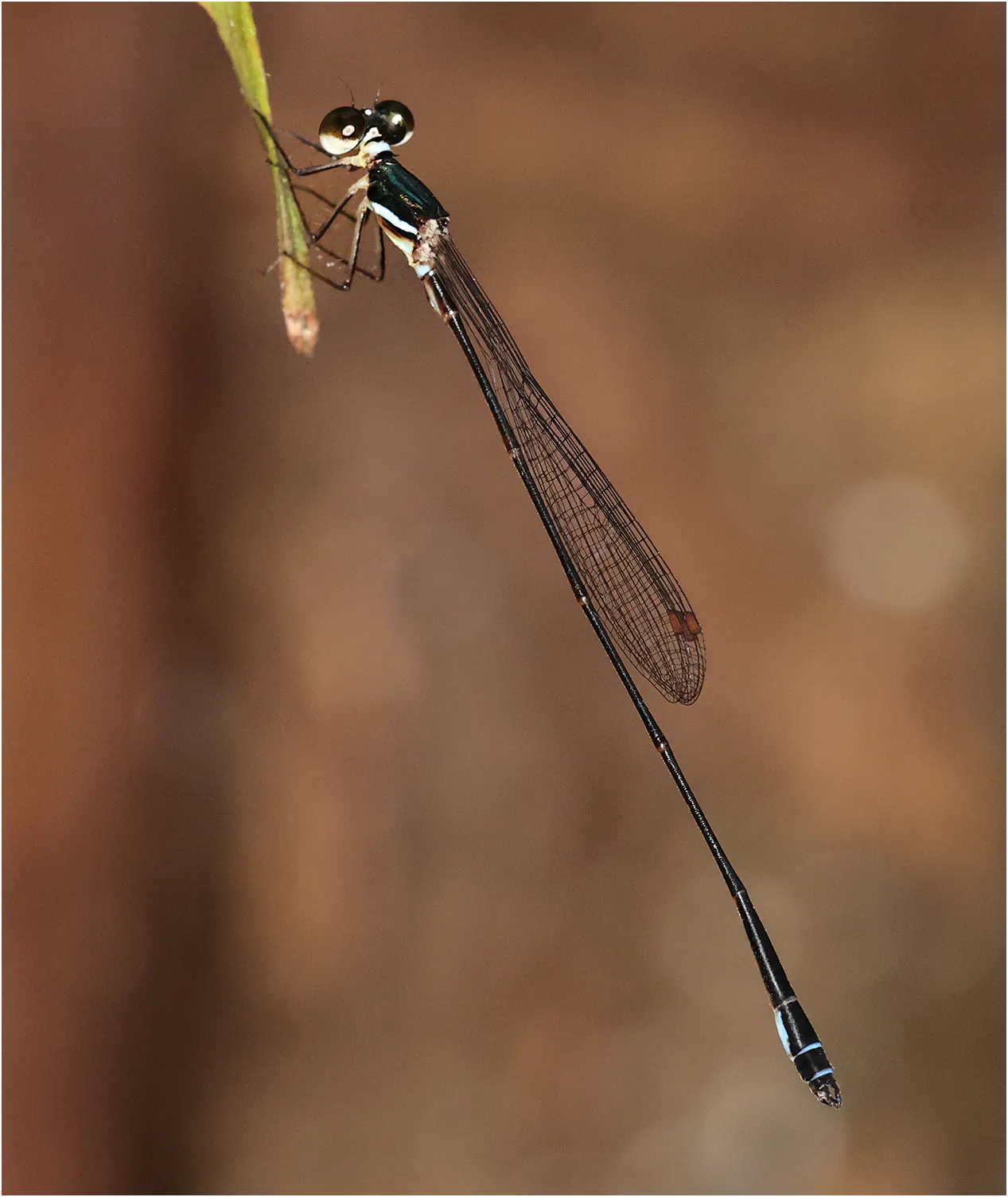
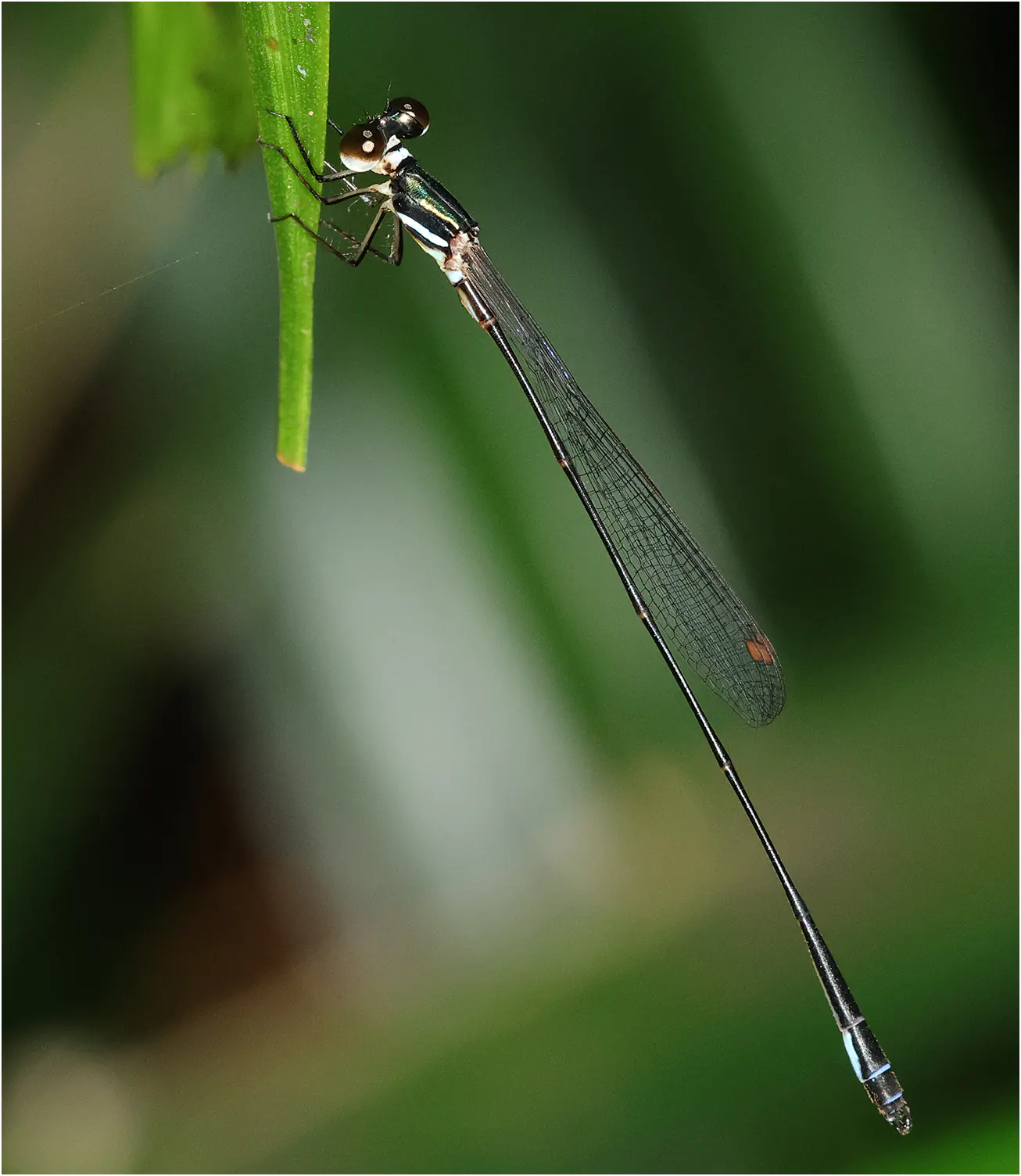
Selys gives it an abdomen of 30 mm (anal appendages included or not?), Lieftinck 32.5 to 37 mm including the anal appendages, and if we rely on the latter, the insect reaches about 41.5 mm.
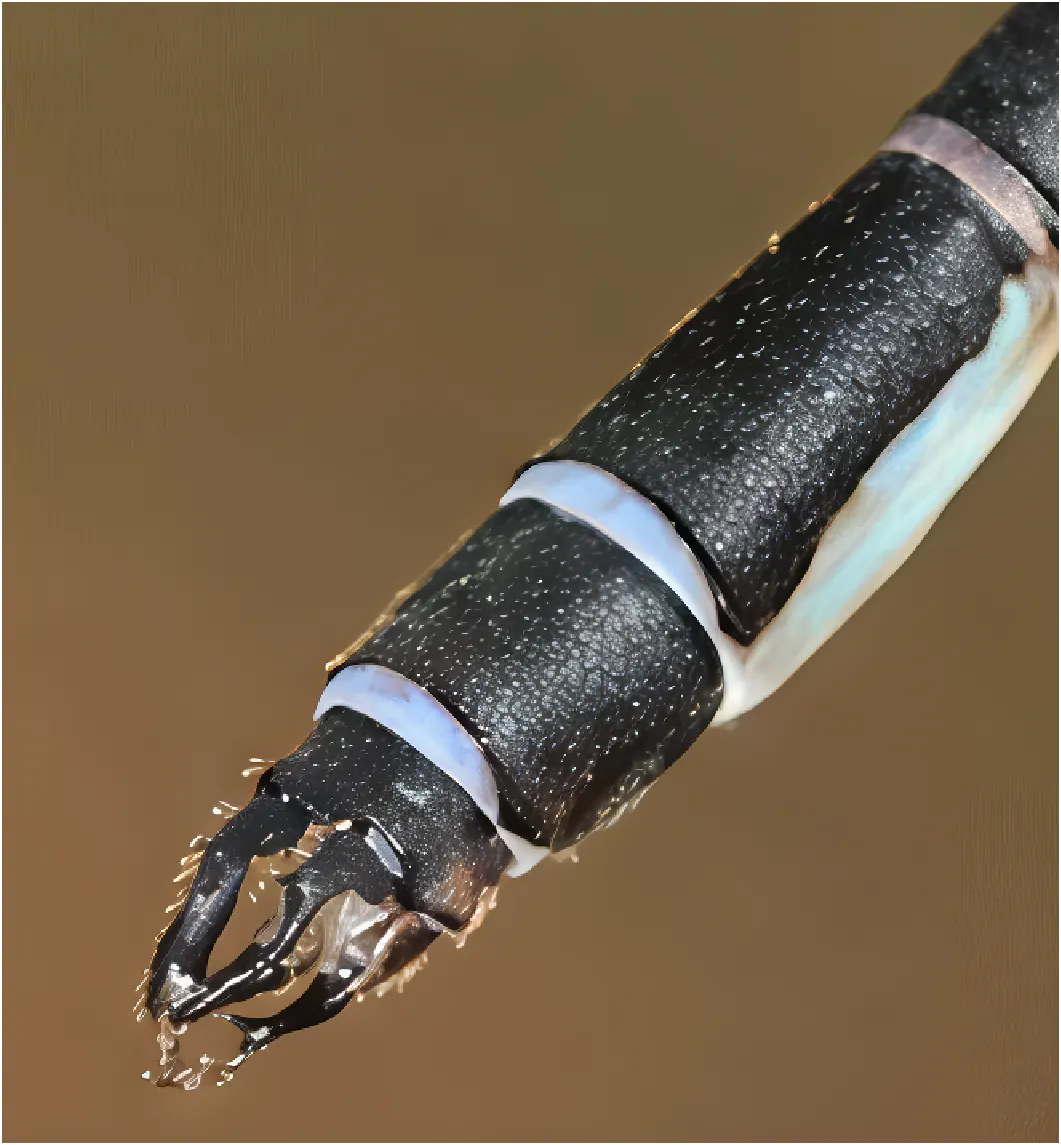
Drepanosticta show complex anal appendages, bifid, adorned with teeth or tuberosities, which are said to be quite specific, and yet so similar when looking at the plates presented in Dow, 2017 (3); in terms of differentiating the anal appendages, it is a real matter for specialists, requiring capture and a binocular microscope. Furthermore, they are variable regarding the coloration of S9, which may present (see below) a small blue spot.
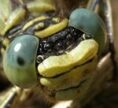
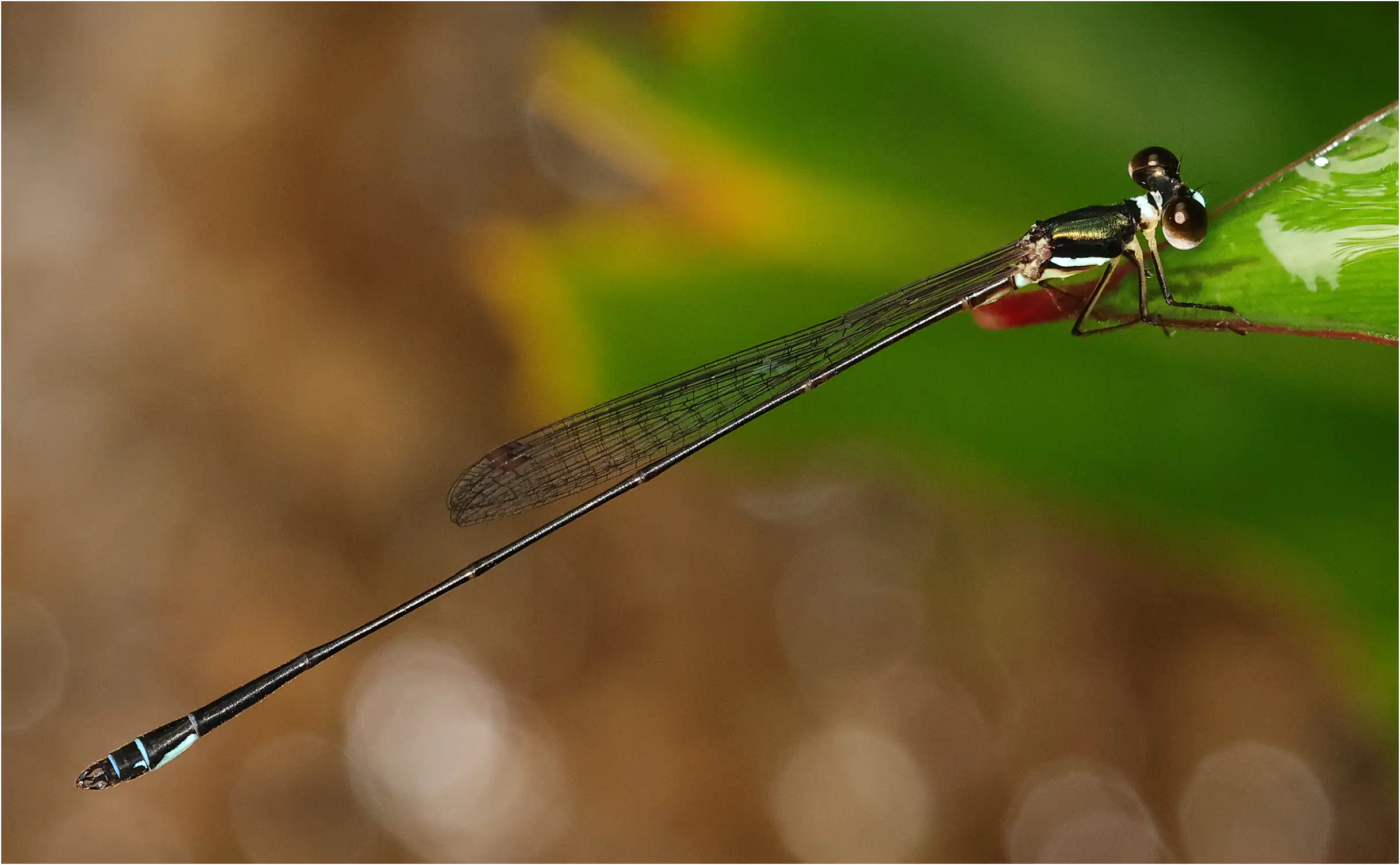
Opposite is a greatly enlarged photo of Drepanosticta rufostigma male, Sarawak, Bung Ngiraja, 26/03/2025
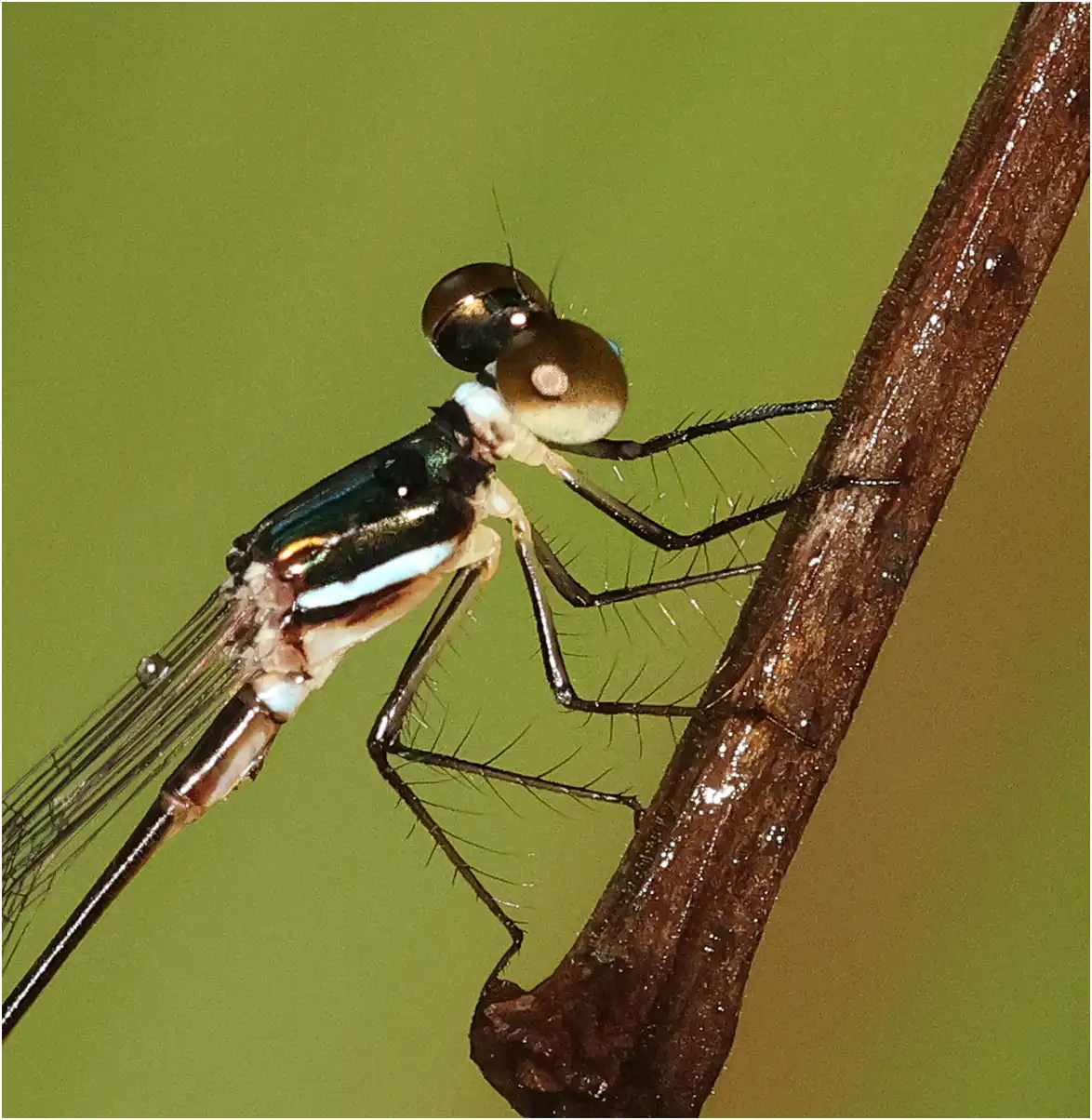
On a river along the Bung Ngiraja Trail, we were surprised to discover an individual that, briefly, seemed new to us! Indeed, none of the known Drepanosticta exhibit this broken blue stripe (photo on the left below). Unfortunately, when we were able to circle around it, the right side of its thorax turned out to be completely consistent with an honest Drepanosticta rufostigma, as shown in the photo on the right.
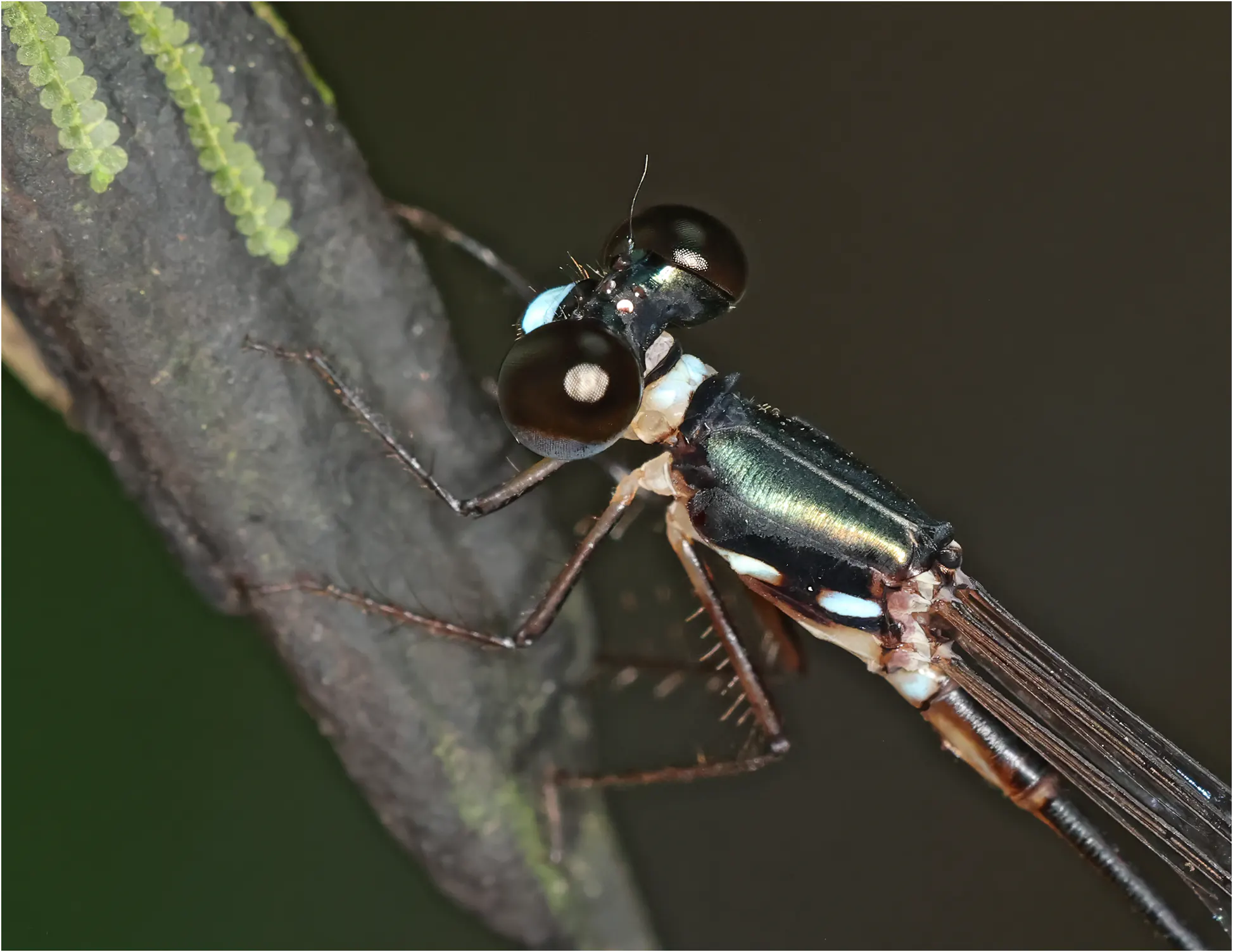
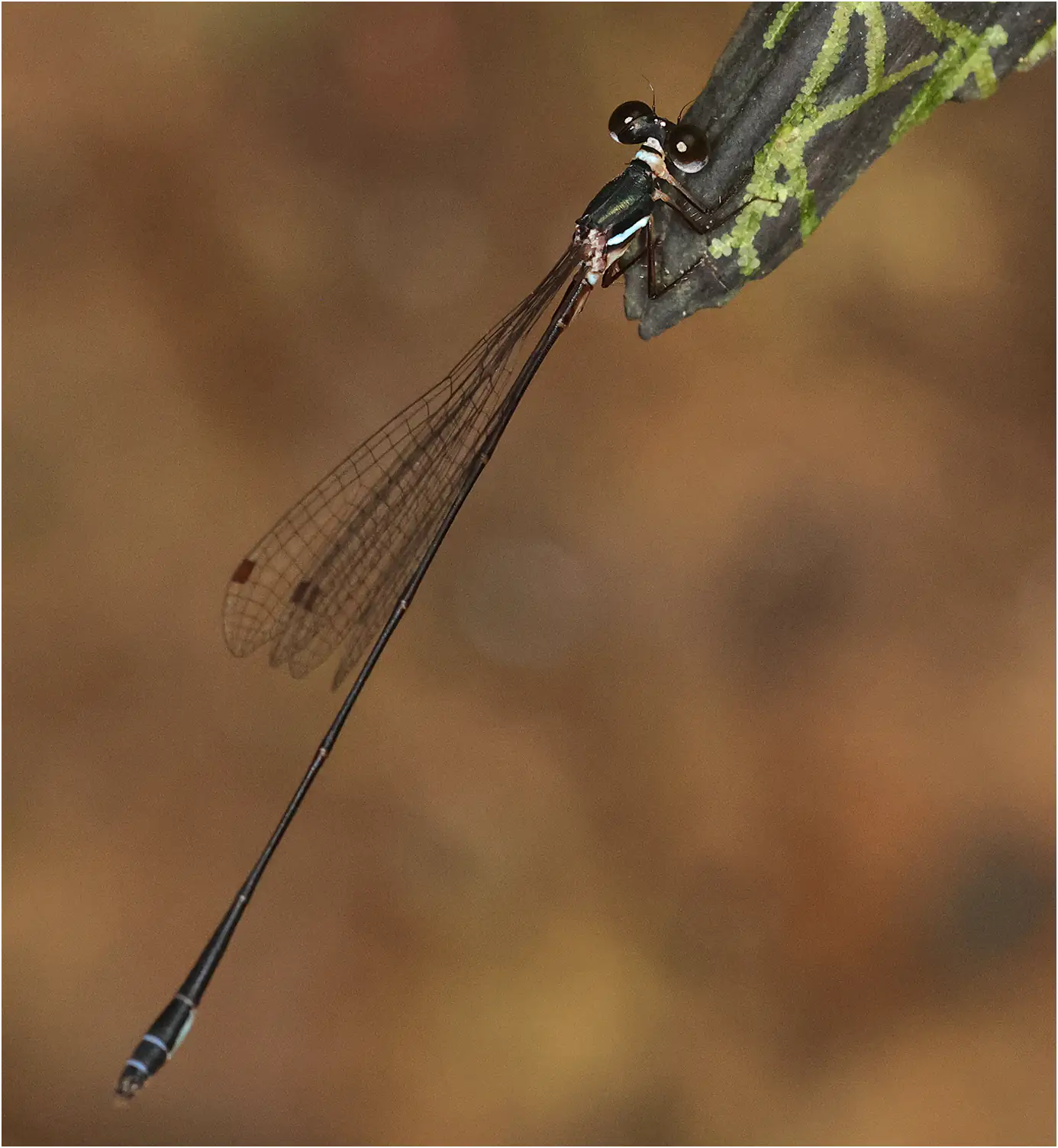
Note above on the left the extent of the blue spot on the face, which would make it possible to distinguish it at least from D. actaeon and D. kosterini (3).
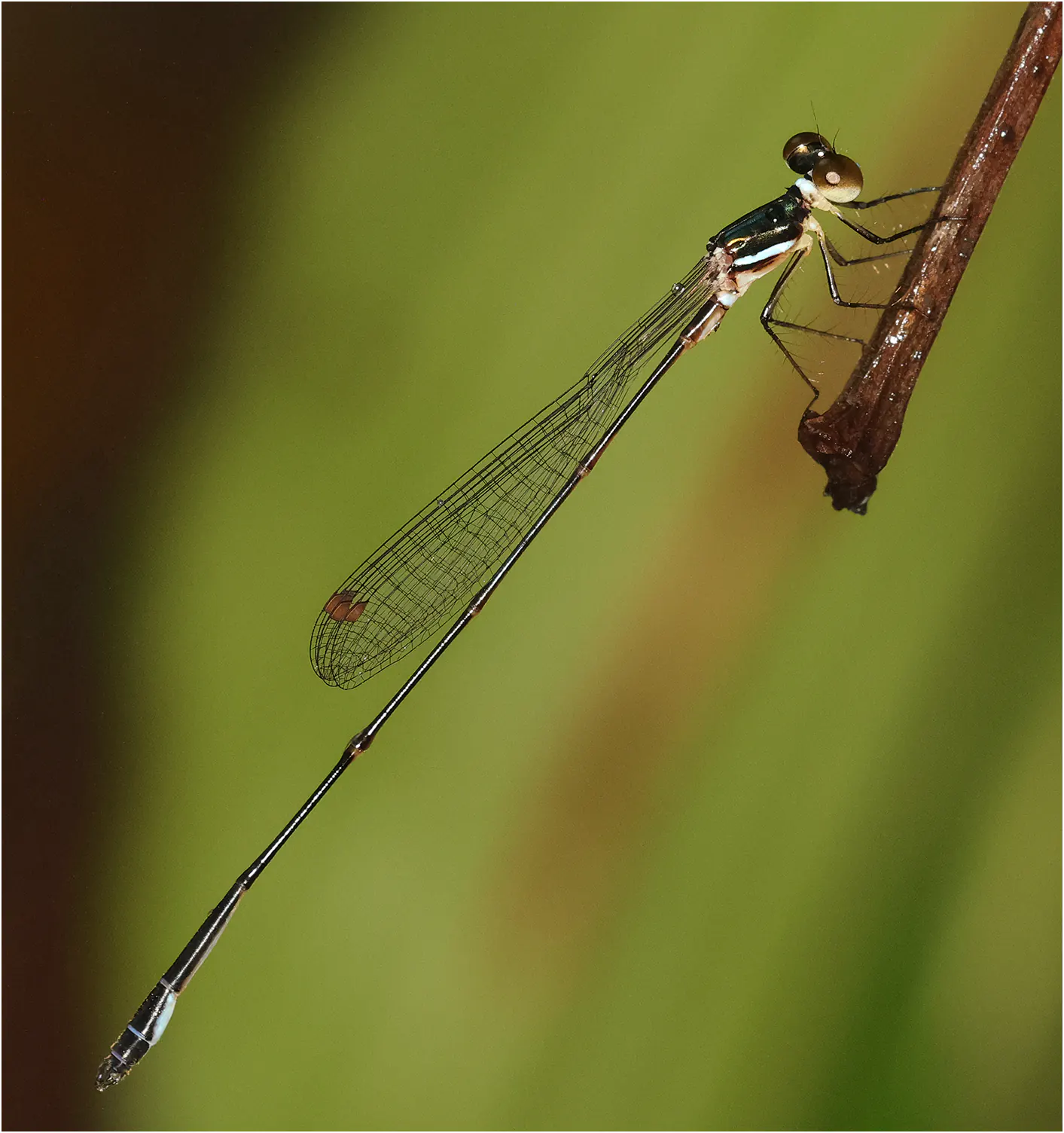
And below, on this other specimen, one should note the magnificent spines on the middle and hind legs; the front legs show much smaller setae on the lower half of the tibiae. We know that the front legs are used for capturing prey, which is logical given their position, but they are also used to "groom" the eyes!
It lives on forest rivers; I spent many long minutes a few meters away from it trying to properly photograph an E. impar; shadow and light, a lot of shade, and patches of sunlight make conditions difficult to spot and photograph them. Devadatta podolestoides was also part of the local fauna.
It is endemic to Borneo, mainly localized in the north, in Sarawak, Brunei, and Sabah, with a few records in northwestern Kalimantan (3).
IUCN Red List.
Note below the small blue spot on the ninth abdominal segment (S9).
Etymology of Drepanosticta rufostigma
Drepanosticta: from the Greek drepanon, for "sickle, pruning knife" and stiktos, meaning "tattooed, marked or spotted." It is certainly the particular shape of the wing margin that gives this genus its "sickle" designation, although no mention is made of this character in the description of the genus by Laidlaw (3) in 1917. As for the mention of "spotted" (sticta), it is only there to emphasize its membership in the Platystictidae family, whose name derives from Platysticta, a genus from South Asia whose wingtips bear a dark spot (4).
Rufostigma, from the Latin verb rufo, meaning "to turn reddish," and stigma, "brand mark" or "spot," referring of course to the coloration of the pterostigmas (this species name is shared with Ischnura rufostigma, at least). Selys could not have known about the many Platystictidae that have pterostigmas of the same color…
1- Selys, 1886 – Révision du synopsis des Agrionines. Première partie comprenant les légions Pseudostigma – Podagrion – Platycnemis et Protoneura. Mémoires Academie royale Belgique, 38, 1–233. P. 155.
2- Dow, 2021 – AN ANNOTATED CHECKLIST OF THE ODONATA (INSECTA) KNOWN FROM SARAWAK WITH RECORDS TO DISTRICT LEVEL – Sarawak Museum Journal · January 2021
3- Dow, 2017 - A new Bornean species of Drepanosticta allied to D. actaeon Laidlaw, with notes on related species (Odonata: Zygoptera: Platystictidae) - Journal of the International Dragonfly Fund n° 104 1-32.
4- Robin Ngiam & Marcus Ng – A photographic guide to the Dragonflies and Damselflies of Singapore – John Beaufoy Publishing – 2022