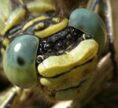
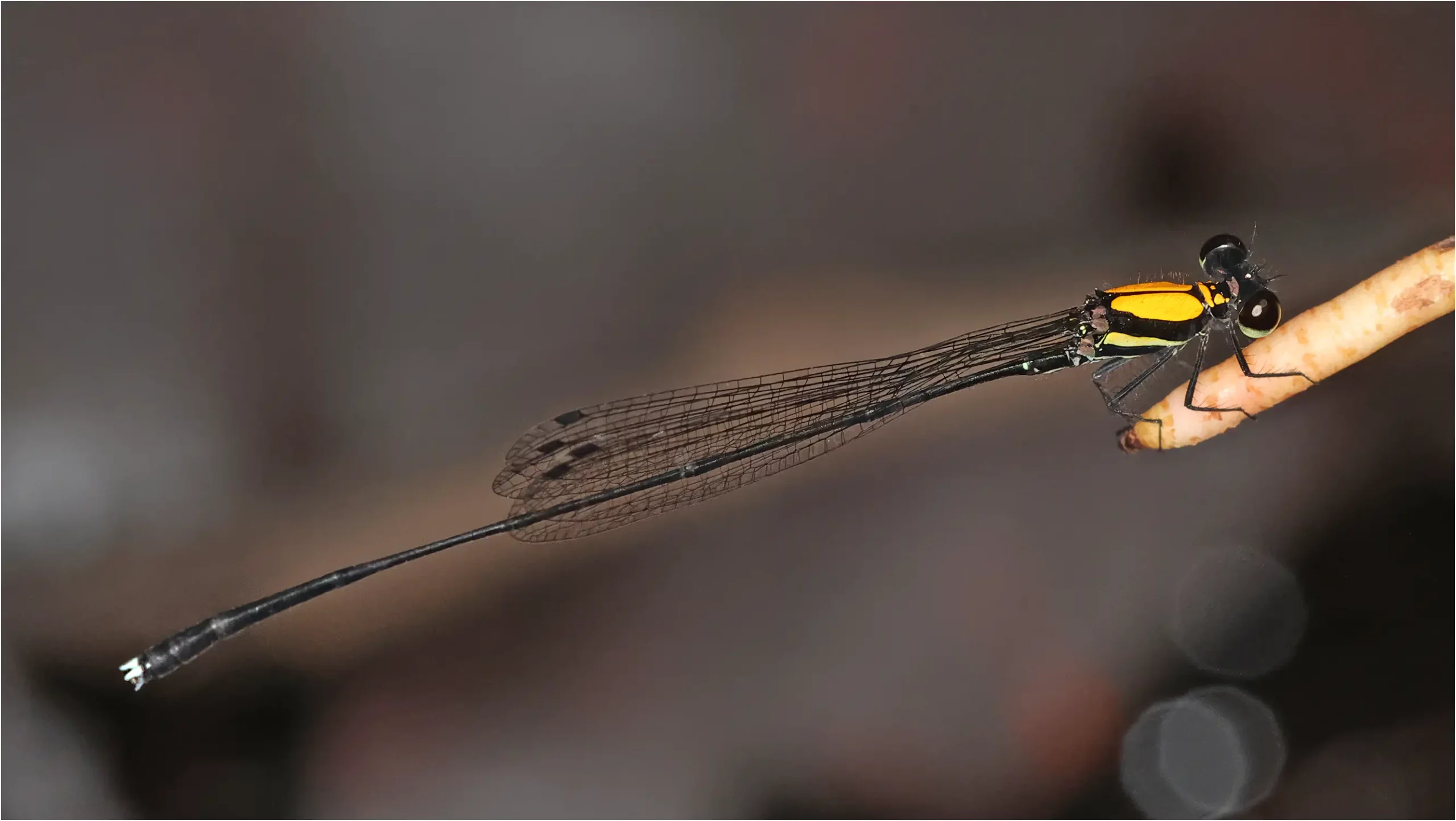
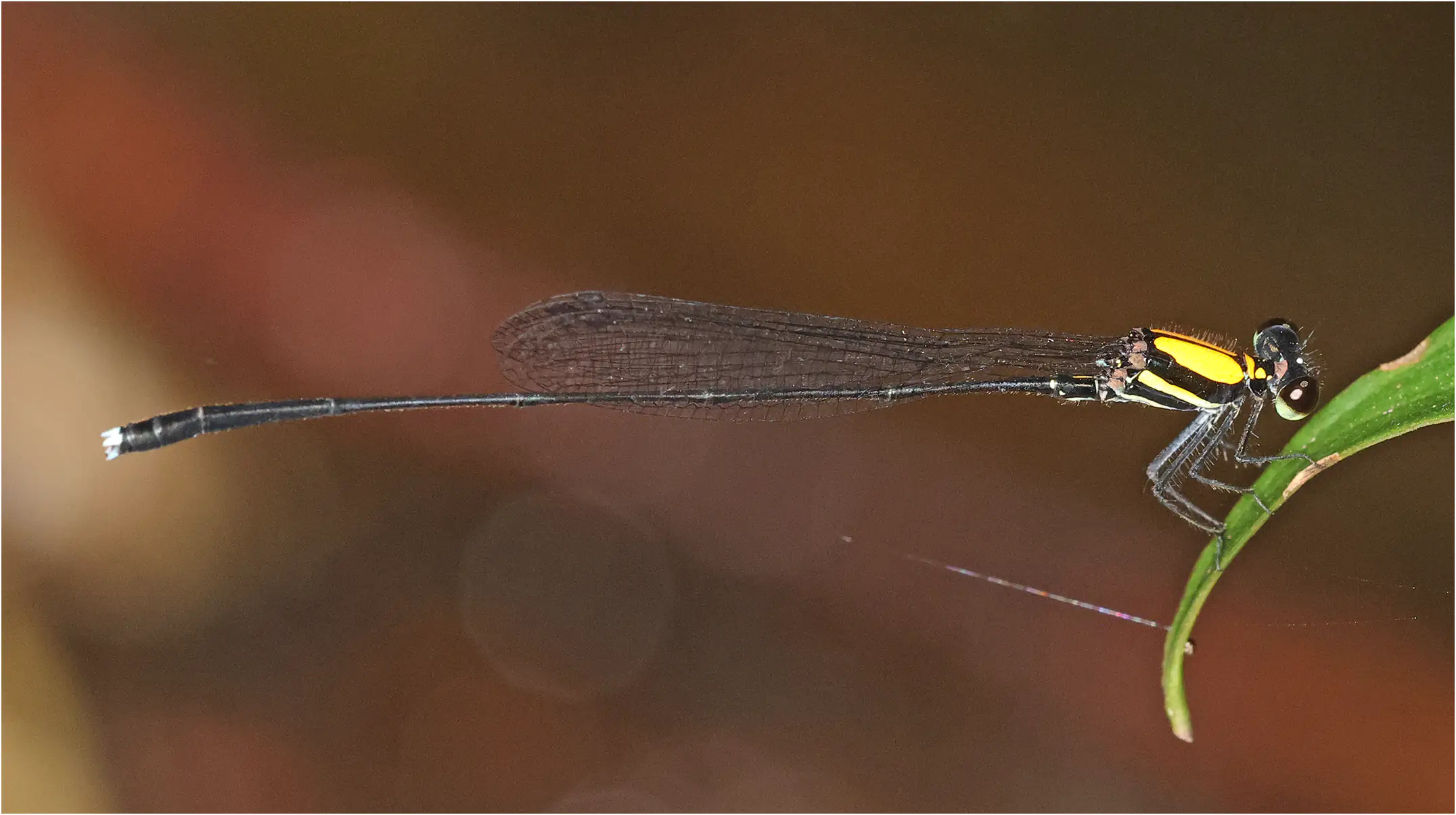
Prodasineura dorsalis, a member of the very large Platycnemididae family, is an odonate that, at least for an odonatophile, is well worth the trip. The combination of bright yellow, glossy black, and white anal appendages is magnificent. It immediately reminded me of another beauty from the same family, Coeliccia chromothorax (here in Thailand), which displays almost the same habitus (though it is not present in Borneo). However, on site, I did not recall its cousin Prodasineura croconota, which I had encountered in Vietnam. The latter is even closer (with a very slight difference in the shape of the thoracic dorsal spot) and is distinguished almost solely by the shape and colouration of the anal appendages; it is not present in Borneo either.
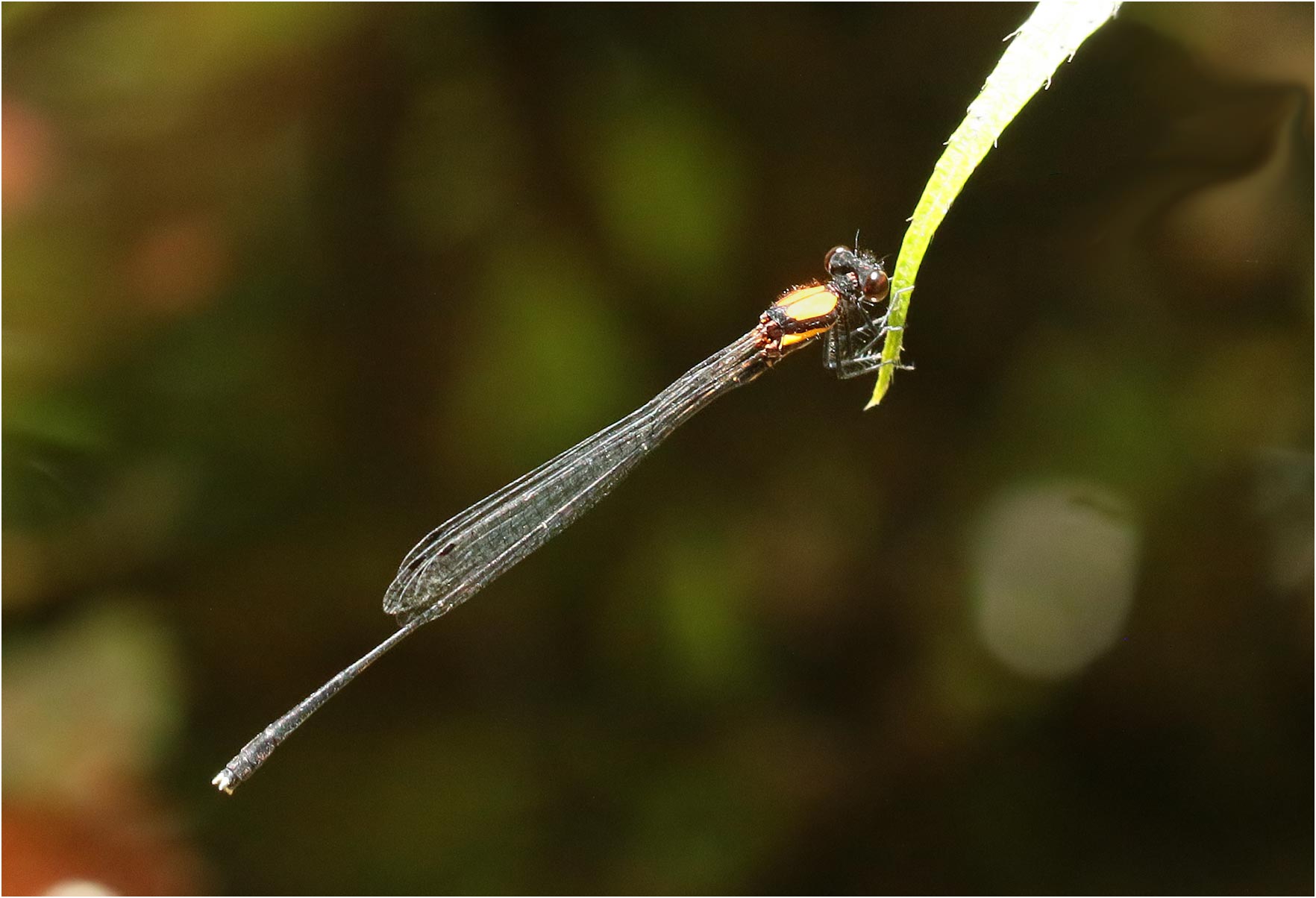
There are 39 species of Prodasineura in the world, 11 of which are found in Borneo, but identification on the island is made easy by the unparalleled extent of yellow—sometimes orange—colouration on the dorsal side of the thorax.
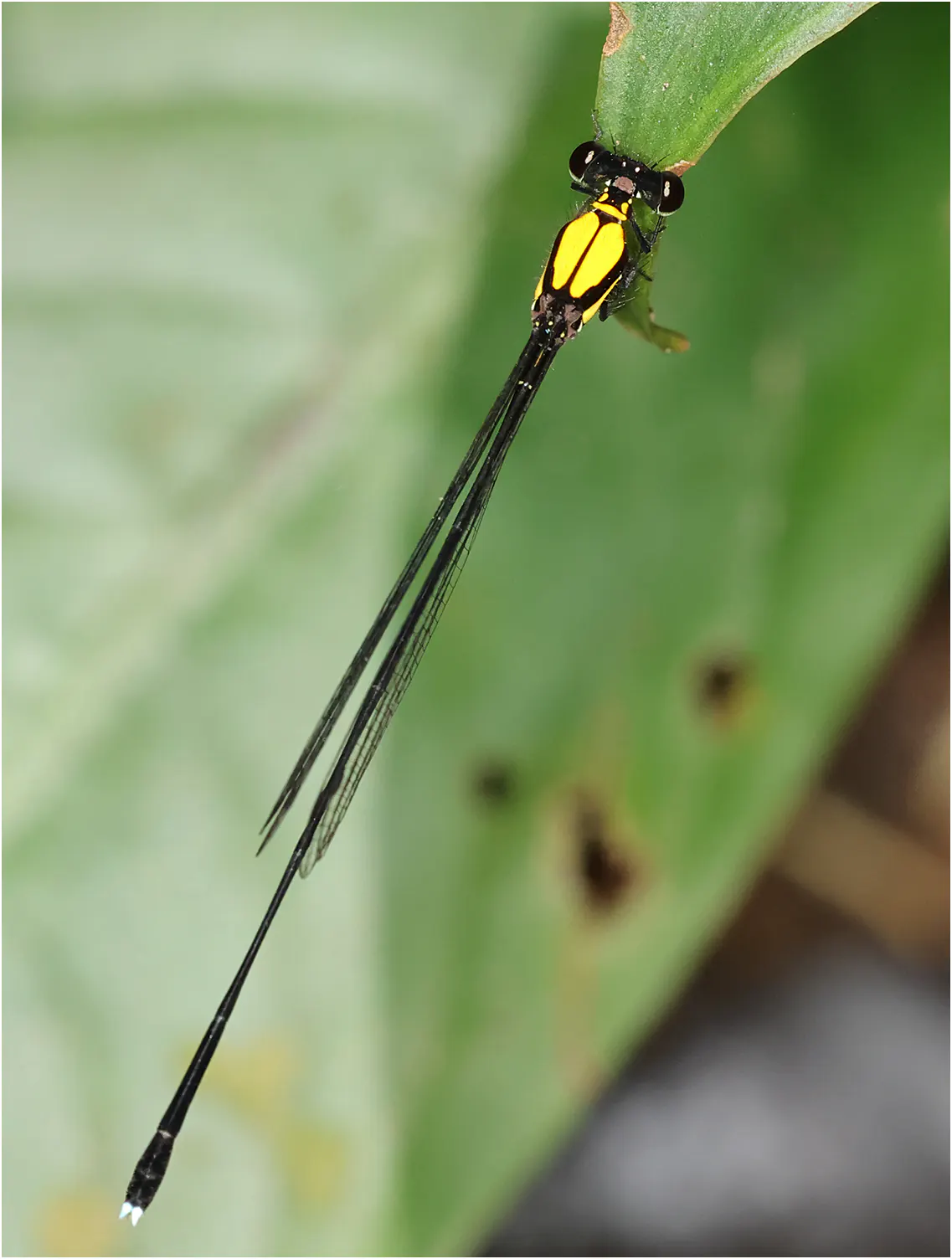
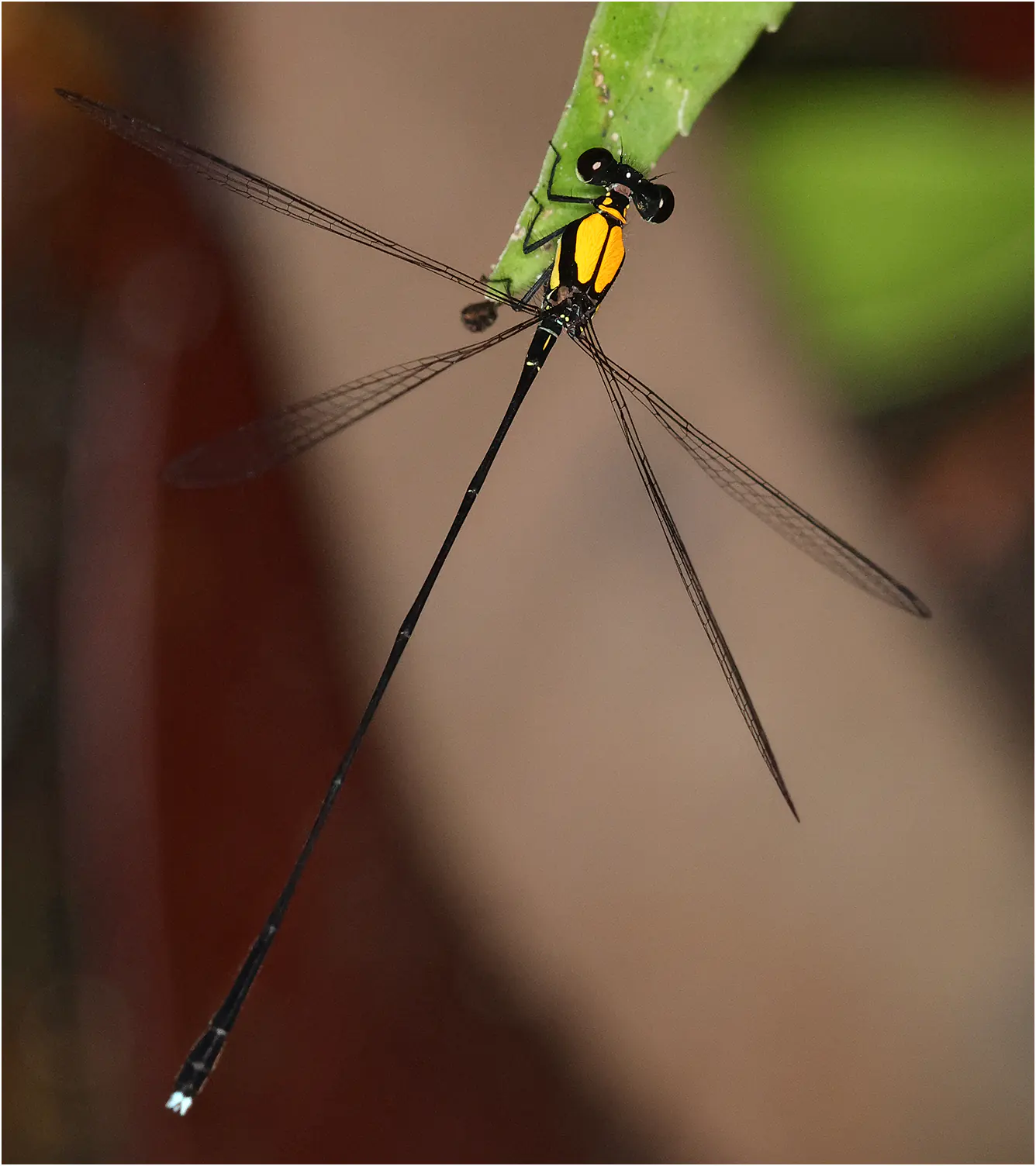
Selys (1), who named it Alloneura dorsalis, measures the abdomen at 30 mm and the hindwing at 19 mm; the entire insect reaches about 36 mm.
Note that the abdomen at its narrowest part, at the level of the sixth segment, reaches only 3 tenths of a mm.
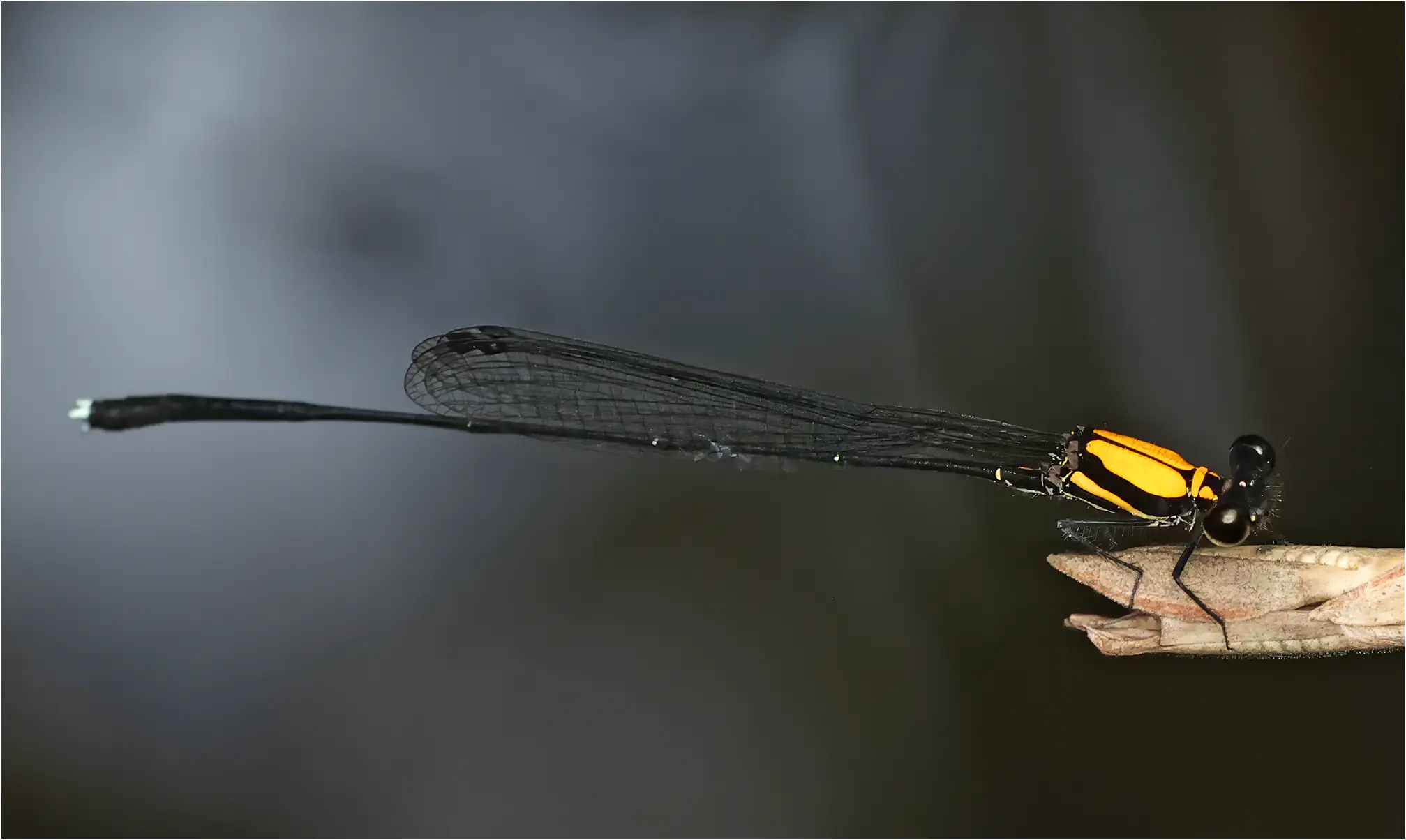
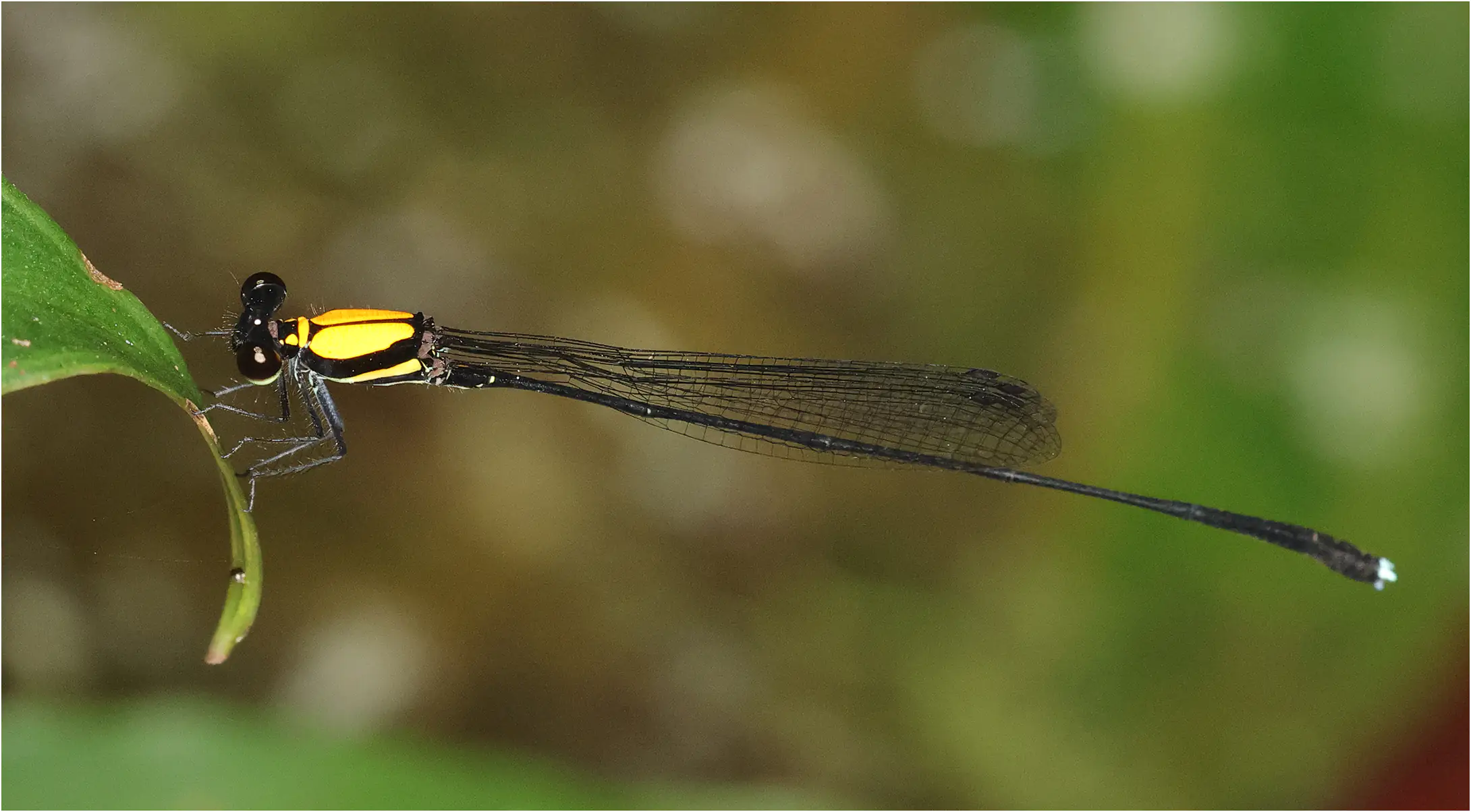
At Bung Ngiraja, we encountered it in a hilly environment, in dense forest, on a stream with a rocky and gravelly bottom, accompanied by Prodasineura haematosoma, Drepanosticta rufostigma, Euphaea impar, Devadatta podolestoides, and Tyriobapta torrida, to name just the closest ones.
On the Kuching University campus, we observed it in a forested swamp peat bog where progress is difficult, not because of the vegetation, but due to the treacherous black water, full of root holes and collapsing supports. It is worth noting that Selys mentions "a reddish triangle between the lateral ocellus and the antennae", which is absent in the specimens I photographed. However, Dow (2019) (2) acknowledges significant variability on this point, ranging from the complete absence of colouration to a full band of colour between the two eyes (p. 16).
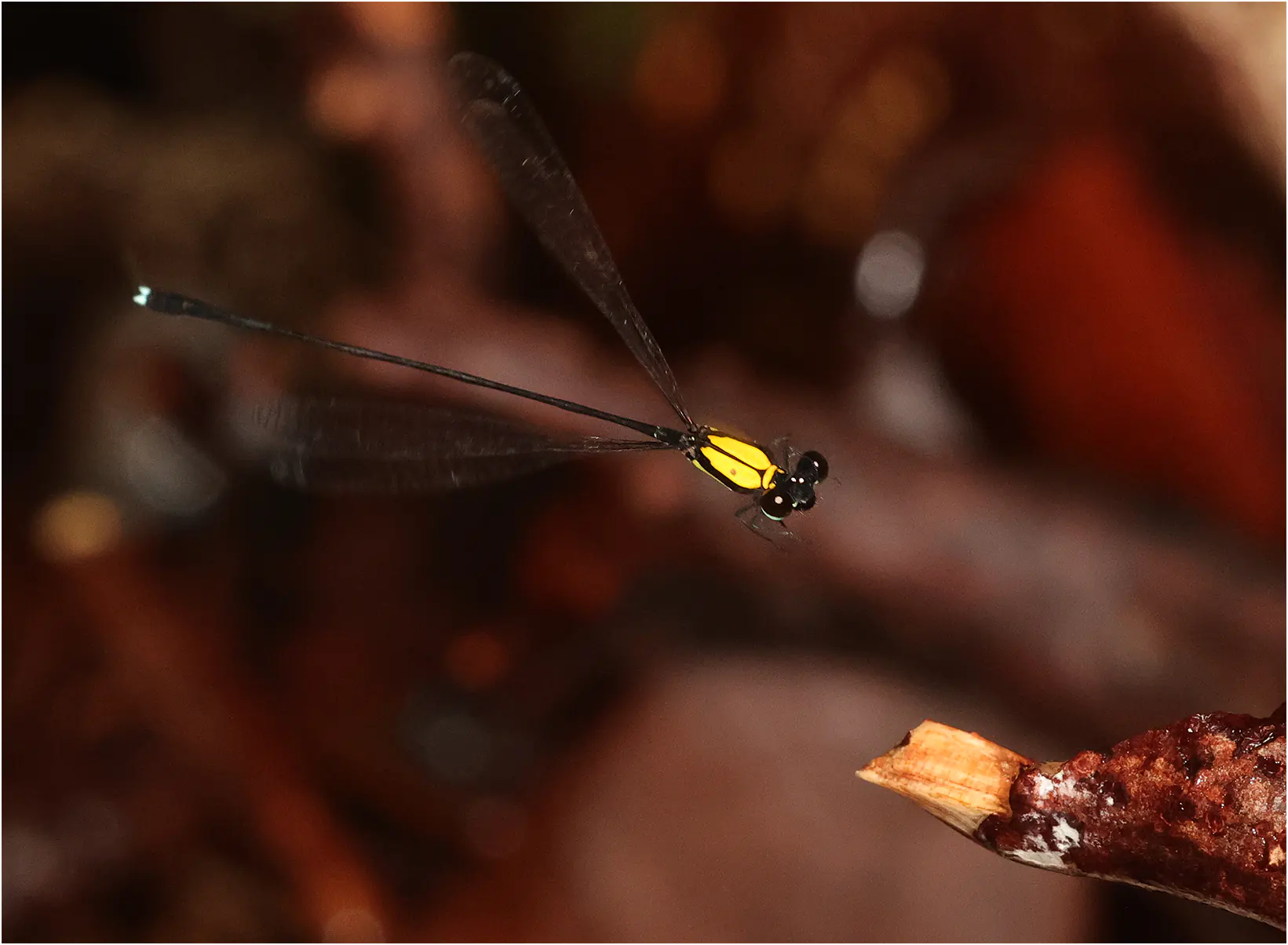
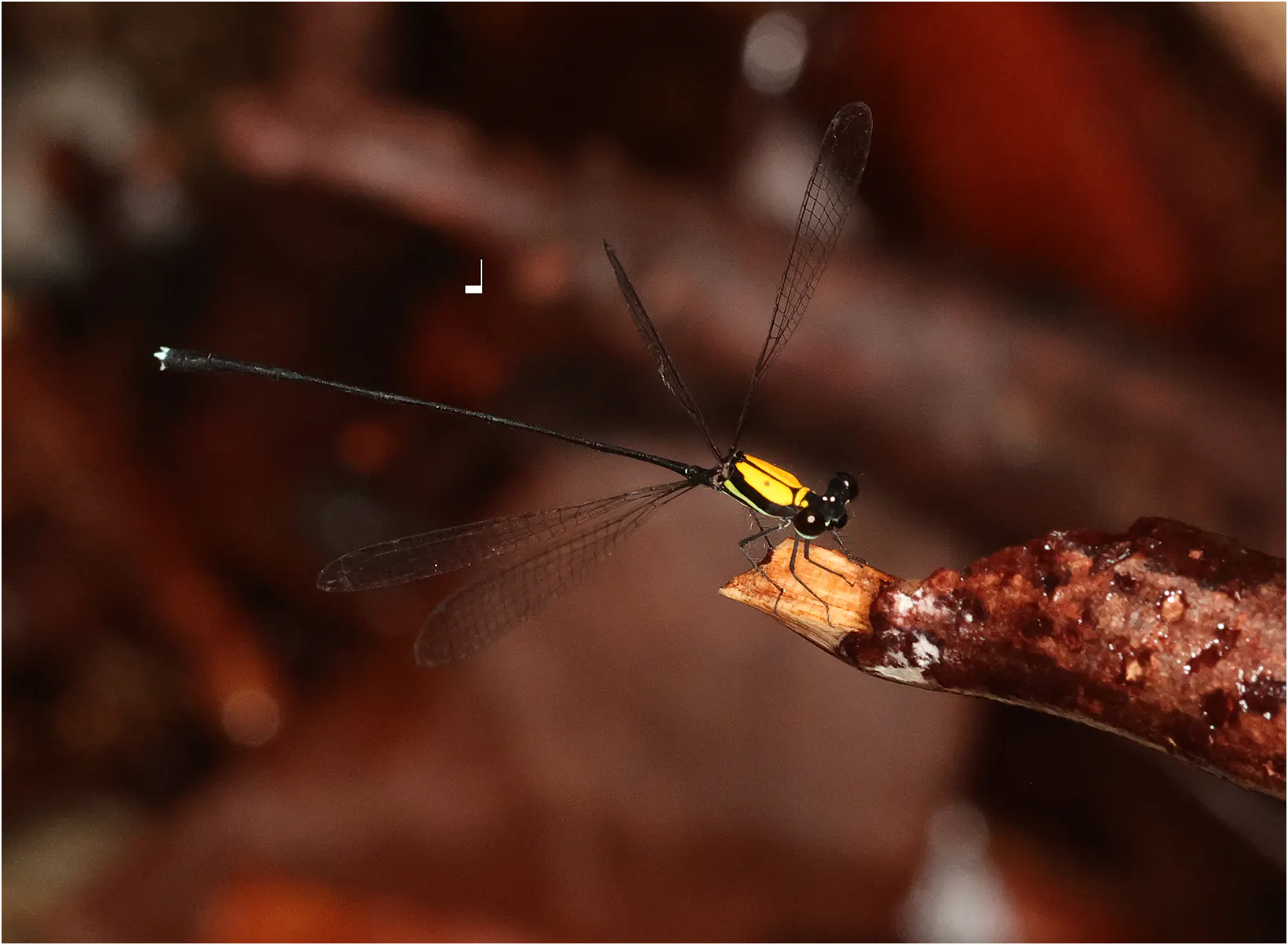
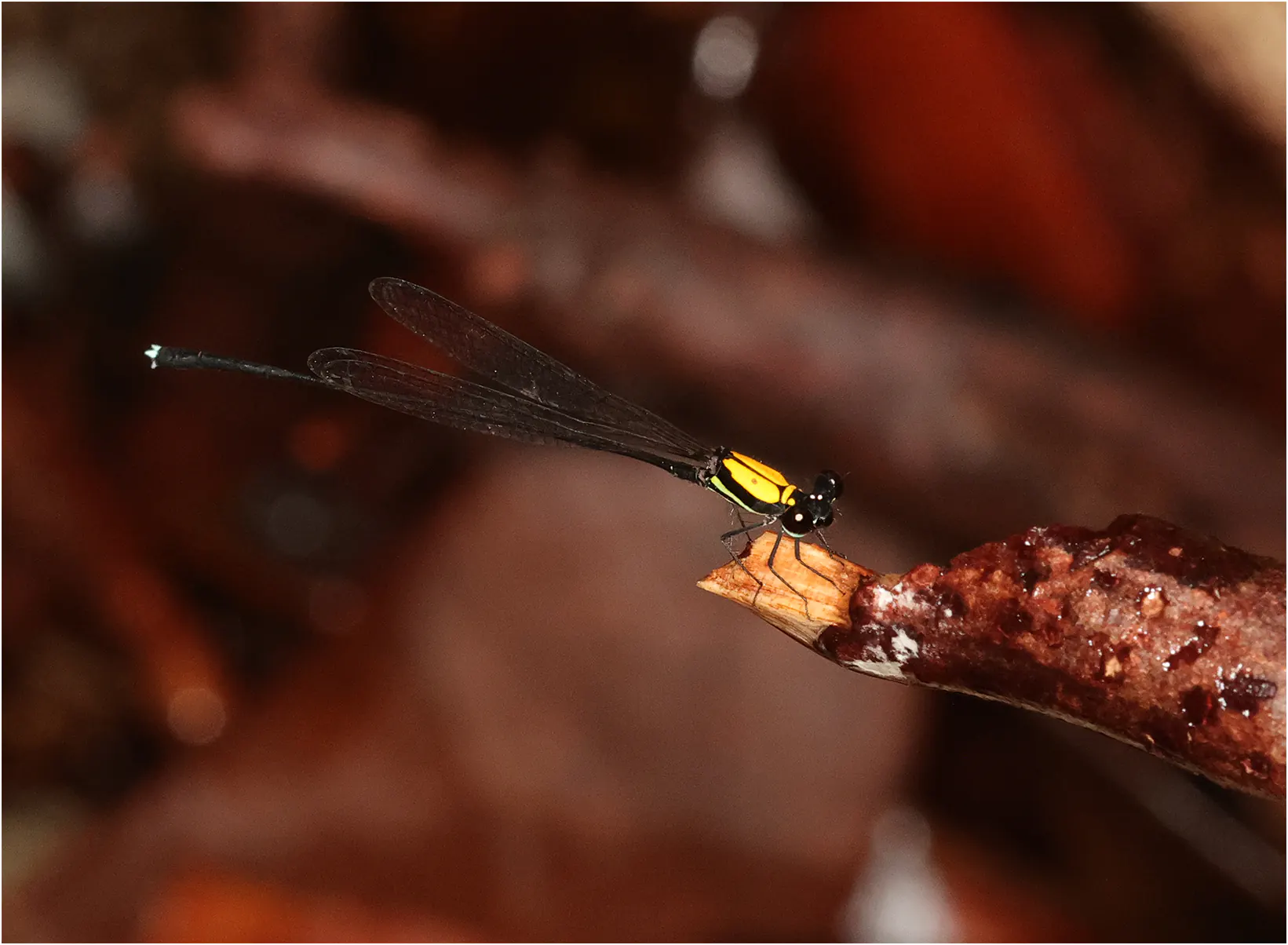
The three photos above illustrate a common situation with dense forest odonates: the pre-flash causes them to flinch or even briefly take flight. Most of the time, they land back in the exact same spot; the subsequent flash triggers the same reaction, but they eventually get used to being stars and settle down. I thus unwittingly photographed this subject in flight, startled by the pre-flash, while the other two photos show it with wings still spread, then folded after landing.
It is endemic to Borneo, where it is known from Sarawak, Brunei, Sabah, and extreme western Kalimantan.
IUCN Red List.
Etymology of Prodasineura dorsalis
Prodasineura (Cowley, 1934) (3); I was unable to access the document in which Cowley separates this genus from Disparoneura (Selys, 1860). "Disparoneura" means "distinct venation" to emphasise its distinctiveness, and Cowley, keeping this idea, created this anagram of Disparoneura, as this genus exhibits very similar venation.
Dorsalis; Selys does not explain why he gave this name to this former Alloneura; he simply writes: "Tout le devant du thorax roux - The entire front of the thorax reddish."
Mais il est très vraisemblable que le dos presque entièrement jaune de cette espèce lui vaille son nom ; il ne connaissait pas P. croconota (ici au Vietnam) décrit par Ris seulement en 1916.
1- Selys, 1860 – Synopsis des Agrionines – Dernière légion : Protoneura – p. 456 [Alloneura dorsalis].
2- Dow, 2019 – Odonata from Sri Aman Division south and west of the Lupar River and from the Kelingkang Range, Sarawak – Journal of the International Dragonfly Fund 137 (1-26).
3- Cowley, 1934 – Notes on some generic names of Odonata – Entomologist’s Monthly Magazine -Volume 70, pages 240 à 247.