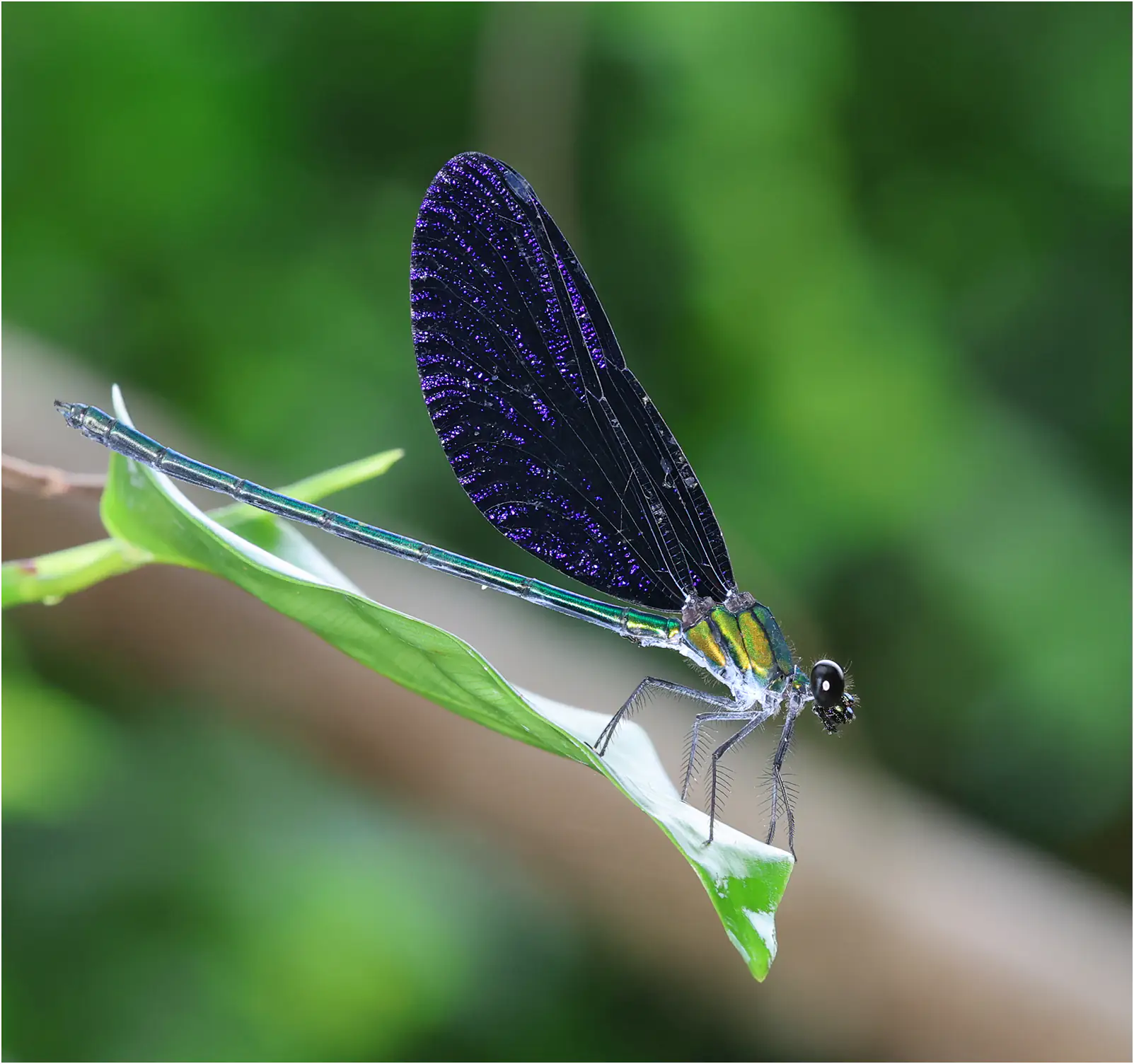
If the wings of Sapho ciliata, Calopterygidae, appear black in the shade, as soon as they catch the light, they display magnificent metallic indigo or deep violet iridescence (earning it the English common name of Western Bluewing). The genus, endemic to tropical Africa, includes seven species (World Odonata List) And it differs from the genus Umma mainly by being more robust, having larger pterostigmas, and often displaying colored wings (ADDO (2023)). However, it is not impossible that one day the two genres will be merged under Sapho, which would take precedence…
There are only two representatives of the genus Sapho in Ghana, but it is easy to distinguish from its relative S. bicolor, whose wing coloration covers only the distal quarter of the wing.
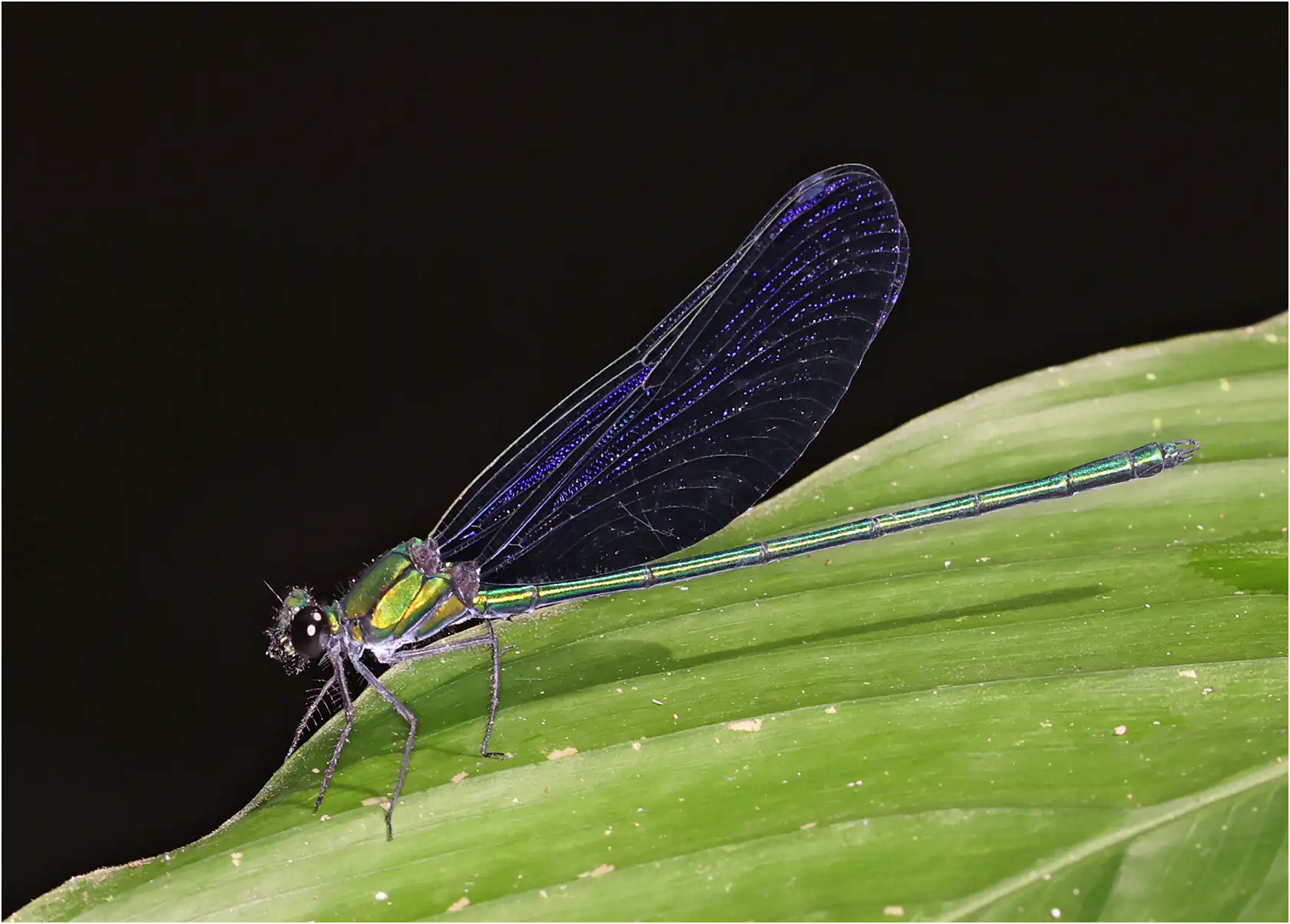
Selys & Hagen (1854) tell us that the male measures 57-60 mm and the slightly smaller female, 55-56 mm.
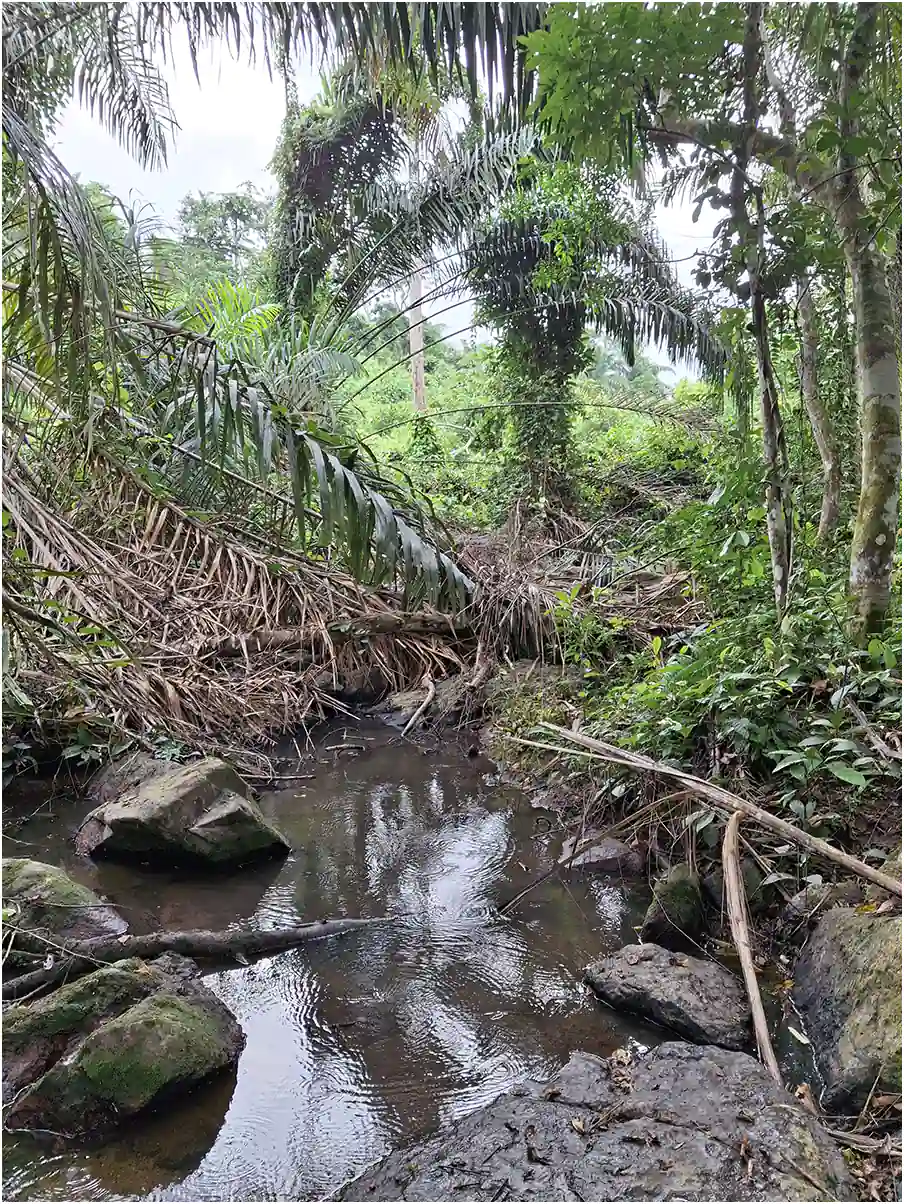
We encountered them in the forest, in open areas, near streams or rivers where shade alternates with sunlight.
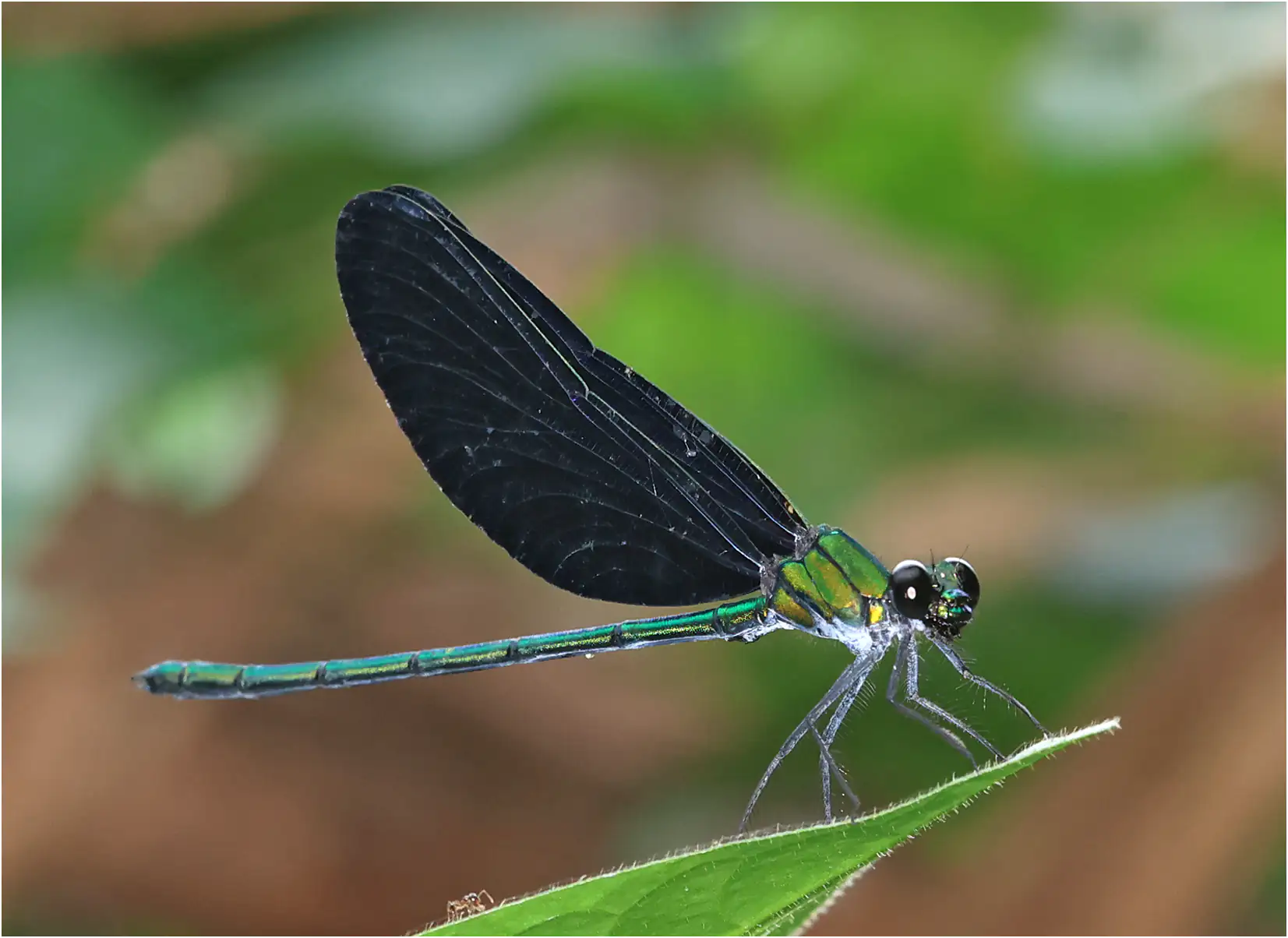
Below is a young male with wings that are still hyaline, revealing a pterostigma that will almost completely disappear in adults within the dark coloration.
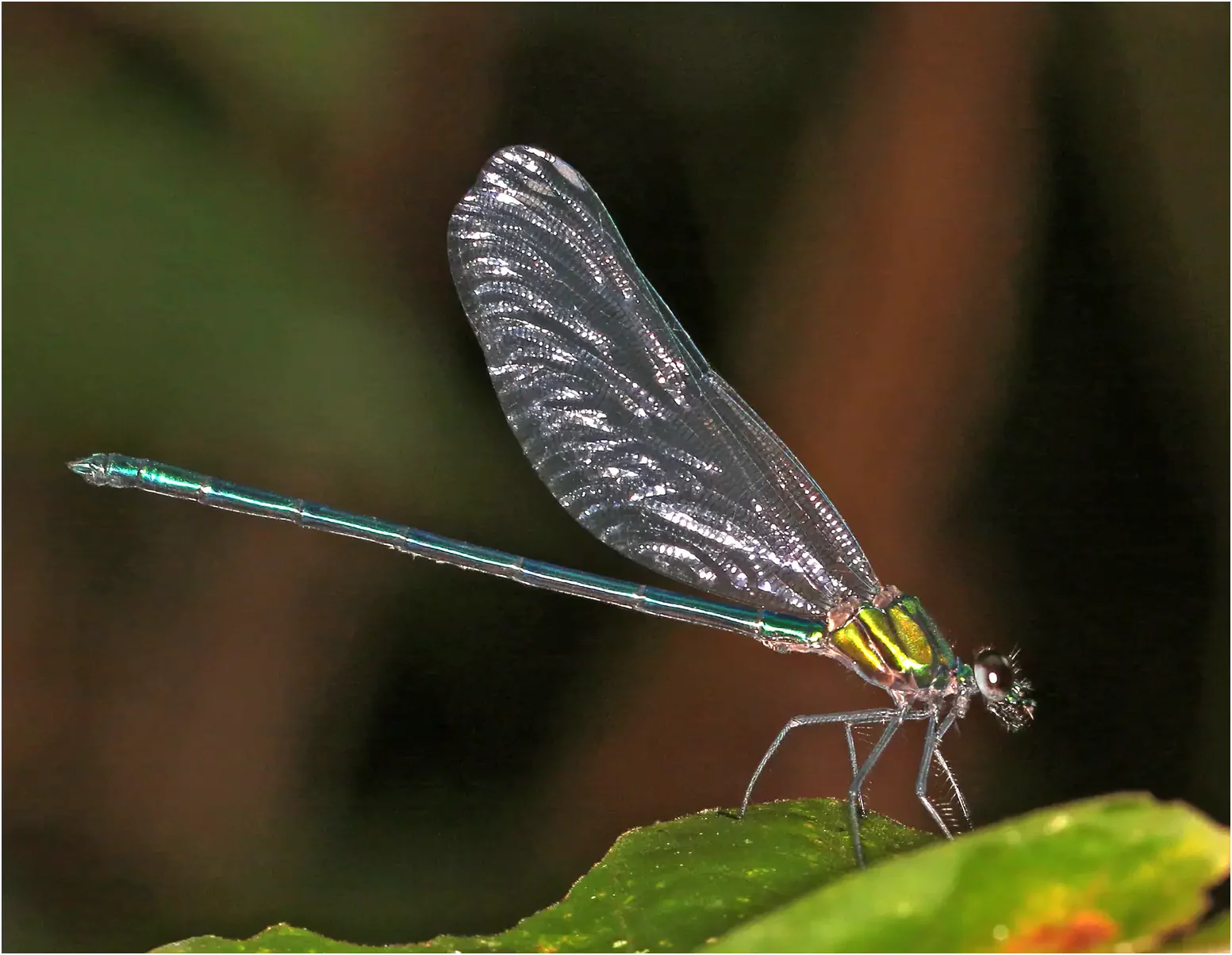
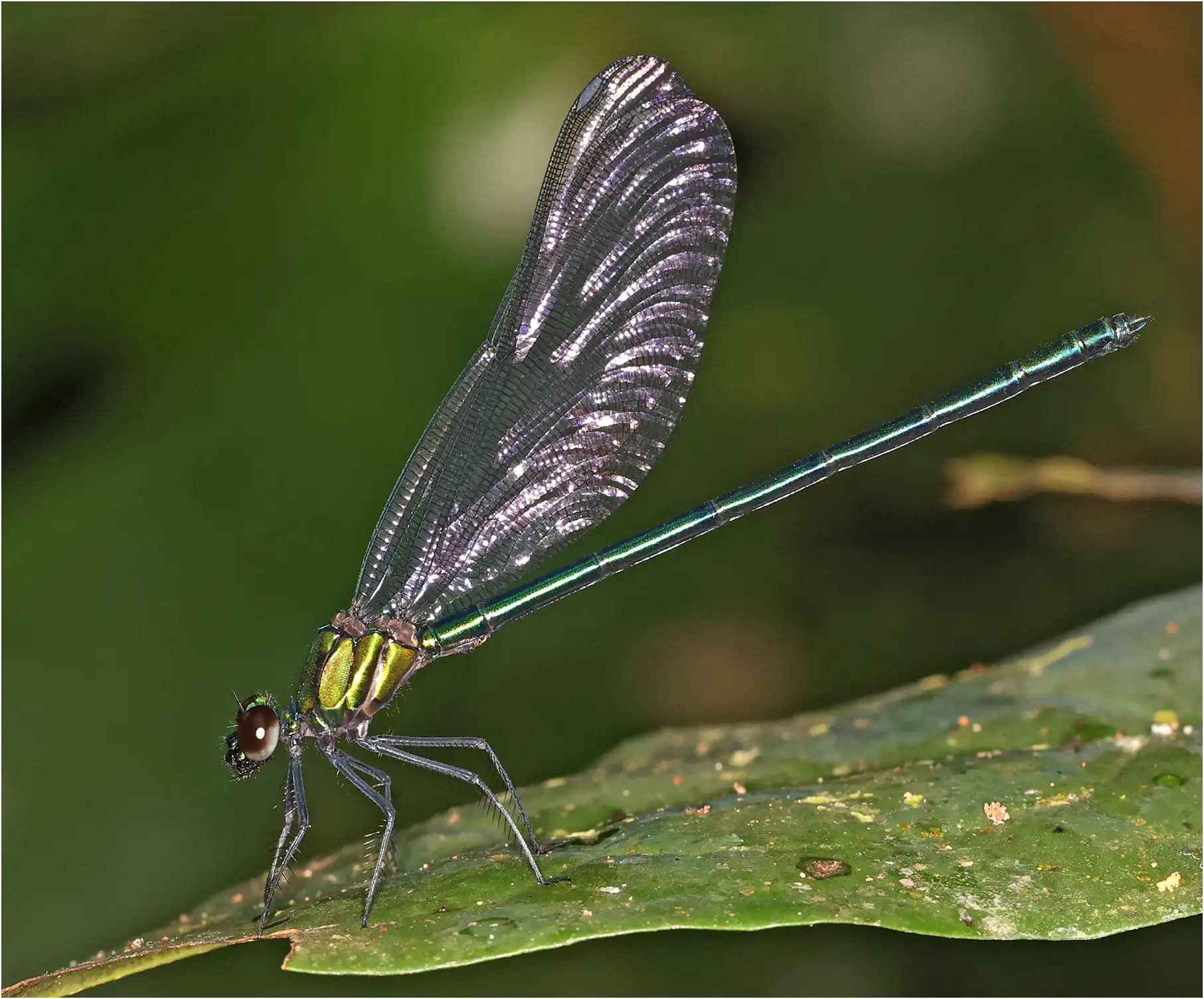
Sapho ciliata is found from Guinea and Sierra Leone to Nigeria (although it is not currently recorded in Benin).
IUCN Red List.
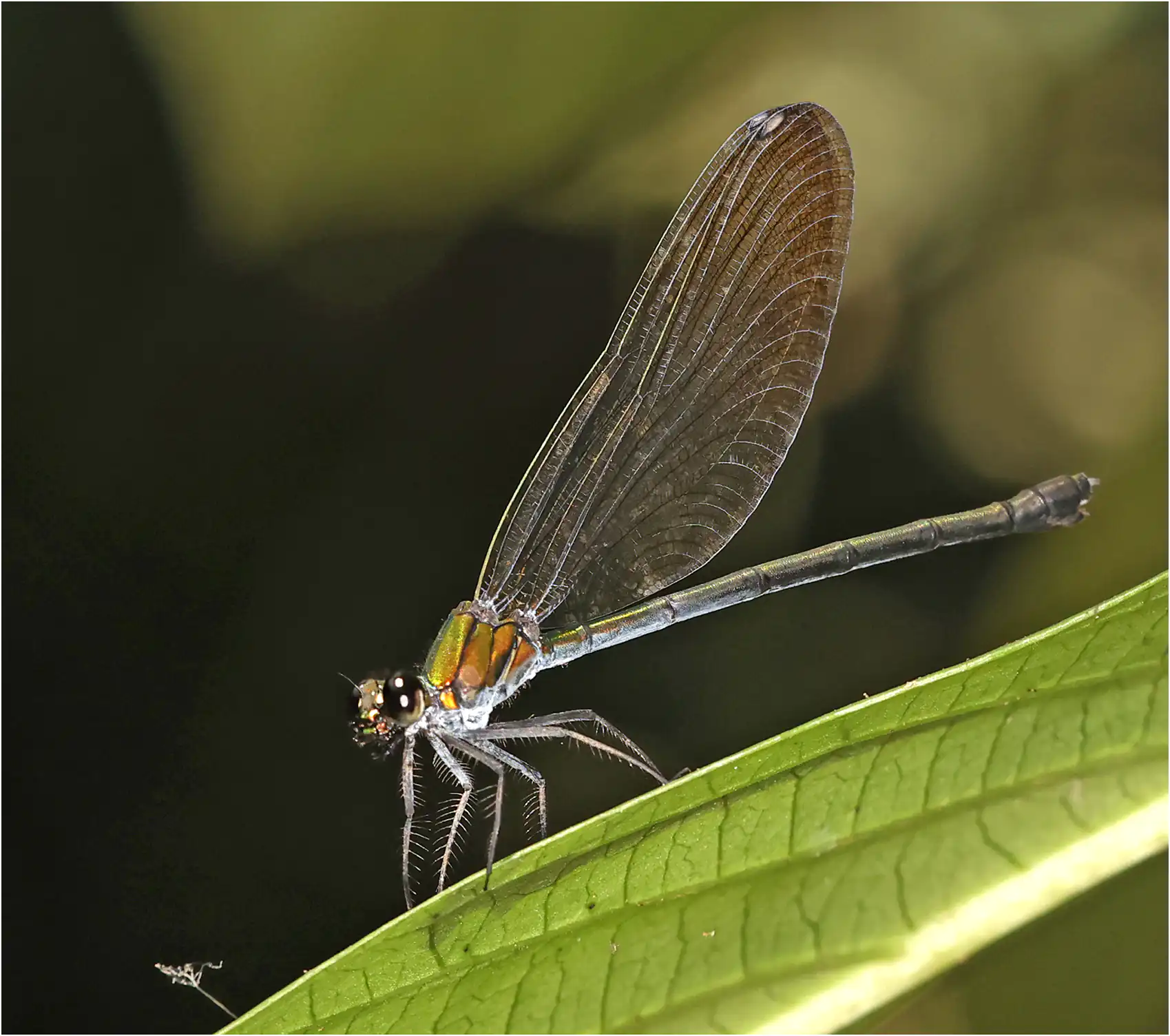
Opposite, the only female we encountered.
Sapho ciliata female, Ghana, Ankasa Forest Reserve, 16/01/2026
Etymology of Sapho ciliata
The species was described under the genus Agrion by Fabricius, and it was Selys who placed it in the genus Sapho.
Sapho refers to Sappho (or Sapho), an ancient Greek poetess (7th century BC) from the island of Lesbos. In his Synopsis des Caloptérygines, Selys created numerous genera and multiplied references to mythology or history; genera were thus named Phaon (a ferryman on the island of Lesbos with whom Sappho fell in love) and Cleis (the name of Sappho's mother and daughter). See Fliedner (2006).
Ciliata, from the Latin cilium for eyelash, to which the suffix -ata meaning "provided with" is added, refers, of course, to the dense, long spines on its legs. Fabricius writes: "Pedes valde ciliati, nigri" – "Legs strongly ciliated, black".
Fabricius notes that the specimen he described, from the Banks collection, came from the Coromandel Coast on the eastern shore of India. This was a labeling error, and Selys would describe the species again using a specimen from Guinea.
Dijkstra, K.-D.B (editor ADDO), 2023 – African Dragonflies and Damselflies (ADDO) – Genus Sapho – [Le lien peut ne pas fonctionner ; lien web.archive à partir du site ADDO, maintenant hors ligne.]
Fabricius, Johann Christian, 1781 – Species insectorum, exhibentes eorum differentias specificas, synonyma auctorum, loca natalia, metamorphosin, adjectis observationibus, descriptionibus (Vol. 1, p. 528). impensis C. E. Bohnii.
Sélys-Longchamps, Michel-Edmond, & Hagen, Hermann August, 1854 - Monographie des caloptérygines (p. 58). C. Muquardt.