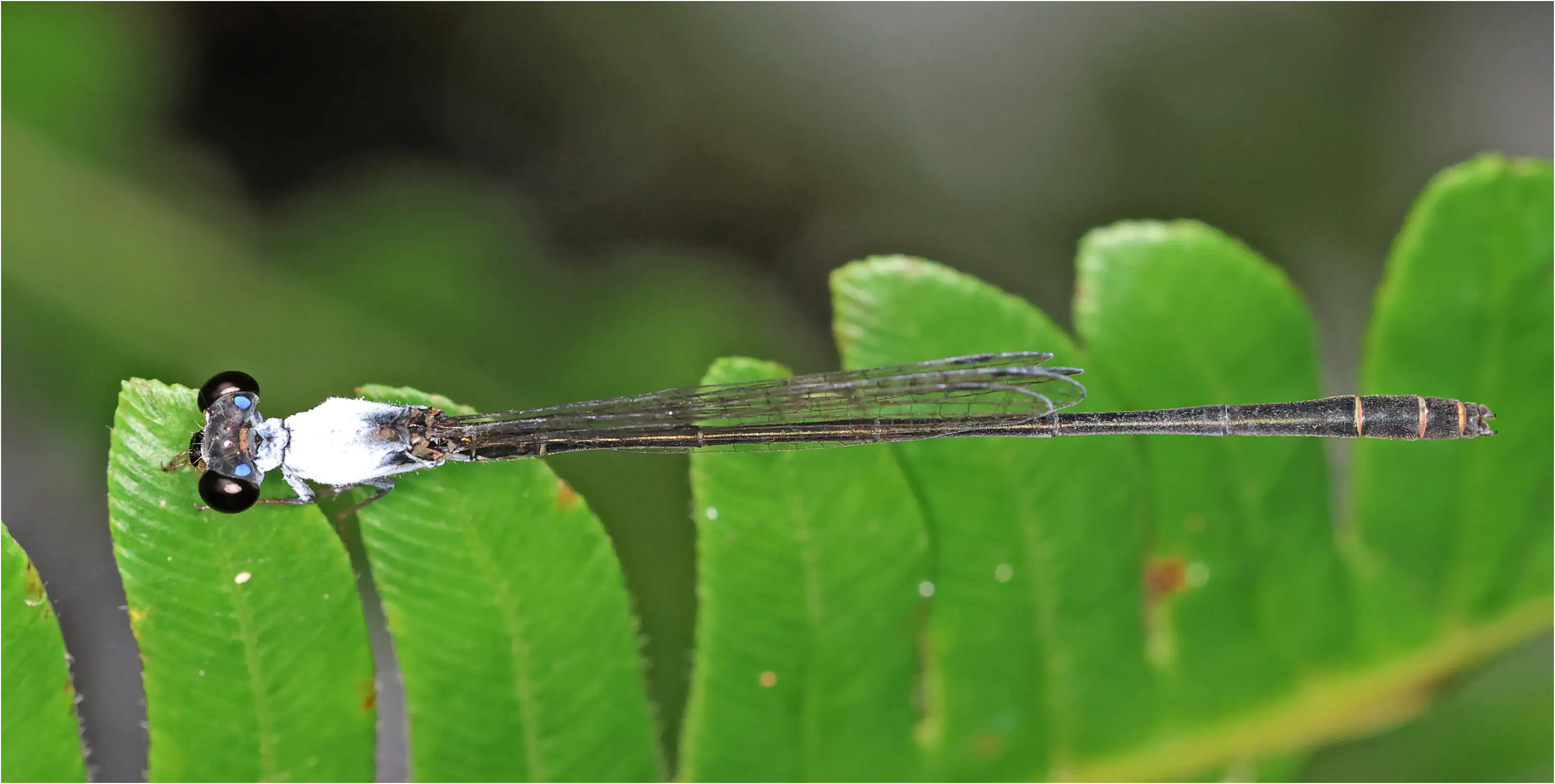
We encountered Agriocnemis maclachlani on several occasions. It belongs to a genus that currently includes 43 species in Asia and Oceania and 18 in Africa. Three species were previously known in Ghana, but we discovered A. victoria there, bringing the total number to four. We also encountered A. zerafica, but we missed A. exilis.
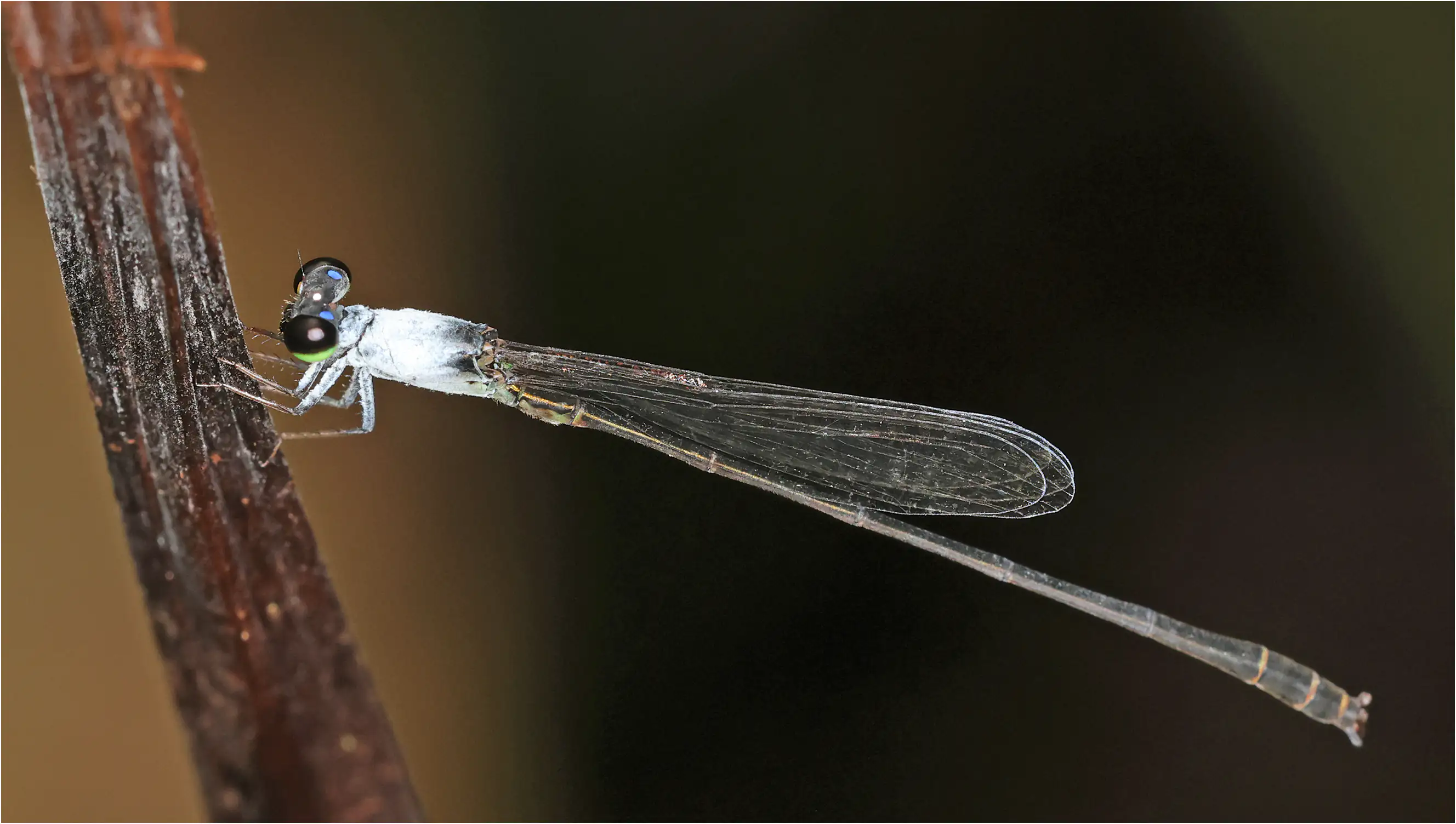
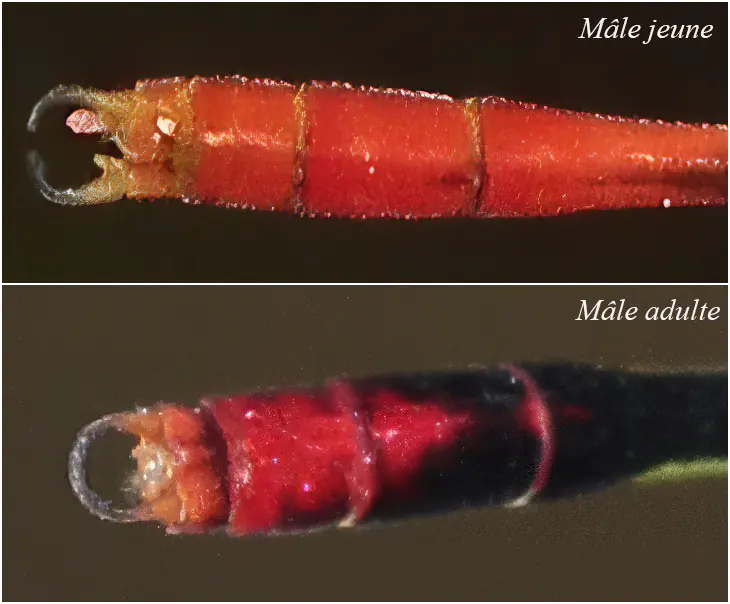
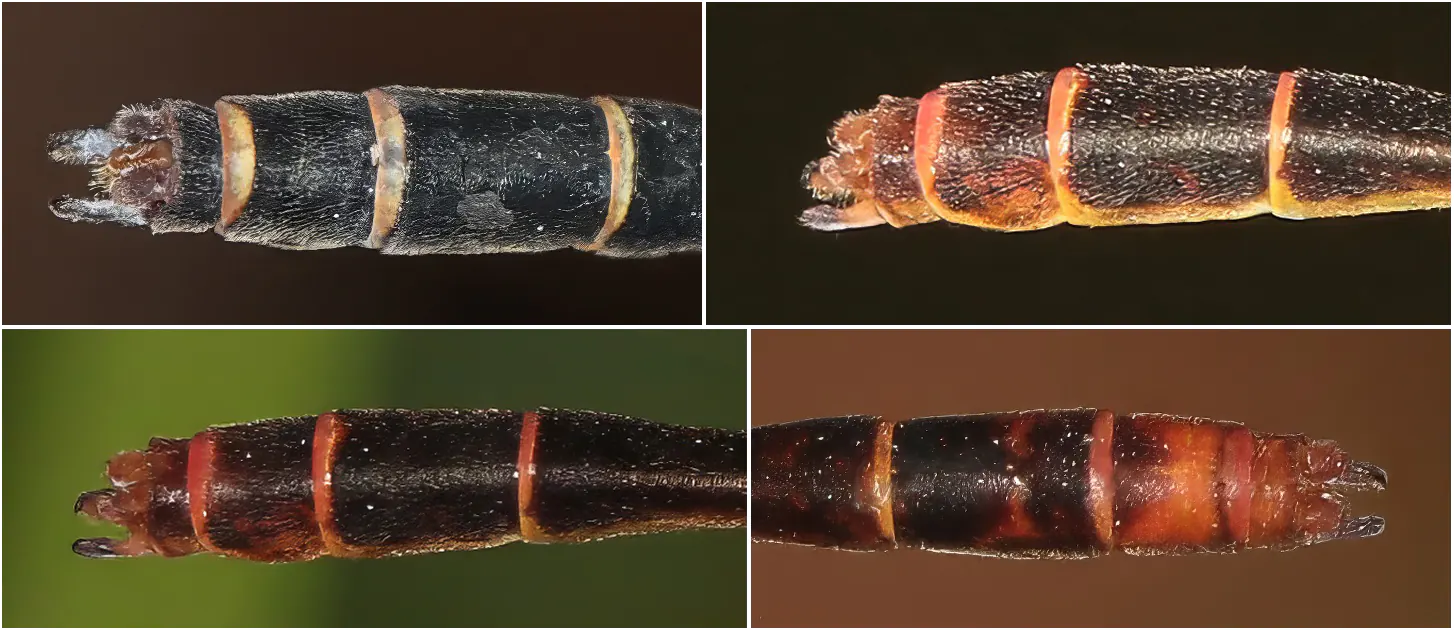
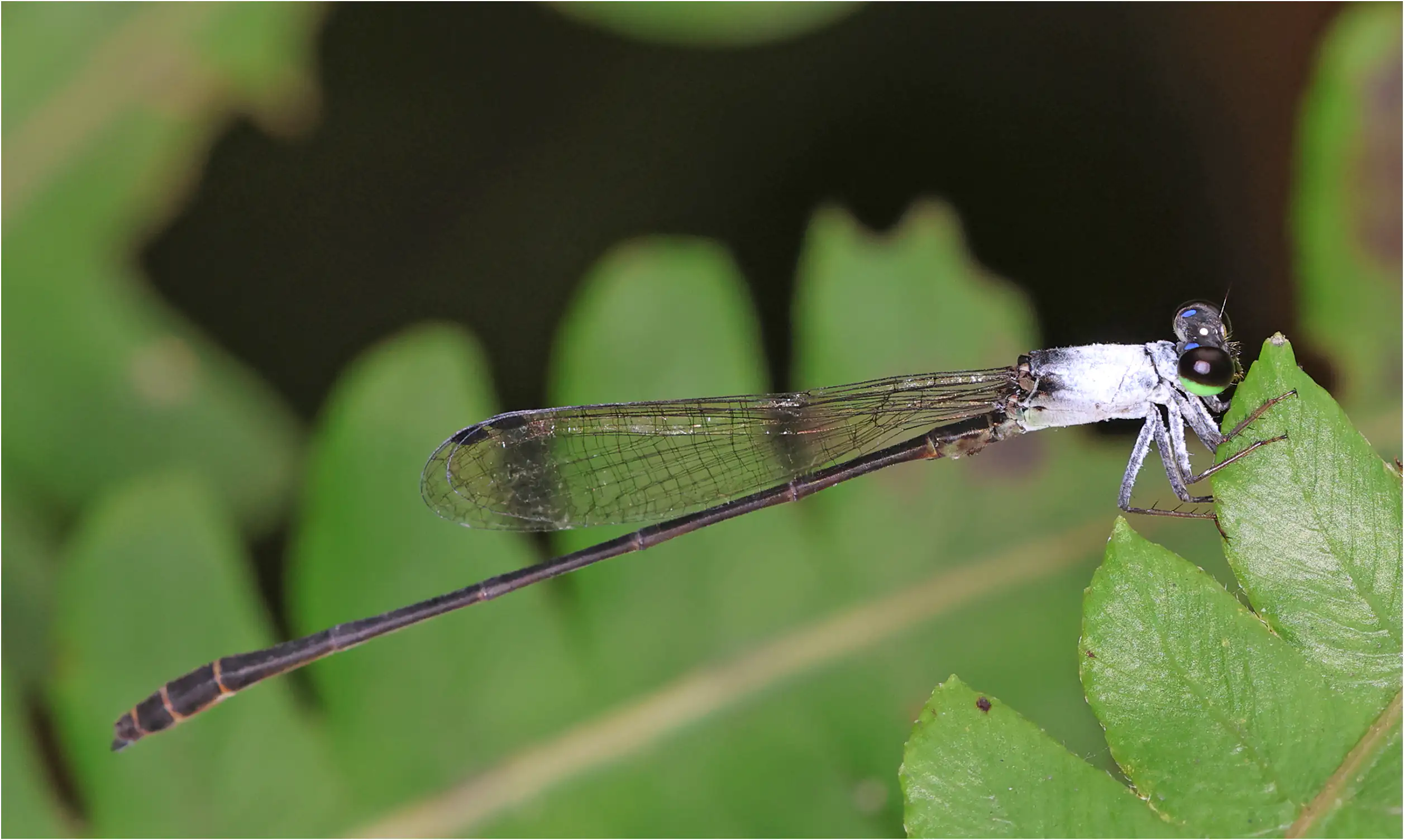
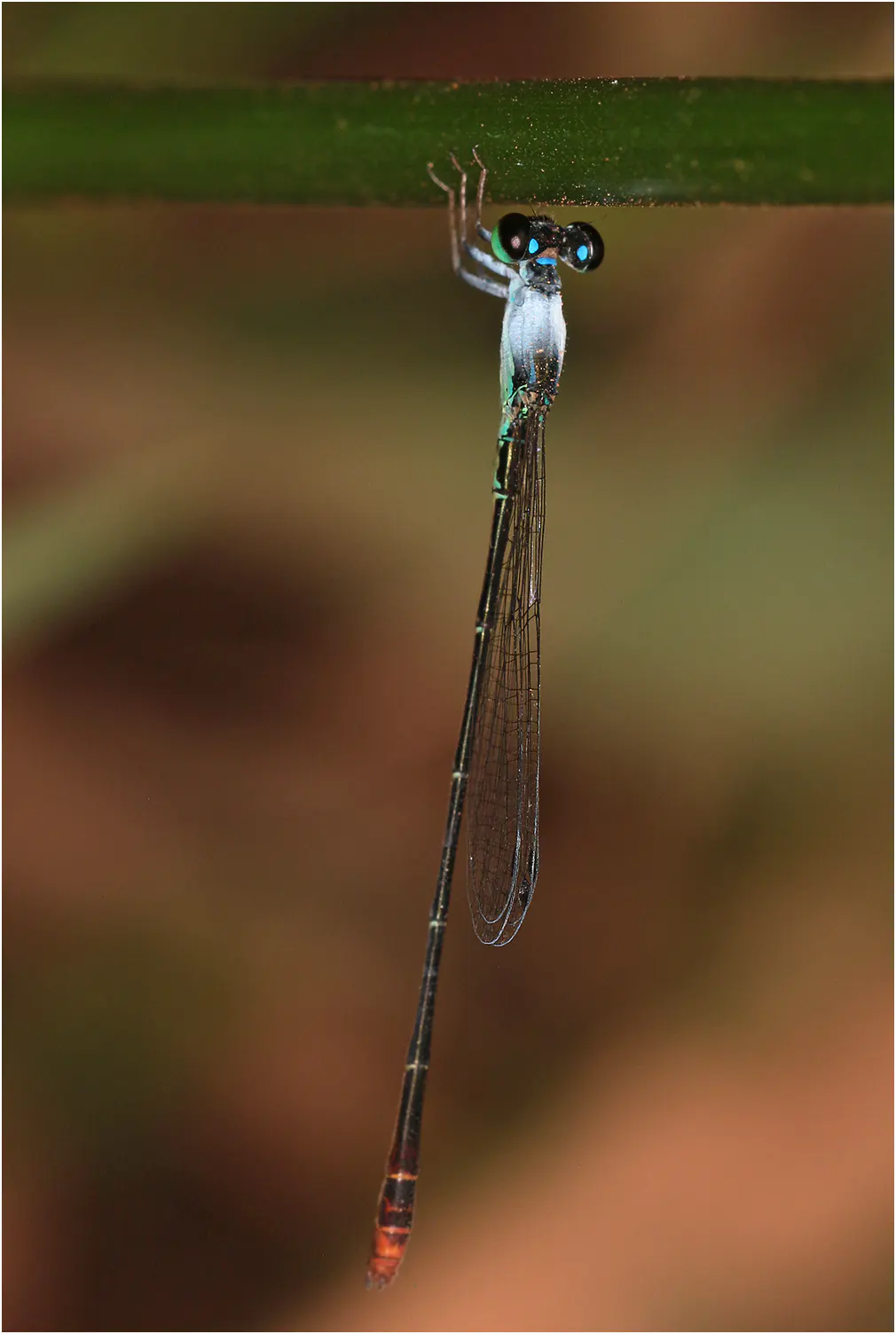
When adult, the thorax is completely covered in strong white pruinosity, making it easy to identify provided one gets close enough to distinguish the pronotum and anal appendages (the individual above displays curious anal appendages; these are movable, and the inferior ones, which are the longest, are spread apart here).
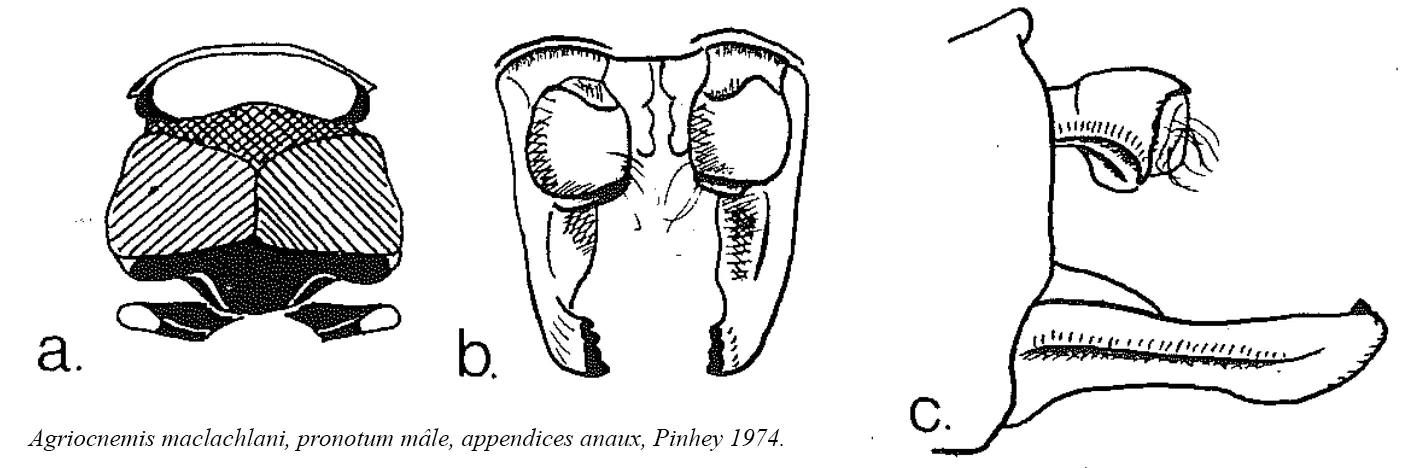
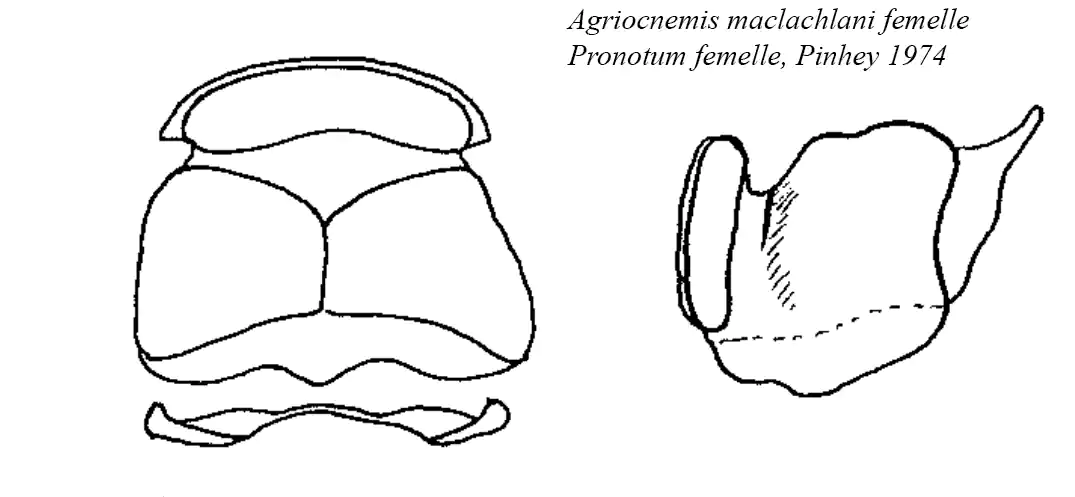
The pronotum shows a distinct step, with a horizontal protruding tooth on its posterior margin that is slightly upright and clearly visible from above.
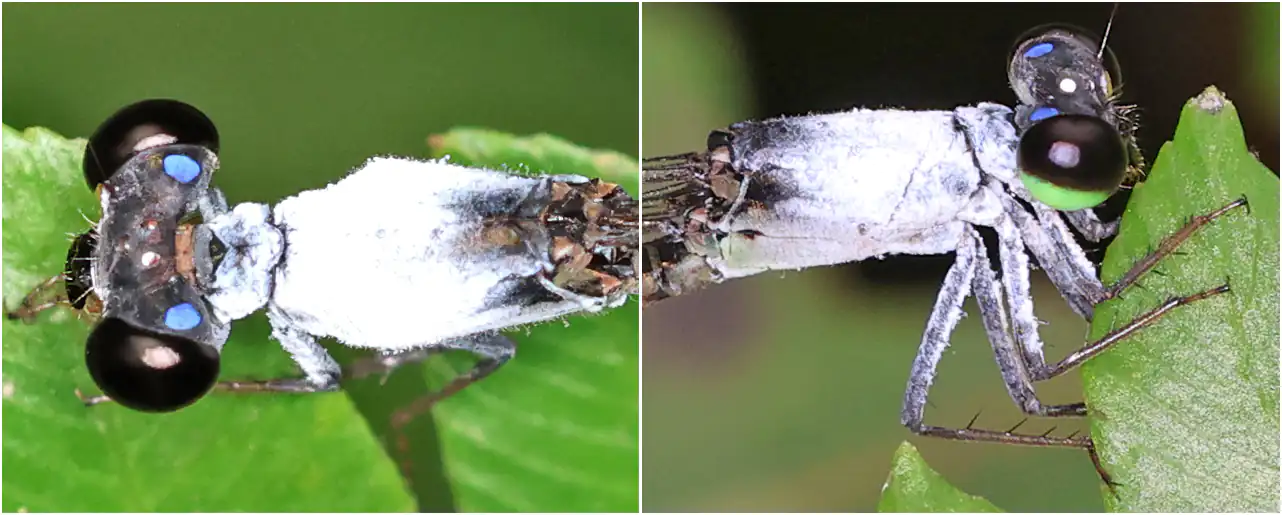
As for the anal appendages, they are easy to distinguish from those of the other three species present in Ghana; those of A. zerafica and exilis are respectively short and very short (barely visible in photos), with the cerci being the same length as the paraprocts. Those of A. victoria are closer, with the inferiors clearly longer than the superiors, but the inferiors are forcipate (pincer-shaped, strongly concave internally), whereas those of Agriocnemis maclachlani are nearly straight, with their tips directed very slightly toward the center.
By comparison, here are Pinhey's drawings (1974) of the pronotum in dorsal view and the anal appendages in postero-dorsal and lateral views from his revision of African Agriocnemis.
Selys notes that its abdomen measures 21 mm, so it reaches 26 mm in total length, very small like all Agriocnemis. It is a species of still waters and likely temporary pools in forests (known in English as the Forest Wisp), but in relatively open areas. It is found among grasses or emergent vegetation in shallow water.
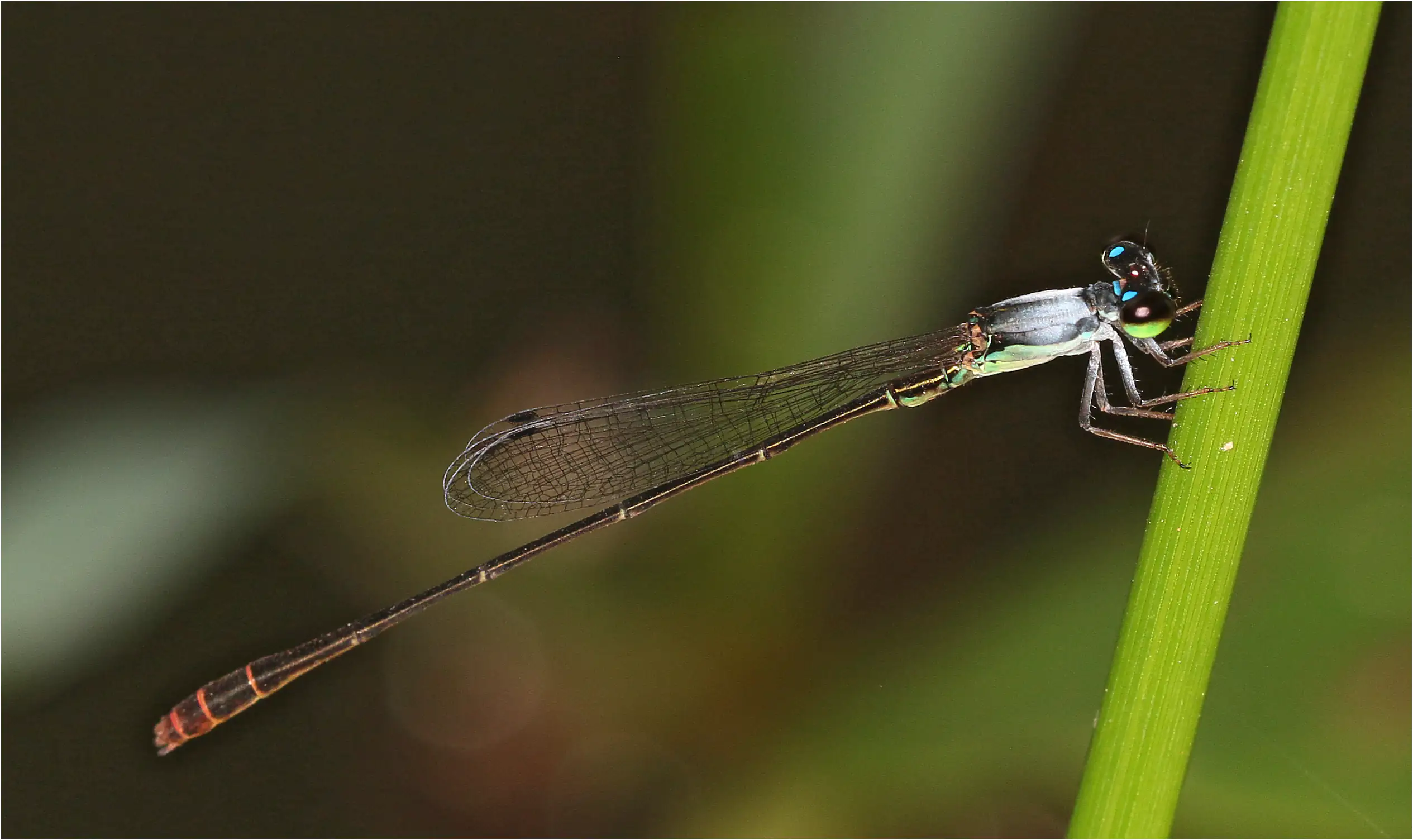
When they are younger, the thorax is black above and green below, and the final segments are red.
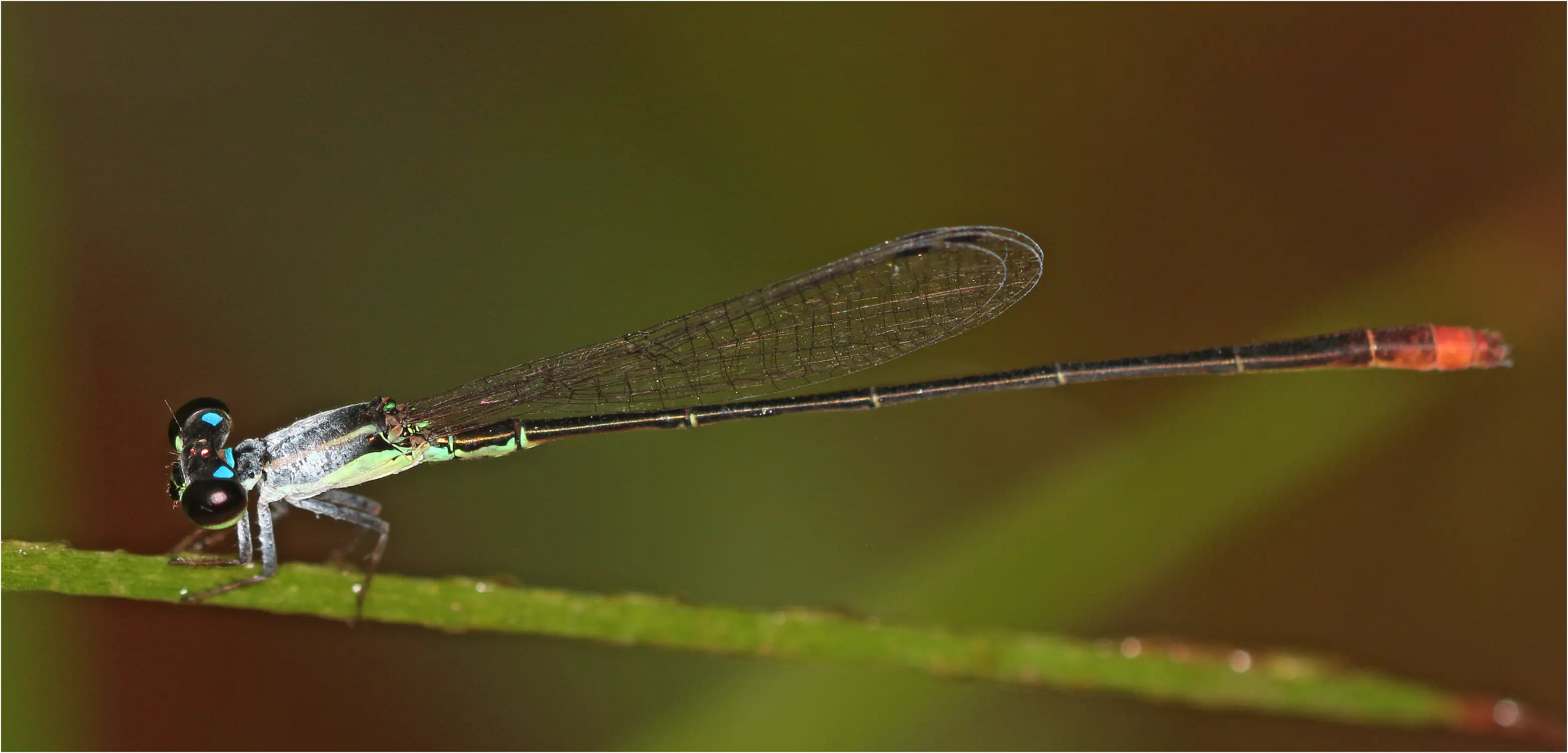
It is present from the Gambia and Senegal to Gabon in the south and Uganda in the east.
IUCN Red List.
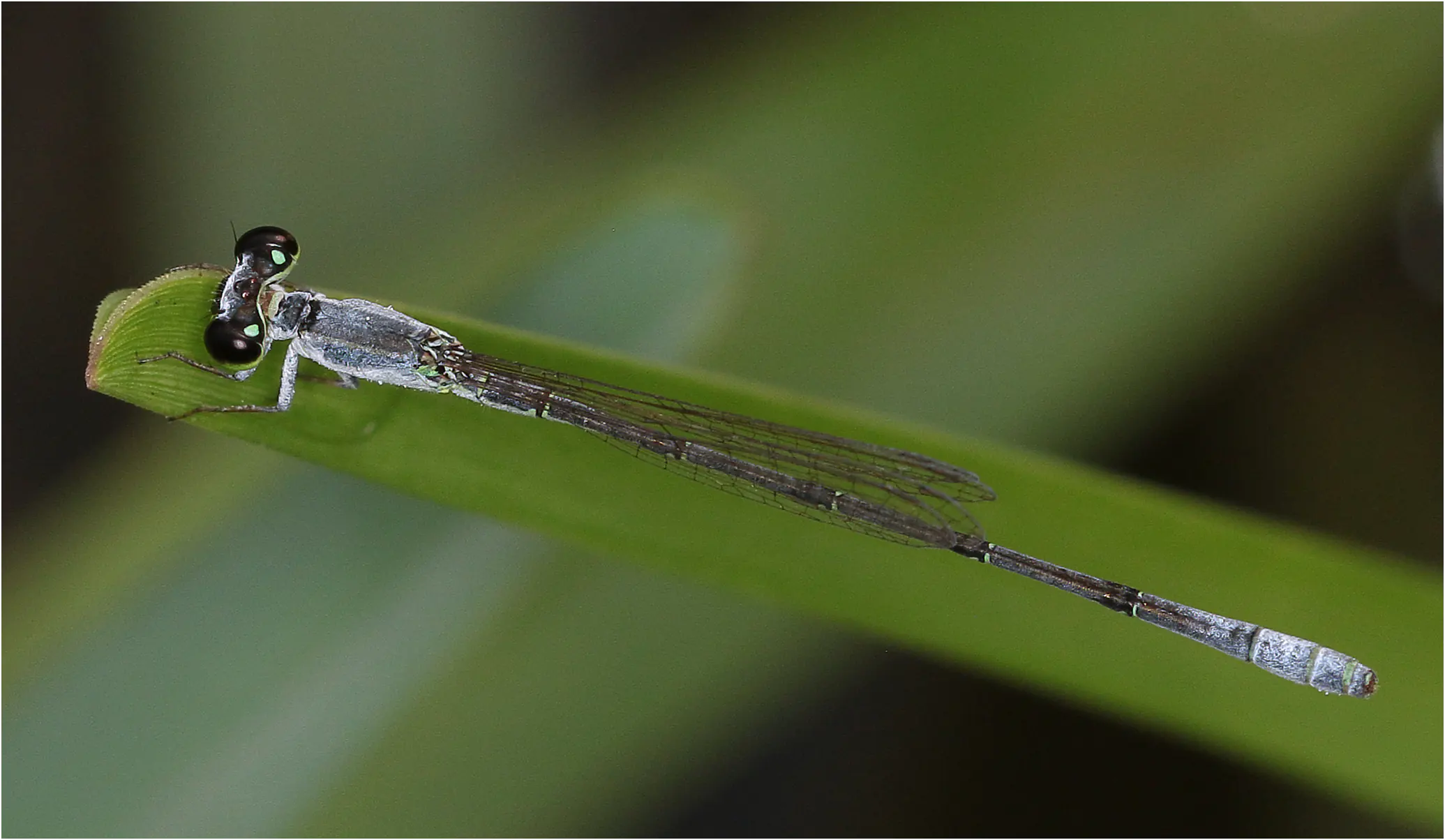
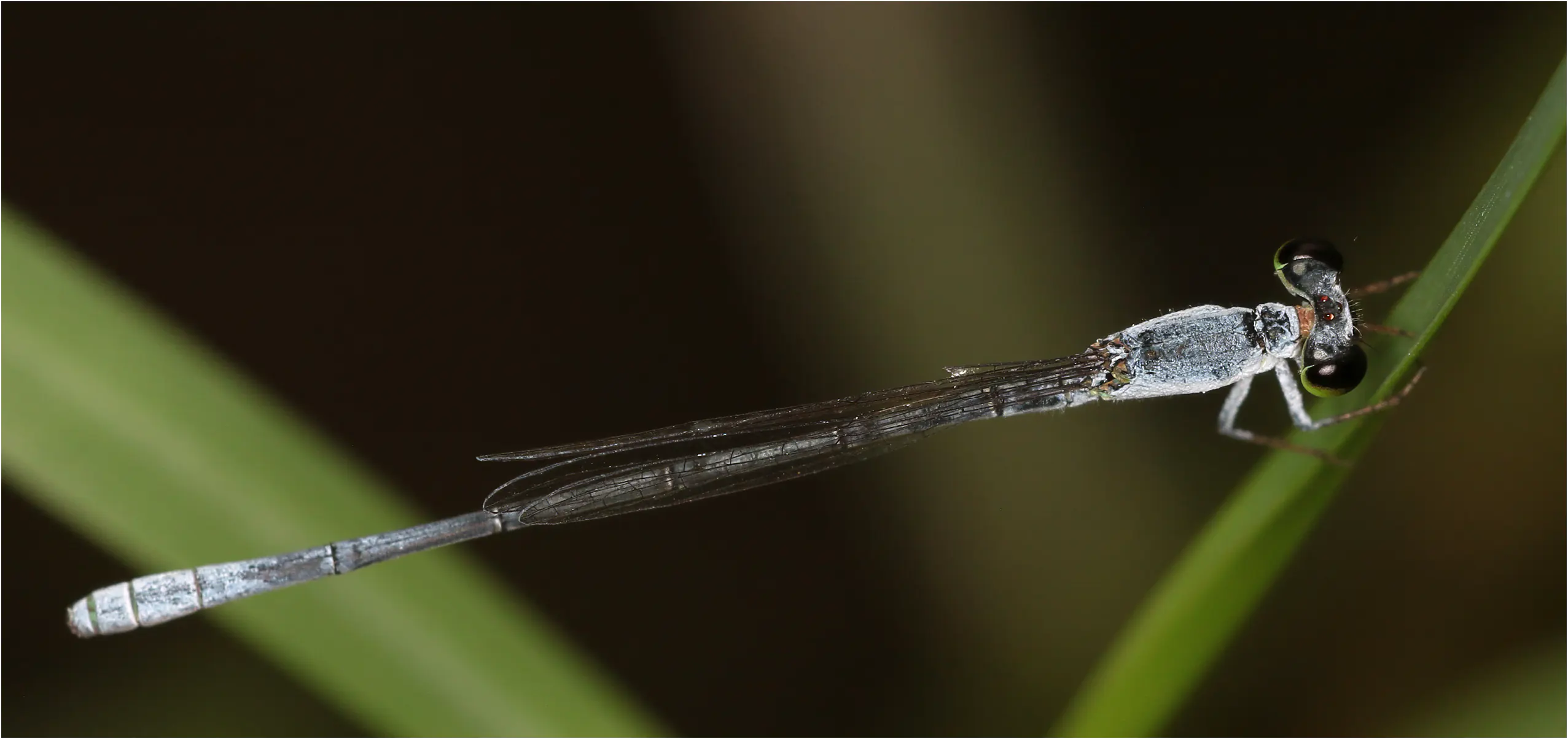
It is sometimes difficult to identify females from photos. However, we encountered these in the absence of other Agriocnemis species, surrounded by males of the species. Their pronotum, with a reduced version of the male's "tooth," matches Pinhey's description and drawing (1974) well. Their pruinosity is spectacular.
Étymology of Agriocnemis maclachlani
Agriocnemis, from the Greek agrios—wild, meaning living in the fields—and knemis, which means greave or legging, as with our European Platycnemis. Selys believed the genera to be closely related with regard to their tibiae, which I do not observe at all. Those of Agriocnemis do not seem to me any wider than those of other Coenagrionidae. But "cnemis" in many compound genus names should rather be understood as "belonging to the Coenagrionidae" (see Endersby & Fliedner (2015)).
Maclachlani is a homage from Selys to his friend McLachlan. Selys wrote: "Patrie : Le Gabon. Un couple m'a été donné par mon ami McLachlan — Sénégal. (Coll. Selys.) - Habitat: Gabon. A pair was given to me by my friend McLachlan—Senegal. (Coll. Selys.)" McLachlan was an English entomologist, a world authority on Neuroptera (in the original sense), and a major specialist in Trichoptera.
Agriocnemis maclachlani male, Ghana, Adansi Sud, 21/01/2026
Ian Endersby & Heinrich Fliedner, 2015 – The Naming of Australia’s Dragonflies, Ian Endersby & Heinrich Fliedner, Busybird publishing.
Pinhey, 1974 - A revision of the African Agriocnemis Selys and Mortonagrion Fraser (Odonata Coenagrionidae). Occasional Papers National Museums Rhodesia B Natural Science, 5, 171-278, p. 232.
Selys, 1877 - Synopsis des agrionines, 5ᵉ légion : Agrion (suite et fin). Les genres Telebasis, Argiocnemis et Hemiphlebia. Bulletin Académie royale Belgique, Série, 2 43, 97-159, p. 152.