At first glance, identifying Orthetrum microstigma seems straightforward: you just have to look for its small pterostigmas. That is the theory; the practice, in the field or later on screen, is far more uncertain.
Because without direct comparison, estimating that a pterostigma is short is difficult unless you have a lot of experience; remember that there are at least 15 Orthetrum species in Ghana (36 in Africa).
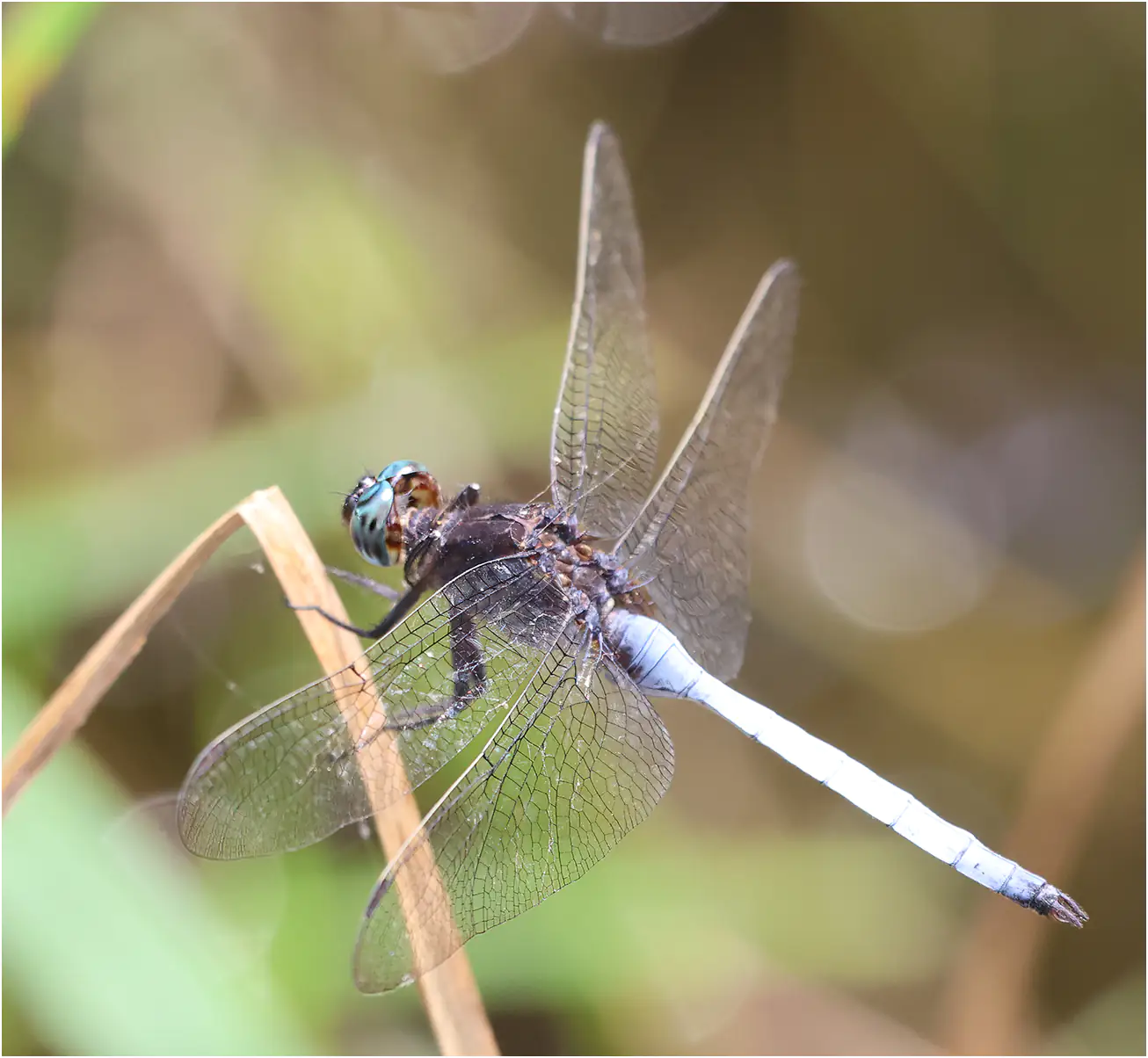
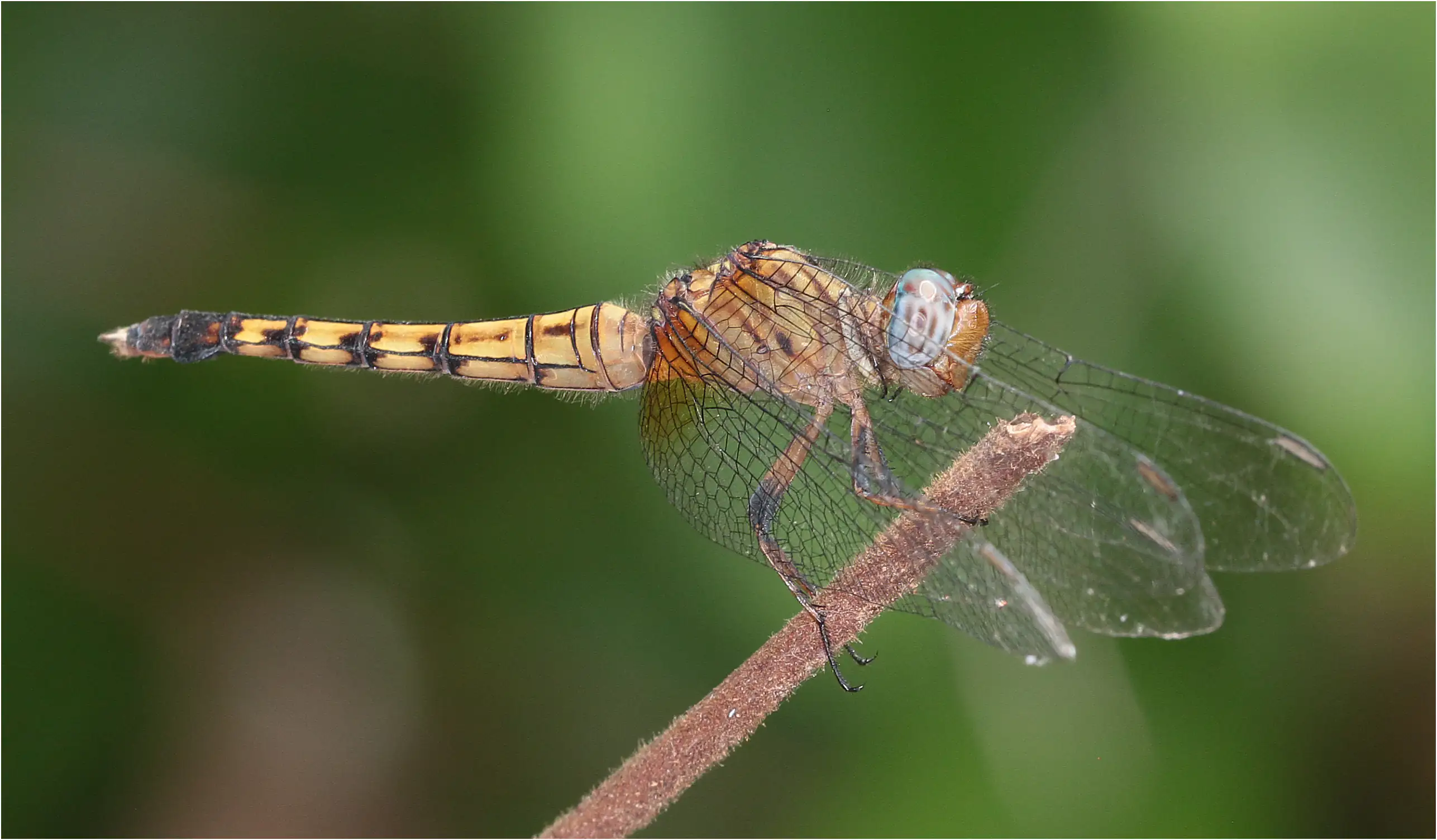
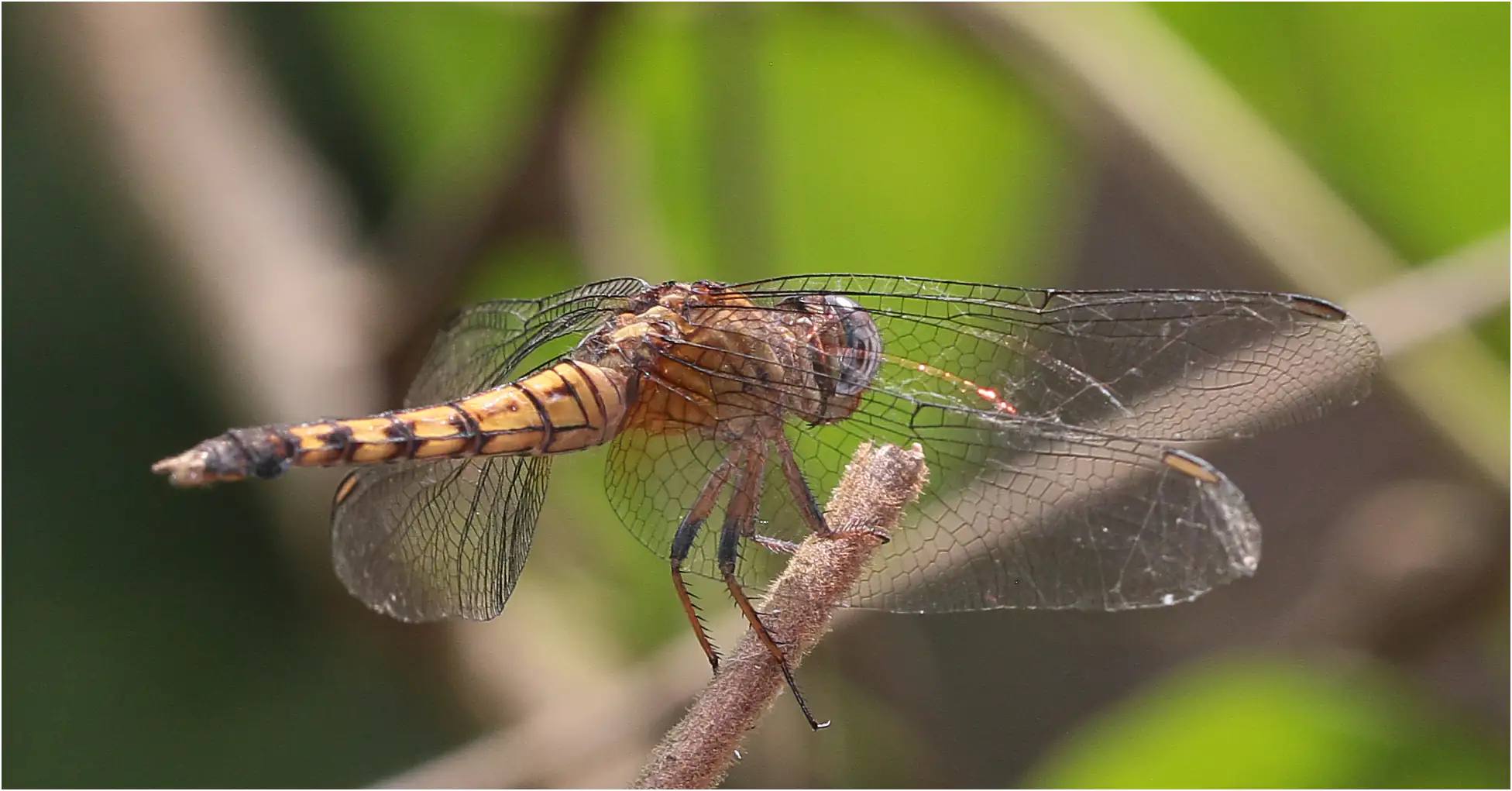
Therefore, I have only kept these two photos of males, taken in different locations, because in addition to their narrow and short pterostigmas—heavily bordered with black—they show many other details matching the description by Ris (1911):
- dark thorax
- the first two segments dilated laterally and dorso-ventrally; the abdomen covered with whitish/bluish pruinescence, narrowed at the third segment, then fusiform. The first three segments are marked with black laterally.
- black upper appendages, as long as the ninth segment
- hindwings with a dark brown-black patch, slightly lighter along the margin, in which the veins are dusted with blue
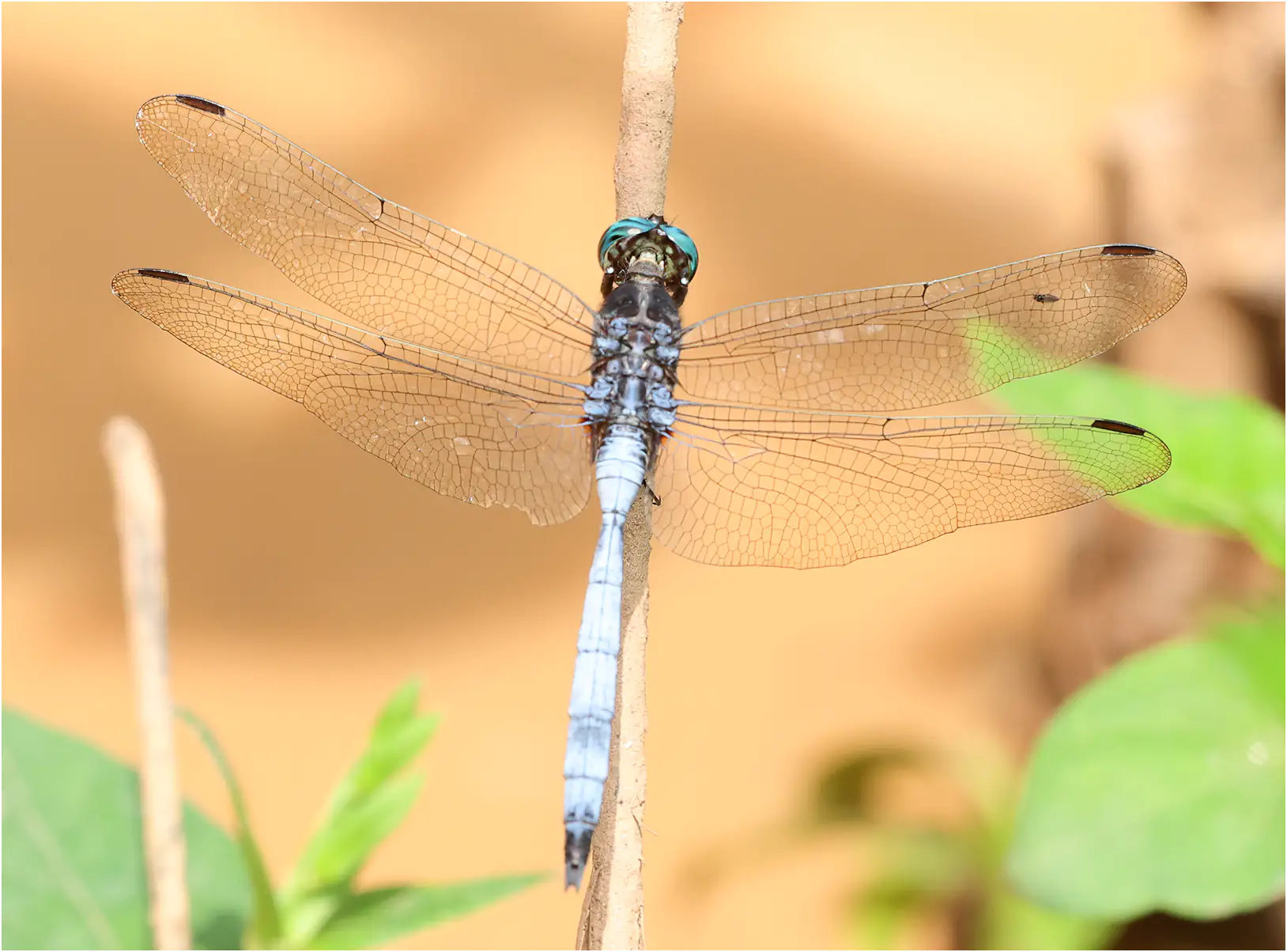
Ris tells us that its abdomen measures 30 mm, giving it a total size of about 43 mm.
We certainly encountered the female Orthetrum microstigma: there are no other photos of it on the web, but its pterostigmas are so short that there is little room for doubt. And this is of course not the only detail that guided us toward this identification; the legs are brown, but the tarsi are black, as is the lower quarter of the femora, which is certainly unusual. It shows no distinct markings or pale patterns on the thorax (like the male), and the lines are black on a brown background.
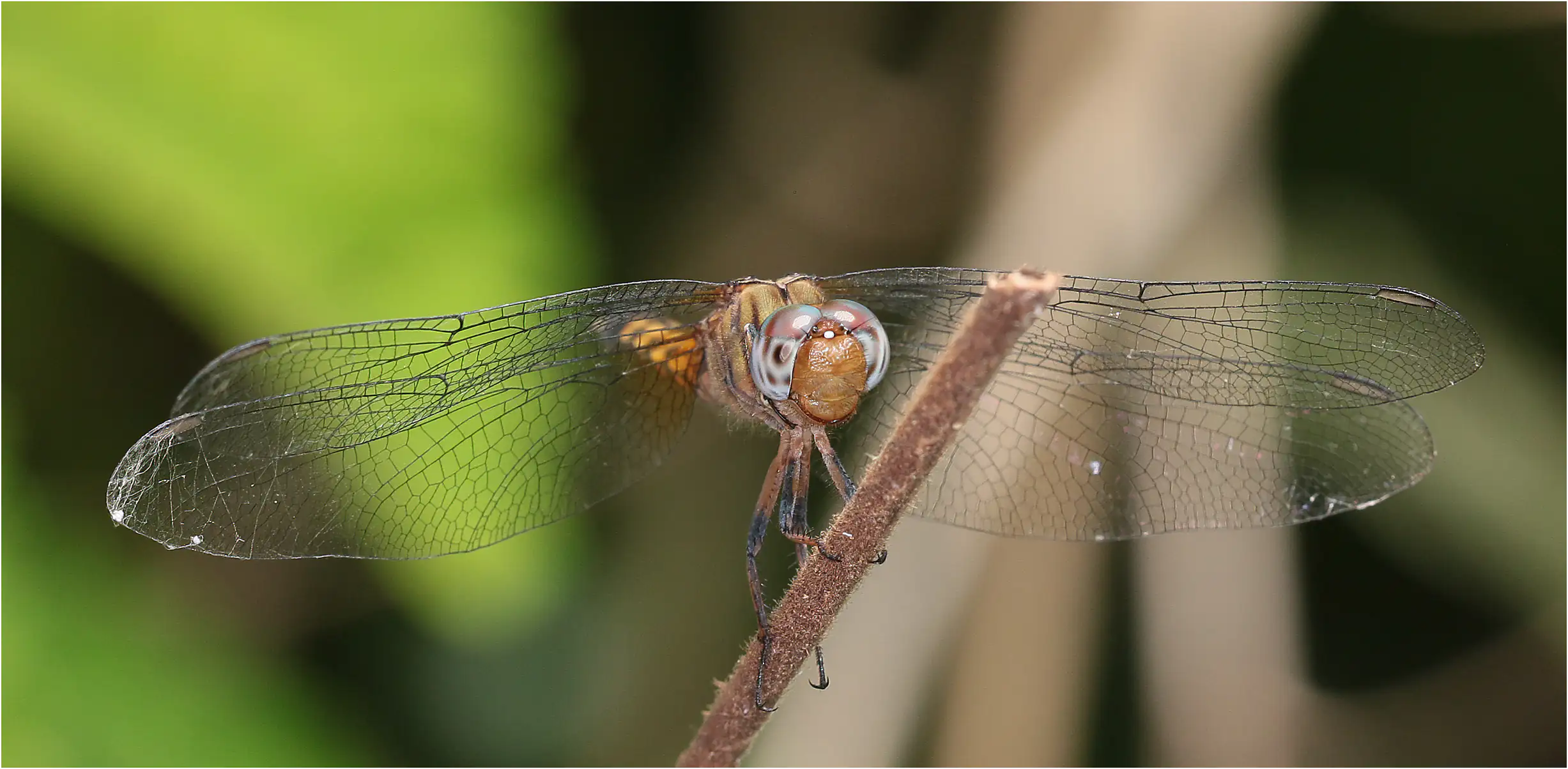
The base of the wings is broadly amber-tinted, and the sides of the 8th segment are expanded and black.
The Farmbush Skimmer is found in standing waters, often temporary, in open forest areas (Dijkstra, 2023 - ADDO). We encountered males near forest pools, while the female was along a wide forest track.
Its distribution ranges from Guinea and Sierra Leone to Kenya, reaching Angola and Zambia to the south.
IUCN Red List.
Étymology of Orthetrum microstigma
Orthetrum (see Endersby & Fliedner, 2015) comes from two Greek words, orthos meaning straight, and etron for abdomen, to indicate that the sides of the abdomen are parallel. This (neuter) genus name created by Newman in 1833 lost its relevance with the discovery of new species (whose abdominal sides are not parallel), but the name remained.
Microstigma, from the Greek mikros, small, and stigma, meaning mark or spot, which for odonates often refers to the pterostigma. Ris wrote: "Pterostigma sehr klein und schmal, gelbbraun bis dunkelbraun, mit dicken schwarzen Randadern. Pterostigma is very small and narrow, yellow-brown to dark brown, with thick black marginal veins."
Dijkstra, K.-D.B. (editor, 2023). African Dragonflies and Damselflies (ADDO).
Endersby Ian & Fliedner Heinrich (2015). The Naming of Australia’s Dragonflies. Busybird publishing.
Ris, F. (1911). Zwei neue afrikanische Arten der Libellulinen-Gattung Orthetrum. Revue zoologique africaine, 1, 125-131.